
GIULIA BE | June ‘26
Words by Lily Egleton
LA-based GIULIA BE is a Brazilian singer-songwriter and actress, sparking incredible popularity with songs like ‘fool for love’ (2025). Notably, she is one of the most promising voices of this generation, amassing over 2 billion streams across Spotify and YouTube and exceptional achievements, such as a Latin Grammy Award nomination for Best New Artist. Her creative journey does not end there, with her self-titled trilingual album due to be released on 25th June 2026, with “911” emerging as a focus single from the English side of the project. What makes this album all the more exciting is that it is made up of three EPs: GIULIA BE (Español) released on 23rd April; GIULIA BE (Português) to be released on 21st May, and GIULIA BE (English). Upon writing this, what struck me was the world-building aspect of her art form. Not only did she write each song on the forthcoming project, with each song in all three languages, but the project includes 21 music videos all visually connected as part of one cohesive narrative. The project doesn’t feel simply an album, but its own little universe.
Her intelligence and ambition are not limited to her art. Before her rise to fame, she was set to be a lawyer, having been accepted into several different law schools, including King’s College London. She “always knew I wanted to be a musician, but I didn’t know if I was going to be able to do it. I was a huge Hannah Montana fan from a very early age, so I grew up watching Miley and that was my dream, but it’s something you think only happens on Disney Channel, and not a real option”. It was during the months between graduating high school and attending law school that she “decided to give myself a shot” artistically.
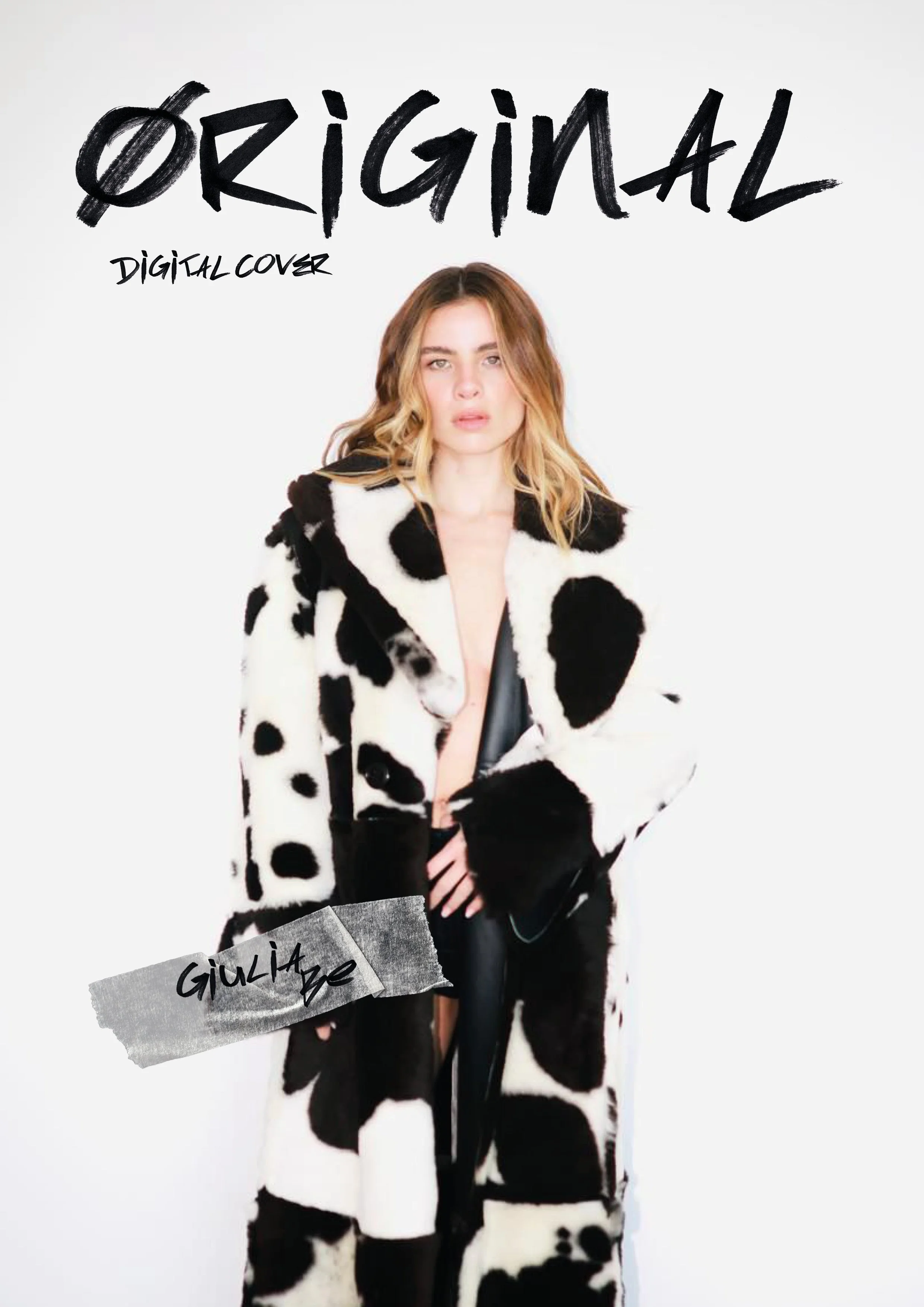
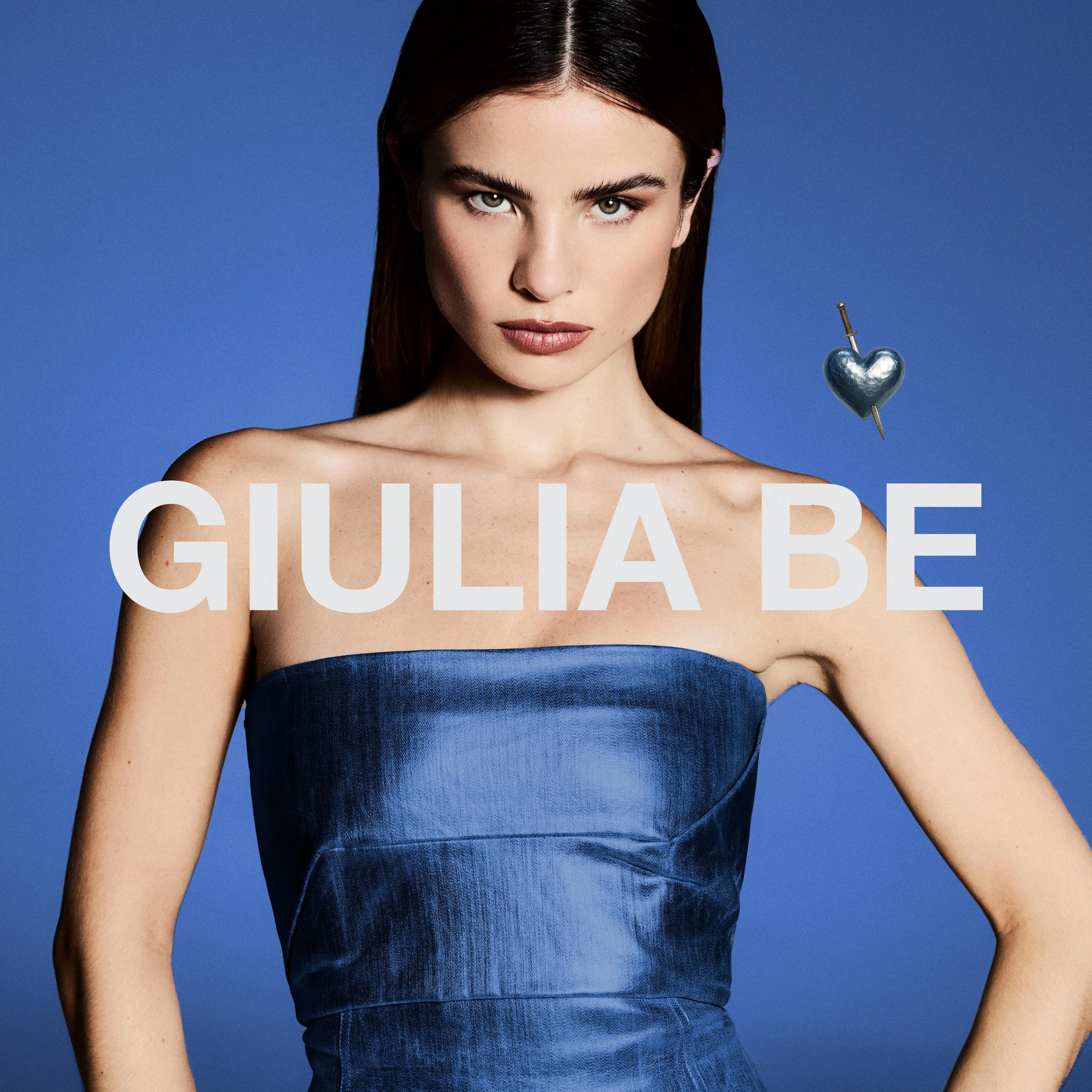
Cover Image above, GIULIA BE wears:
Coat: Heira Leatherwear | Hot pants: RETROFÊTE
GIULIA BE is grateful for giving herself this chance, releasing a greatly successful song called ‘Too Bad’ in 2019, however she notes that while the song was popular, it was often mistaken as a song by the likes of Dua Lipa and Halsey. Following this came her hit song ‘Menina Solta’ which was certified platinum in Brazil, which “struck a vein” with listeners. Following ‘Menina Solta’, it was difficult for GIULIA BE to “get approval to sing in anything other than Portuguese”, with this song becoming a notable feature of her discography. The trilingual artist notes that this was a difficult position to be in artistically, writing “songs in English and Spanish and I kept them kind of hidden on my phone”. However, she feels as though her trilingual songwriting capabilities are newly celebrated since signing with Sony, who don’t limit herself to one box.
Her upcoming self-titled album feels as though “it is truly me without any restrictions. These are the three languages I love writing in and singing in, so it is the first time that I have the first time to showcase all of that to the world”. As a monolingual writer myself, I find myself fascinated by the many dimensions of expression she moves through in each language. The conversation with GIULIA BE inspired me to consider how every language offers not just new words, but an entirely new way of writing, feeling, and translating emotion into meaning an ability she is able to leverage in its entirety in her forthcoming project.
“100%” she answers with no hesitation when she is asked if being able to write and sing in three different languages unlock different emotions within her, “I feel like GIULIA in Spanish really leans into the spiciness of things and the depths of emotion. GIULIA in Portuguese comes from a different place she is more structured and I feel like I have more to answer to as that is where I built my career and where my family is from”. GIULIA in English is now the language she speaks the most in, specifically due to her fiancé being American, and she feels this is the “most confident and decisive” version of her singing and songwriting identities. She feels as though the English language is a “playground” to write in, due to the variety of vocabulary which she can play around with in her writing.
Much like her diverse and nuanced lyricism, visual world-building and storytelling were integral in the creative process of her self-titled album. “All the songs have a music video which is a dream come true for an artist, especially nowadays when music videos don’t always get the time of day as much as they used to”, she notes, specifically in a day and age where social media is often considered responsible for limiting audiences’ attention spans. This makes her even more grateful to fans who watch her music videos in their entirety and enjoy the visual exploration of her lyrics. World-building was equally as important for her previous album, Disco Voador, which she considers “futuristic and stylistic”. Rather than this futuristic or stylistic approach, the focus of her music videos for all 21 songs of her album has been “rather than building a world, inviting people into the world I have already built”, exploring different facets of her personality across each EP.
The process of creating each music video was a “collaborative” one, beginning with GIULIA BE’s passion of watching music videos and imagining her own when writing each song. Everyone “brought in different references and watching different movies”, creating a diverse and exciting range of videos for this project. She “embraced” the “amazing collaborators who not only brought my vision to life, but elevated it”. Often, music videos are considered a dying art in today’s digital age, however GIULIA BE hopes to continue expressing her visions through music videos and anticipates a “shift” in a time where music videos from the likes of Olivia Rodrigo and Sabrina Carpenter are often regarded highly and met with an excitable and positive reception.
Creative autonomy lies at the heart of GIULIA BE’s artistry: a conviction that feels especially resonant among a new generation of young female musicians reclaiming ownership of their voices. “When you write your music, they become your daughters,” she says. “They are an extension of me. I would be nothing without them, and it is very daunting to think that somebody could take that away from me.” There’s a palpable sense of relief in knowing she “will never have to fight to sing my own songs” - a striking reminder that, in an industry where art is so often treated as commodity, creative ownership can feel like an act of preservation as much as expression.
The instinct to protect her art extends far beyond songwriting alone. Recently, GIULIA BE took ownership into entirely new territory, digitally cloning herself through a process involving “thousands of cameras photographing me from every angle and recording my voice”. The result is a virtual version of the artist: one she fully owns and can selectively license to brands on her own terms. In an era increasingly shaped by artificial intelligence, it feels less like a novelty and more like a statement of intent.
“I’ve always been into AI,” she explains, approaching the subject not with fear, but with striking clarity. “We’re starting to see a lot of different repercussions of it. A lot of damage has been done to intellectual property, and it is going to be an interesting future.” For Giulia, the technology itself is not the enemy; rather, it is the lack of protection surrounding the people behind the work. Her decision to digitise herself becomes an act of pre-emption - a way of reclaiming agency before the industry decides otherwise. “I am trying to protect myself the best I can for it,” she says.
Yet beneath the futurism lies something deeply human: solidarity. She speaks less about self-preservation in isolation and more about creating a blueprint for others to follow, particularly young women navigating industries that have historically profited from their creativity while limiting their control. “I also really want to bring attention to that topic and inspire other artists and other female writers to be able to follow in my footsteps and fight for their right of ownership.”
There is optimism in her voice when she speaks about the cultural shift already underway one driven not just by artists, but by audiences themselves. “I feel that there has been a huge shift within that conversation by fans and artists,” she reflects, “with some fans becoming only comfortable with listening to songs that are owned by the artists.” In many ways, it signals a quiet but radical redefinition of value: ownership not as corporate leverage, but as creative dignity. And for GIULIA BE, that evolving relationship between artist and audience is only the beginning: “I’m excited to see where that leads.”
“Instinct is the most important thing you have, and individuality” another instinct that I found particularly poignant for a female artist, “I believe a lot in manifestation and putting things into existence”. While she notes she of course has days of doomscrolling and comparing herself to others online a trouble so many of us digital natives experience she grounds herself by taking a step back and validating her journey thus far.
For all our conversations about technology and the future, there is something refreshingly grounded about GIULIA BE’s sense of self. These days, she is based in Los Angeles a place she describes candidly as a “hard city to make friends”. In a city built on image and ambition, connection can often feel elusive, transactional even, but Giulia approaches it with the same openness that shapes both her artistry and her personal life. “I’m not afraid to go to an event alone and I’m not shy to introduce myself to people,” she says, “which is a skill you need to have in this city.”
That ease with people, she believes, may be deeply tied to her Brazilian upbringing. She describes Brazilians simply as “warm” a quality that seems to permeate the way she speaks, creates, and navigates unfamiliar spaces. Despite the physical distance from home, Brazil remains ever-present in her daily life, not as nostalgia, but as ritual. She returns often, grounding herself in familiarity whenever she can, and maintains that connection in quieter, more intimate ways too: through food, routine, and domestic comfort. Cooking homemade Brazilian cuisine, she explains, has become one of the ways she stays connected to her roots - a reminder that identity can live just as powerfully in small habits as it does in language or geography.
“grey zone” track 6 on GUILIA BE (English) is a song that surprised her by building its way to become one of her favourites on the project. “Every time people listen to it, they say oh, this is different. This is an original.” Alongside “911” the focus single from the English side of the album the track showcases the confidence and emotional directness which has emerged throughout her English songwriting since moving to Los Angeles. She fell in love with this song slowly, creating a palette of songs across the album that feel both distinct and original.
Listening to the wisdom and creativity with which she speaks, it’s hard to believe she is only 26. When asked how she differs from the girl who first stepped into the industry, she reflects on how time, experience, and confidence have quietly reshaped her.
“At the beginning, I was so excited that I was getting to do this for a living and that this was going to be my life, so I would push away anything bad that was happening. Looking back, I can see my relationship with social media,”
…she states, “I would search my name up on Twitter every night which is a habit that I definitely haven’t kept. I give that version of myself a lot of grace and all the hats off. I am very proud to have continued myself to a new season of my life and I am much more calm now.”
There’s a tenderness in the way she speaks about her younger self - not with any regret, but with understanding. If she could offer that version of herself one piece of advice, it would be simple: “Write your music. Everyone when they start sucks. But it is something nobody will ever be able to take away from you: when you write your own music, you’ll never second-guess your own originality because it is your own story”.
That sense of honesty and self-possession runs through the music itself. For listeners discovering her for the first time, she hopes the album leaves them with a clear understanding of who she is: “it is the same girl who is singing in three languages. I hope they understand that these are my stories and this is my way of making sense of the world around me and spinning it into music, and I hope that they understand I believe in every word that I am saying. I am a hopeless romantic. Just because your heart was broken doesn’t mean that you’re not going to fall in love again the next day”.
On June 25th, she will release a 21-track self-titled album, "GIULIA BE” made up of three separate language projects, representing the three sides to her songwriting. The album features 7 songs written in each language: English, Spanish and Portuguese.
Team Credits:
Photographer: Christy Barley
Glam: Julia Petrarca
Stylist: Juliana Giménez
PR: Jordan Frazes
