Pauline Dujancourt SS27
The Bitter Tears
Images By: Ines Bahr
“And for us loving meant always being aware of what was happening inside each of us”.
When I read or hear a number, I see a colour. The same with letters, with days of the week, with months; each corresponds to a different colour. Three is green; ‘u’ is yellow; July is both yellow and green. There’s a name for this phenomenon: synaesthesia.
But what if I could apply that sensory overlap to emotions? What would the aesthetic, tactile manifestation be of relief, of sadness, of pain?
These were the questions that kept coming to me when I began working on the Spring Summer 2027 collection. I considered tears how they are exterior expressions of our interior lives. But they do not tell us everything. Not all tears are the same, they can be portraying myriad different emotions.
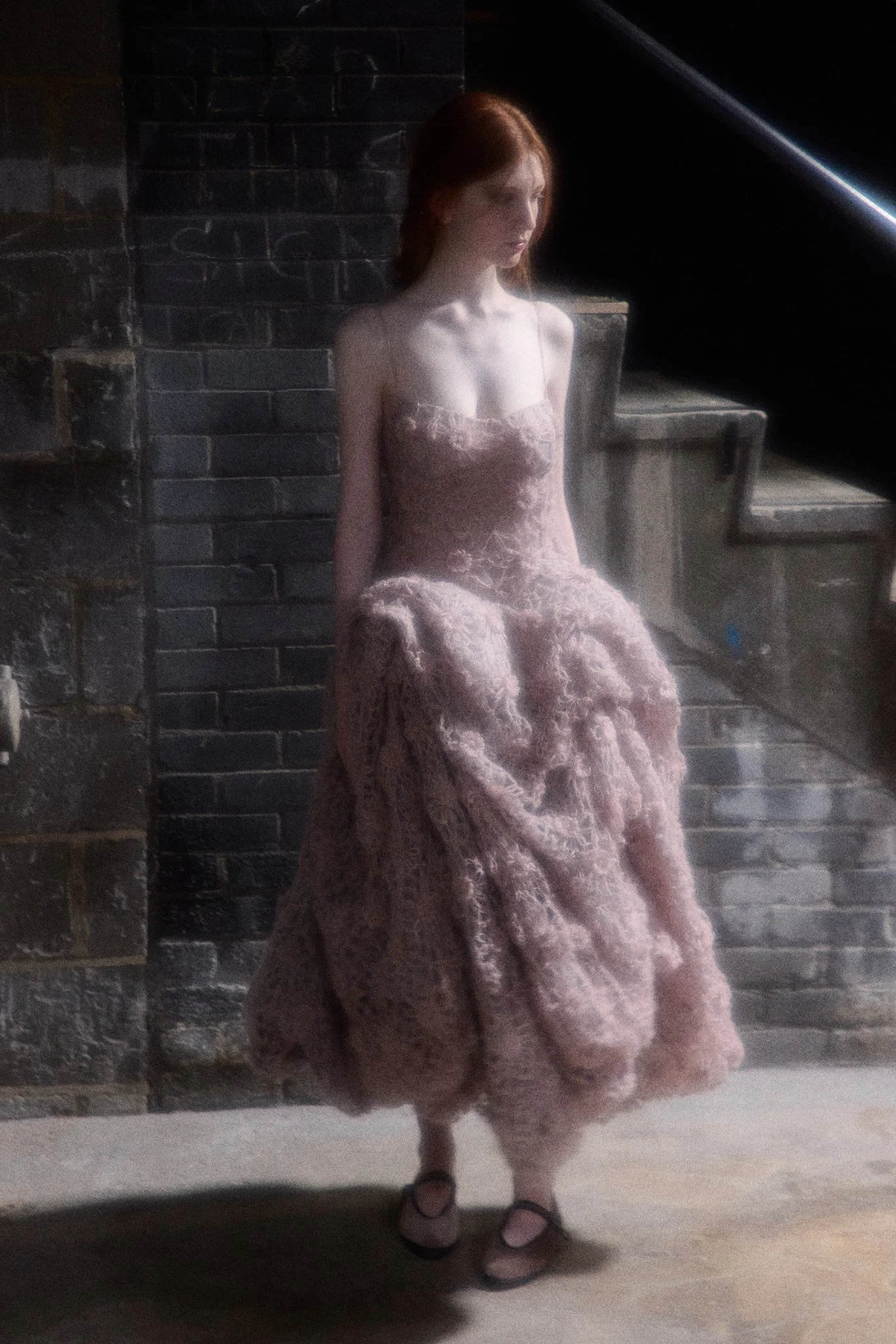
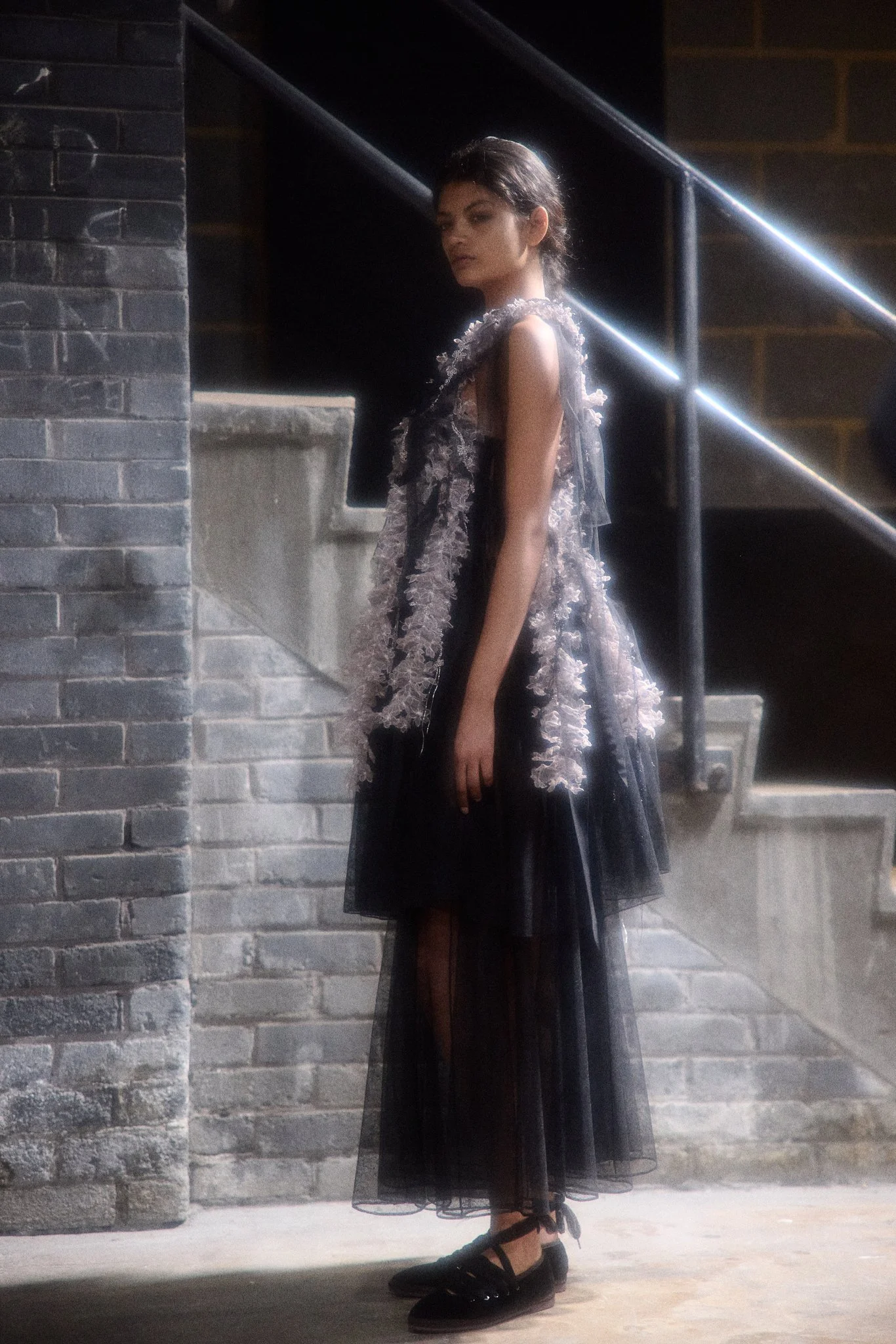
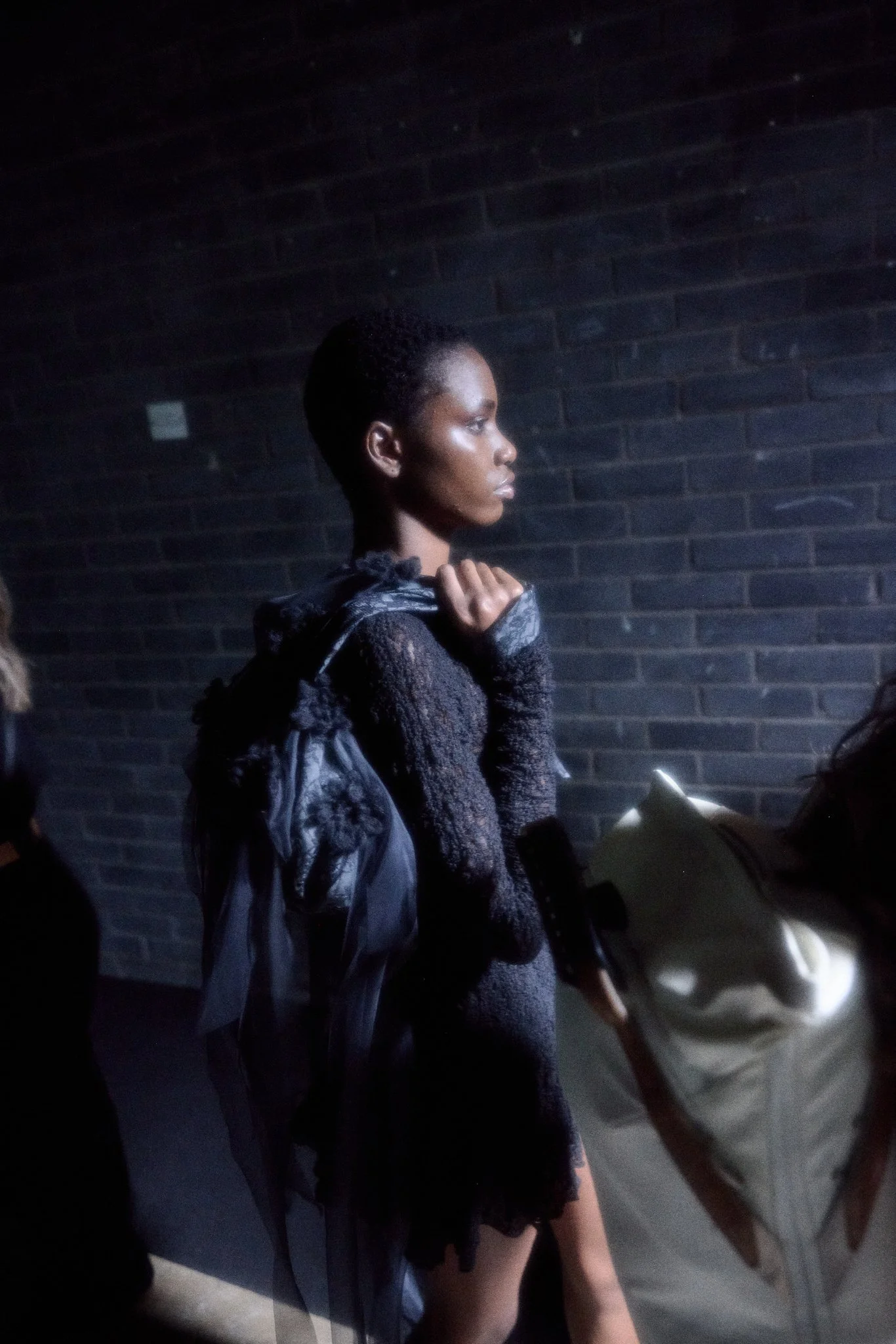
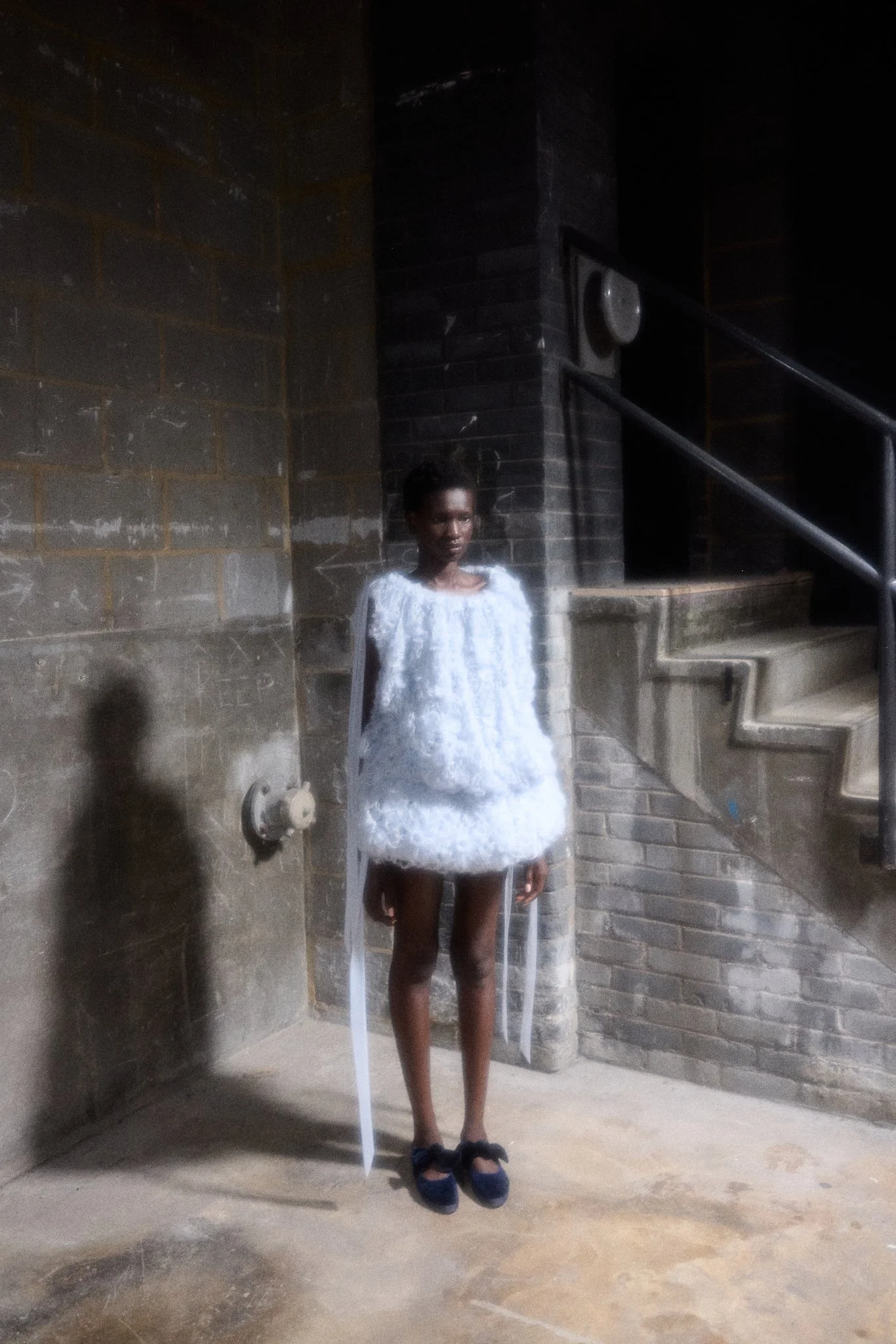
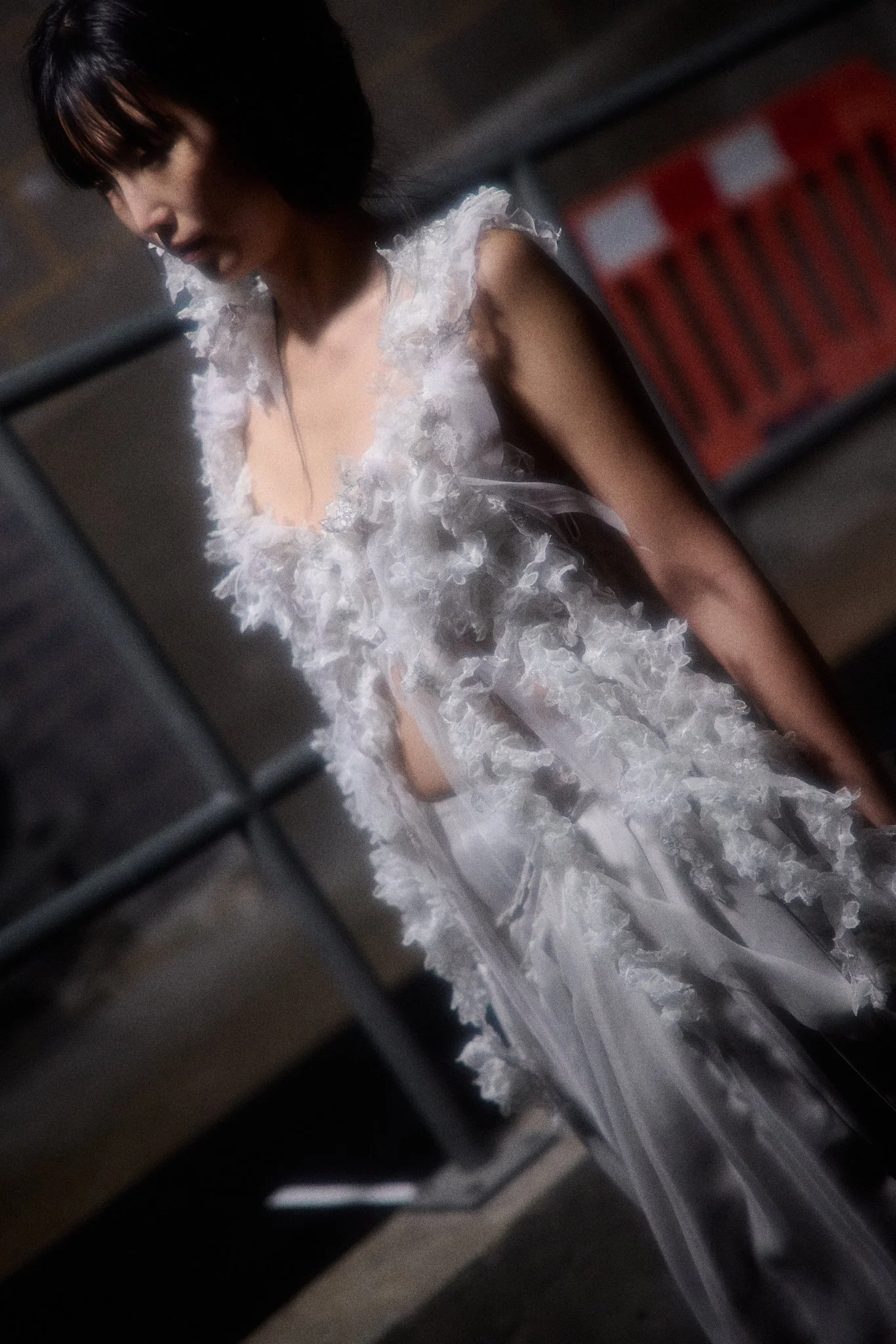
I began to compose a library of tears. In it, different feelings, different causes for crying, were translated into their own distinct visual language. Seven emotions – despair, grief, fear, pain, bitterness, sadness and relief – have here been expressed in textile form, as tumbling fronds of hand-cut and gathered lace and crochet springing from looks throughout the collection.
These tactile tears form the centrepiece of the collection; each emotion treated as valid and beautiful in its own way. Too often we think of explicit displays of emotion as clumsy, ugly losses of control. People do not want to be seen crying. But why? Isn’t there something empowering about reclaiming that transparency, in owning our sensitivity?
This season I was also thinking a lot about Rainer Werner Fassbinder’s 1972 play The Bitter Tears of Petra von Kant. A study of obsessiveness, of control, of desire and of love, I was fascinated by the work since I first read it as a student in Paris.
An intimate piece set entirely inside the titular Petra’s apartment, the characters are all women. And yet it was written by a man. Fassbinder took his own personal story of unrequited love and transferred it to a female perspective, shifting the setting from the world of theatre and cinema in which he lived to that of fashion. He felt the need to both express himself and protect his anonymity. There’s a tension to that the desire to both be seen and to hide which I find deeply intriguing. It invites you to ask questions.
Although I am not like Petra, there are facets of her character that resonate with me. Yes, because she is a designer and a feminist, but I also connect with her passion and her independence and, in some ways, how she views love. So, I found myself amplifying the femininity and romance of my work, being playful perhaps a little provocative, even with it. There is strength in sensuality, in softness.
You can see this, I hope, in the collection’s recurring central motif: flowers. So often associated with femininity, I wanted to both embrace and subvert that correlation, consider it afresh and reclaim the cliché on my own terms. Unapologetically romantic pieces have an underlying toughness, bold silhouettes are surprisingly light. Power and delicacy harmoniously co-exist.
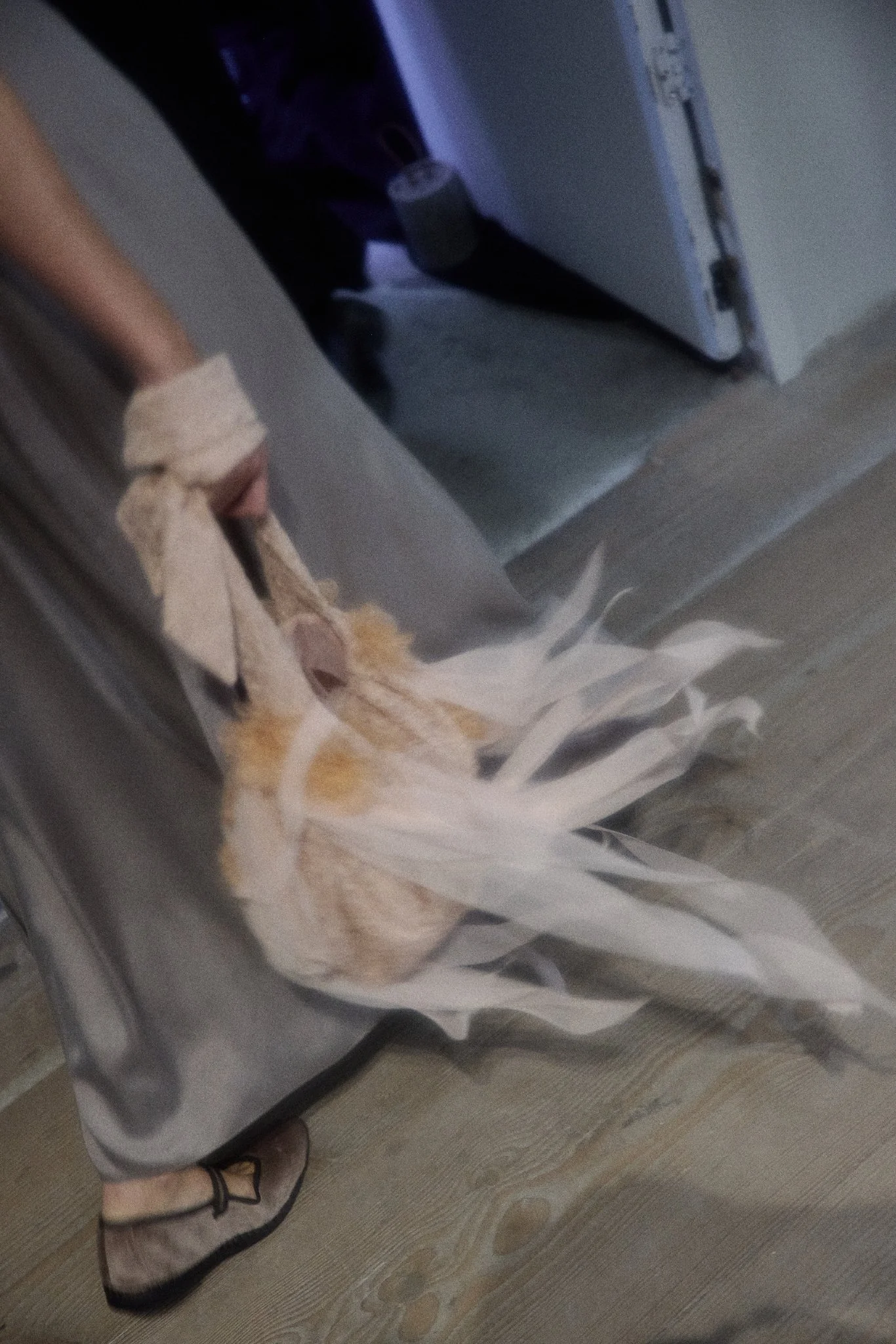
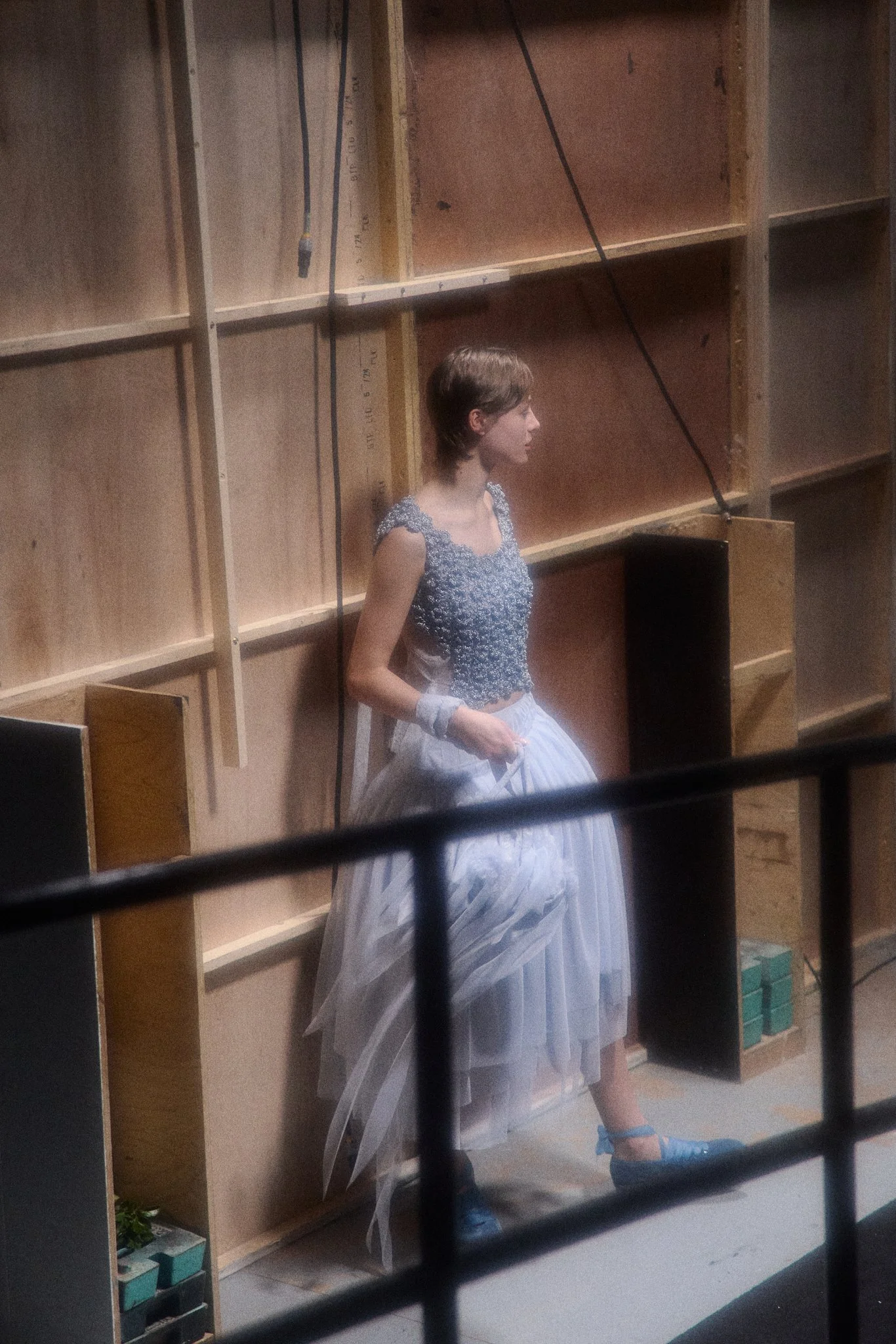
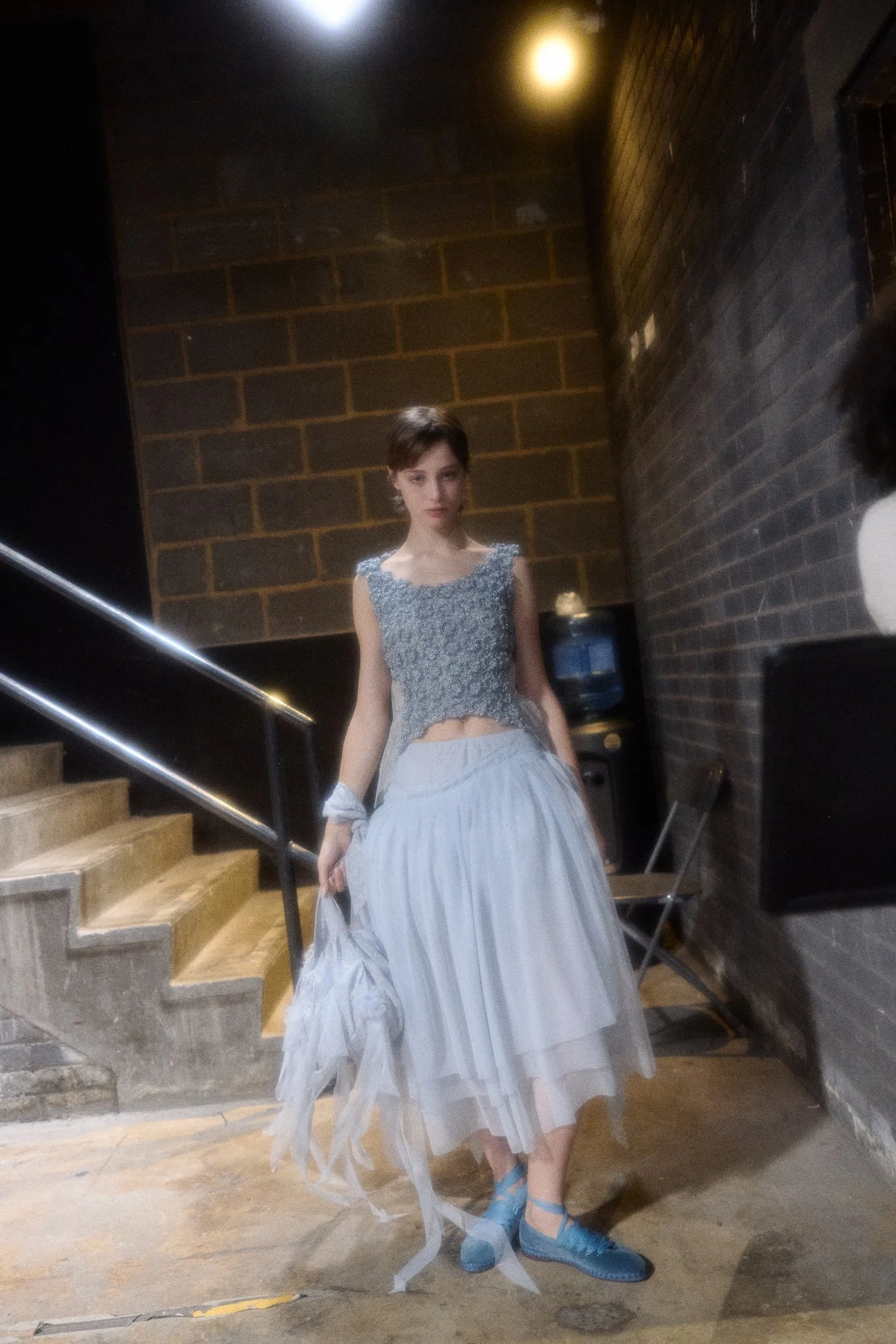
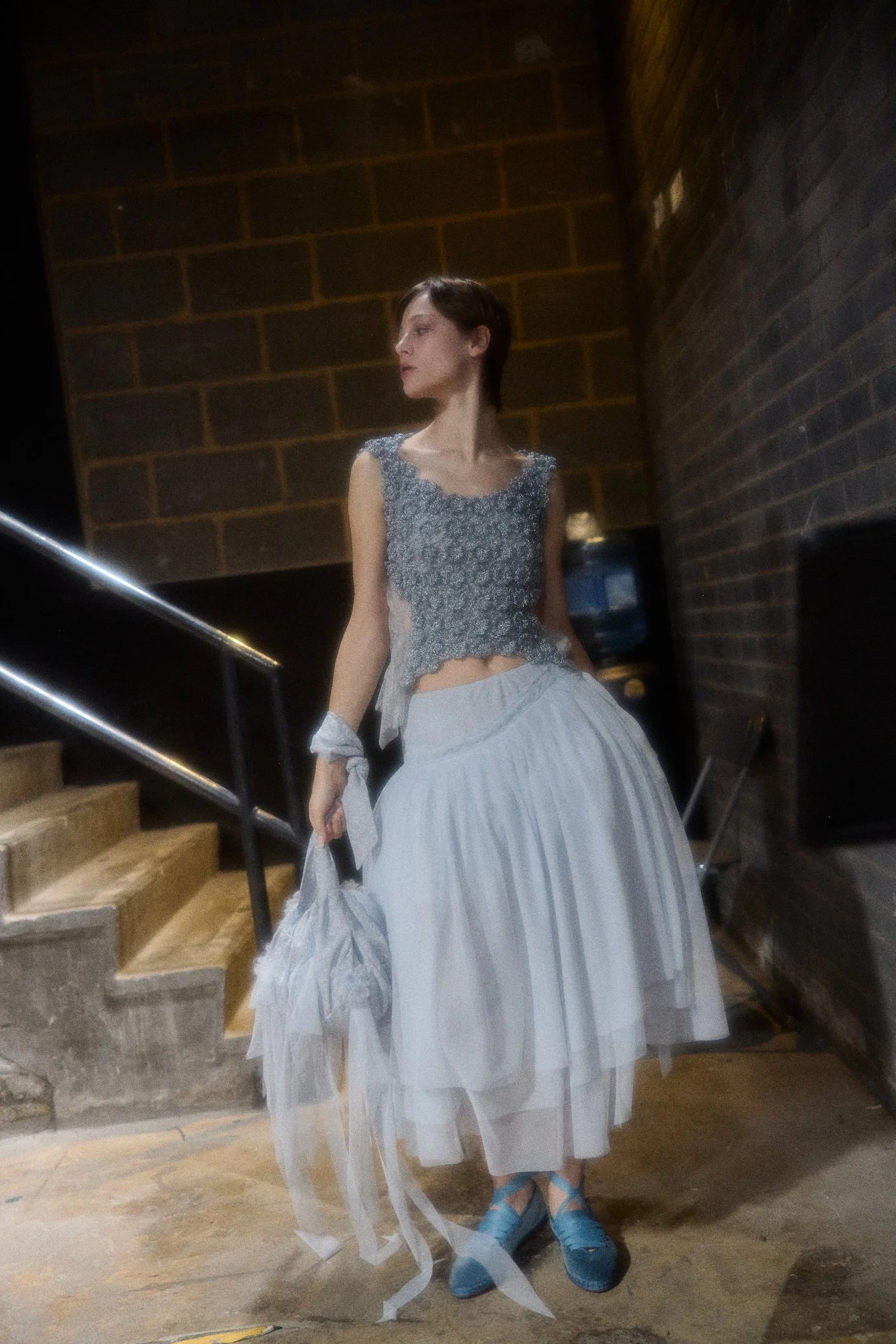
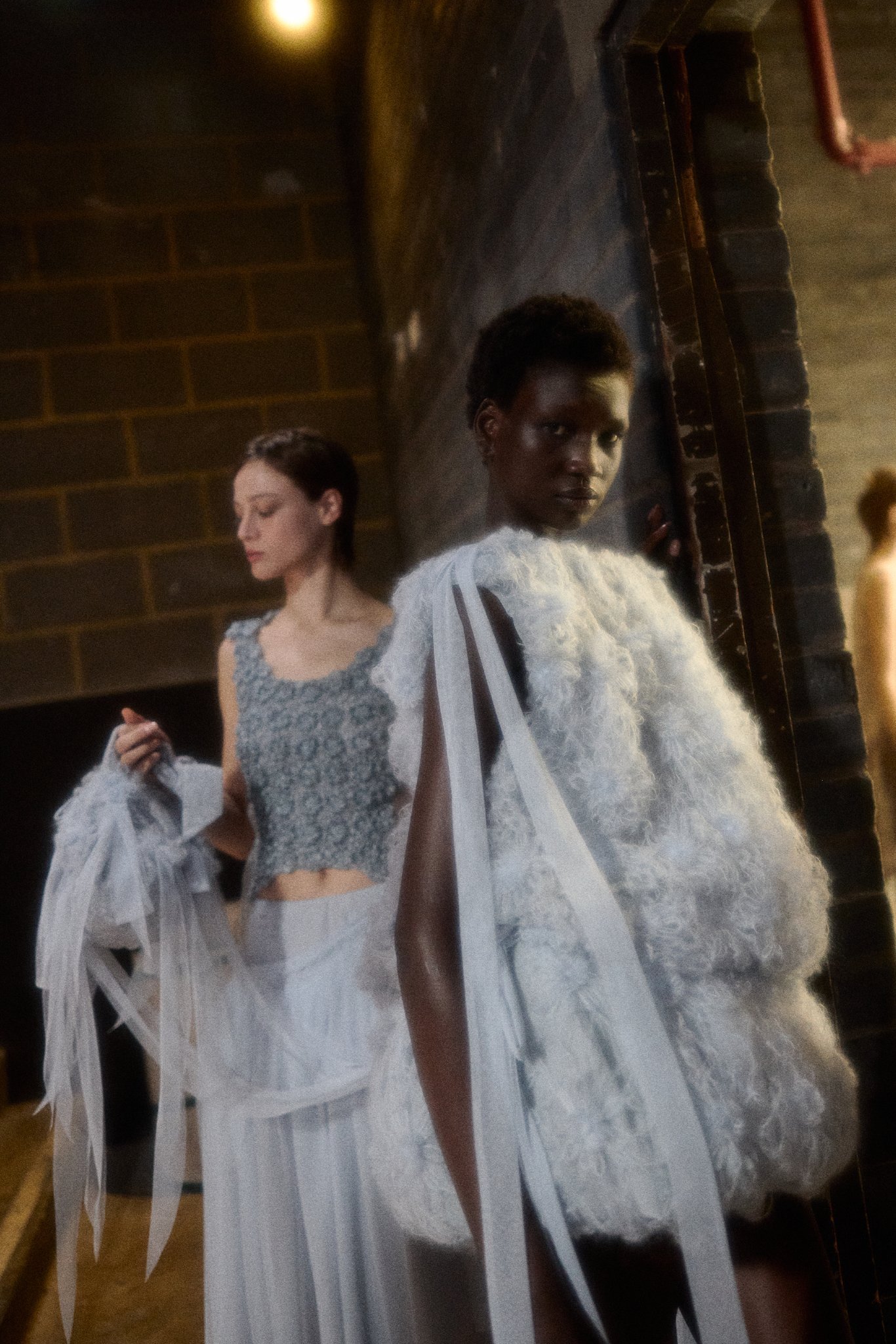
Thousands of individually hand-sewn and crocheted blooms are strewn throughout the collection. Sometimes scattered, sometimes densely packed, they are even incorporated into the set, where 4000 handmade loom flowers are applied to hand-scalloped lace. Two dresses, including the finale look, are each composed of 700 fine alpaca loom flowers crocheted together and mounted onto organza and tulle, creating voluminous pieces that are soft, light and airy – illustrations of the dichotomies at the heart of the collection.
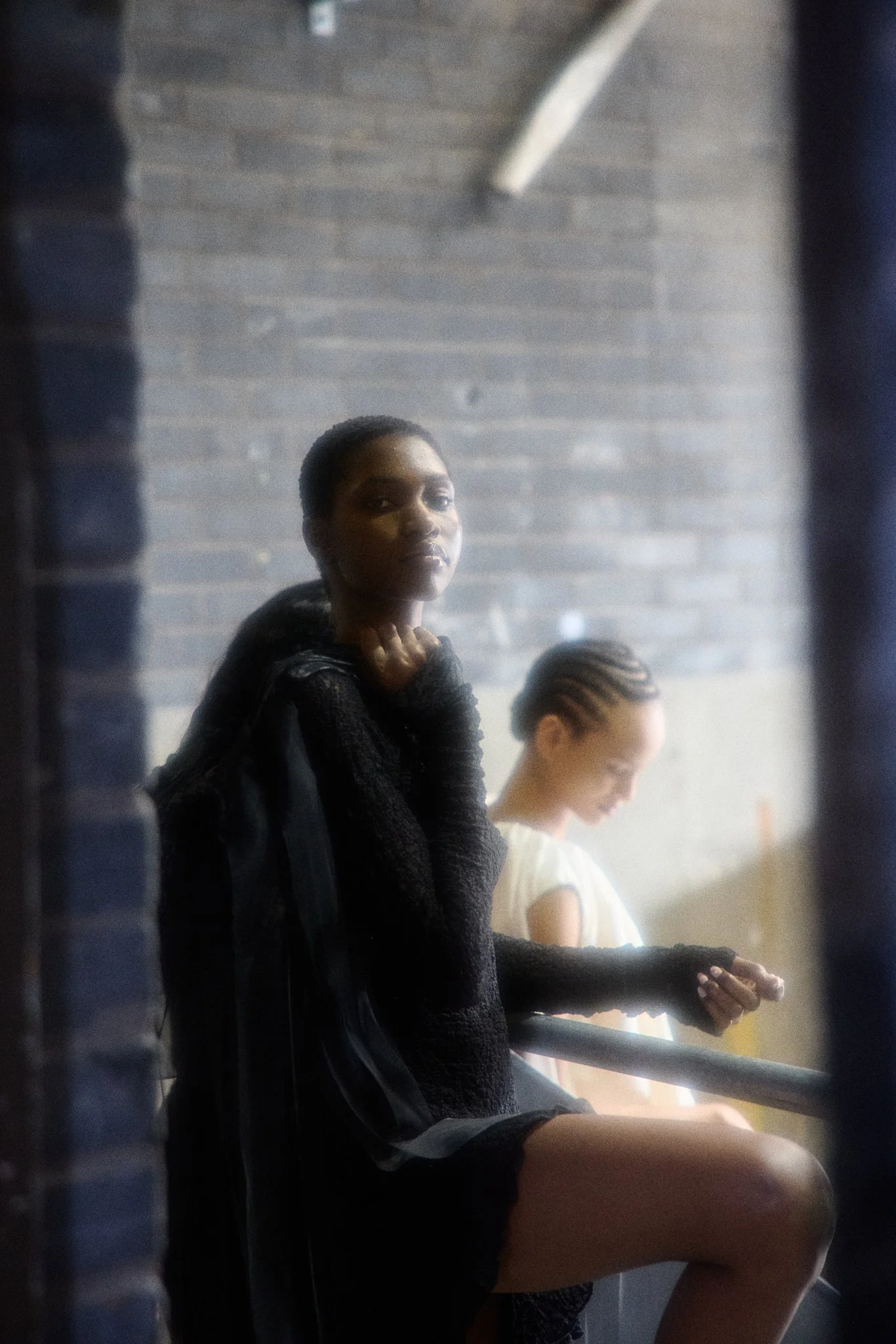
Elsewhere, fine loom flowers are conjoined in a crocheted open weave that calls to mind a web, that is delicate but strong. Our signature metallic yarn is merged with intricate, hand-scalloped Japanese lace strips and applied onto ruched flower embroidered organza.
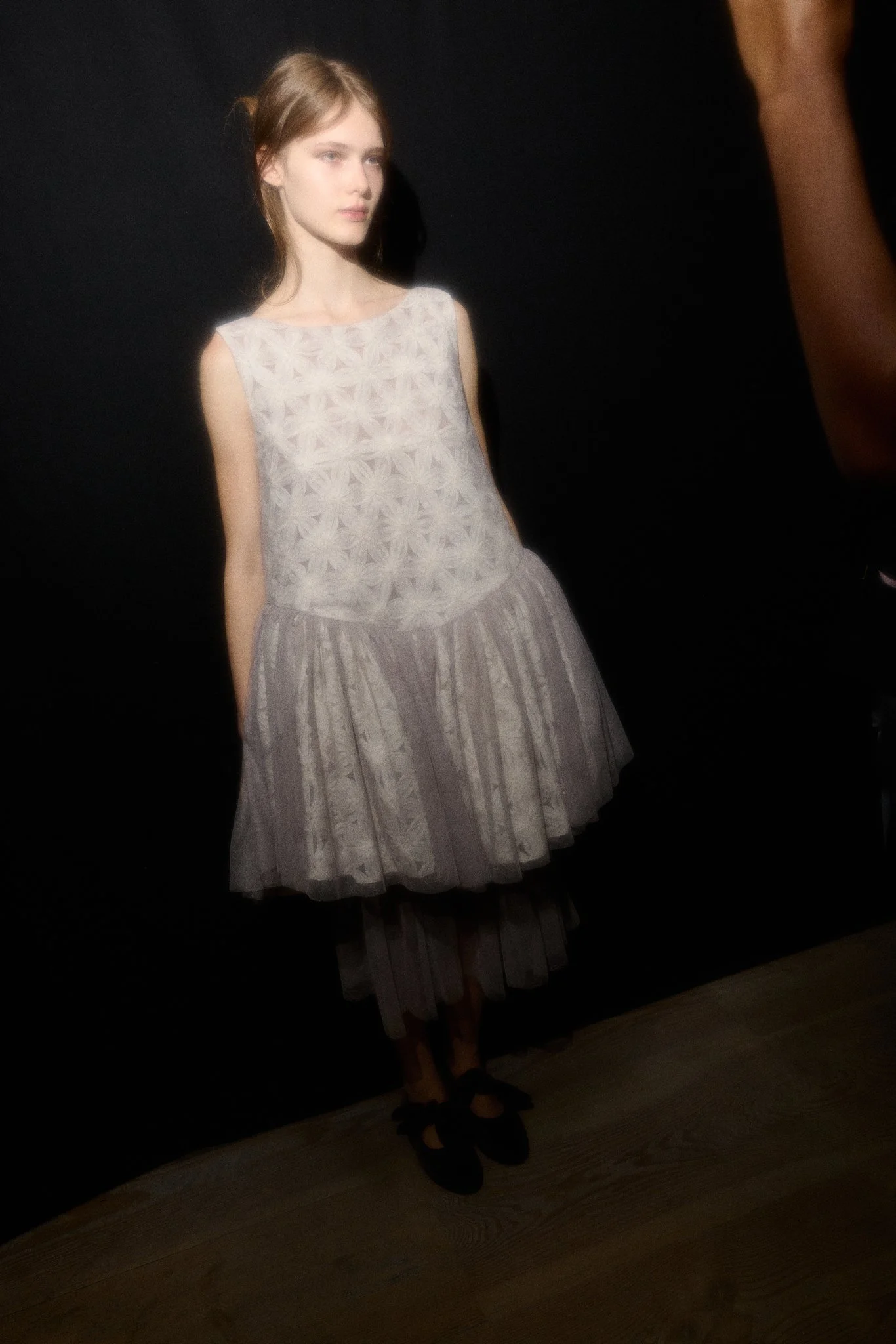
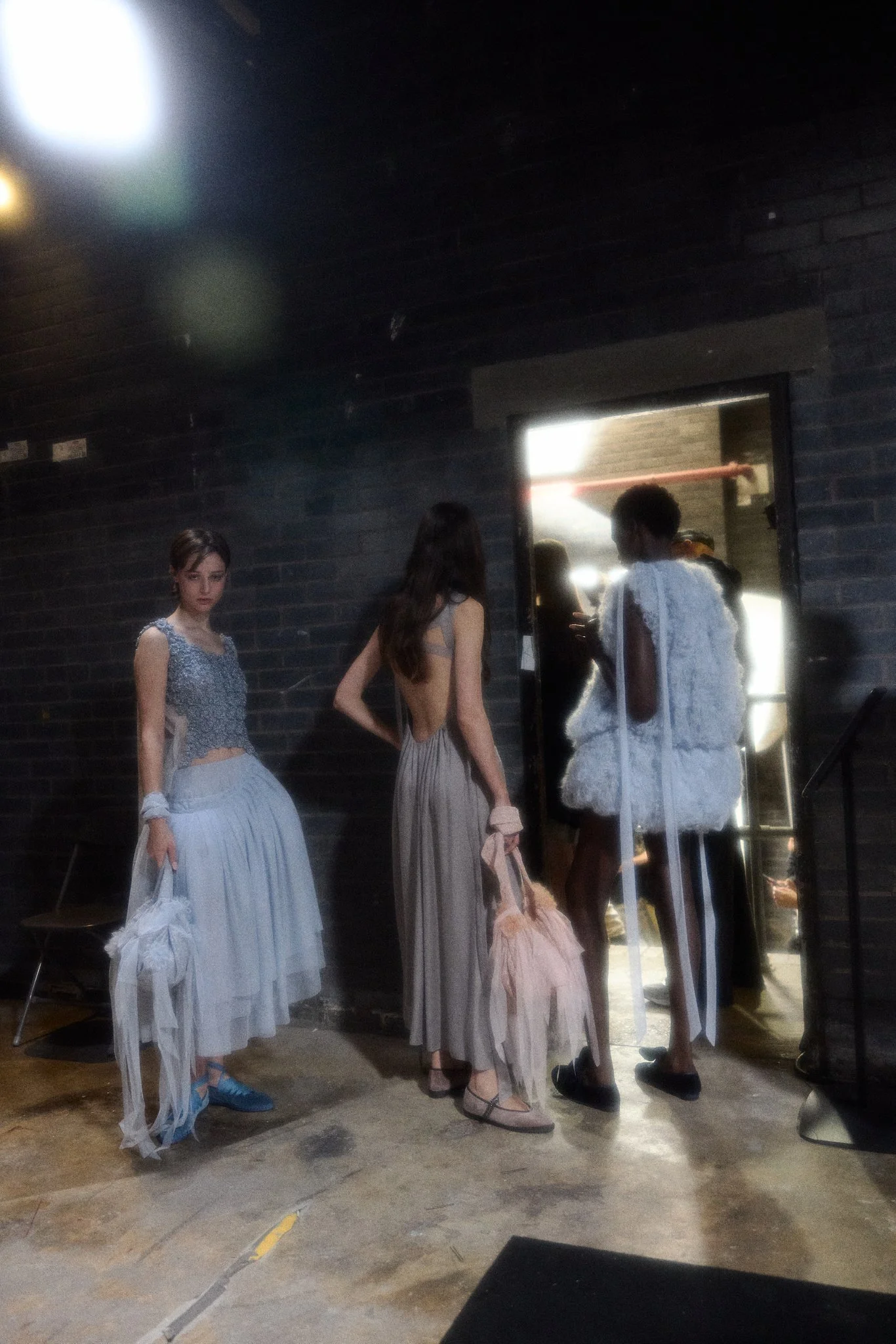
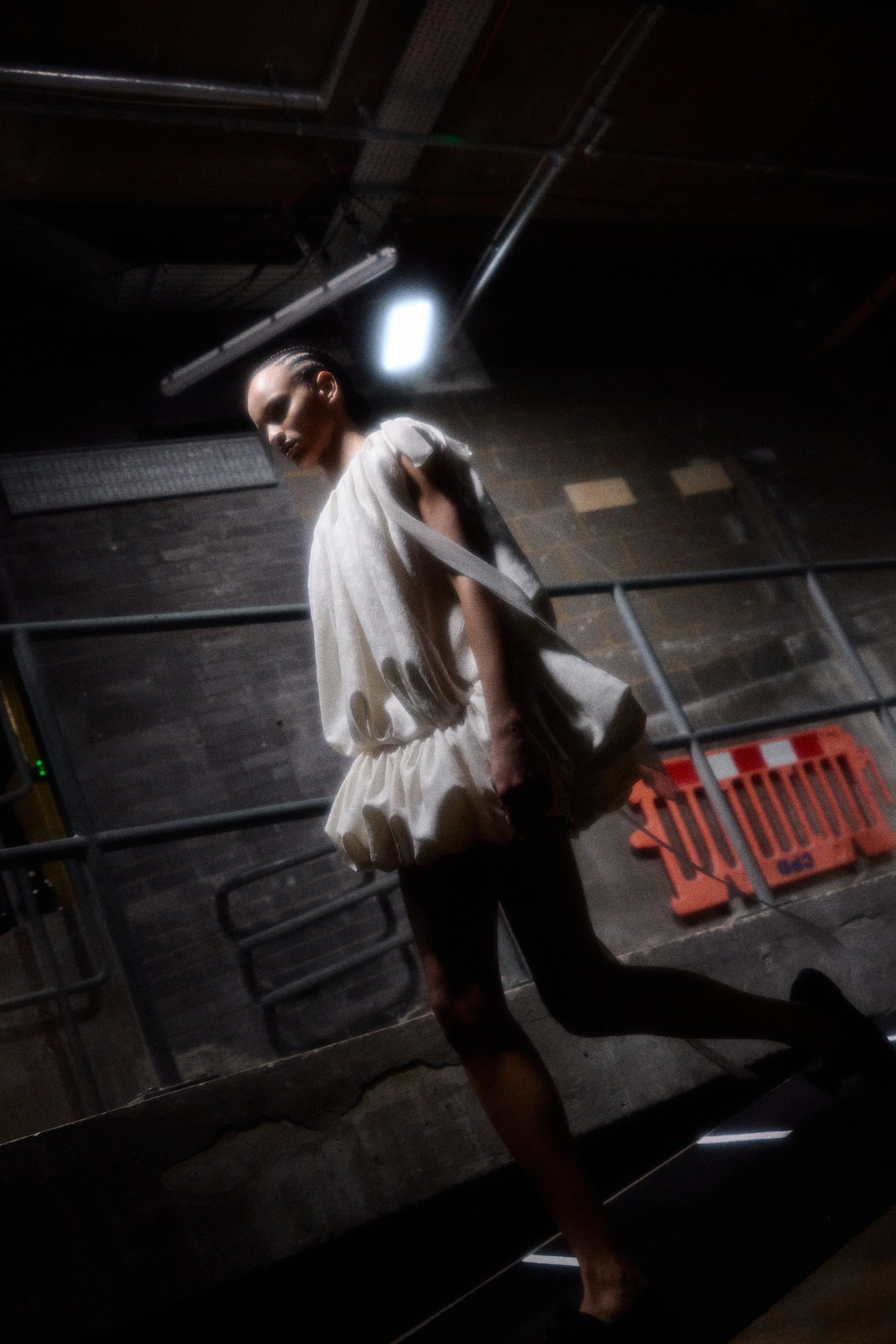
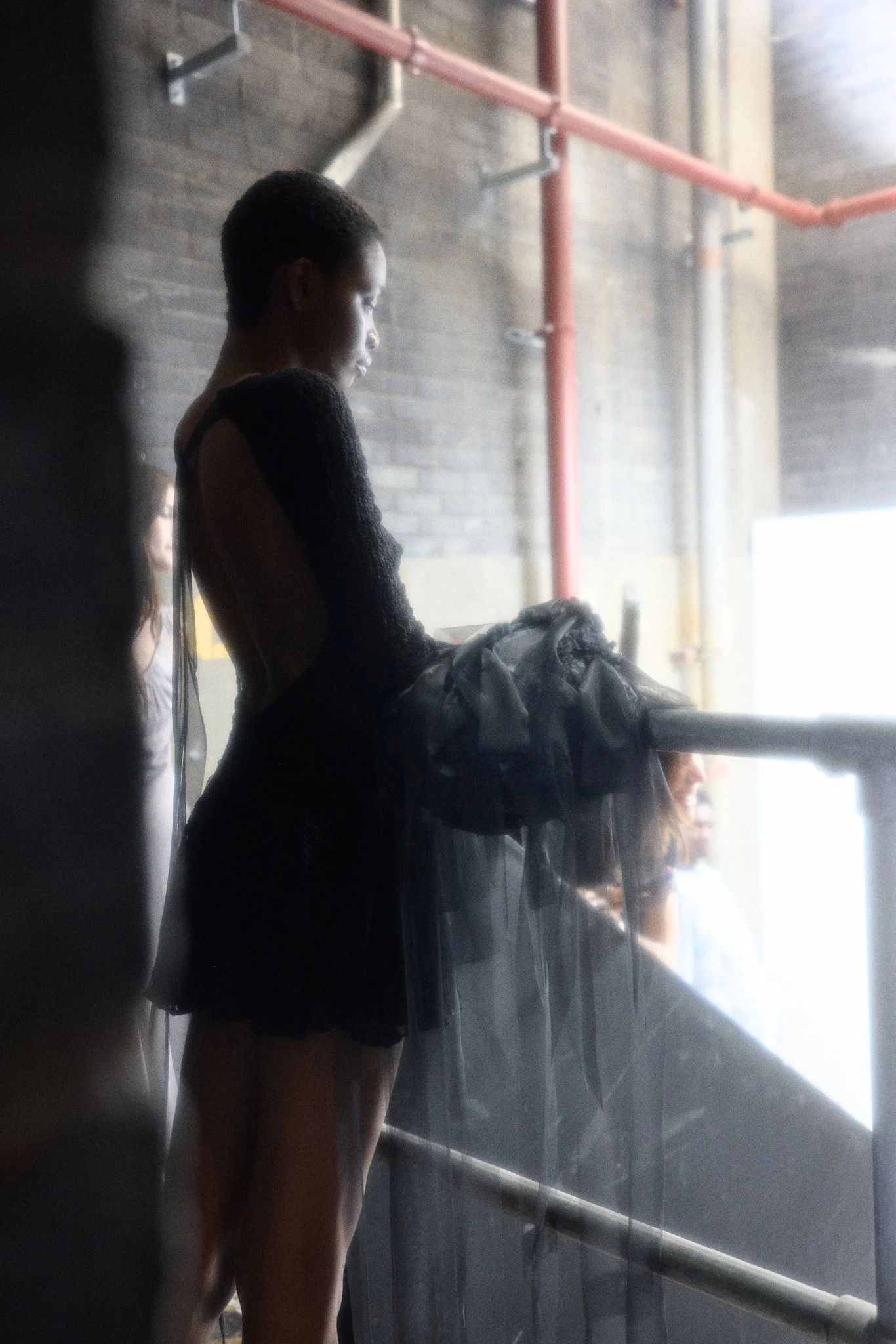
Silhouettes are exaggerated, be that in the organic drape of a sleeve, the shrunken proportions of a bolero or the sweeping structure of our take on a tutu, where our textile ‘tears’ are draped through its layers. Fine spaghetti straps bind a top together, tulle and lace bow ties flutter behind the wearer. The elegant ‘Petra’ neckline, a curved and puckered wide ‘V’, is found on a fluid cupro-rayon slip and a blush lace and tulle dress. Diaphanous fabrics contrast with tweed jacquard; ribbons criss-cross behind the shoulders to sharp effect; full, bouncy skirts are worn with tops cut deep and low at the back.
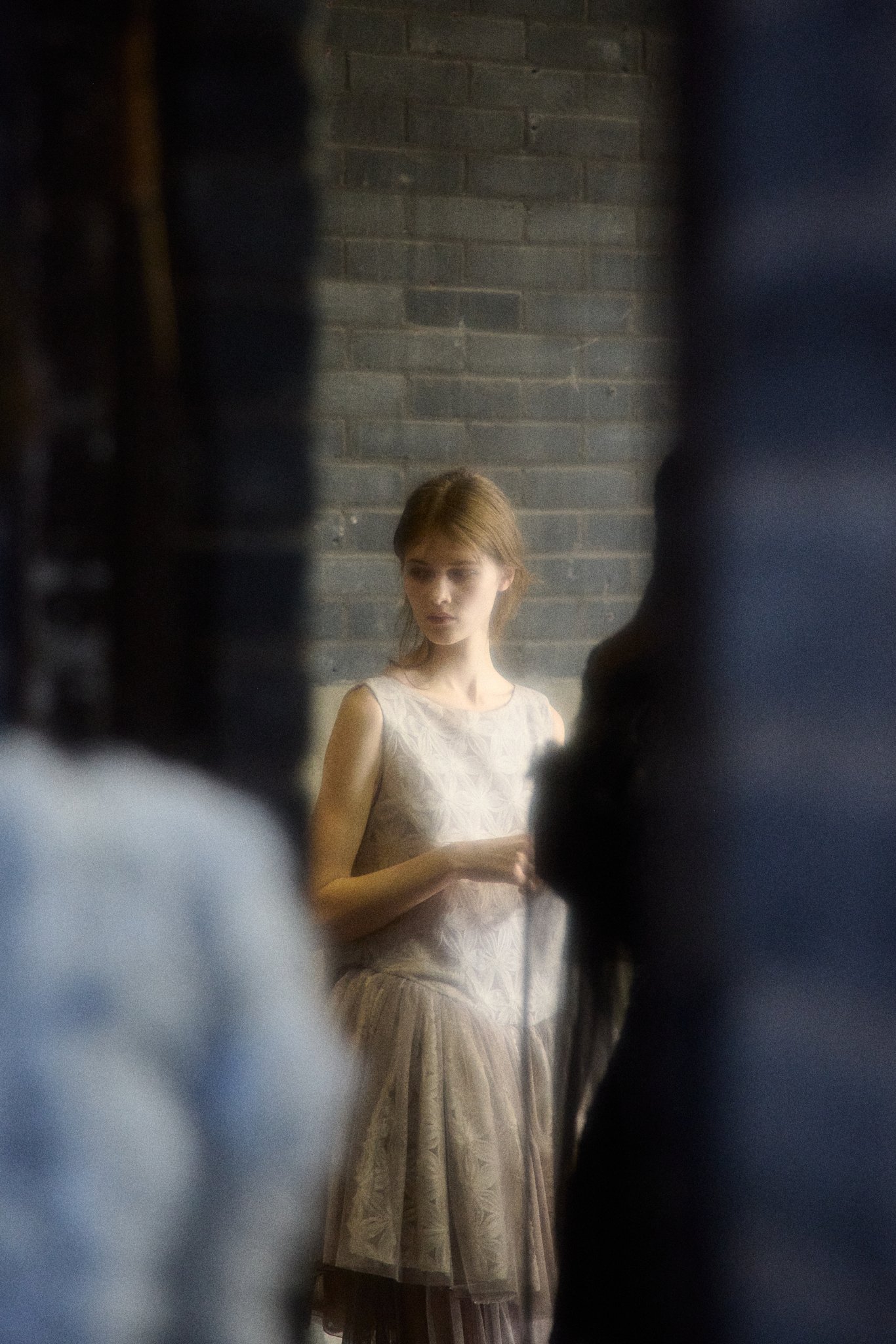
The colour palette is deliberately sweeter than previous collections, softer and brighter, with pinches of blush pink and peach invigorating the cool blues, black and white. There is a movement to the collection, the sense of a life lived in motion. Skirts are haphazardly hitched, dresses organically draped on the body, silhouettes are gently off-kilter and asymmetric. Everything is underpinned by an undone quality that is sur prisingly robust.
Every collection I do explores womanhood and is a celebration of independence. I hope Spring Summer 2027 invites her to assert herself without feeling the pressure to dim her femininity.