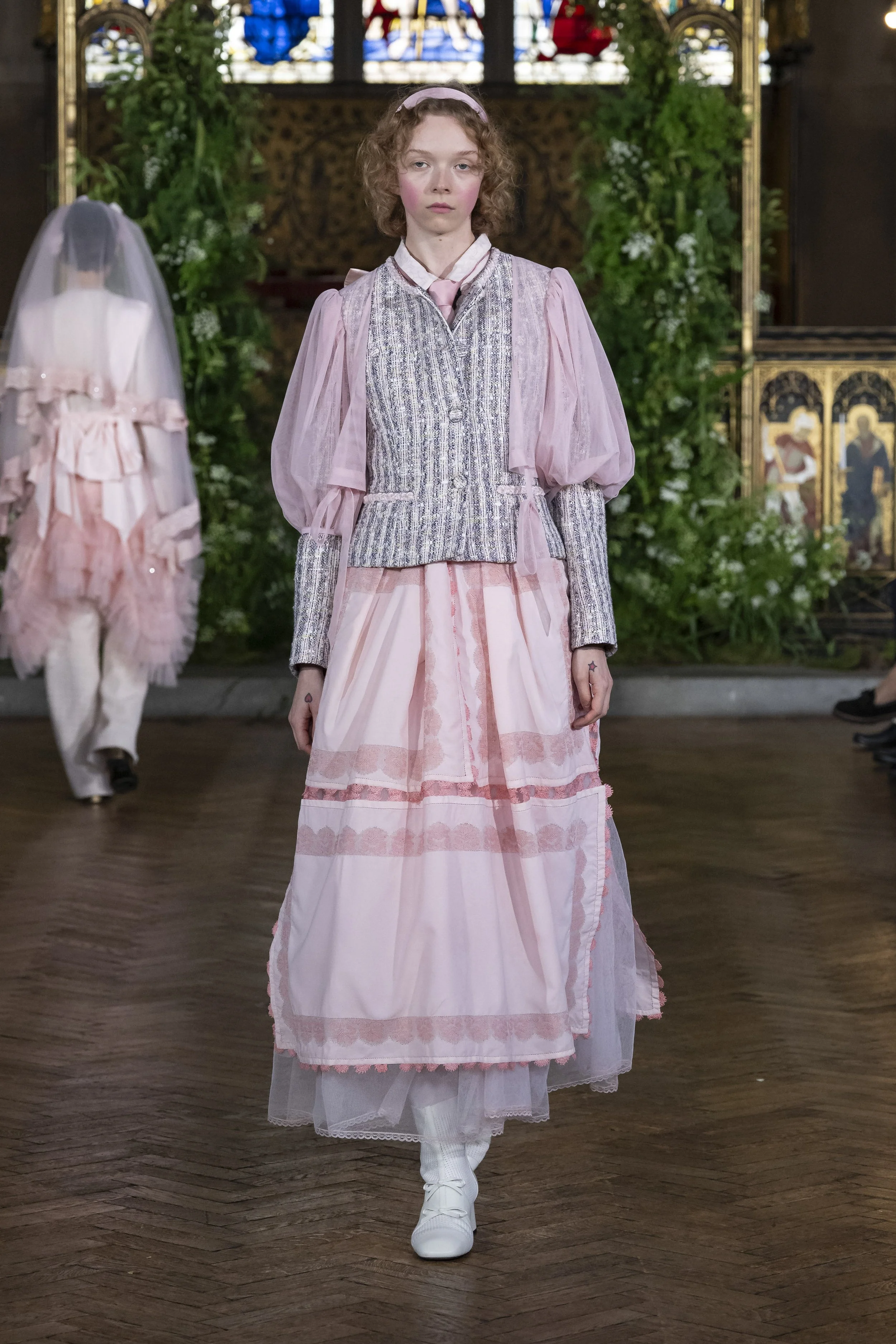
Bora Aksu SS27
Painting Women Back Into the Picture
Writer: Anya Duncan
Images By: Jason Lloyd Evans
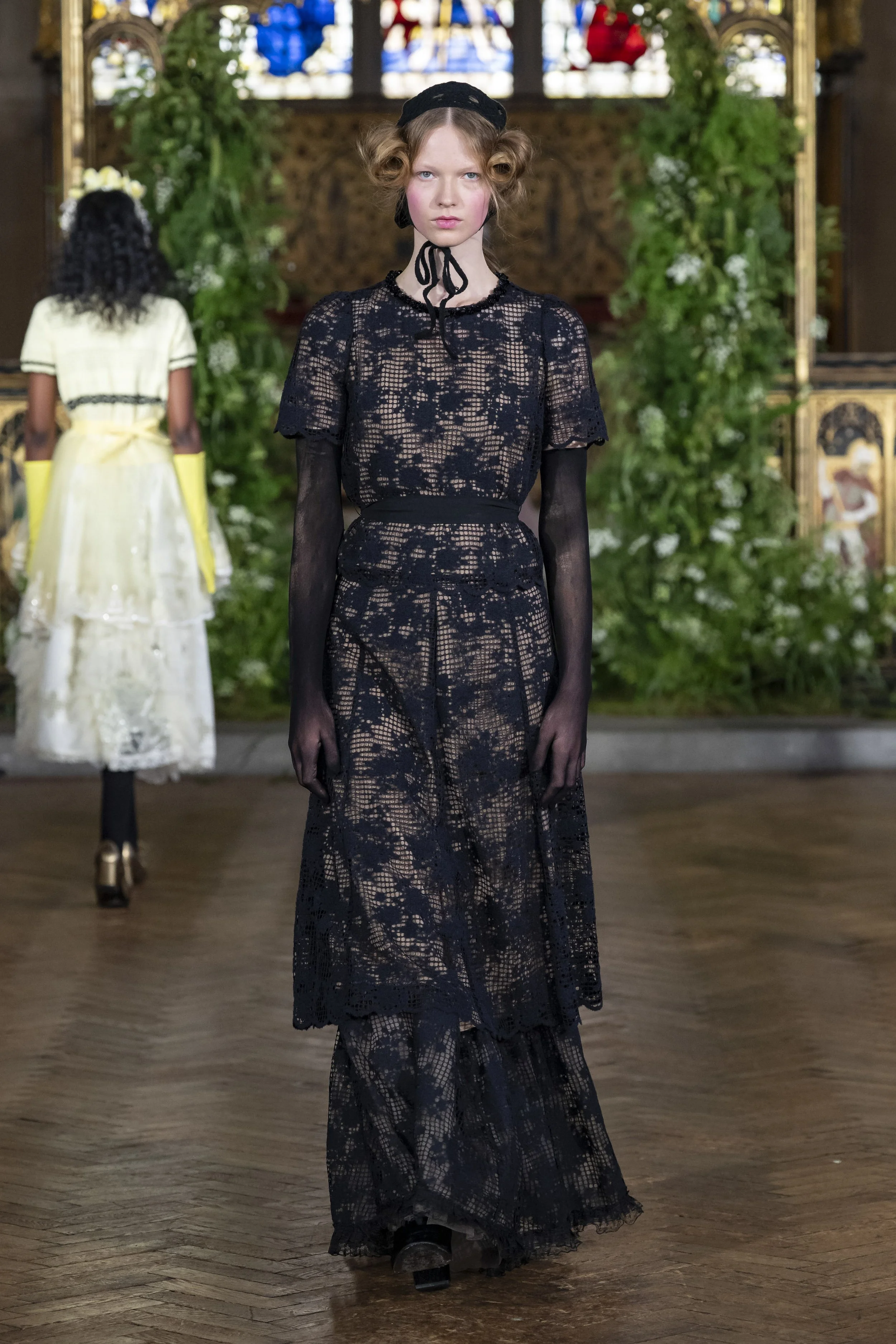
The setting for this show is drenched in Baroque imagery. This is no shock Bora Aksu has habitually paired his airy designs with the most sturdy of backgrounds for the runway. Stone and wood, tulle and lace. This is what I expect.
This is what we all come to see.
In contrast with the stone pillars and steadfast wood, Bora Aksu’s designs lead with grace and flexibility. Romantic lines ruled a collection that fit exactly with the designer’s usual visual language. But beneath the bulbous layers and flurry of textures, Aksu is portraying the tensions of a different time. He is honouring one of the women who established herself amongst the arts: Mary Beale.
Working within the 17th century, Mary Beale was a prolific portrait artist who escaped the expectations of her gender through her art, painting nobility, figures of influence and church leaders in order to provide for her family. Here, the heart of Bora Aksu’s spring/summer collection became clear: honouring artists who capture a full image of society whilst remaining at the edge of its vision.
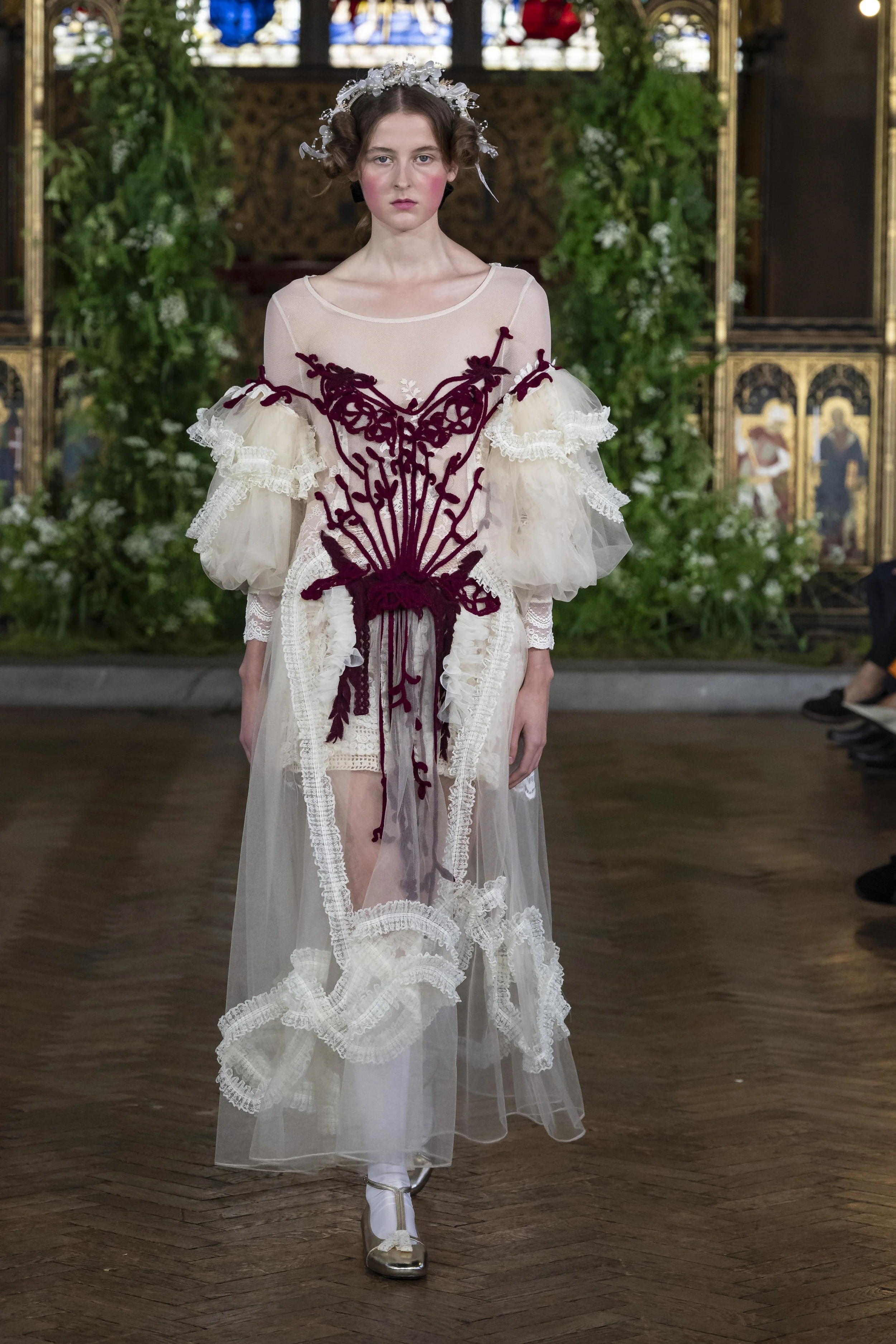
My favourite piece of the collection takes this tension and extrapolates it onto fabric. A gorgeous white dress, largely sheer, is interrupted by rigid white lace that creates box-like cut-outs around the legs, whilst dramatic bell sleeves encompass the model’s whole arm. On this garment rests organic shapes of burgundy. Like the church we all sat in for the catwalk, the bodice swirls in flattering patterns across the model’s stomach and chest until she is outlined like stained glass.
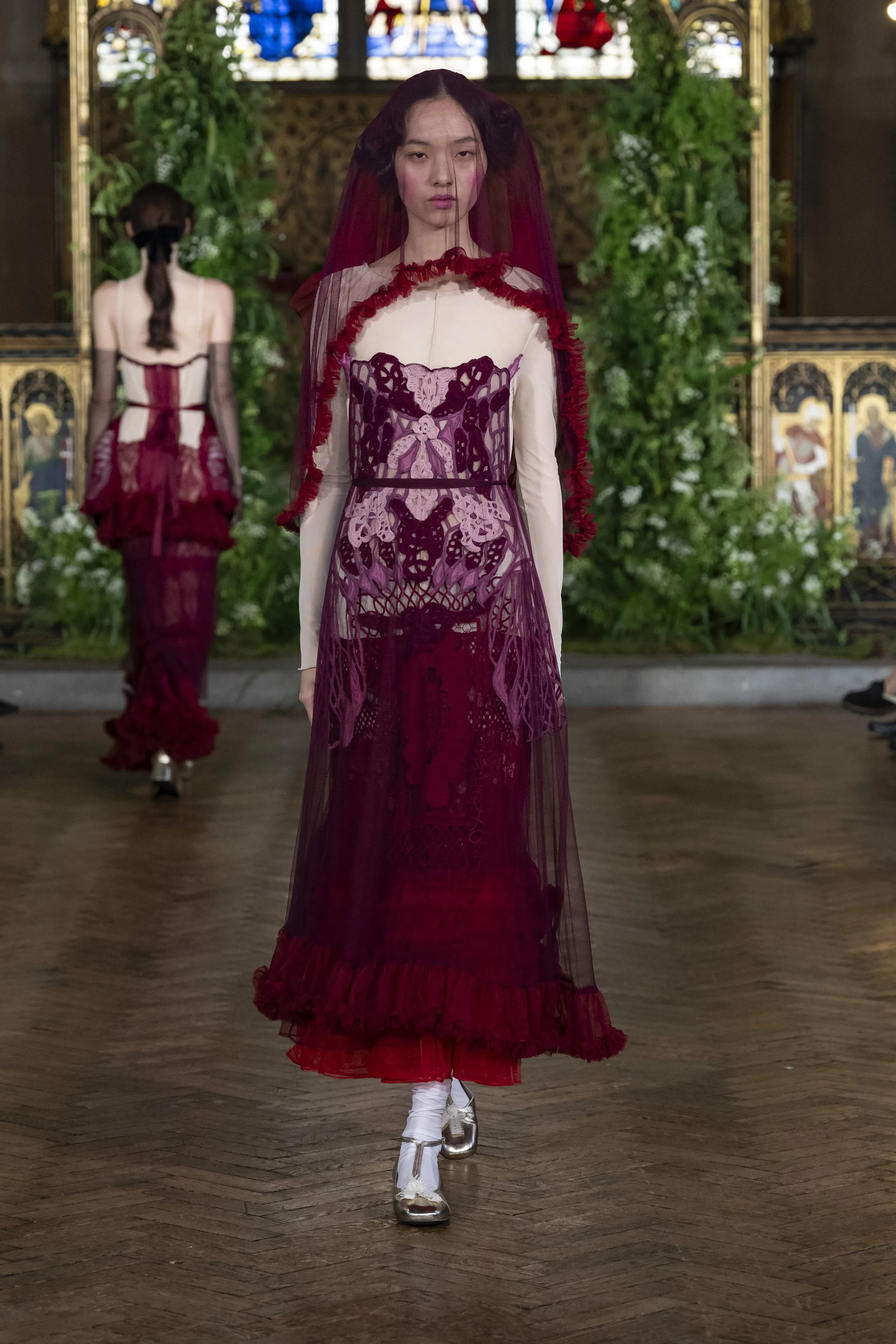
The embroidery technique that created these thrilling embellishments shares the same tension as Mary Beale: Antep embroidery, developed by the women of Gaziantep in Türkiye, whose extraordinary craft remains on the outskirts of fashion’s gaze. Here, it is finally brought to the centre.
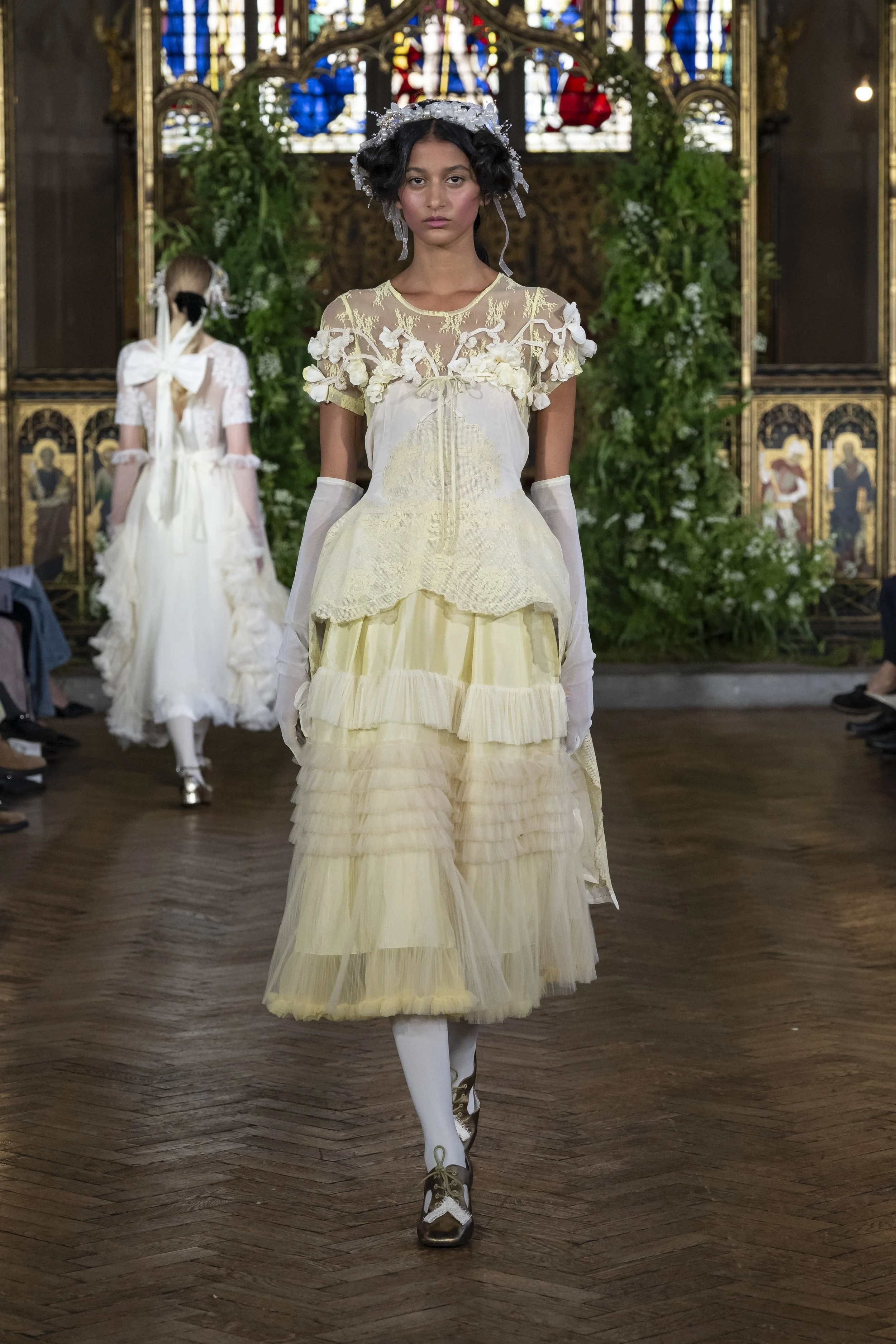
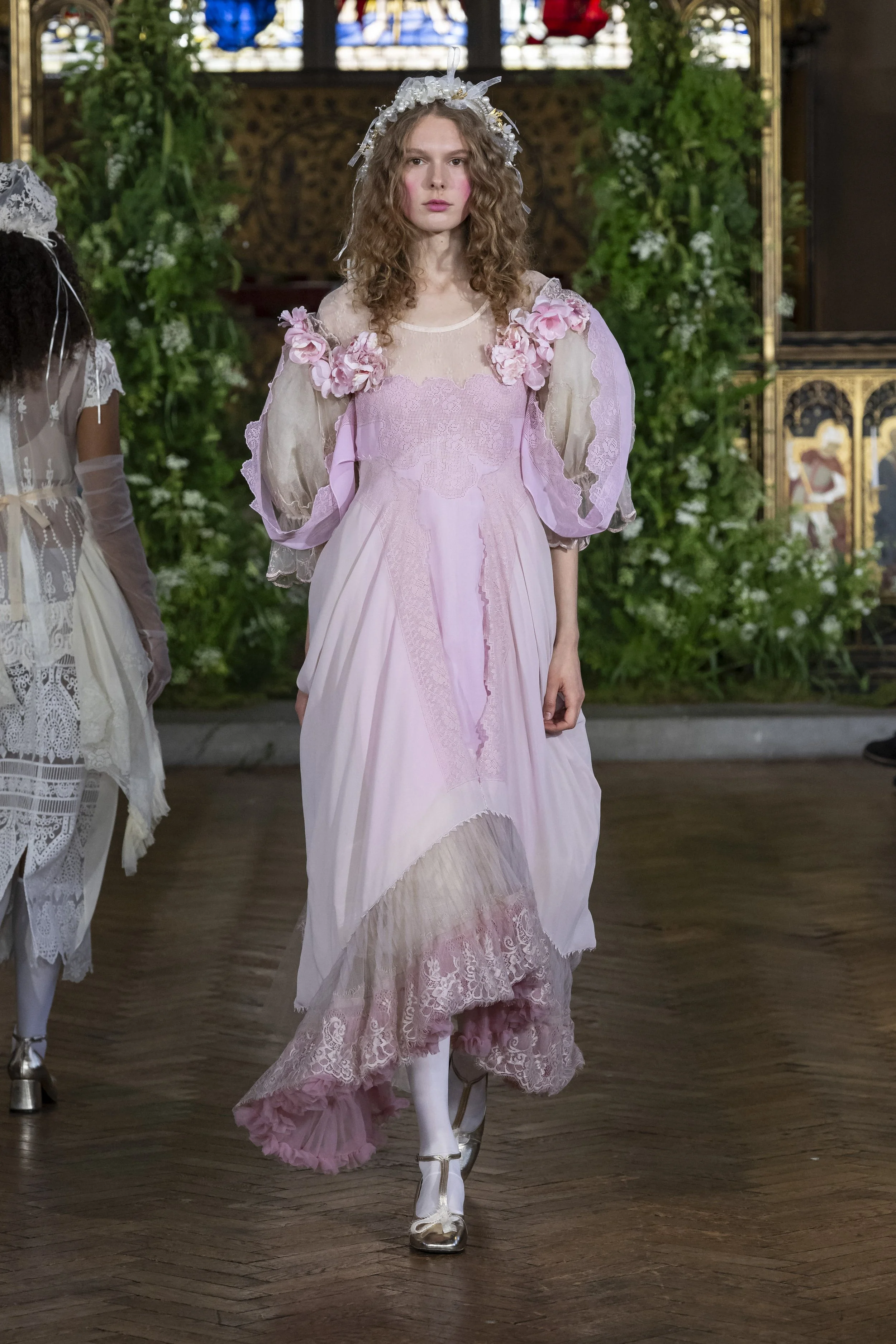
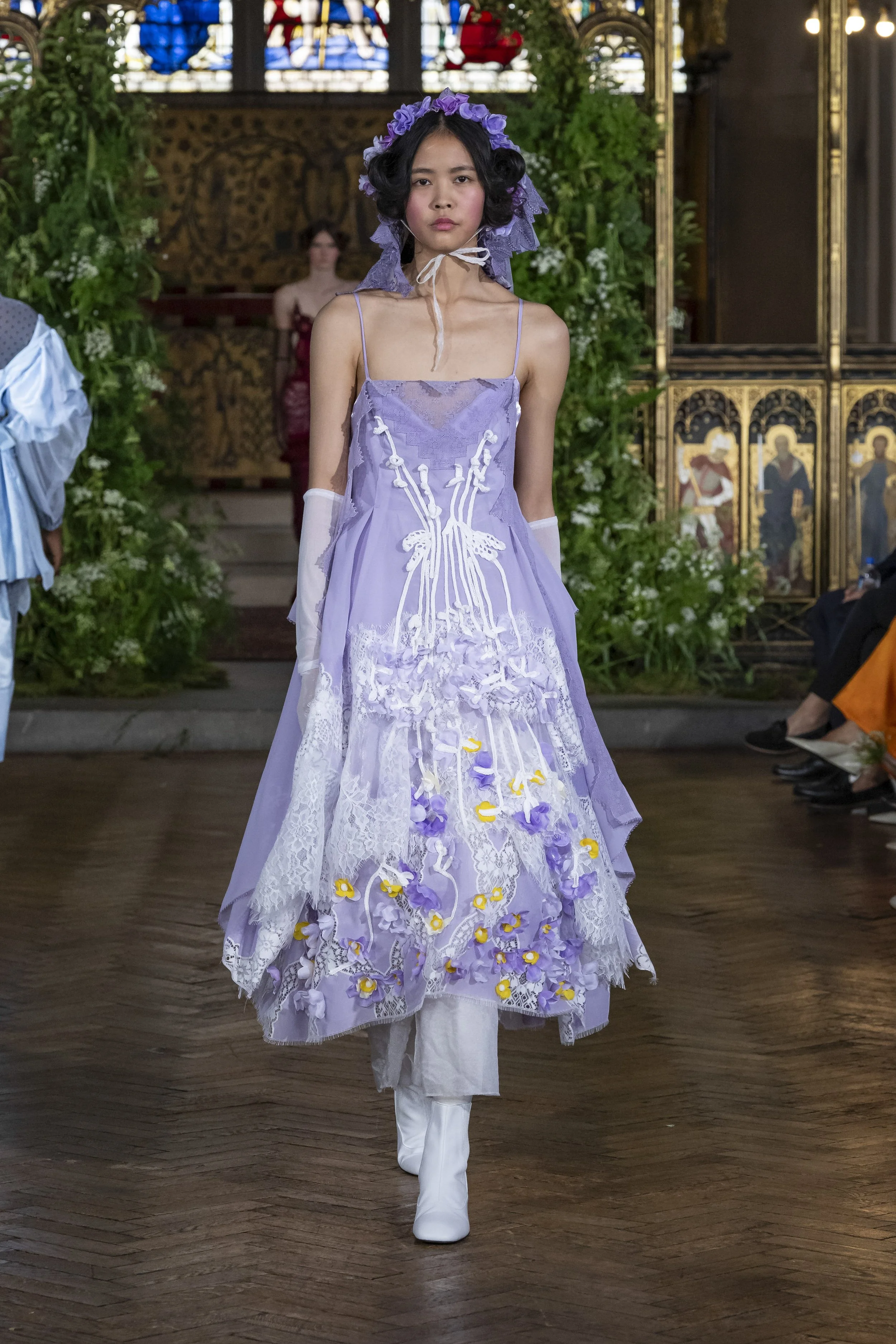
This conversation between softness and structure continues throughout the collection. A lilac dress carries the same ornate construction across its bodice before falling into an A-line skirt, where yellow and purple flowers are stitched amongst layers of lace. The colour is gentle, almost saccharine, but the construction beneath it is anything but. White lace spills from the body, whilst three-dimensional flowers seem to bloom from the fabric itself. It is a dress caught somewhere between a garden and a garment.
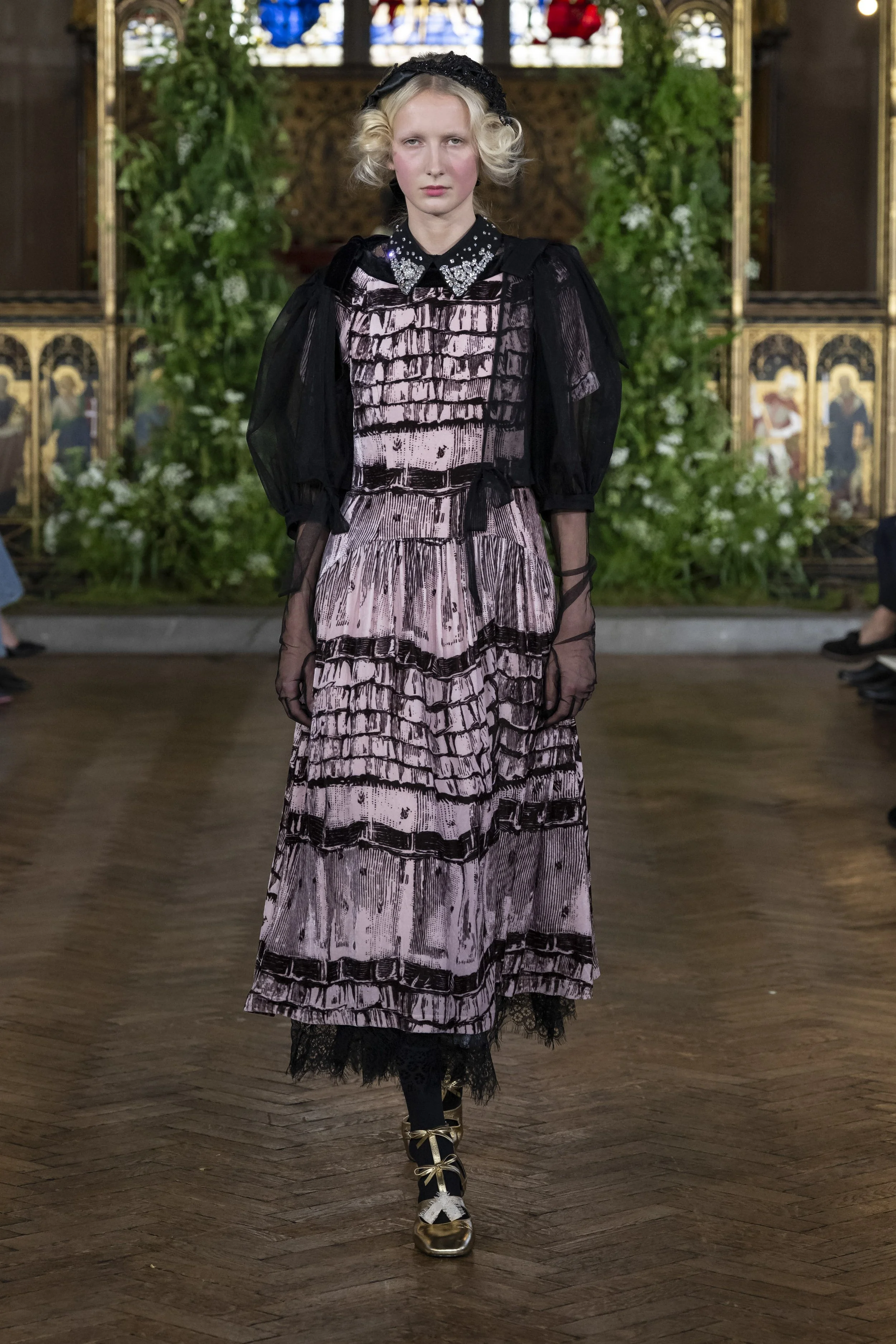
Then comes burgundy. Deep, rich and almost ecclesiastical, it gathers across sheer layers of fabric, embroidered with intricate floral forms and lace. A black belt cuts sharply through the waist, bringing structure to the softness below. Cream and yellow peek through the darker shades, like light finding its way through a stained-glass window.
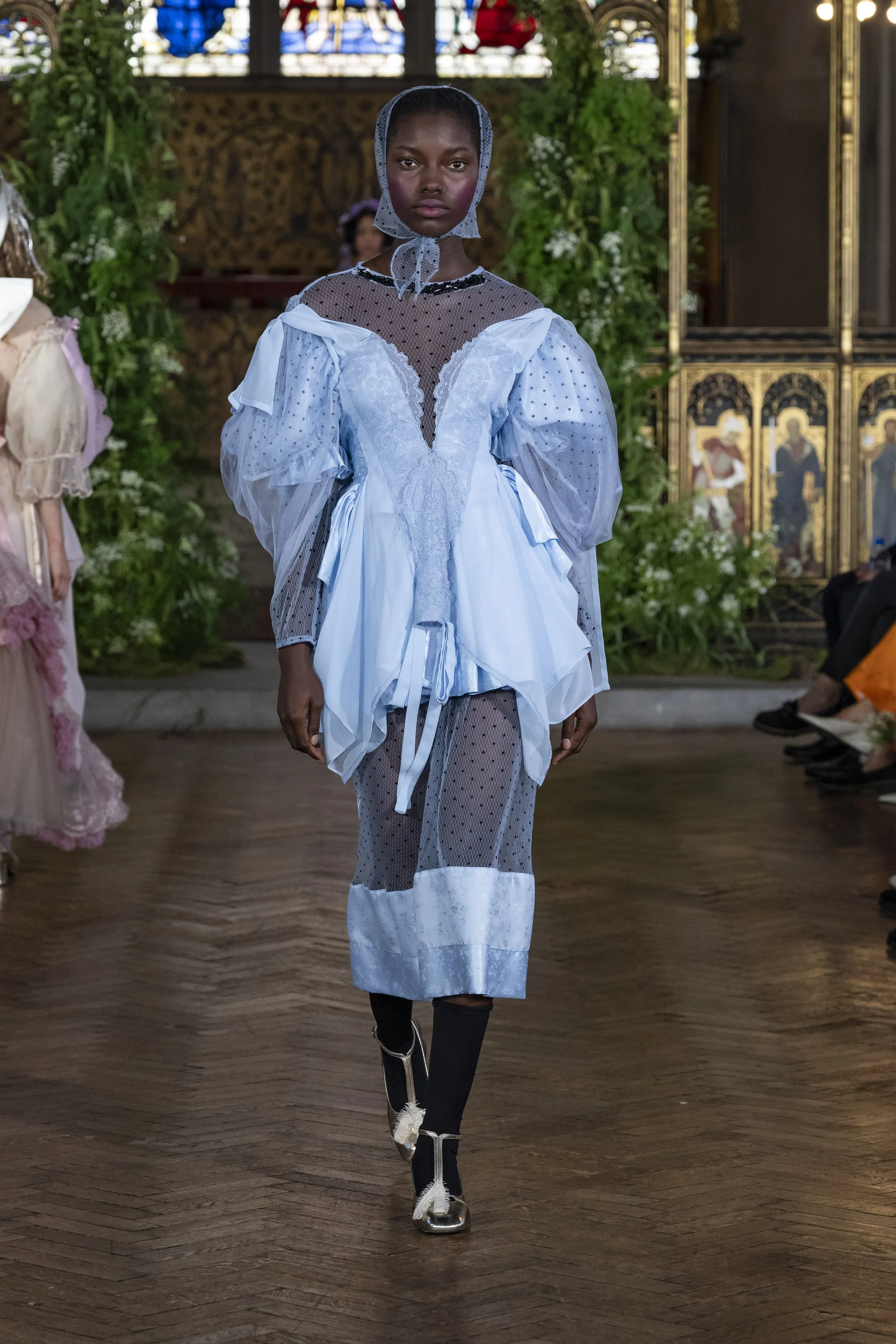
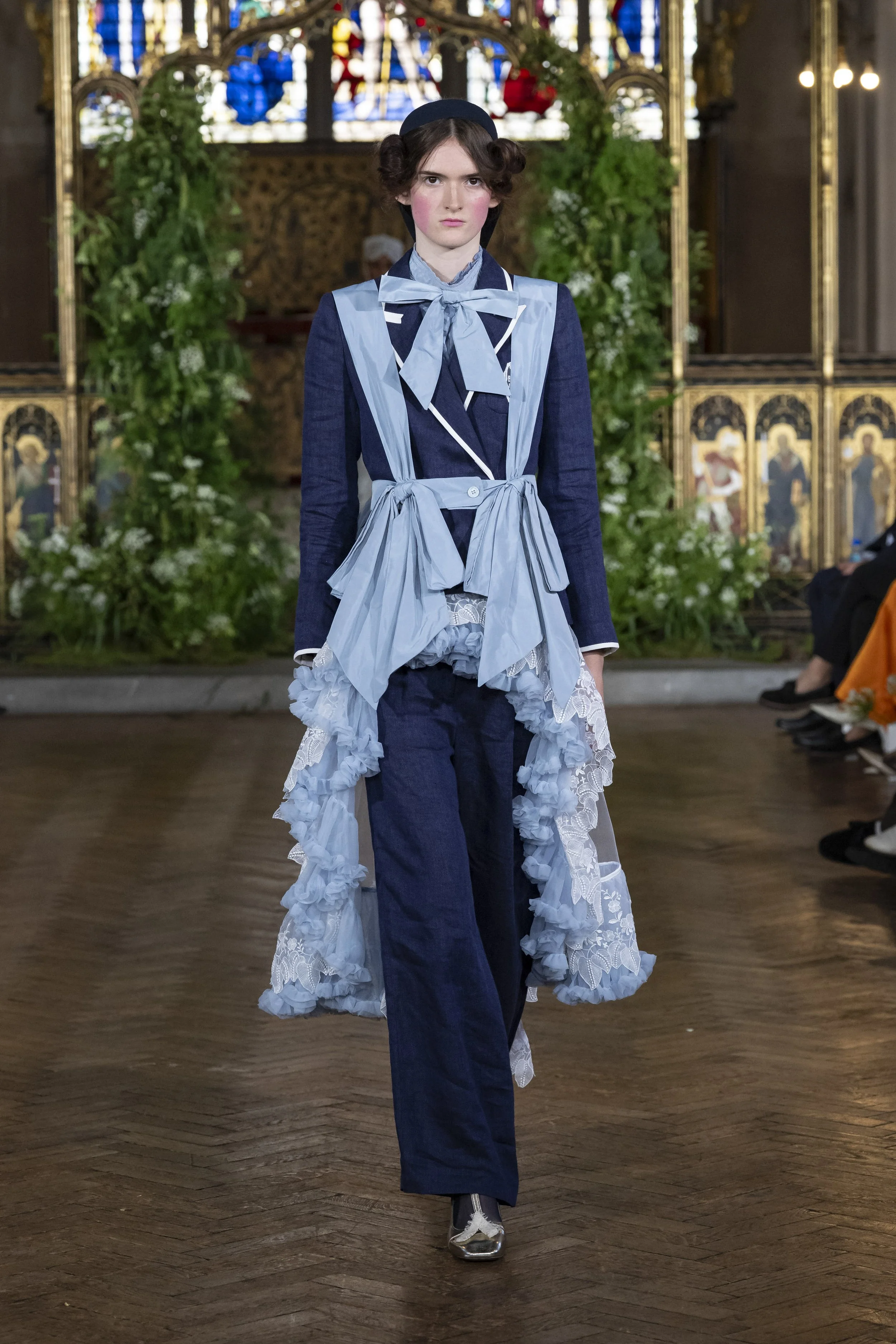
Besides these creams and whites sat moments of divine colour. Pastel purples and yellows use the same techniques. White lace accompanied these details to create a gentle caress of a dress; 17th-century tailoring and structure, once exclusive to men, now sits on female canvases.
There is something gently radical in the way Aksu approaches these traditions, if such an opposing concept even exists. Nothing is abandoned. Instead, everything is carried forward embroidery, tailoring, lace, flowers and given another body to live upon.
Like Beale herself, this collection takes traditional practices and turns them into something of its own. It asks: what are the bounds of old and new? Of art and the artist? Of the woman who creates and the woman who is seen?
Perhaps that is where the collection finds its most beautiful tension. In making clothes that look backwards, Aksu is not recreating the past. He is giving it another place to exist.