5000 SS27
Finds its Frequency
Writer: Anya Duncan
Images By: Phillip Raheem
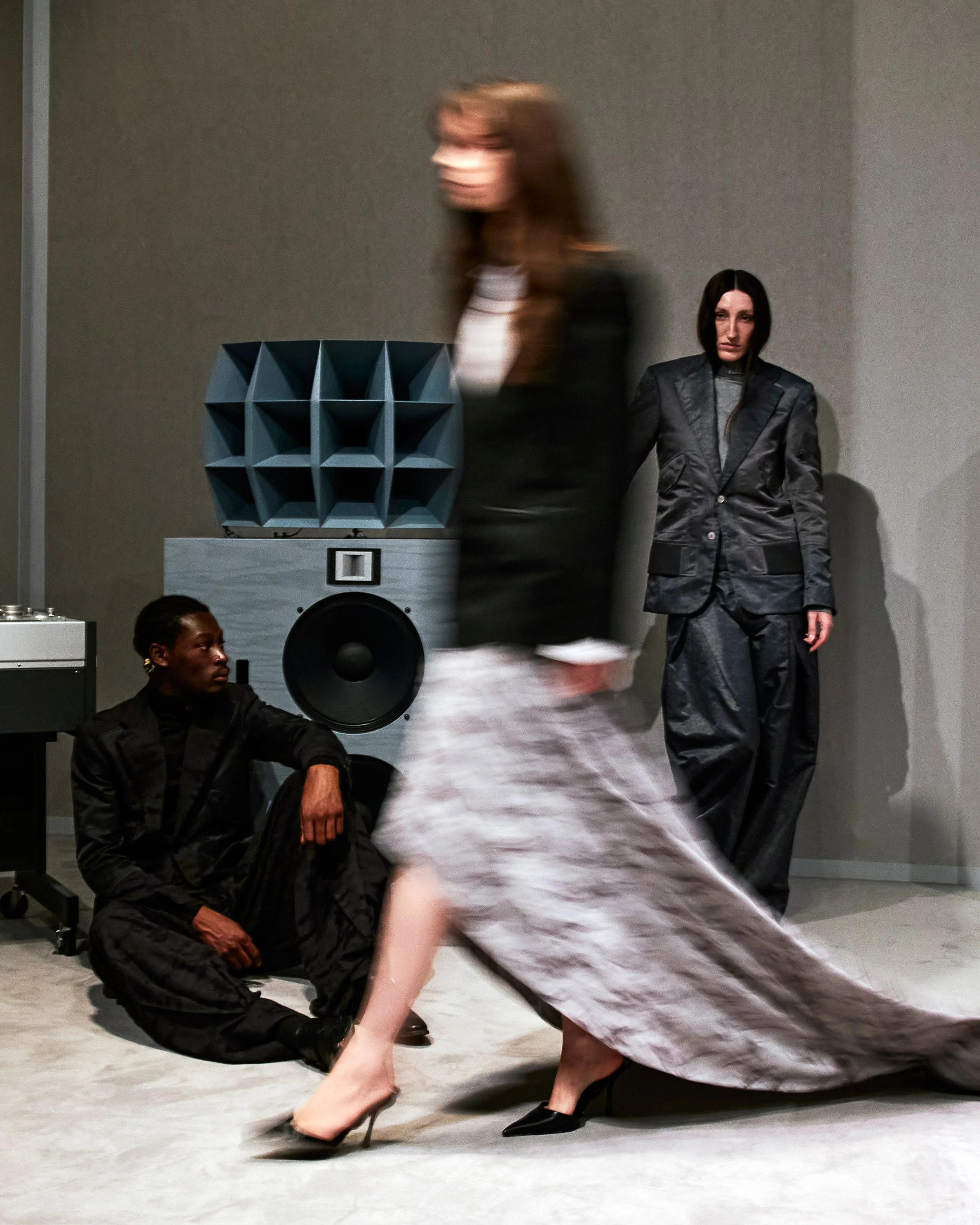
A bassline moves through the room before the first model appears. At 180 Strand, 5000 turned London Fashion Week into something felt through the body: jazz spilling from oversized speakers, vinyl records leaning against a central console, and a procession of grey tailoring moving steadily through the listening room.
Developed by Taylor Thompson during her residency as the Paul Smith Foundation designer-in-residence, the presentation unfolded as a multisensory sound bath, bringing together clothes, art and music in an experience that surrounded the body.
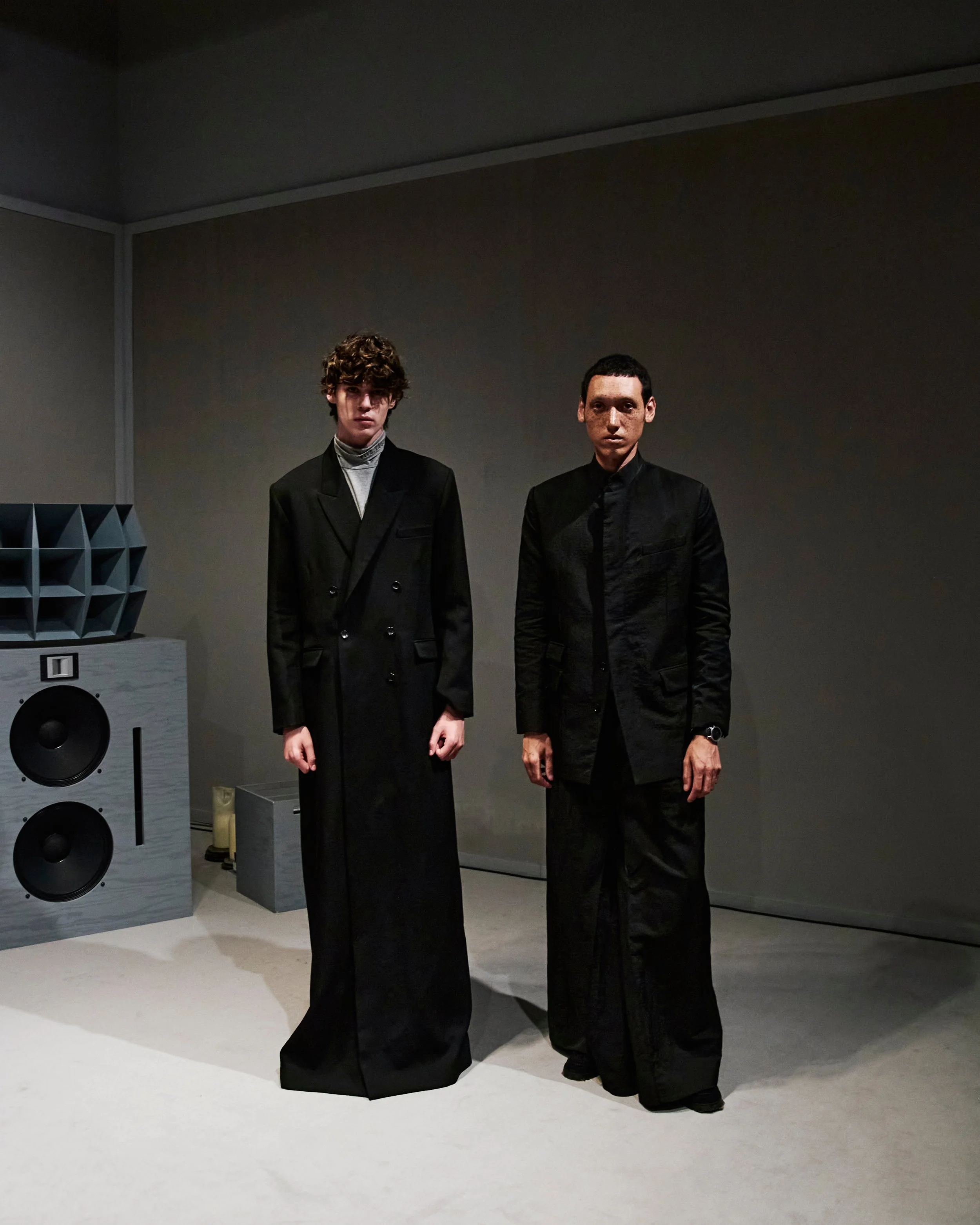
The room was stripped back and monochromatic. At its centre, a console table held a record player, framed by large stereo speakers and vinyl records propped casually against the furniture. It felt part listening room, part studio a space where sound had been given the same architectural weight as the clothes. Jazz filled the room as the models moved through it, giving the otherwise severe setting a pulse.
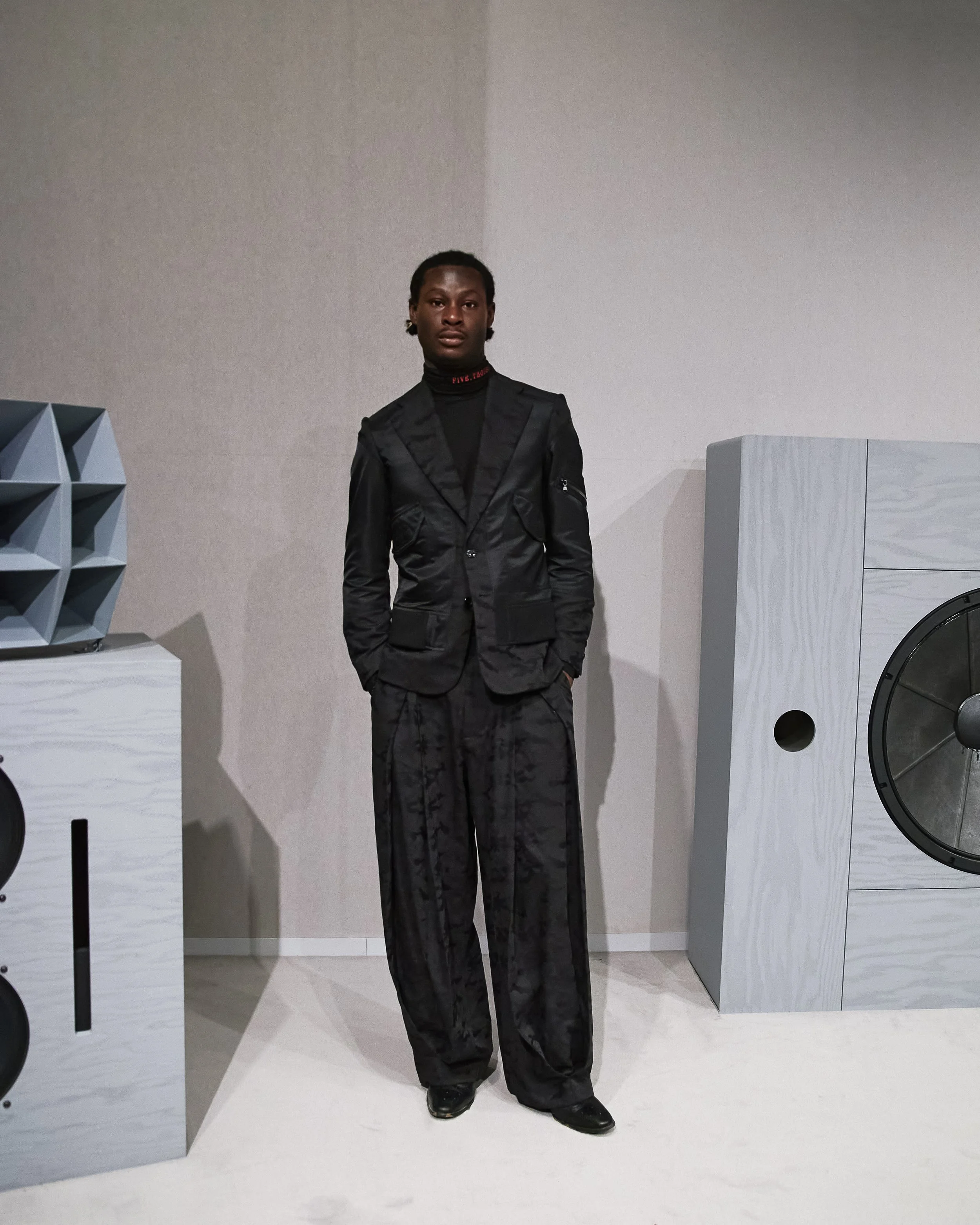
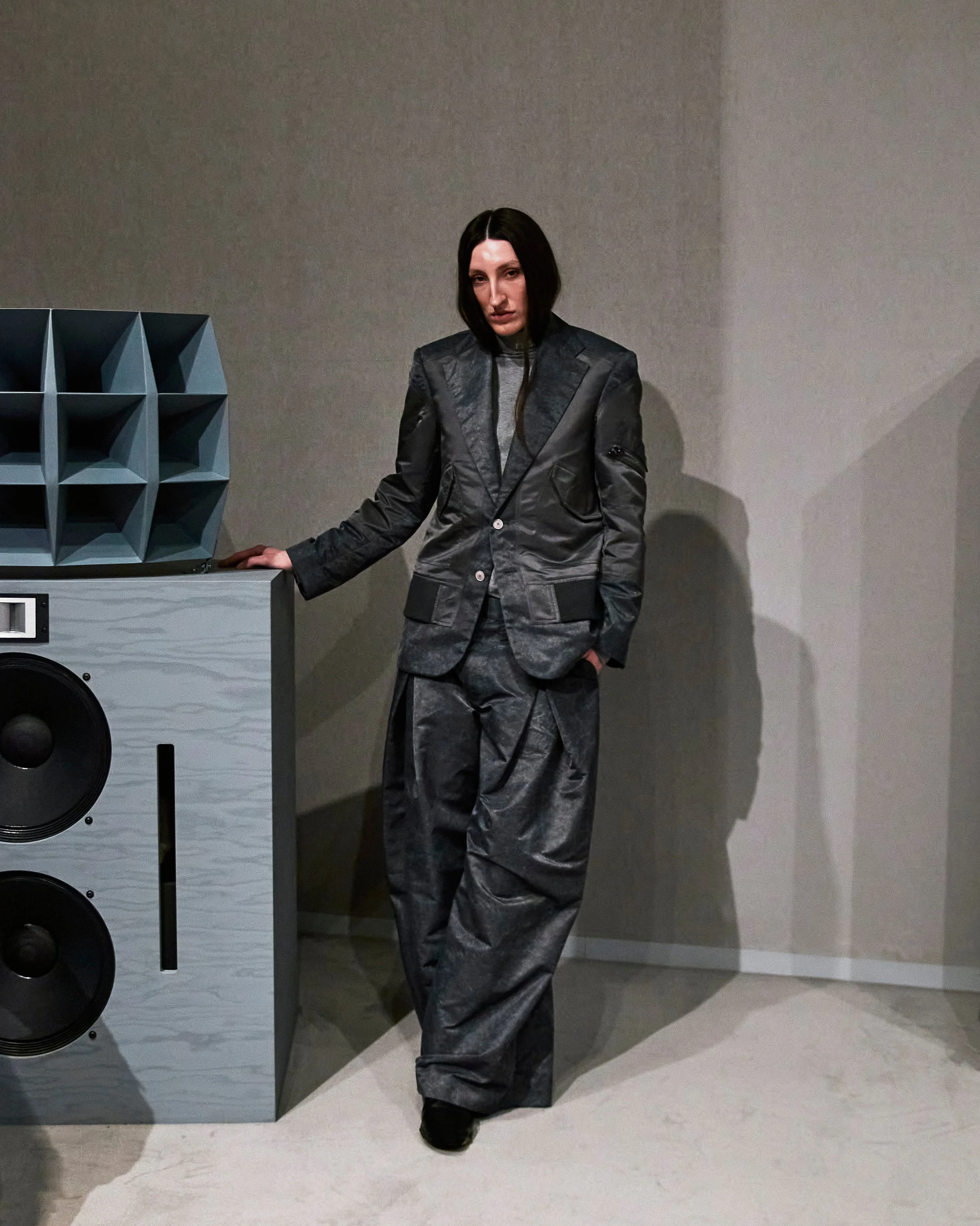
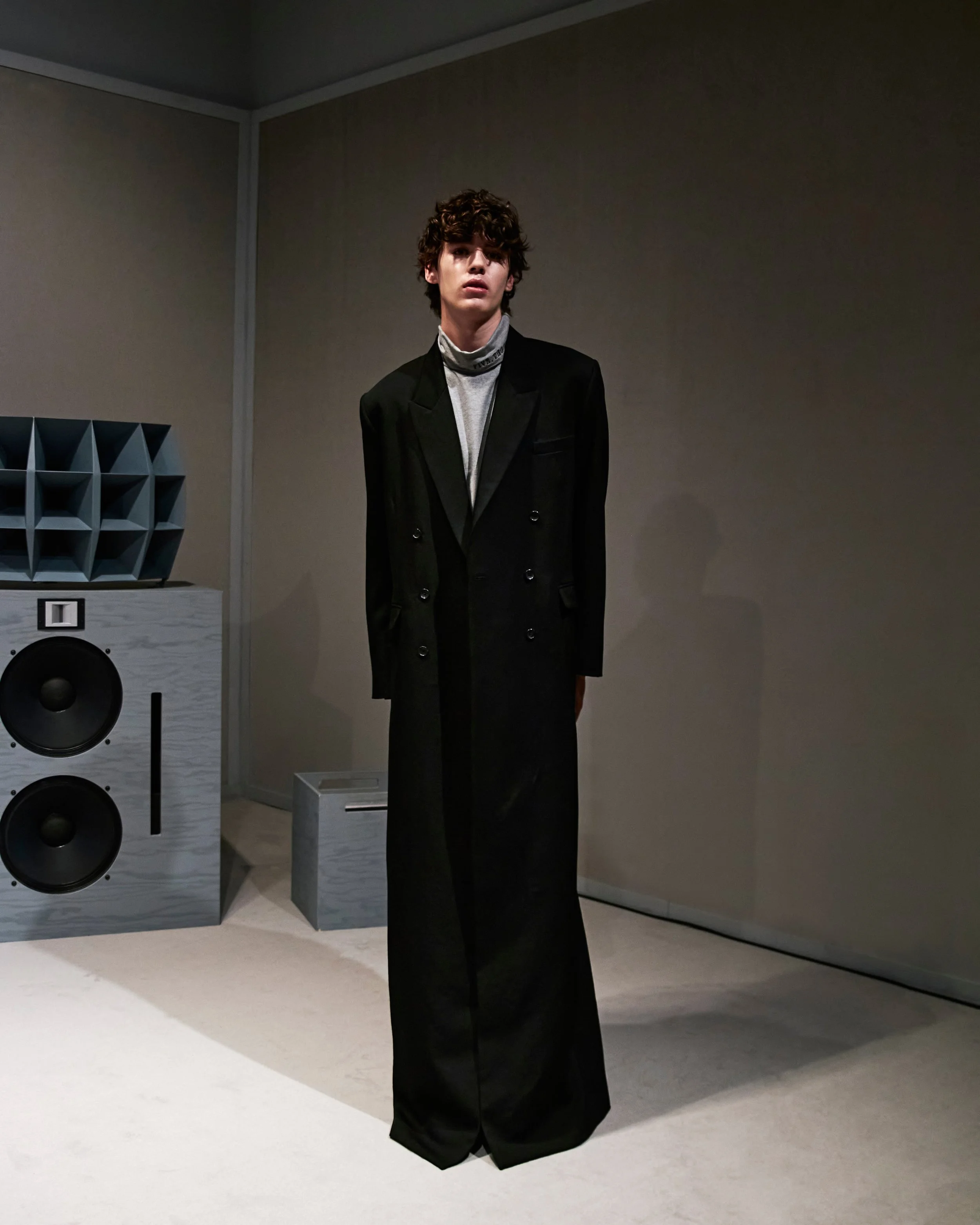
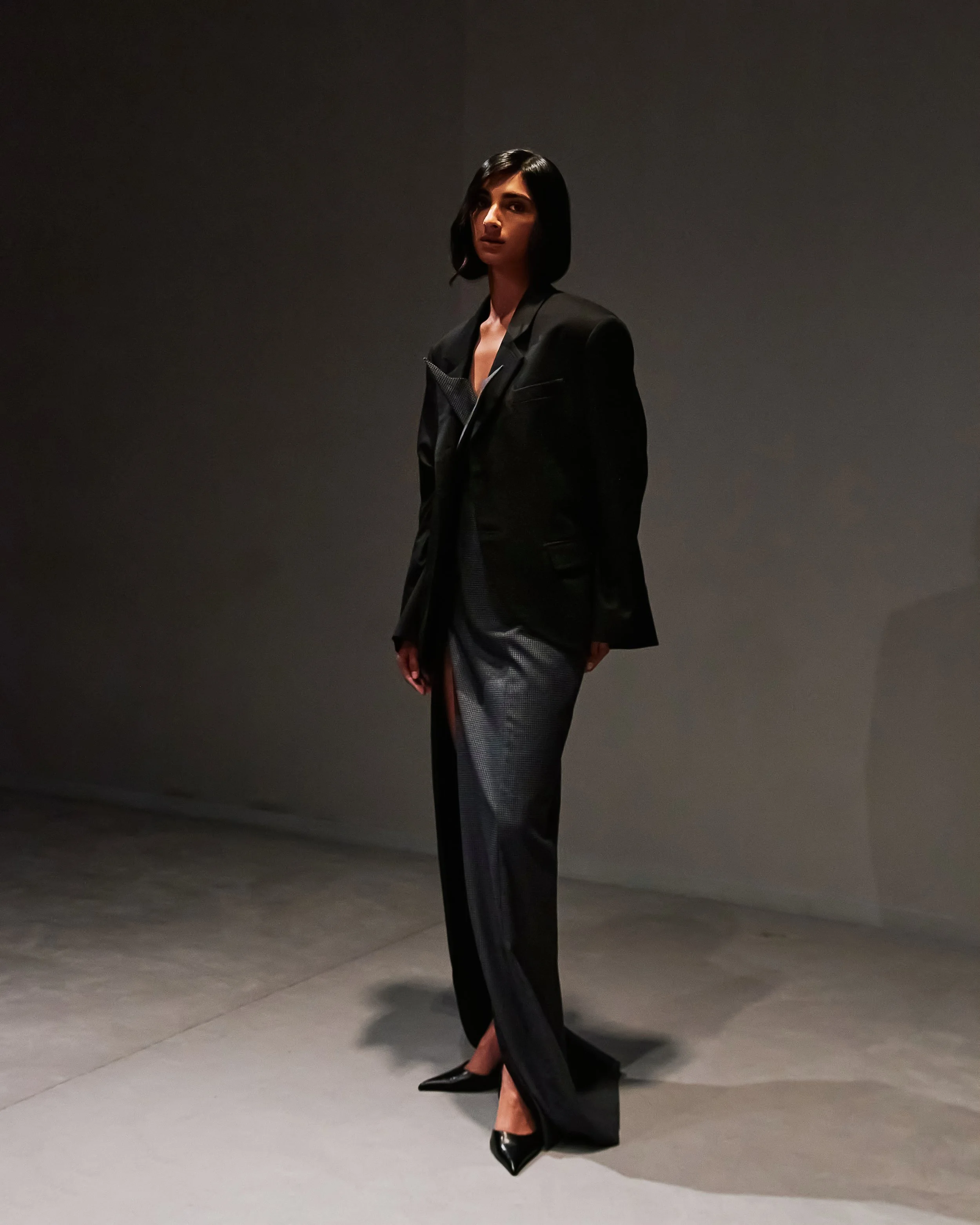
The collection followed suit. Everything seemed reduced to shades of grey, from charcoal to softer, almost silver tones, creating a visual language that was sleek, restrained and entirely assured. There was something almost corporate in its precision. Oversized blazers, tailored trousers and sharply constructed silhouettes suggested a wardrobe built for business, but one loosened from the restrictions of the office.
The models moved slowly through the space, their clothes catching the light as they passed. One look concealed a buttoned dress beneath an oversized blazer, its pleated collar accents just visible above the strapless neckline of the outer layer. It was a small reveal, but one that captured much of the collection’s appeal.
The clothes appeared straightforward at first, only to disclose another construction beneath.
Many of the male models wore variations on the same black silhouette. Seen together, the repetition was almost uniform, but closer inspection revealed the details that separated one look from another. Pleated folds travelled through the garments, allowing the fabric to fall away from the body with an ease that contradicted the tailoring’s initial severity.
That tension between control and release seemed to run throughout 5000. The silhouettes were oversized but not careless; the tailoring was precise but never rigid. Pleats became a mechanism for movement, giving structure somewhere to soften.
The sound bath added another dimension to this sense of movement. Jazz drifted between the speakers and across the concrete room, transforming the presentation from a conventional fashion show into something closer to an installation. The vinyl records resting against the central console seemed almost like props from a private archive, suggesting that the clothes and music belonged to the same world. One built around rhythm, repetition and restraint.
There was something satisfying about experiencing the collection in this way. Without the interruption of a conventional runway, the clothes had room to breathe. The repetition of grey, black and tailoring became meditative rather than monotonous, while the music encouraged attention to the smaller movements: a trouser folding at the knee, a blazer shifting over the shoulder, a pleat opening as the body walked through the room.
5000’s presentation made fashion feel physical beyond the clothes themselves. It was something heard through the chest, absorbed through the eyes and followed through the movement of the body. In the quiet severity of its palette and the steady rhythm of its tailoring, Thompson created a world where sound and clothing could exist on the same frequency.