Petra Fagerström: After Everything I Did For You
Words by: Abby Scarlett
Upstairs from her studio, a stone’s throw from Fleet Street, Petra Fagerstöm presented her AW26, After Everything I Did For You, with the quiet intensity of a dress rehearsal under clinical lights. Gorgeously scented with Byredo’s Tree House burning throughout- a subtle luxury not overlooked. A recent LVMH Prize nominee, Fagerström is building her practice on interrogating power with this season filtering it through the disciplined, militant world she once inhabited: competitive figure skating. I guess the 2026 Winter Olympics missed one final round of applause.
As the cultural afterglow of athletic excellence lingered, Fagerström turned attention toward those behind the podiums. Drawing on historian Michel Foucault’s notion of power as inherently asymmetrical, the Swedish designer holds close inspection of the power dynamics of coach and skater in translation of mother and daughter. In the waiting room over rich espresso, the show-notes read of “one holds expertise, authority and memory; the other embodies learning, vulnerability and aspiration. One is doing, one is watching”.
A former prodigy herself, Fagerström articulates empathy with the label’s residual pressure and hostility. Channelling unfulfilled ambition into the skater, the mother sees the skater as a vehicle through which to live vicariously. Risking dissolving her own identity, the mother is reduced in cultural narrative to caricature or villain, the evil stepmother to Snow White, image of self eclipsed by the daughter. Pressing pause on this villainisation, Fagerström’s AW26 is the mother’s own portrait, sympathetic to her pride for her daughter’s skill as opposed to envy.
After Everything I Did For You suspends itself in the limbo between perfectionism and practicality- between the rhinestone fantasy of competition dresses and the utilitarian warmth of rink-side parkas.
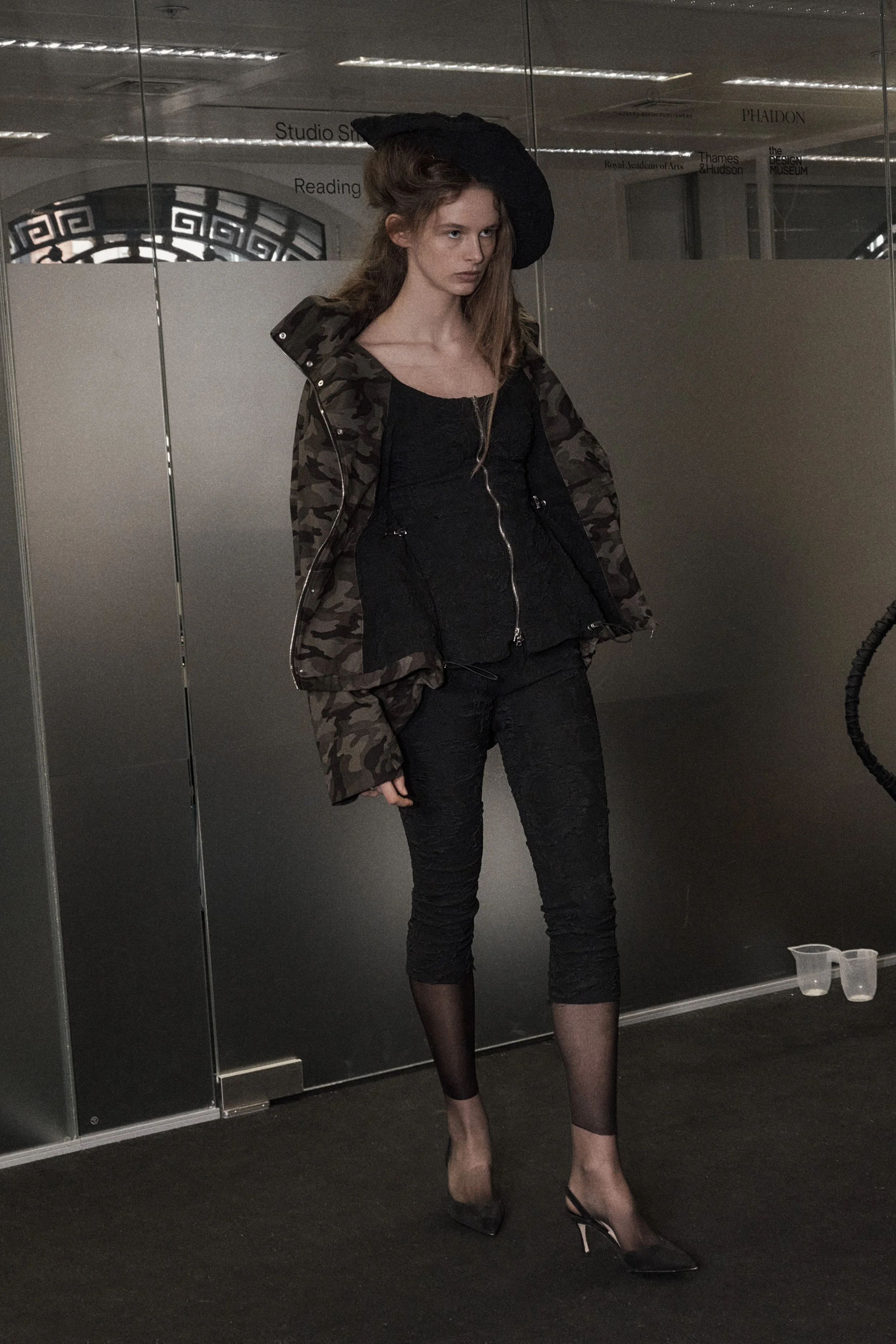
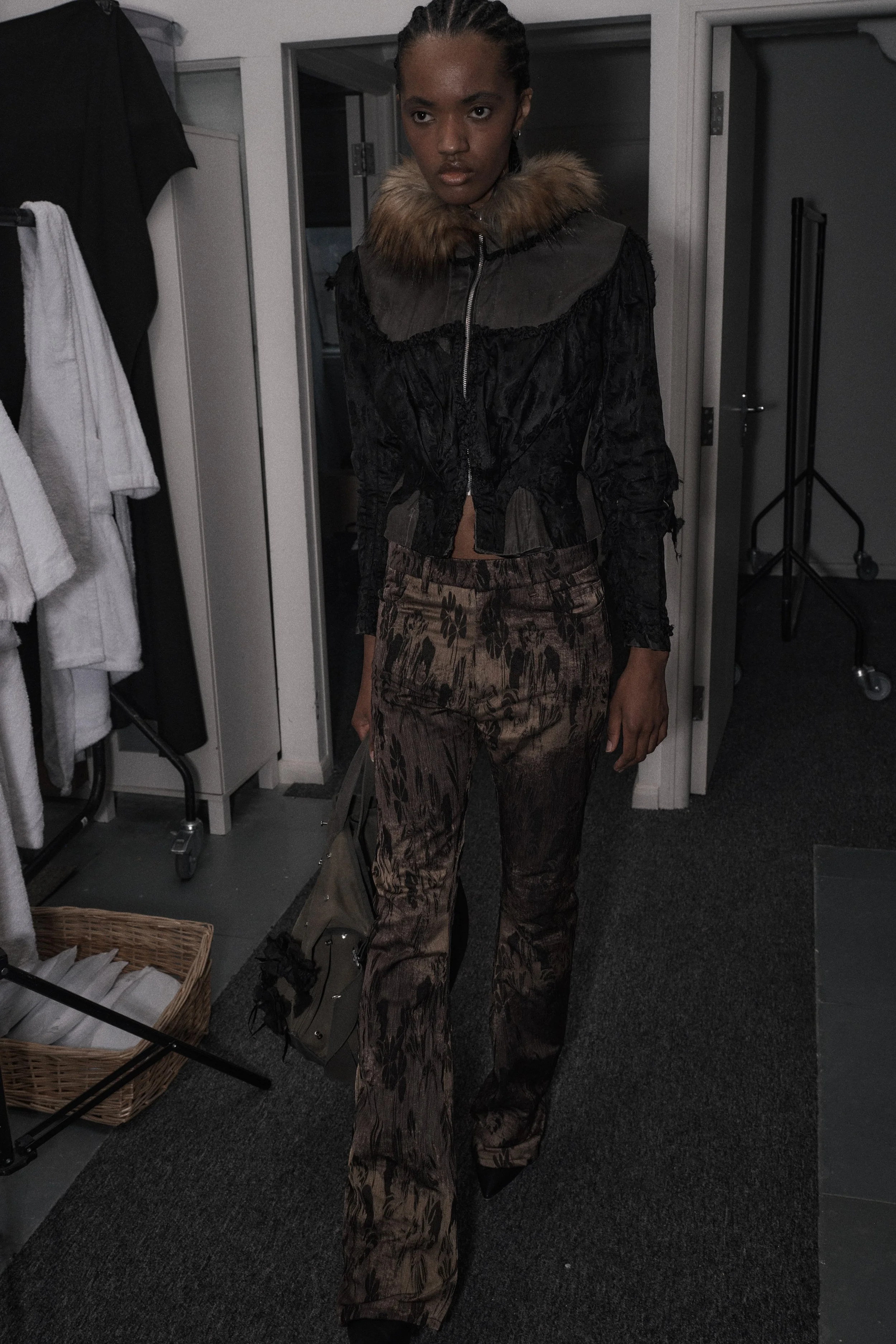
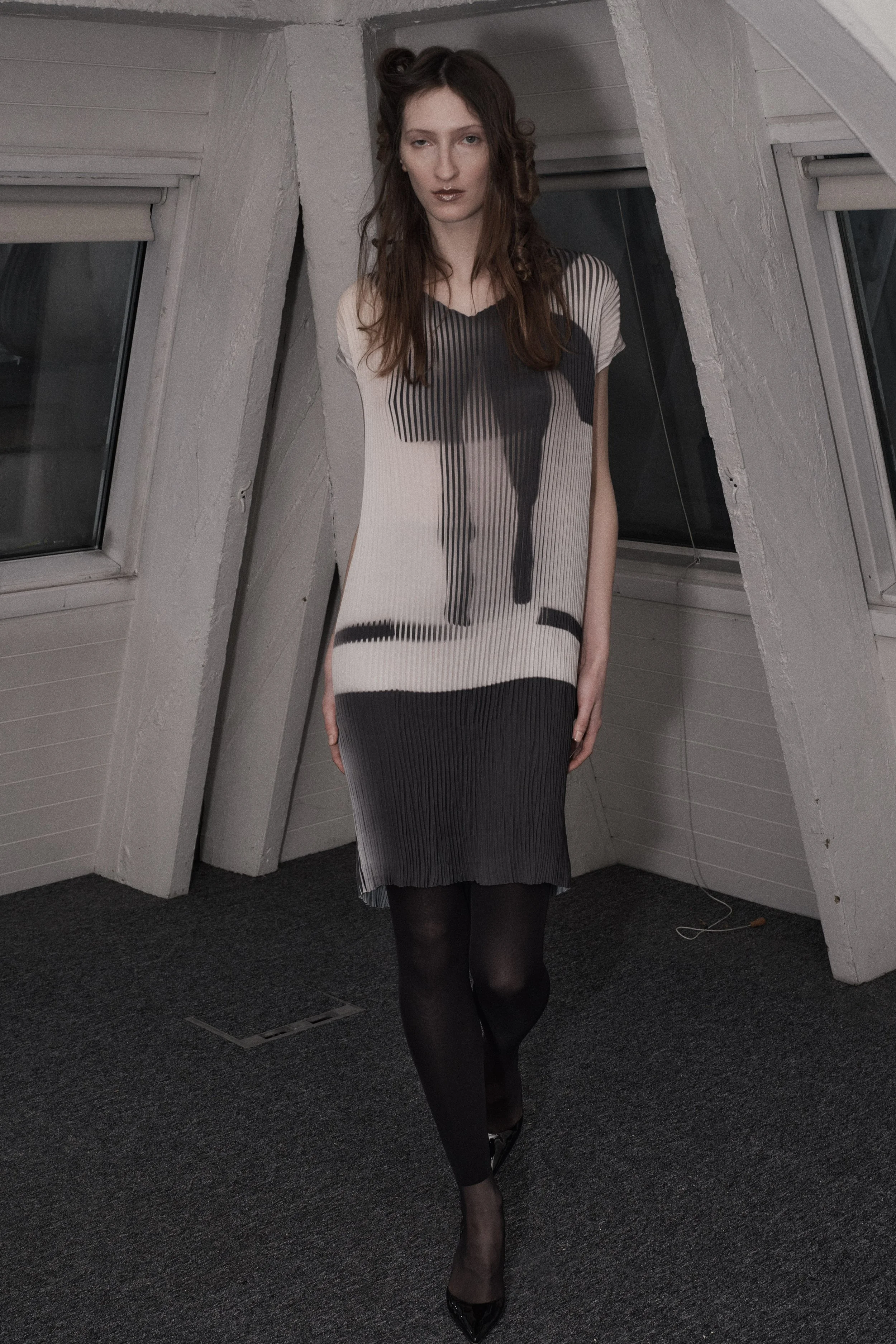
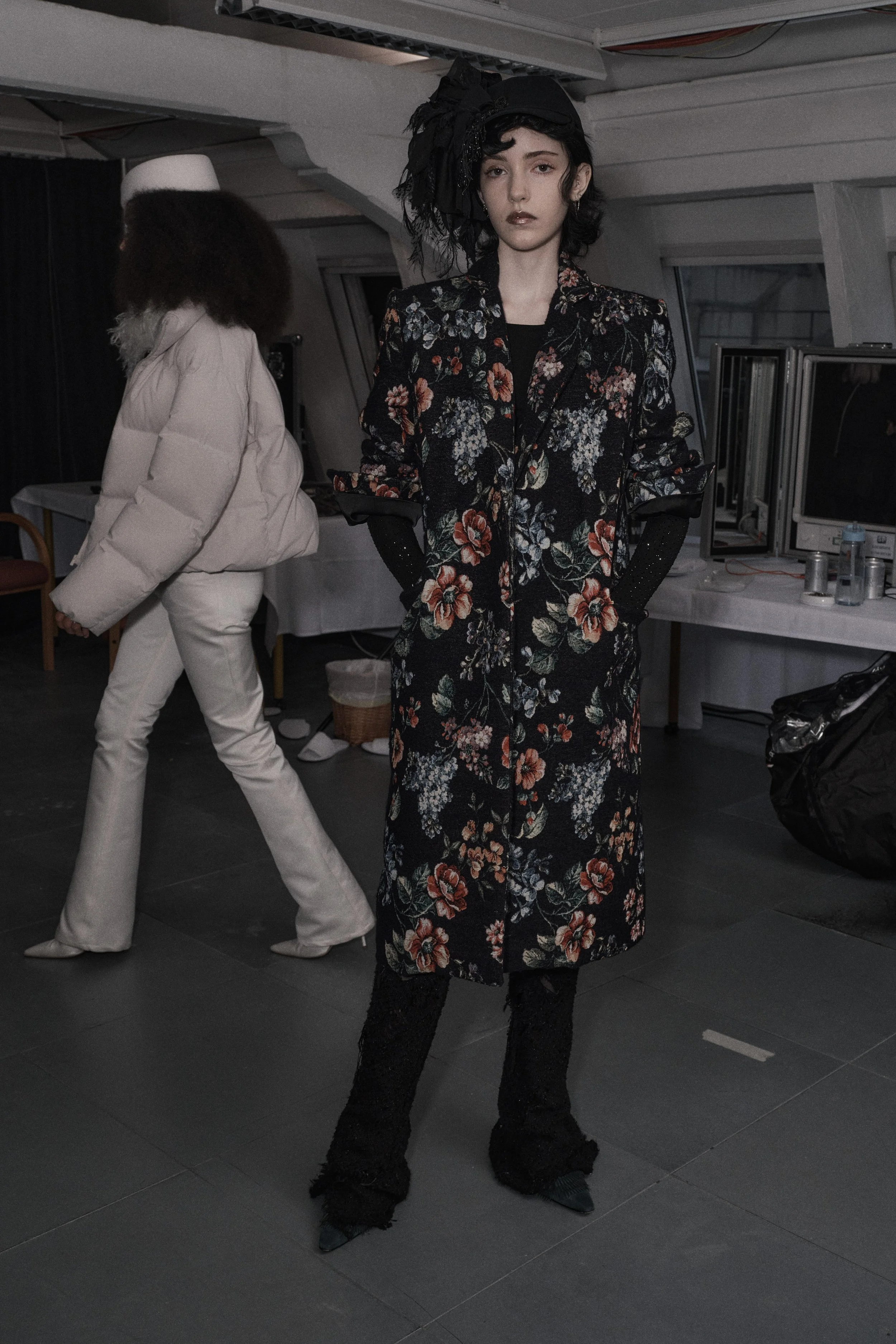
Cinched windbreakers flared dramatically at the waist, white trousers bore floral jacquards. Lenticular pleating- first developed during her Central Saint Martins graduate collection- created holographic shifts as the models rotated places, the recycled polyester structures catching the light and blurring like a controlled glitch in vision, whilst trompe l’oeil images screened overshirts.
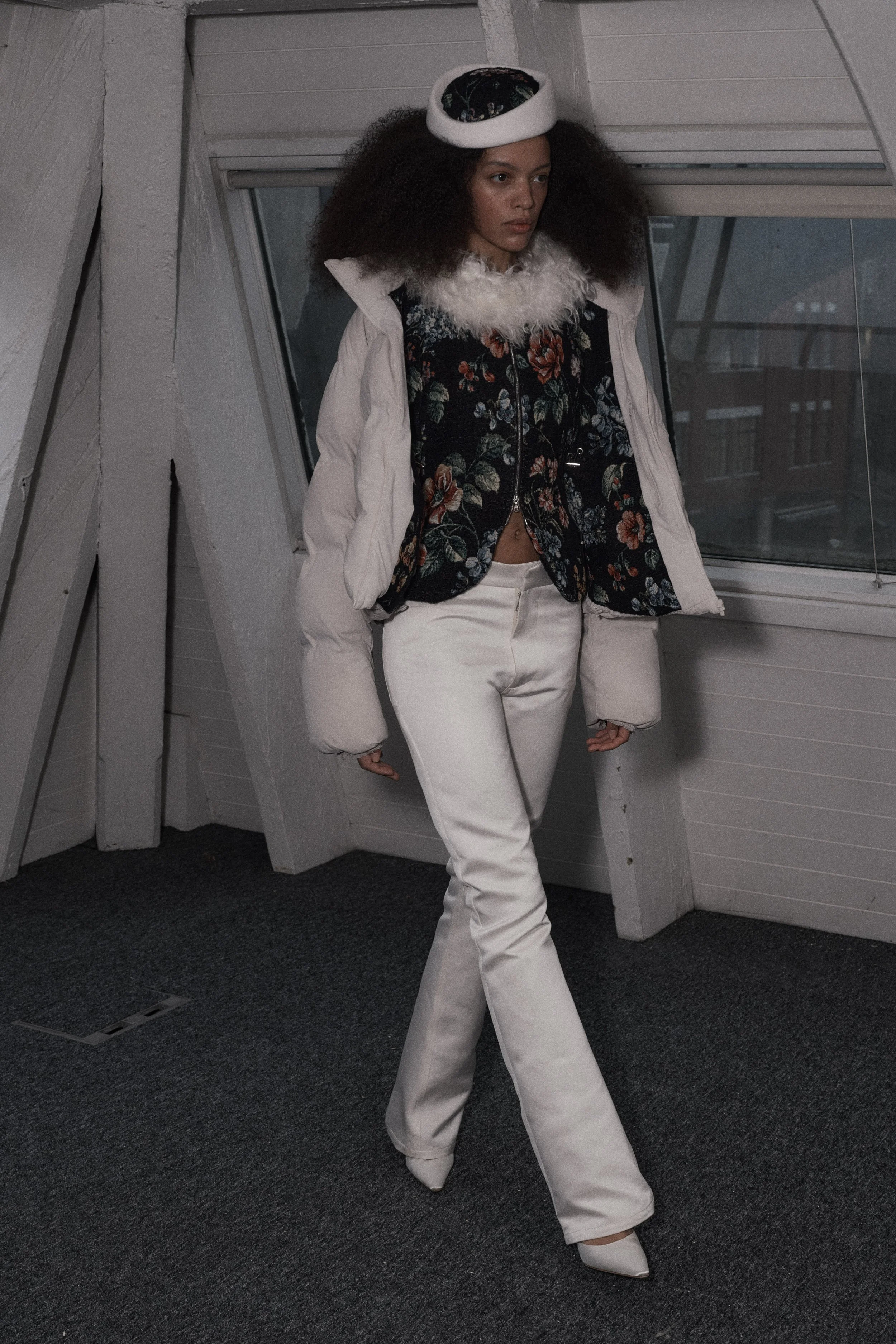
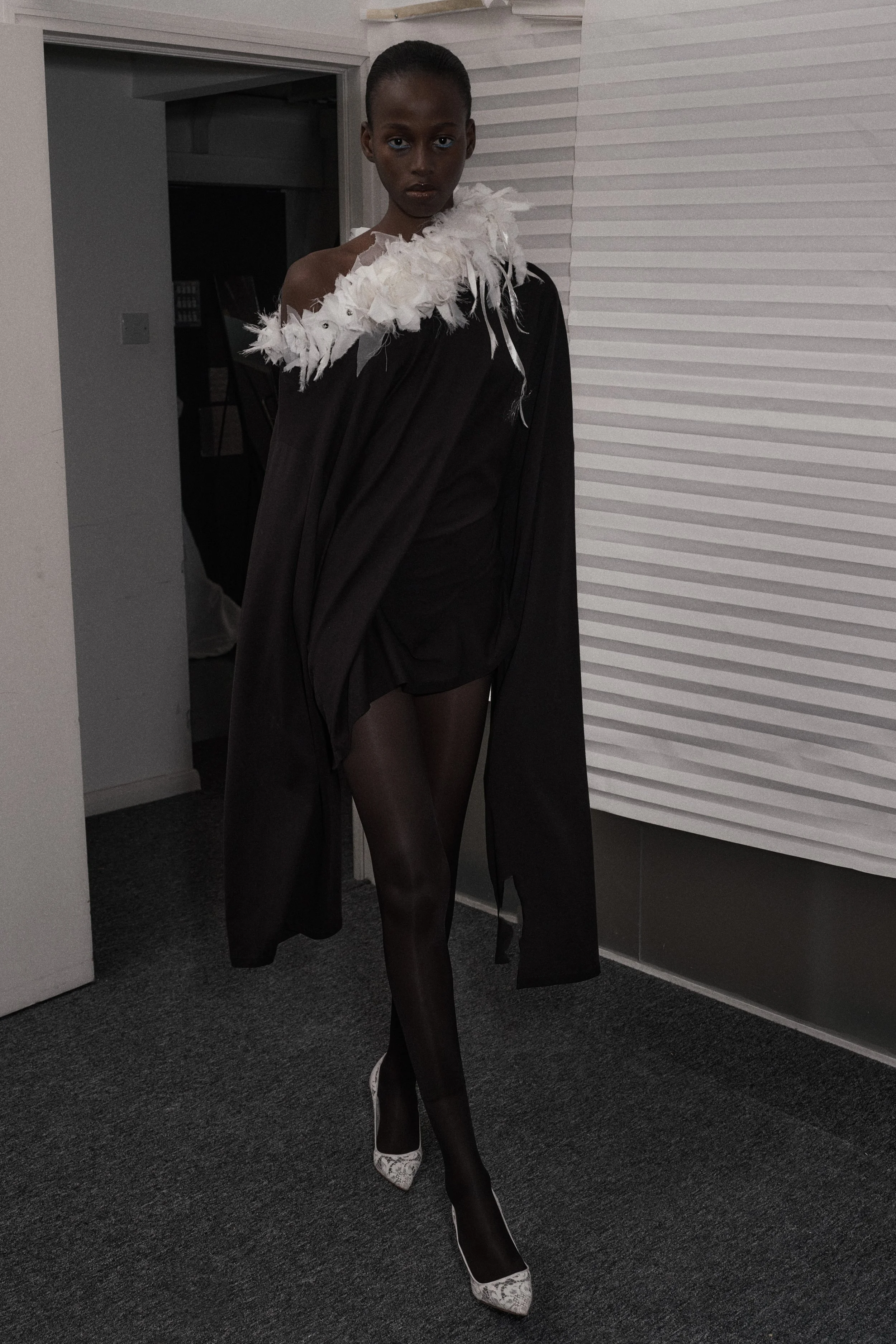
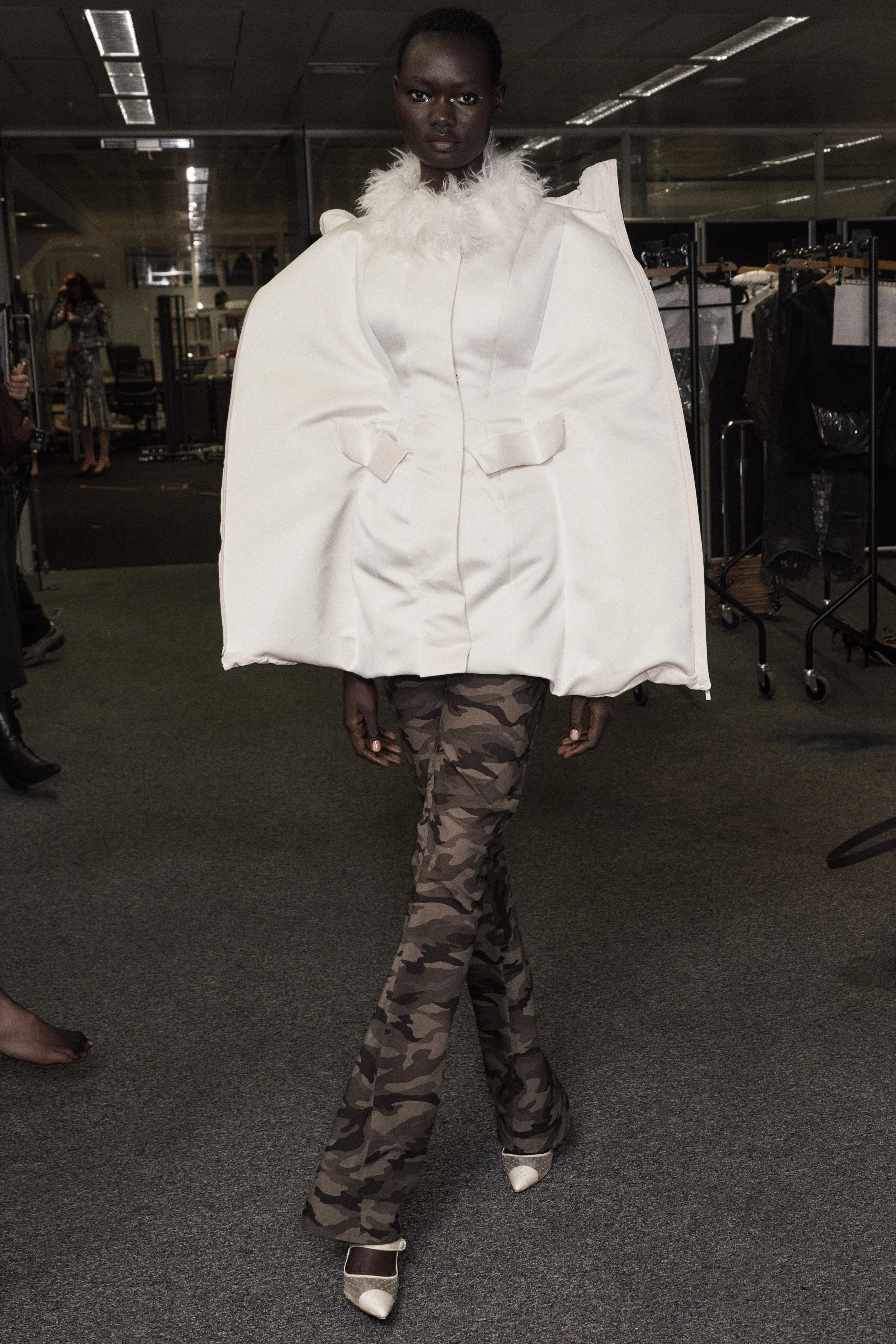
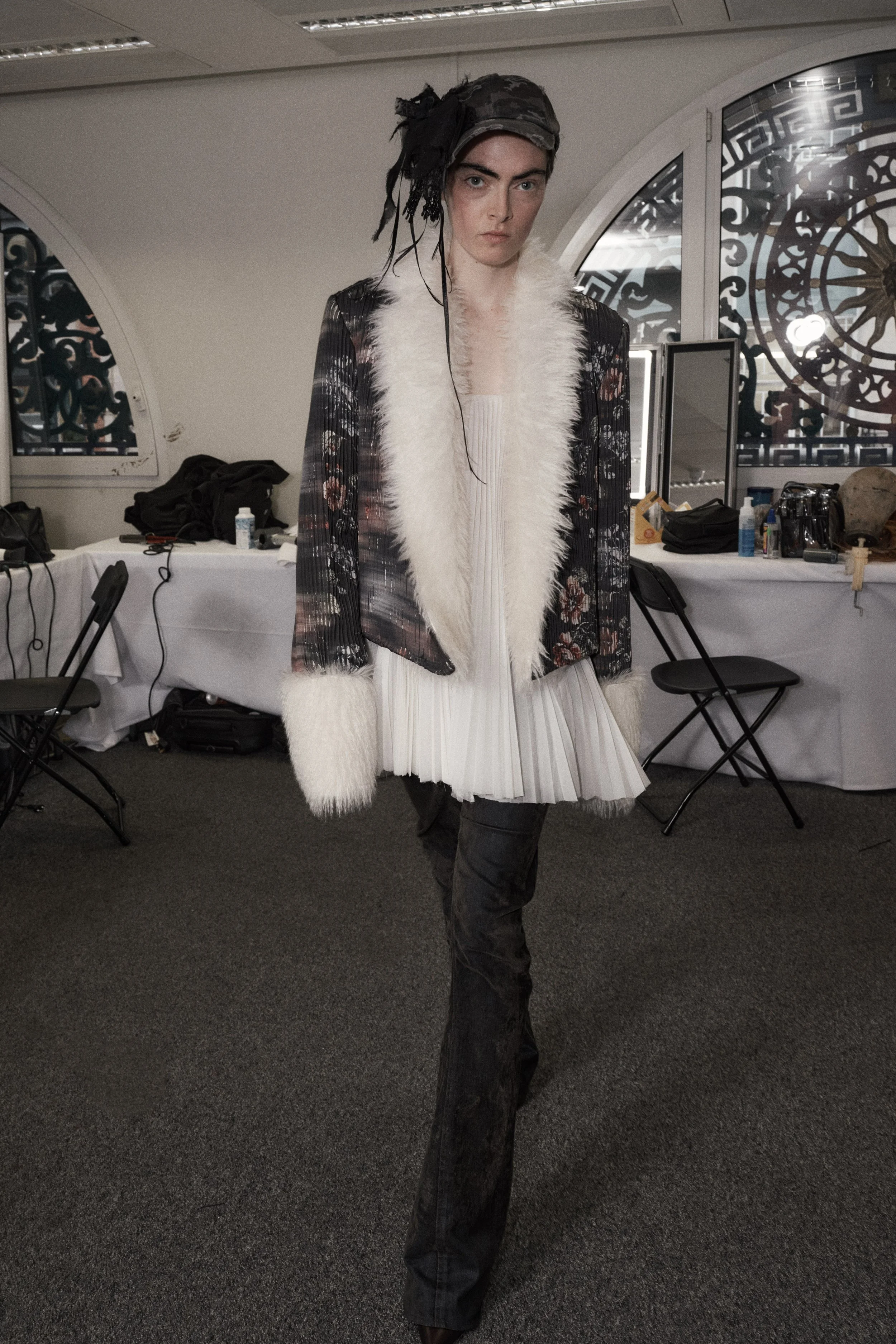
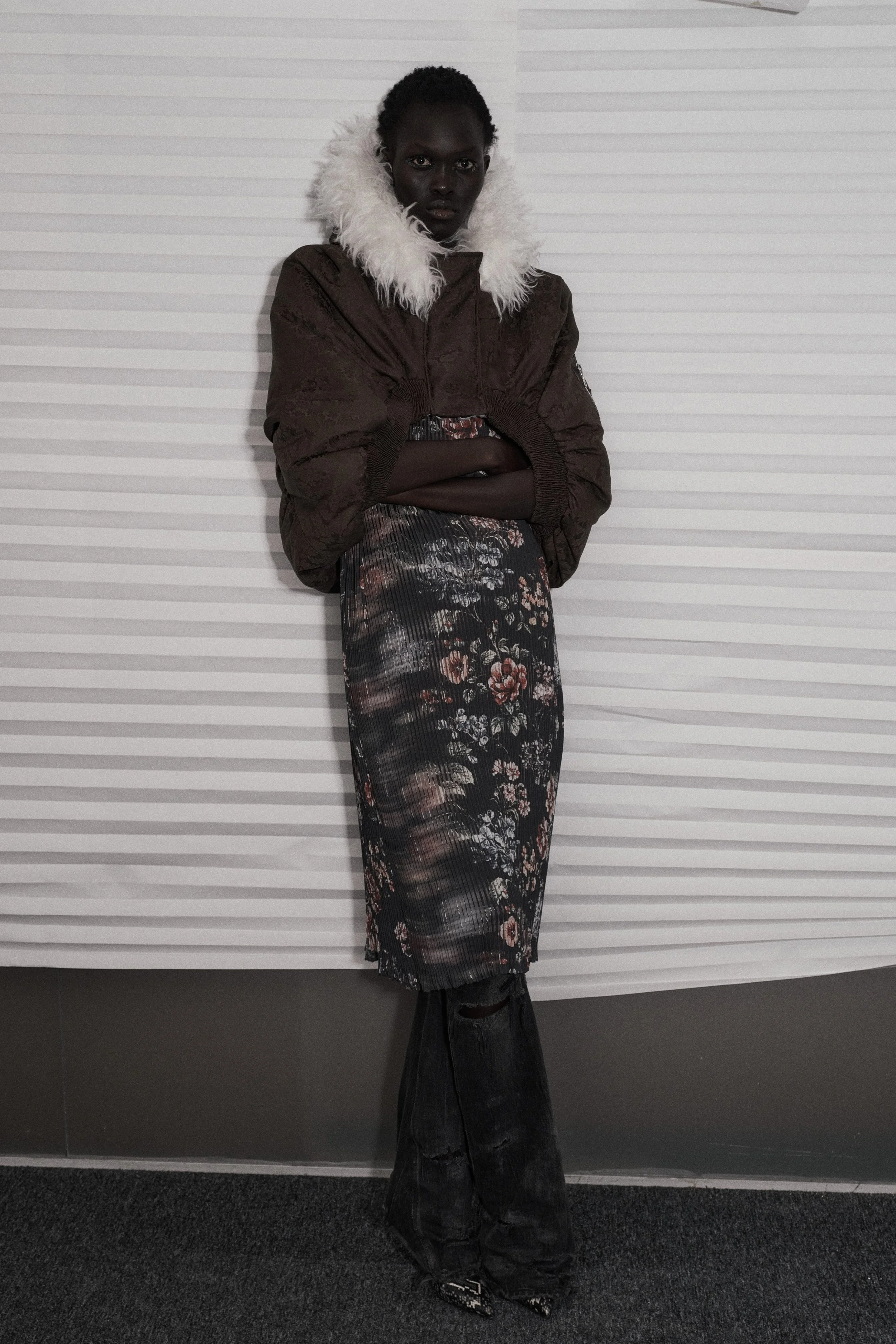
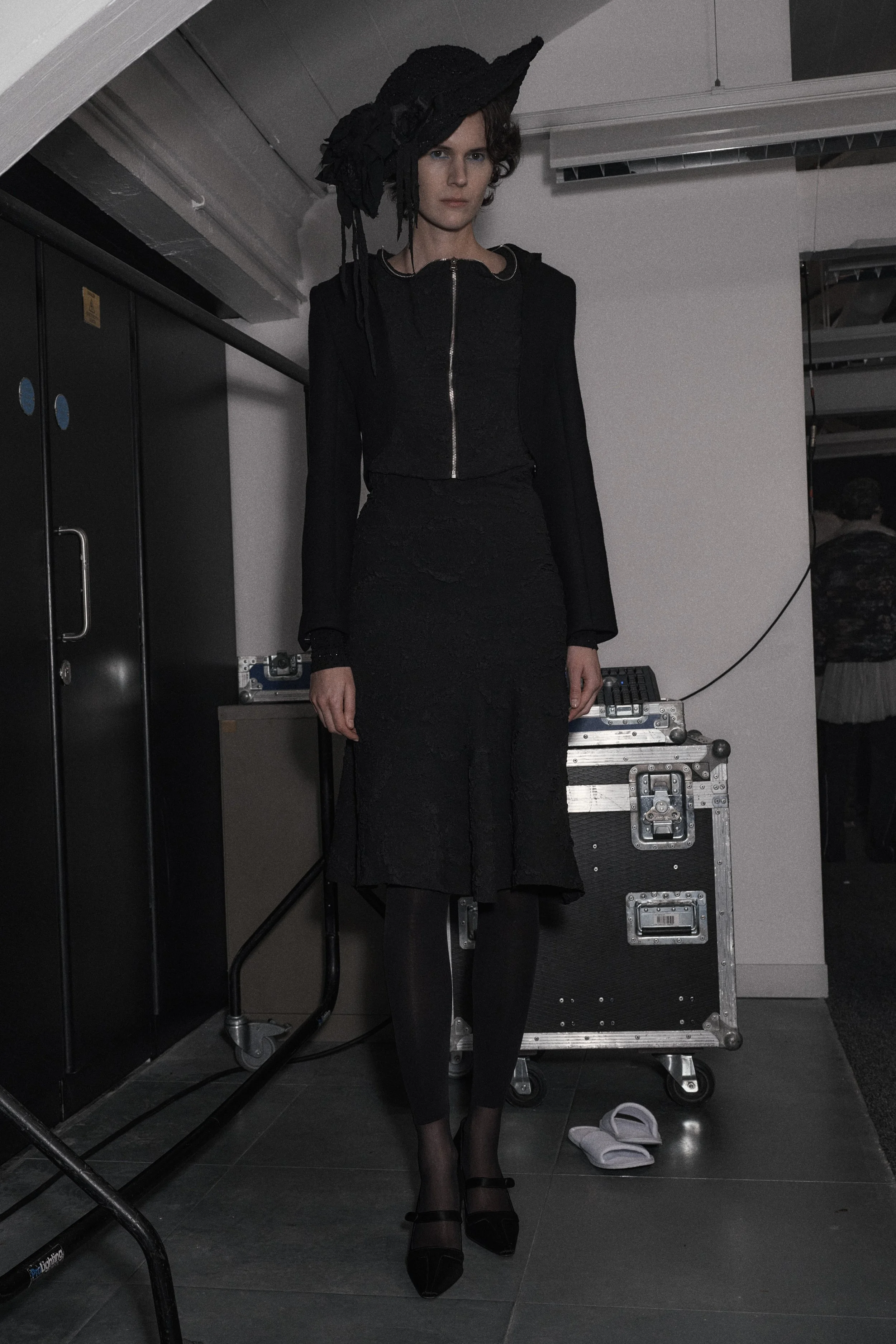
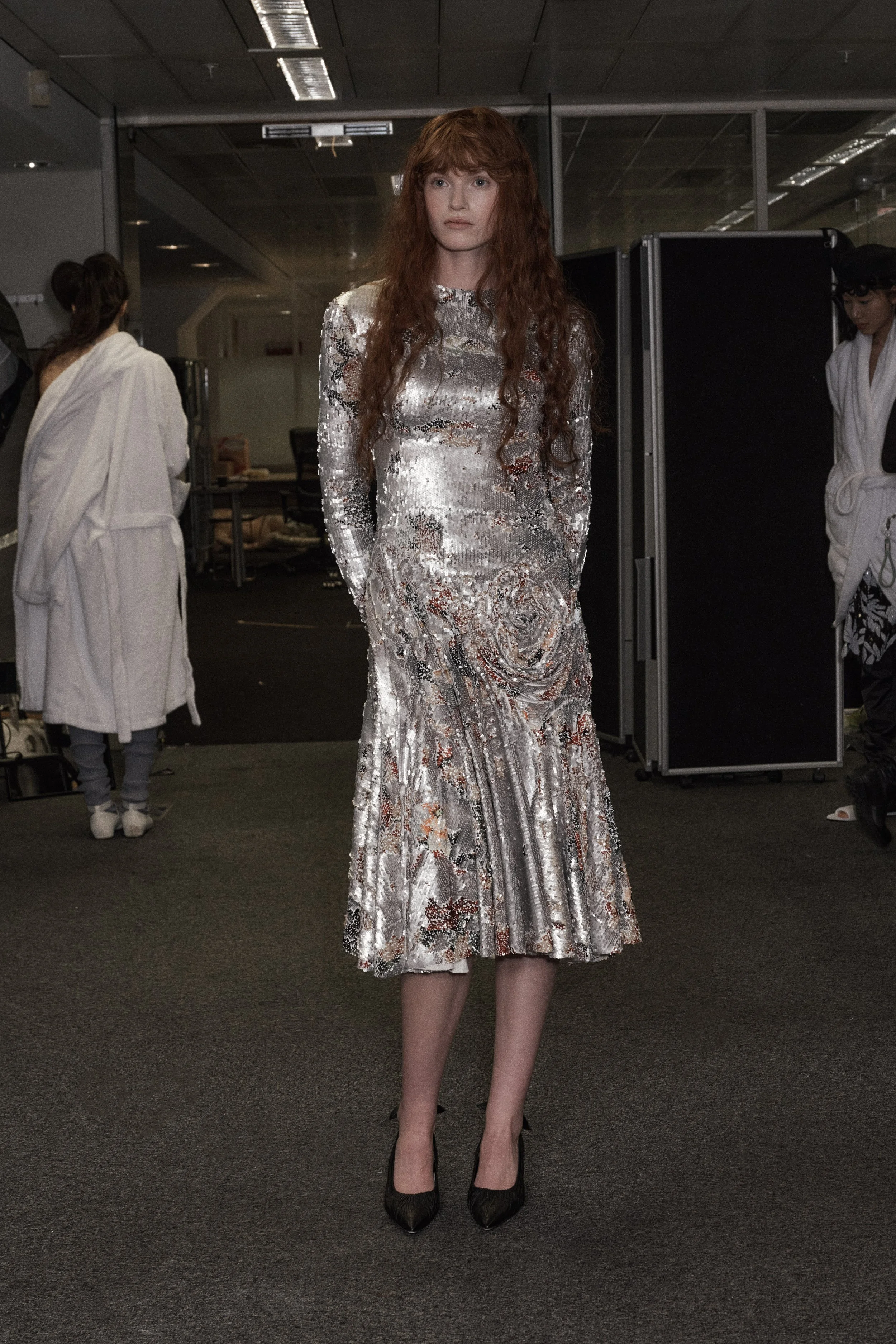
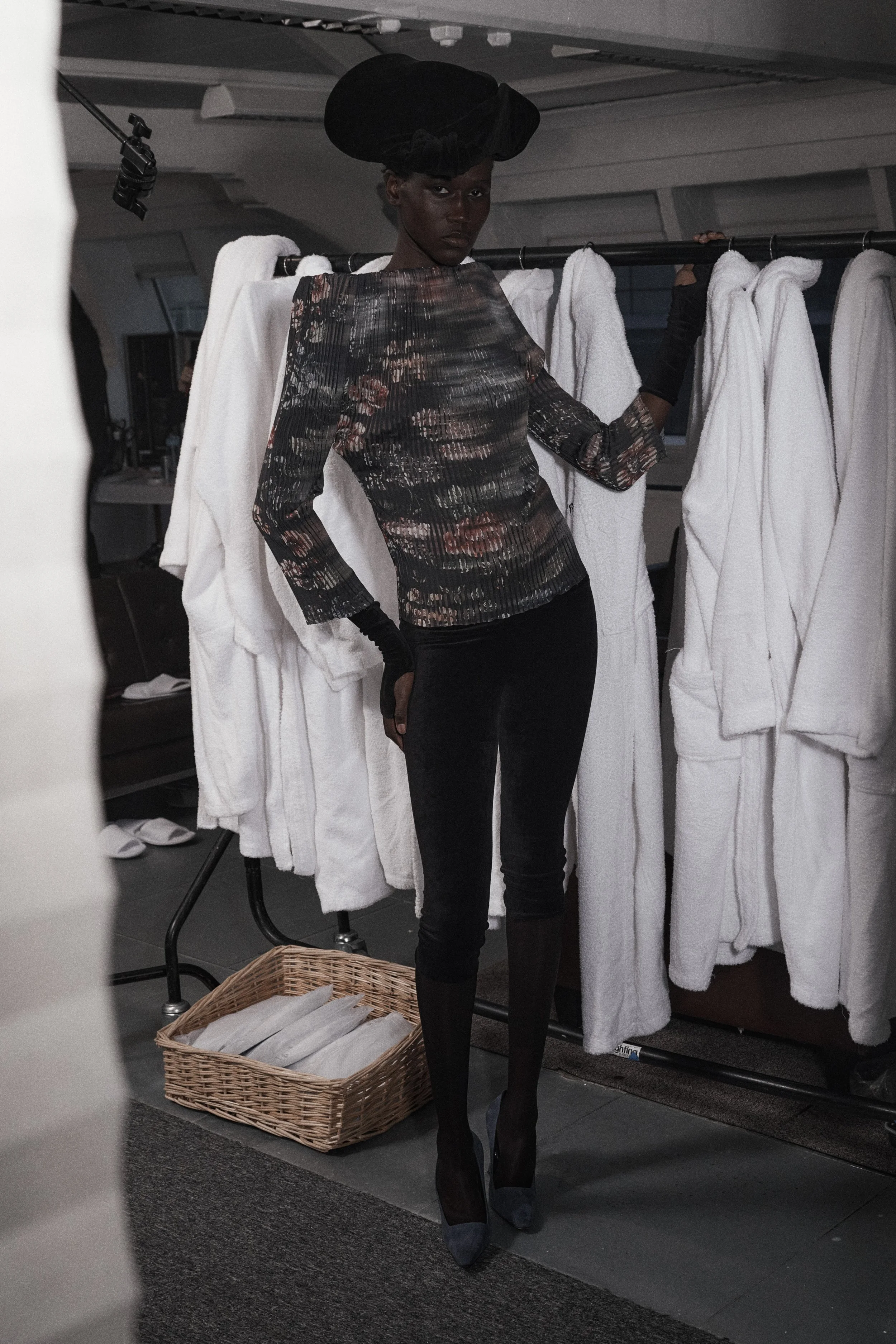
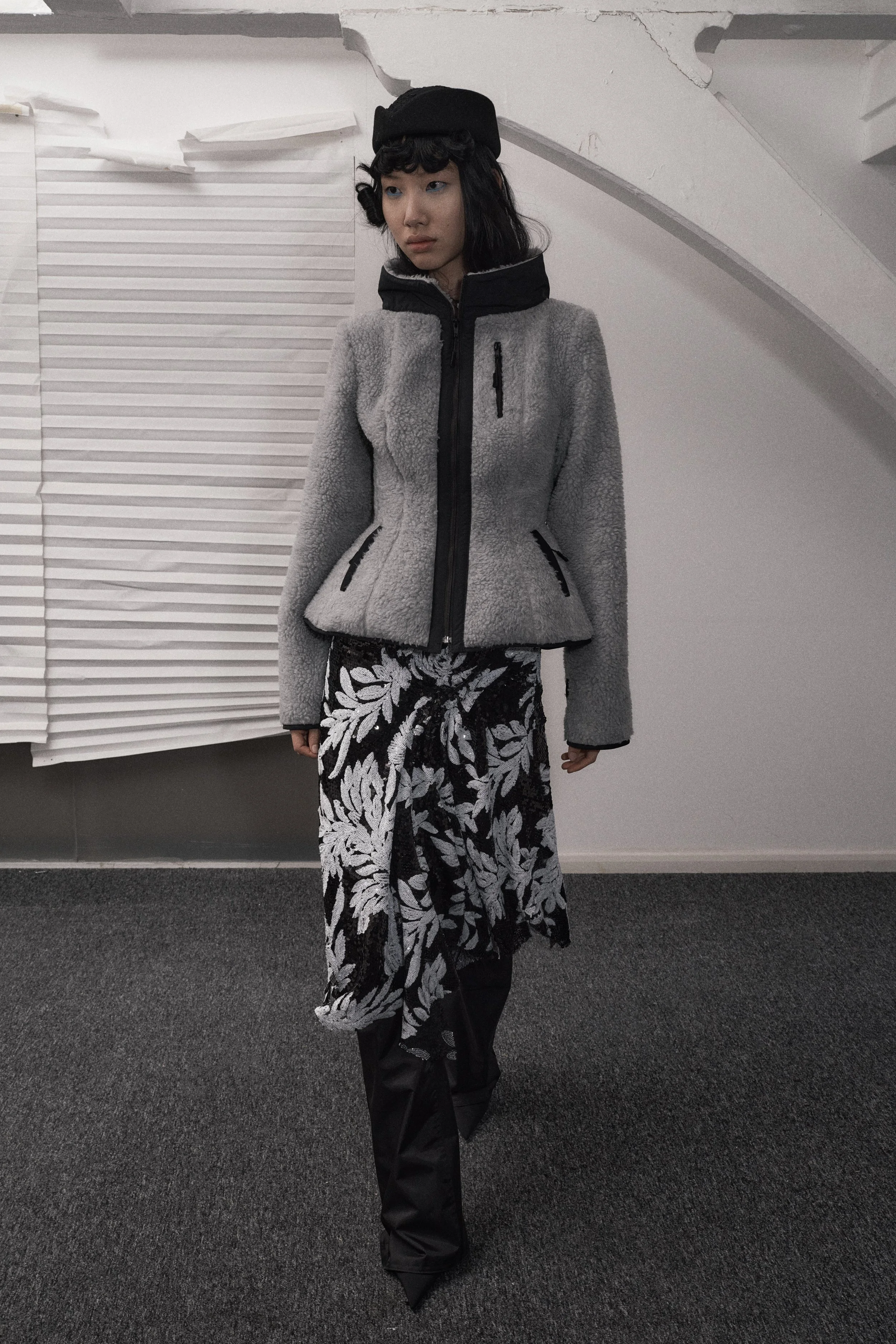
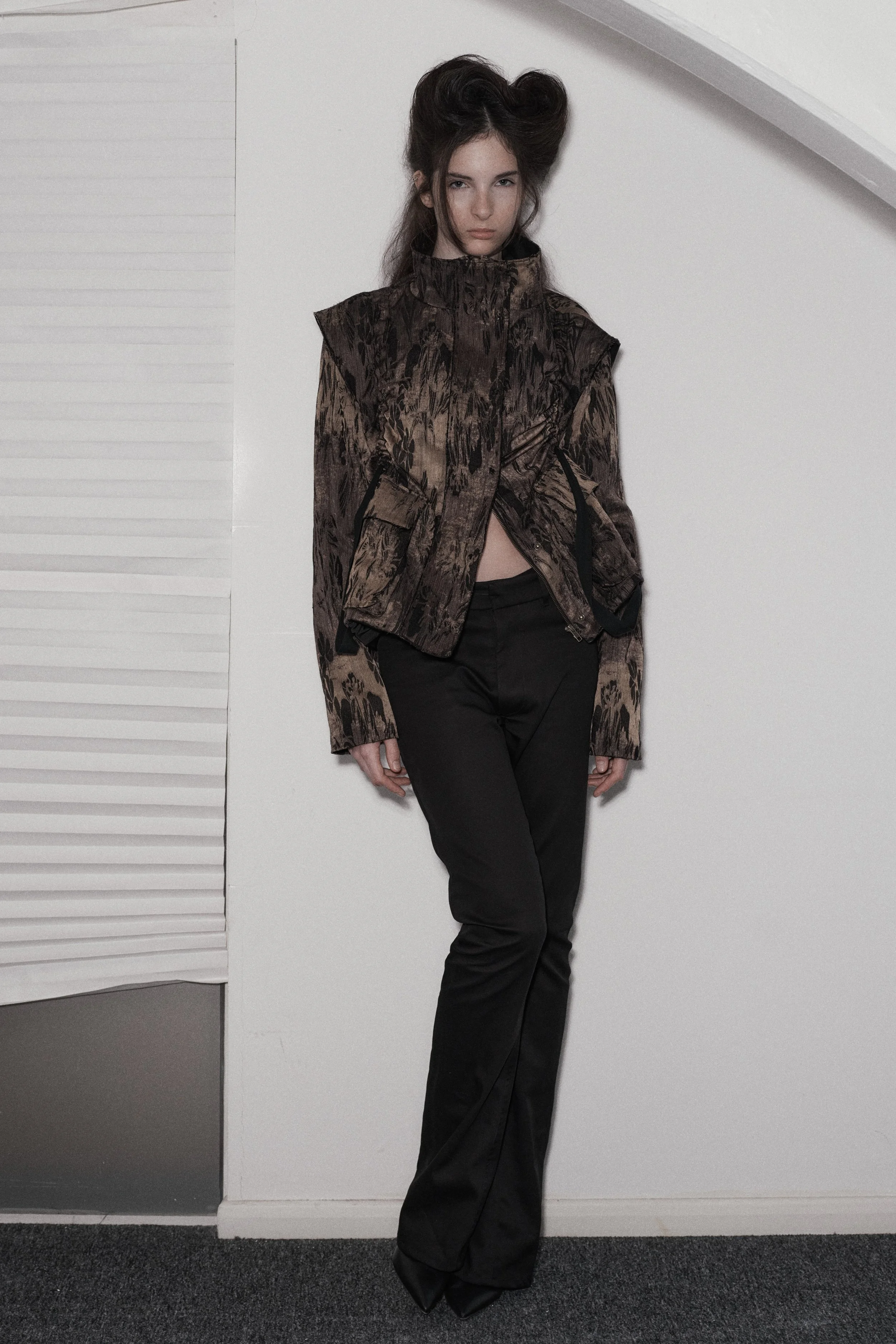
Ebony draped mini-dress slipped from one shoulder seductively, knee-length sleeves that would soar like ship’s sails mid-lutz on ice. Slim, flare-bottom camouflage trousers grounded alabaster satin outerwear in a hybrid, double fronted puffer jacket blurring into a tailored mini-dress trimmed with a delicate, pearl feather neckline. Army-hued bombers cut open like capes, framed a self-embrace, model’s arms folded inward in comfort. Distressed black denim hung beneath long-line dresses recalling mid-2010s waves of indie dressing, complete with frosted lips. Even with closed eyes and a decade having passed, one could not forget the societal cornerstone of the khaki-green parka jacket.
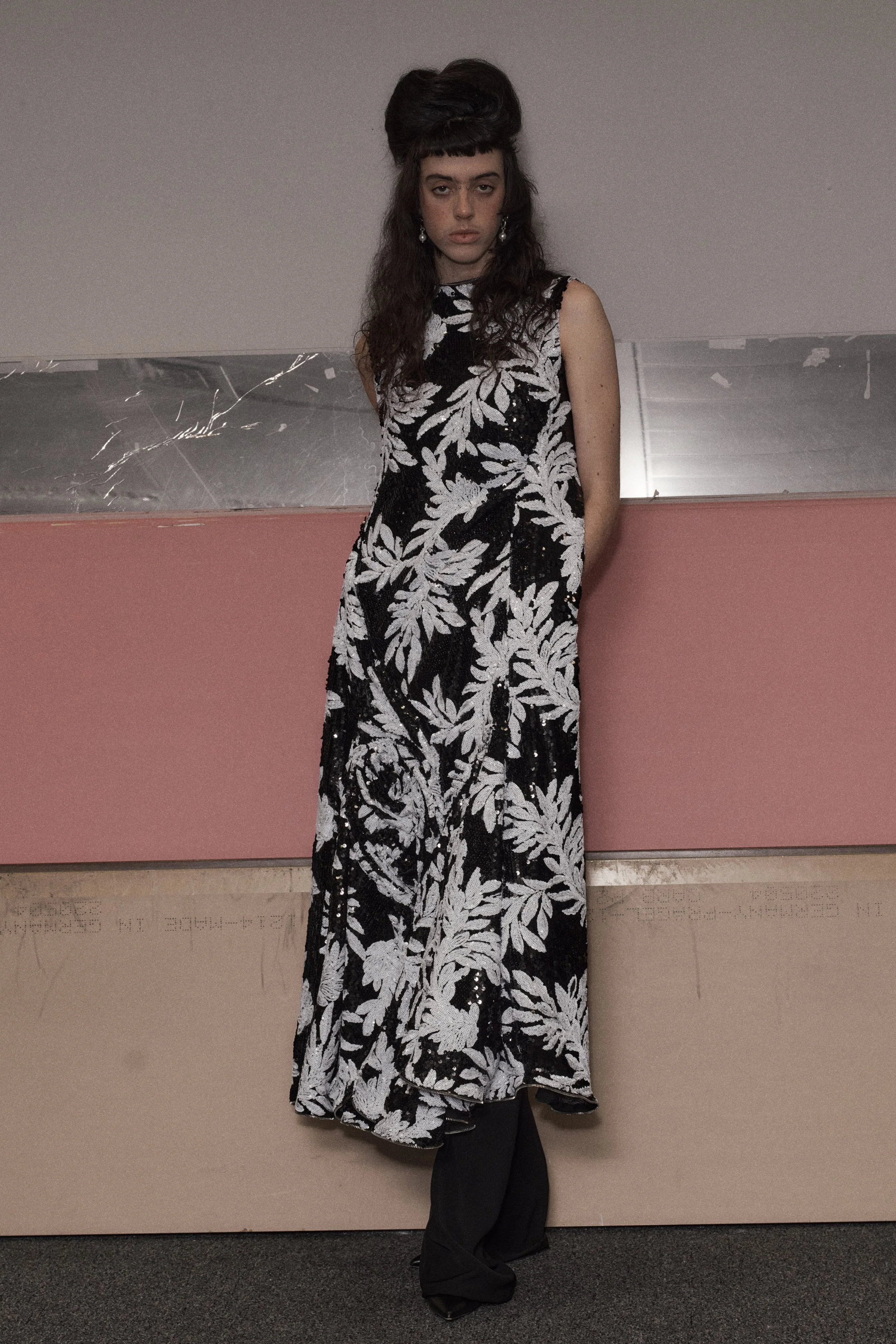
Shimmer arrived in modest mid-calf shift dress entirely sequinned, refracting in sparkle beneath the presentation’s scrutiny. Specks of blush and leaf push through the dense silver armour as romantic Pre-Raphaelite locks fall over. Velvet capris elongate the silhouette, crowned by an inflated boatneck frame of panelled pleating. Metallic oil-slick sequin eyeliner and icy-blue waterlines hardened gazes of Fagerström’s iterations of the coaching mother. Corn-based faux fur trims and sculpted fleece jackets- nipped hyperbolically at the waist- balanced glamour with maturity. Not a six-inch stiletto in sight, kitten heels anchored every look in pragmatism.
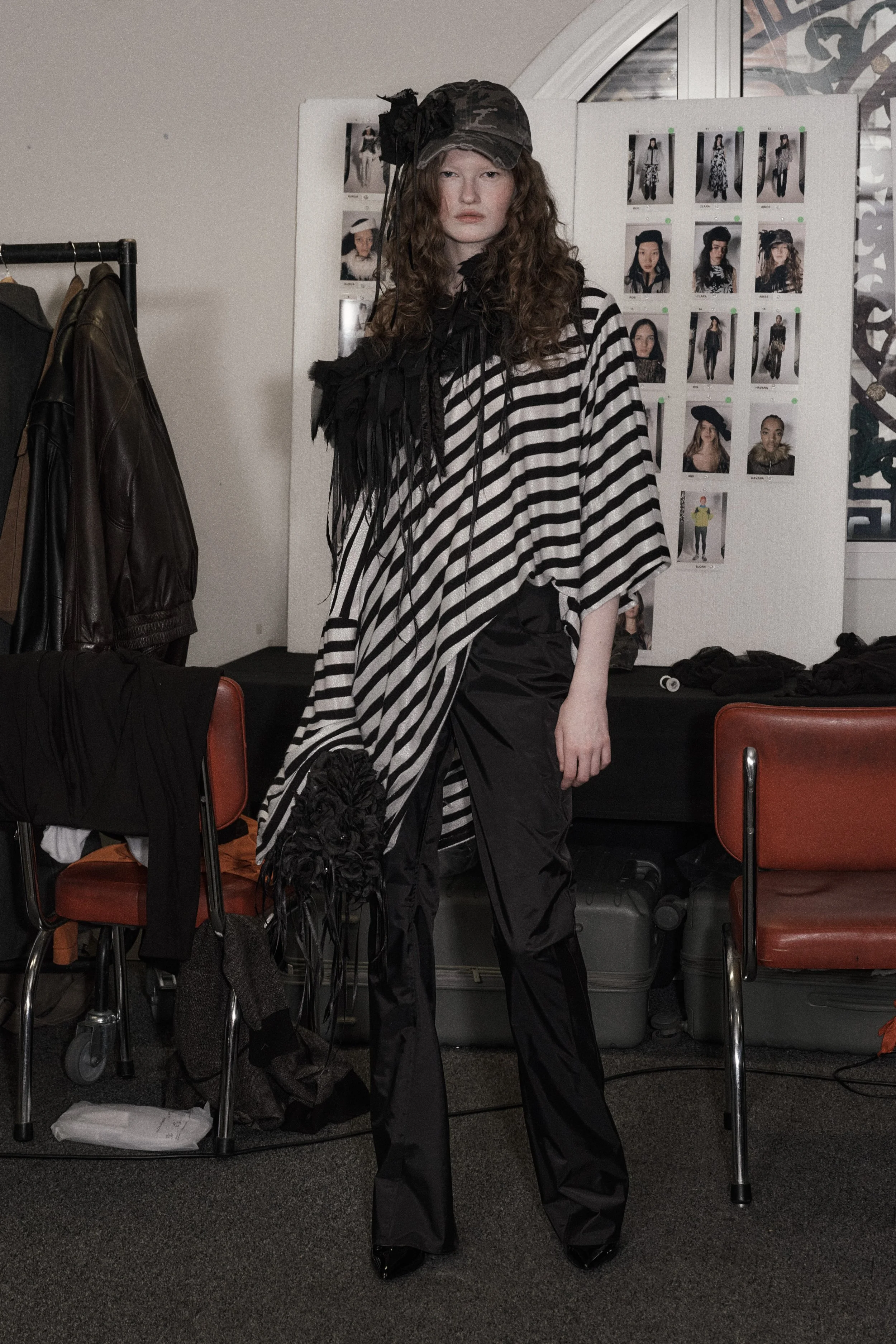
Rhinestone sleeves under folksy floral outerwear, sheer socks under skinny trousers, fingerless gloves and statement millinery, each look carried an amalgamation of layers slowly building up, in reflections of the way dancers gradually undress post warm-up. Long sleeve t-shirts curled across one limb, a rolled-up tracksuit pant bearing calf, singular leg-warmer remaining. A symbol of discipline inscribing itself on the body. Femininity, meticulously governed within the world of dancers and skaters alike, hereby becomes a lens through which Fagerström guides an audience to examine how expectation shapes womanhood long after medals are packed away.
After Everything I Did For You is not an accusation piece, but a dialogue of understanding. Spotlight falls not on the girl mid-pirouette, but the woman who laced the skates, the architects of ambition. An homage to the selves that were once girls on ice in pursuit of poise and perfection.