Leo Prothmann’s Cabaña
Words by: Abby Scarlett
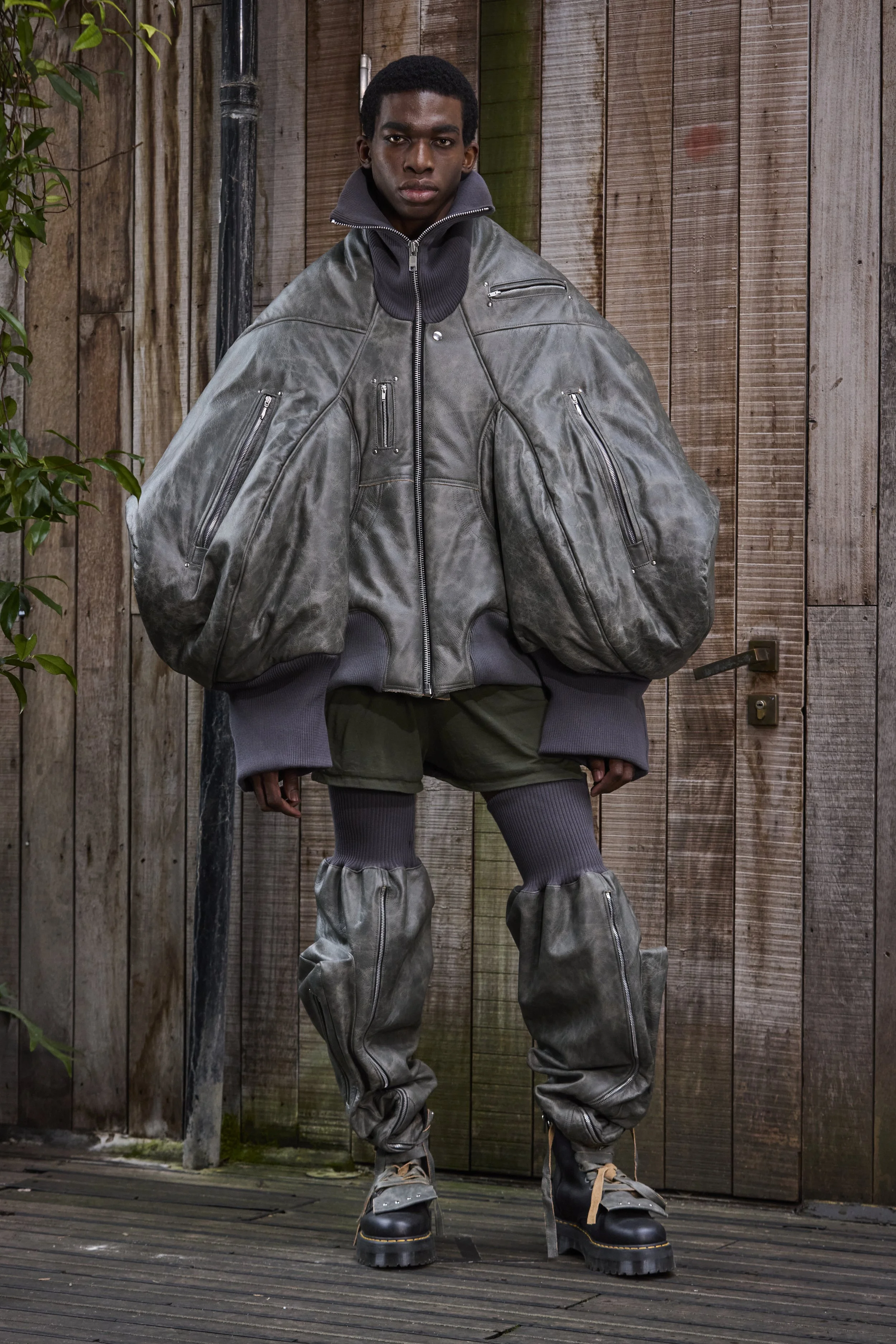
On the wooden-walled retreat that is the Jurema Terrace of The Mandrake Hotel, Leo Prothmann unveiled Cabaña, a first on-schedule LFW presentation for the designer that pulsed with heat, pigment and sculptural force. Against a landscape of greenery, guests were transported from Fitzrovia’s red-bricked townhouses to the rainforest, into a world shaped by intense saturation, modular construction and urban defiance. Prothmann, smiling shyly in conversation with critic Suzy Menkes as audible gasps rippled across the terrace, has firmly established a presence on the London scene. High-glamour, dirty and seductive, gender-fluid design sharpened by architectural ambition.
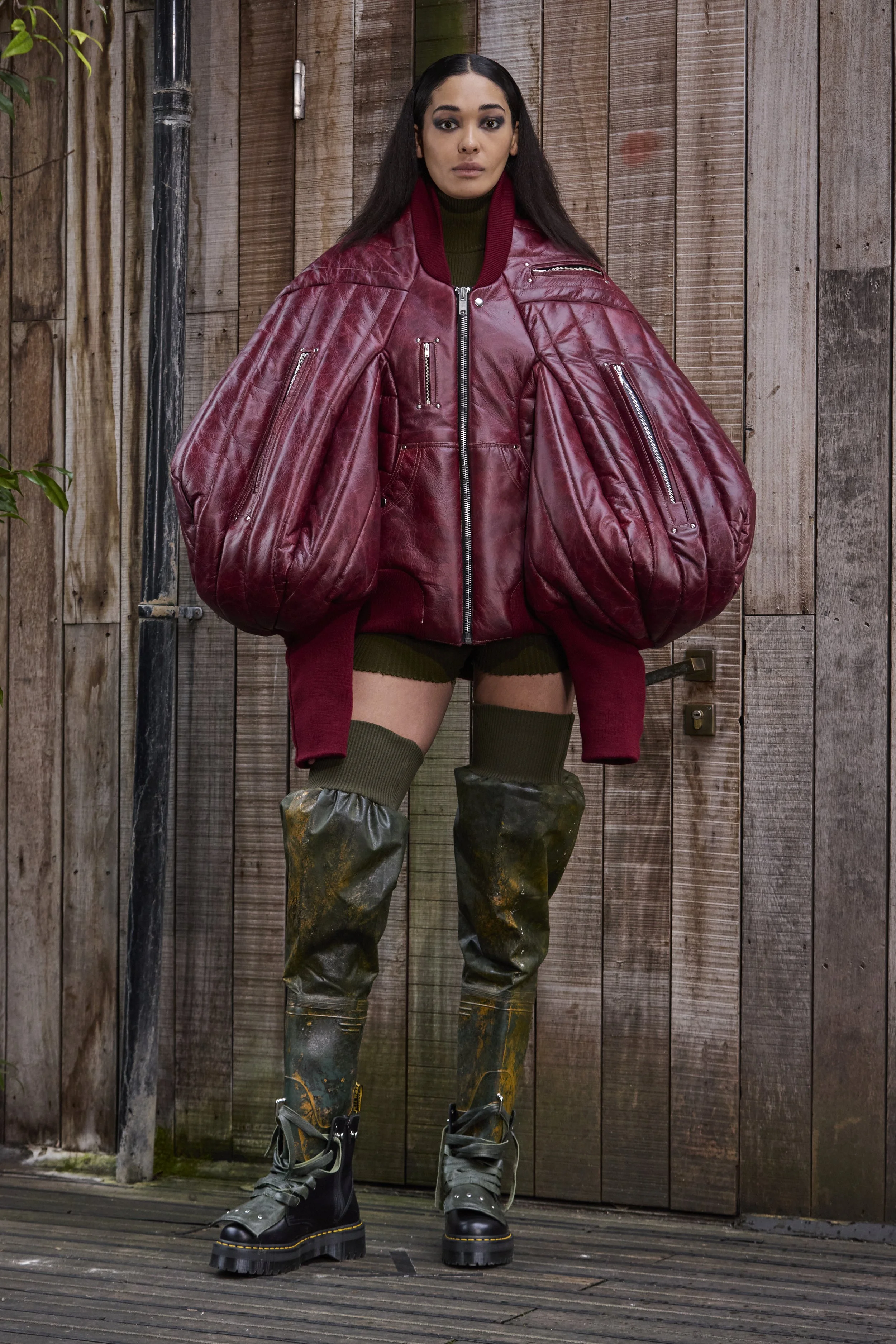
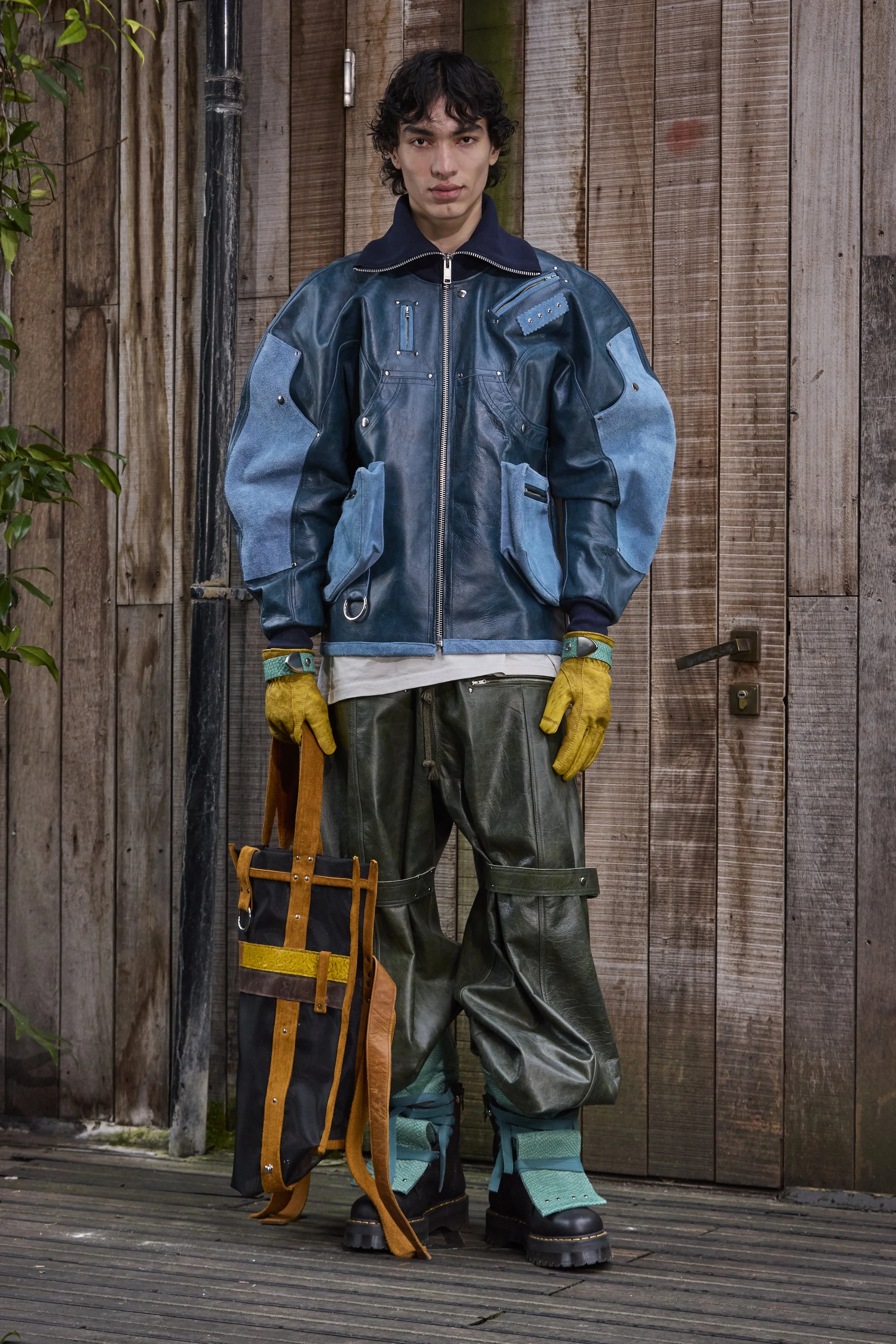
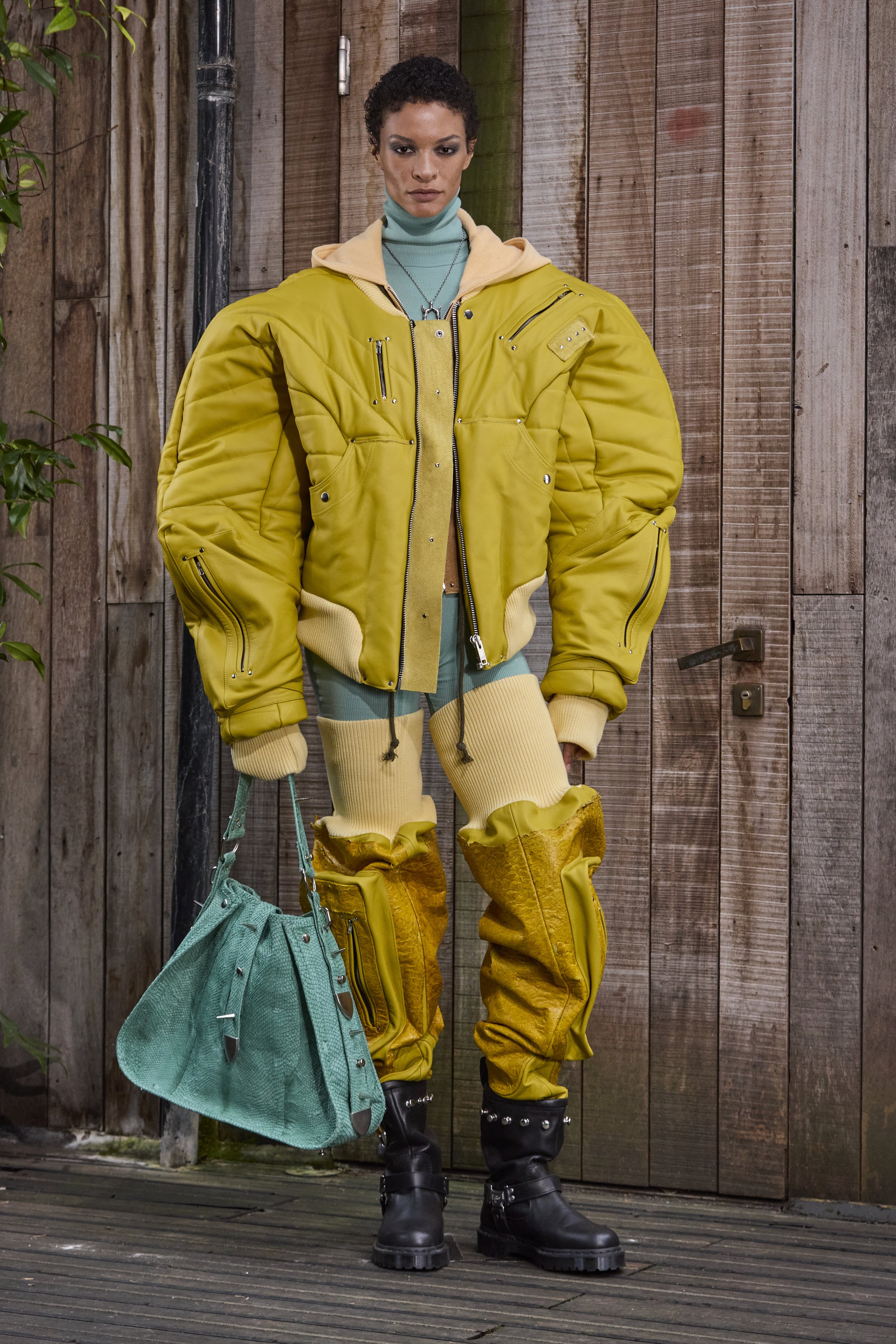
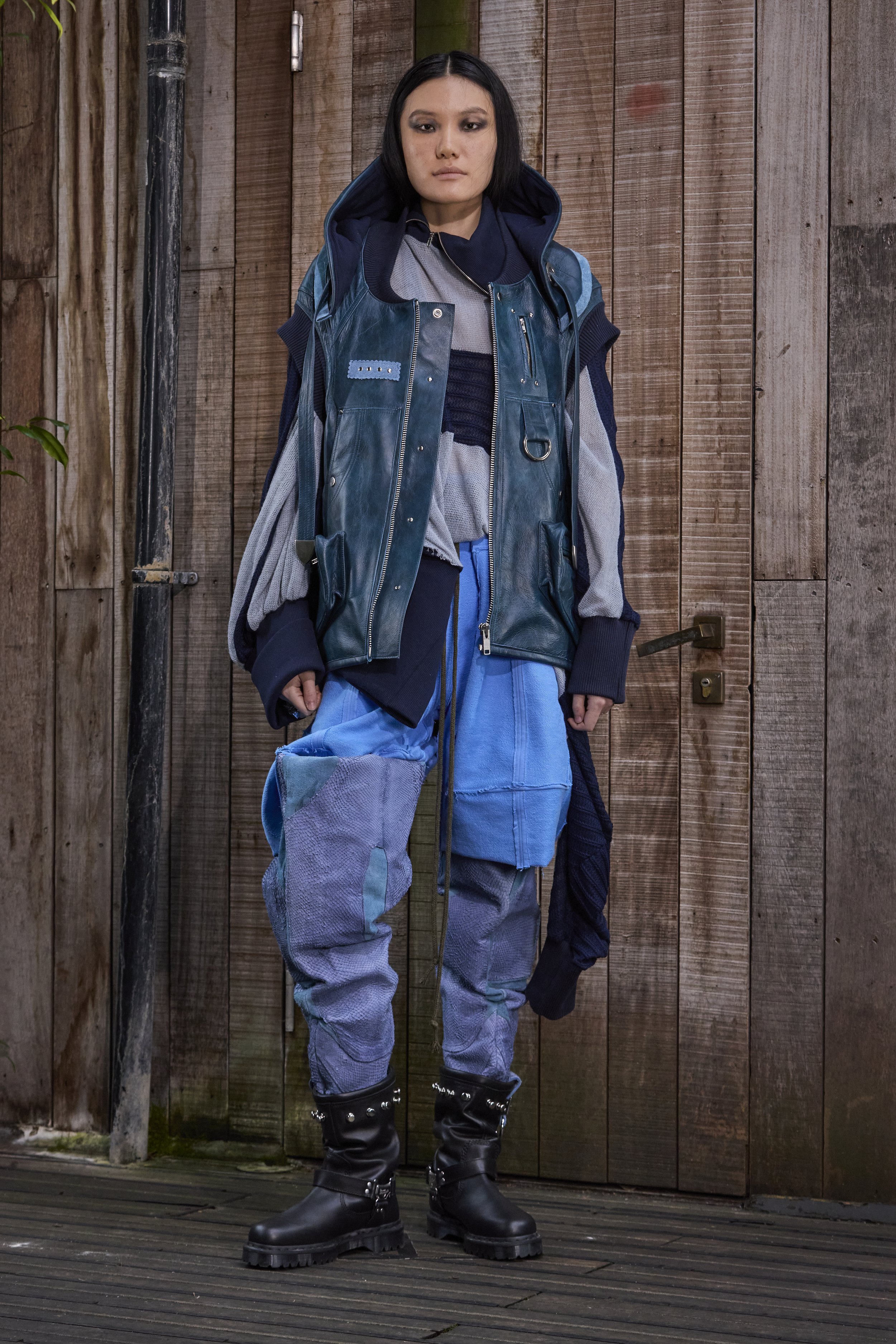
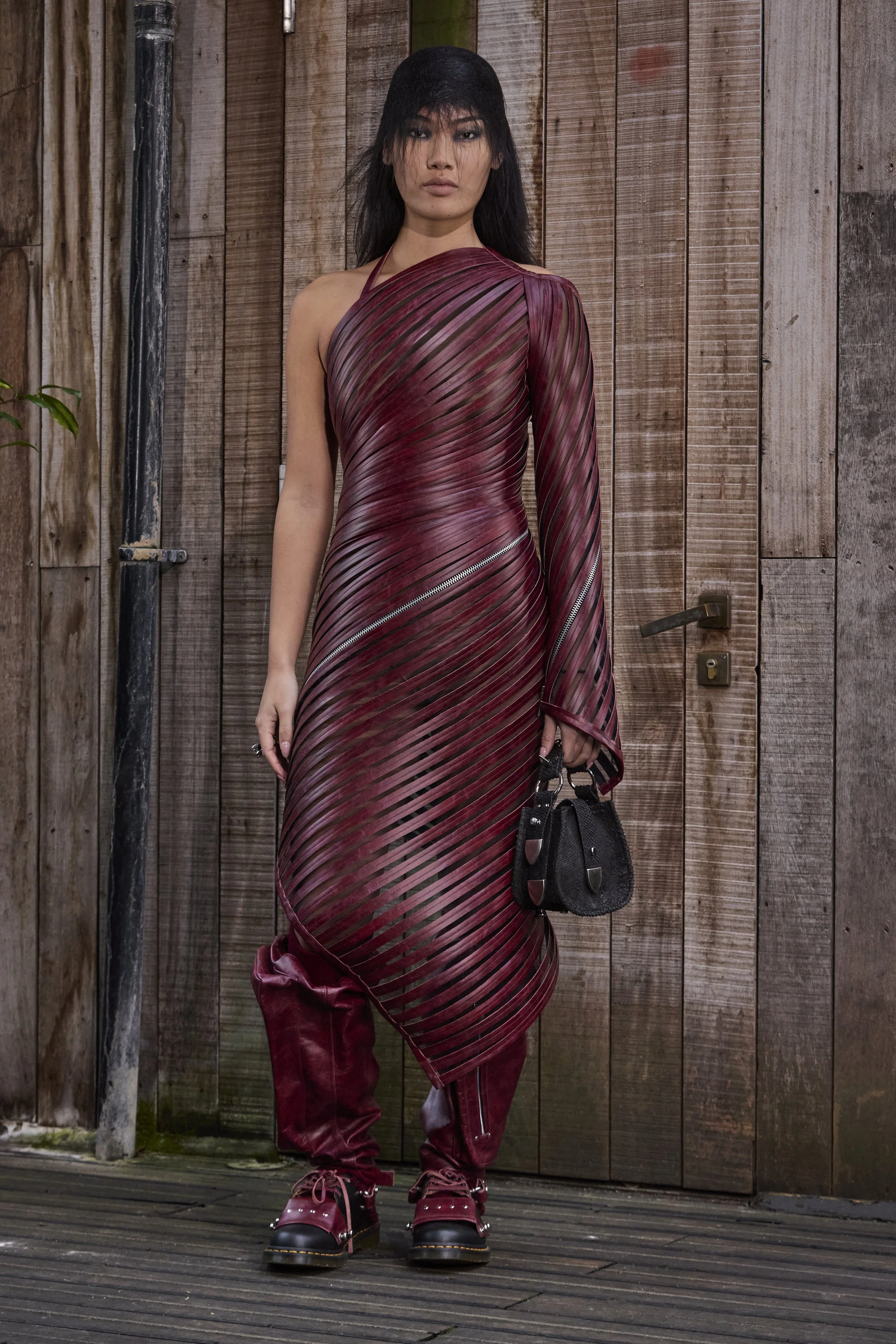
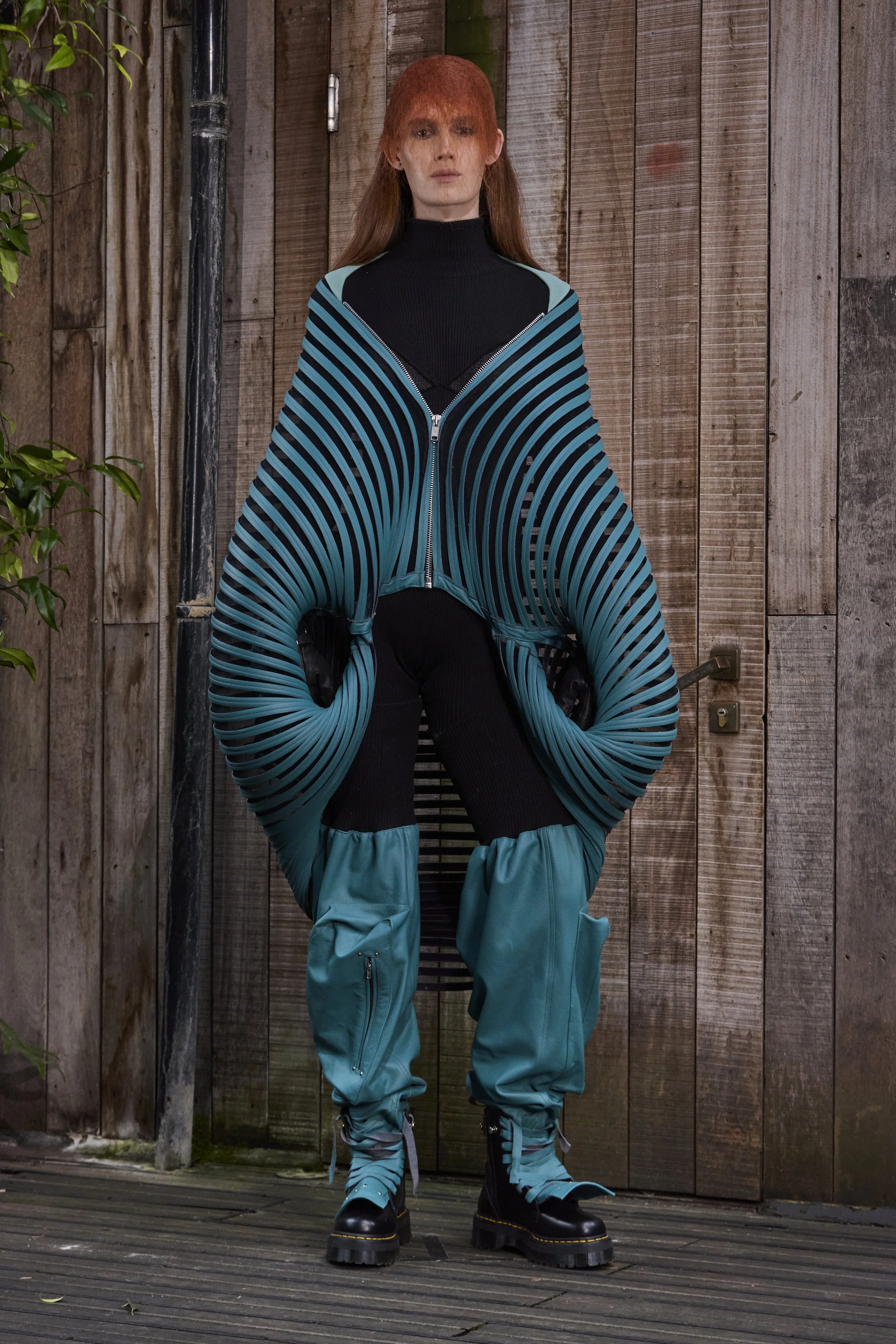
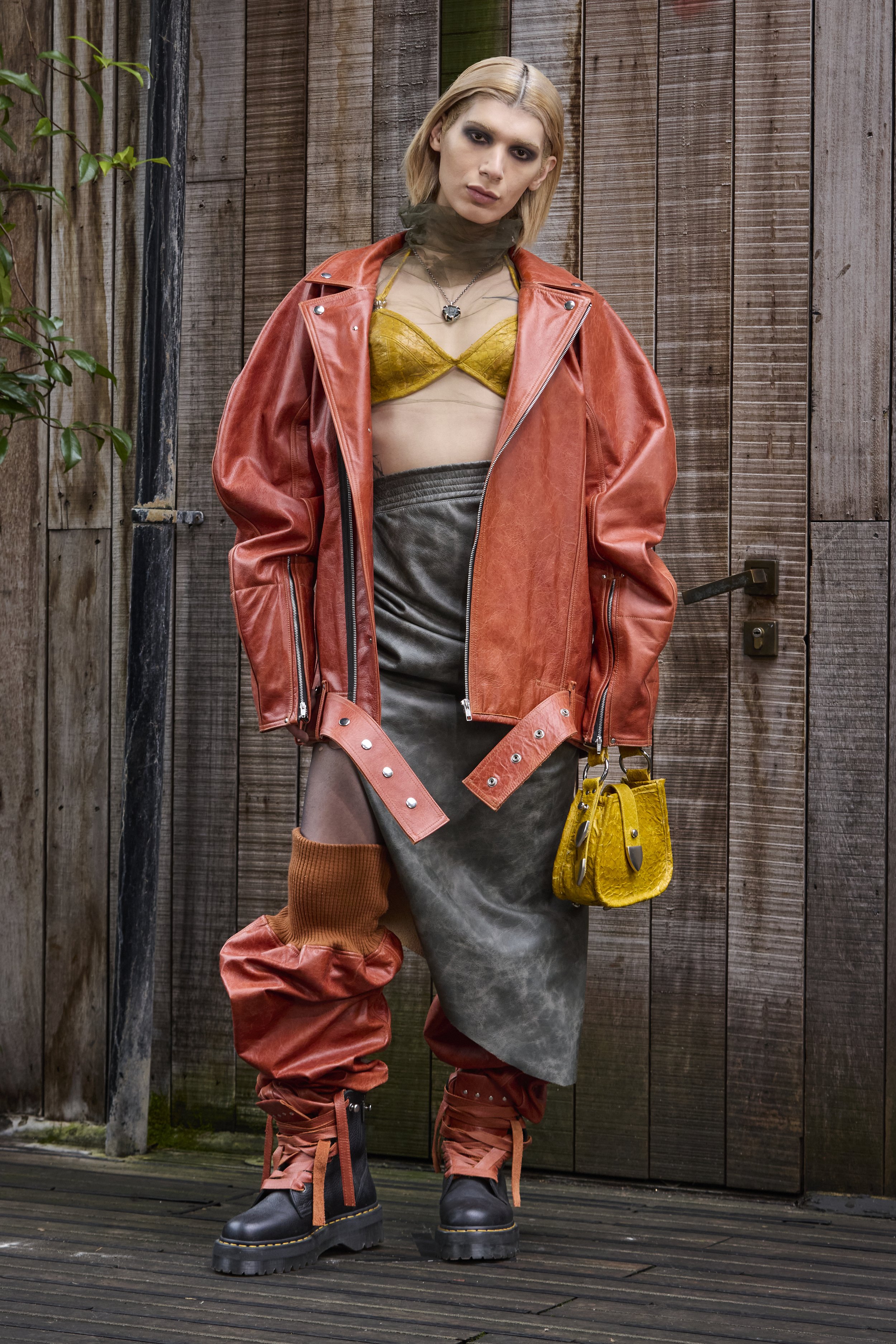
Cabaña was born from Prothmann’s excursion in San José del Pacífico, Mexico, where inspiration was extracted from the tones of buildings, walls weathered by sun and damp, colour softened by time. Such imprints translate into a palette of mud and mustard, burgundy and teal. Ochre bled into juniper coatings like bleach stains; fire-reds and electric cobalts punctuated the muted, earthy base notes. Prothmann’s background in expressionism was palpable, colour used emotionally as part of a larger tableau.
Equestrian codes- harnesses, tough leathers, disciplined lines- remained rooted in each look, here eroded by the jagged modernism of streetwear influence. Motorcycle-style jackets proceeded, the exaggerated curvature of balloon sleeves taking up grand stature. Bomber jacket proportions pushed toward the gamified, almost heroic. Drawstring waists, cargo pockets, zipped up capes all suggested adaptability, garments ready for transformation. Standing before an illustration of Prothmann’s mind, there was a sense of an army assembling for some otherworldly reckoning.
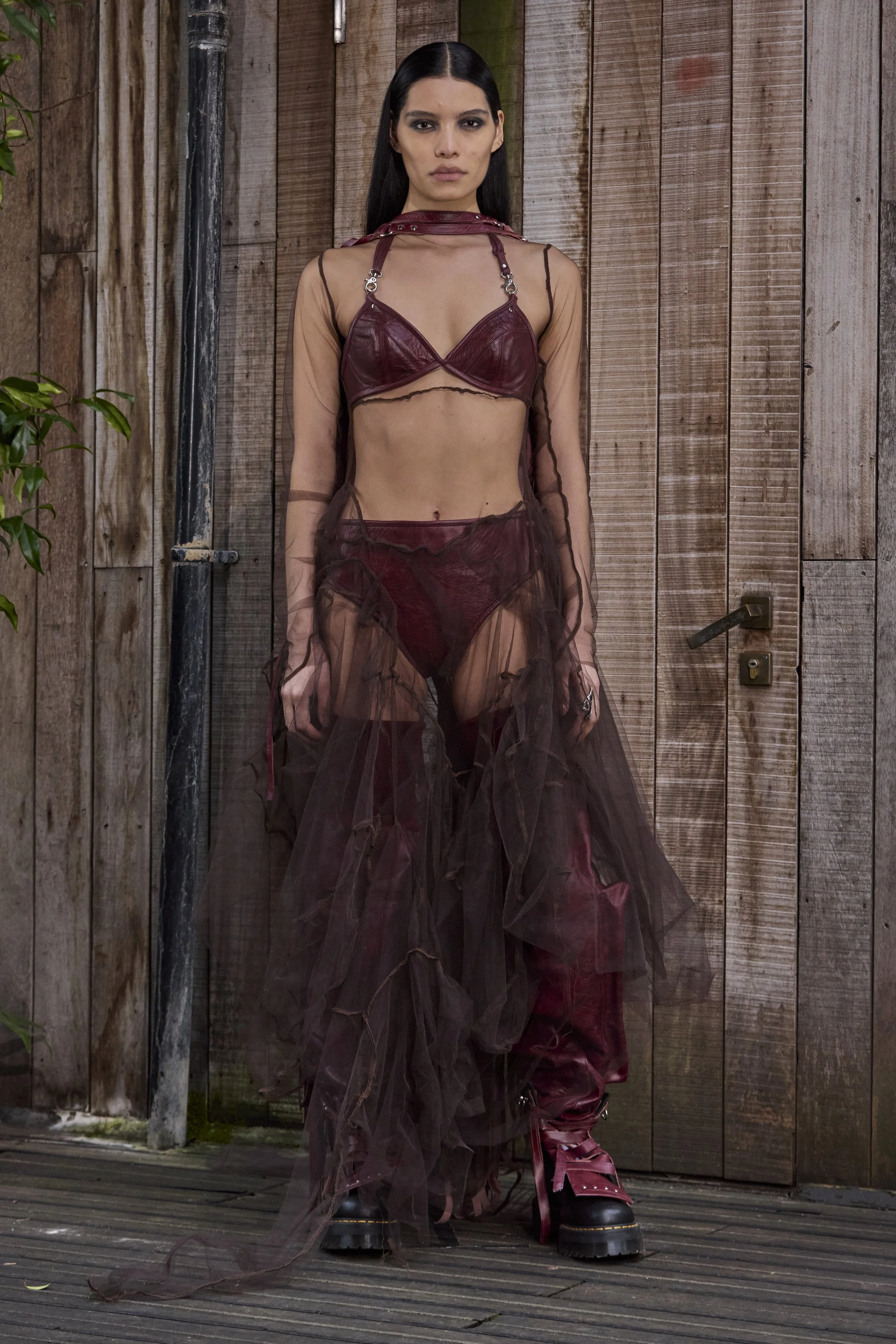
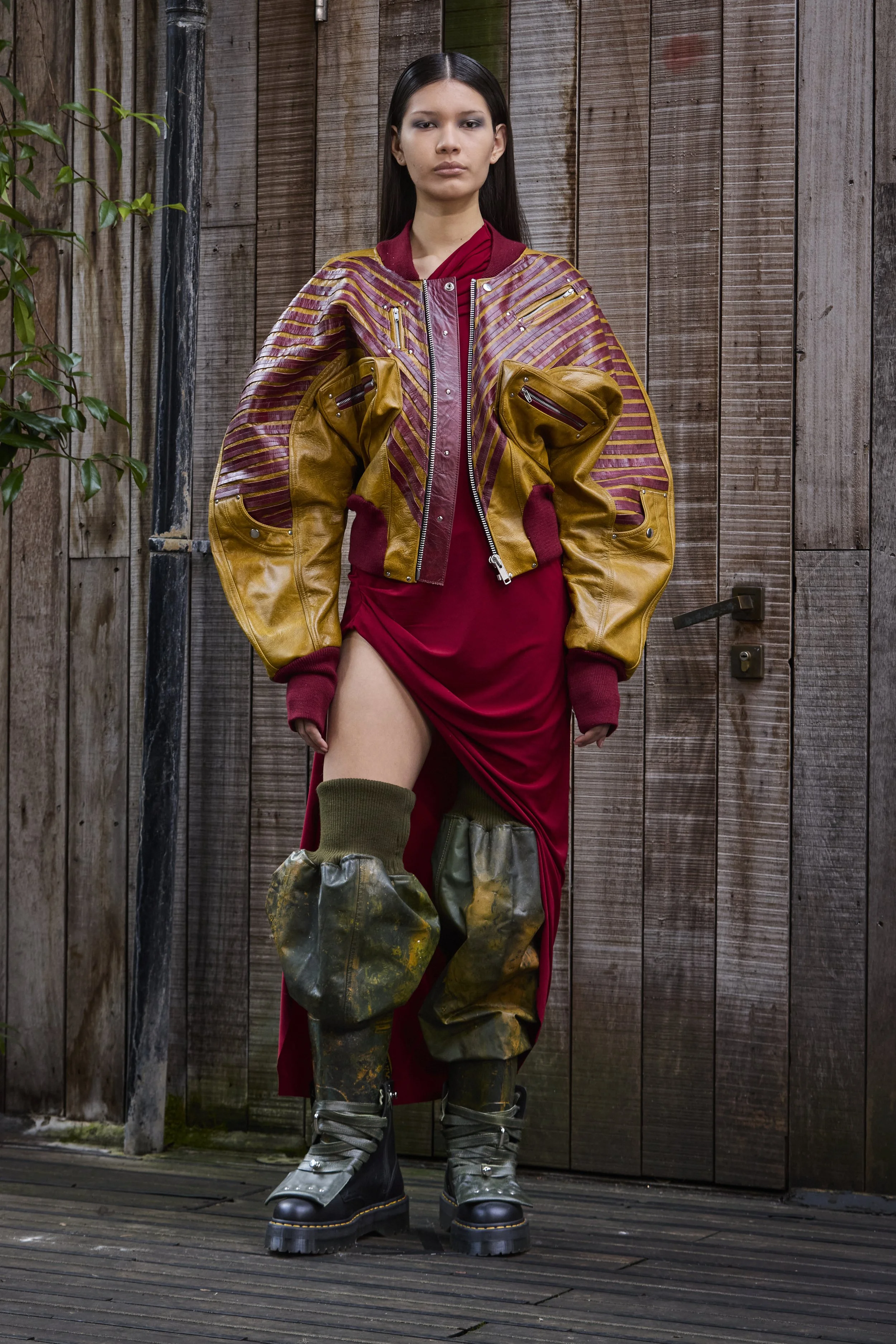
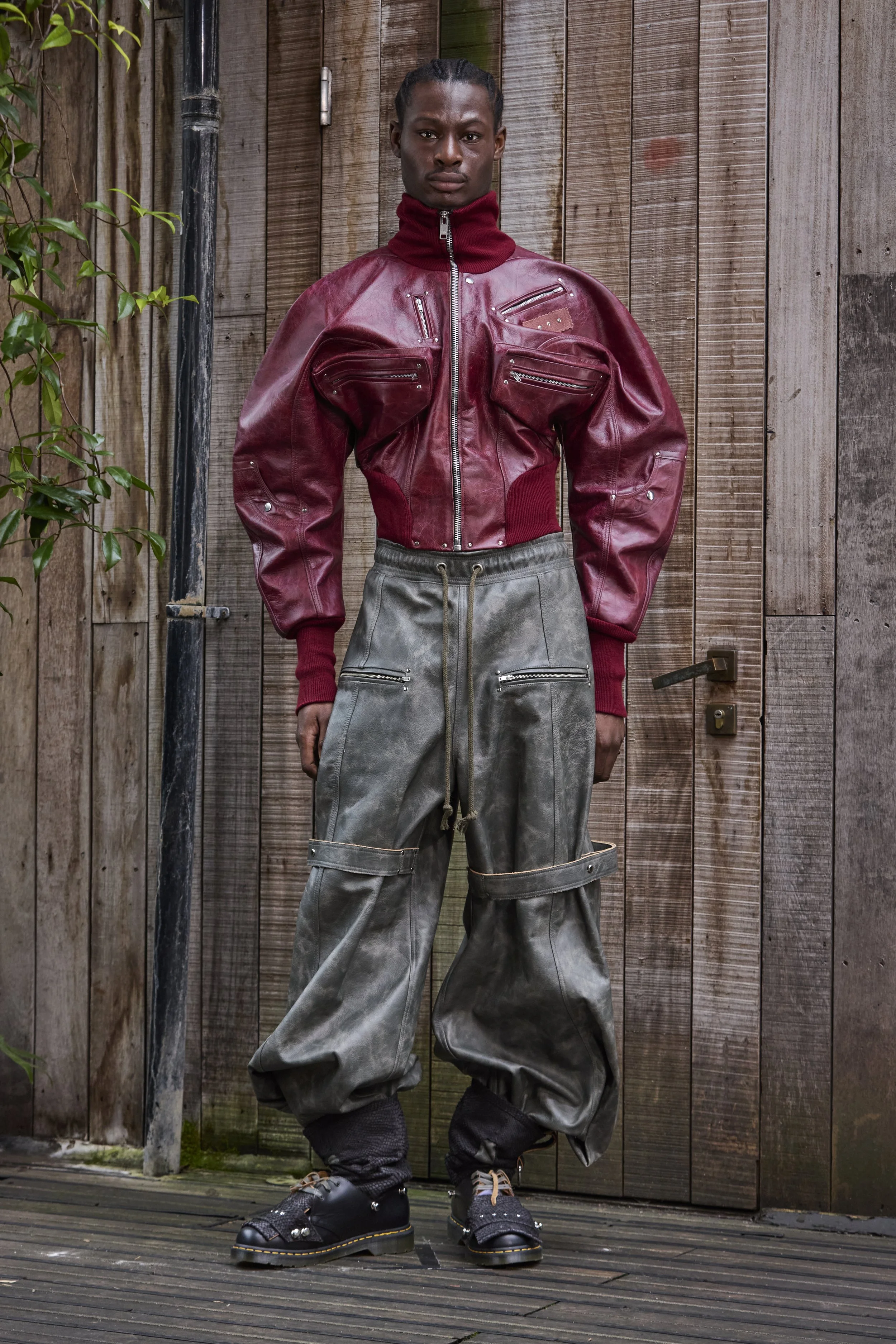
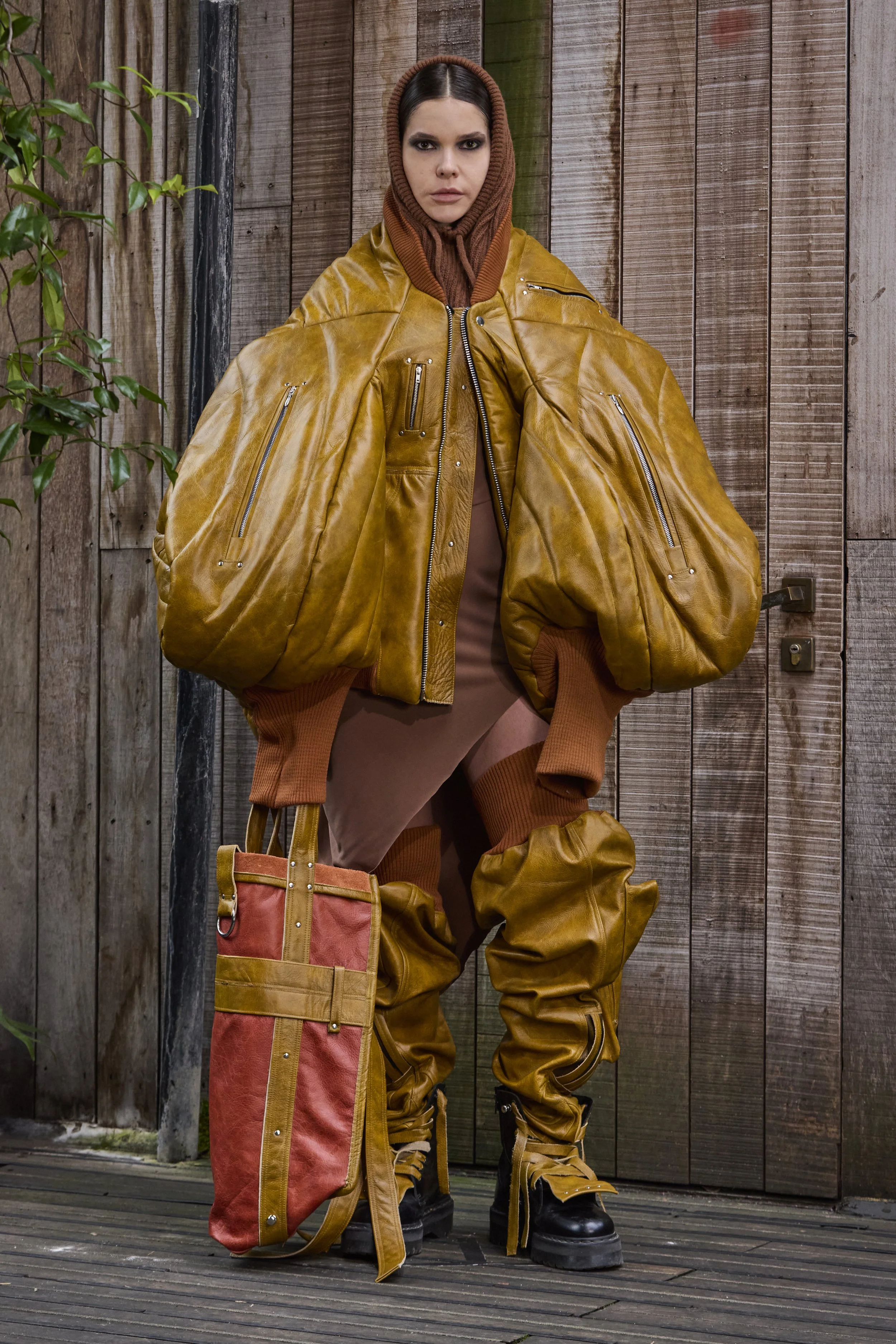
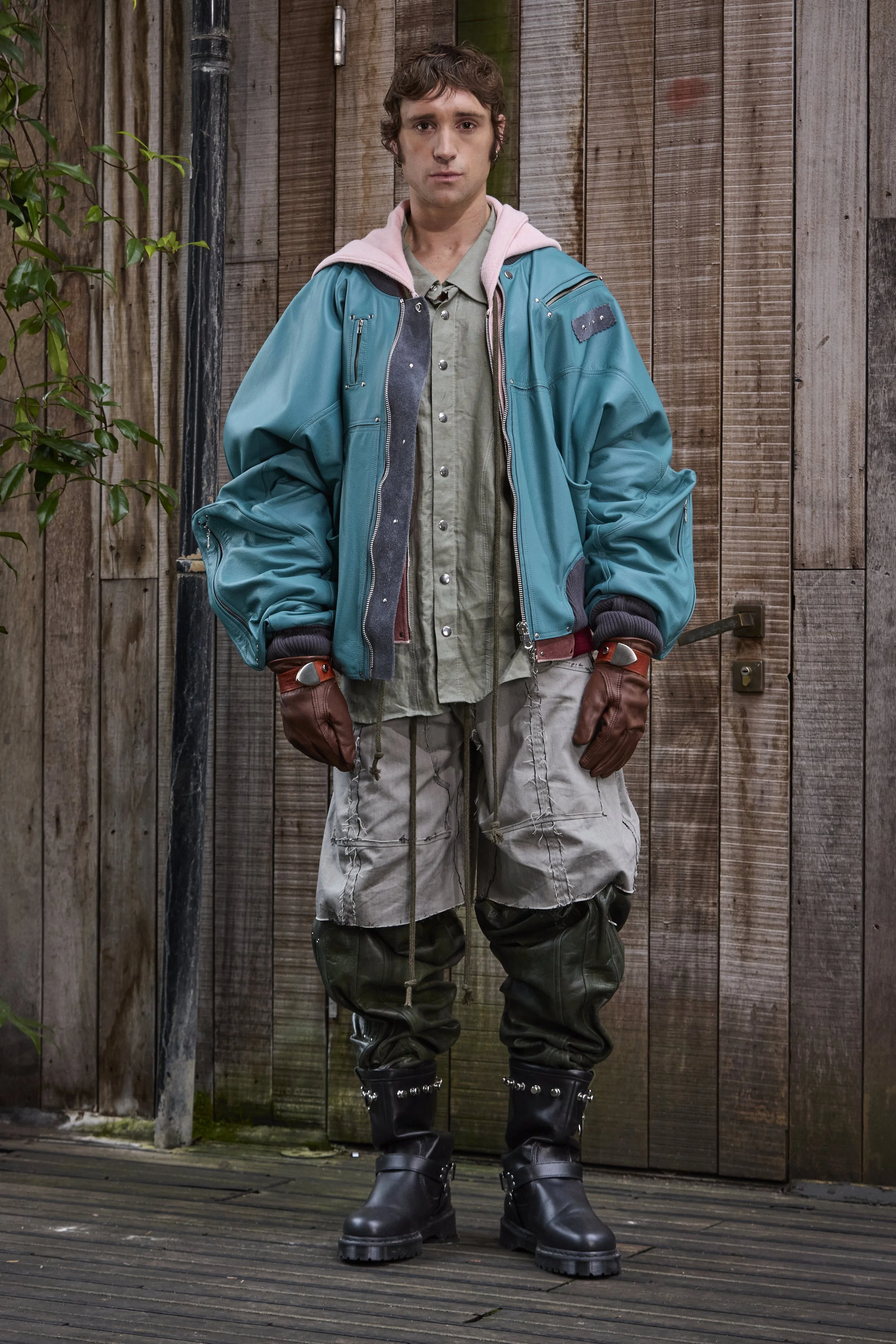
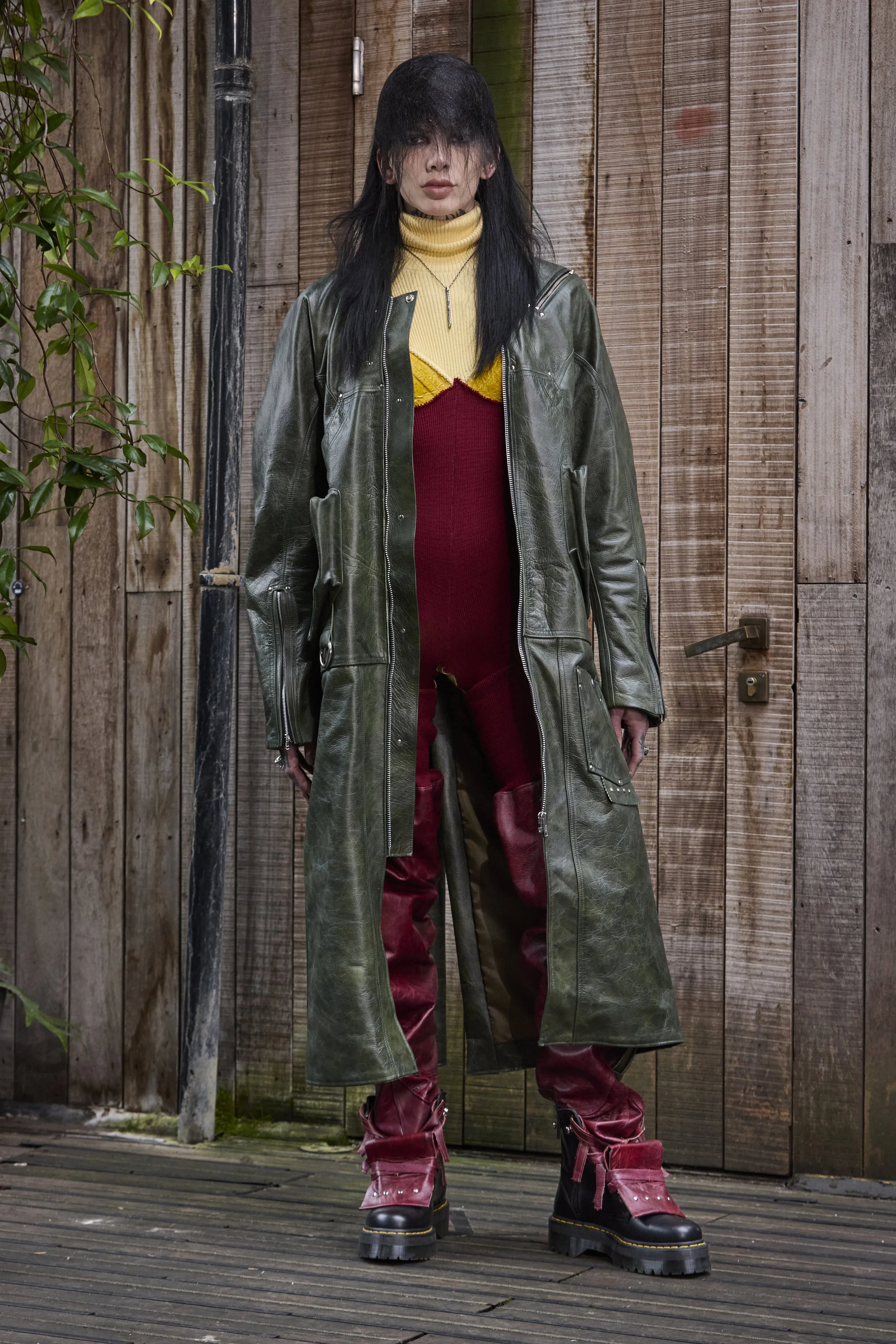
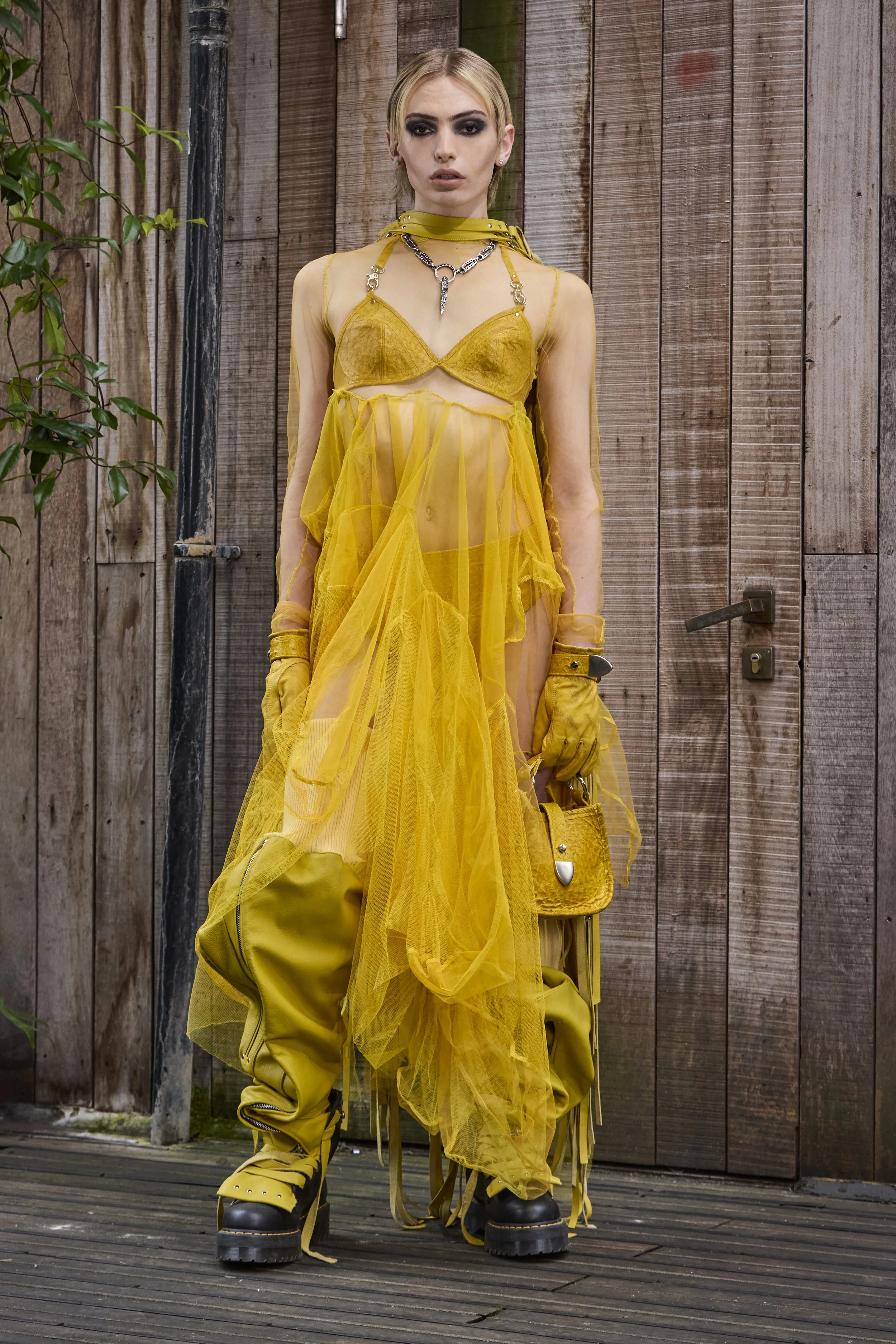
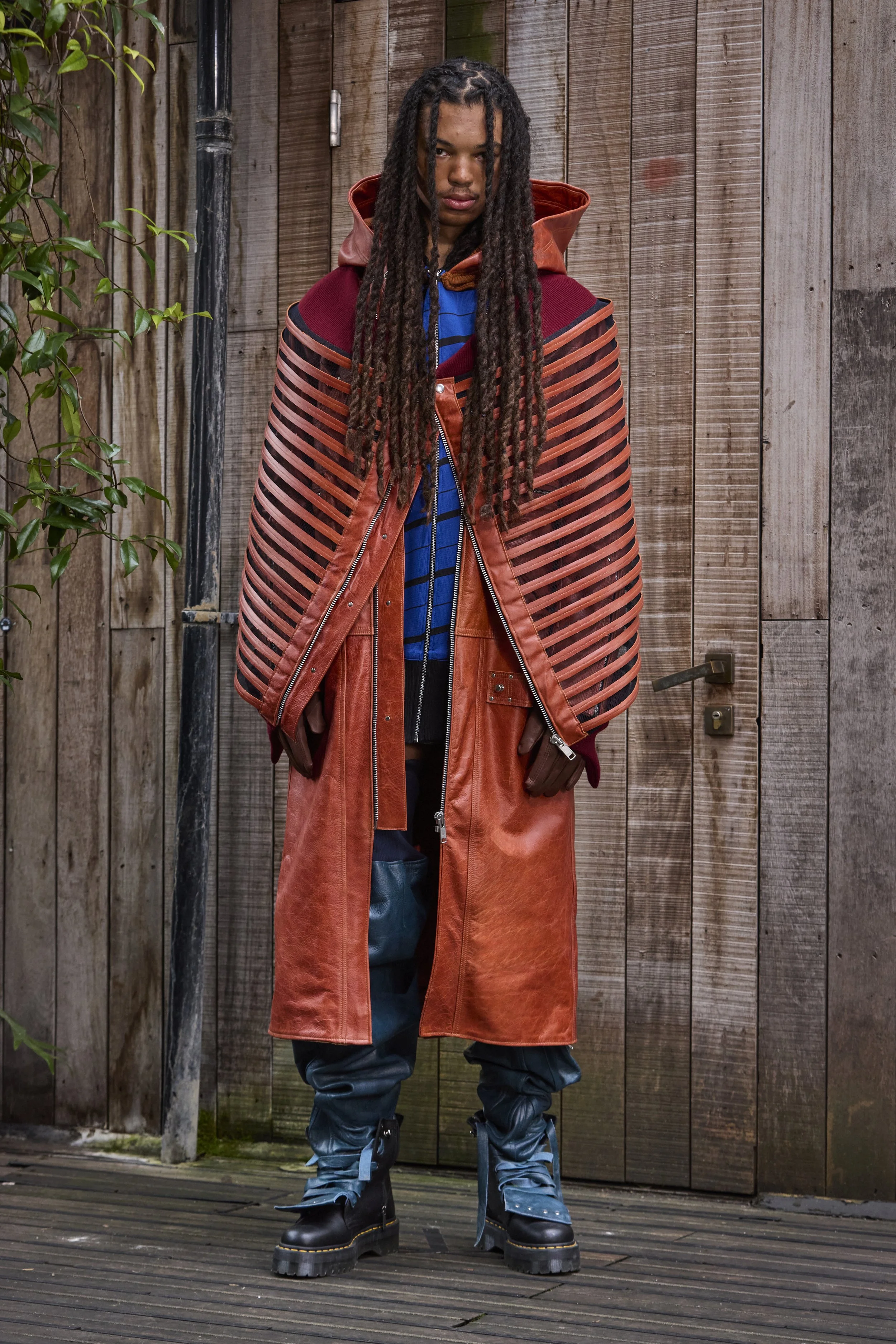
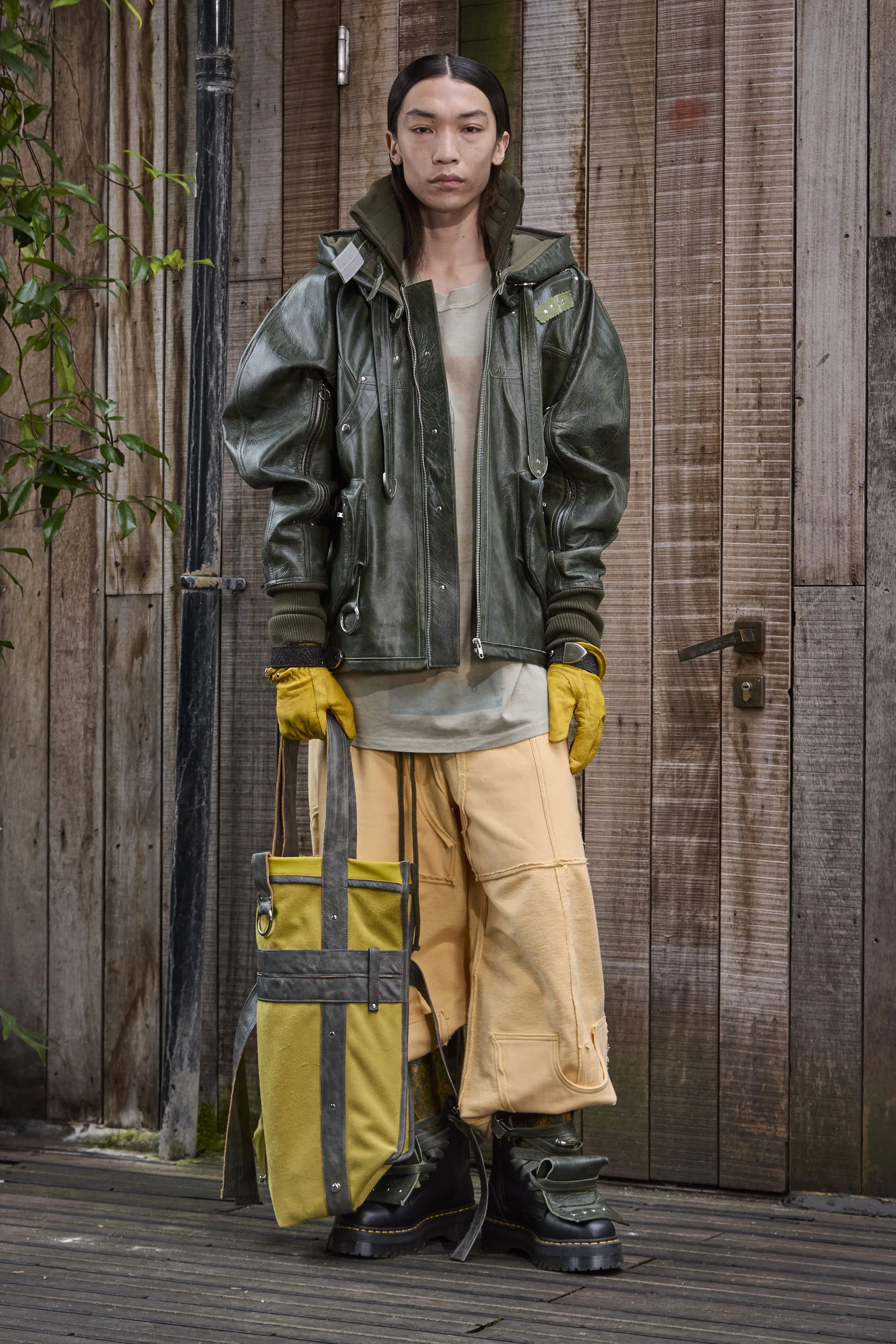
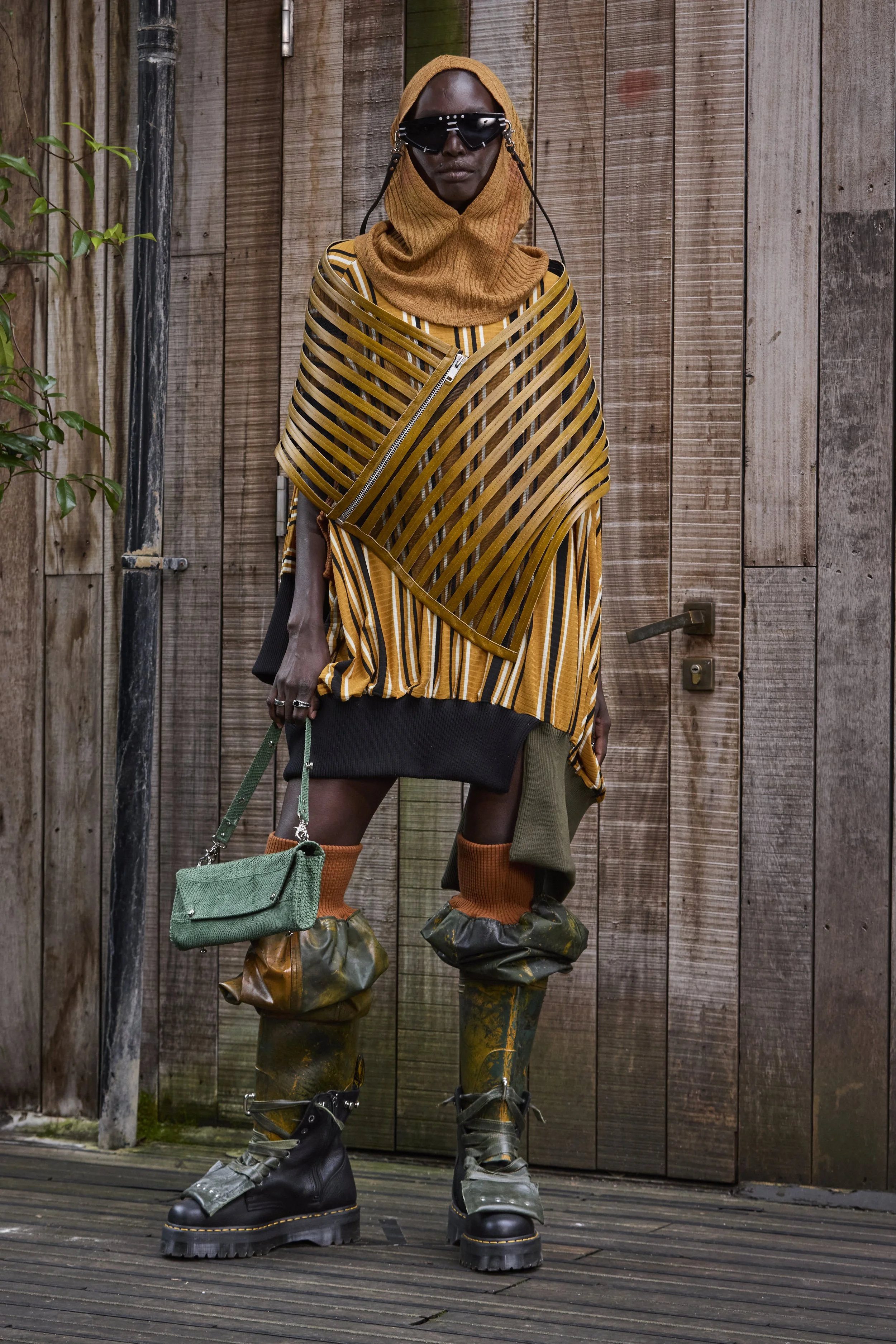
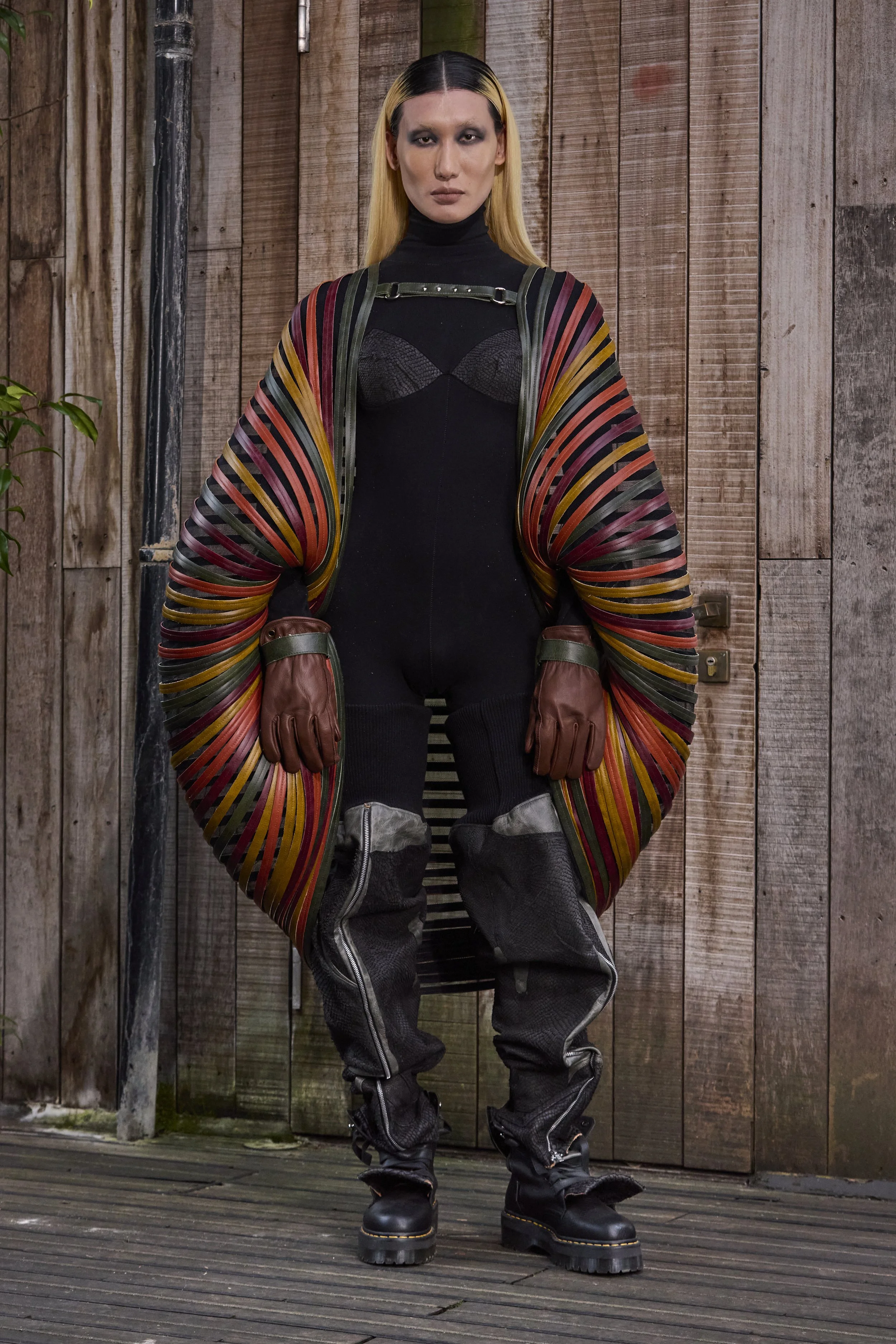
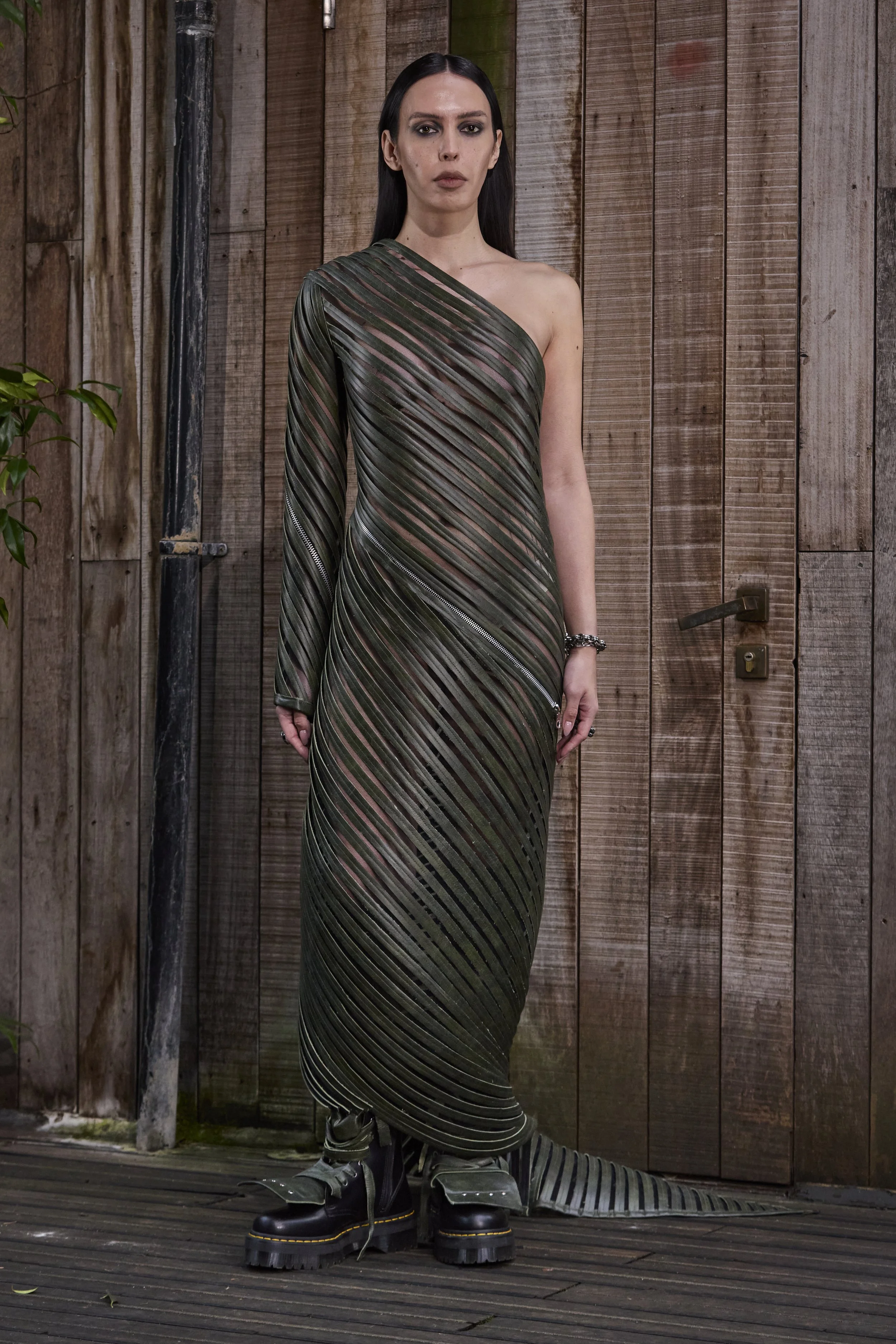
Leather dominated in myriad forms, including fish leather sourced as a by-product in line with sustainability remaining a pillar of Prothmann’s in-house production model. Gathered leather was belted and bolted, strapped and secured to manipulate ripples and channels of fabric. Thinly cut strips were reinforced with boning, molded into grandiose sculptural contours that flared like insect wings or the shells of armoured creatures. Panelled into ventilated cases, they warped around the torso, amplifying proportions with arduous linear control and rigorous spacing.
Lemon-yellow thermal turtleneck punctured oxblood bodysuit, styled with floor-length green-veined leather outerwear. Monochrome ensembles provided breath between the collection’s saturated bursts, slotting into the lineup like moments of stillness amid storm. Chains draped necks; thick gloves and harnesses tightened silhouettes; industrial accents of eyelets, lobster clasp, exposed zips pierced the surfaces.
Ruched organza overcovers softened the aggression, layered into skirting that fluttered lightly over the burdened leather bases. Barely-there shirts gathered in gradient halos around the neck, colour diffusing like heat haze. Encased one-sleeve dress shapes flashed stomach and leg, balancing vulnerability against sheathing.
Footwear underscored the terrain-driven narrative. In collaboration with Dr Martens, Prothmann presented a deconstructed, waterproof hiking boot- chunkier, grungier, built for perseverance. Ribbed cuffs atop boot covers reminiscent of firefighter uniforms, reinforcing the survivalist undertone. Quilted leather parkas and structured outerwear extended functionality, pieces designed not merely to be worn, but to be inhabited.
Cabaña thrives in duality: rural escapades meeting metropolitan intensity, Mexican pigments colliding with London’s industrial edge in a conflict of glamour and grit. In silhouettes intentionally gender-fluid, the body becomes canvas, scaffold and battleground all at once, governed by visceral use of colour and architecture. Conjuring humidity, earth and rebellion in equal measure, Prothmann’s AW26 presentation saw fashion as a transportive device.