Yaku’s Evolution of Combat
Words by: Carolina Fernandez Bold
Images by: @framedbycecily & Blonsten Productions
London-based designer Yaku Stapleton returns to Fashion Week with the seventh chapter of his radically imaginative design universe. Informed by his Caribbean heritage, The Possible Family in RPG Space draws on diasporic memory and speculative futures, woven together with the logics and aesthetics of fantasy role-playing video games. It is an Afro-futurist vision of representation and possibility.
But for AW26, Yaku leans into the harder implications of this limitless universe. Rooted in a long-standing interest in martial arts, Evolution of Combat becomes a study of survival and discipline. Dancers replace models this season, performing combat-inspired choreography to a score that blends orchestral drama with grime beats.
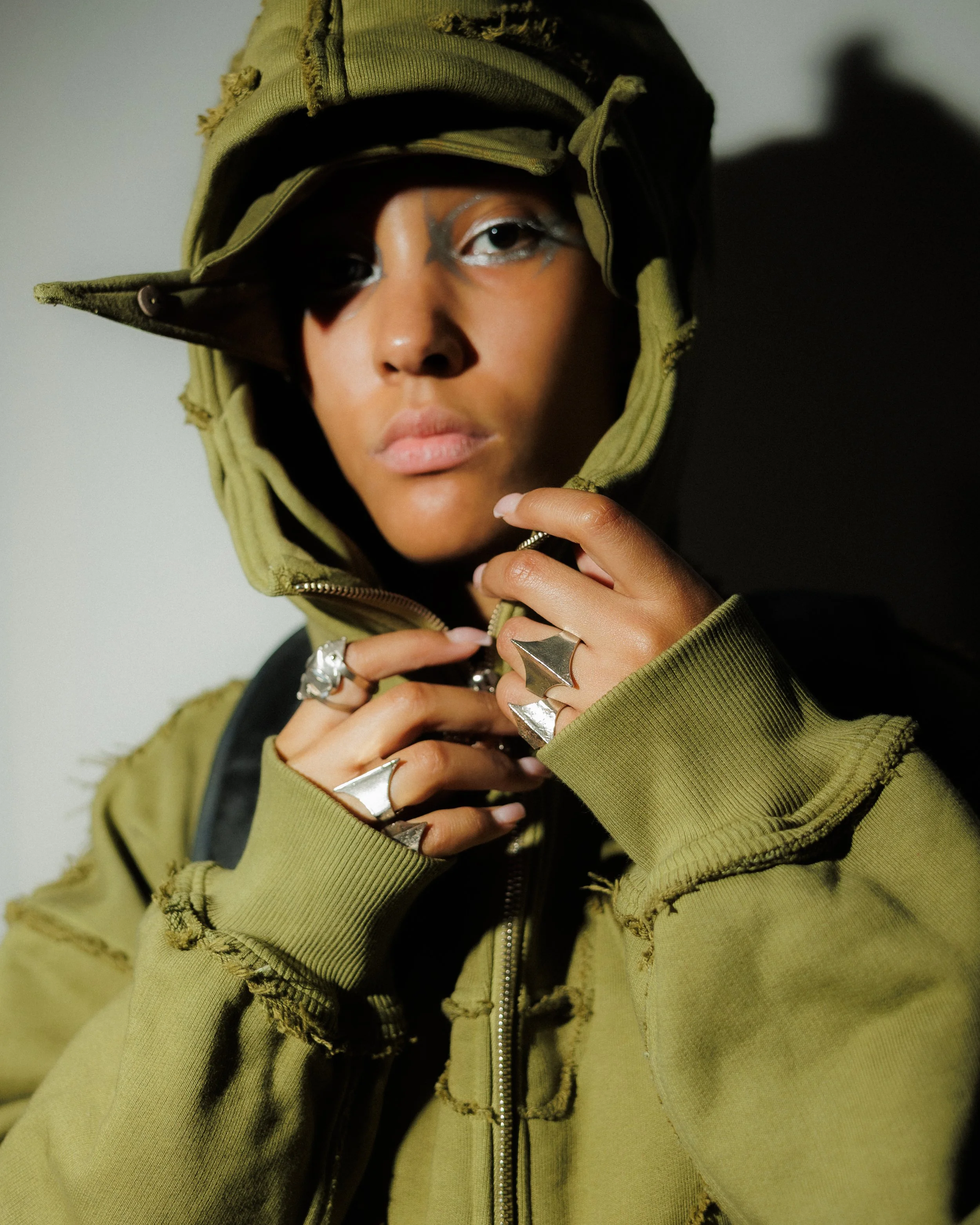
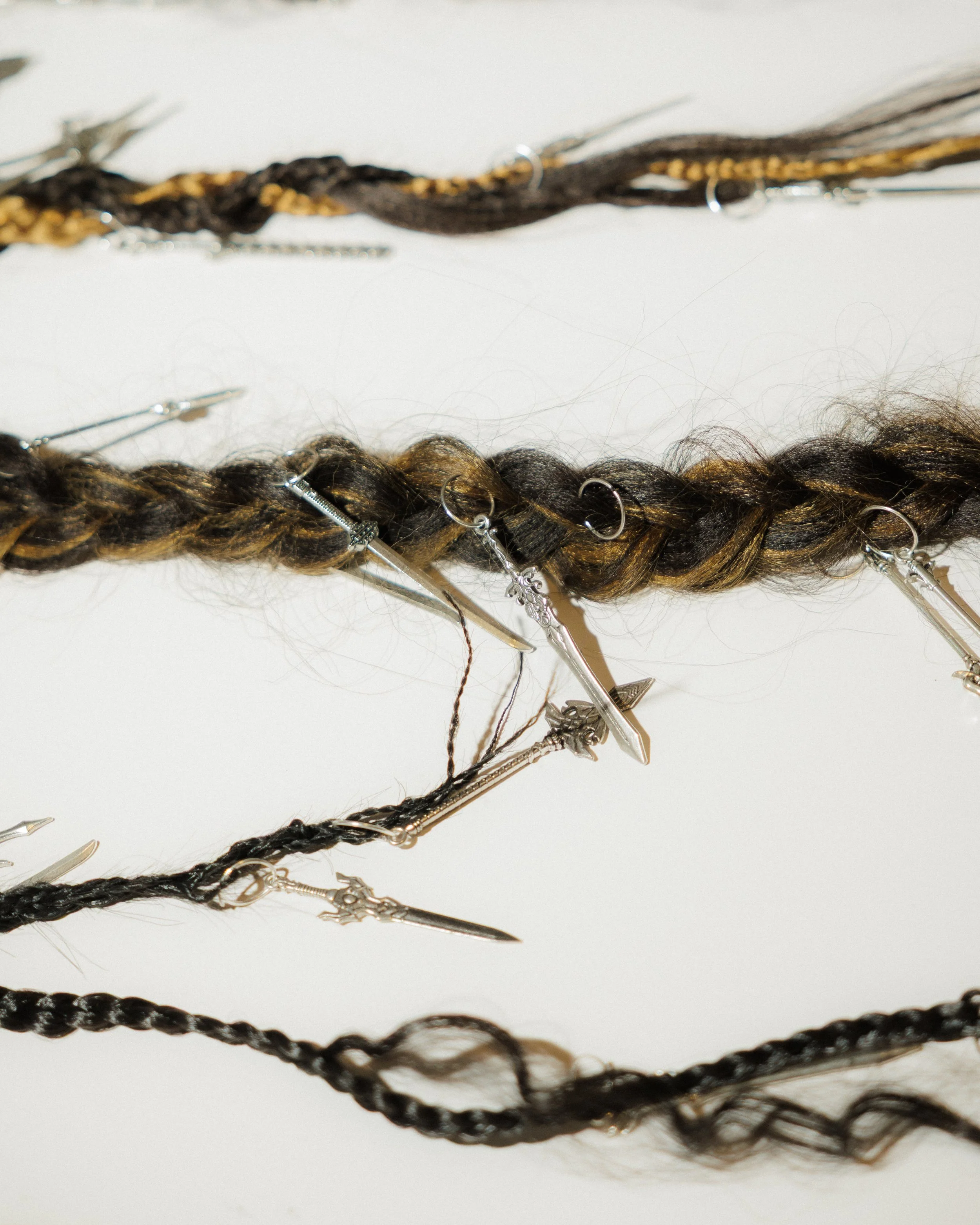
On the runway, fabric swords are sewn sheathless onto the legs of cargos and joggers, or hang from the waist in a skirt of blades. Yaku’s signature pointed fabric shapes appear over trousers, almost tunic-like in their drape. In another look, angular panels are stacked to evoke armour.
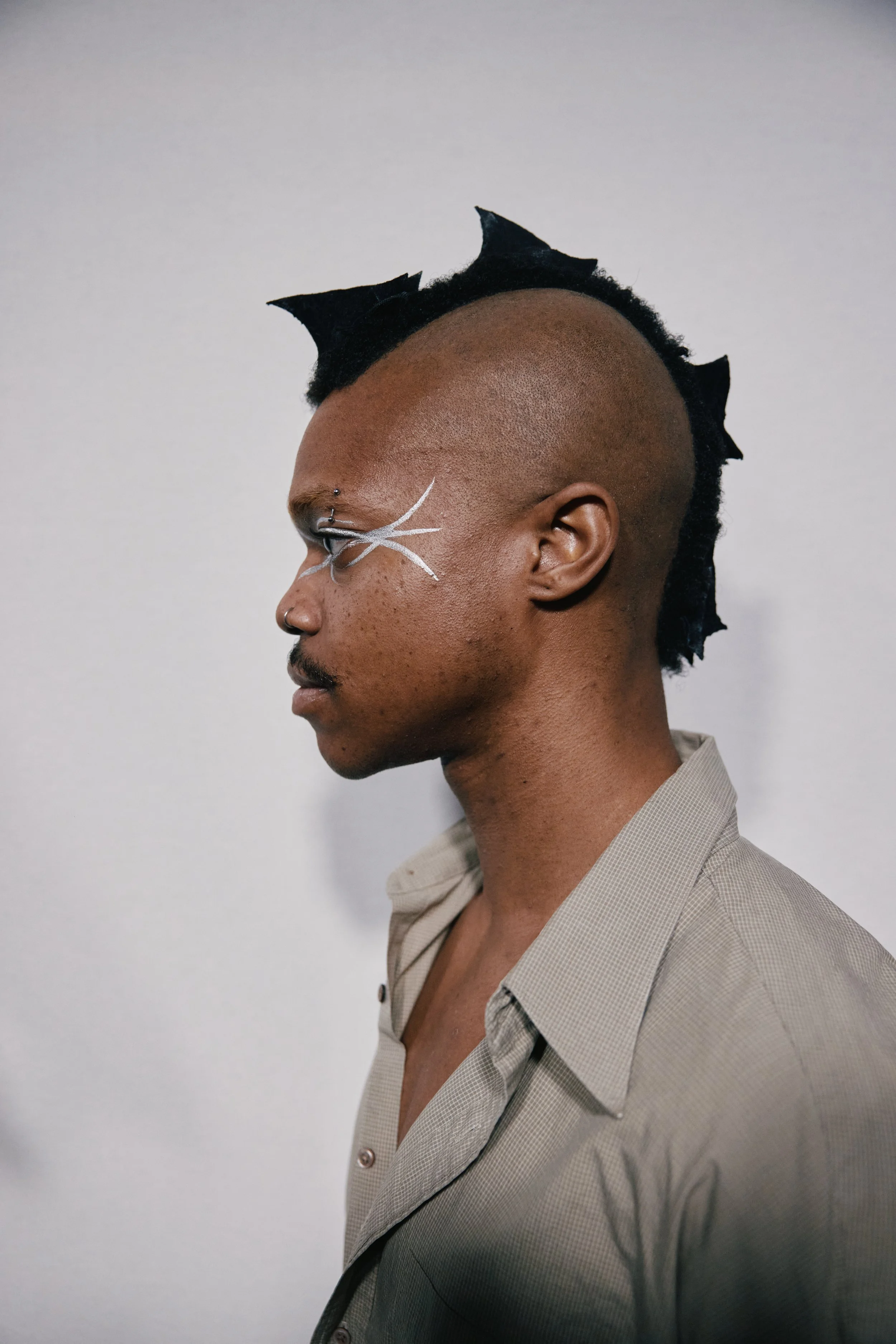
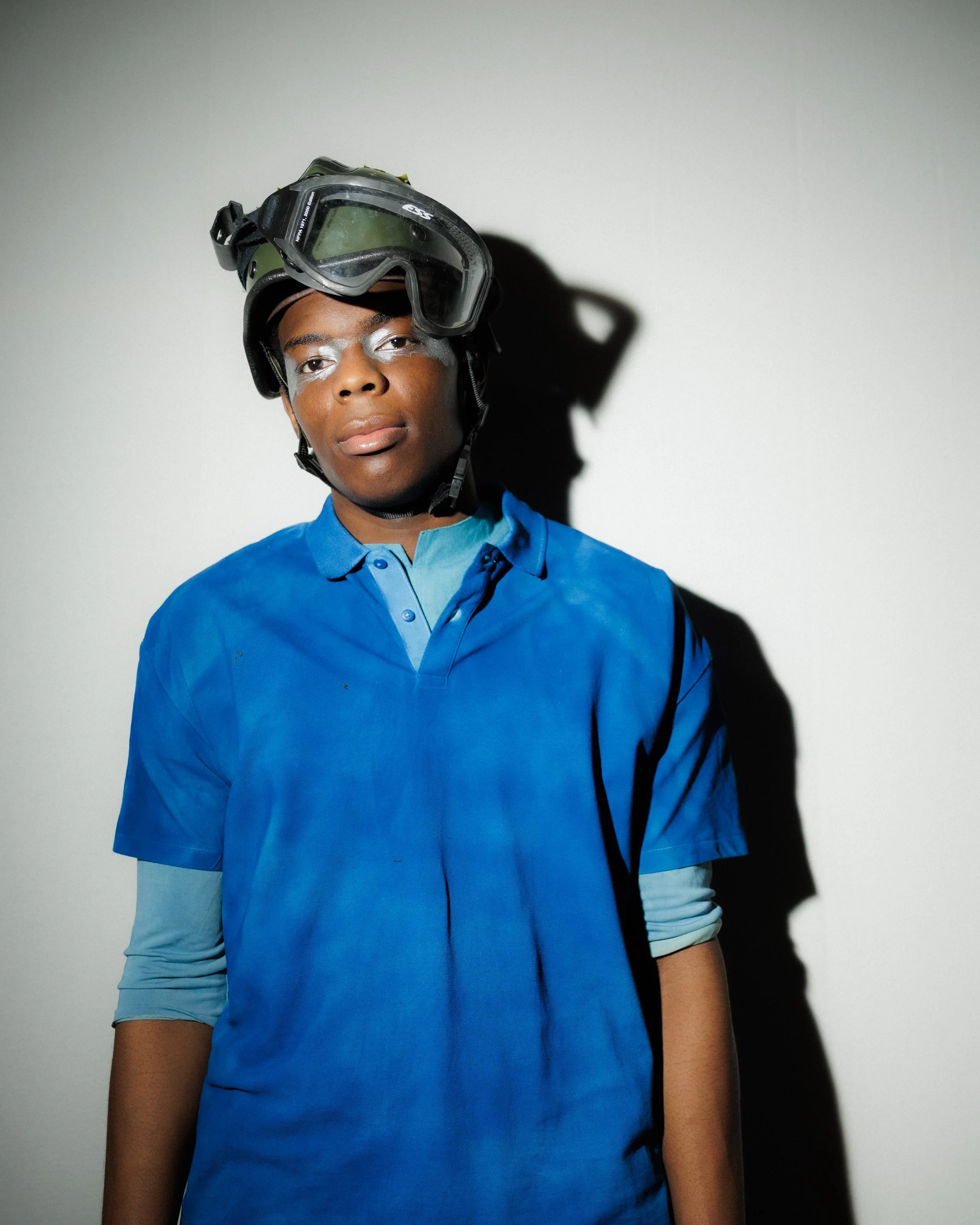
Caps, hats, and especially hoods dominate headwear, sometimes layered together for added presence. Where these are absent, hair becomes part of the silhouette: sculpted
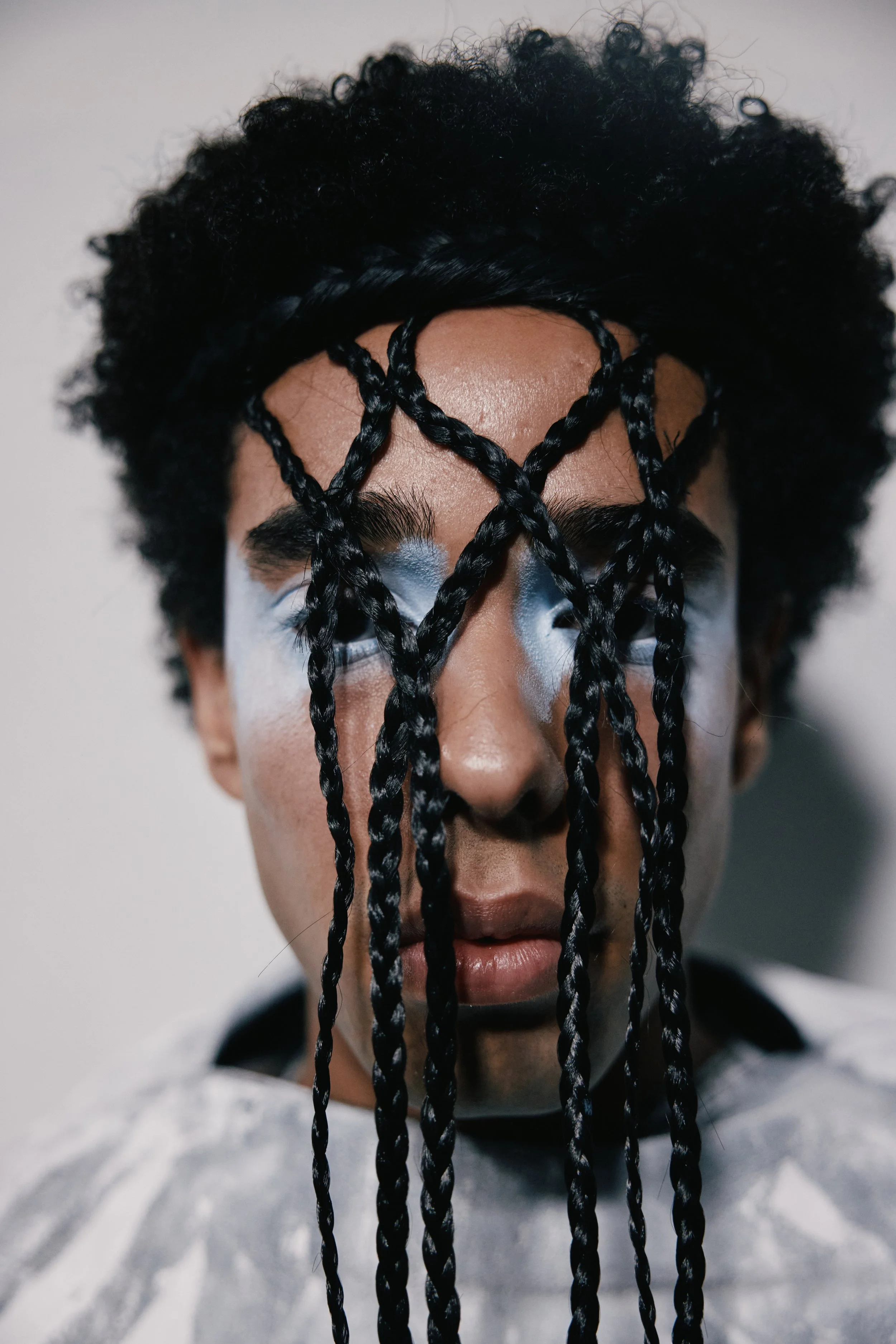
upward into sharp, angular forms that add height and severity, or braided across the face like a veil, echoing the protective concealment of the hoods.
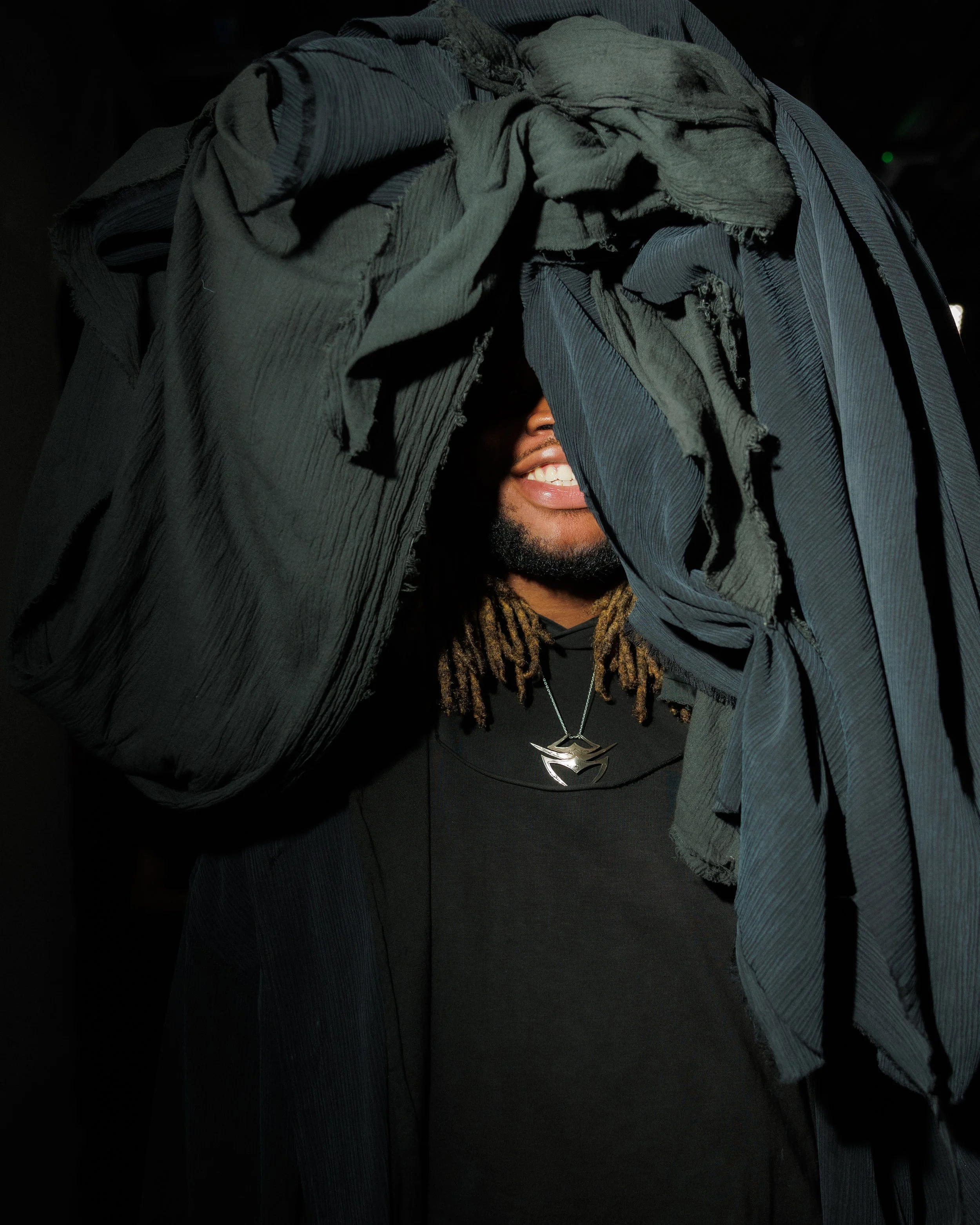
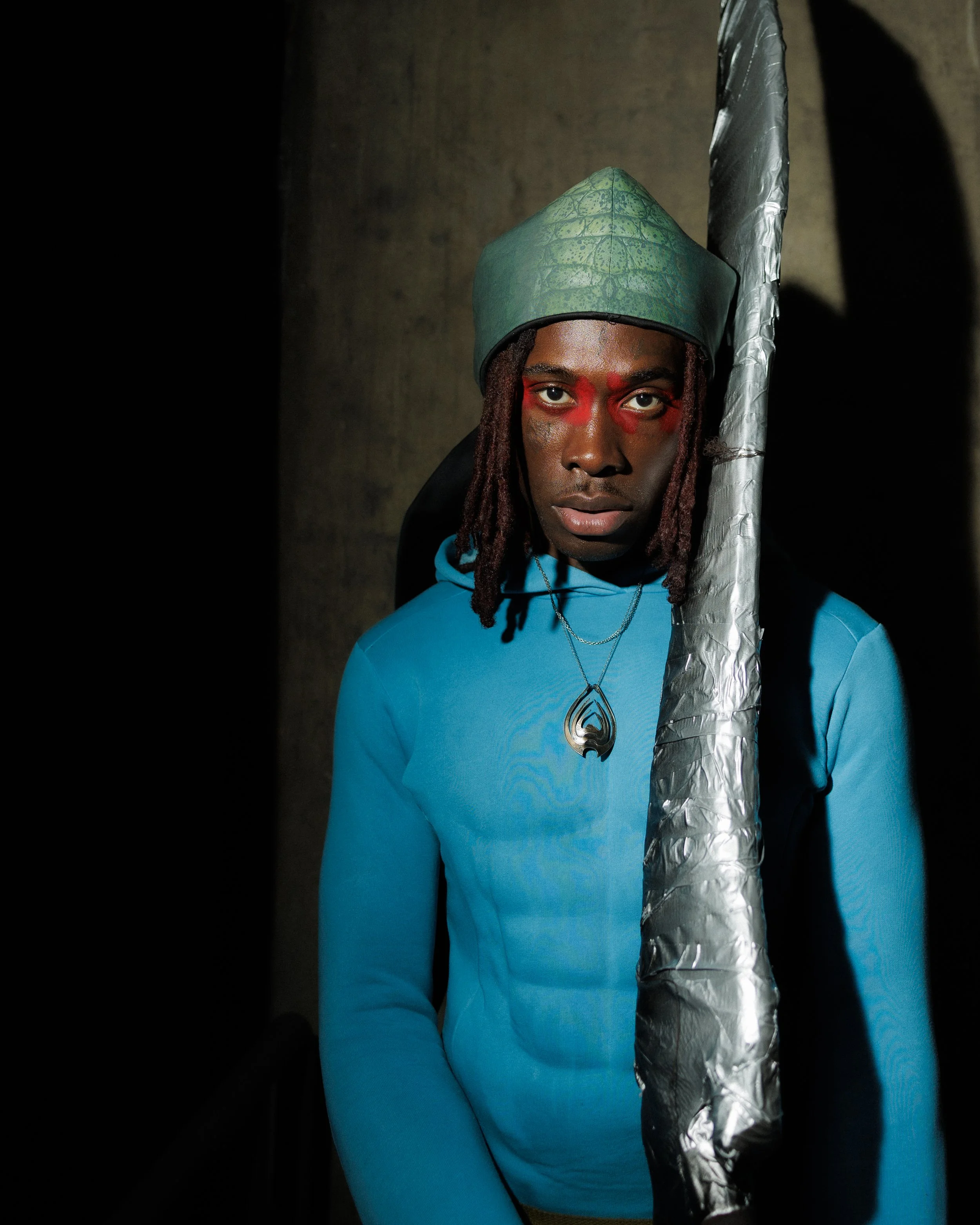
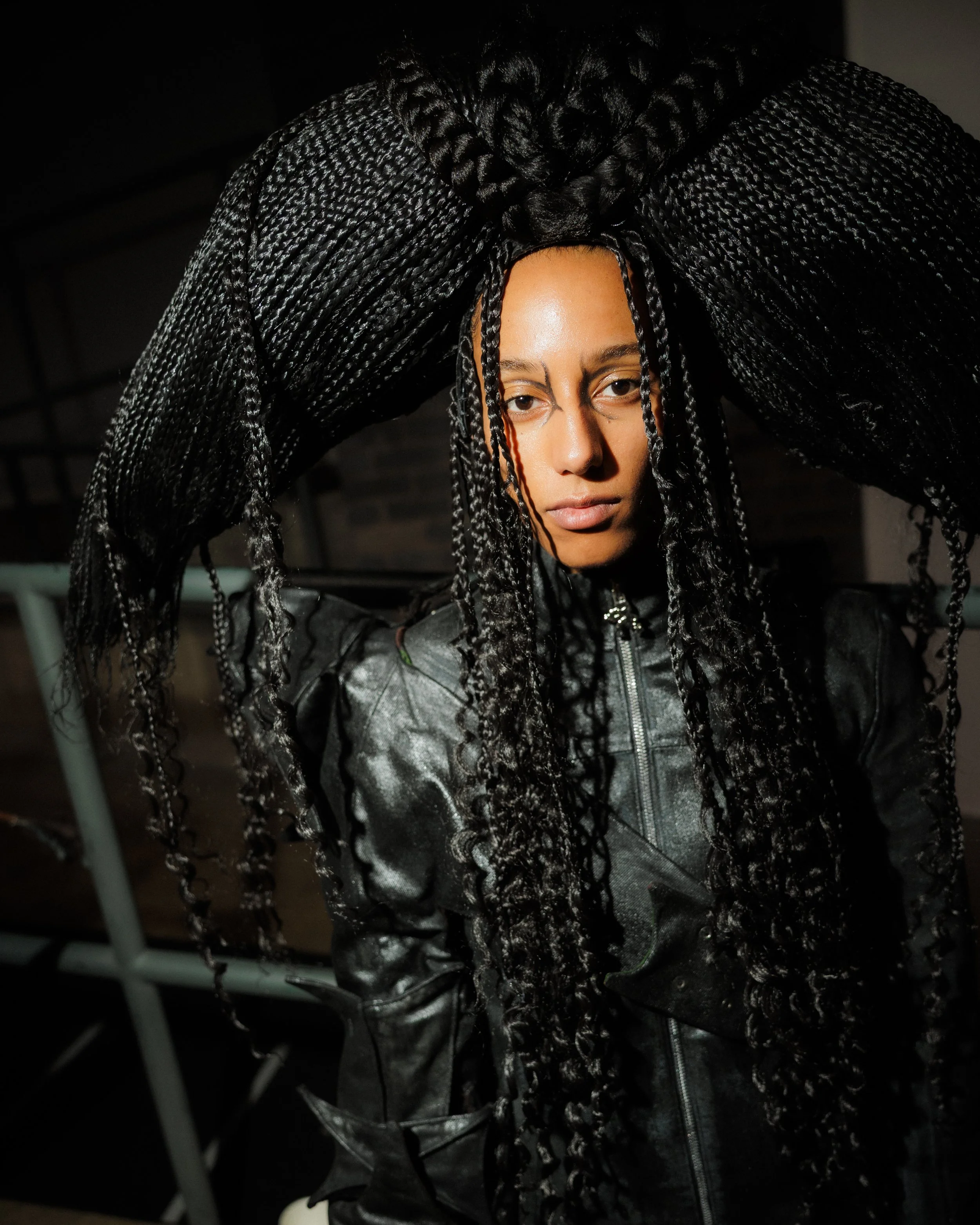
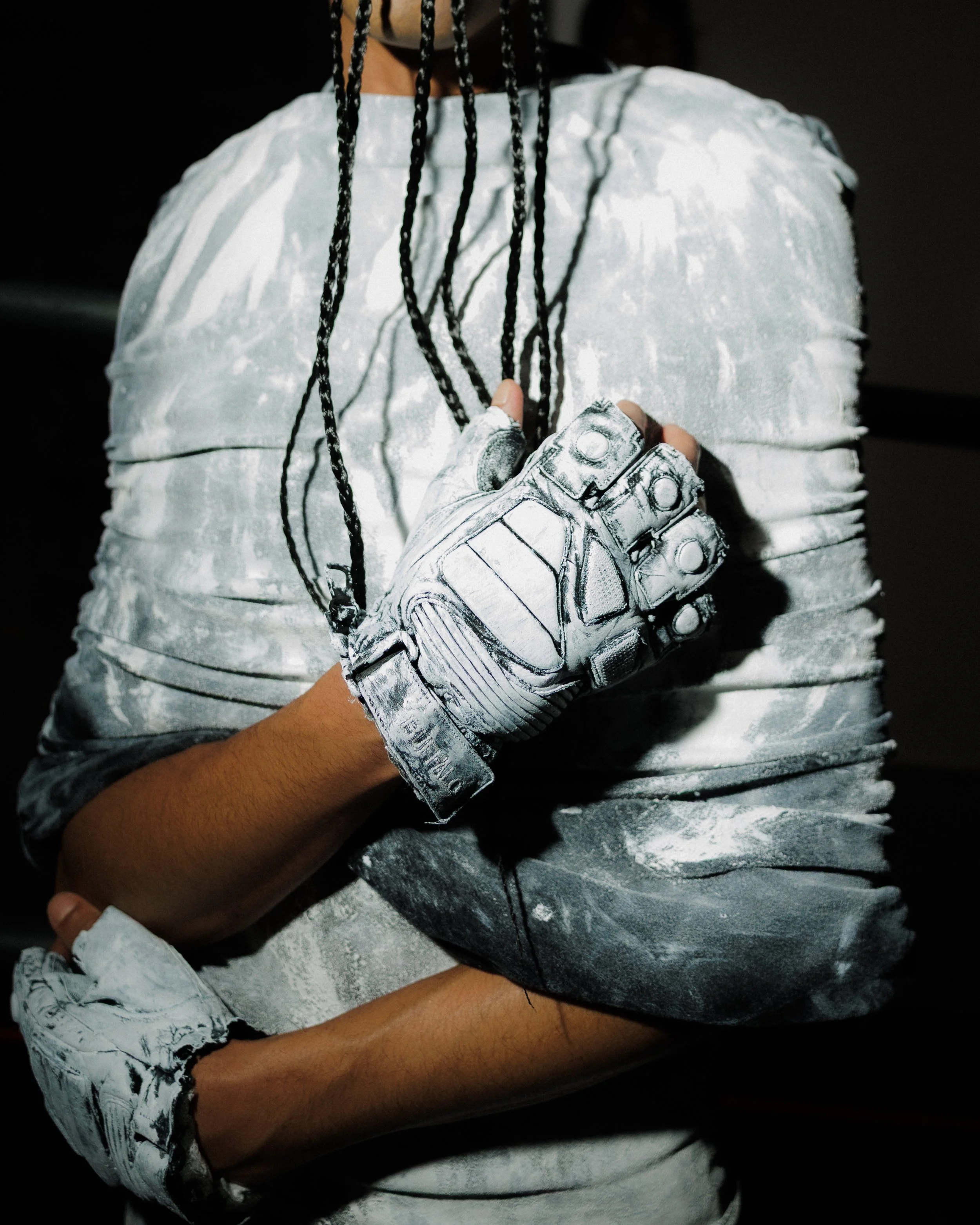
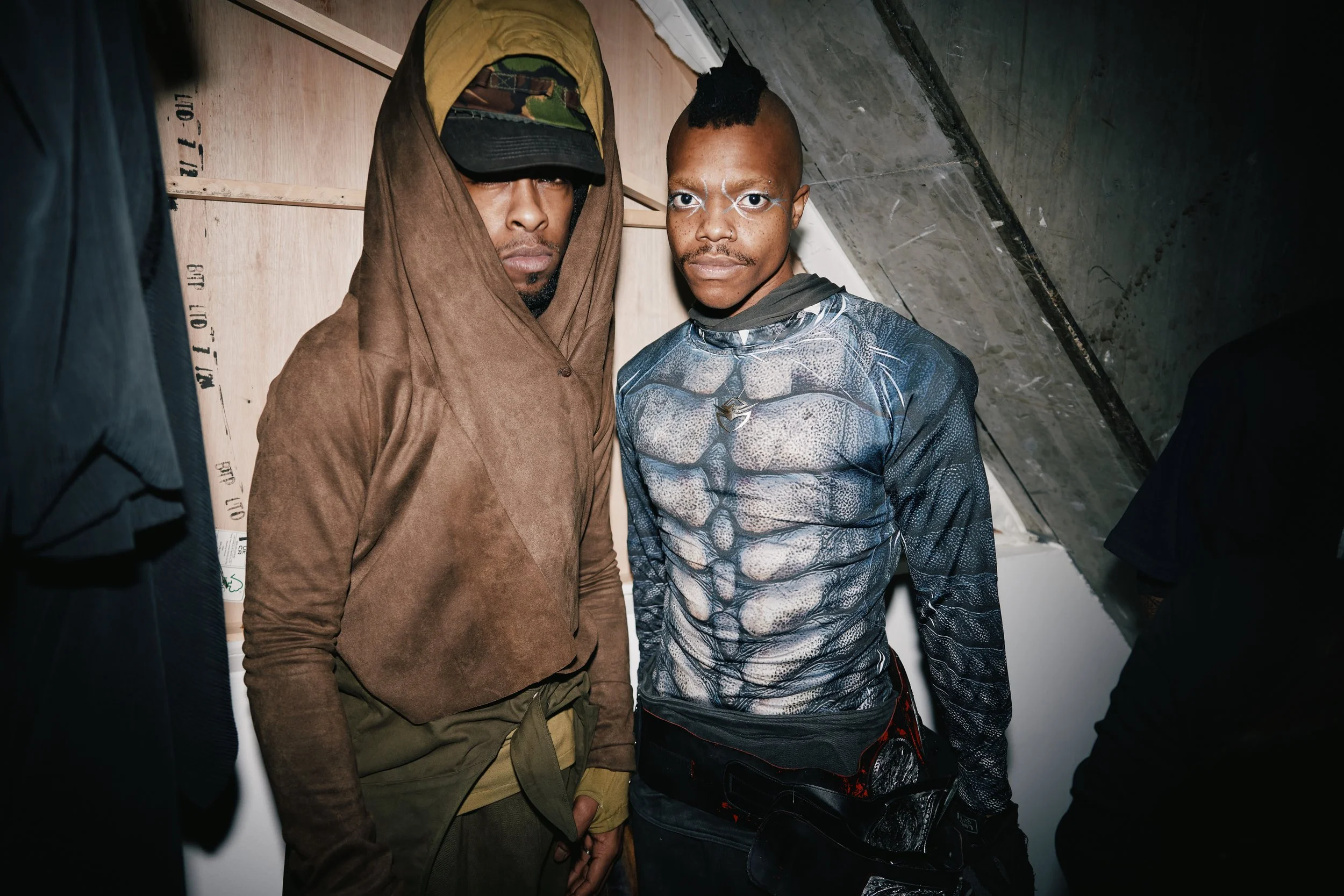
While much of the collection embraces volume in boots, sweeping cloaks and exaggerated proportions, there are tighter, form-fitting moments too. Skin-tight compression tops emphasise the body’s strength as padding on the abs sculpts a pronounced six-pack.
Above the runway, two human-like figures hang suspended from the ceiling, pierced with arrows. Parallel to this, the set unfolds ominously: two opposing groups stand in army-like rows.
They wear identical black cargos and utility jackets, hoods cinched tight like sealed flower buds, erasing faces. Nearby, a beheaded body hangs upside down against a jagged rock formation.
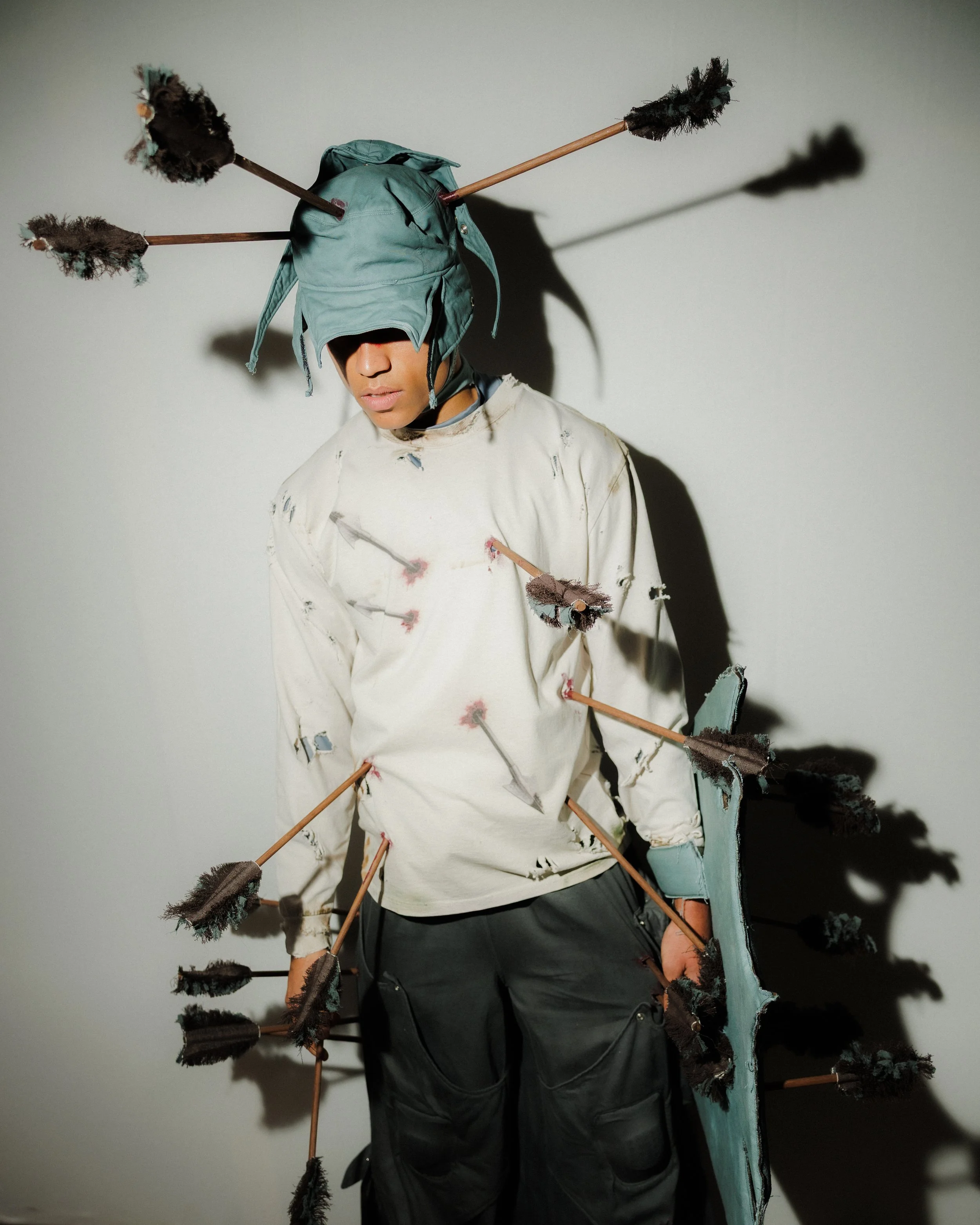
Violence hangs — literally — above and beside the runway. Yet the dancers ignore it. Its presence is suggested only in props: a heavy sword, empty arrow sheaths, or a lone dancer moving forward, pierced by arrows.
By not engaging directly with the set, the dancers embody the show’s underlying tension: bodies still carry conflicts and hardships, even when these are suppressed or erased from history.
As Yaku Stapleton explains, he is exploring the space between optimistic re-imagination and acknowledging reality:
“We’re trying to make art that responds to the world rather than simply offering hope — exploring a negotiation with reality alongside the desire to evolve, because hope alone doesn’t drive change.”