
Robert Carlyle
Inside Three
Words By: Anya Duncan
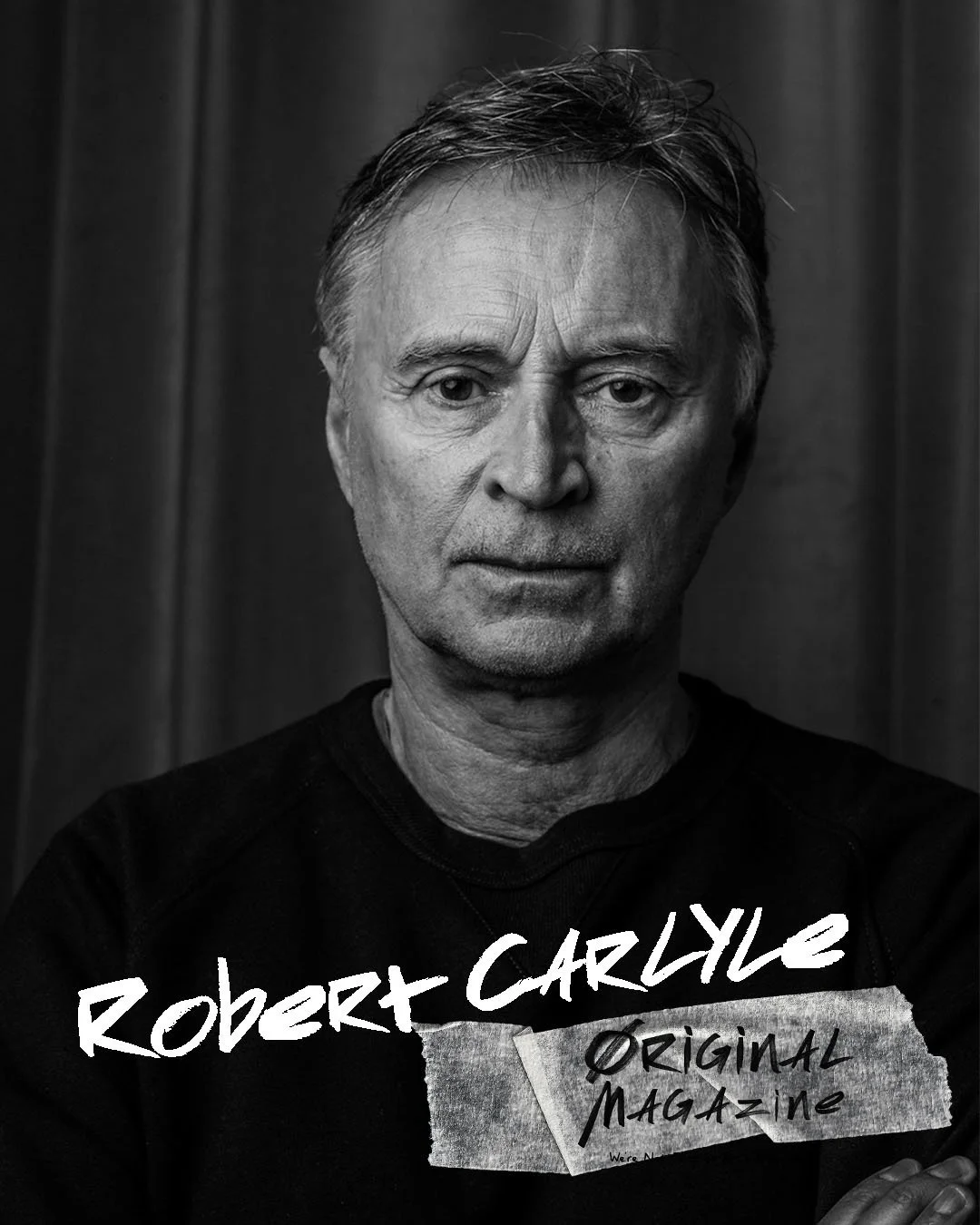
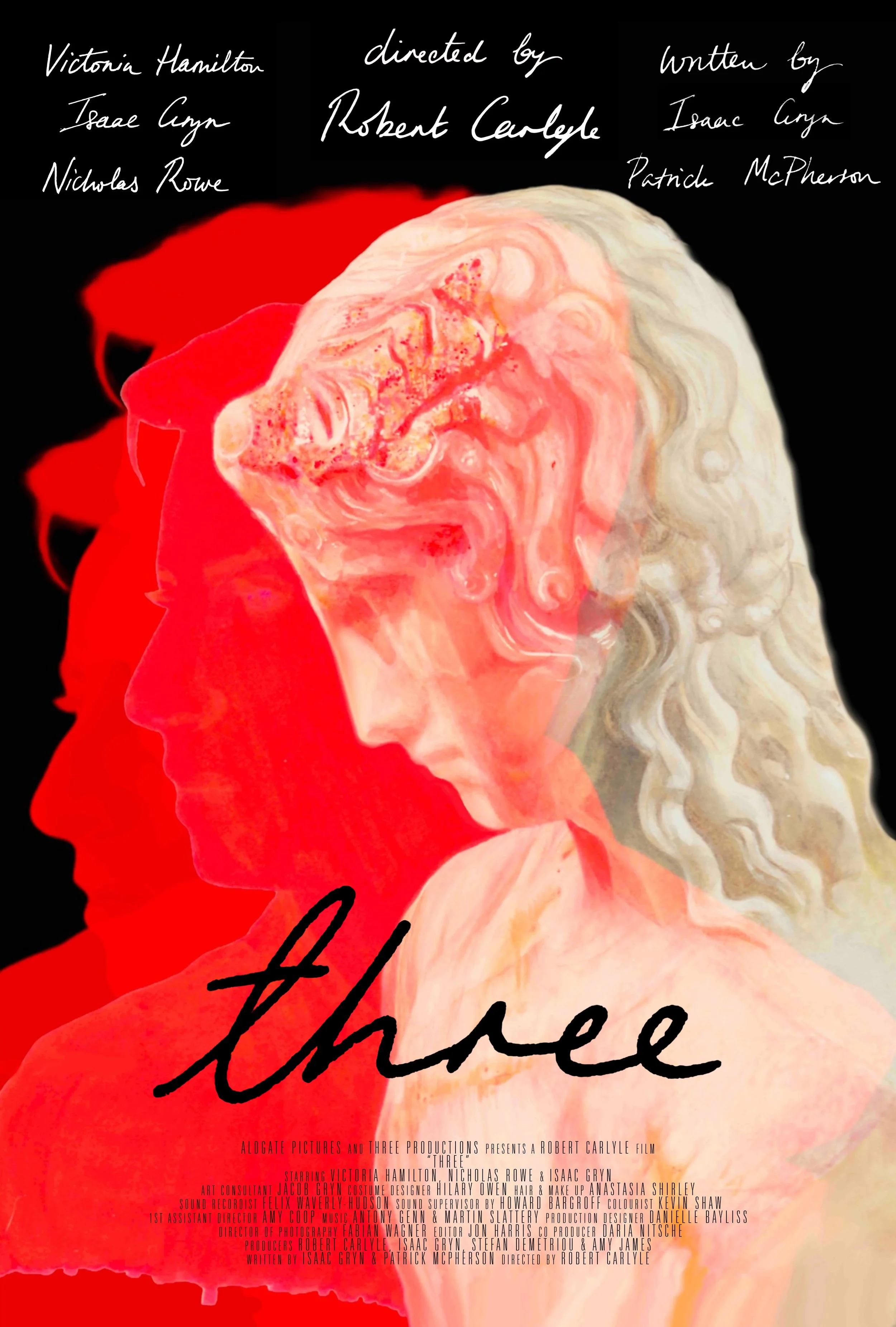
Robert Carlyle has spent much of his career inhabiting people caught between opposing forces: tenderness and violence, vulnerability and control, reason and its collapse. He has played men pushed to the edge of themselves, characters whose surfaces rarely survive the pressure placed upon them, and figures encouraged to tread bravely through their own vulnerability. Now, with Three, his newly directed short film, Carlyle moves behind the camera but not, perhaps, as far from the actor’s world as it first appears.
Because Three is a film about performance. About the games people agree to play, and what happens when the rules begin to change.
At its centre is a relationship governed by an unstable distribution of power. Matt, played by Isaac Gryn, finds himself drawn into a psychological game with Sarah and Ed, played by Victoria Hamilton and Nicholas Rowe. What initially appears to be a test gradually becomes something more unsettling: an examination of obedience, emotional exposure and the quiet violence of control.
For Carlyle, directing begins with looking.
Decades spent working with filmmakers including Ken Loach, Alan Parker, Danny Boyle and Michael Apted have given him an accumulated visual vocabulary. But Three is not an attempt to reproduce any single director's language. Instead, it feels like the product of a career spent watching.
Of learning how choices made behind the camera alter what happens in front of it.
“It’s through experience, I suppose,” Carlyle muses when considering the influences that encouraged him to experiment with the framing of Three.
“The many, many films I’ve been in, thinking about the directors that I’ve worked with and how they’ve shot stuff. Massive credit goes to Fabien Wagner, who is the wonderful DOP. It’s through chats with Fabien that I would talk about how we isolate parts of the film. Fabien was wonderful. It was a team effort.”
That collaboration was rooted in trust. Carlyle had already worked with Wagner on the feature he directed in 2014 named The Legend of Barney Thomson, and describes the cinematographer as precisely the kind of presence he needed while entering unfamiliar territory.
“DOPs come in many different shapes and sizes, but Fabien is the calmest guy I’ve ever met in that role. I’m coming at it from the acting perspective really, so you need someone that you trust to show you the way in terms of lenses and lighting.”
It is an admission that reveals something fundamental about Carlyle’s approach. He may have moved behind the camera, but he has not abandoned the instincts that made him an actor. If anything, he has carried them with him.
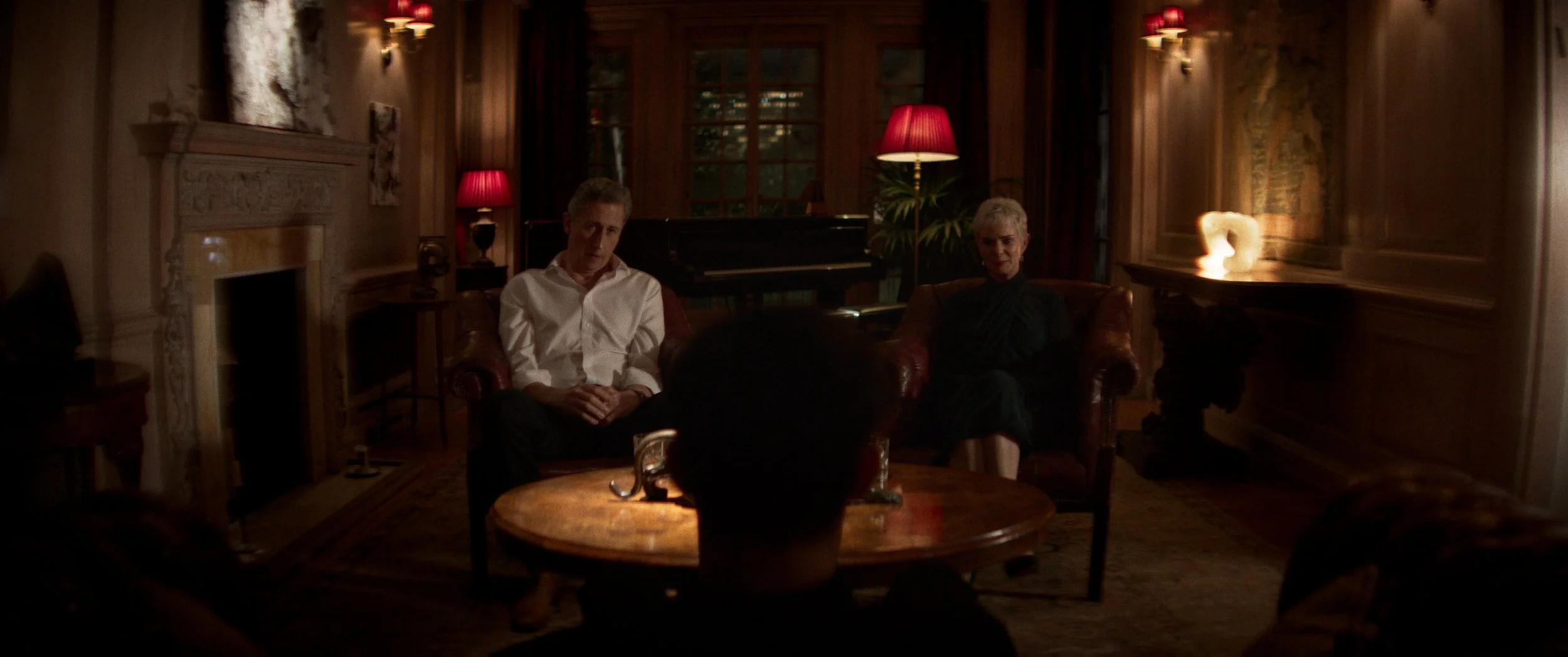
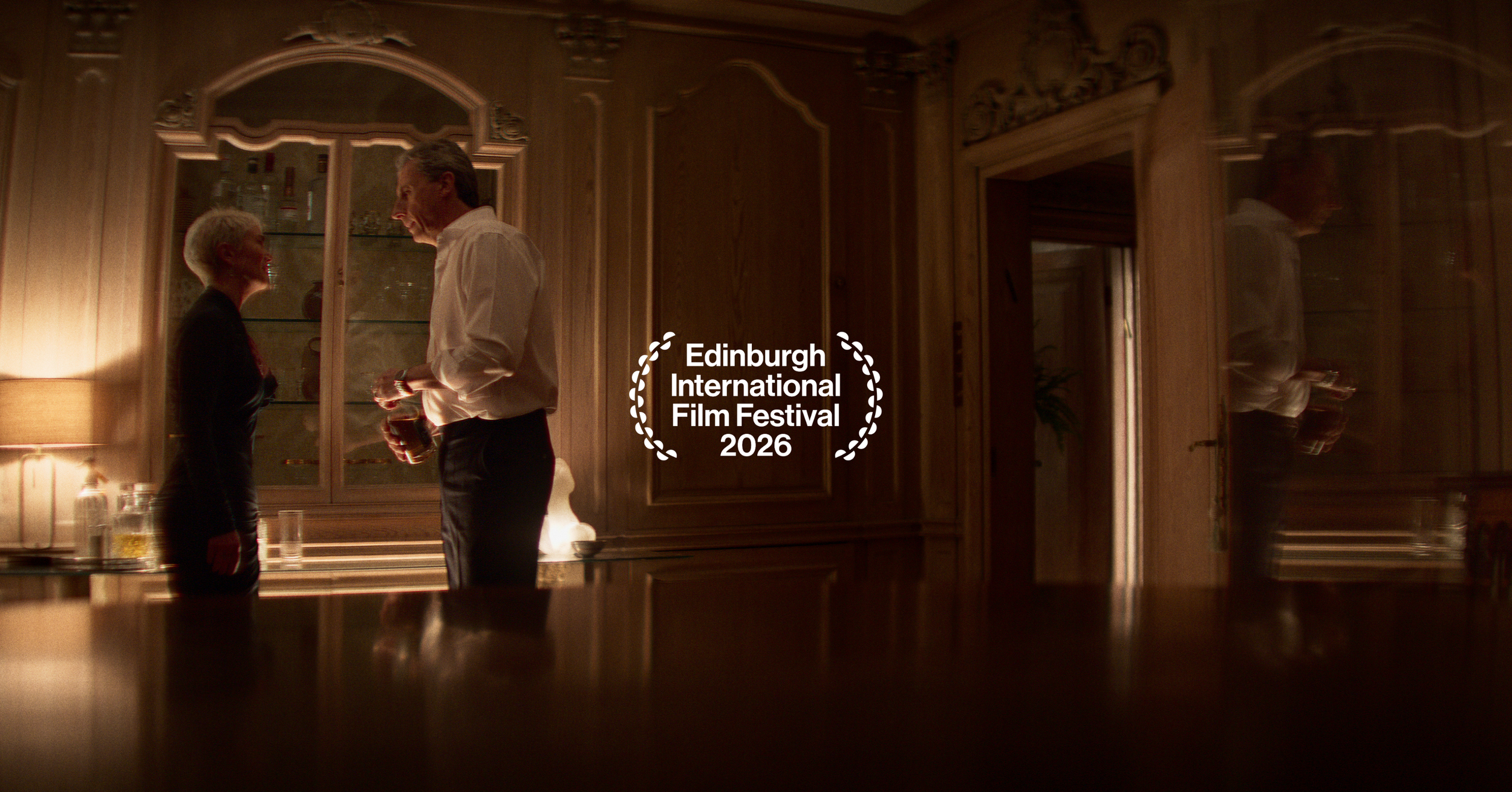
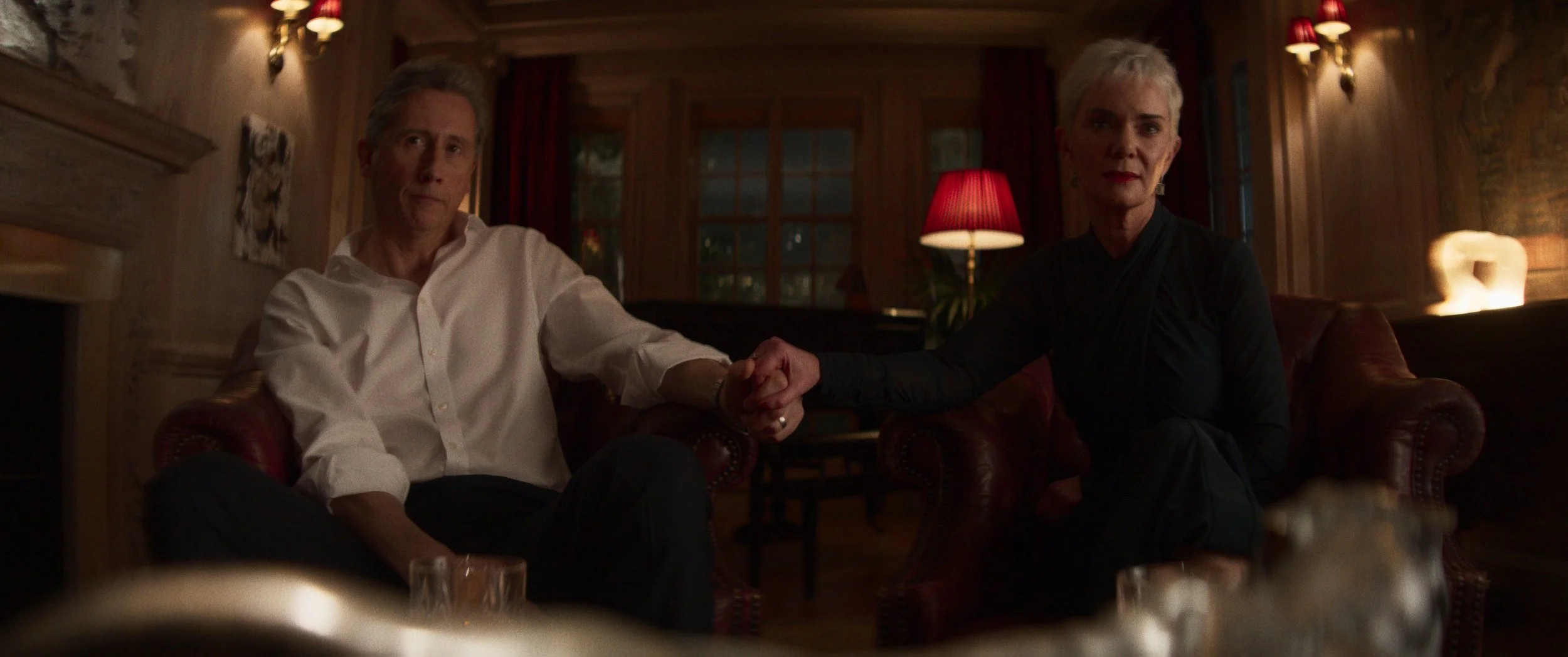
The technical language of cinema matters, certainly. But for Carlyle, the camera is ultimately a way of observing human behaviour.
Some of the film’s wider shots emerged from practical necessity. The room in which much of the action takes place was narrow, creating distortions when the characters were positioned at opposite ends of the frame. Wagner initially wanted to correct the effect. Carlyle resisted.
“A lot of the wider shots were filmed because of the physicality of the space. The room was actually quite narrow, so we only used those shots a couple times because it began to look a wee bit too weird. Moments where Matt’s on one side and Sarah and Ed are at the other, there was some distortion that was happening through the camera. Fabien wanted to fix that, but I said, ‘let’s not fix it’. There’s something about that which, to me, looked like somebody was watching this.”
That final thought is crucial.
In Three, the audience is not merely positioned as an observer. We become part of the act of observation itself. The imperfect frame begins to feel like another presence in the room.Carlyle traces the instinct back to David Lynch’s Eraserhead, one of his formative cinematic experiences. What stayed with him was the sensation that the mechanics of filmmaking had somehow leaked into the world of the film that the camera was not a neutral window but something with its own physical presence.
So Three allows its imperfections to remain visible. Distortions are not necessarily corrected while unusual compositions become part of the visual grammar. Sweeping images can feel simultaneously controlled and slightly broken. The effect is disquieting because it complicates the boundary between watching and being watched.
Victoria Hamilton and Nicholas Rowe are given the freedom to inhabit their characters rather than explain them, while Isaac Gryn is placed in a different kind of crucible: a younger performer deliberately surrounded by two actors with enormous experience.
“When you’re working with actors at the calibre of Victoria Hamilton and Nick Rowe, you don’t have to say too much. They know exactly what they’re doing with this.”
But Carlyle was interested in what would happen to Gryn’s confidence under that pressure.
“Even with Isaac, he’s in there with two heavyweights. He had this natural confidence about him, so I thought: ‘let’s see how confident you are with these two’.”
The answer is written across the film.
Matt gradually unravels. What begins as confidence becomes uncertainty, and uncertainty becomes something closer to emotional exposure. By the end, the boy who entered the situation believing he could play the game has discovered that the game was never really his to control.
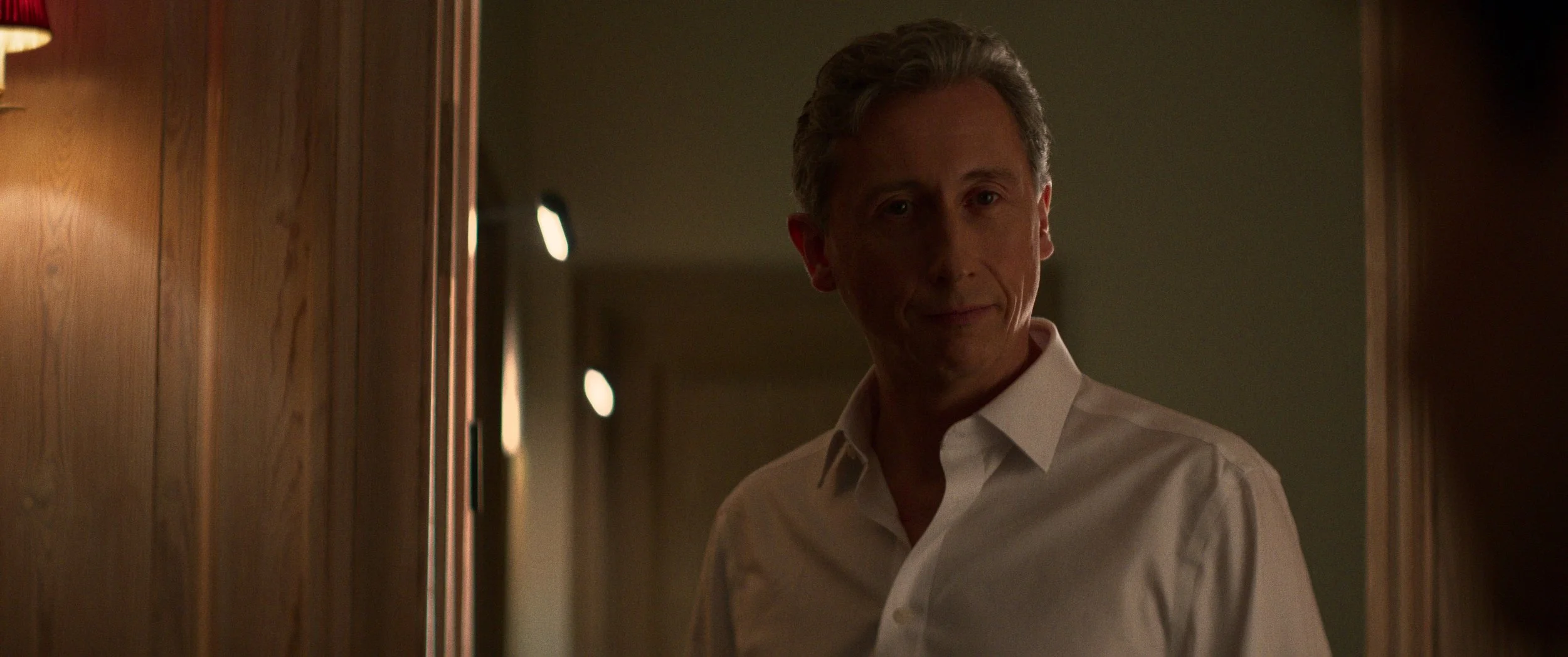
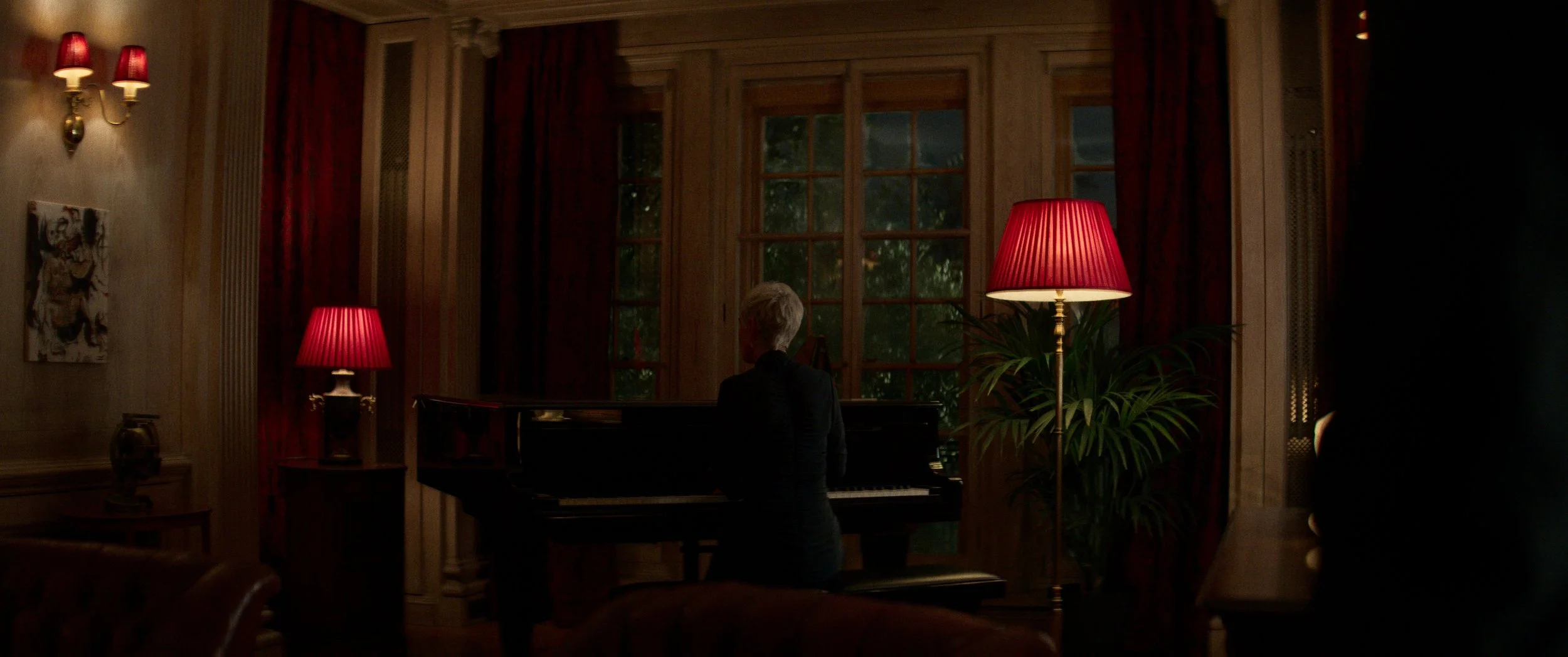
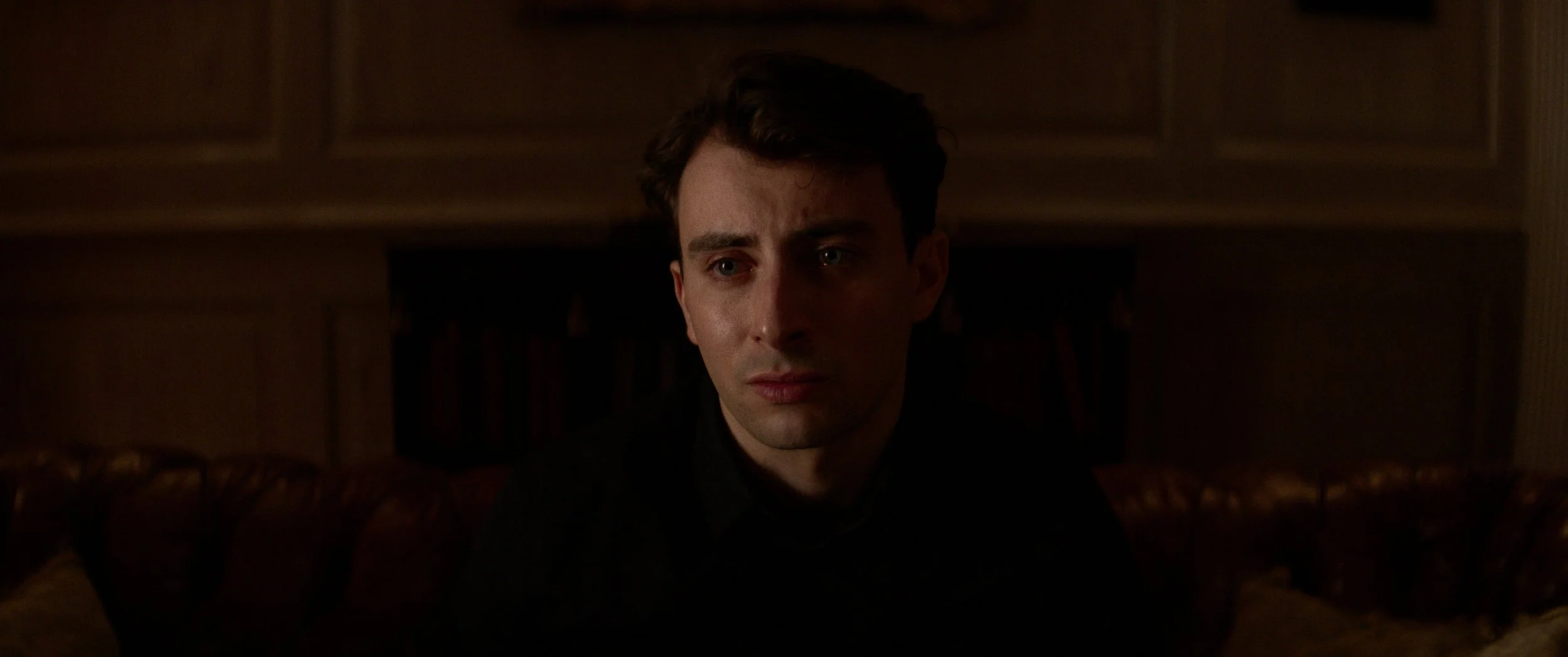
The technical language of cinema matters, certainly. But for Carlyle, the camera is ultimately a way of observing human behaviour.
Some of the film’s wider shots emerged from practical necessity. The room in which much of the action takes place was narrow, creating distortions when the characters were positioned at opposite ends of the frame. Wagner initially wanted to correct the effect. Carlyle resisted.
“A lot of the wider shots were filmed because of the physicality of the space. The room was actually quite narrow, so we only used those shots a couple times because it began to look a wee bit too weird. Moments where Matt’s on one side and Sarah and Ed are at the other, there was some distortion that was happening through the camera. Fabien wanted to fix that, but I said, ‘let’s not fix it’. There’s something about that which, to me, looked like somebody was watching this.”
That final thought is crucial.
In Three, the audience is not merely positioned as an observer. We become part of the act of observation itself. The imperfect frame begins to feel like another presence in the room.Carlyle traces the instinct back to David Lynch’s Eraserhead, one of his formative cinematic experiences. What stayed with him was the sensation that the mechanics of filmmaking had somehow leaked into the world of the film that the camera was not a neutral window but something with its own physical presence.
So Three allows its imperfections to remain visible. Distortions are not necessarily corrected while unusual compositions become part of the visual grammar. Sweeping images can feel simultaneously controlled and slightly broken. The effect is disquieting because it complicates the boundary between watching and being watched.
Victoria Hamilton and Nicholas Rowe are given the freedom to inhabit their characters rather than explain them, while Isaac Gryn is placed in a different kind of crucible: a younger performer deliberately surrounded by two actors with enormous experience.
“When you’re working with actors at the calibre of Victoria Hamilton and Nick Rowe, you don’t have to say too much. They know exactly what they’re doing with this.”
But Carlyle was interested in what would happen to Gryn’s confidence under that pressure.
“Even with Isaac, he’s in there with two heavyweights. He had this natural confidence about him, so I thought: ‘let’s see how confident you are with these two’.”
The answer is written across the film.
Matt gradually unravels. What begins as confidence becomes uncertainty, and uncertainty becomes something closer to emotional exposure. By the end, the boy who entered the situation believing he could play the game has discovered that the game was never really his to control.
Like Matt, the audience is invited to anticipate a conventional release: confrontation, explosion, catharsis. We have been trained to expect the tension to culminate in spectacle. Thrillers, particularly in contemporary cinema, often promise that pressure will eventually detonate.
Three refuses that easy satisfaction.
Sarah's final words do not simply address Matt. They seem to reach across the screen. The audience has been waiting, too, and when it does not arrive in the form we expect, we are left confronting our own appetite for it.
Perhaps that is one of the film's sharpest ideas: that tension does not always exist in order to be released. Sometimes tension is the experience.
In an era of superheroes, escalating spectacle and battles designed to provide the audience with a definitive emotional payoff, Three finds drama in something smaller and, arguably, more disturbing. It asks us to stay inside the discomfort. To watch the relationships rather than wait for them to explode.
When I asked Carlyle about the motivation behind this story, this film, this choice to take on the role of director, his answer was characteristically straightforward:
“There are times when any actor, or any creative person, thinks they’ve had enough of this. Of course, people question it. You put so much into it and you don’t get what you think you deserve, and all of that. The answer is always yes, of course I’m going to continue.”
Then comes the story of Sir Ralph Richardson, who, in an interview with Bernard Levin in the 1970s, was asked about continuing to play different parts late into his life. His answer stayed with Carlyle.
“He said, ‘I feel I’ve learned a bit; I hope to learn a bit more’. I thought I’d take that and steal it.”
It is an appropriate philosophy for a film about people attempting to understand the rules of a game they did not create.
Carlyle, too, is still learning the rules.
Three is not simply another credit in a long career. It is an extension of one: an actor taking everything he has learned from watching other people work and turning that knowledge towards his own frame. His influences are there, but so is something more personal an instinct for performance, a sensitivity to power, and an understanding that what happens between two people can be more compelling than anything the camera can manufacture around them.
The film itself is preoccupied with control. Its creation, however, depended on surrender.
Carlyle trusted Wagner with the frame. He trusted Hamilton, Rowe and Gryn with the characters. He trusted the imperfections that might once have been corrected. Most importantly, he trusted the actors enough to let them find their own way through the material.
Put simply then, Carlyle’s film about control was made possible through trust.
