
Culture Wars
Finding New Ladders
Words By: Anya Duncan
Images By: Harriet Beth
For most bands, freedom in the music industry can only arrive when they stop chasing the version of themself that other people imagined.
In the case of Culture Wars, that freedom echoes through every corner of their new record, Don’t Speak. Not because they've suddenly become fearless, they'll tell you the pressure never really disappears but because they've learned that growth has little to do with certainty. It has everything to do with trusting the discomfort.
"When we wrote the last song for the album," frontman Alex Dugan reflects, "it was interesting because it was different. It was challenging for me... I think we're gonna experiment a lot."
That final song doesn't feel like an ending. Instead, the band treat all releases in their first album as doorways.
Across the album, Culture Wars refuse to settle into a single silhouette. The songs move with the confidence of a band willing to let contradiction become part of its identity. One moment, they're writing with diaristic intimacy; the next, they're observing someone else's heartbreak from the edge of the room, turning another person's experience into something quietly universal.



"None of the songs are made up," Dugan explains. "Some of it is me and some of it is me watching."
It's a philosophy that gives the record an unusual elasticity. The emotional centre is never fixed. Instead, it shifts between confession and observation, inviting listeners to inhabit stories that don't necessarily belong to the band, but somehow end up belonging to everyone.
That openness extends beyond the music itself.
Rather than dropping the album in one explosive moment, Culture Wars let it unfold piece by piece. Every single person was given space to breathe as an invitation into different corners of their world.
"We wanted each song to bring a new group of people into the ecosystem," Dugan says. "Miley will probably bring in different people to Typical Ways... they all serve a purpose."
It's an unusually generous way to think about releasing music. Rather than demanding listeners meet them on one set of terms, Culture Wars built multiple doorways into the same house. Genre became a conversation between each release, all with the intention of leading their listeners towards each other. Every track offers a slightly different perspective on who they are, until eventually the album reveals itself as a complete emotional landscape.
Perhaps that's only possible because they've spent years resisting the temptation to fit neatly anywhere.



Growing up in Austin's celebrated music scene might sound like an advantage, but Culture Wars describe it with little nostalgia. They watched bands succeed by moulding themselves into expectations that rarely stretched beyond city limits, and quietly decided they wanted something else.
"We would never really play ball with the local scene," Dugan admits. "We'd seen plenty of people shape themselves to survive there and never leave."
That refusal to belong became their compass. The same instinct shaped how they approached the wider music industry. While so many artists arrived carrying carefully constructed origin stories, Culture Wars never felt compelled to invent mythology around themselves.
"We're dudes who write music and live in Texas," Dugan shrugs. "We're not gonna put on some hardship that doesn't exist to sell records."
It's a disarmingly ordinary statement in an era that often rewards spectacle over substance. Yet that very ordinariness has become quietly radical; their songs don't ask to be believed because of the biography behind them. They ask to be believed because they feel true. Ironically, that authenticity has produced the album's most unexpected success.


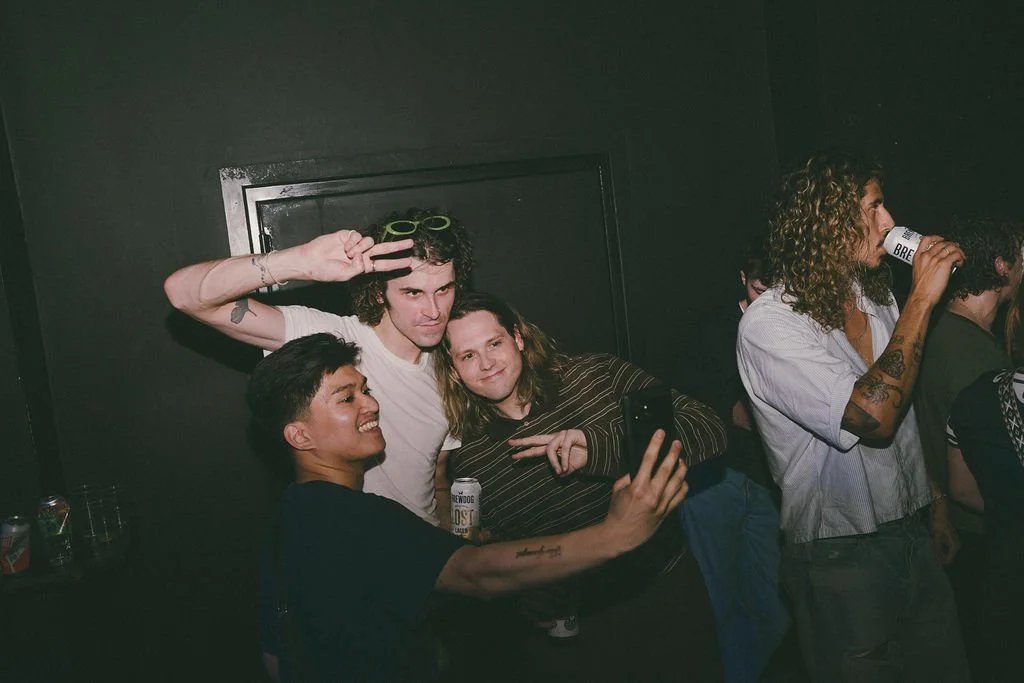
One of its quietest songs, Tokio, never received the machinery usually afforded to a single. Written on an acoustic guitar while missing his wife on tour, Dugan assumed listeners might simply stumble across it one day.
They did.
"I see a lot of phones out for that one," he smiles. "It's nice to see that people resonated with it without needing a commercial push."
Moments like that feel increasingly rare. In an industry obsessed with algorithms, Culture Wars found proof that songs can still travel by word of mouth, shared feeling, and the slow accumulation of genuine connection.
That patience has been hard-earned. Looking back, Dugan speaks about failure with surprising affection.
"I think we failed at the right times," he reflects. "If I want a new ceiling I'll need to find a new ladder." It's an image that lingers long after the conversation ends.
Most artists spend their careers trying to break through ceilings. Culture Wars seem more interested in building ladders. The album feels like another rung.
Not a destination. Not a definitive statement. Simply the latest step in a band becoming increasingly comfortable with uncertainty experimenting without abandoning melody and letting curiosity lead what’s next. Perhaps that's the real story after all.
