
Priscilla Del Castillo
Unapologetically Priscilla: The Power of Being Seen
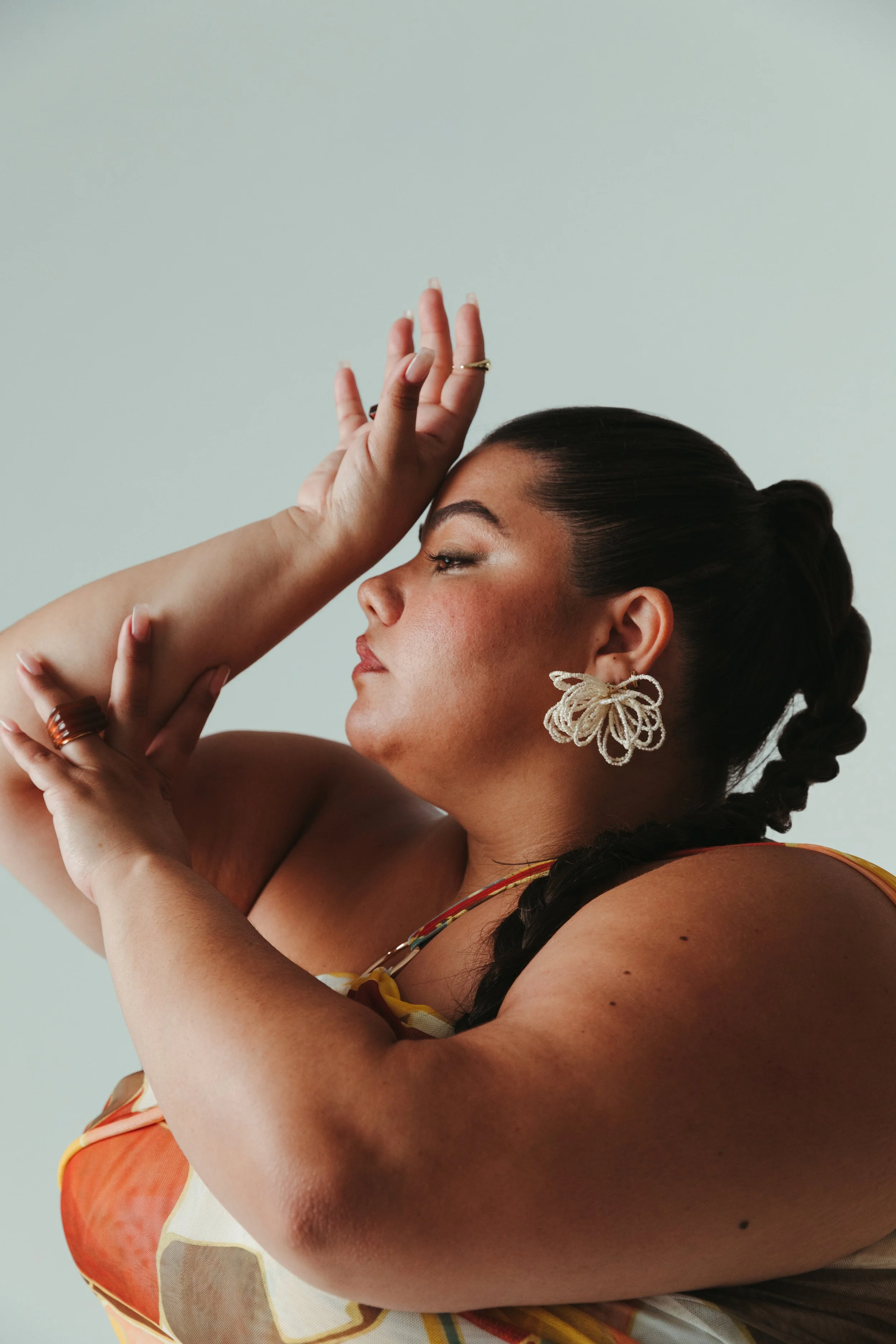
O.M: How did your journey into modeling begin, and what (or who)inspired you to pursue this career path?
P.D.C: My journey into modeling actually started when I was just three years old. I was enrolled in a dance studio that also offered modeling classes, and the moment I was old enough to join, I was basically swept into this mini supermodel world I didn’t even know existed. We’d perform dance recitals that included themed runway shows, and I remember feeling completely exhilarated by it.
Around age 10, I shifted more into the dance side of the studio and put modeling on pause but the spark never really left. It wasn’t until I moved to New York in 2015 that the journey truly picked back up. After a few years of grinding and growing, I booked my first modeling job in 2018, and that moment reminded me why I loved it in the first place.
O.M: Every model has a story behind their first big booking or show. Can you share yours?
P.D.C: My first big booking was a Target swim campaign in 2019. They flew me out to California it was only my second time there and my first time traveling alone for work. They put us up in a hotel in West Hollywood, and the next morning, a van picked us up and drove us deep into the desert. The set was surreal tucked between canyons with this wild outdoor setup that felt like something out of a movie.
I remember taking a deep breath and trying to be fully present. I was about to shoot a national campaign for a store I had grown up shopping in, and it hit me just how big that moment was. And it wasn’t just any campaign it was swimwear, and I was a plus-size woman who never saw bodies like mine represented in stores growing up.
What made it even more special was how supported and seen I felt on set. Everyone made it so easy for me to be myself. At the time, body positivity was gaining momentum, and while I didn’t always connect with that exact messaging, I did feel aligned with the body neutrality movement just showing up as I was, without needing to justify or explain my body. That experience will always stay with me,
O.M: Were there any personal breakthroughs that helped you step into the industry with power?
P.D.C: One of my biggest personal breakthroughs actually happened on set during the Target shoot. I had a moment of clarity where I reminded myself,you were booked for a reason. It didn’t matter how famous the model next to me was,we were in the same room, doing the same job. That mindset helped me stand tall and not shrink myself, even when conversations or energy around me could’ve made me second guess my place.
I stayed grounded in the excitement of the opportunity and didn’t let anything dim that. From that shoot on, it felt natural to continue on this plus-size modeling journey with confidence. I also had an incredible support system. My family even from a distance was always cheering me on, and my friends at the time showed up for me in real ways. That foundation made all the difference.
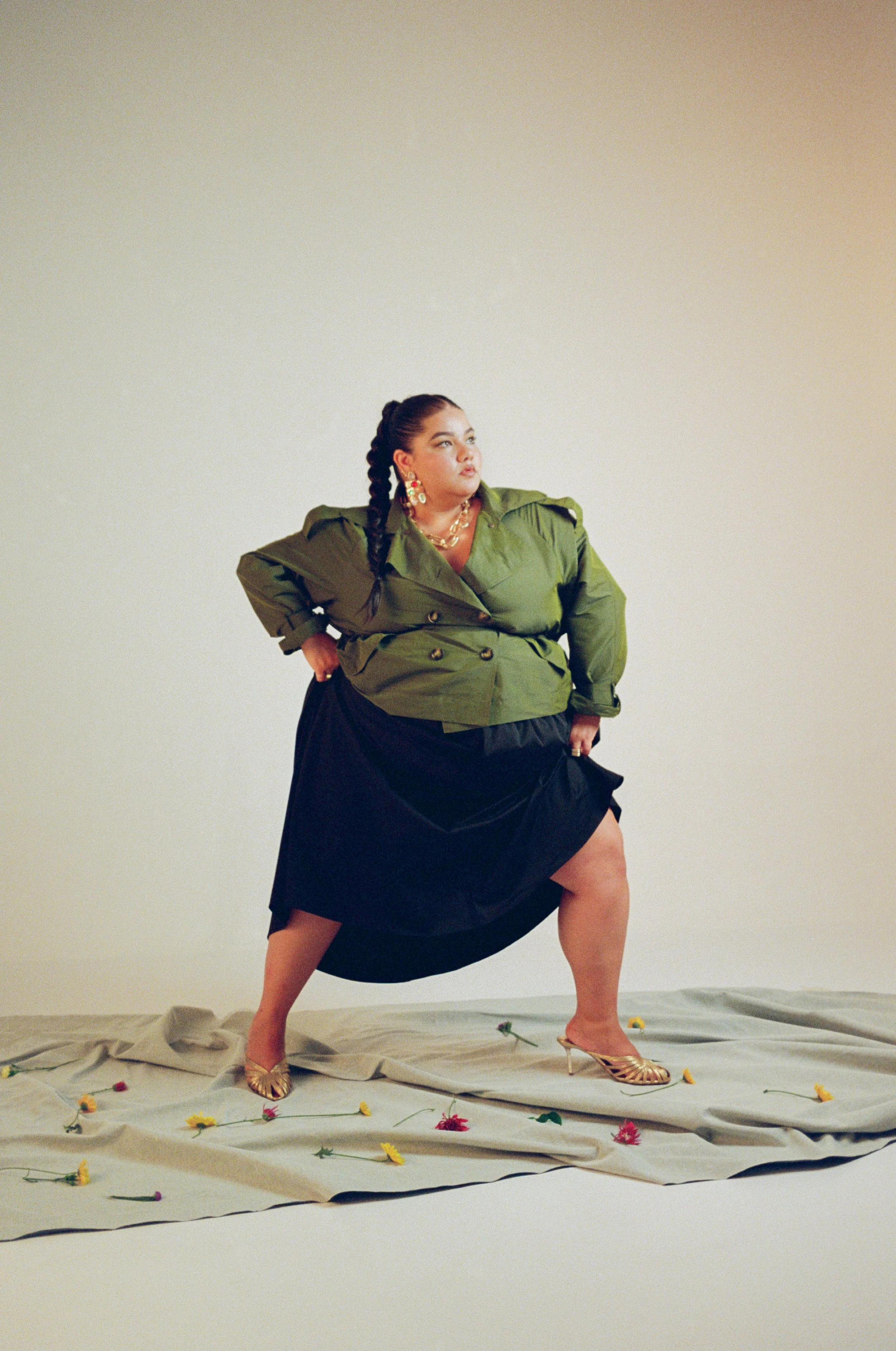
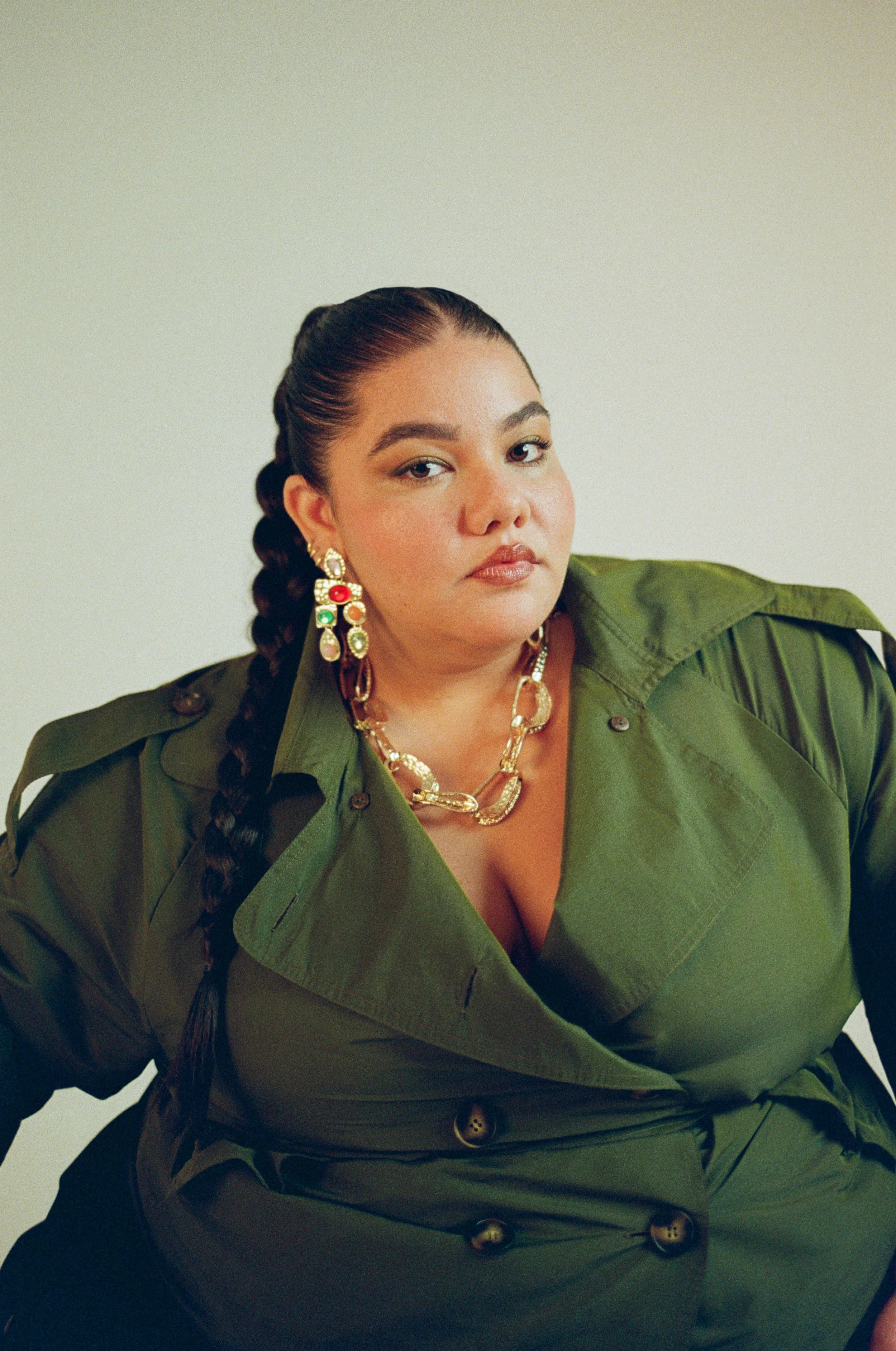
O.M: When you first entered the industry, were you focusing more on the runway or editorial side of modeling? Has this changed as you’ve grown into your career?
P.D.C: When I first entered the industry, I didn’t have a specific focus I truly approached it with a “whatever is meant to be will be” mindset. I’ve never professionally walked a runway (yet!), but it’s definitely something I’d love to experience in the future especially if a designer is open to a 5’4” model!
So far, I’ve leaned more toward the commercial side of modeling, but being booked for a Teen Vogue spread was a turning point. It made me realize that I could absolutely belong in the editorial space too. My outlook on placement in this industry hasn’t really changed I still believe that what’s meant for me will find me, and I don’t need to chase or force it. It’ll arrive right on time.
O.M: What helped you push through those early doubts or external criticisms that so many women (especially in diverse body types) face when stepping into the pubic eye?
P.D.C: I’ve never really been afraid of what people think of me, and I credit that to the strong foundation of women who raised me. My mother, aunt, and grandmother instilled a deep sense of self-worth and authenticity in me from a young age. They always reminded me to show up as 1000% myself, no matter the room.
When my first big Target campaign launched, I did see comments some about my size, others mistaking me for Lizzo(I guess big girls look the same) but honestly, I didn’t let any of it shake me. I’ve always had a neutral response to outside noise. If someone isn’t contributing to my life or paying my bills, they don’t get access to my energy.
What helps me stay grounded is mentally preparing myself and focusing on the people who actually matter the ones I see every day who love, support, and reciprocate that same energy. That’s where my validation comes from.
O.M: Do you have any particular modeling inspirations, both past and present, who have shaped your own career?
P.D.C: Growing up, I didn’t really see anyone in the industry who looked like me, so my early modeling inspirations were shaped by the icons of that era Cindy Crawford, Naomi Campbell, Tyra Banks, and, oddly enough, the Pussycat Dolls. They represented a kind of glamour, confidence, and femininity that influenced how I viewed women in the industry.
As the industry evolved, so did my inspirations. Today, I really admire women like Ashley Graham, Paloma Elsesser, Precious Lee, and of course, Rihanna. They’ve each carved out space by being unapologetically themselves, and they’ve shown that beauty and power come in all forms. Seeing them thrive has definitely helped shape my own vision and path in this industry.
O.M: How do you navigate the often rigid and unrealistic beauty standards placed on women in the fashion and media industry?
P.D.C: Oooof that’s such an exhausting question because honestly, why does this still have to be a question? Why can’t we just live our lives with free will and let people exist in their own bodies without constant scrutiny?
The truth is, people will be people and the most insecure ones tend to project their own issues onto others through rigid beauty standards. But I’ve learned not to take that on. As a society, we really need to evolve and realize there’s so much more to life than fitting into a narrow definition of beauty. Everyone’s version of beauty is valid, and we all deserve to take up space exactly as we are.
O.M: Following on from this, have you ever faced moments where professionals have tried to mold you into their version of “acceptable” beauty? If so, how did you respond, and what did you learn from those moments?
P.D.C: I’ve actually never had anyone try to mold me into their version of “acceptable” beauty because when people meet me, they quickly recognize that I show up as my full, authentic self. There’s an energy I carry that makes it clear: I’m not here to be changed, I’m here to take up space.
That said, I’ve definitely experienced moments where people made assumptions about me. I’ve checked into shoots and been asked if I’m the makeup artist or part of the production team never assuming I’m the model. And in those moments, I don’t shrink, I correct them. I let them know I am the model, and I say it with confidence to remind them that their biases have no place here.
What I’ve learned is that people will often try to label you based on their limited perspective but it’s your responsibility to correct the narrative and remind them who you are. Every time I do that, I’m not just speaking up for myself I’m shifting the standard for everyone who comes after me.
O.M: As a Miami-based model, have you found any unexpected sources of support or empowerment within the Miami fashion and beauty scene?
P.D.C: I was born and raised in Miami and lived here until I was 18 then my journey took me to New York, where I really found my voice and began building my career. Coming back to Miami with a different path than the one I left with has been eye opening. The industry here operates very differently, and I’ve found it challenging to break into the fashion and beauty scene as someone who doesn’t fit the traditional mold.
Miami’s culture can feel a bit closed minded at times, with a very specific idea of what a model should look like. That mindset has made it harder to find people in the industry who are truly open to diversity and body inclusivity. But what’s kept me going are the unexpected allies people who have outsourced opportunities for me, believed in my potential, and helped open doors I couldn’t access on my own.
Those connections have been a huge part of my journey here so far, and I’m incredibly grateful for them. They remind me that while the system might be slow to change, there are people willing to push the limit and I’ll continue to be one of them.
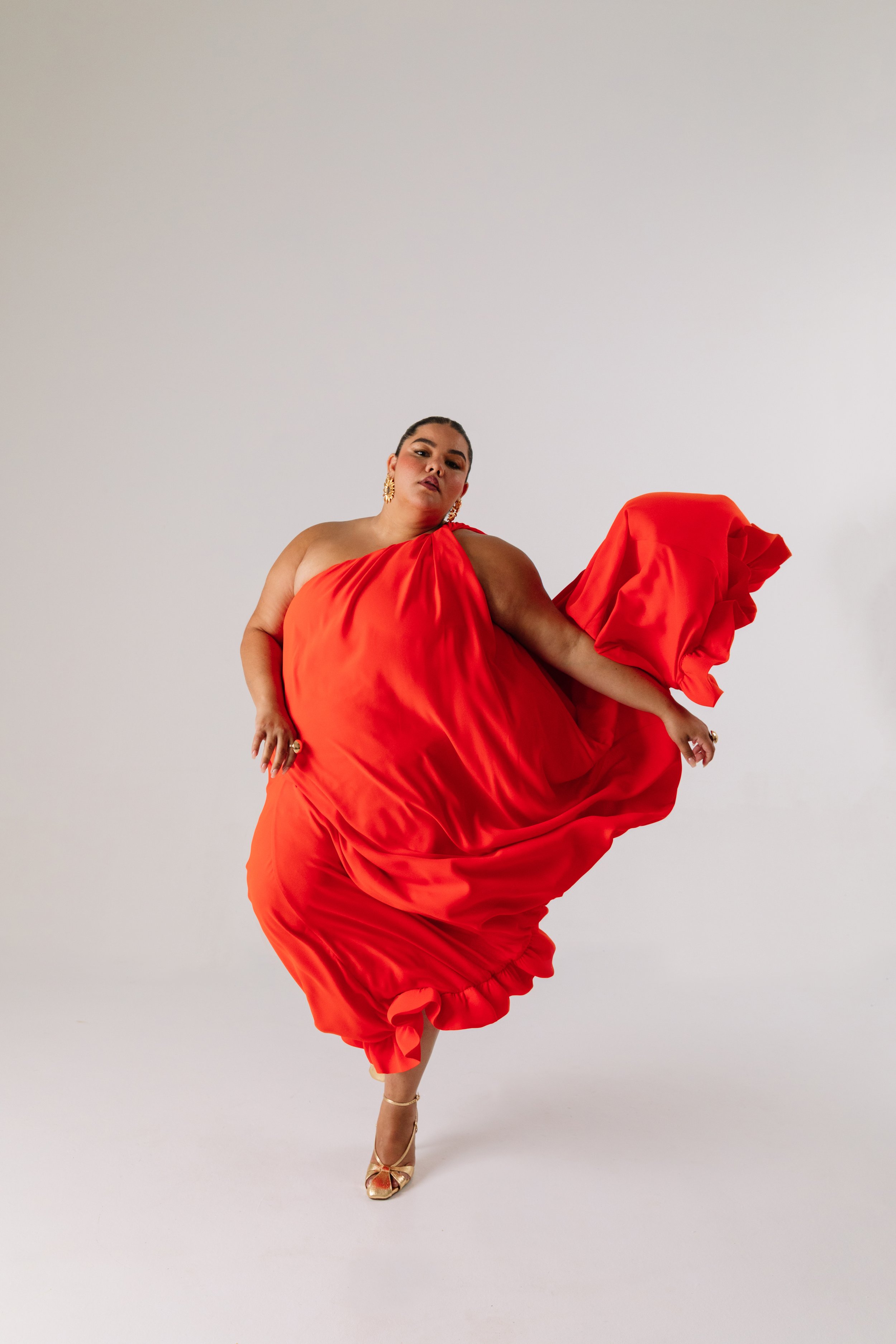
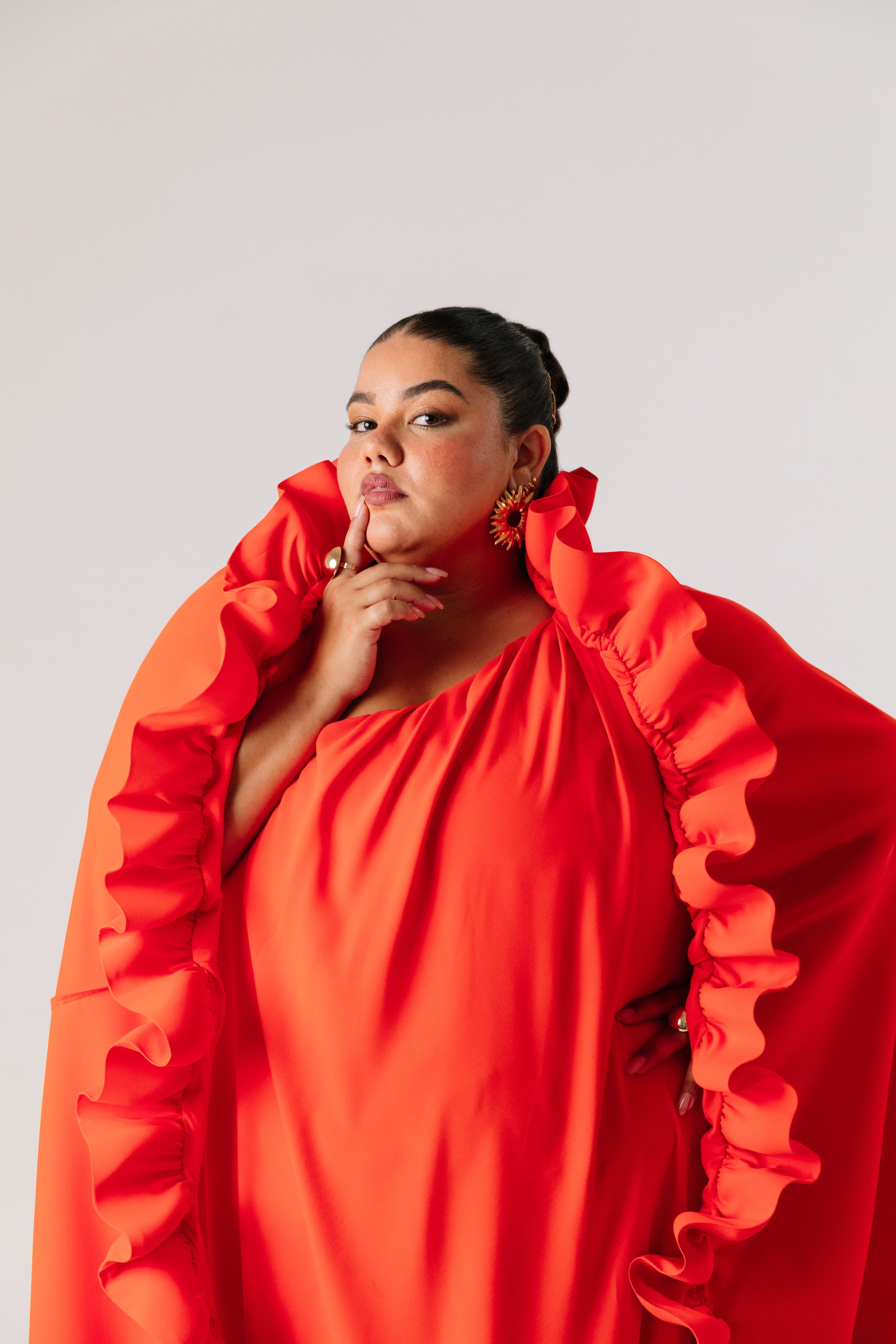
O.M: Where do you see the future of plus-sized representation heading, especially in major markets like Miami?
P.D.C: I don’t just want to change people’s perspective here in Miami about who can be a model I want to prove it. I show up as my full self, confidently and unapologetically, to challenge outdated beauty standards and remind people that models come in all sizes.
The future of plus-size representation, especially in major markets like Miami, depends not only on visibility, but on the fashion industry’s willingness to truly invest in us. Runway designers and major brands play a huge role in shaping what’s considered “in style.” If they don’t make space for plus-size bodies in their seasonal collections or sample sizes, we remain excluded no matter how much demand there is.
So yes, the future can be inclusive but only if the industry starts treating plus-size fashion as essential, not optional. And I’ll keep doing my part by showing up, creating impact, and breaking those barriers one casting, one campaign, and one conversation at a time.
O.M: The industry continues to diversify the bodies they celebrate during campaigns and runways. From personal expereince, do you think this inclusivity is authentic, or is it still surface-level progress?
P.D.C: From personal experience, I’d say we’ve made progress but a lot of it still feels surface level. Yes, we’re seeing more diverse bodies in campaigns and on runways, and that visibility matters. But true inclusivity goes deeper than just a casting decision. It’s about whether we’re being treated with the same respect, paid equally, styled with the same care, and included in the long-term vision not just during “diversity months” or when it’s trendy.
There have been times I’ve shown up on set and realized they weren’t prepared for my body type whether it was not having my size in wardrobe or not knowing how to pose or light me properly. That’s not inclusivity that’s performative.
Real change means hiring plus size models and making sure the teams behind the scenes are trained, inclusive, and genuinely committed to representing all types of beauty. It’s about shifting the mindset from “making space” for us to recognizing that we are the space.
Until that becomes the standard not the exception we still have work to do.
O.M: What changes would you like to see from brands, designers, or agencies to create a more genuinely inclusive environment?
P.D.C: One of the biggest changes I’d like to see is a move beyond performative inclusivity. It’s not enough to check a diversity box during campaign season or for a single photoshoot. Brands, designers, and agencies need to be intentional and consistent with who they hire, represent, and uplift not just in front of the camera, but behind the scenes too.
True inclusivity happens when people feel seen and supported. When you’re not just invited to the table but your voice actually shapes the conversation.
O.M: What advice would you give to young women struggling to embrace their bodies in a societythat still widely promotes narrow standards?
P.D.C: To any young woman struggling to embrace her body,please know you were never meant to fit into a mold that wasn’t made for you. Society has tried to convince us that beauty comes in one size, one shade, one shape lbut that’s a lie designed to keep us small.
Your body is not a problem to fix it’s your home. It holds your laughter, your power, your stories, and your softness. And that deserves respect, not shame.
What helped me was learning to talk to myself with the same love and grace I give others. Unfollow anyone who makes you feel less than. Fill your world with people, media, and role models that remind you you’re worthy exactly as you are not when you change, but even if you never do.
And remember confidence isn’t something you find, it’s something you build by choosing to show up anyway. Even on the days you don’t feel “enough,” you are still deserving of love, joy, and taking up space.
O.M: What message do you hope your work as a model sends to women and girls who don’t see themselves represented in mainstream media?
P.D.C: I hope my work as a model reminds women and girls that they don’t have to wait for permission to feel beautiful, powerful, or worthy. Mainstream media may still have a long way to go, but that doesn’t mean we wait quietly on the sidelines we show up anyway.
Every time I step in front of the camera, I do it for the younger version of myself who didn’t see anyone that looked like her. I want girls to know that softness is strength, curves are worthy of celebration, and confidence isn’t about being flawless it’s about being real.
Representation matters because visibility plants the seed of possibility. If one person sees me and thinks, “If she can, I can too,” then I know I’m doing my job.
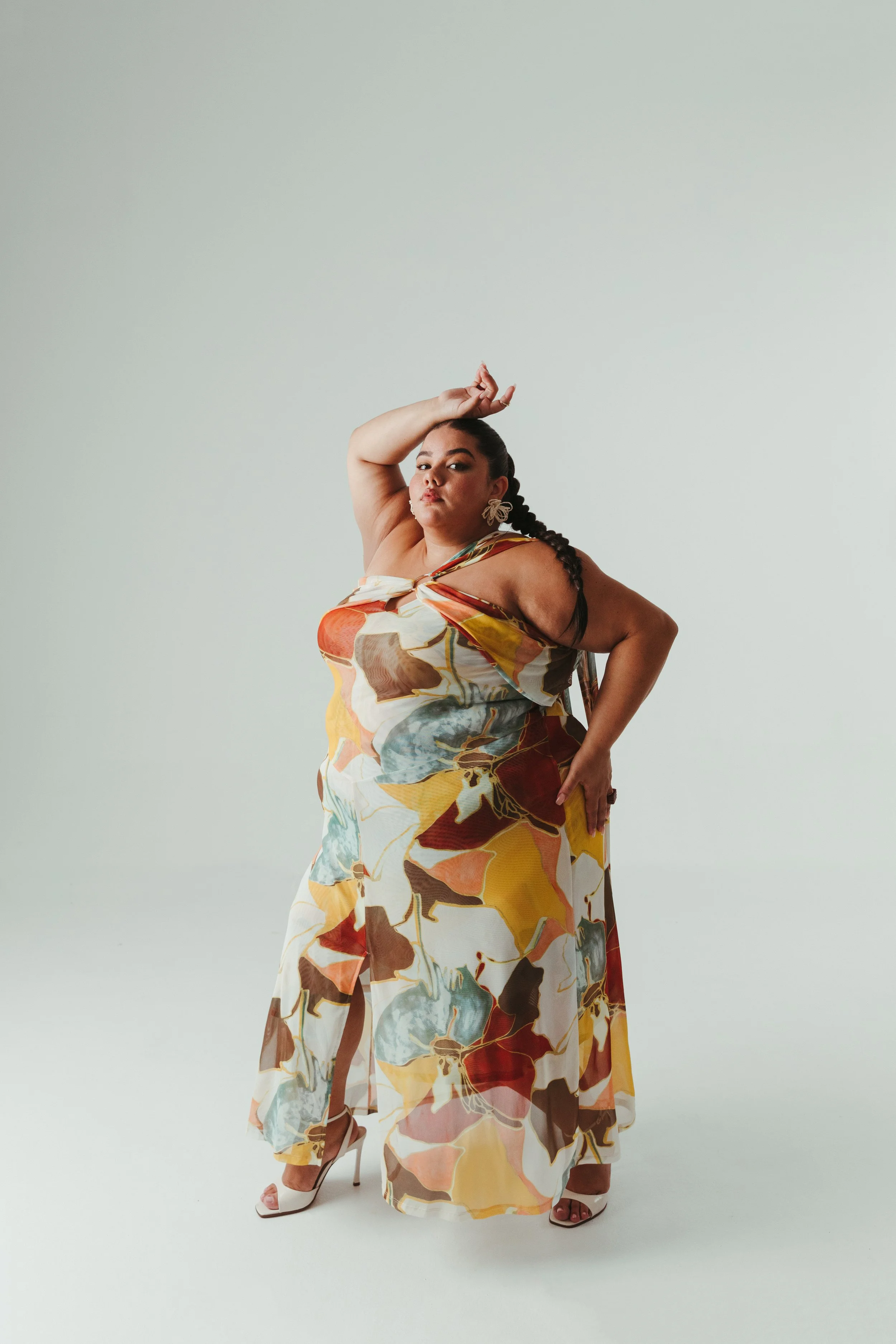
O.M: What ambitions do you have for the future? Are there any projects, campaigns, or goals you’re especially excited about?
P.D.C: I’m in a season where I want to do it all but with intention. I’m really focused on expanding as a content creator and model, while stepping more into acting and tapping back into my singing and dancing roots. Performing has always been a huge part of me, and I’m excited to explore projects where I can use all of those skills again.
At the same time, I’ve been growing in a totally different lane consulting for med spas, building content strategies, and learning the backend of the wellness and aesthetics industry. It’s been incredibly rewarding, and I’m planning to eventually launch a creative agency that blends both worlds: storytelling and strategy for beauty, wellness, and fashion brands.
Whether I’m on set, on stage, or in a strategy meeting, I just want to keep creating, learning, and building something that’s true to who I am.
Team Credits
Photographer: Desiree Prieto
Stylist: Camila Brosens
Makeup Artist: Alison Cintrón
