
Look Back
A Masterful Exploration of Friendship and Creativity
Writer: Owen Nicholls

For those who love humanistic world cinema a new film by Hirokazu Kore-eda is an event to be treasured. Look Back continues that trend. The Japanese filmmaker – and winner of the Palme D’or for Shoplifters – has taken a one-shot Manga (already filmed into an Anime) and breathed life into every frame, giving us a beautiful mediation on creativity, loneliness, fate and friendship.
We meet Fujino (Furi Nanase) as a precocious 13-year-old schoolgirl. Well-liked and respected by her peers, Fujino excels at drawing four-frame comic books distributed in her school’s weekly newsletter. When the home-schooled Kyomoto (Rokka Okada) contributes her own Manga to the publication, Fujino cannot cope with the fact this recluse’s art is better than hers. Fujino sends herself into a jealous obsessional spiral trying to better Kyomoto’s work. That is until the day Fujino meets Kyomoto in person and an instant, one-of-a-kind collaboration is formed.
Taking place over three distinct timelines – school years, first forays into publishing, separate paths – Look Back presents friendship in its truest form. Beginning with a rivalry, often as close as a romantic love, the films soars when Fujino and Kyomoto’s partnership blossoms, leading to a career neither could have achieved without the other. As young girls – and then as women – the two lift one another up, both professionally and, more keenly, personally.
Writer-director Kore-eda is a master at exploring childhood and how early events shape us. In Like Father Like Son, he examined the difference our surroundings make to our lives. With Monster, he turned his lens on how we look at one another, making judgements based on a handful of facts. Here, with Look Back, Kore-eda is more fundamentally concerned with why we choose the paths we do.
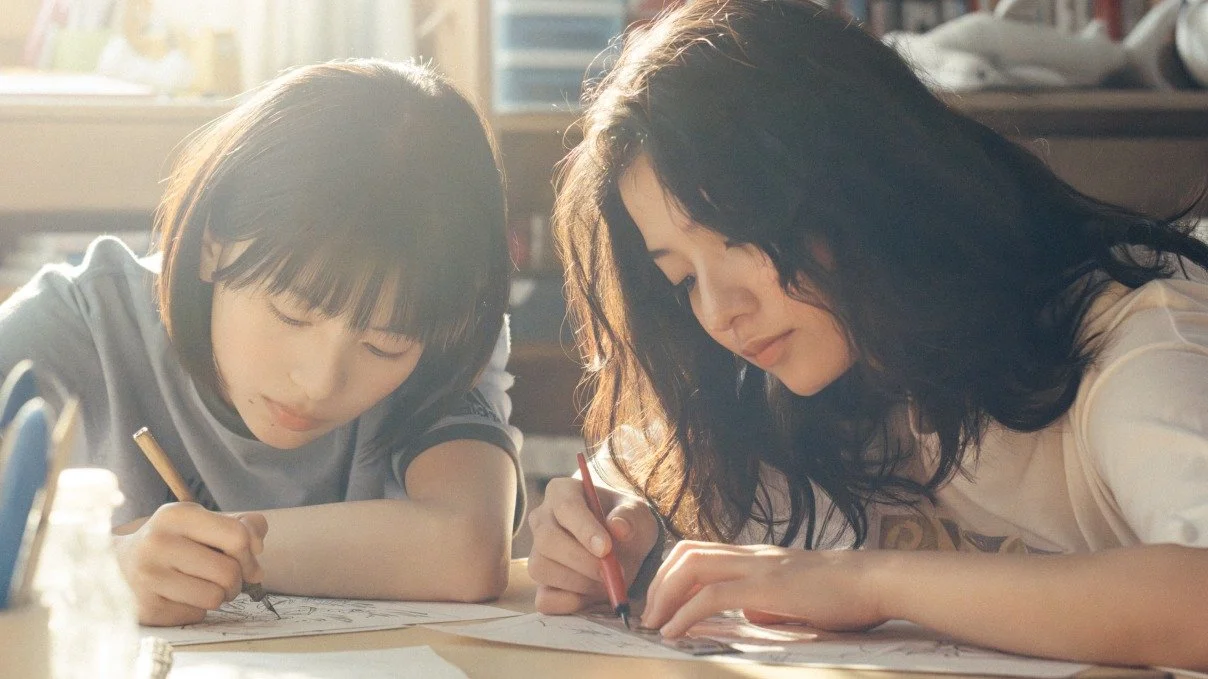
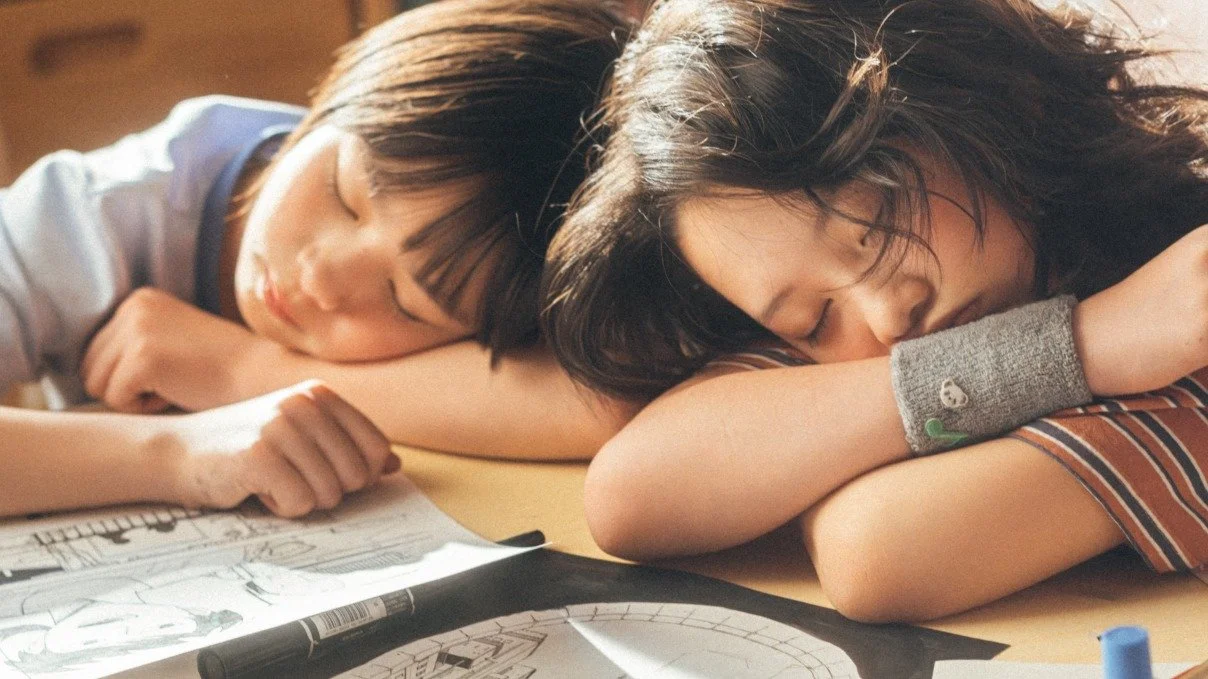
This idea of paths travelled and not is at the heart of Look Back. Single moments mean more in Kore-eda films. One particular scene towards the end of our story presents an alternative history of the two friends’ lives. It is as devastating as it is triumphant, leaving the audience gutted at what might have been and feeling blessed by the gift of imagination. Yet, even away from the tragedy – and the story contains plenty of tragedy – there is light and humour and love etched into every frame.
Working with composer Yuta Bandoh for the second time in a year (Sheep in a Box), the music of Look Back is as delicate as the tale being told. Acoustic strings are gently plucked like memories, giving the entire mood an ethereal, dreamlike state. It’s not a coincidence that this score is the type you could get lost in while at work. It feels designed to soundtrack a thousand creatives at their own desks, working away, typing words, or, indeed, drawing Manga.
Such is the strength of performance from all involved that the jump from child actors to adults is so effortless you’d be forgiven for believing they’d ‘done a Boyhood’ waiting for the actors to age in real-time. Both incarnations of Kyomoto exhibit strength and skill behind her fragility. While Fujino’s hardy exterior could be off-putting in the wrong hands, here she is given persistence and determination to counter-balance her childhood self-aggrandising. What success she achieves feels earnt and fought for. How she picks up and nurtures her friend’s talent is wonderfully realised. The lesson of how to succeed – keep going, never give up, immerse yourself in that thing you love.
To tell a story three times in half a decade may feel like overkill (the original one-shot was published in 2021, the 58-minute Anime film followed in 2024). But each iteration of Fujino and Kyomoto’s story feels worthwhile. Given more room to breathe, Kore-eda and his accomplices offer us a more expansive, meditate than those that came before. One that fits perfectly alongside his other masterpieces: After Life, Like Father, Like Son and Broker.
A beautiful, soaring, crushing, lyrical film of friendship and loss, of creation and destruction. The mark of an exceptional film is one you could watch instantly again the second the credits end. Look Back is such a film.
