
Iron Boy
A Hand-Painted Dream That Is Lovely to Look At,
Even If It Doesn't Quite Leave a Mark.
Writer: Anya Duncan
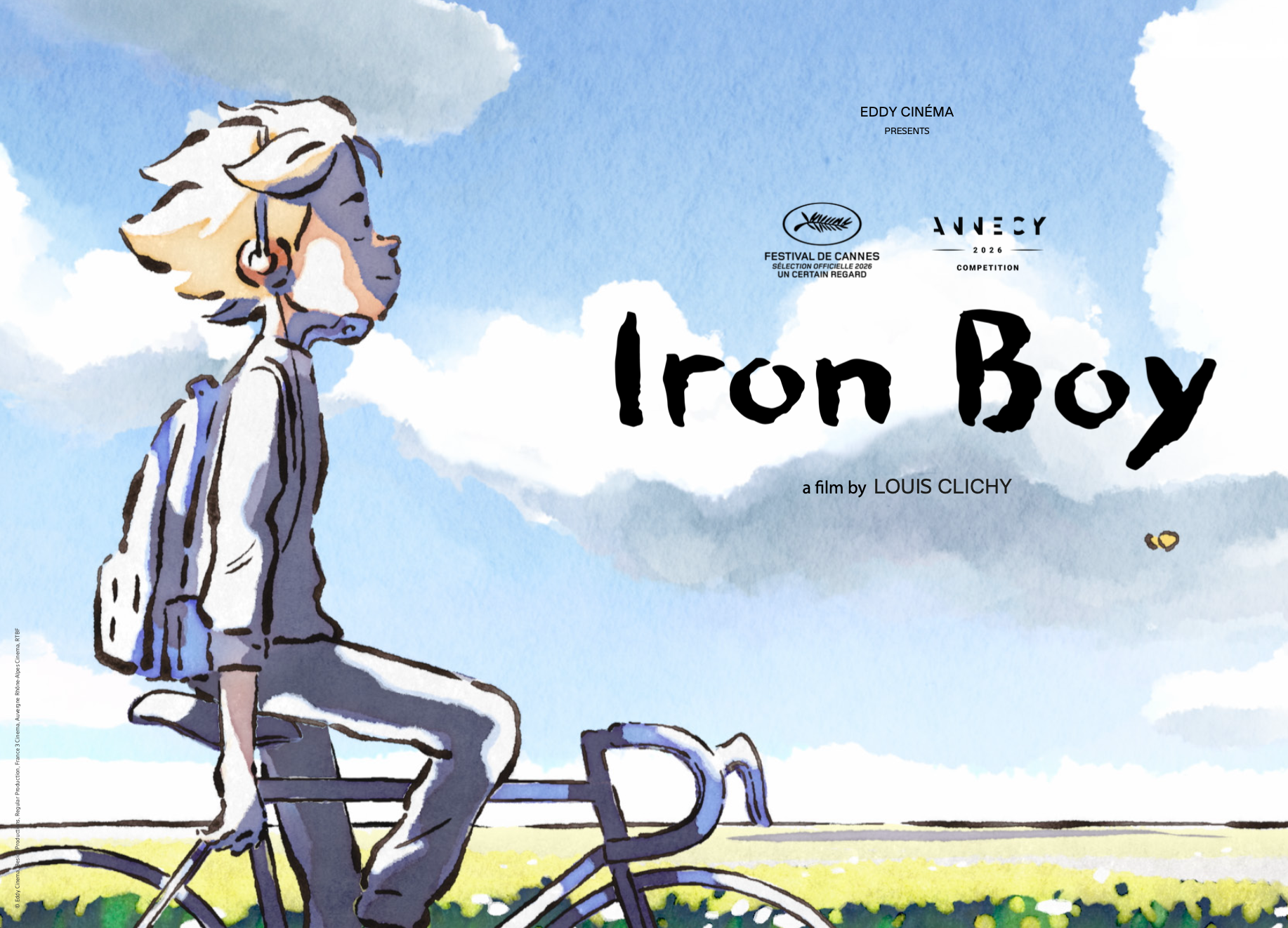
There is something rather wonderful about watching a film that has clearly been made with love. Not simply love for its characters or its story, but love for the act of making cinema itself. Iron Boy, Louis Clichy's animated coming-of-age drama, exemplifies this passion for process. Its greatest achievement is not necessarily what it has to say, but the extraordinary care with which it says it. Every frame is touched by the human hand, every wash of colour gives the impression that the world might dissolve into watercolour if you stare at it for long enough.
I found myself admiring the film's craft long before I became particularly invested in its story. And, as it turns out, that craft is more than enough to make Iron Boy a thoroughly pleasant experience, even if I left the cinema without quite knowing what I wanted to say about it.
Set in rural France in the late 1980s, the film follows Christophe, a young boy growing up on his family's struggling farm under the watchful eye of his rigid, emotionally distant father. When a physical condition causes Christophe to lean and collapse without warning, he is fitted with an iron corset that changes the way he moves through the world. Forced to adapt to his new circumstances, he discovers a passion for music through lessons on the church organ and strikes up a friendship with Clara, a spirited girl who encourages him to embrace a little mischief. As Christophe begins to imagine a life beyond the farm, he must reckon with the expectations placed upon him, particularly those of a father whose approval he desperately wants.
It is a charming premise, giving Clichy plenty of room to explore the awkwardness of growing up, the desire to be loved and the difficult business of becoming your own person. But for me, the film's most interesting relationship is not between Christophe and his father, or even between Christophe and Clara. It is between the animation and the world it brings to life.
It is impossible not to notice the sheer love and craft that have gone into building the world Christophe moves within.
Colours bleed into one another, lending movement to the farm, the swimming pool and the supermarket of this sleepy French town. The backgrounds possess a beautiful, almost tactile quality, as though the landscape has been painted directly onto paper and left to dry in the sun. There is an organic irregularity to the images that makes the world feel alive. Nothing is quite as crisp or sterile as it might be in a more conventional computer-animated film. Instead, the colours breathe, the lines retain their imperfections, and the scenery seems to shift with Christophe's emotional world.
This is particularly effective in a story about a boy whose body has become unfamiliar to him. Christophe's iron corset imposes a rigid structure upon his movements, but the world around him remains fluid. Water ripples, fields stretch towards the horizon, and colours drift into one another. This contrast brings a much needed draw to the piece: a boy constrained by metal, moving through a world that refuses to stay still.
Clichy's own background makes this visual approach all the more interesting. Having worked as an animator at Pixar on WALL-E and Up, and subsequently co-directed Asterix: The Mansions of the Gods and Asterix: The Secret of the Magic Potion, Clichy has spent much of his career working within the traditions of computer animation. Iron Boy, his first feature as a solo director, represents a more personal departure, drawing on ink-line illustrations and watercolour imagery to create something that feels closer to a moving painting than a conventional animated film.
The film also draws on his own childhood in rural France. The result is a film that feels deeply handmade, even as its production combines traditional drawing and painting with digital animation and compositing. The art direction, led by Cécile Guillard, and the animation direction, overseen by Chloë Aubert, help preserve the textures, pigments and imperfections that give the images their particular warmth. Shadows are carefully shaped; colours are layered and integrated until the entire frame feels like a single, cohesive piece of artwork.
Unfortunately, I cannot say that its narrative quite reaches the same heights.
The relationship between Christophe and Clara is very sweet, bringing a lightness and playfulness to the film that I found genuinely enjoyable. Clara seems to offer Christophe a way of experiencing the world outside the strictures of his family life. Their friendship opens up new possibilities, allowing him to be mischievous, curious and, for once, a little less concerned with whether he is doing what is expected of him. Their scenes together possess an easy charm, and I found myself much more invested in their relationship than I expected to be.
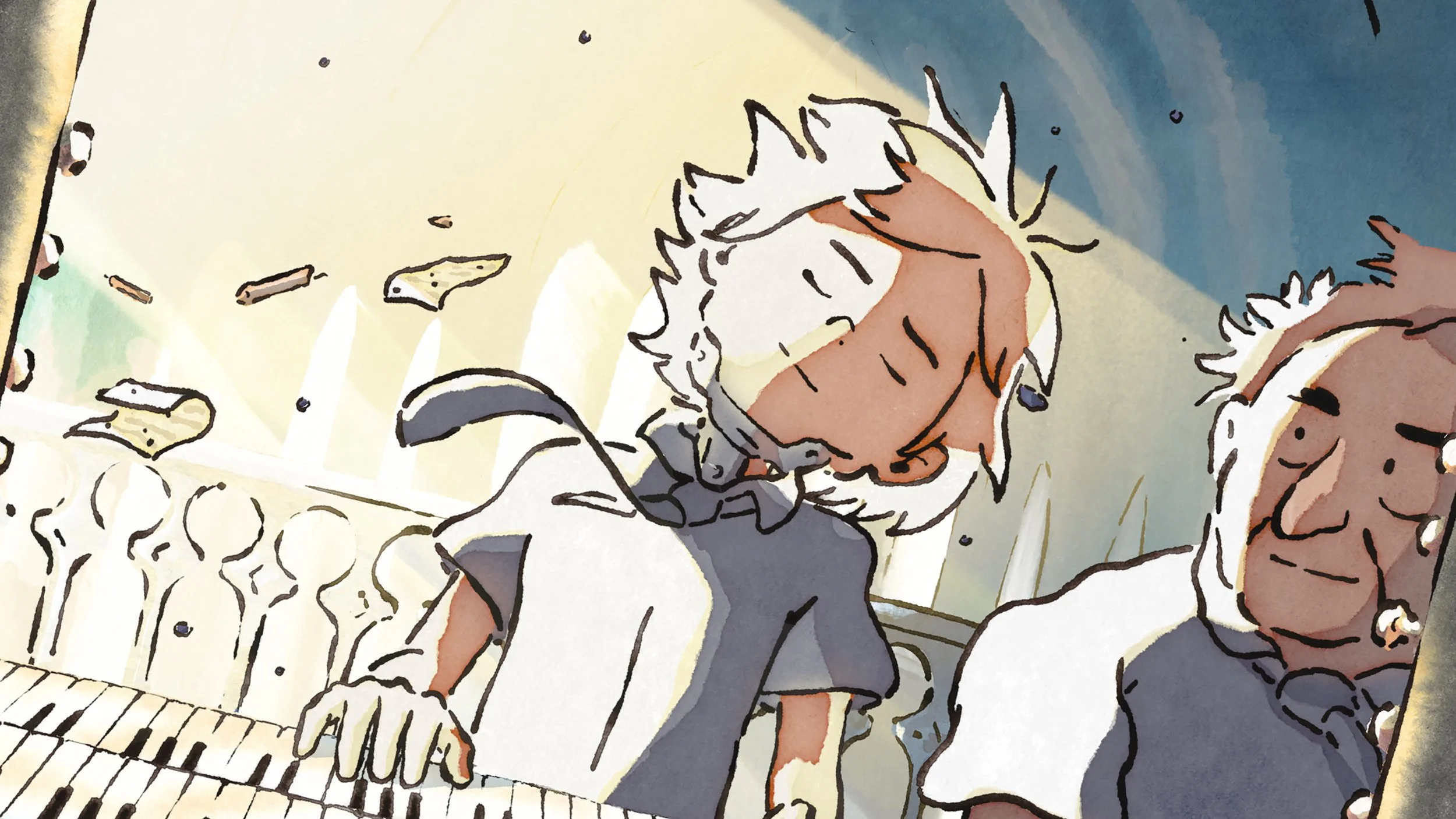
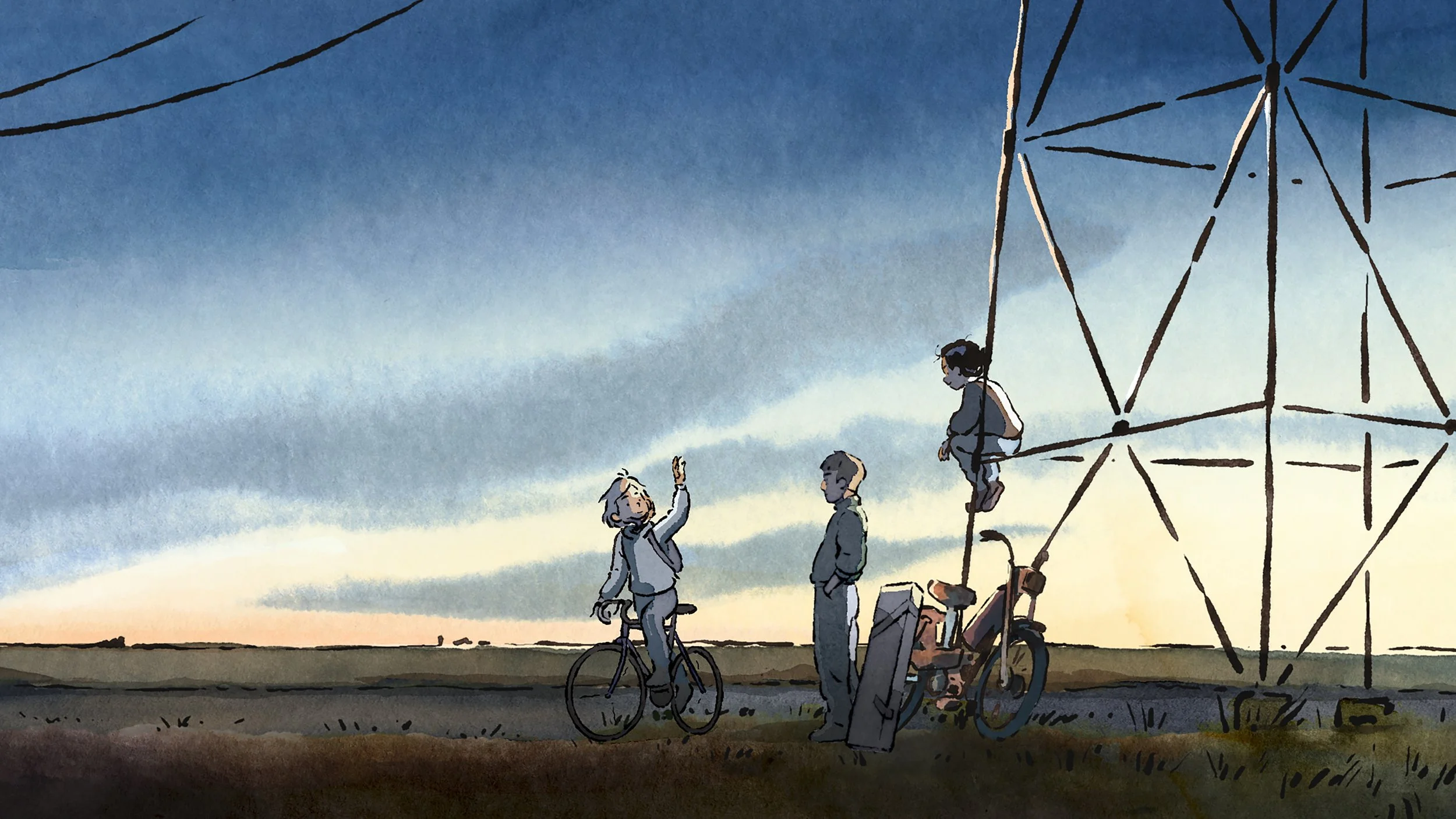
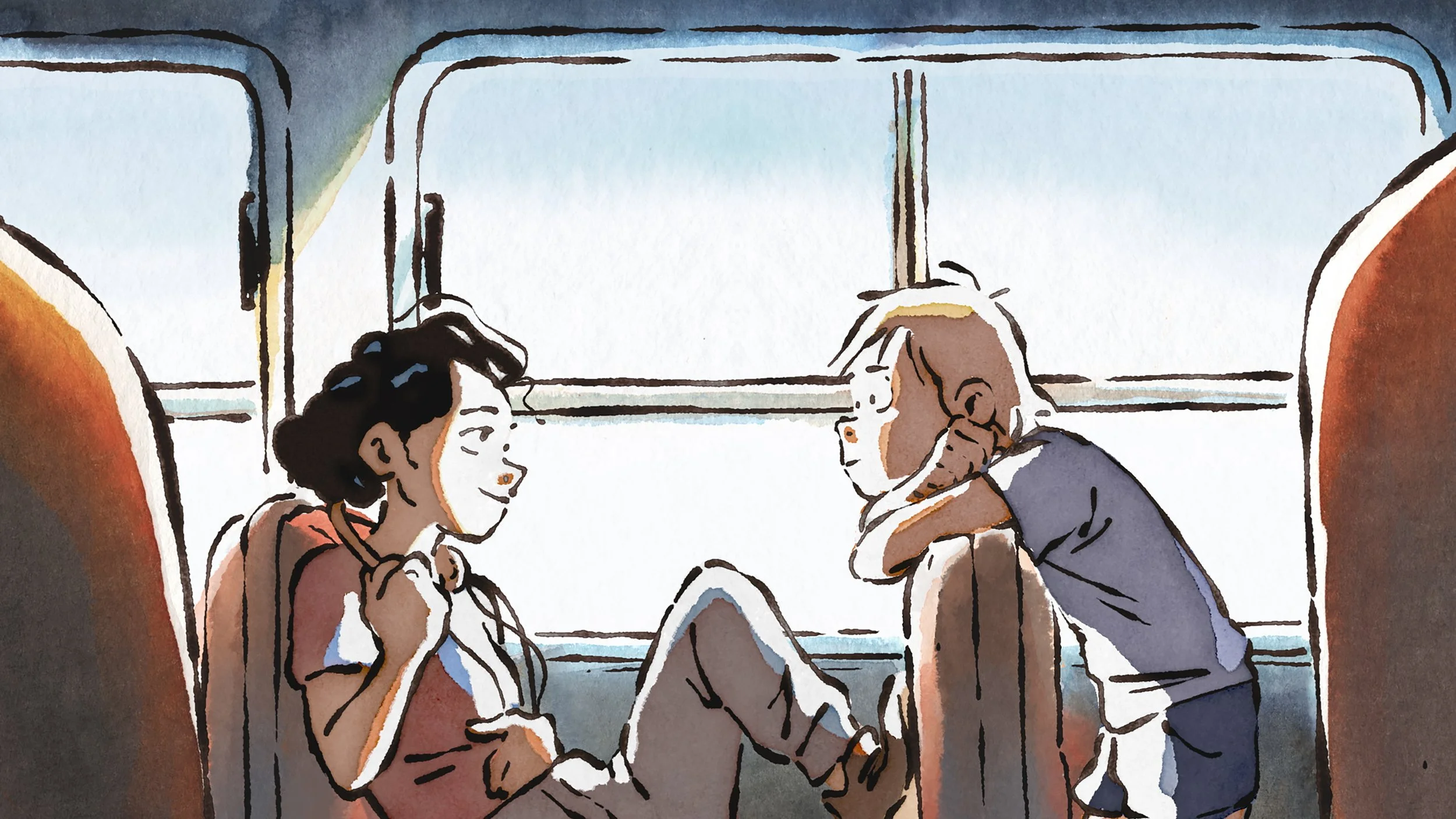
The relationship between Christophe and his father, meanwhile, is considerably more central to the film's emotional ambitions, but it interested me less.
Christophe's father is distant and demanding, and the boy's attempts to live up to his expectations give the story much of its emotional tension. The film understands that parental cruelty does not always arrive in spectacular displays of anger. Sometimes it exists in the everyday: in an impatient look, an unkind remark, an expectation that is never quite met.
But I did not feel entirely satisfied by the resolution of their relationship. When the two eventually make amends, I found myself wondering whether the emotional groundwork had been sufficiently laid. Perhaps the issue was simply the limited time they spent together on screen, or perhaps I struggled to accept that a repaired organ pedal could stand in for years of casual cruelty.
Then again, perhaps this is precisely where the film is being realistic.
Relationships are rarely resolved neatly. Sometimes people find a way to continue living together without ever fully understanding one another. Sometimes the best we can hope for is a small gesture where there was once indifference.
I can appreciate that Iron Boy does not attempt to tie every emotional thread into a perfect bow. But appreciating the intention is not quite the same as feeling its full effect. For me, the reconciliation never carried the weight that the film seemed to want it to.
Iron Boy is an incredibly pleasant film. There is nothing wrong with it. It is charming, carefully observed and visually delightful. The animation alone is worth spending time with, and there is a warmth to the film that makes it easy to settle into its world.
But I also found myself struggling to summon the sort of fervour that makes writing about a film feel urgent.
It is not the kind of film that leaves you with an idea you need to turn over in your head, or an image that continues to haunt you days later. It does not quite unsettle, provoke or surprise in the way that the most affecting cinema can. Its emotional resolutions are gentle, its story familiar, and its pleasures largely contained within the experience of watching it.
What it lacks in narrative profundity, it makes up for in artistic accomplishment. Its greatest pleasure is watching the world take shape around Christophe.
I left Iron Boy without a great deal to ponder, but with a genuine appreciation for the people who made it. In a medium increasingly capable of producing images at extraordinary speed, there is something moving about a film that takes such care over every frame.
