Di Petsa SS27
Holy Milk
Writer: Lily Egleton
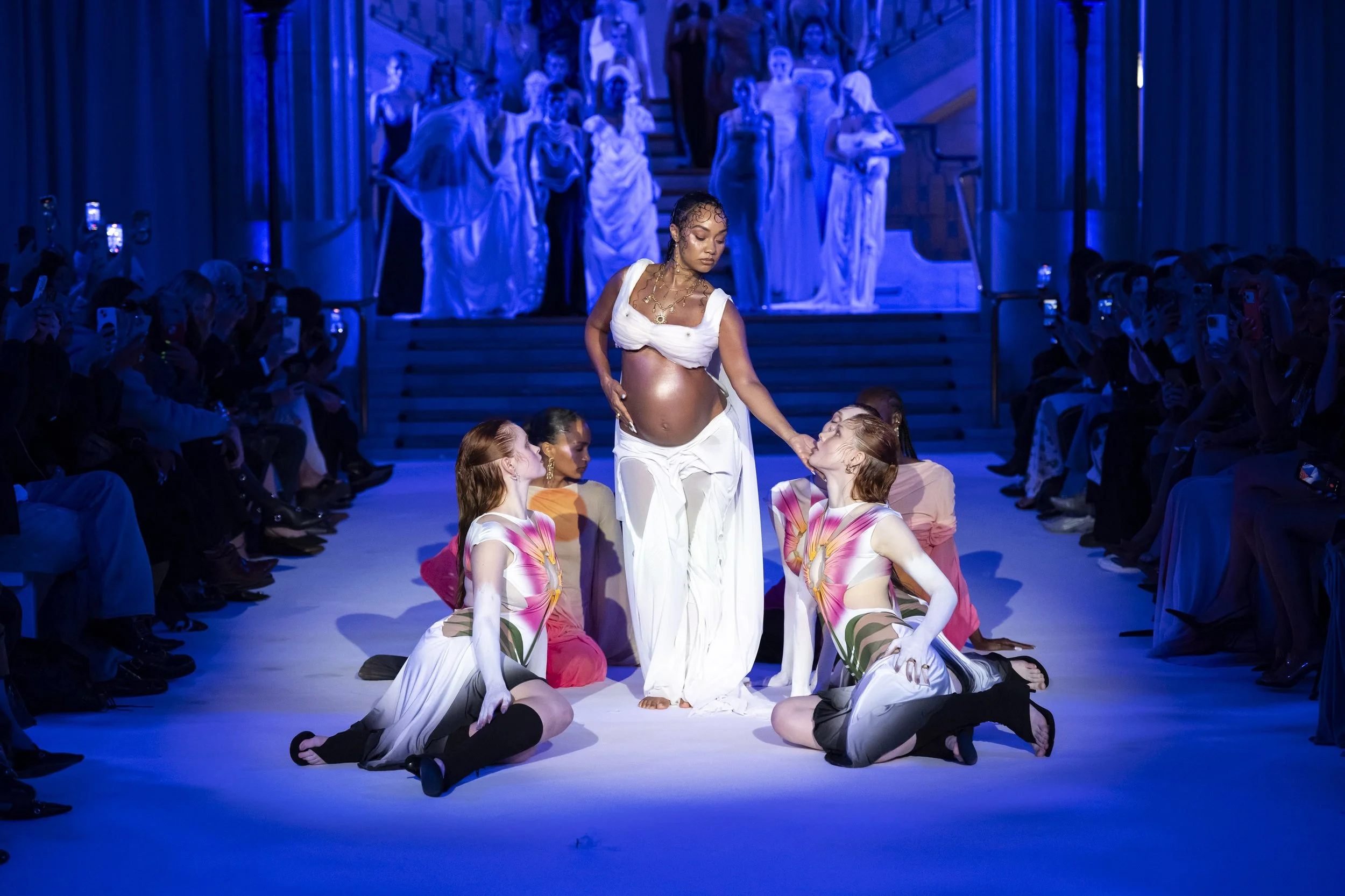
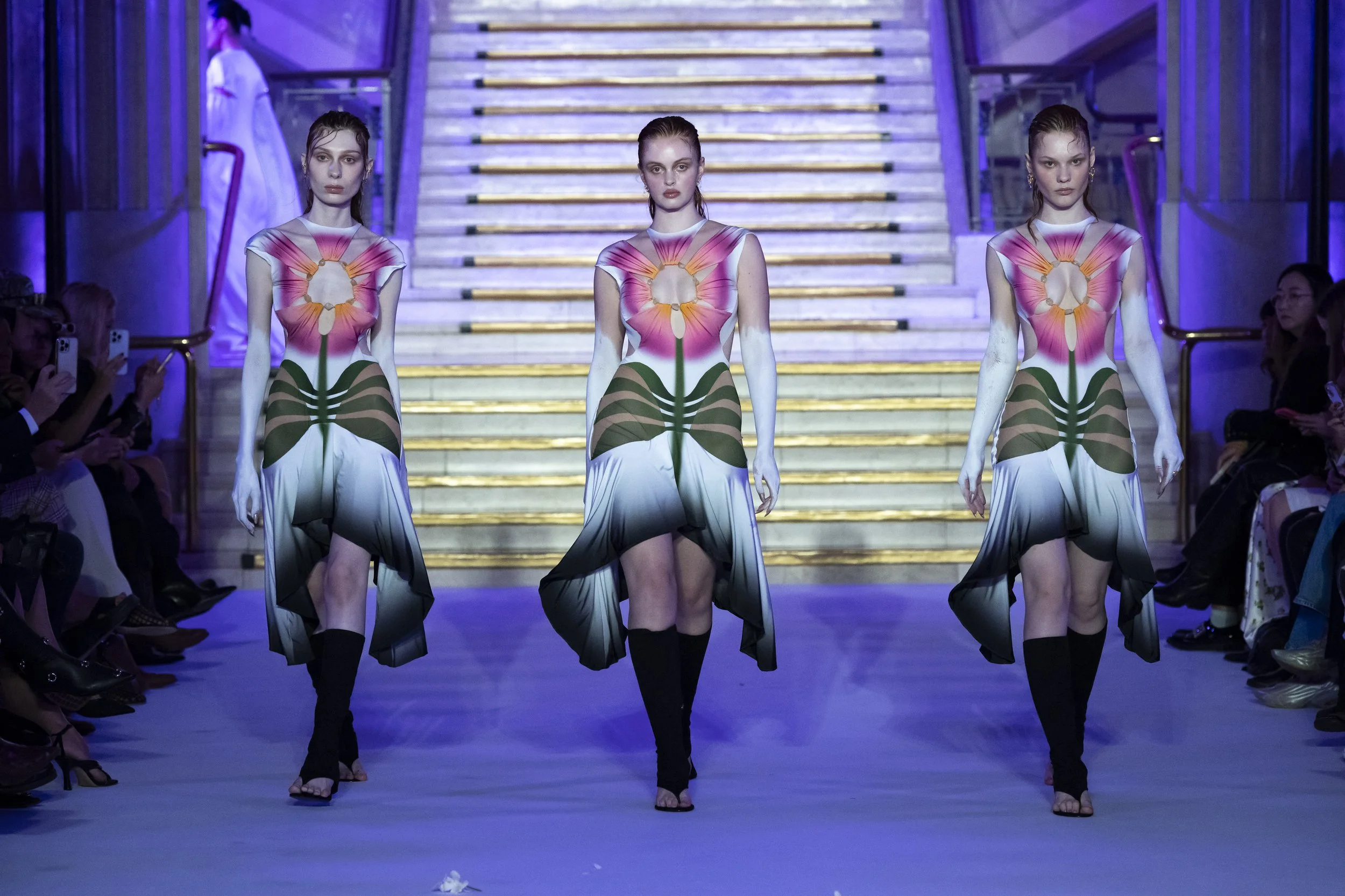
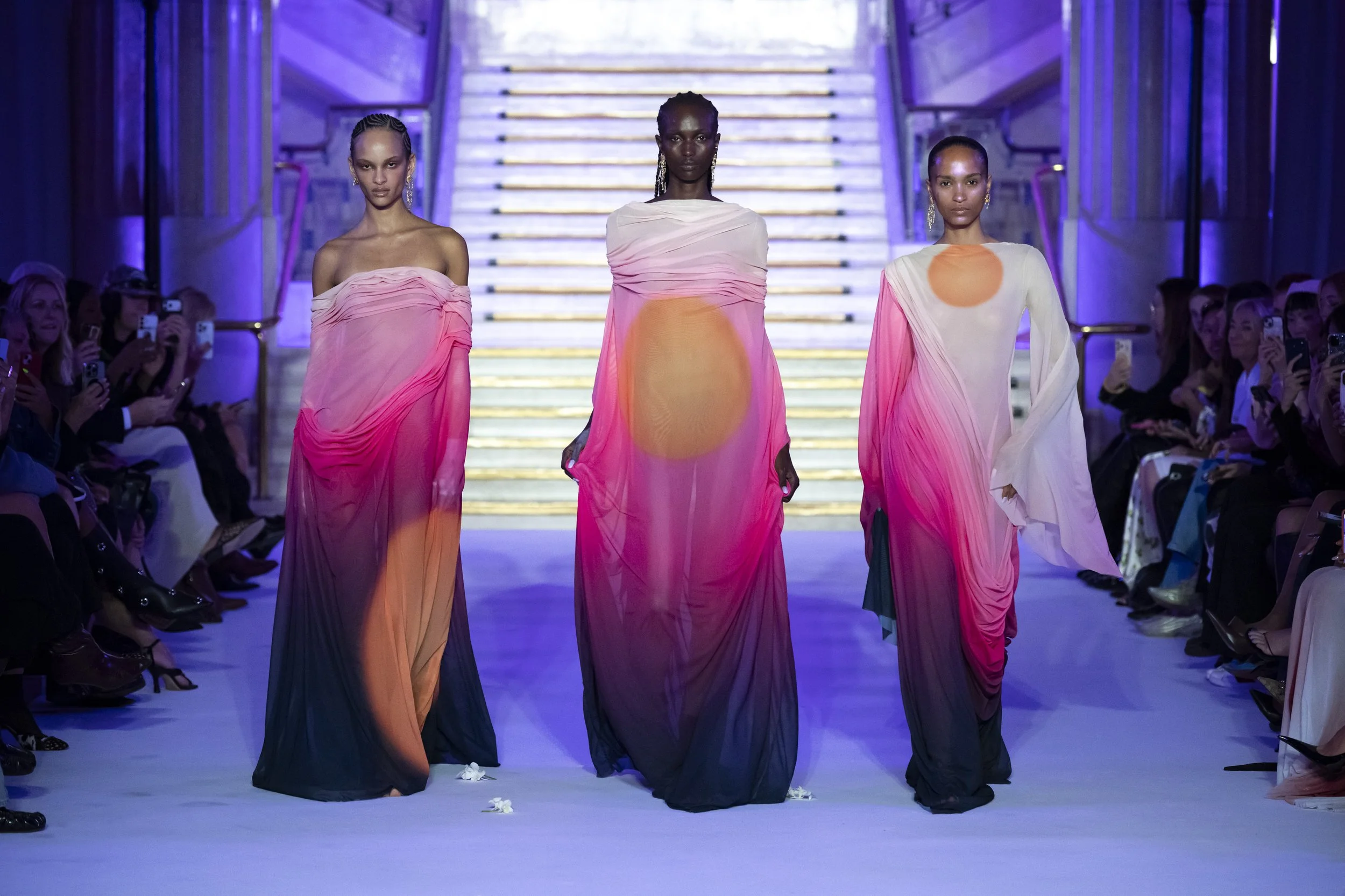
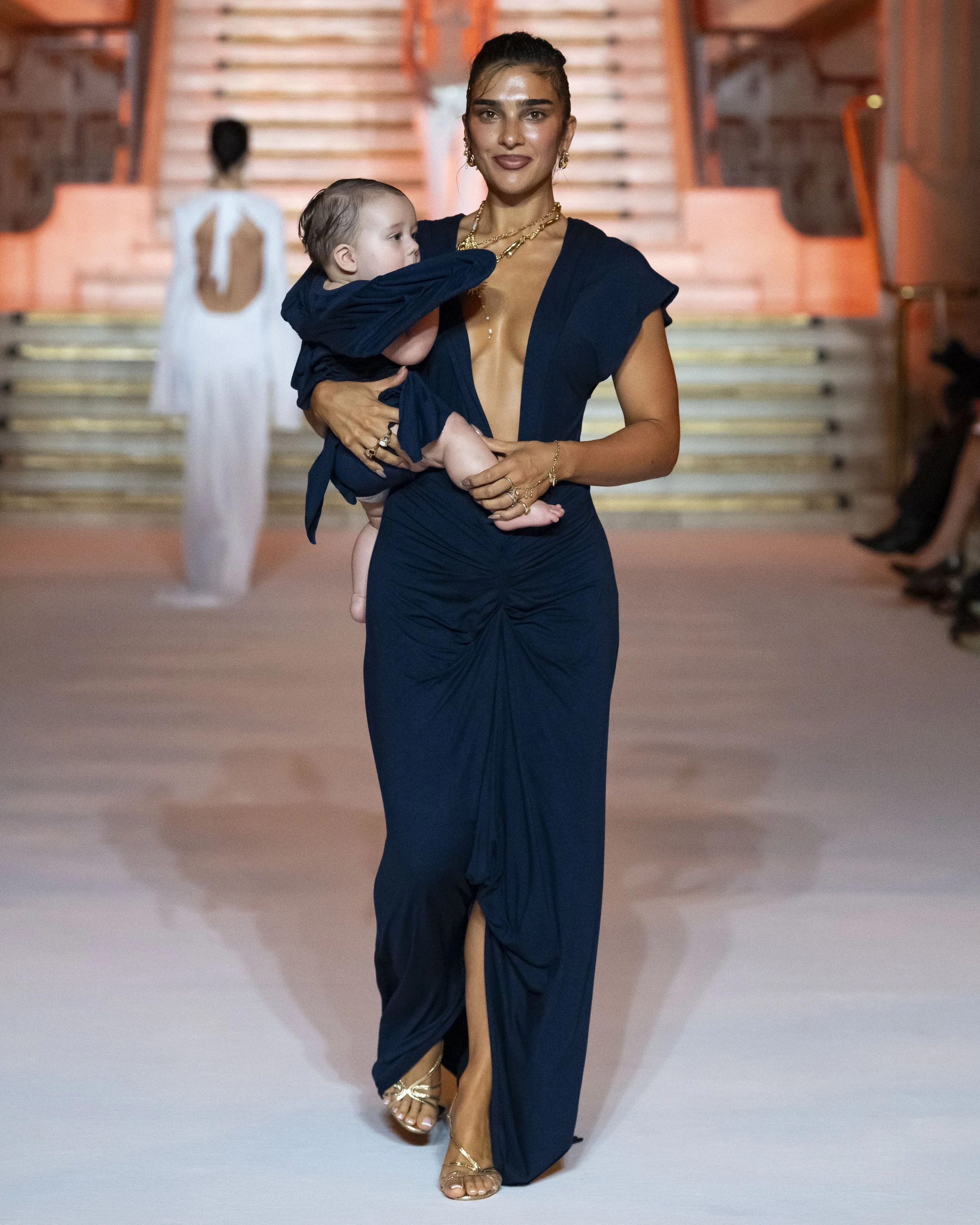
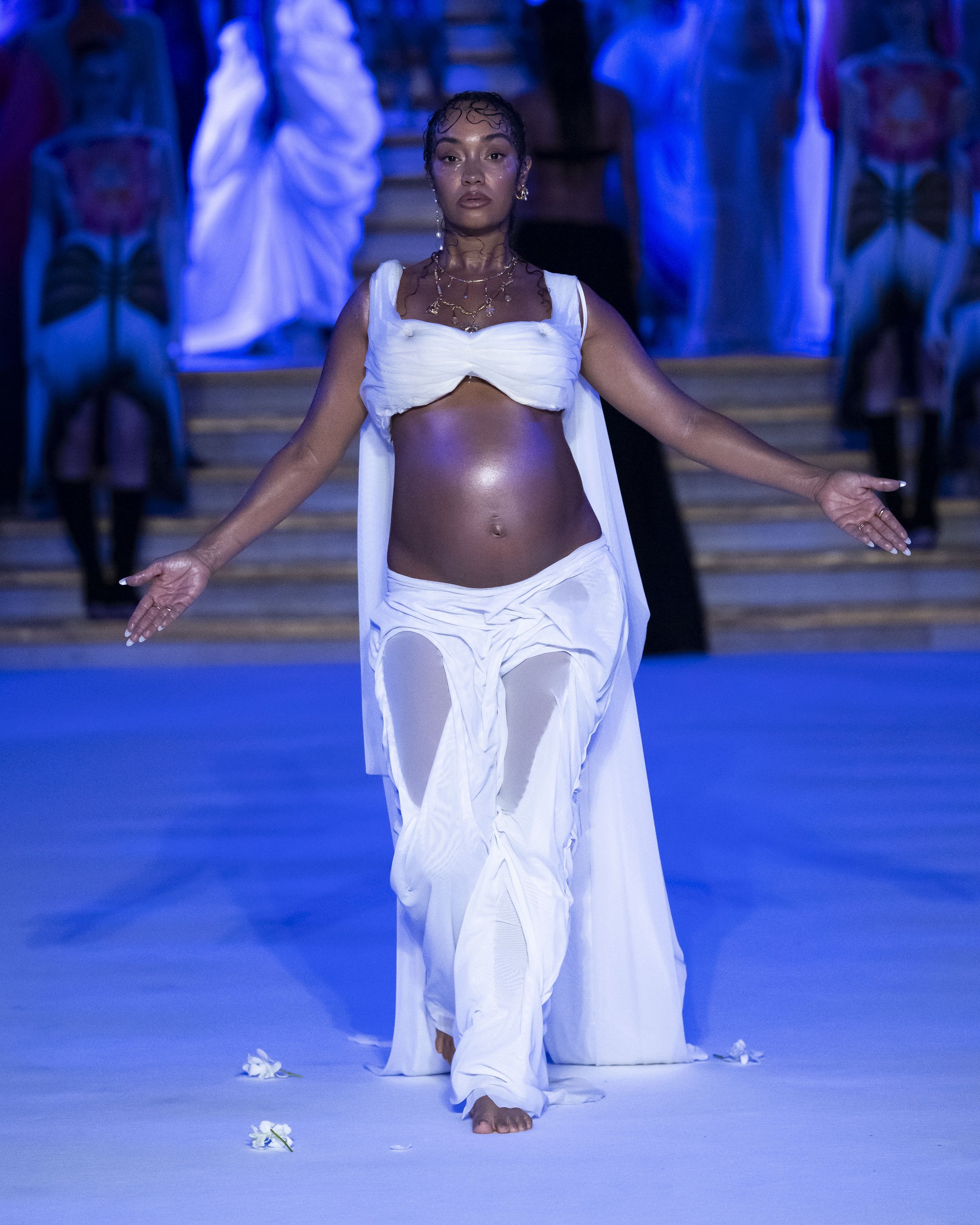
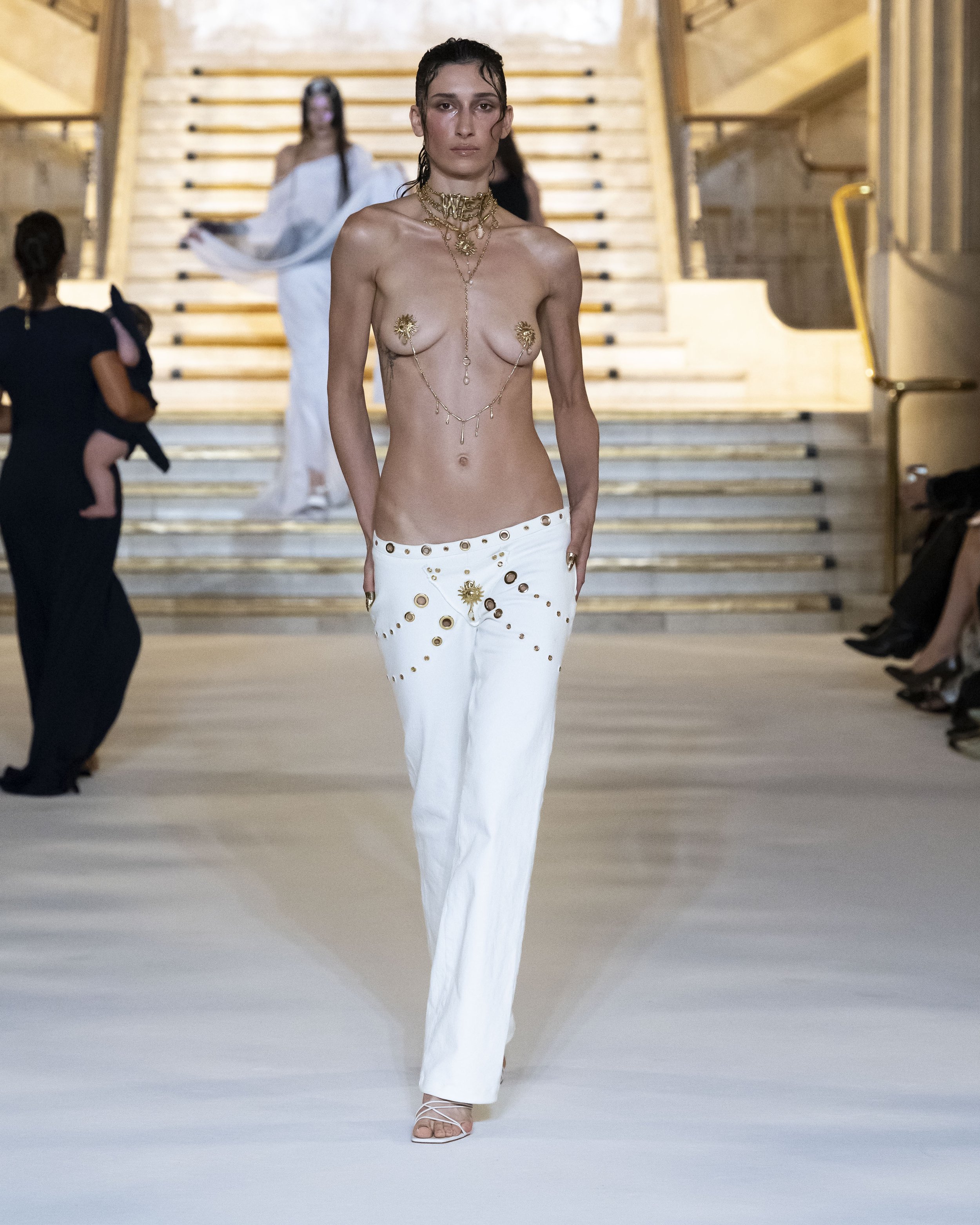
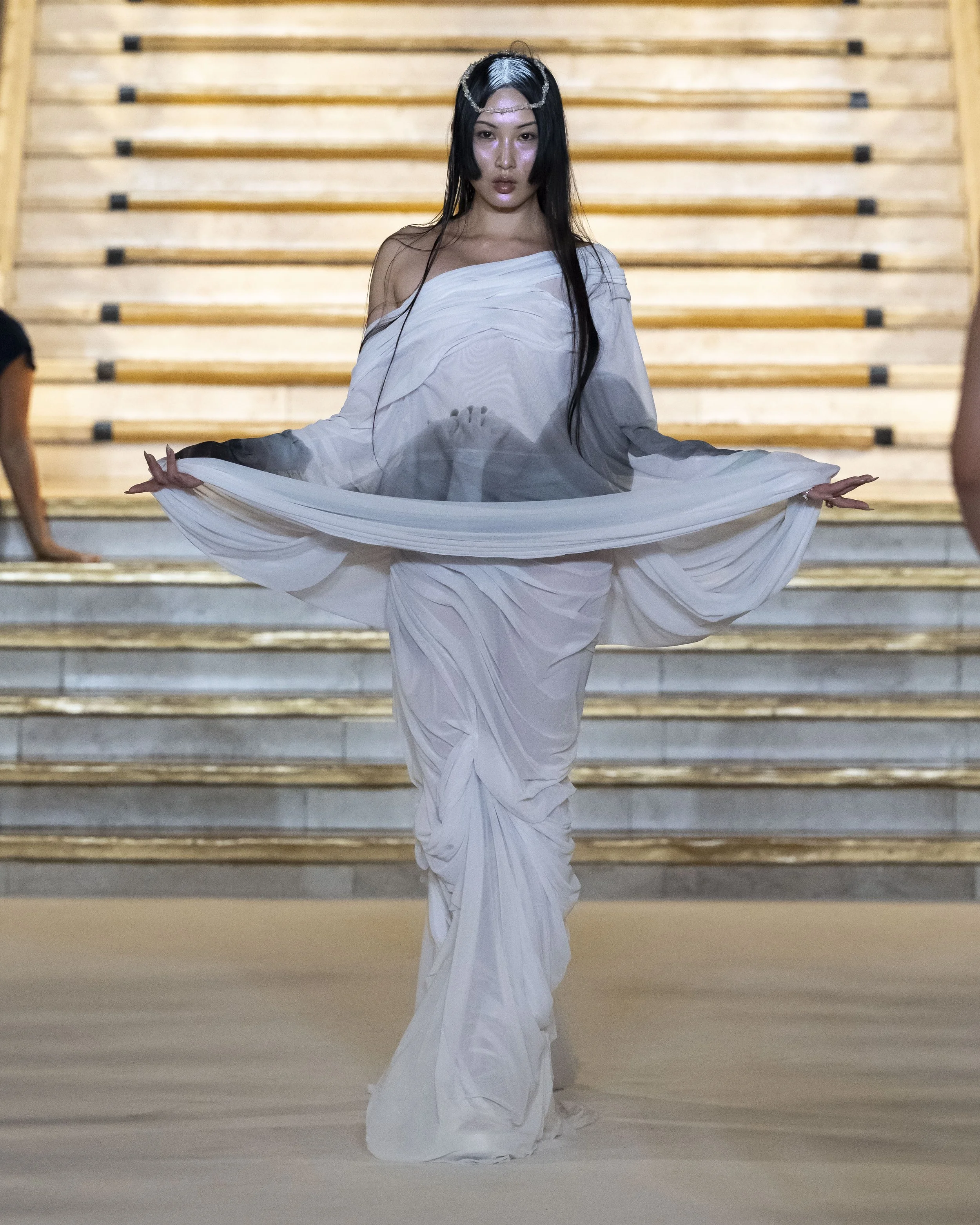
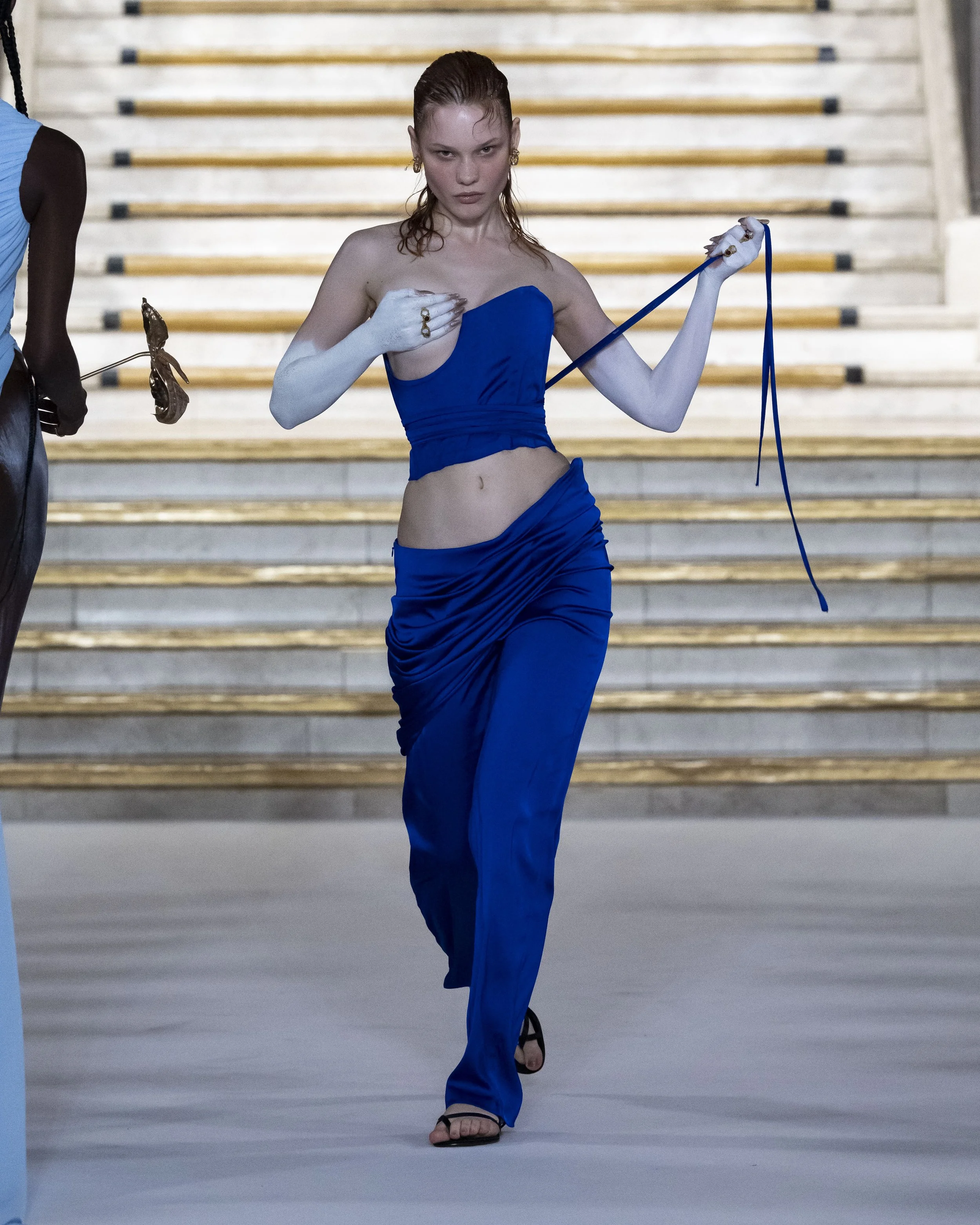
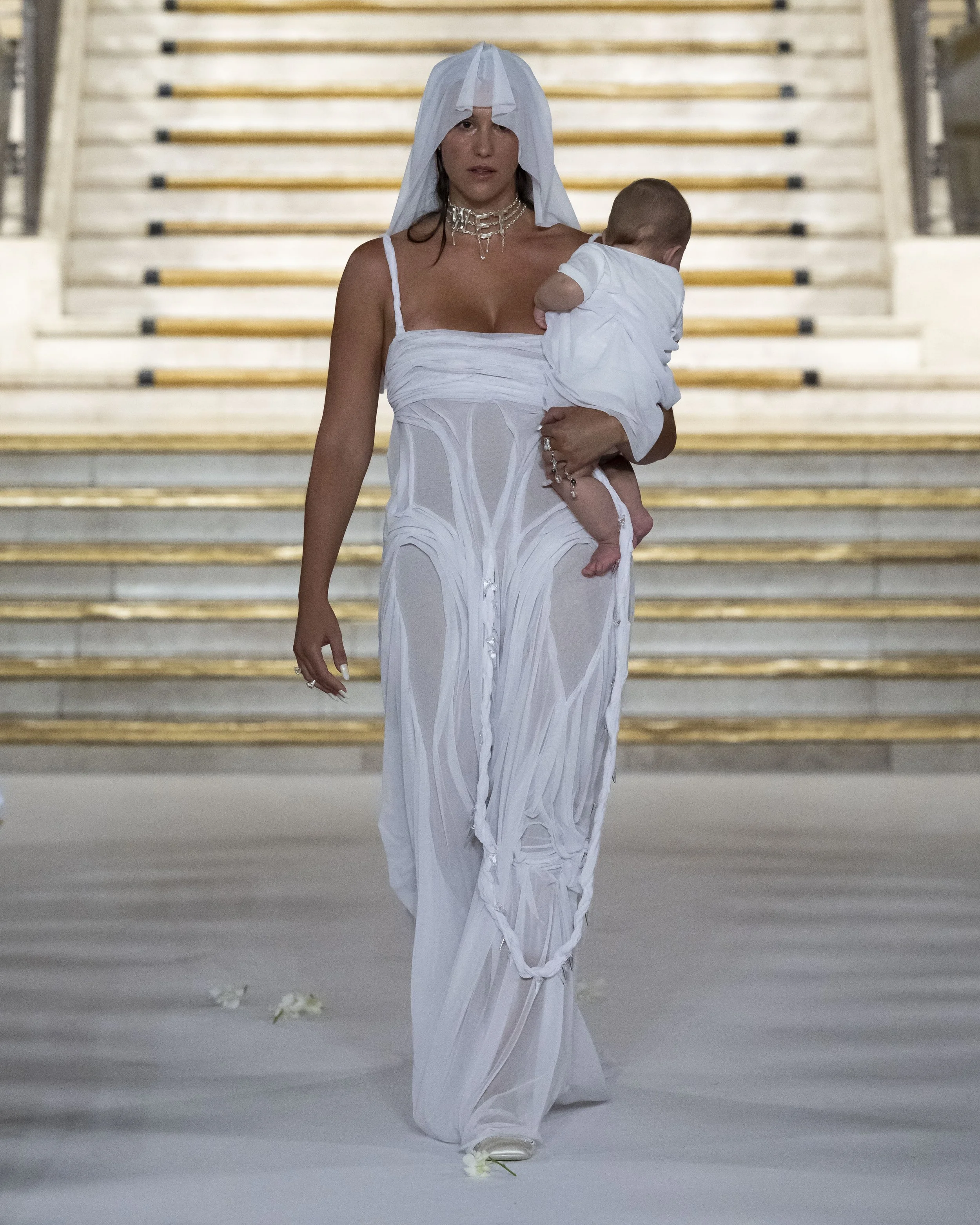
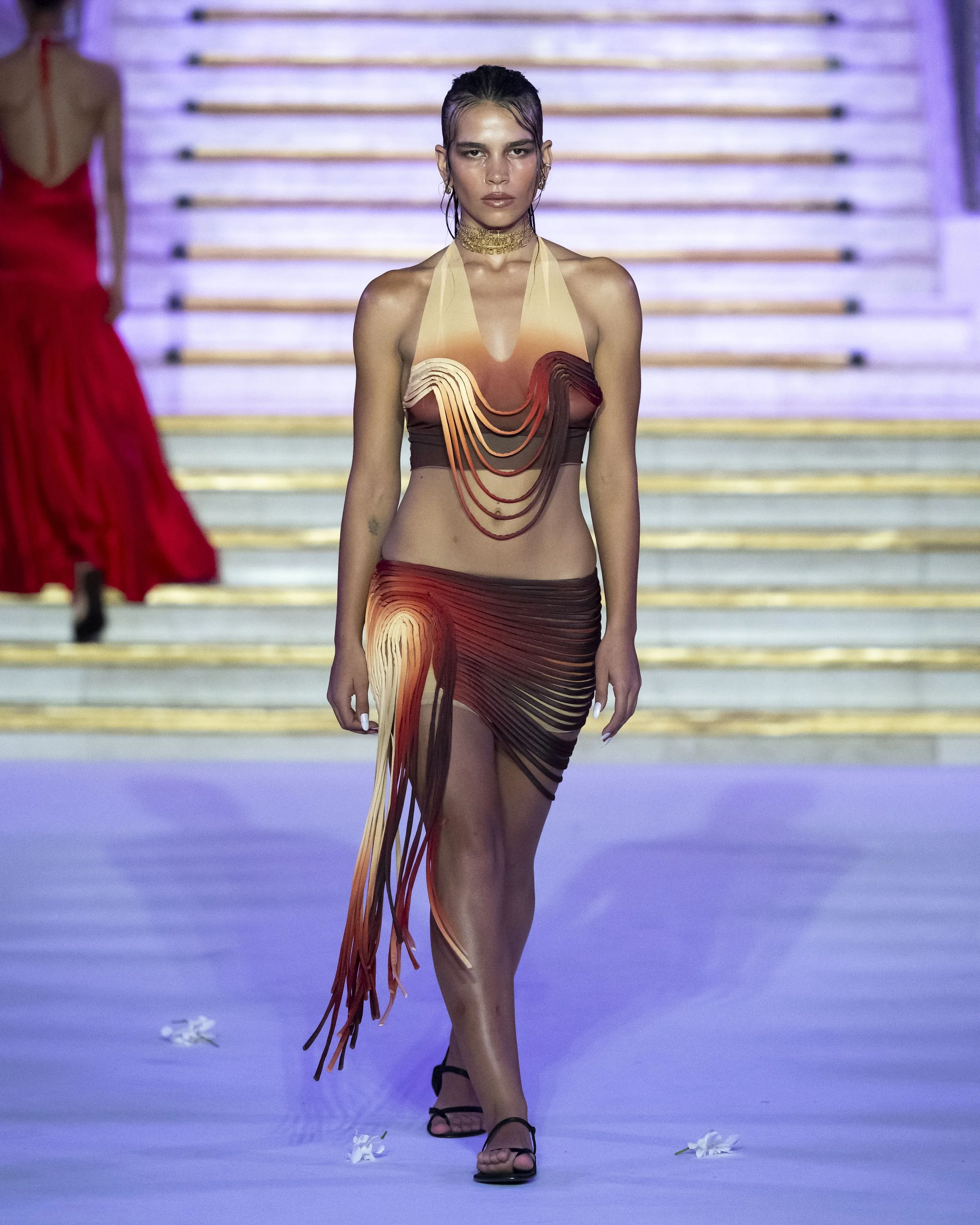
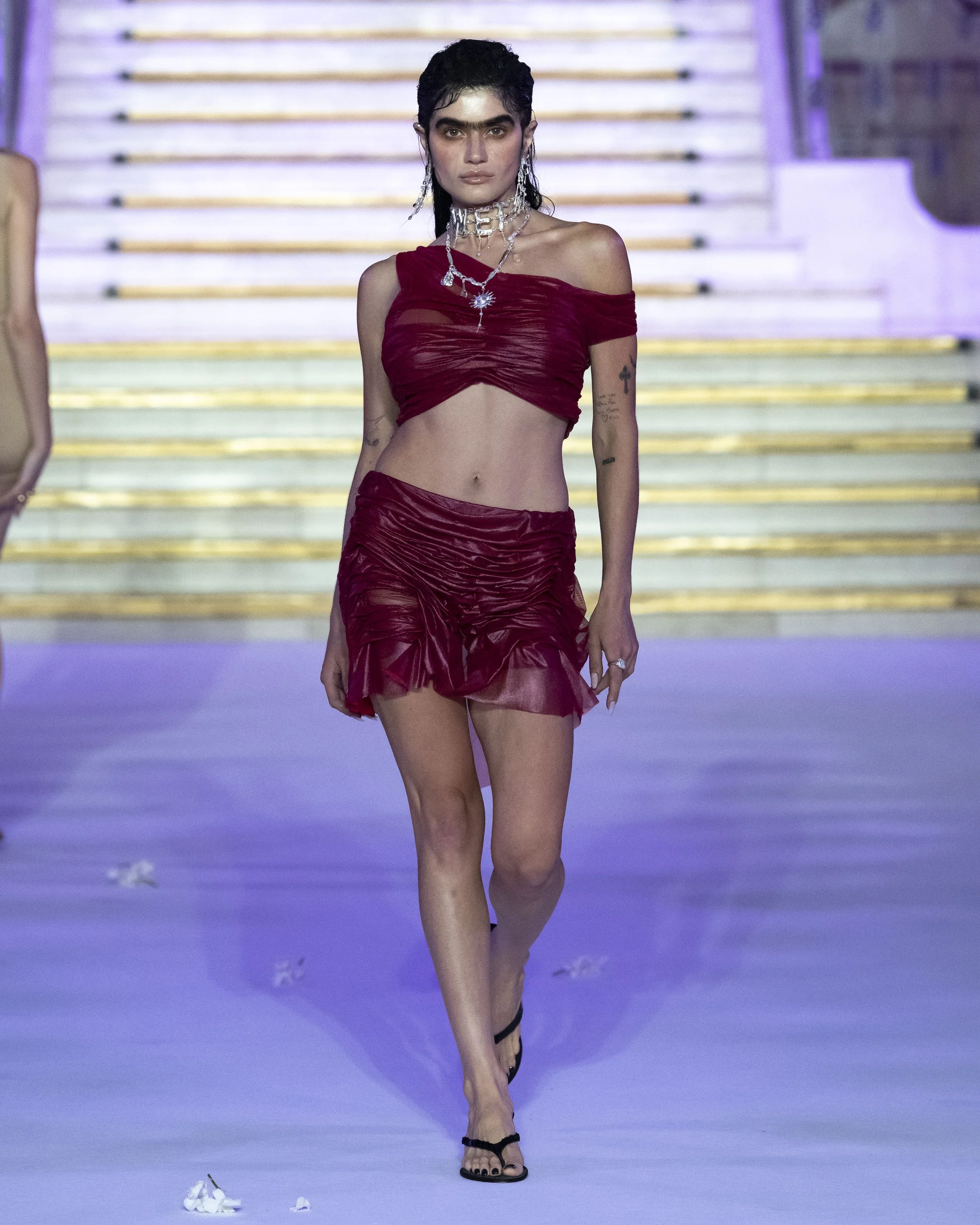
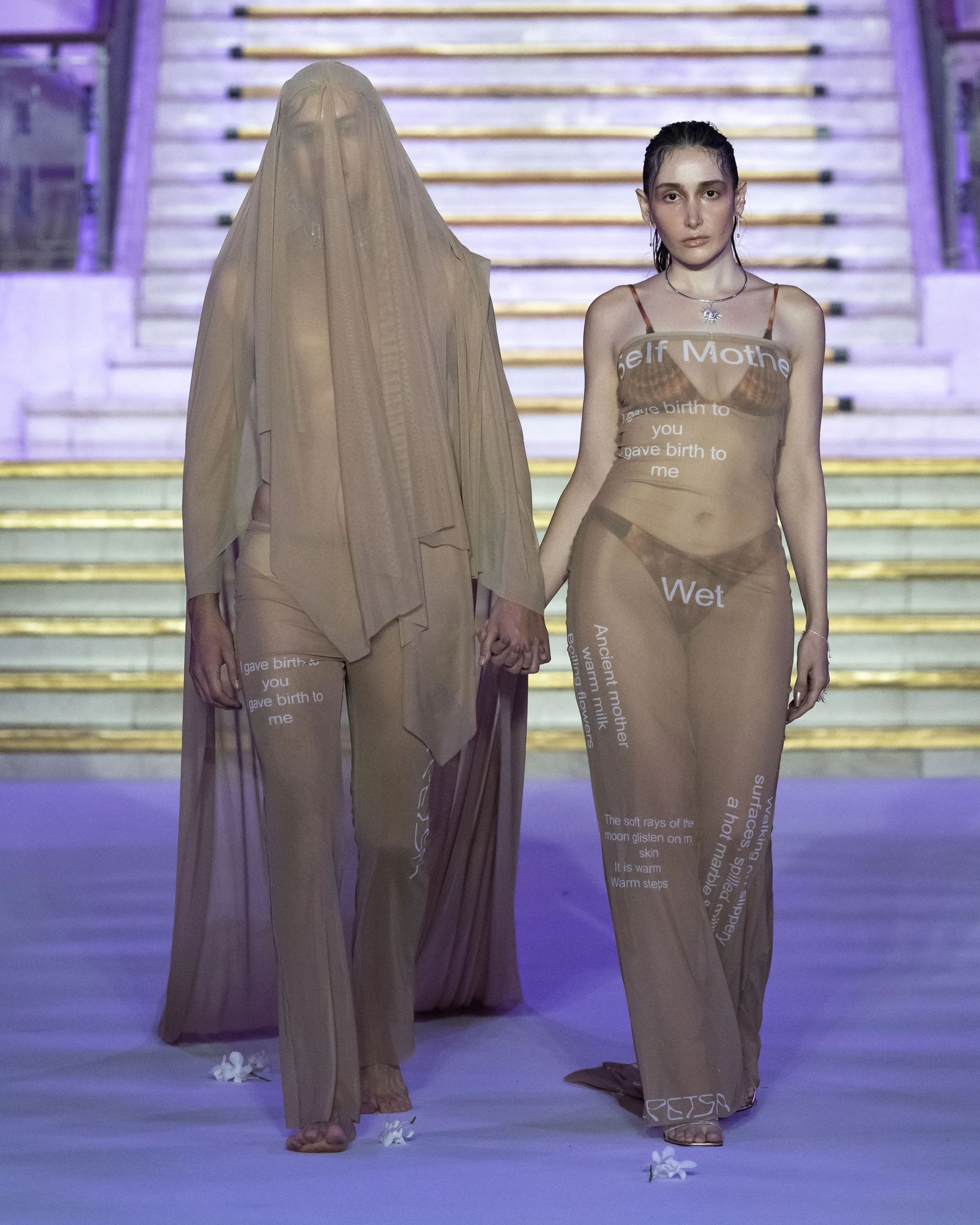
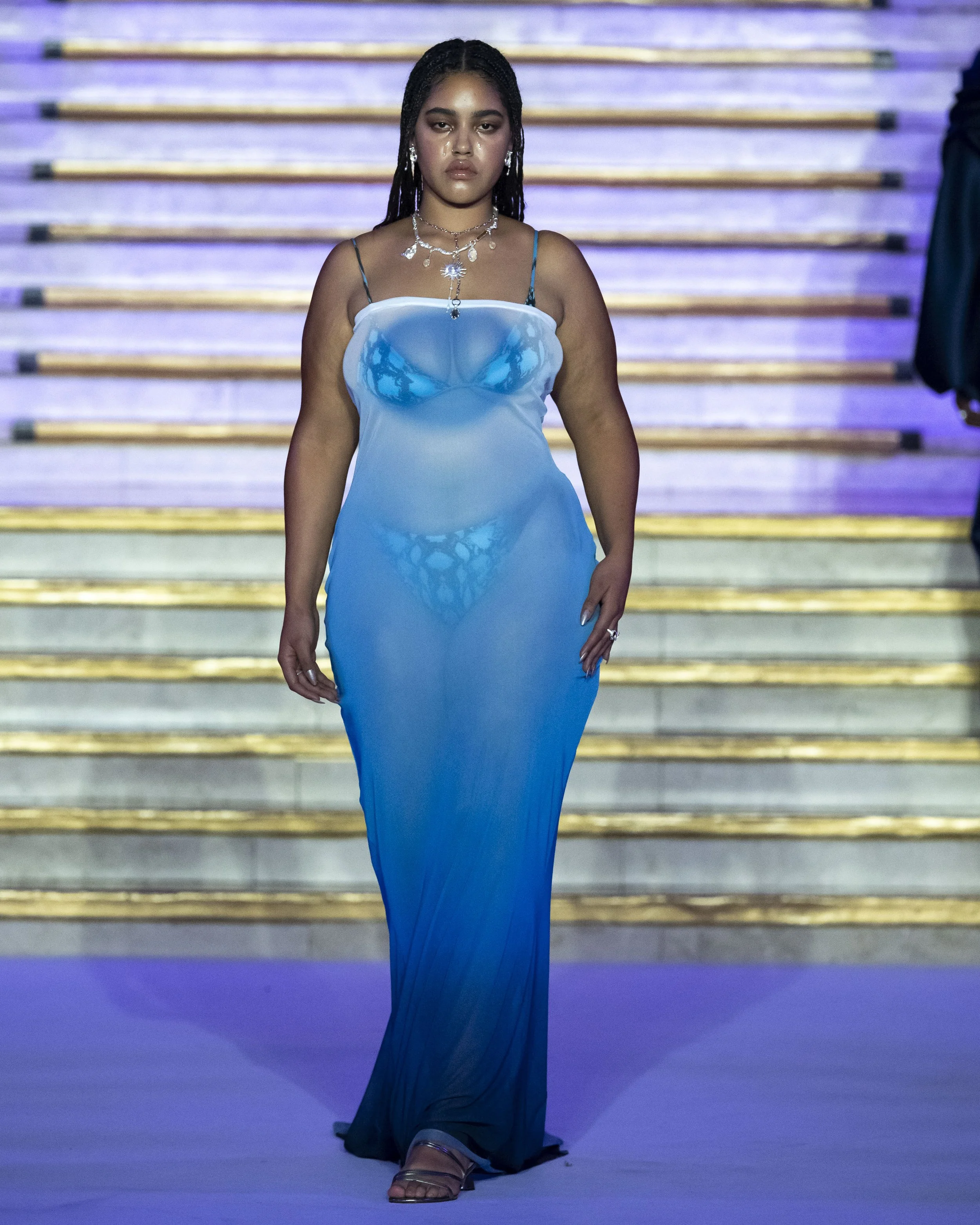
There are few things more capable of making a fashion audience look twice than breast milk. At the finale of Di Petsa’s Spring/Summer 2027 show, Holy Milk, the iconic Little Mix star Leigh-Anne Pinnock stood pregnant at the centre of the runway in a sculptural white bra as milk-like liquid streamed from the garment and over the models gathered around her. It was theatrical, undeniably, and elegant and poignant in its own way. Yet, lingering beneath the spectacle was something much more interesting: a reminder that motherhood is, first and foremost, physical. The designer has long been interested in the relationship between the female body and water, using wet-look fabrics and fluid silhouettes to make the body appear almost submerged. With Holy Milk, that language becomes something more transversive and the allusions to maternity and motherhood are evident.
Milk is one of the most ordinary substances imaginable, yet we have somehow made it strange when it comes directly from a woman. Breastfeeding is natural, yet the sight of a breastfeeding body in public can still provoke discomfort. Women are expected to feed their babies while simultaneously making sure nobody has to see them doing it. Di Petsa transitions that juxtaposition into a spectacle, albeit a beautiful one at that, transforming an act that is usually private and placing it directly in the centre of London Fashion Week.
There is something particularly interesting and special about seeing motherhood presented this way within fashion. Fashion has spent decades being fascinated by the female body, but usually on its own terms. Something that I absolutely adore witnessing within fashion is the portrayal of how the female body is not only to be deemed sexual, desirable, exposed, sculpted and consumed. Instead, fashion can enhance and allude to the utmost power that a female body carries. Motherhood introduces a different kind of power... It is a body that is doing something rather than simply being looked at, objectified, sexualised or analysed. It is producing, feeding and changing. Milk is perhaps the clearest expression of that distinction and serves as a product illusive to the themes of pregnancy and motherhood.
That is what makes Holy Milk more compelling than a simple "shock factor" might suggest. The show is not simply presenting motherhood as beautiful, or attempting to turn it into another polished fashion fantasy. Instead, it embraces what some could consider "messiness" that comes with it. Models carried babies, pregnant bodies were visible and Pinnock’s pregnancy was the climax, becoming a signature aspect of the performance rather than something to disguise beneath the clothes, or to be utilised as a one-and-done "shock factor". The maternal body was not treated as an interruption to fashion - it was the glue that held it together.
Petsa has spoken about being inspired by pregnant friends and by the idea of becoming something new through motherhood, describing the process of creating new versions of ourselves as a kind of rebirth. I think this intimate and personal connection allowed the runway to not only be a concept of beautiful designs and exceptional conceptualisation and execution, but one of love. There is something universal in this idea, even beyond motherhood itself. We are all, at different points in our lives, becoming versions of ourselves that we could not have previously imagined and evolving just like how a body grows and develops... Petsa makes the clear statement that the existence of a changing and powerful body makes that transformation impossible to ignore.
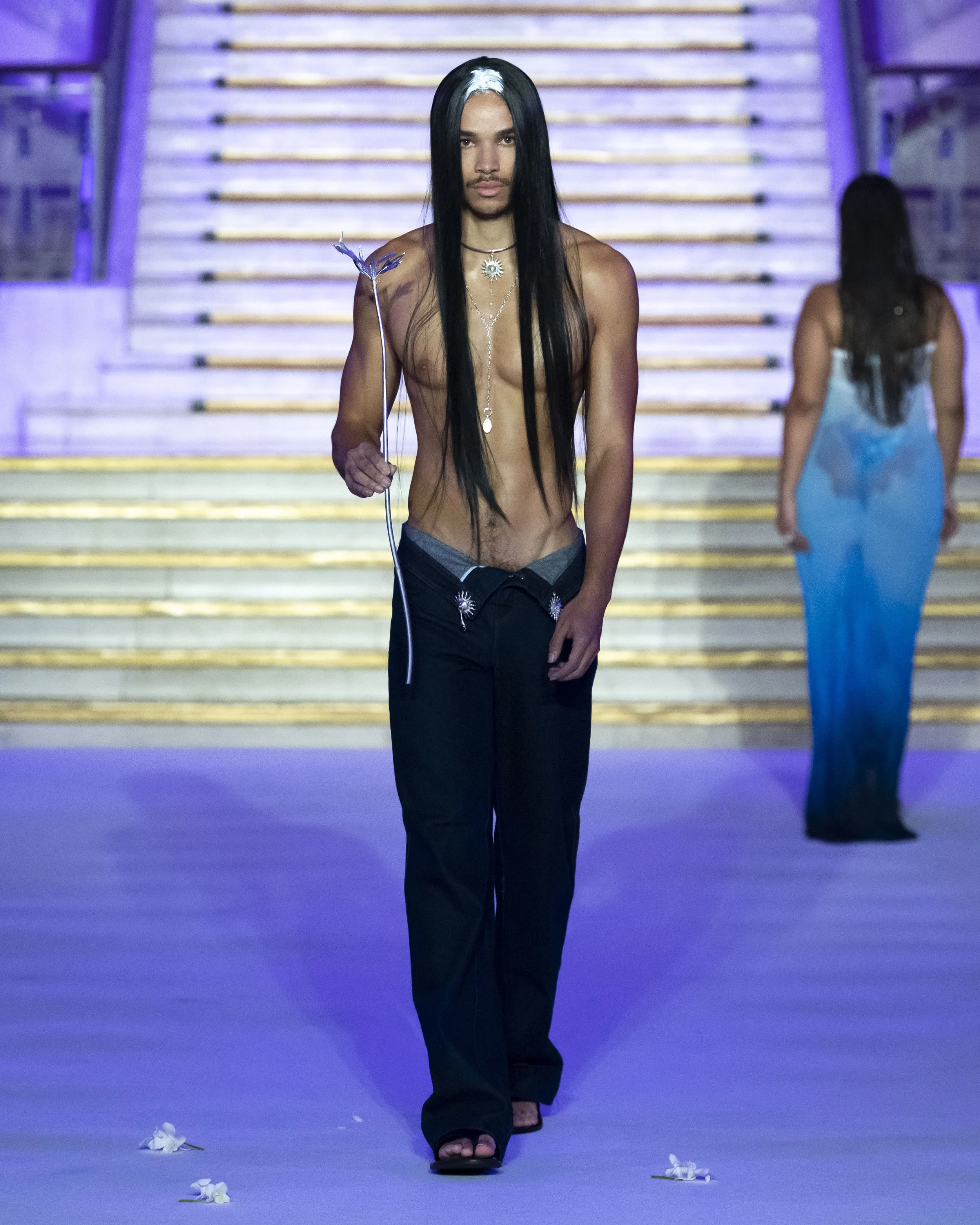
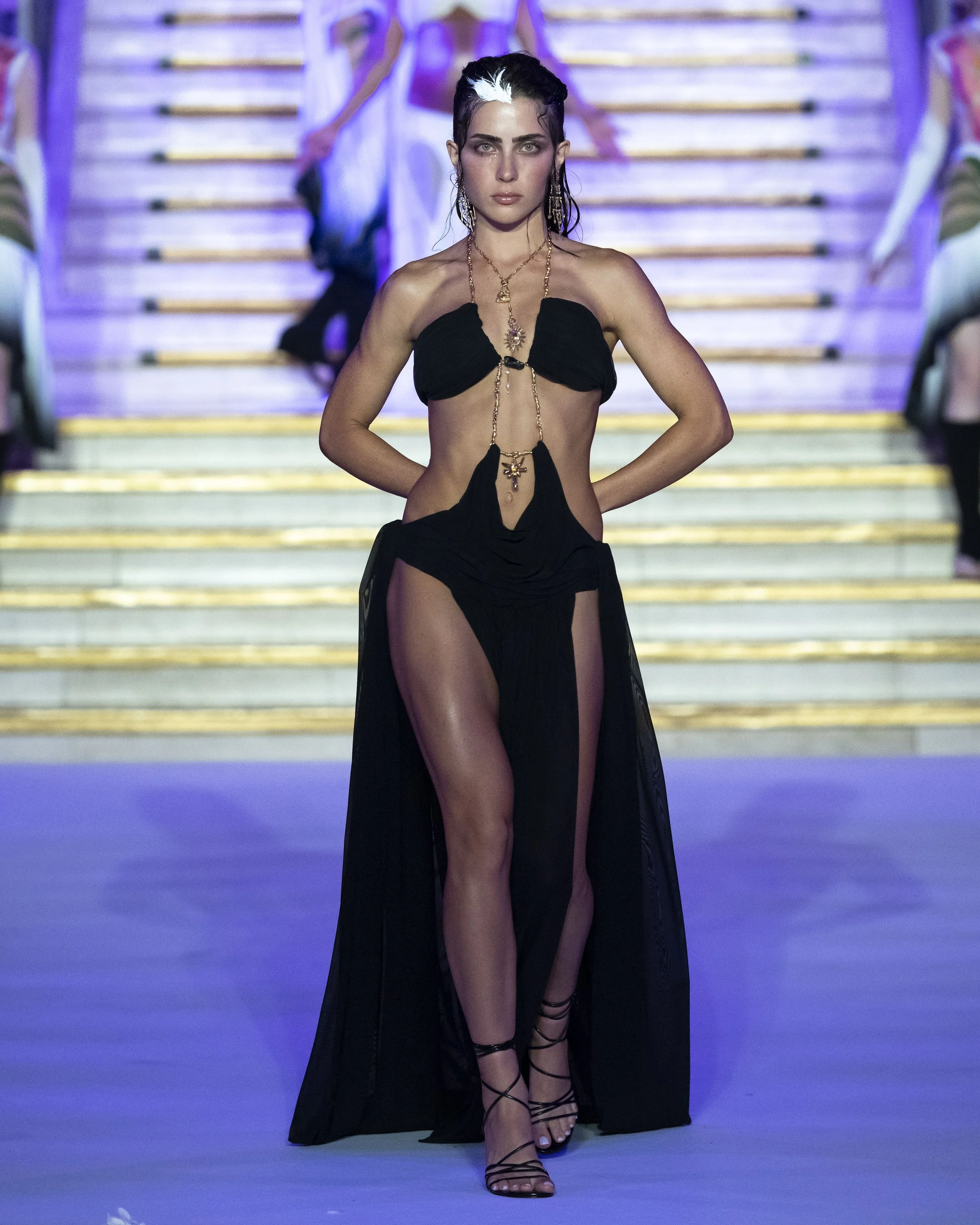
Collaborators included ECO Style gel, Charles & Keith (Women's Shoes), Pedro (Men's Shoes), and Jewellery designed with Awe Inspired.