Walking on Eggshells: Pauline Dujancourt
Words by: Abby Scarlett
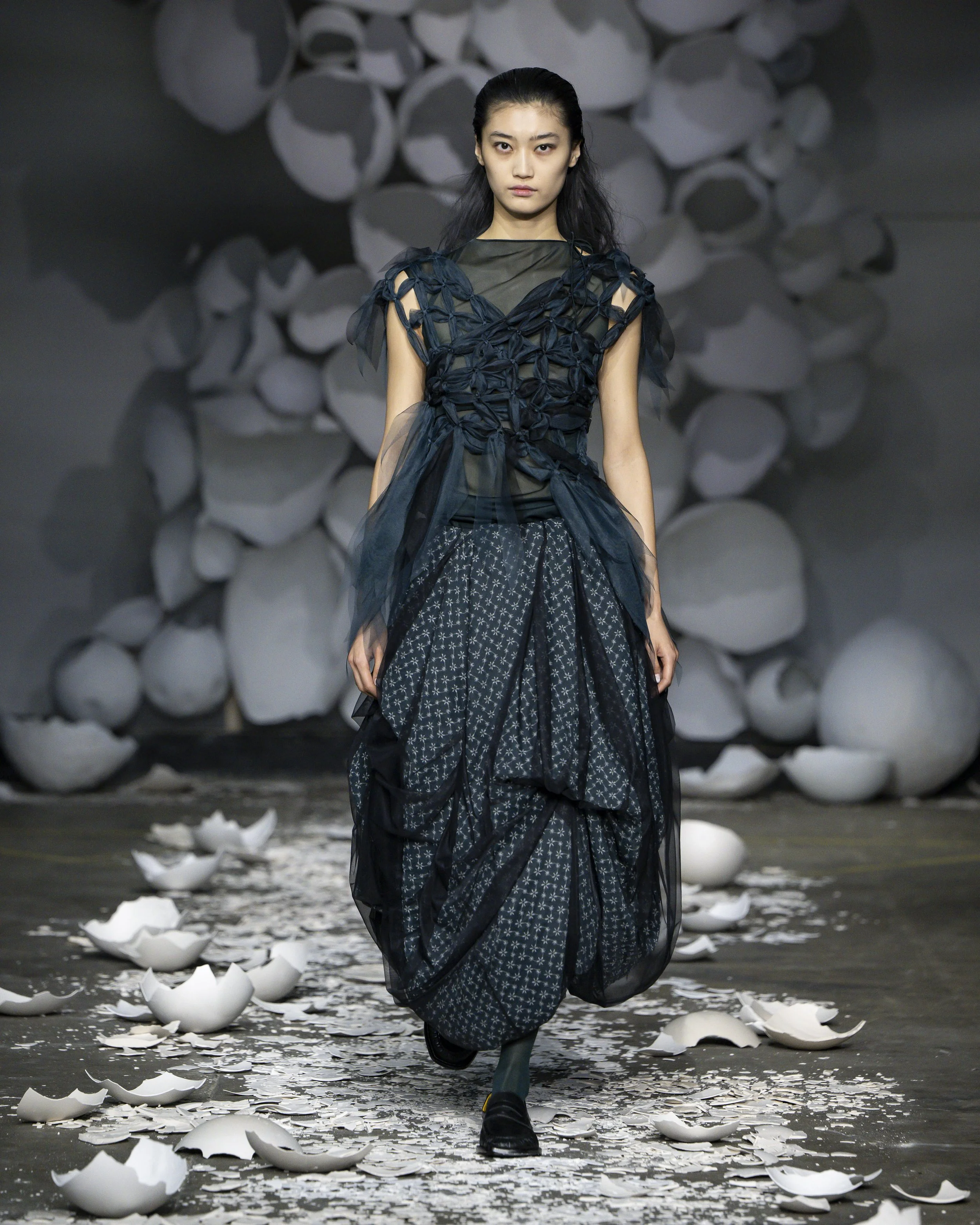
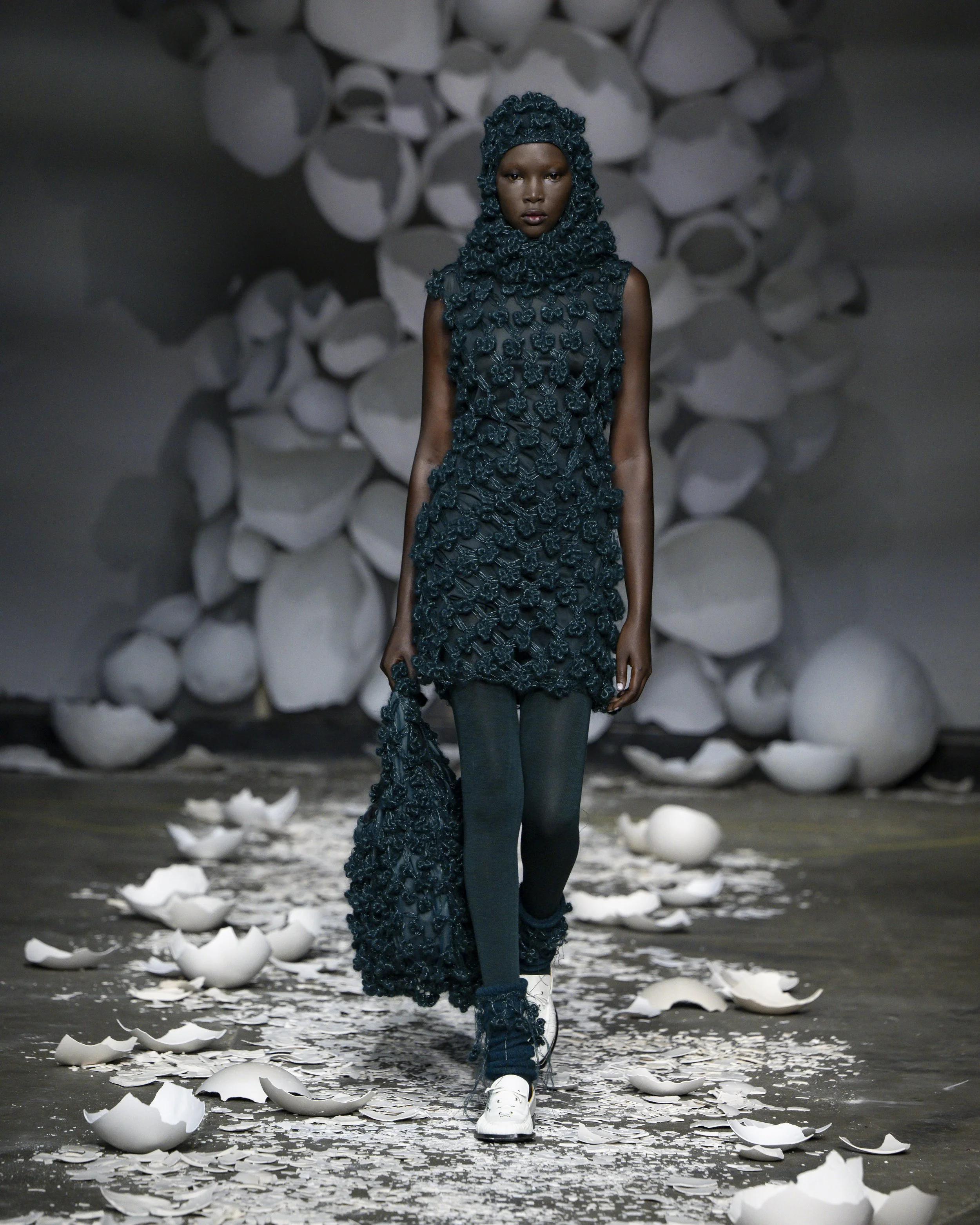
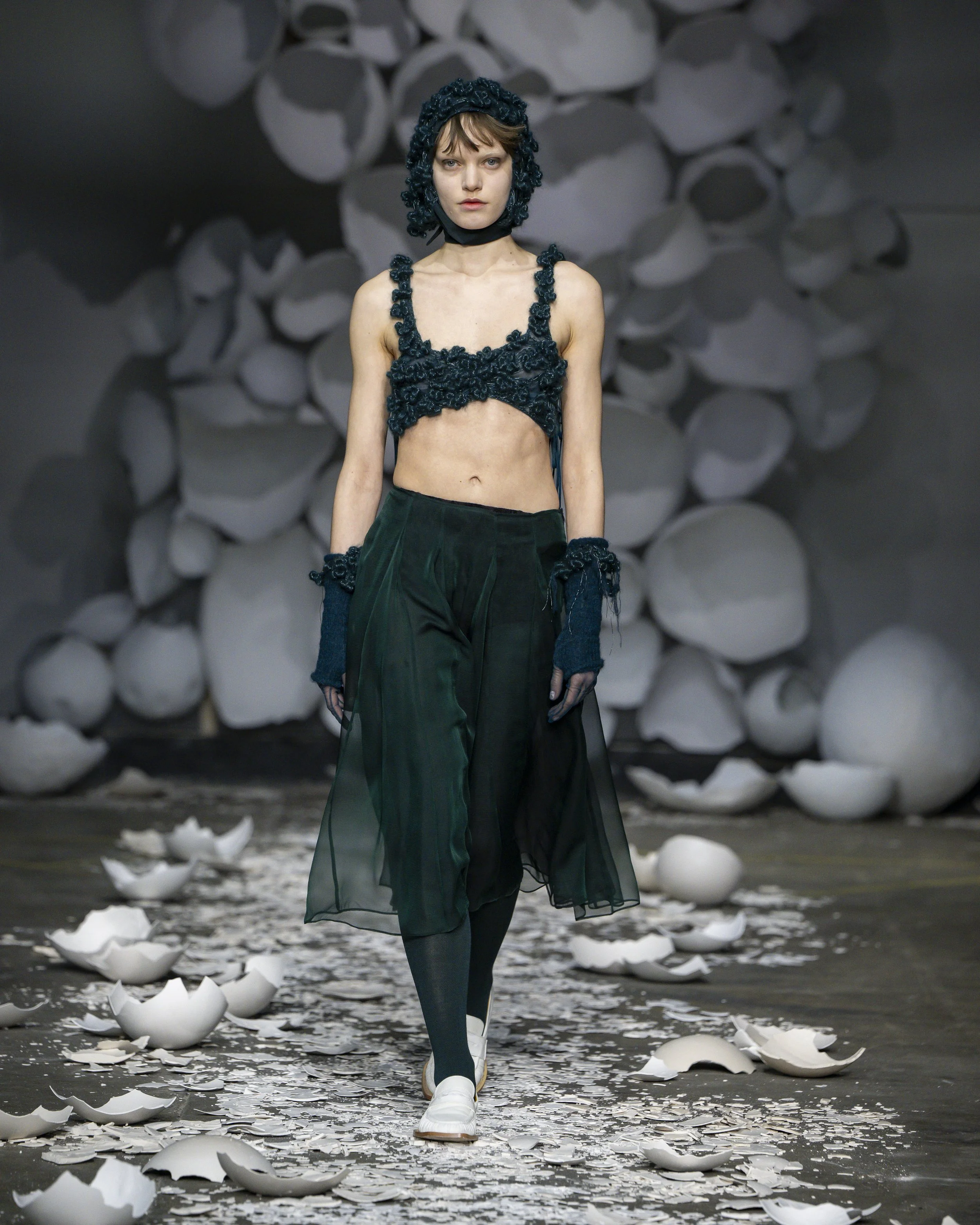
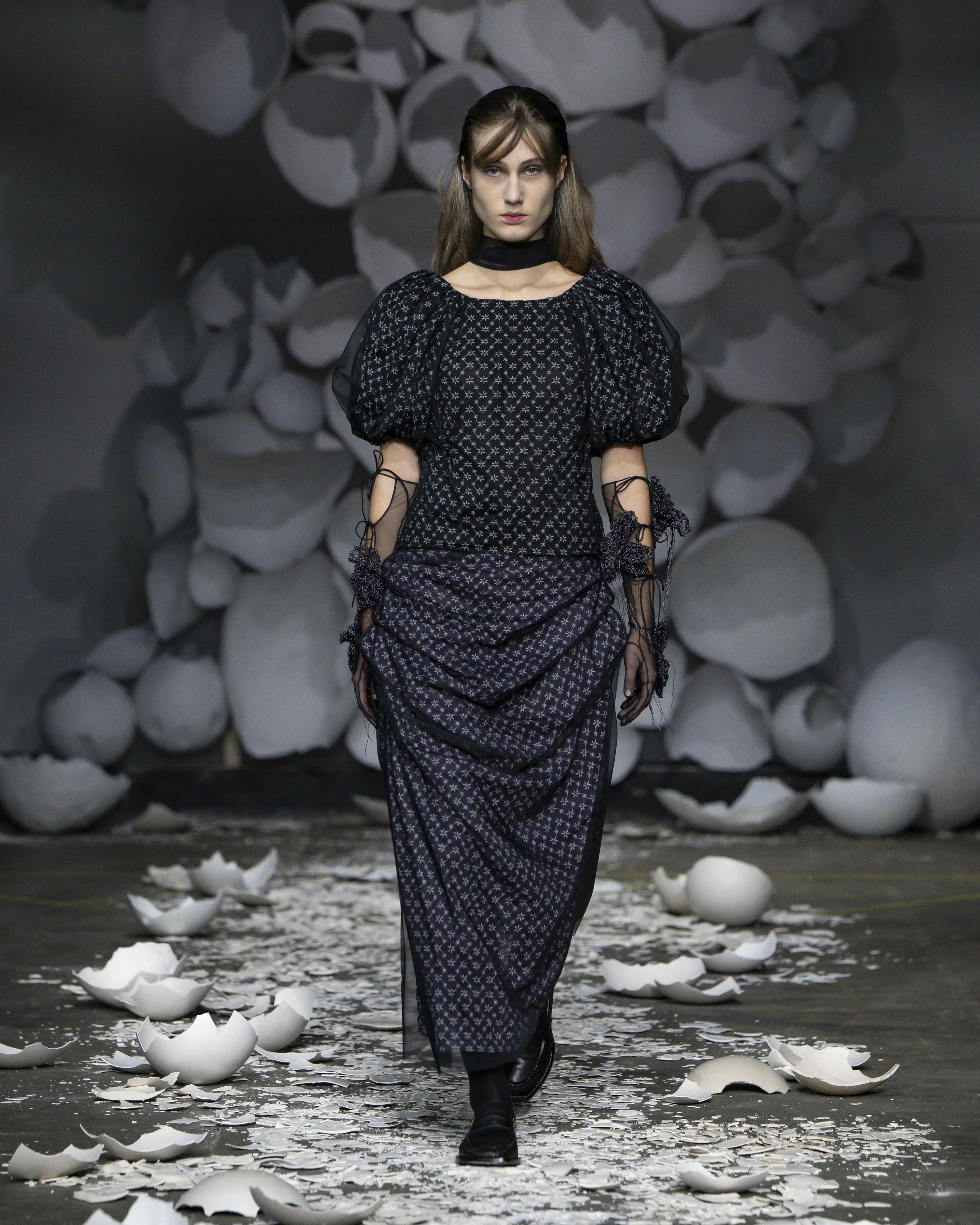
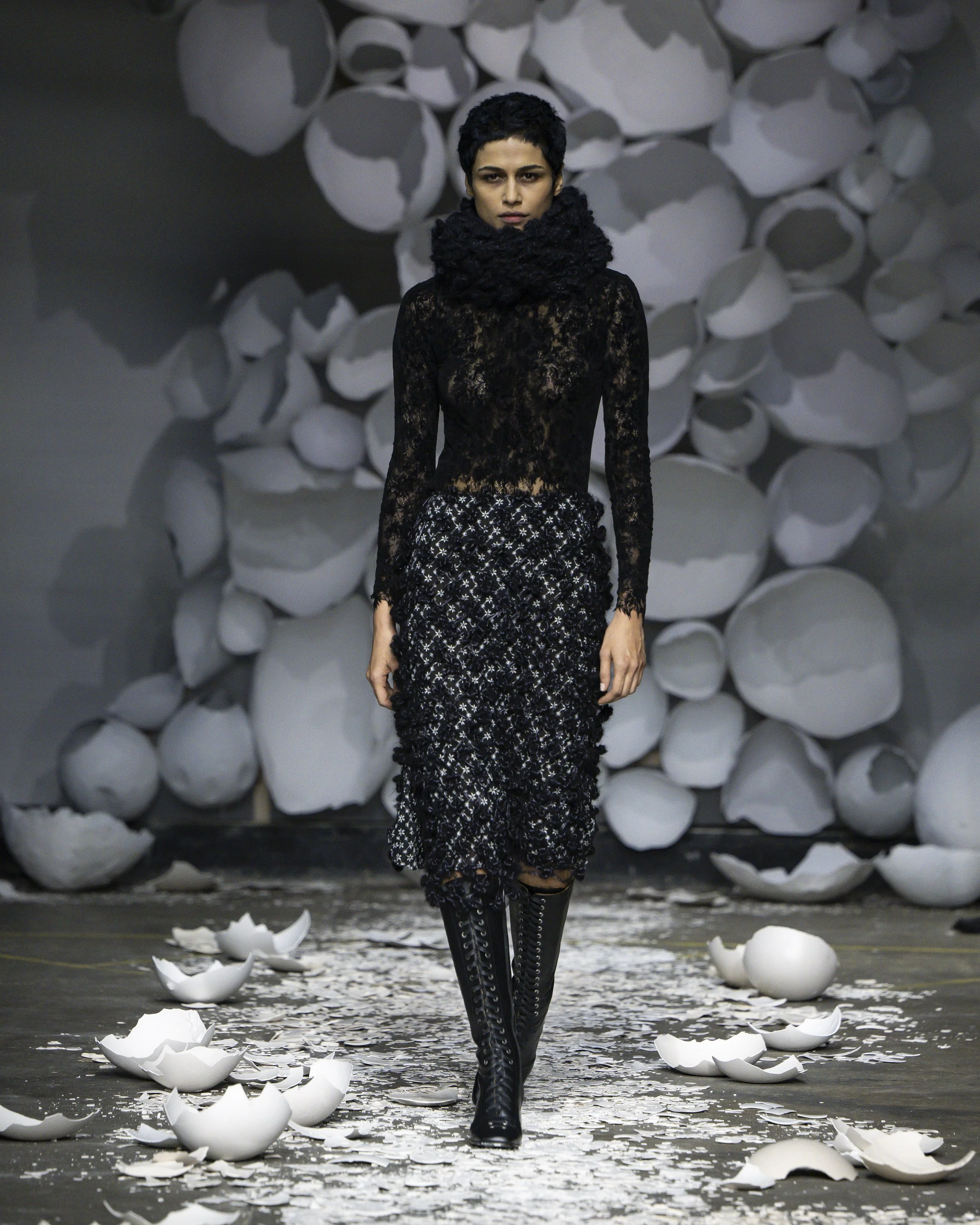
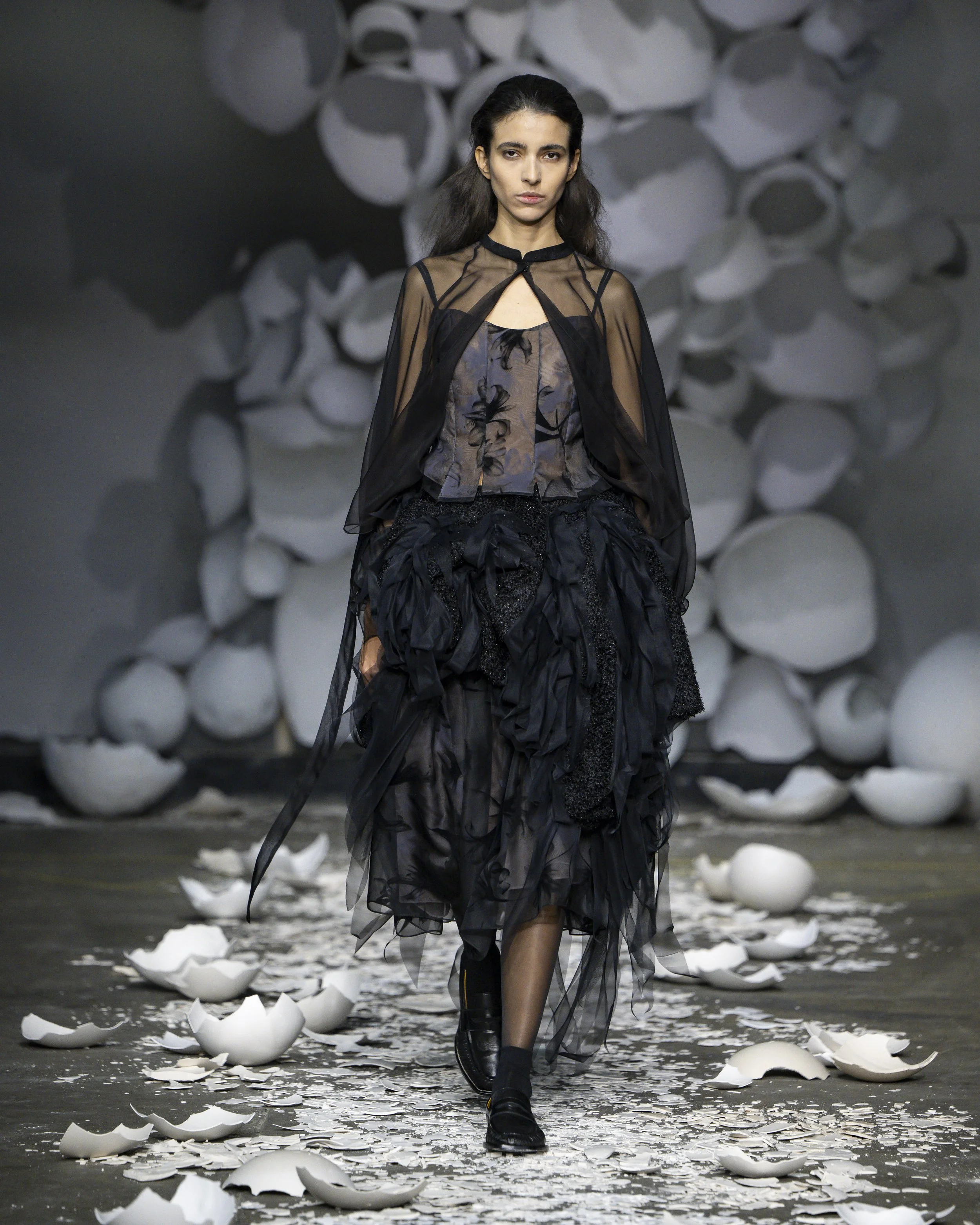
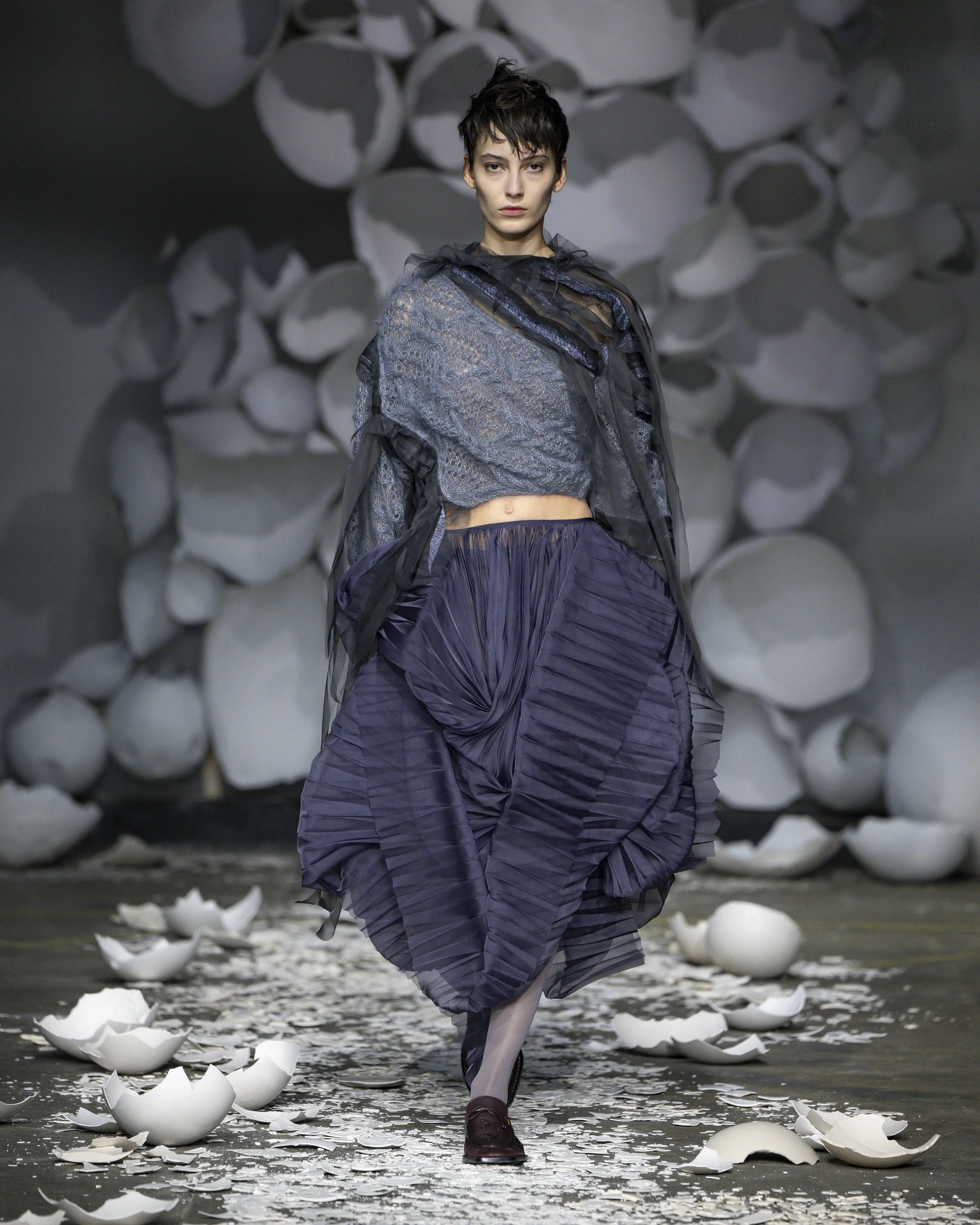
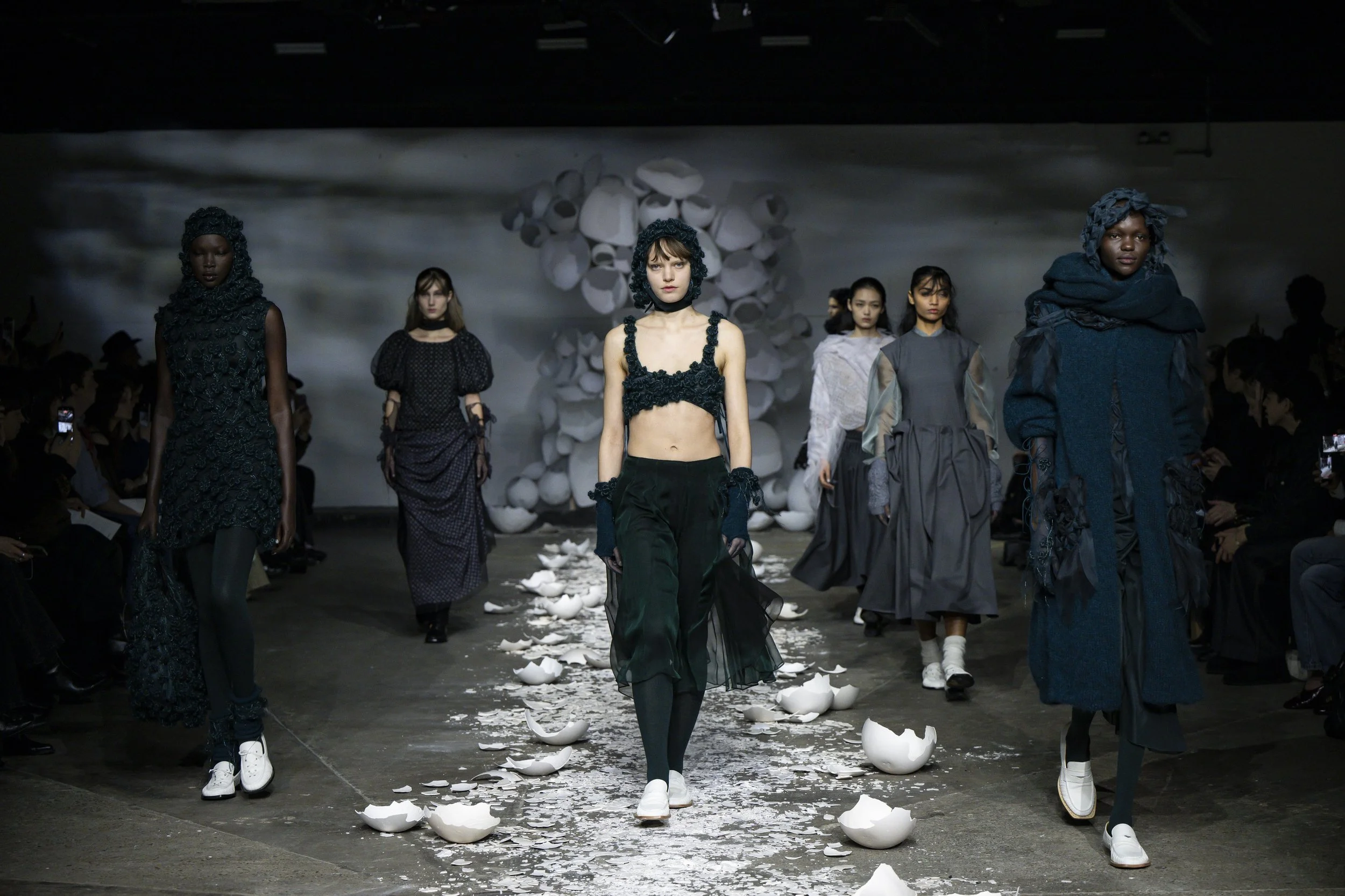
Undoubtedly, the 2024 LVMH Prize finalist and British Fashion Council’s NEWGEN resident, Pauline Dujancourt, has garnered a storm of attention in the past season. Dimly-lit and densely packed in, the incubator that is 180 Studios hummed with the volume of guests being cooped into rows, yearning for Dujancourt’s story to unfold. Without a single look having emerged, the runway alone narrated Walking on Eggshells: plastered eggshells stay scattered across the floor, crunching viciously beneath each model’s step until only mosaic shards remained. Fragile, fractured, defiant.
Dujancourt learned to knit as a child from her grandmother, with her eponymous label since becoming a breathing ode to the intimacy of artistry, connection, and female voices. The bird- long central to the eye of her craft- reappears this season through the shell, a symbol of birth and beginnings. Through the lens of contemporary knitwear, it here manifests proclamation in a rejection of historical understandings of what a woman should be.
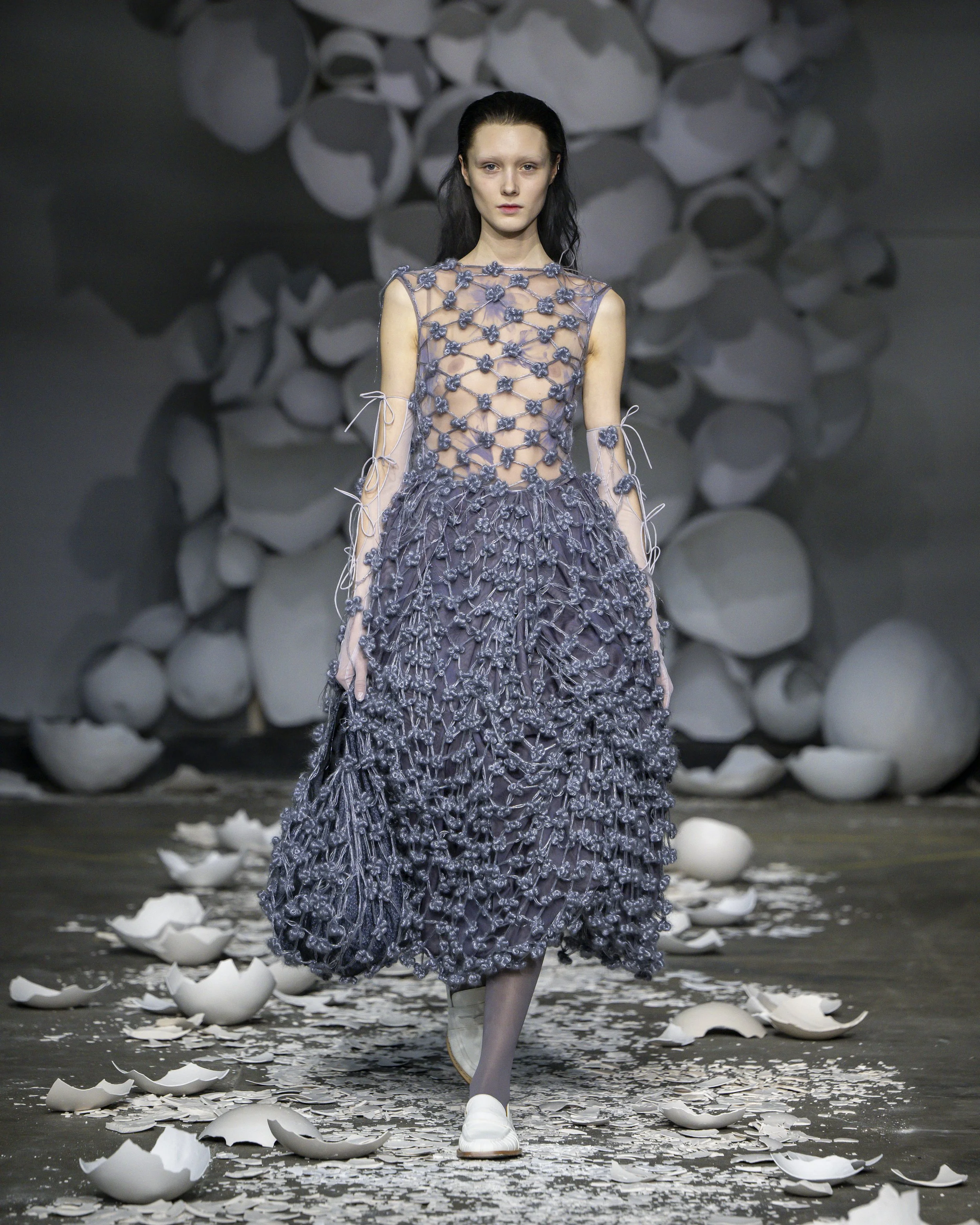
Following a SS26 season steeped in grieving melancholy, Dujancourt turned to the witchcraft persecutions of the 16th to 18th centuries for preparatory influence- an era in which women were accused, tortured and executed in the name of fear and superstition. With almost no immortalisation of these women, no sites of dedication to lives lost, their legacies only linger as caricature: boils and broomsticks, a costume for pantomime. Whilst Scotland already released an official tartan as living memorial to the Scottish purging of so-called witches, textile grounds itself as Dujancourt’s vehicle for rewriting this erasure. As the show notes articulate, the Parisian-born, London-based designer observed images of witches making lace with wooden bobbins alone in darkness. In response, she presented a collection of detailed crochet webs, cable-knit panels and tulle macramé to reclaim their domestic craftsmanship as power.
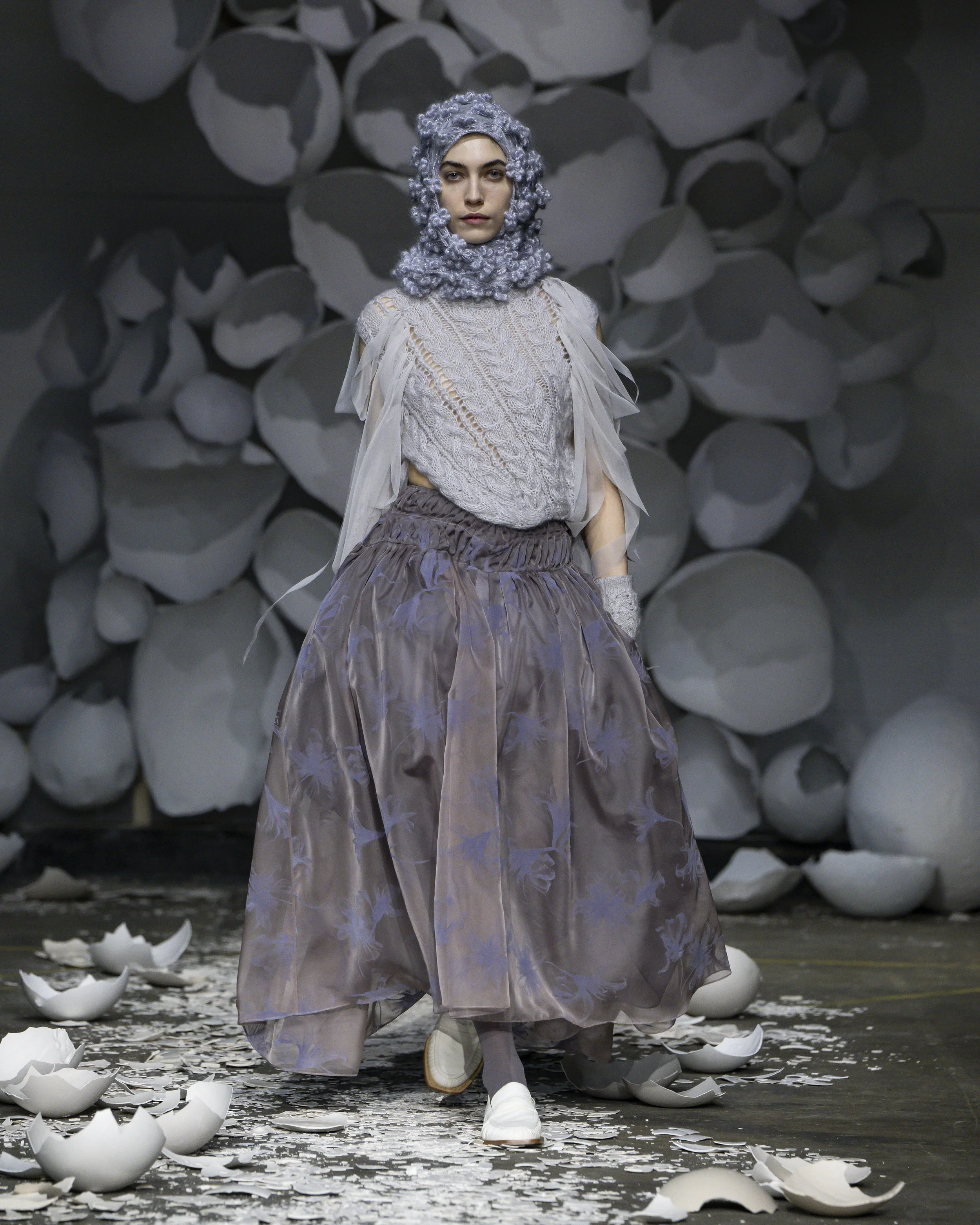
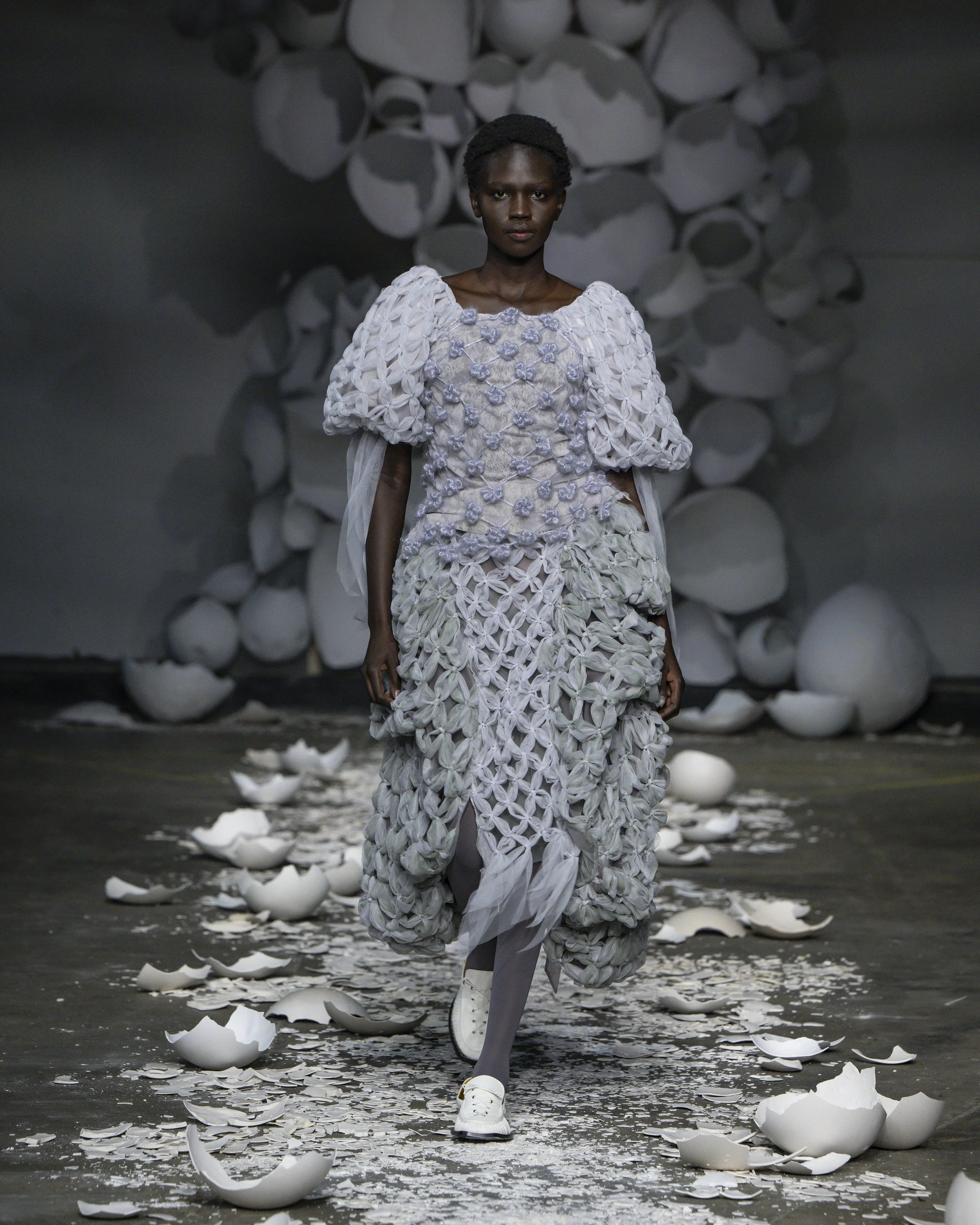
Constructed from over 80 strips of fabric woven and wrapped into structural entities, such tulle macramé stood as testament to painstaking hand process. In the rush of a runway, Dujancourt speaks of how easy it is to overlook such awe-inducing labour. AW26 commemorates her own design team, itself an artisanal coven united in technical fluency. Translating into hand-knitted alpaca outerwear with woven hoods and pockets, juxtaposed against the transparency of tulle in a language of spellbinding admiration. Almost alchemical in the studio’s collaboration- ethereal artists around their own cauldron, curating potion through thread and weave.
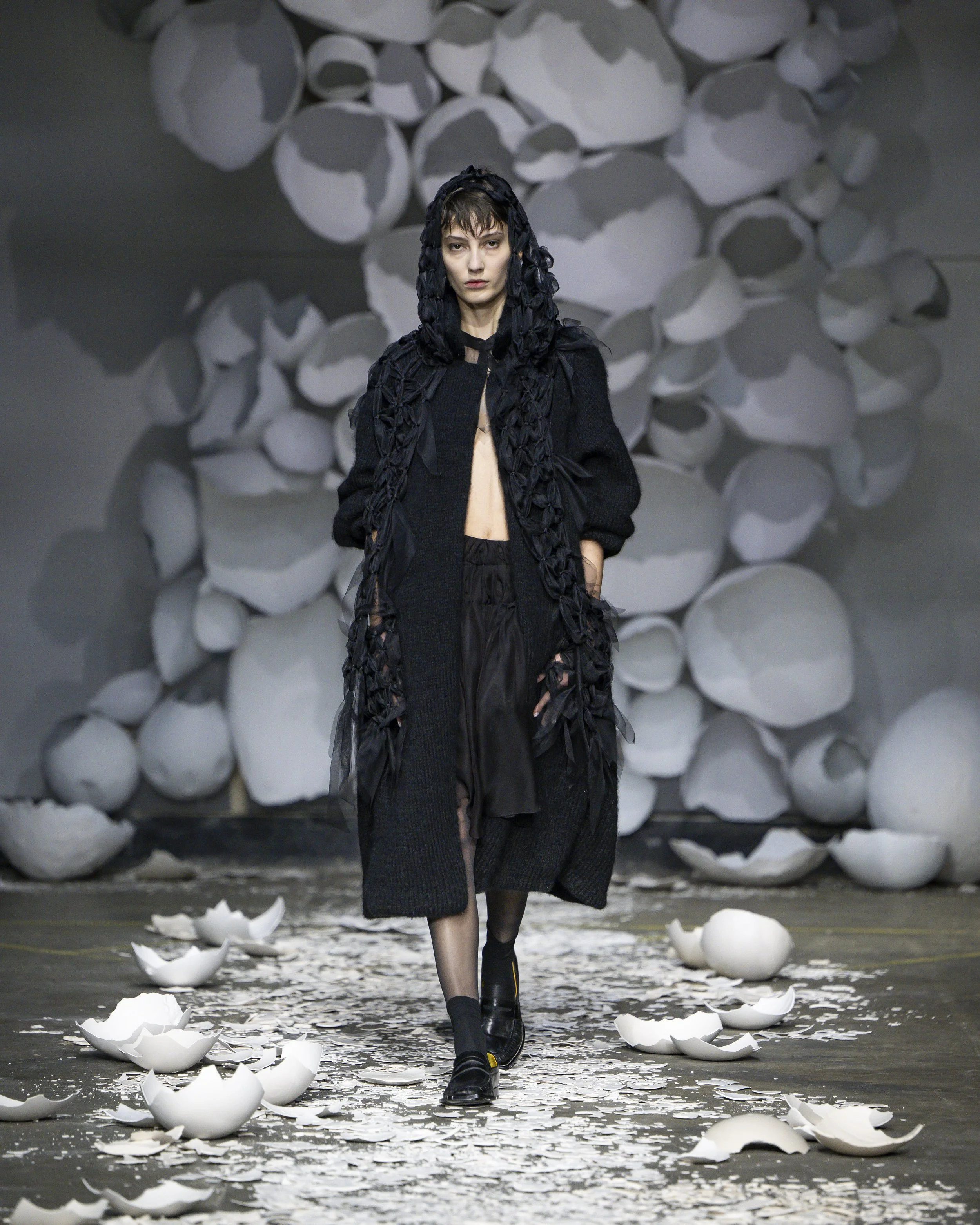
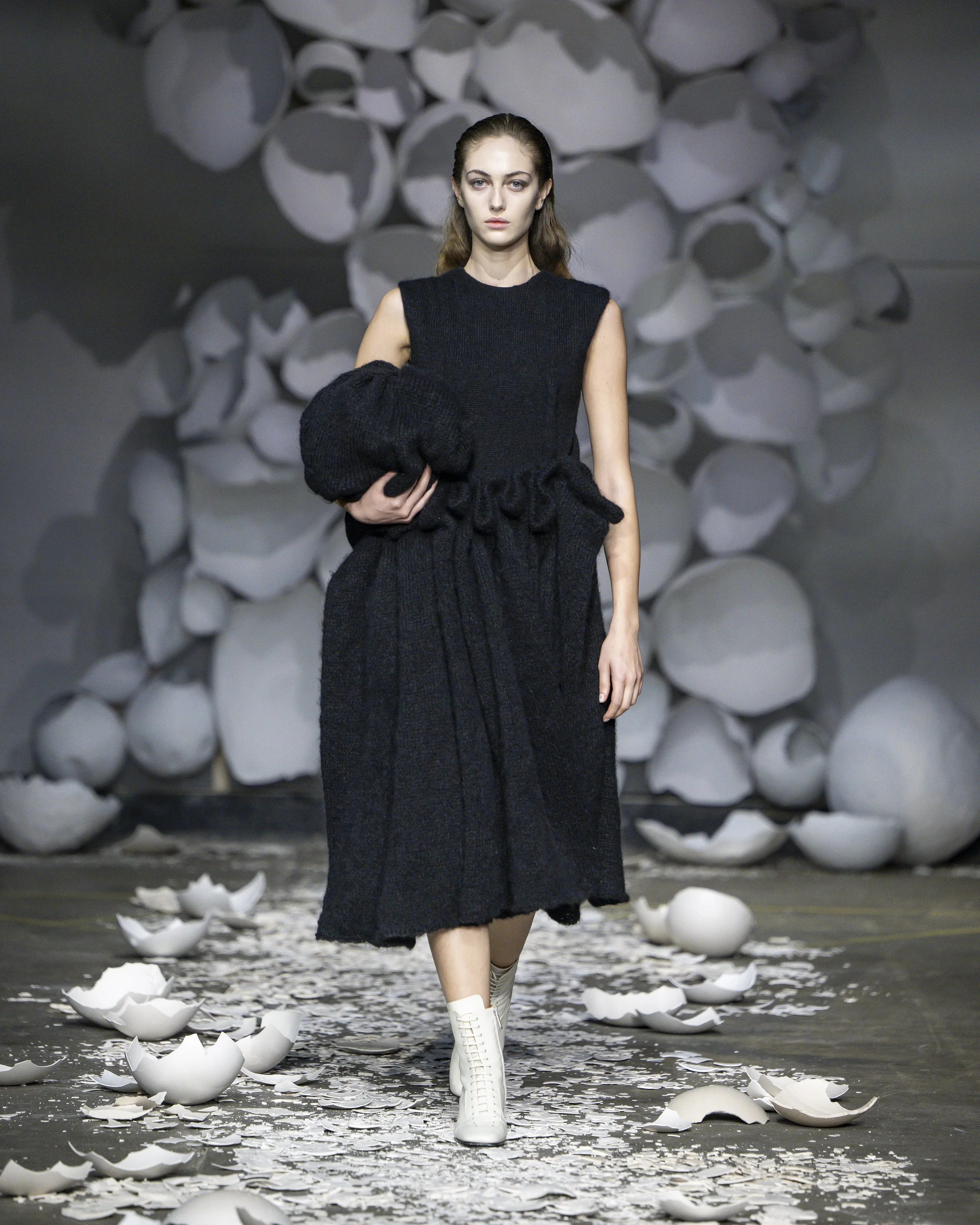
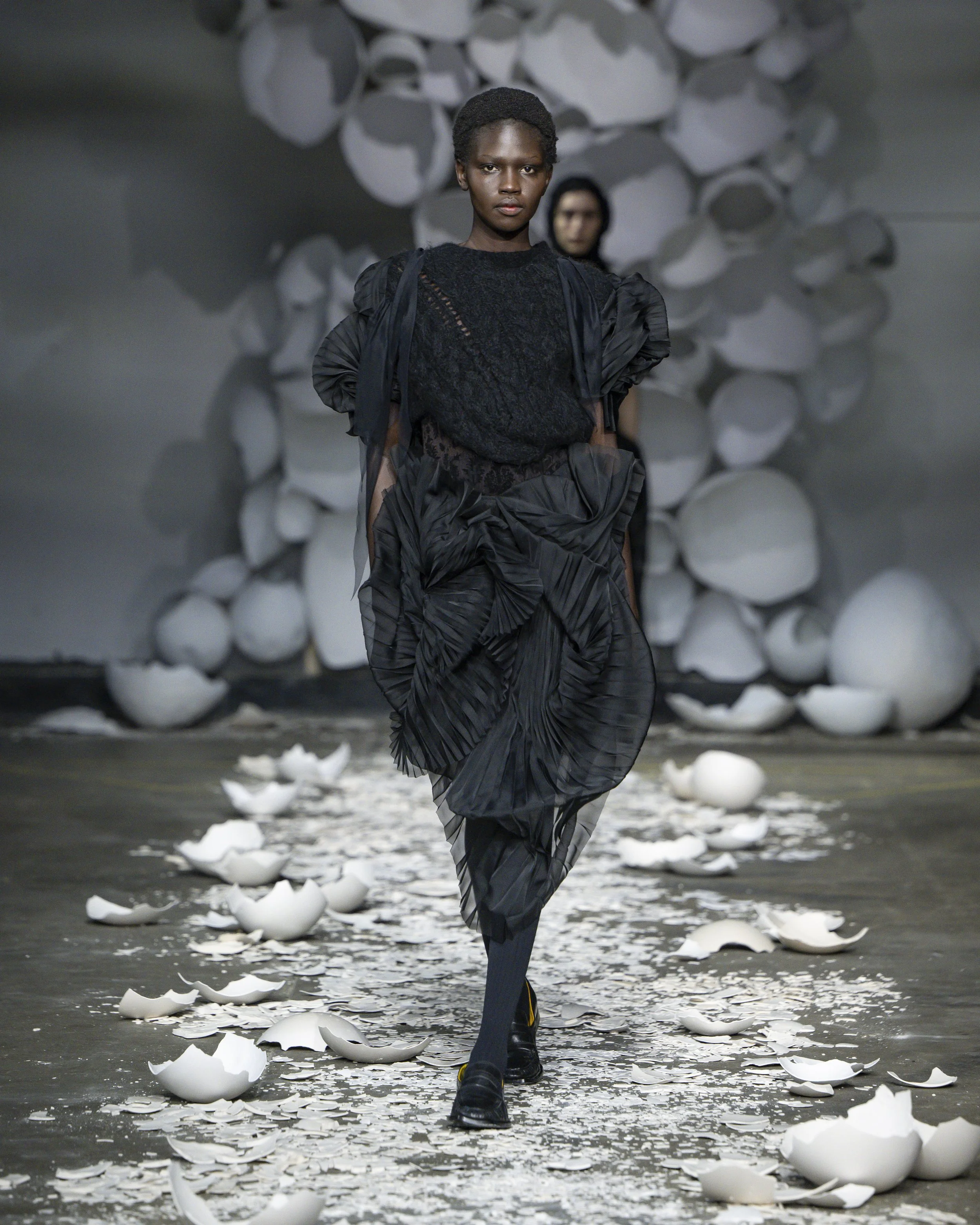
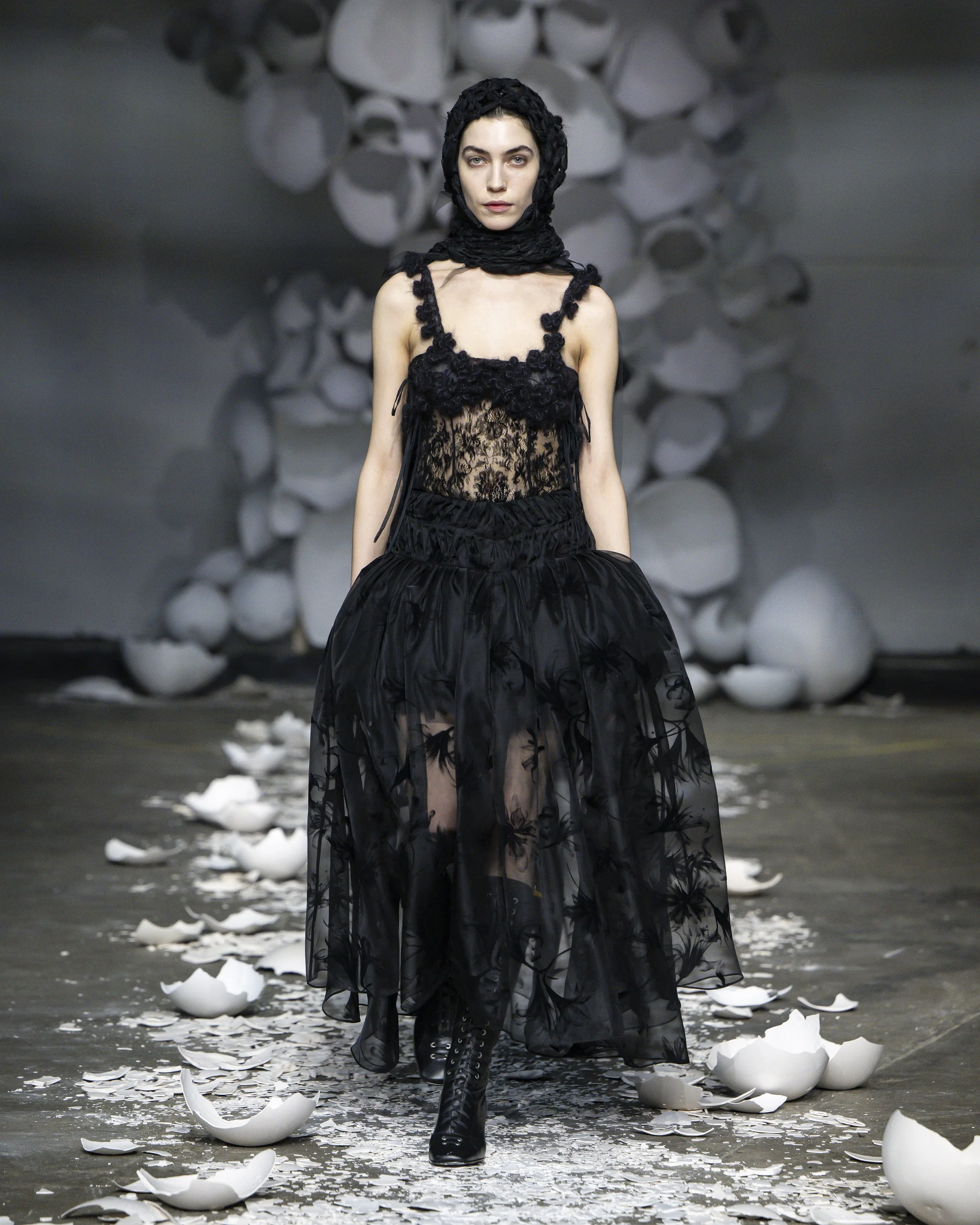
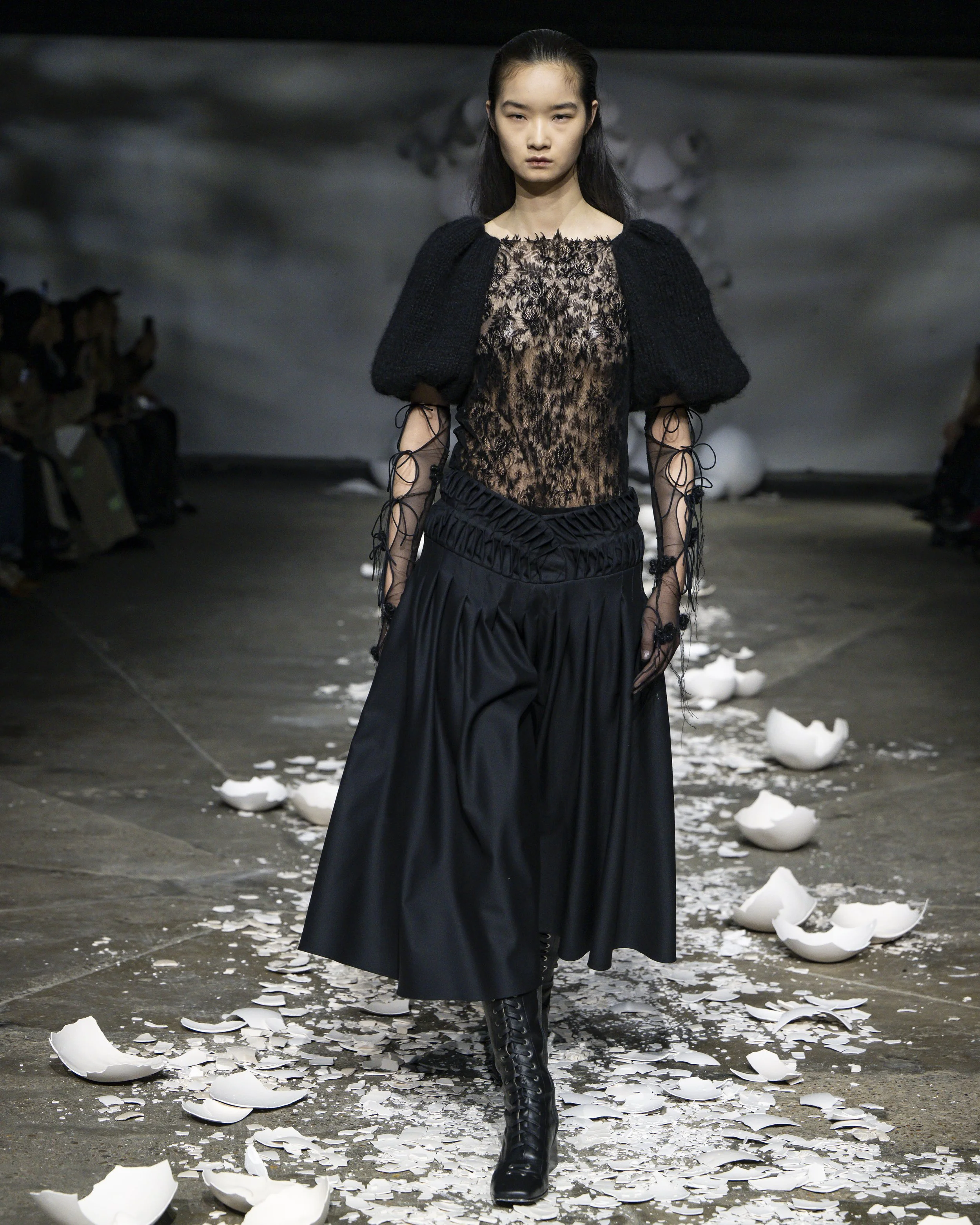

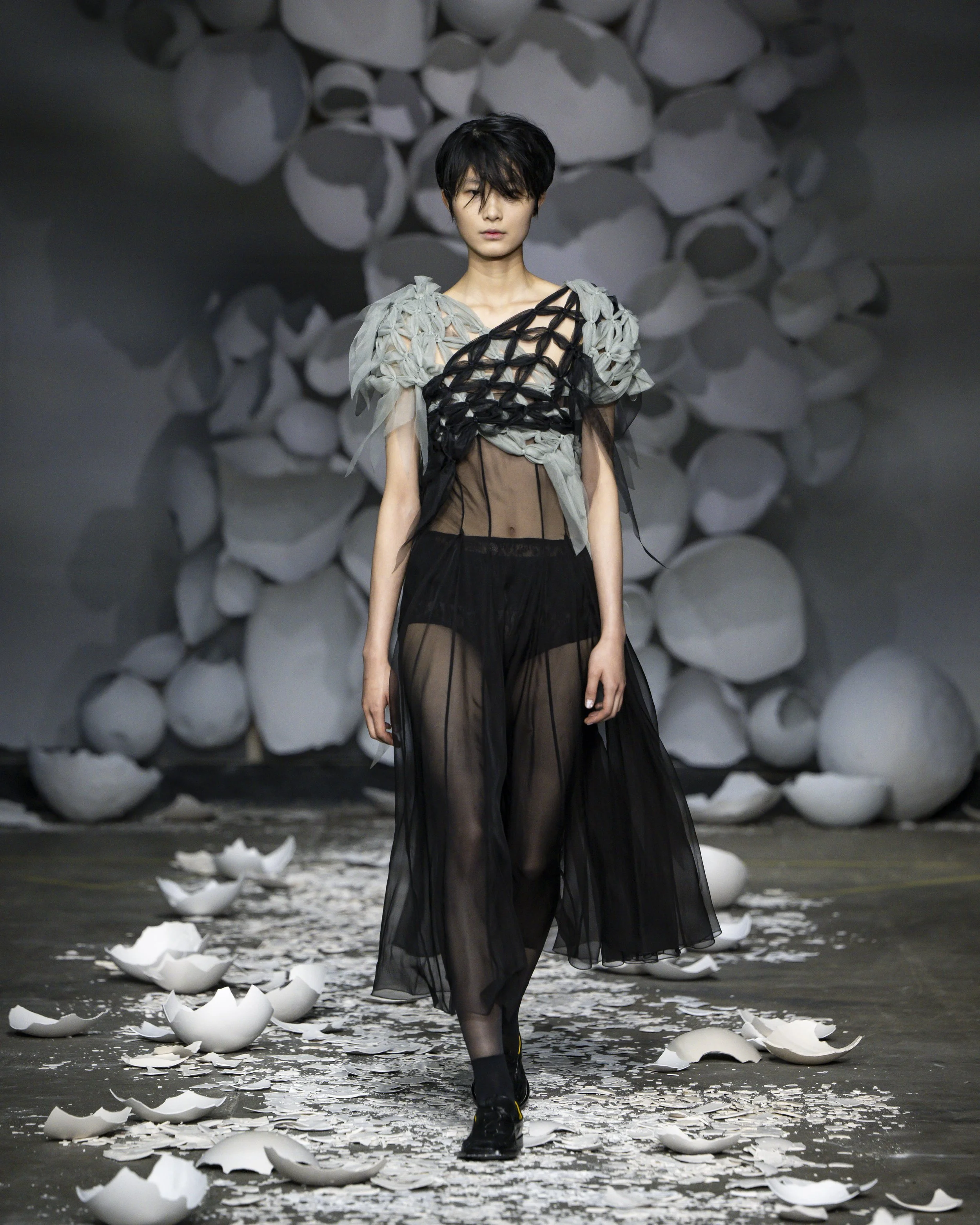
A peacock palette of hues- regal teals, dusty purple, lake greens- dethroned the futility historically projected onto ‘witches’ in favour of modern entitlement. A specially sourced chiffon silk changeant floated through skirts and shirts like smoke, pleating positioned to capture motion. Translucent gowns with vein-like detailing trapped air beneath like capes in the wind as bell-capped sleeves billowed. Sheer lace-up gloves with lavender bows and foggy knitted fingerless coverings, while mint satin darting descended from intricately smocked waistbands. Cold grey school-skirts grounded light clouds of thread that whispered across chests and hugged forearms.
Texture was tiered and tactile: cross-hatched macramé dissipating into crocheted cadence emerging from the frame; voluptuous skirting ballooning beneath oversleeves; outer-thigh fabric sculptures hanging docile yet deliberate. Dujancourt balanced craft with wearability, a commercial clarity nudging the designer into scalable realms as the likes of Vogue’s Joy Montgomery and Selfridge’s’ Judd Crane observed.
Entitled ‘Eli’, Dujancourt’s closing gown honoured someone close to her since her earliest days of design, with each garment an homage to a woman in Dujancourt’s own community. A celebration of women filling the void left by history’s silence. In muddy mauve, a labyrinth of tiny crochet flowers grew over flesh as if from within, a lattice hive blooming into full-skirted majesty. Looking at those closest to her, the fellow devoted artisans, Dujancourt probes at the notion that we too may have been on trial for our existences. Perhaps, we were no more than a shell born at the right place and the right time, and this was all that saved us.
In the hurricane of social unrest that once scapegoated women, and in the anxieties of our present landscape, the impulse to blame persists. Dujancourt seeks to counter it with ancestral artistry and domestic creativity- women working hand in hand to articulate something visually complex, fiercely skilled, and unapologetically in pursuit of survival.