
MYAT: Antechamber
Words by: Abby Scarlett
In a fog-choked industrial warehouse in Bethnal Green, Burmese designer Erica Myat staged her AW26 debut, Antechamber- an immersive meditation over identity, surveillance, and the violence of self-reckoning. Having graduated from Central Saint Martins in 2024, Myat arrives with a practice rooted in empowering vulnerability, urging women to disfigure their façades and confront the inherited beliefs, societal pressures and cultural expectations that contour their becoming.
Upon each seat, a sheer envelope with blue card suctioned tight by an unidentifiable adhesive. Alone in my kitchen after the show, I forced back the envelope, prying the card away in hope of some justification for my transportation of melted teal as precious cargo. Shiny residue clung to the printed words:
Who are you when no one is watching?
Immediately, it felt intrusive, as though rifling through a stranger’s diary with eyes burning into me, watching me prod my way through sticky matter in search of answers. The experience embodied the collection itself, as MYAT pursues clothes that conjure the illicit intimacy of reading one’s private thoughts, however Orwellian in nature. And yet, as the front row lifted iPhones to shutter away, irony overcame the room…
‘How do you rebel when the world watches everything?’
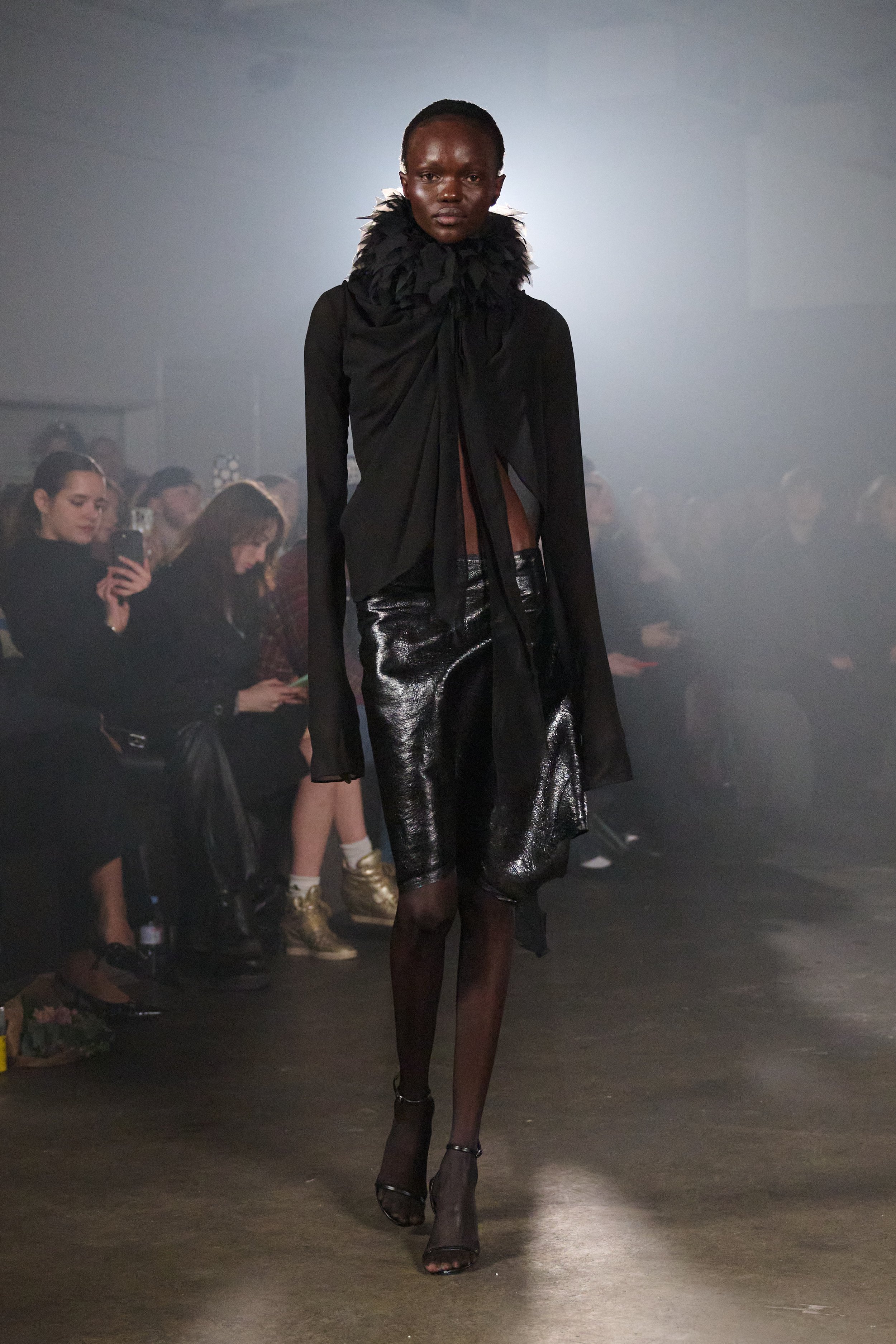
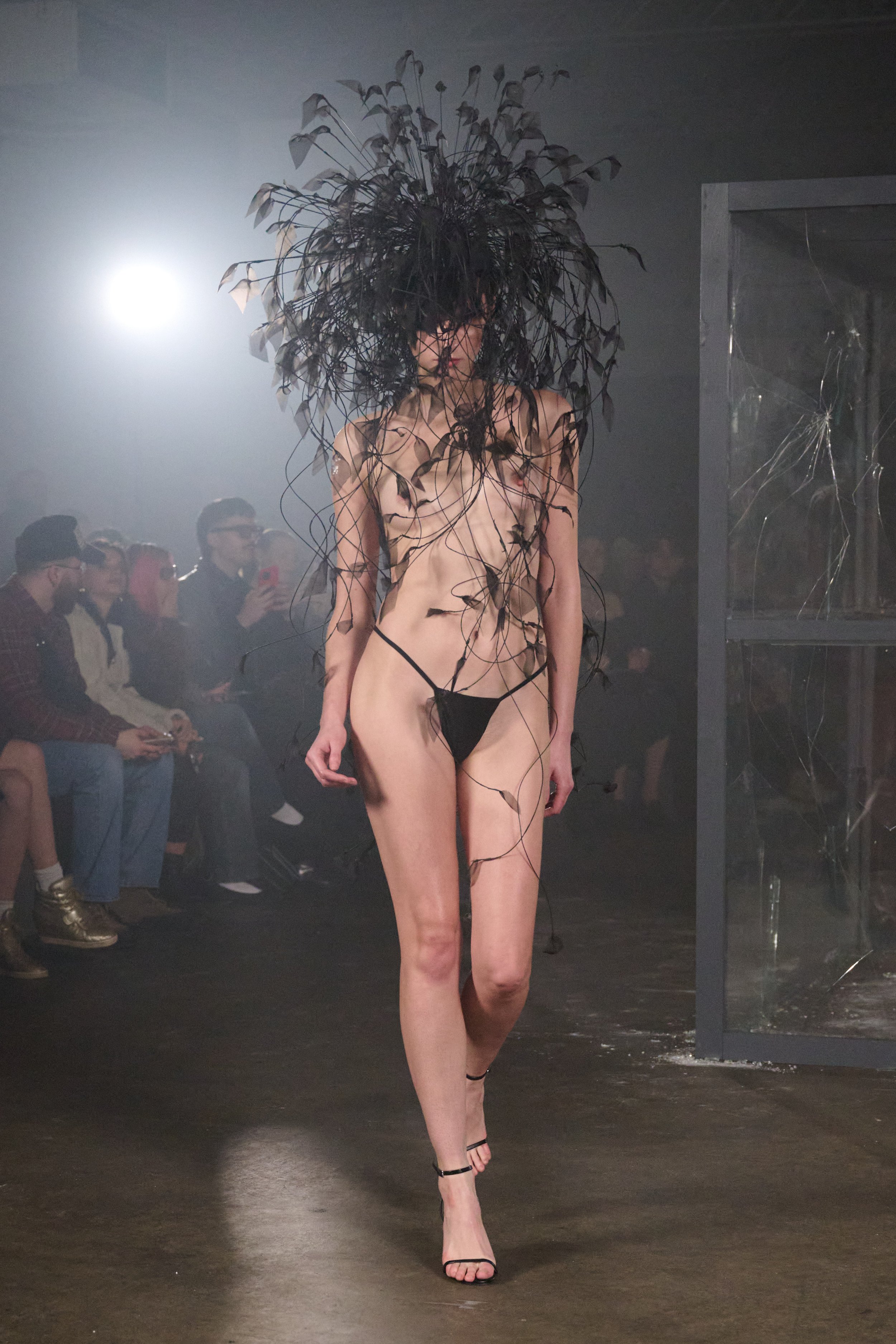
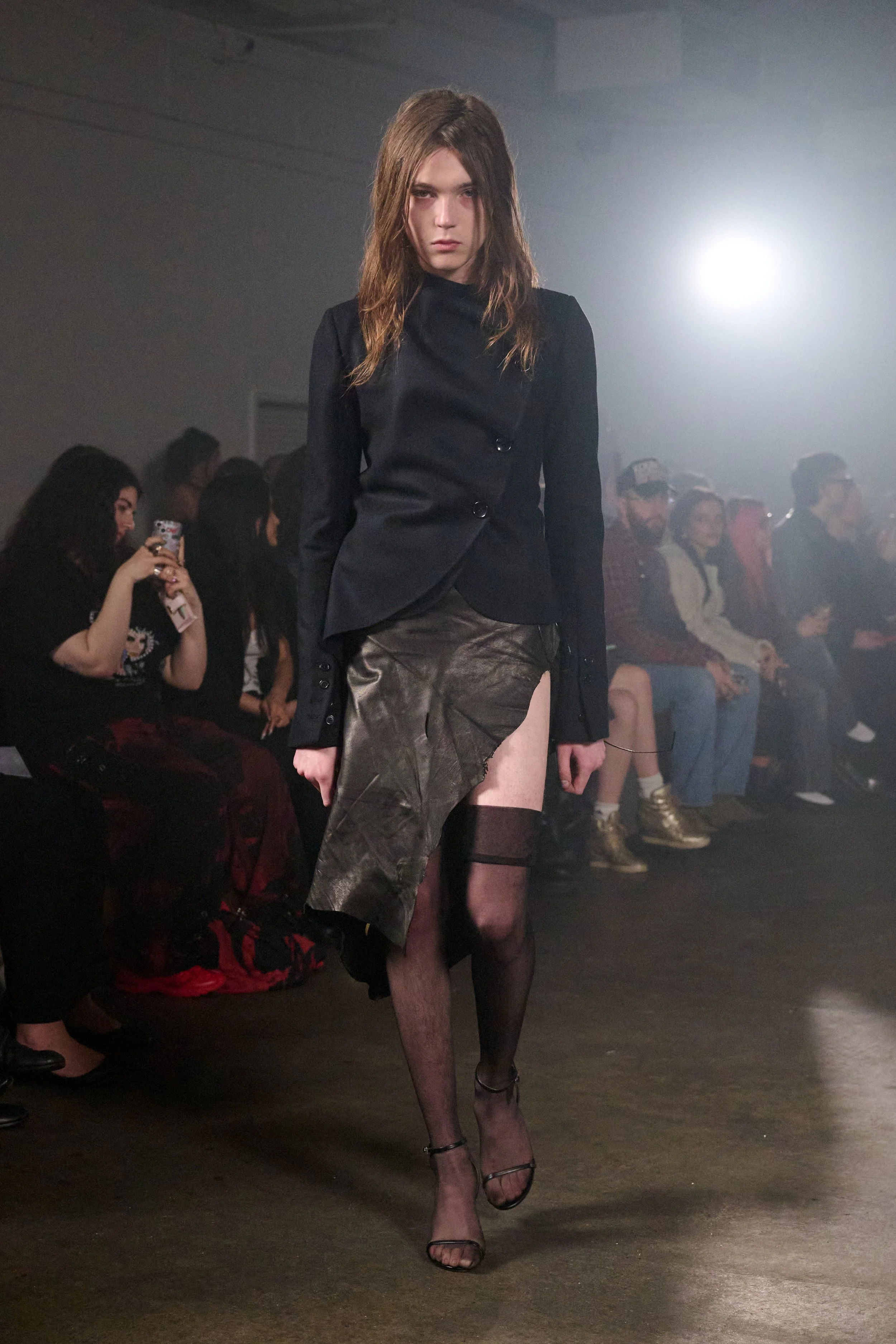
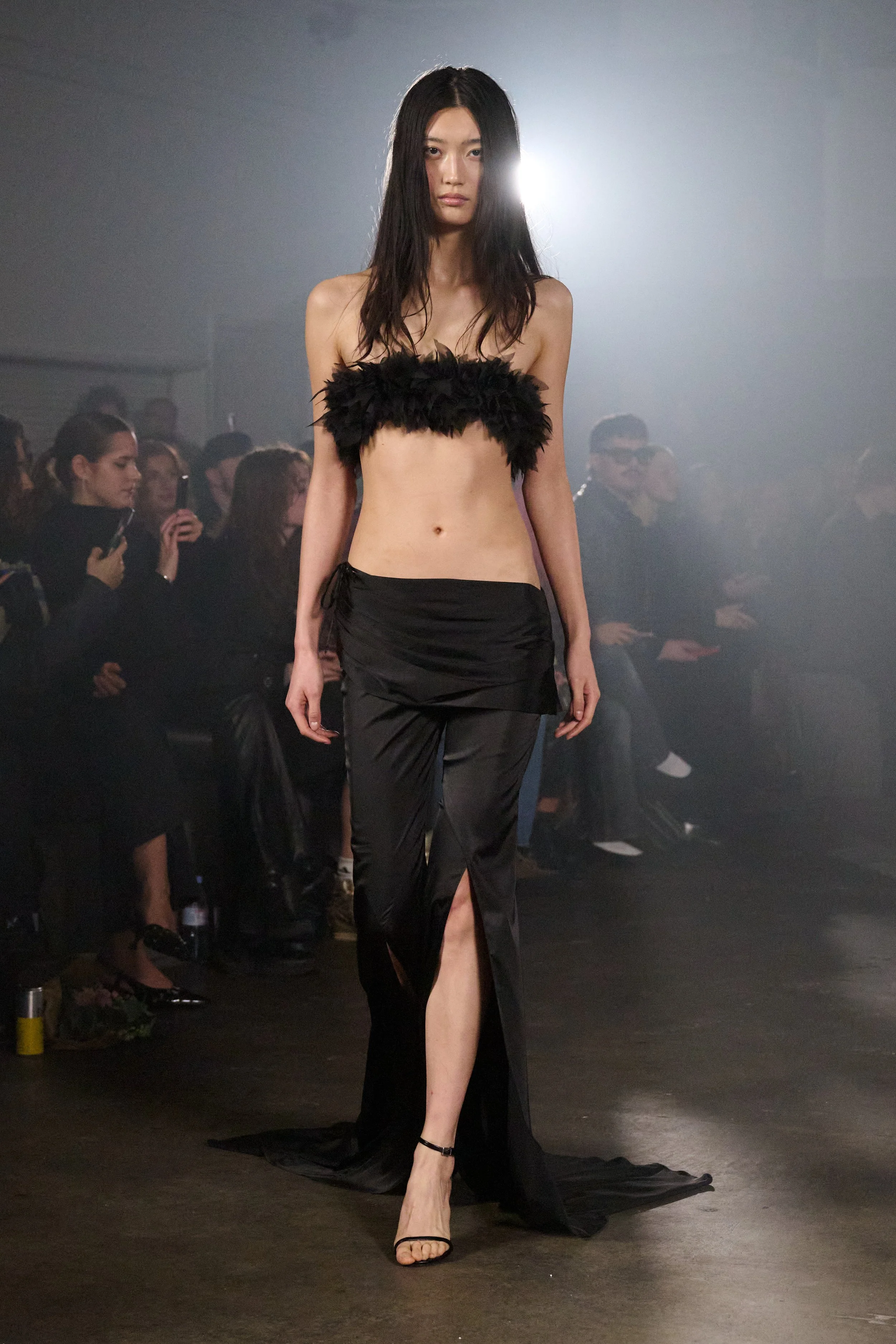
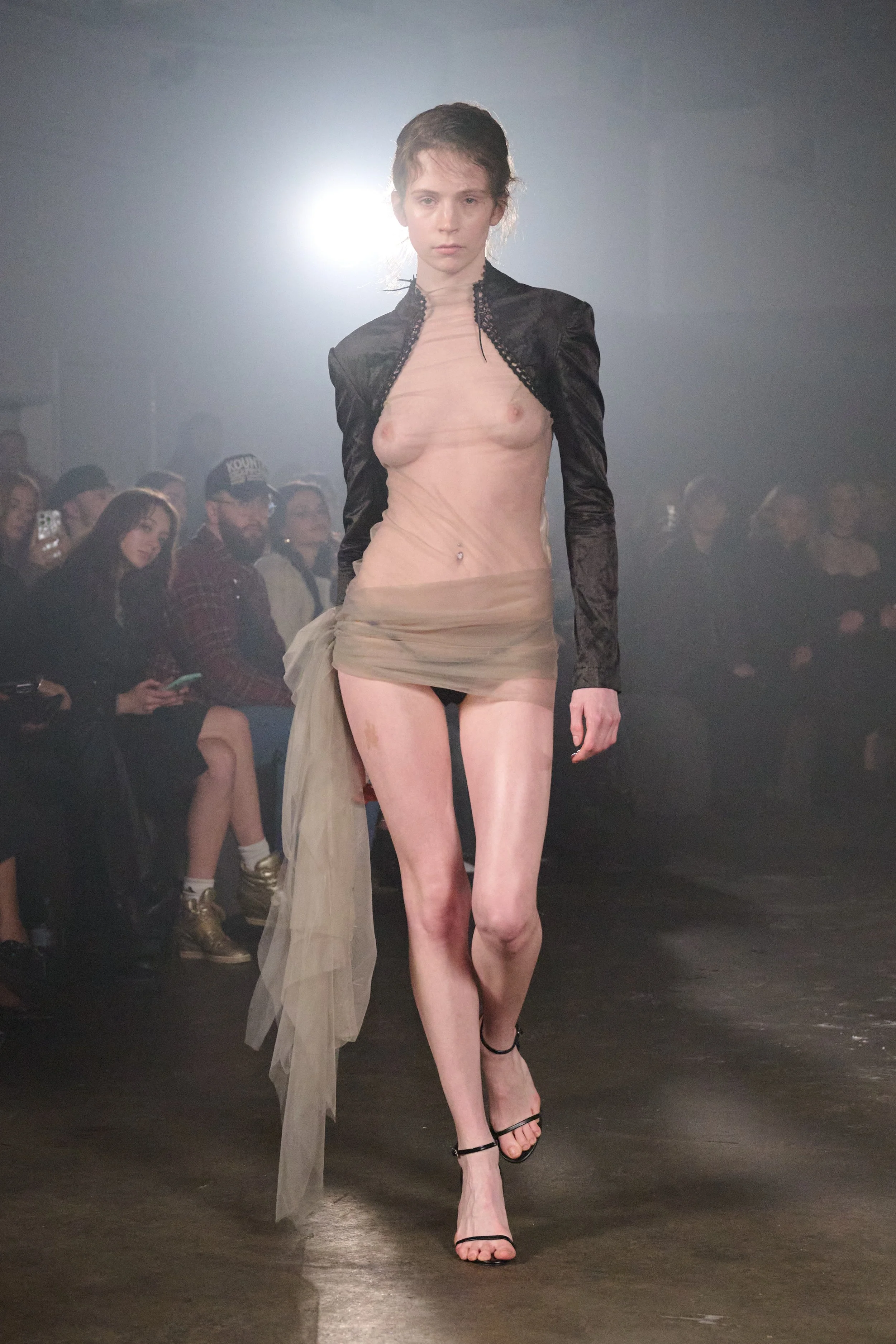
Titled Antechamber, MYAT’s AW26 documents the pursuit of self-acceptance. It probes at the liminality of mental existence- who are you, and who must you become? Erica teases the friction between concealment and revelation, using demi-couture techniques in ready-to-wear molds to translate an instinct to hide, alongside the compulsion to self-actualise. As guests arrived, one model remained encased inside a sugar-glass box, already webbed with fractures and punctures. As the show commenced, models circled freely through the heavy haze, with the imprisoned figure writhing in a blanket of chalky rags, tormented by the choreography of limbs around it. Visually echoing the grimy vitrine of Alexander McQueen’s Voss (2001), the seminal study of spectacle and confinement, MYAT’s lens felt interior rather than confrontational. Less about voyeurism, and more toward mental rupture.
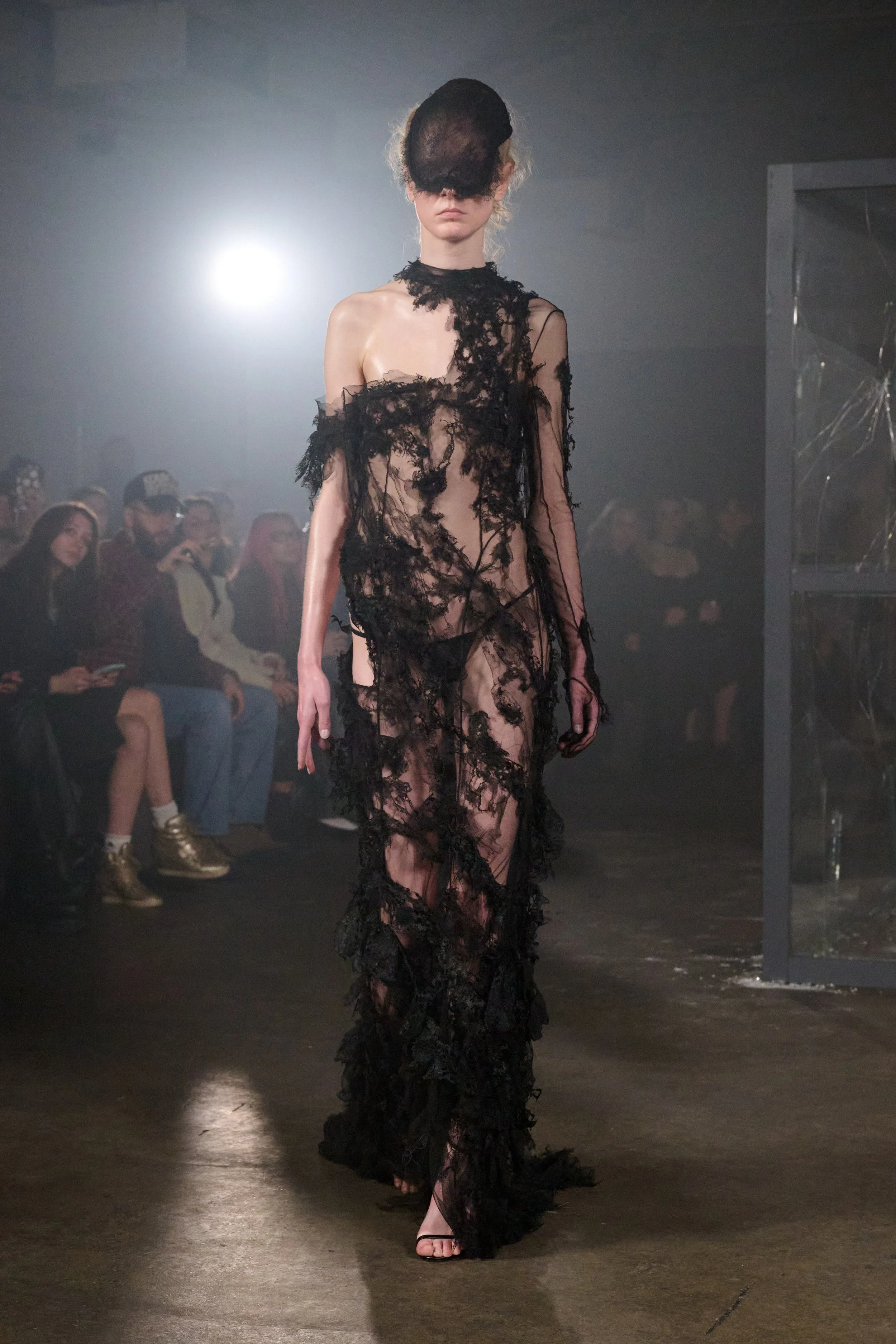
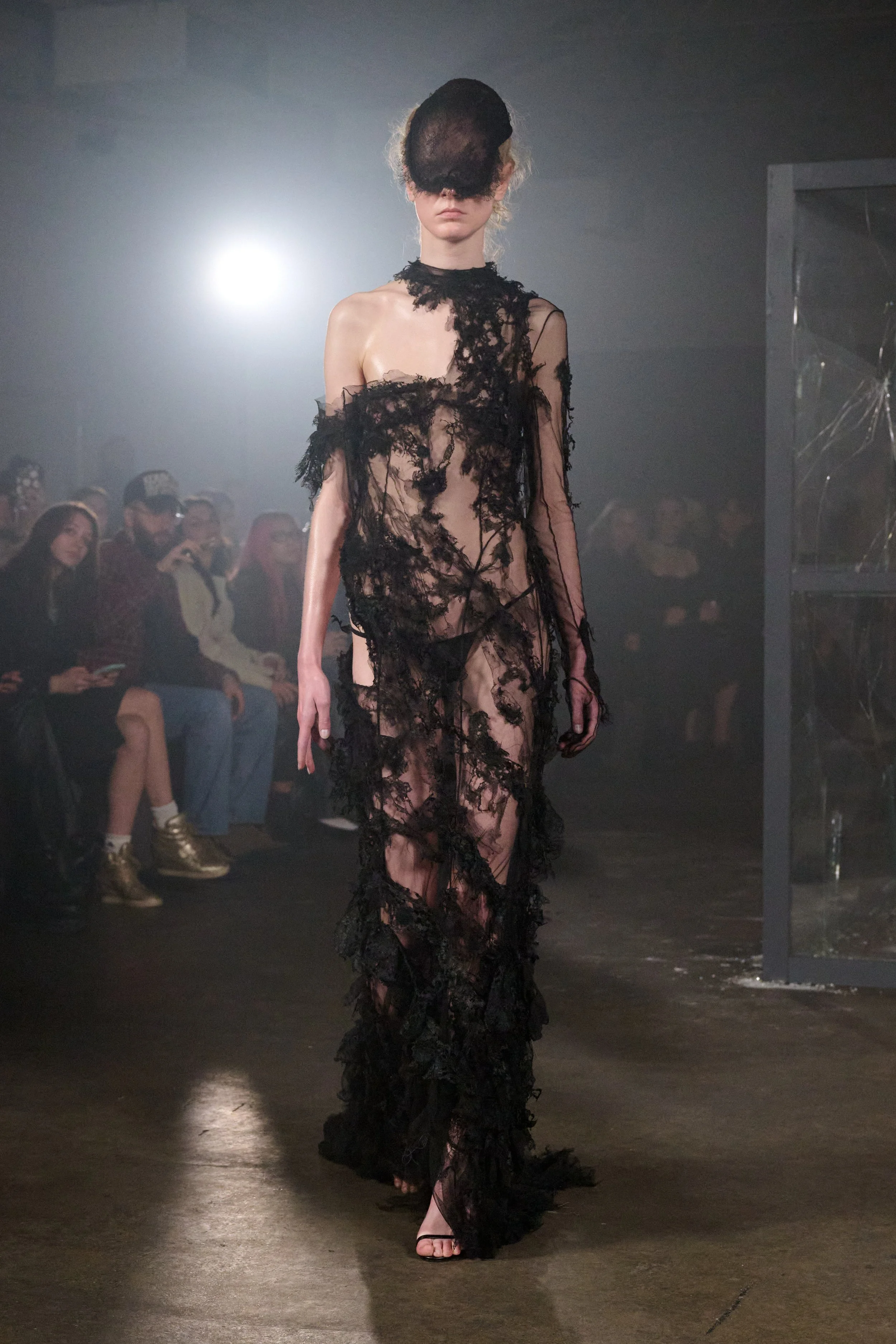
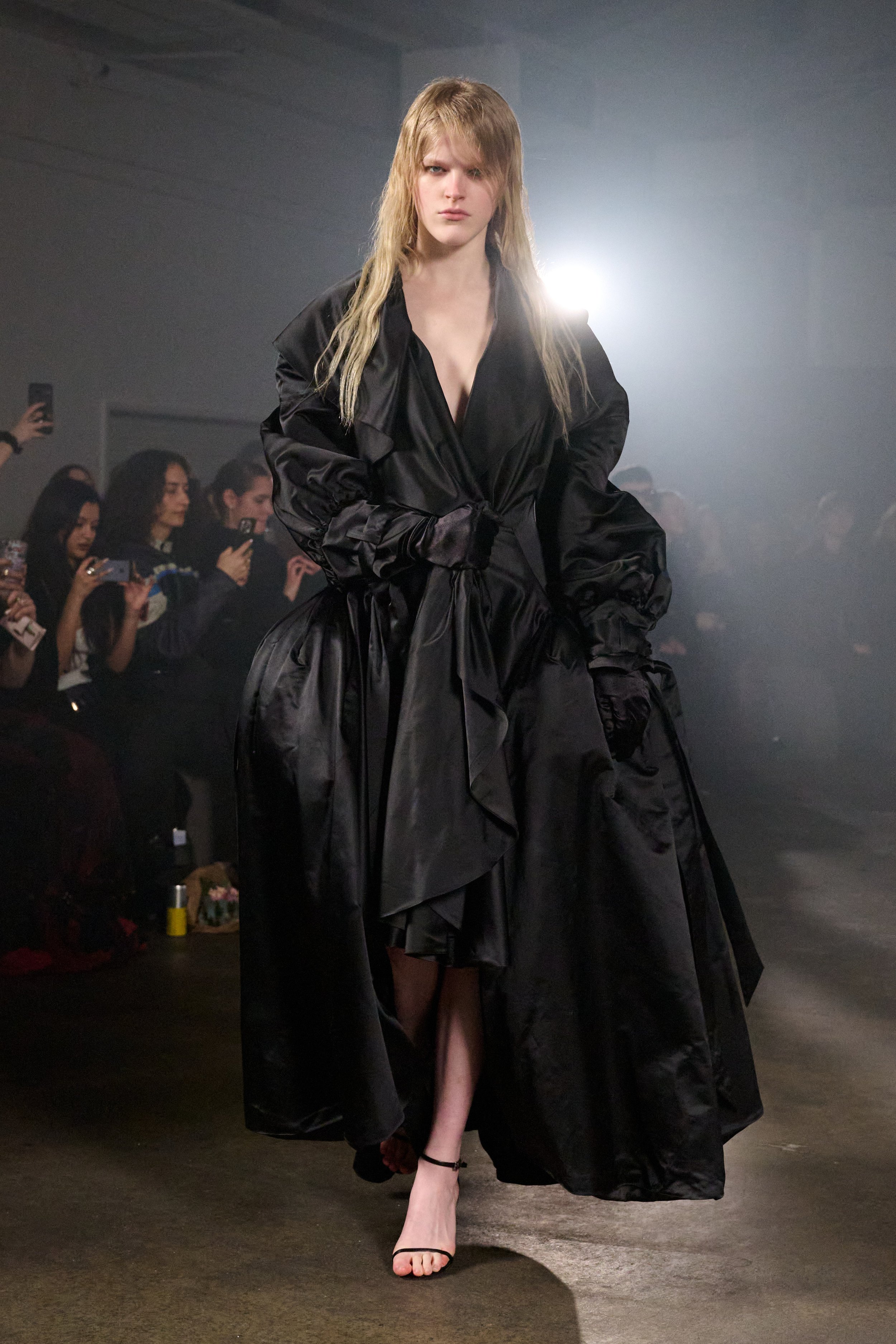
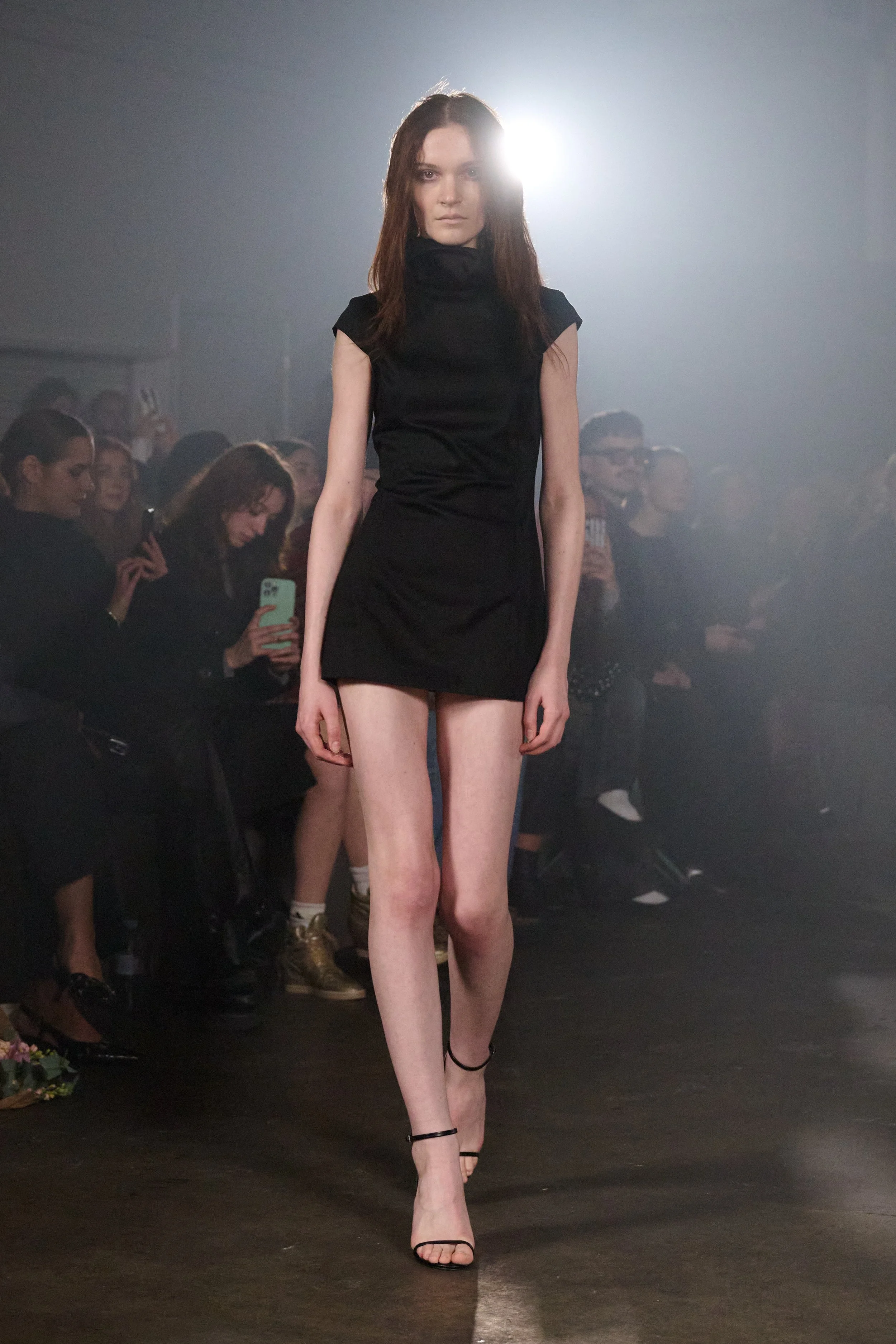
Garments undertook a sense of progression. Heavy woolen coats, deep obsidian sleeves and weighted skirts mirror that of armour, grounding the early looks in restraint. Gradually, opacity dissolved into air: chiffon dresses layered over skimpy G-strings, translucent slips slinging to sweaty frames, and cloaking sheer wraps that divulged the flesh beneath. Uber-low waistlines put the spine on a pedestal, an exposé on the buttock through panelled mini-dresses; an unapologetic flash not of flesh, but of inner consciousness.
Distressed fragments were woven together like muscle fibres in emphasis of hand process and material storytelling; polyester chiffon swaddled over exposed, rigid bodices, adorned panties that followed high-neck latex. Richly layered drapery mimicked feathers, encasing decolletage and crawling up the neck, while torsos remain stripped down and lacquered up. MYAT’s women appeared both as prey and predator of themselves- locked in intimate combat with their own reflection.
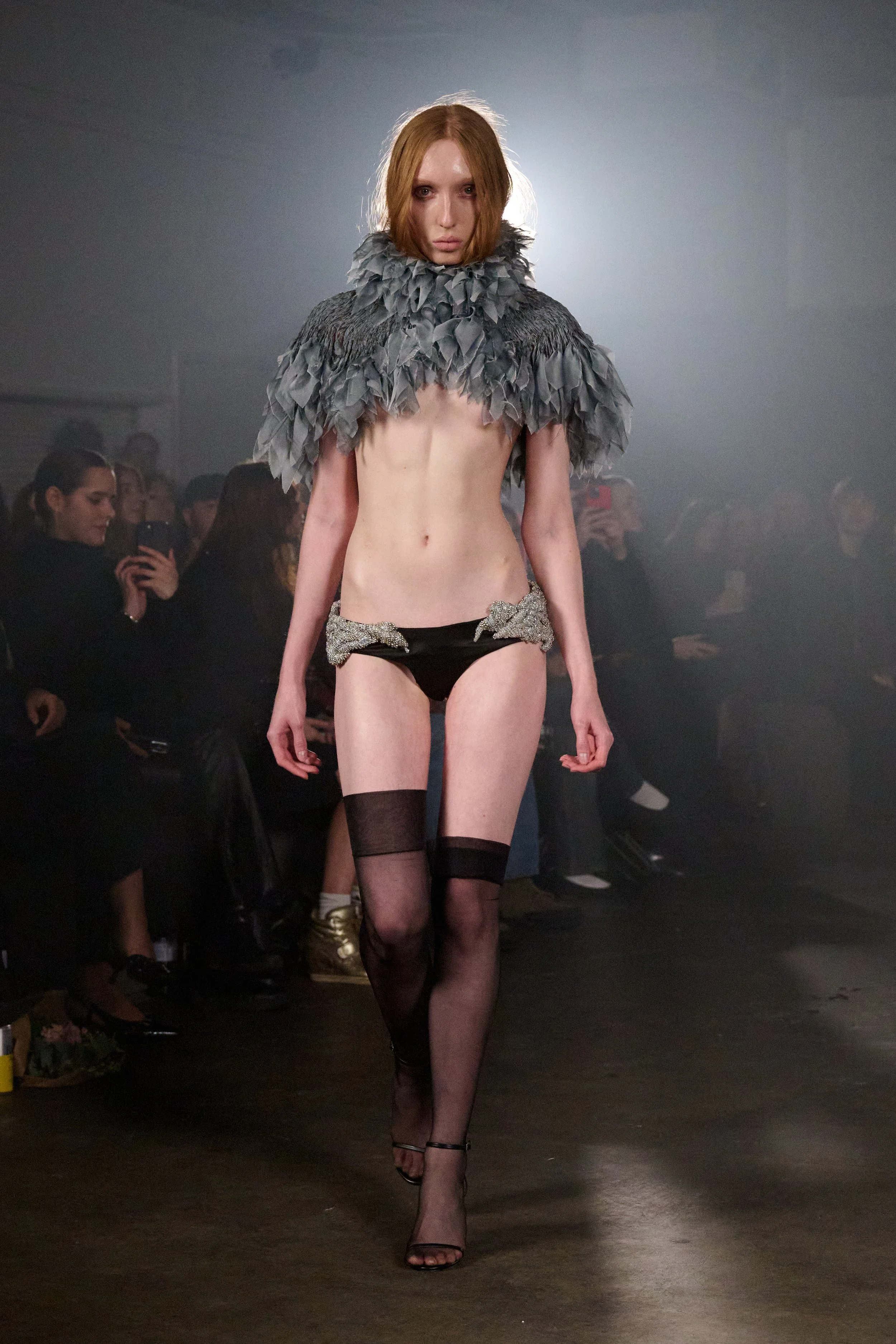
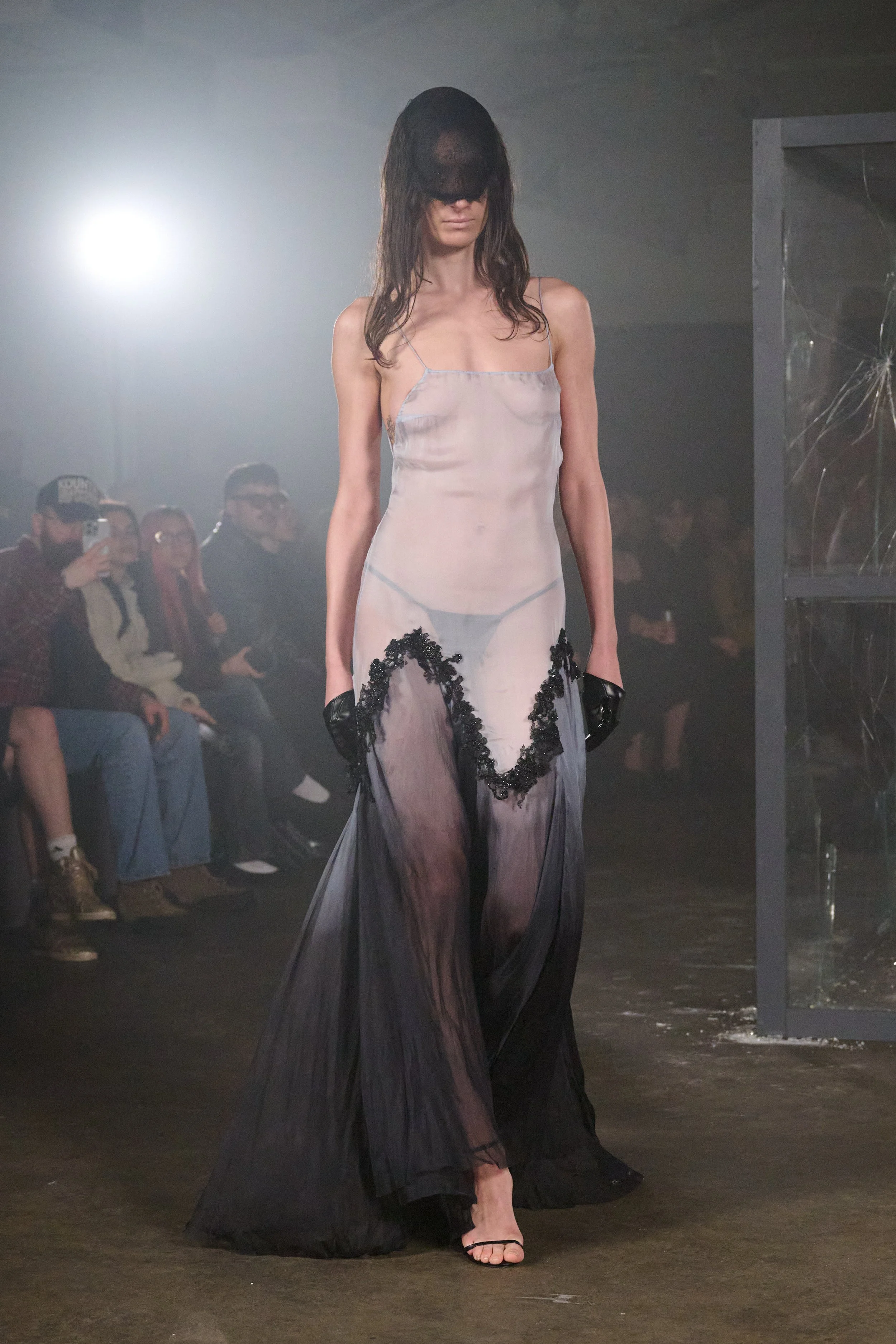
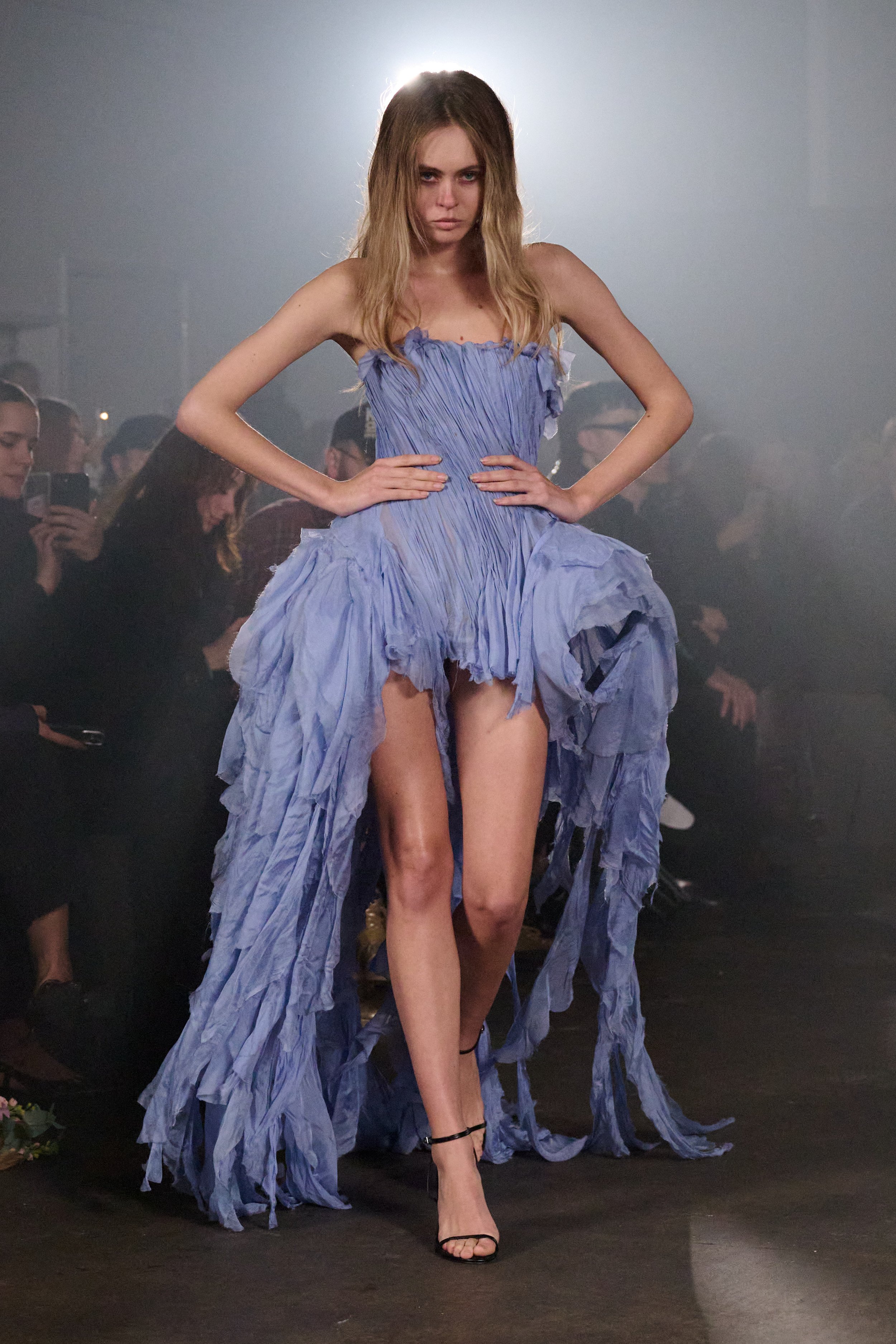
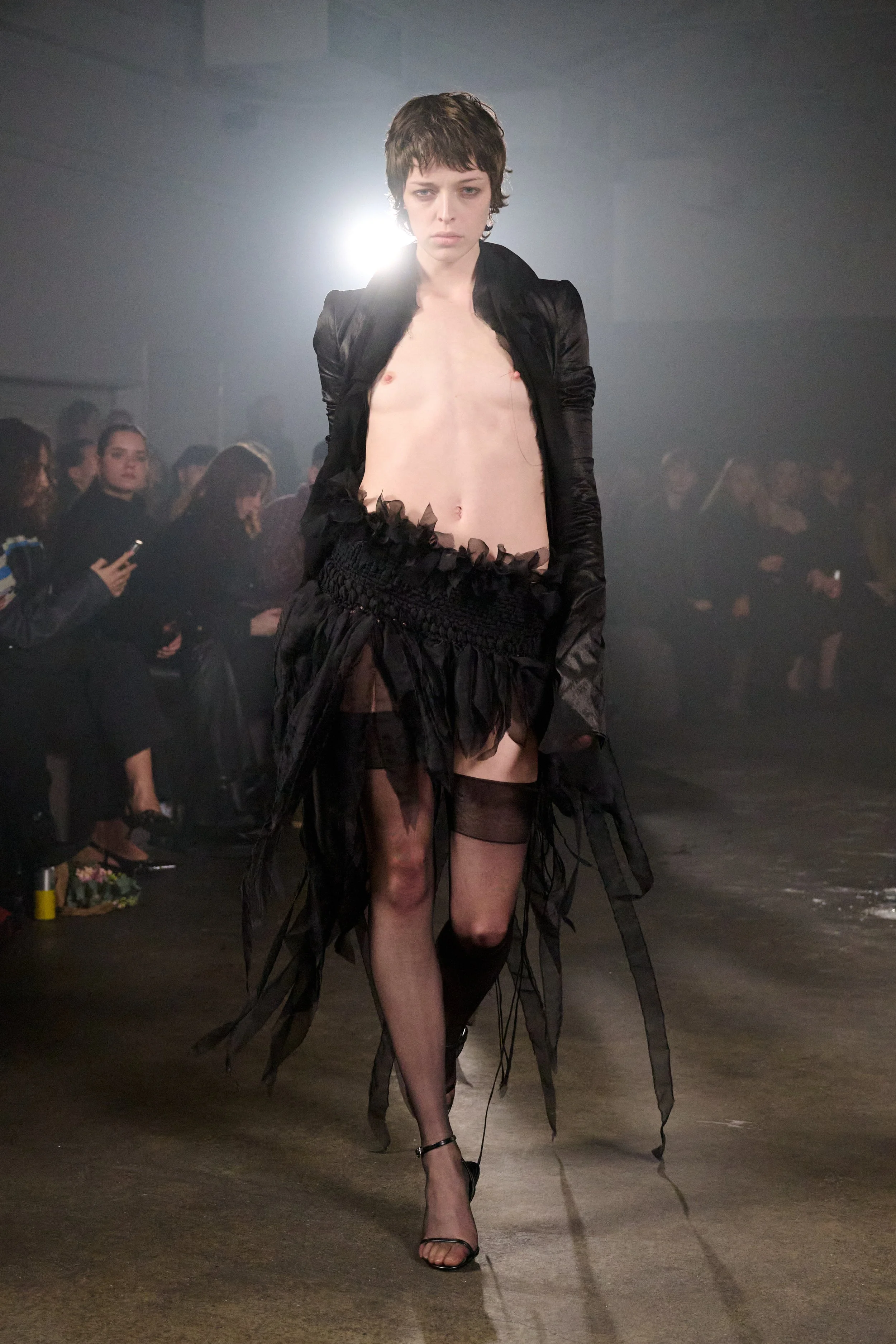
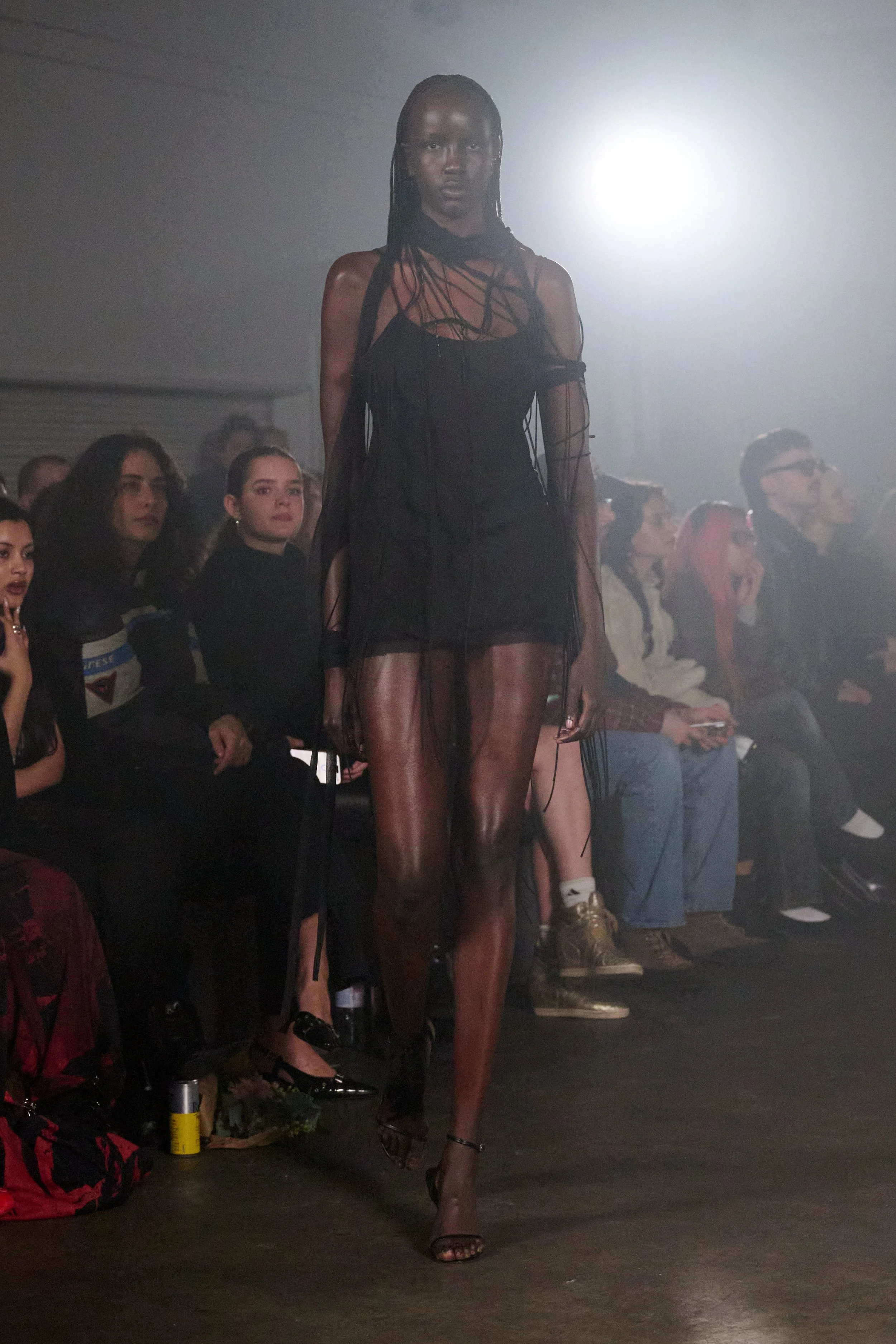
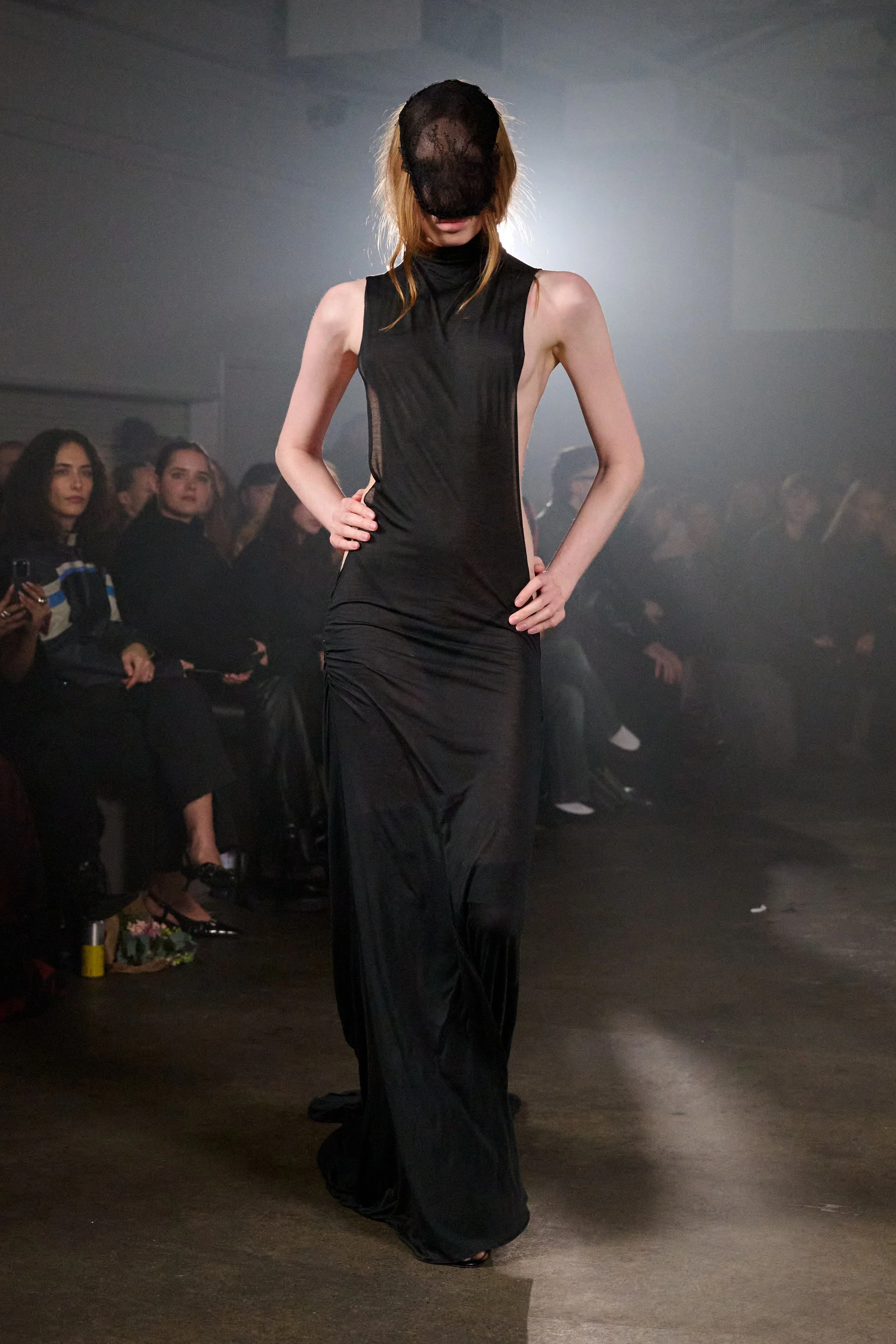
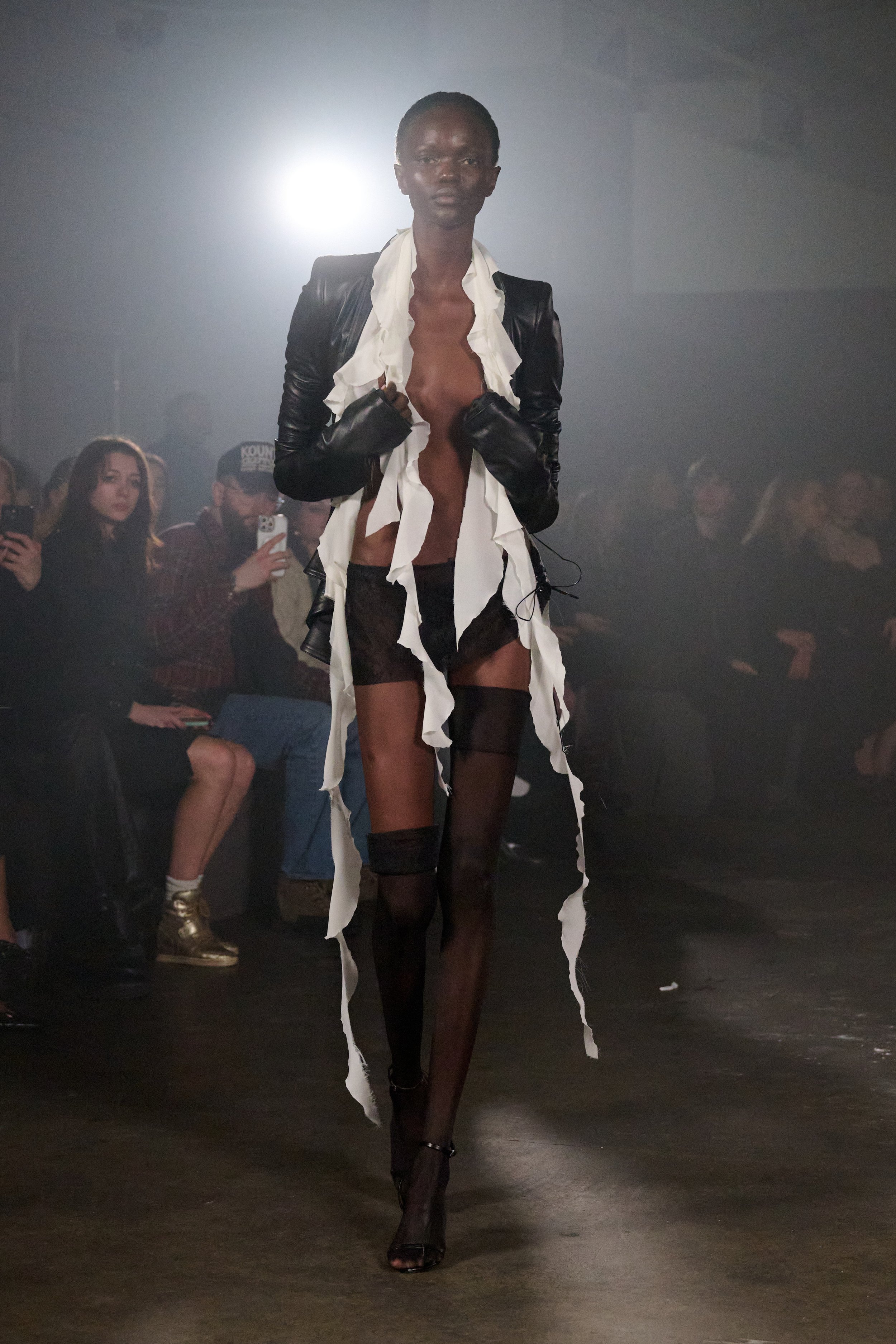
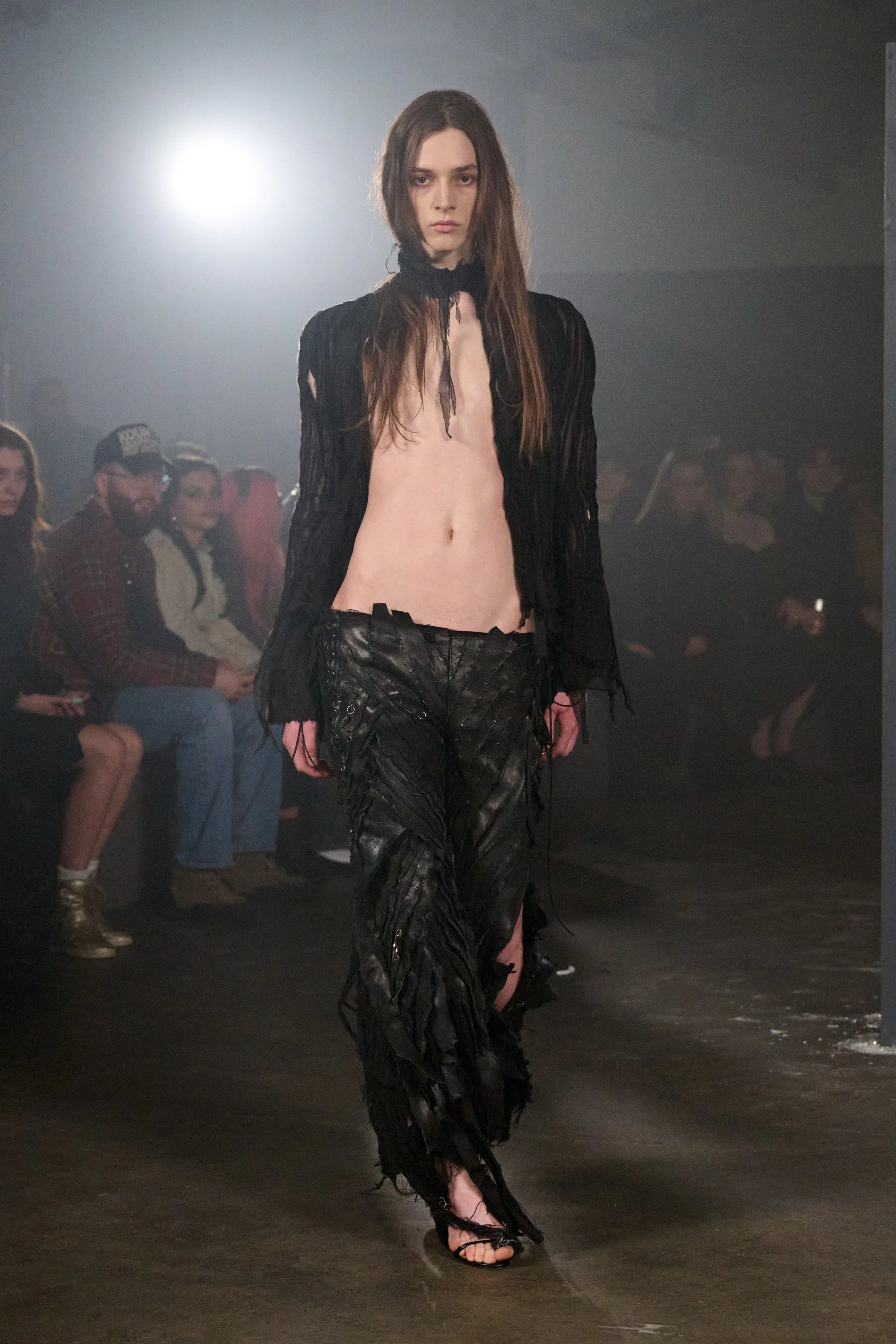
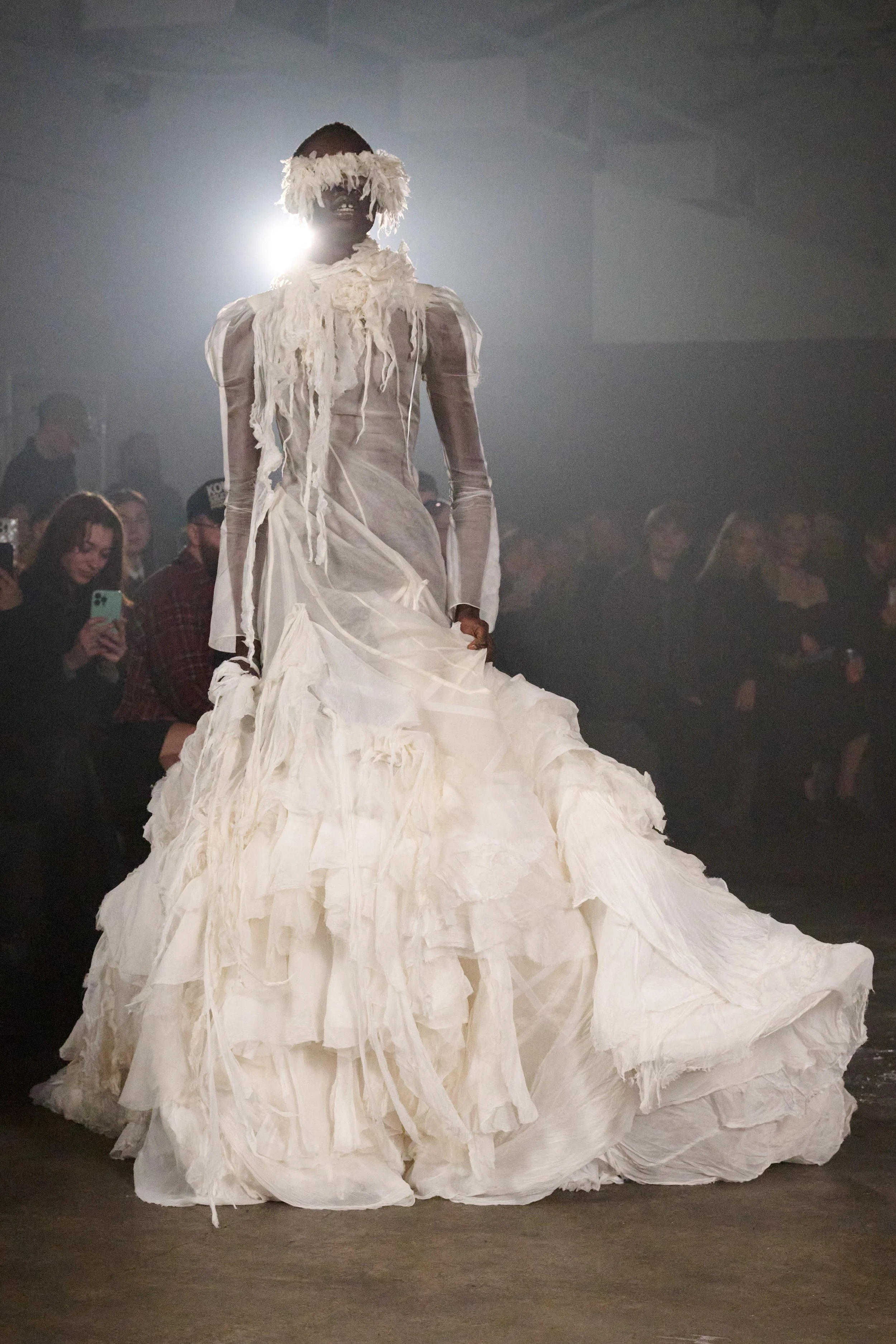
Birdcage veils cast over matted, messy hair in simultaneous overtones of death and rebirth. One figure surfaced from the smog in nothing but an avalanche of wire and intricate leaf-like structures, while others teetered on lace-thin stilettos in sheer mid-thigh stockings. Fabrics unfolded in gradients, tangible traces of time etched into sculptural repairs. One cornflower gown slipped amongst the wash of desaturation in a Cinderella moment, hanging off broadened hips with decaying ribbons of fabric as if clawed at by its wearer, signalling metamorphosis at the hands of midnight.
As all models retired back into their void, the imprisoned figure began to tower over itself, visibly agitated as it coerced its own legs to bear weight for seemingly first time. Hurling its body against the panes of its chamber- fists, shoulders, skull- until glass pierces abruptly, shattered discards thrown across the floor. Self-soothing supersedes stumbles, as the figure finally shifts the narrative to self-revelation. From within the wreckage, the figure emerged in ivory, feathered structures unfurling in a gesture of rebirth and release.
She rebelled against the captivity, even with the world watching intently.
Antechamber exists in the space just before transformation.