Grete Henriette: Take me to Tartarus
Words by: Evie Summers
Grete Henriette is a beautiful expression of the wonder that multi-disciplinary art can hold.
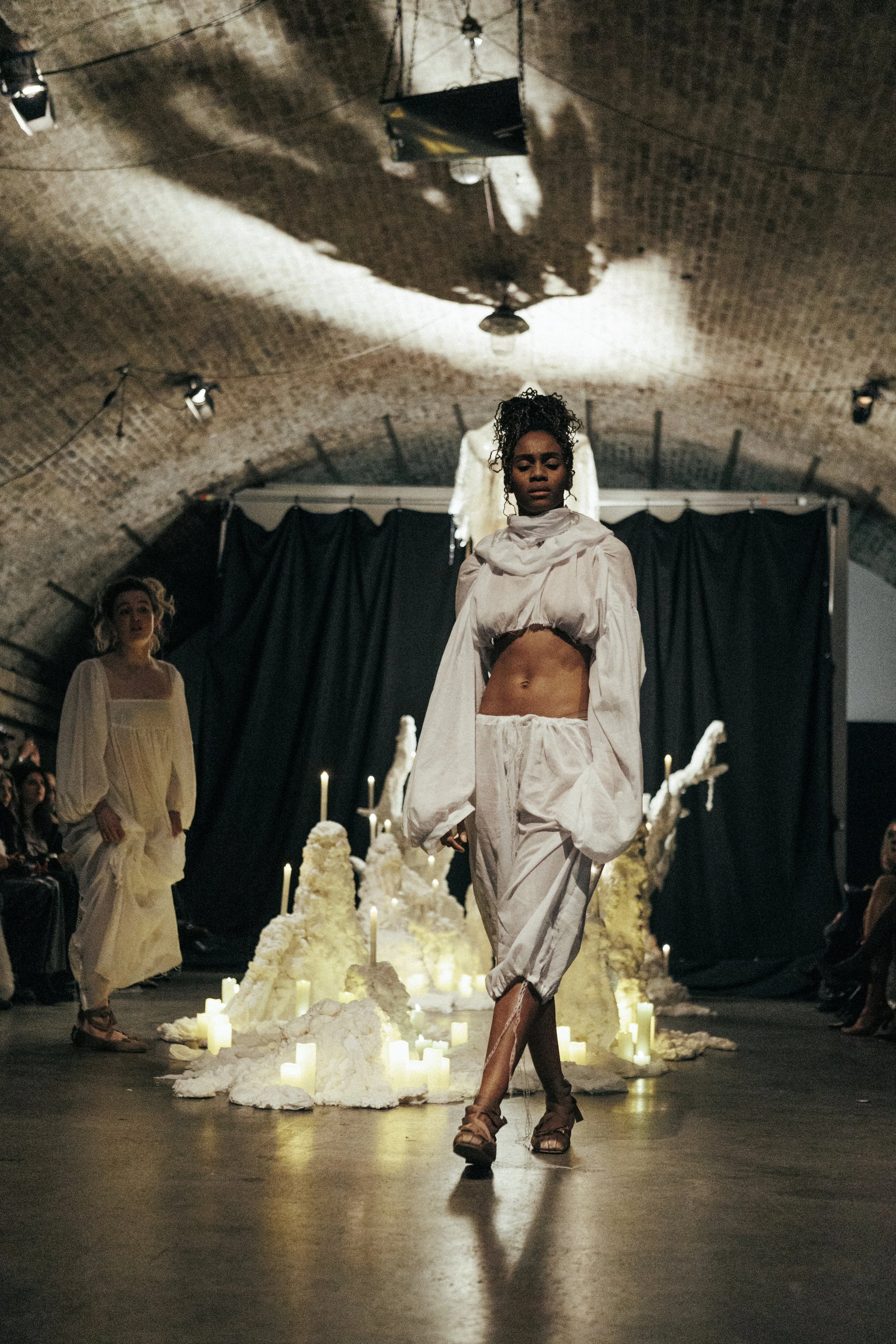
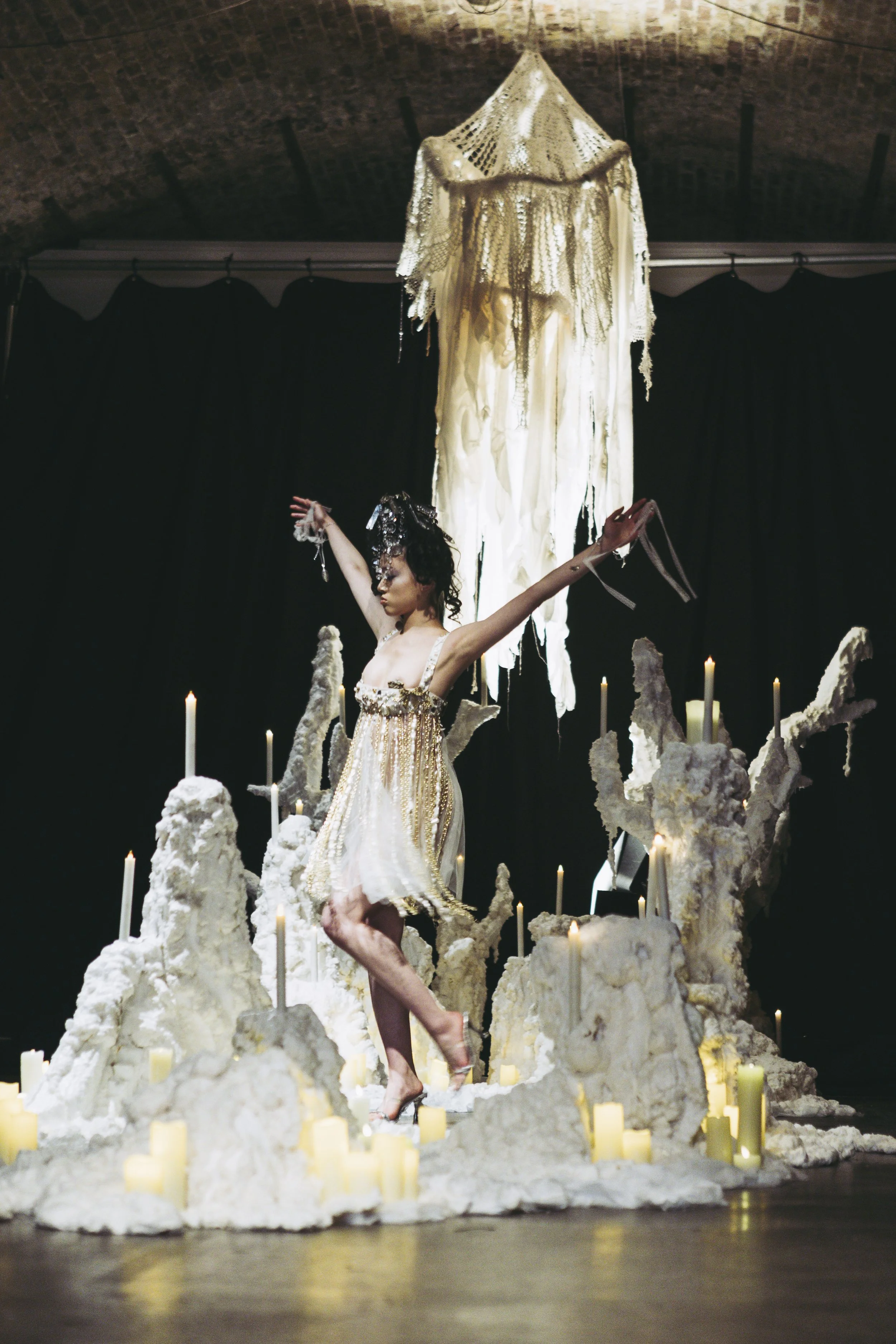
We are initiated into a world of dull light, cavernous in appearance. Set against the landscape of writhing white stone hands that drift and crawl up from the ground, two women take up, first embracing, then quarrelling. One wishes to flee the other to stay.
They appear in romantic and intimate garments, virginal and white. There is an innocence about their clothing, a purity not yet corrupted. Soon, we are introduced to Tartarus, and with it the collection's central theme: whether to stay and be judged and live in repression, or leave and join a community, cast aside and loathed as freaks. This cursed place is regarded as both an escape and a place of looniness. Cast as mad and perverse for their relationship, the two struggle with the comfort of living in shame and the risk of finding a place of acceptance.
The struggle between shame, repression and societal disfellowship offers a stark mirror to our current society and sets us up for the collection.
There is truly a feast for the eyes, littered with context, meaning, and a captivating visual language that could leave the curious mind fed for days after.
As a queer designer, inclusivity was expected, but the candour with which the subject of outsidedness is approached truly stands out. There is anotherworldly nature to the scenes. The piece begins by telling the audience that what they will witness is monstrous and depraved. It mirrors the rhetoric and language of conservative discussion around many queer and minority spaces, it echoes a culture unable to see humanity of non-judgmental sexuality in those who are not white, thin or able-bodied. painting Tartarus biblically depraved, akin to Sodom and Gamora.
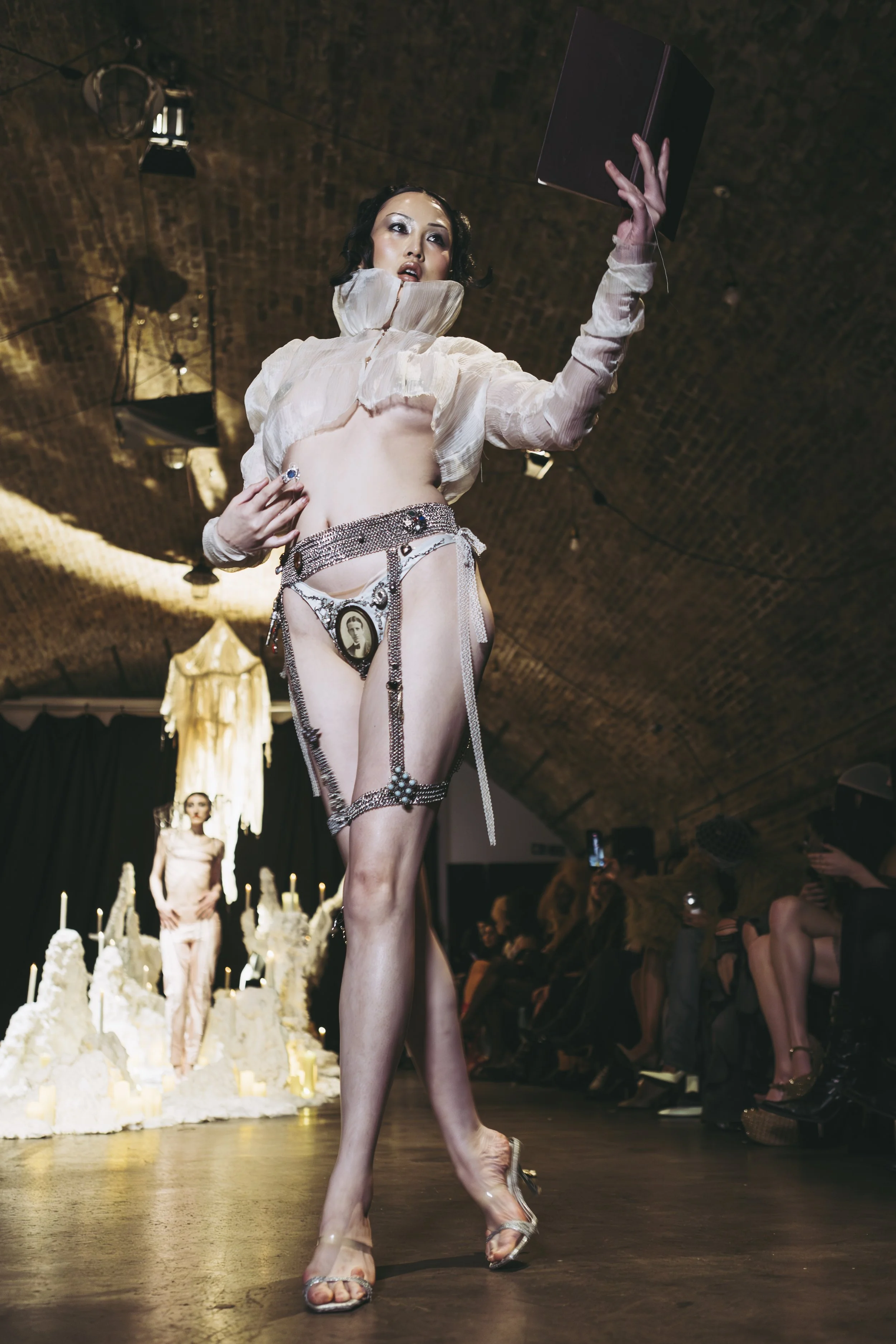
Cut by the entrance first model she slinks onto the scene clad in a leather bikini clad in glass-hung crystals. Biblical illusions seem to permeate the piece as she winds around the stage, entrancing the audience and lover alike, like the snake that caught Eve; similarly, she drew us forward.
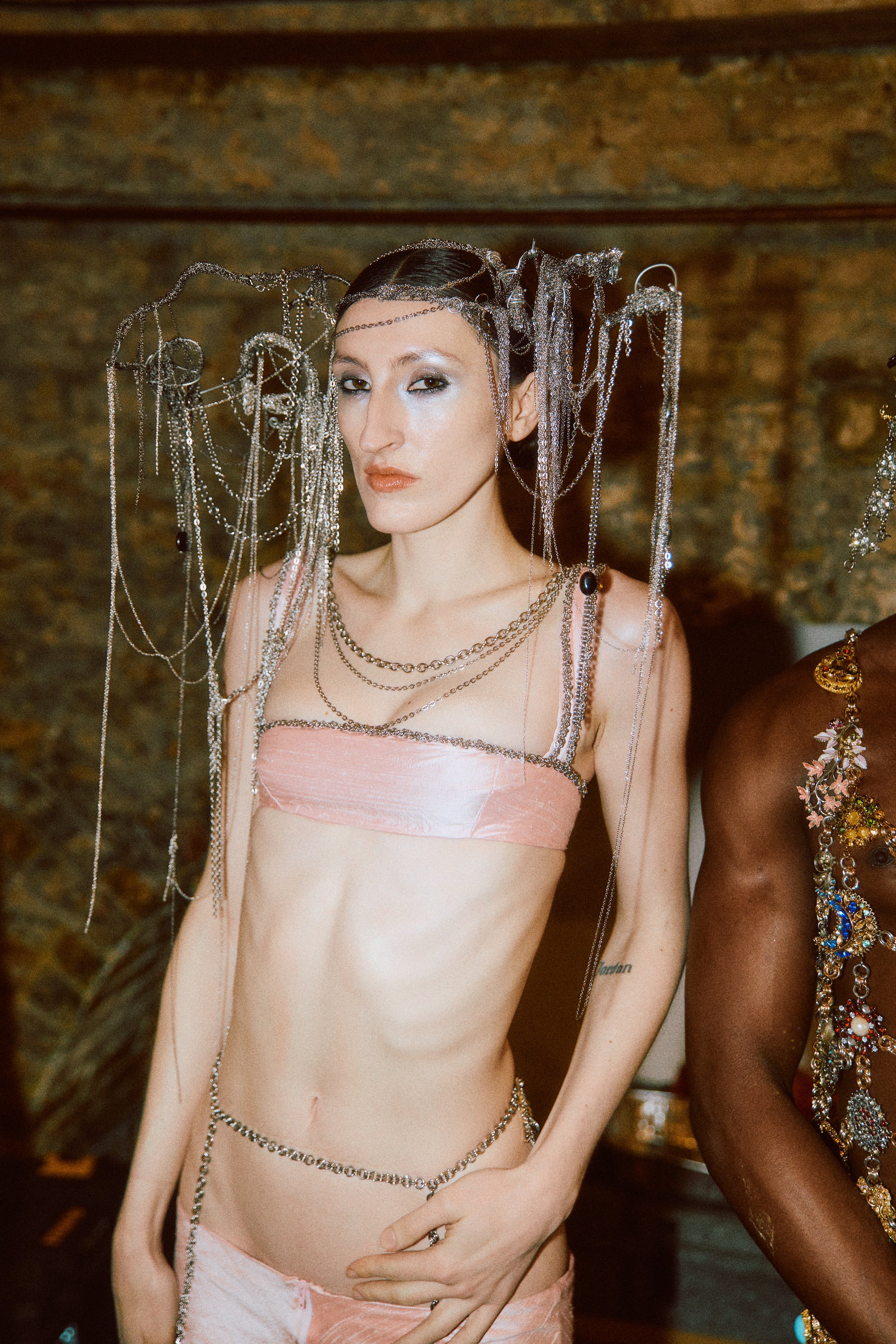
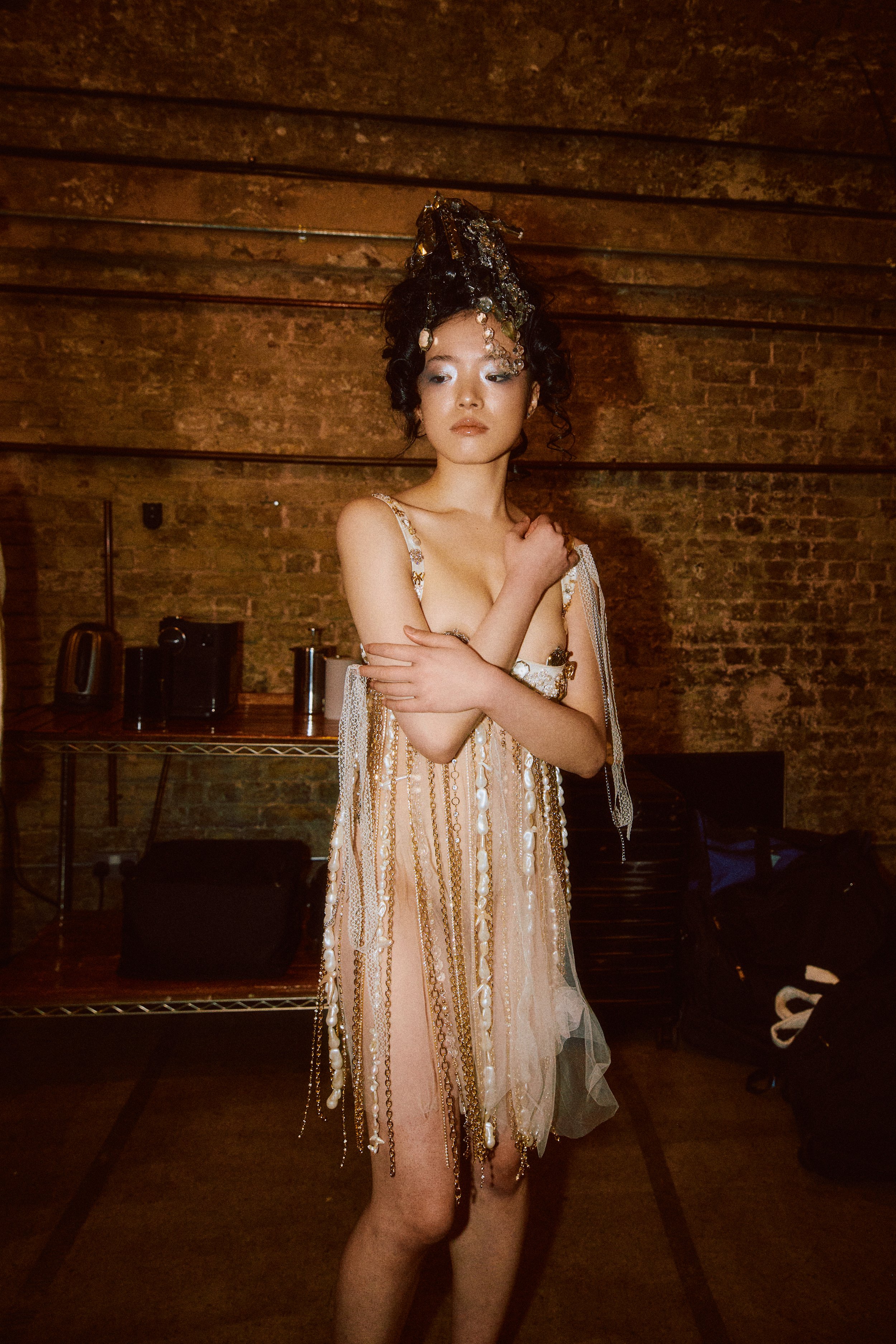
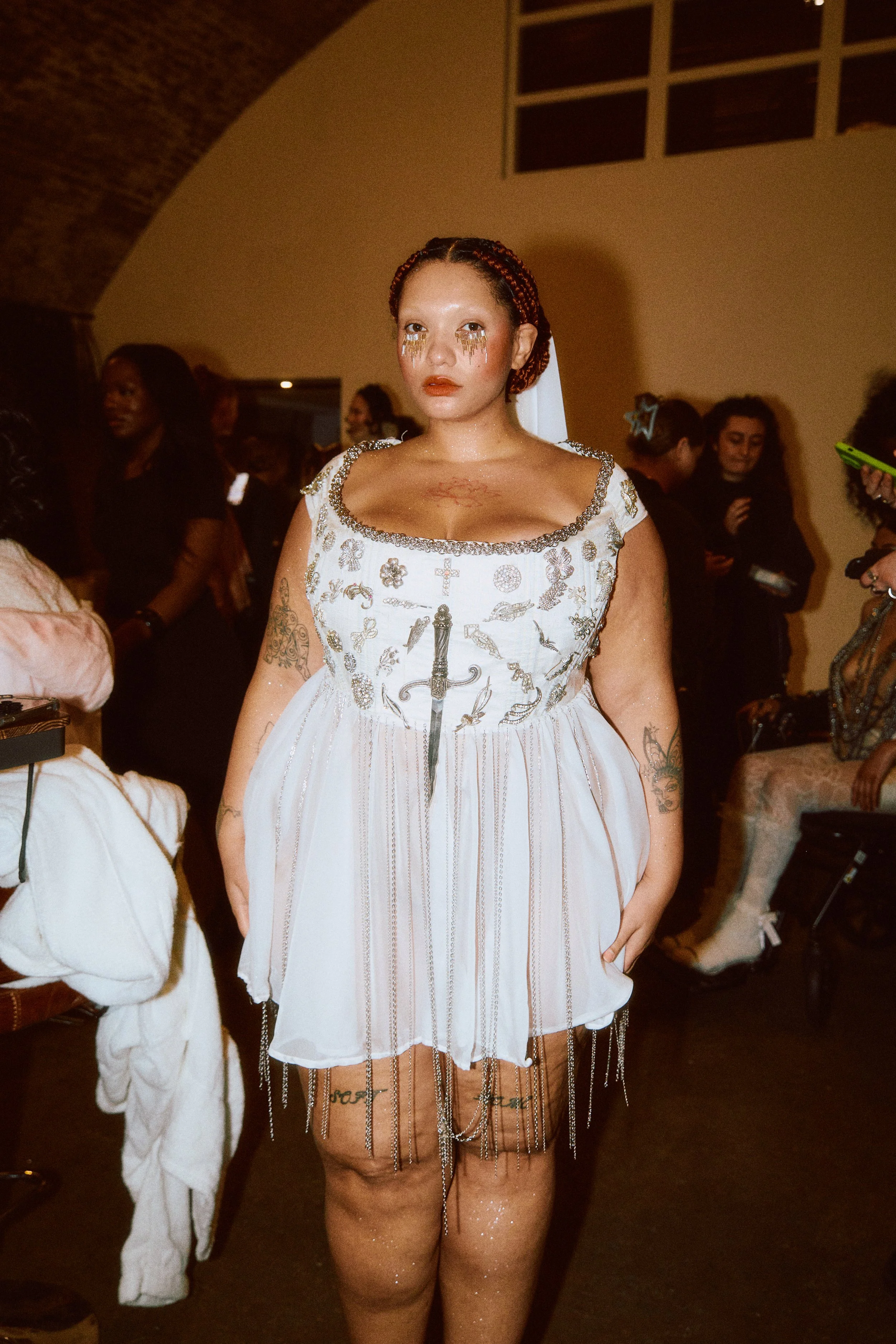
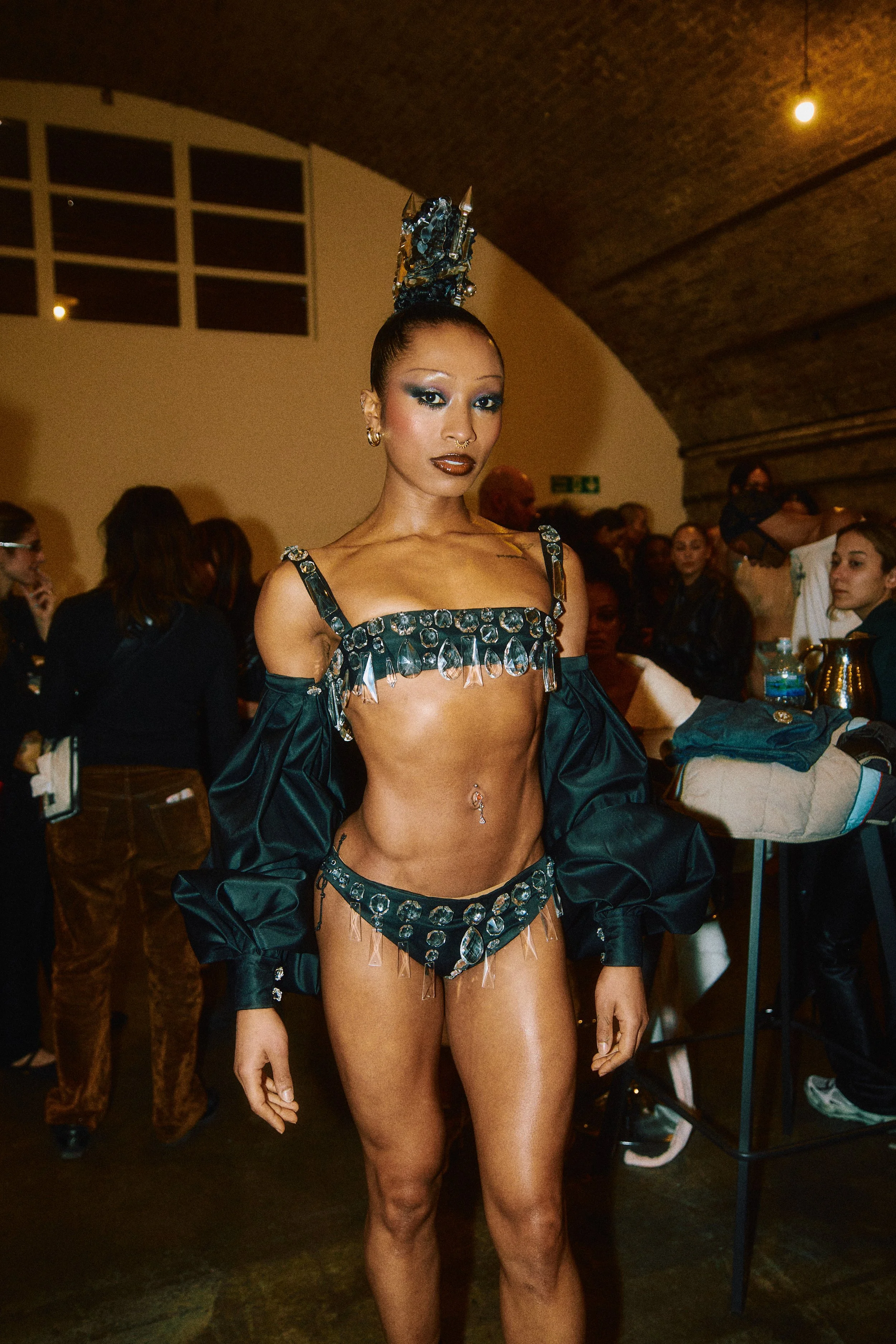

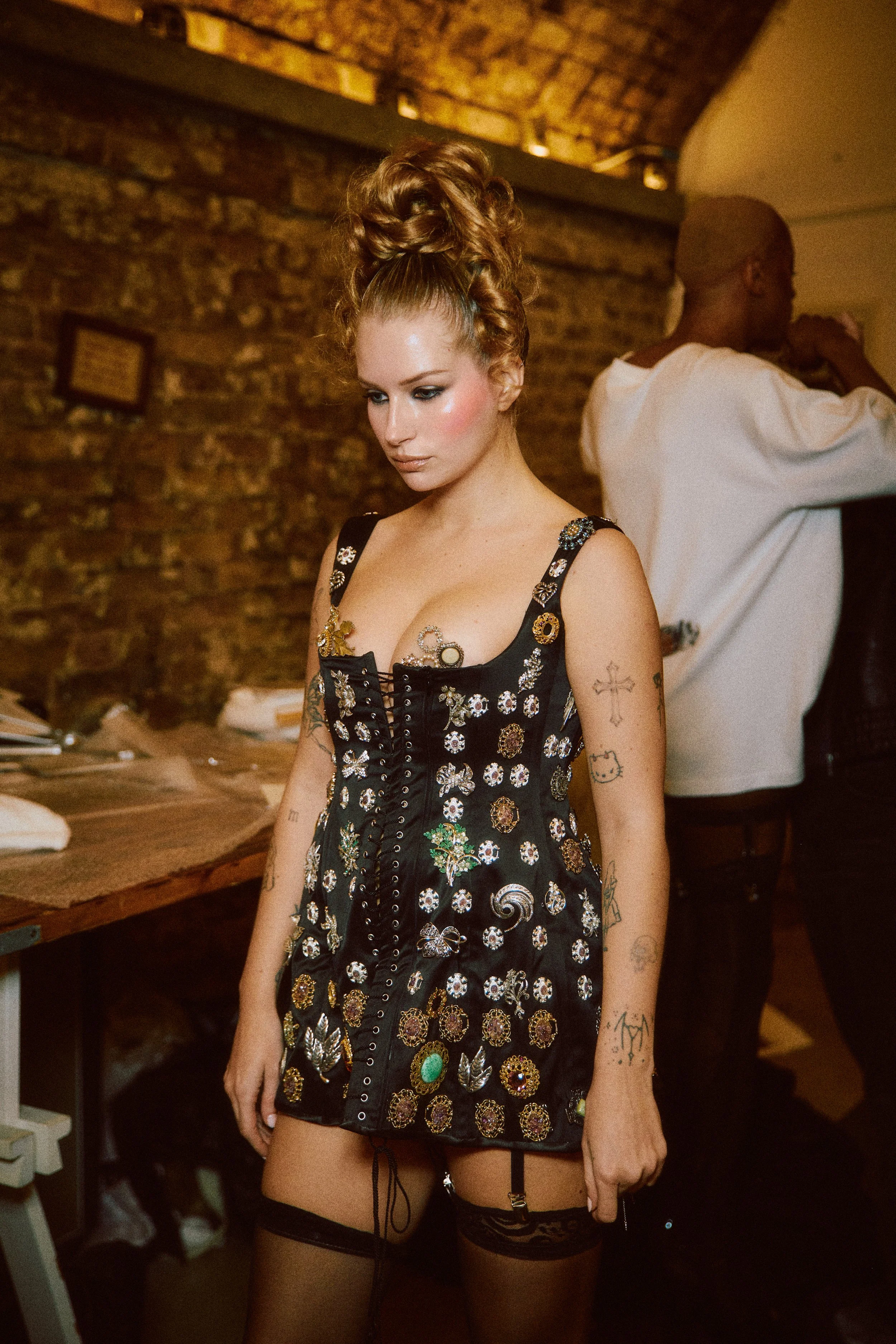
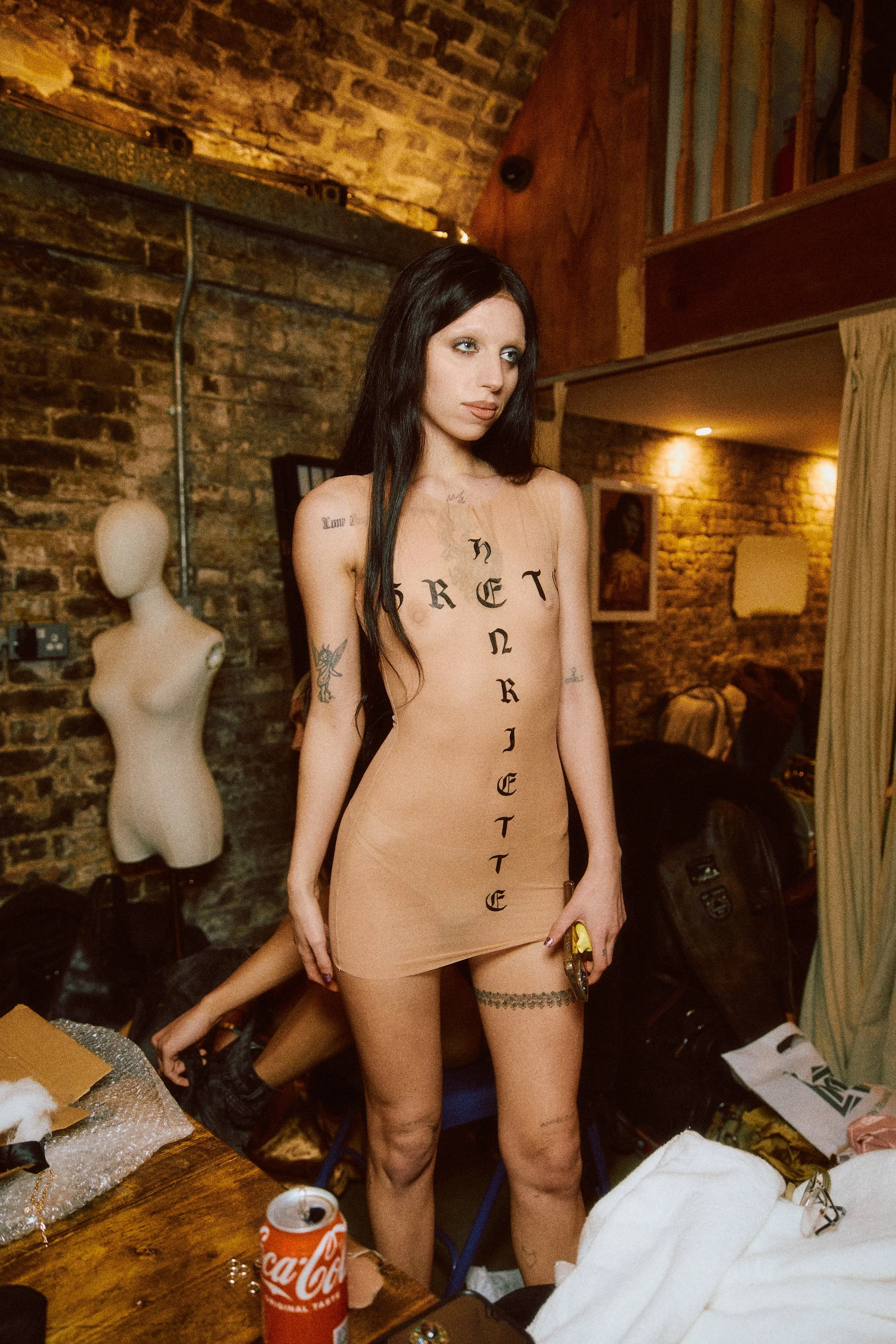
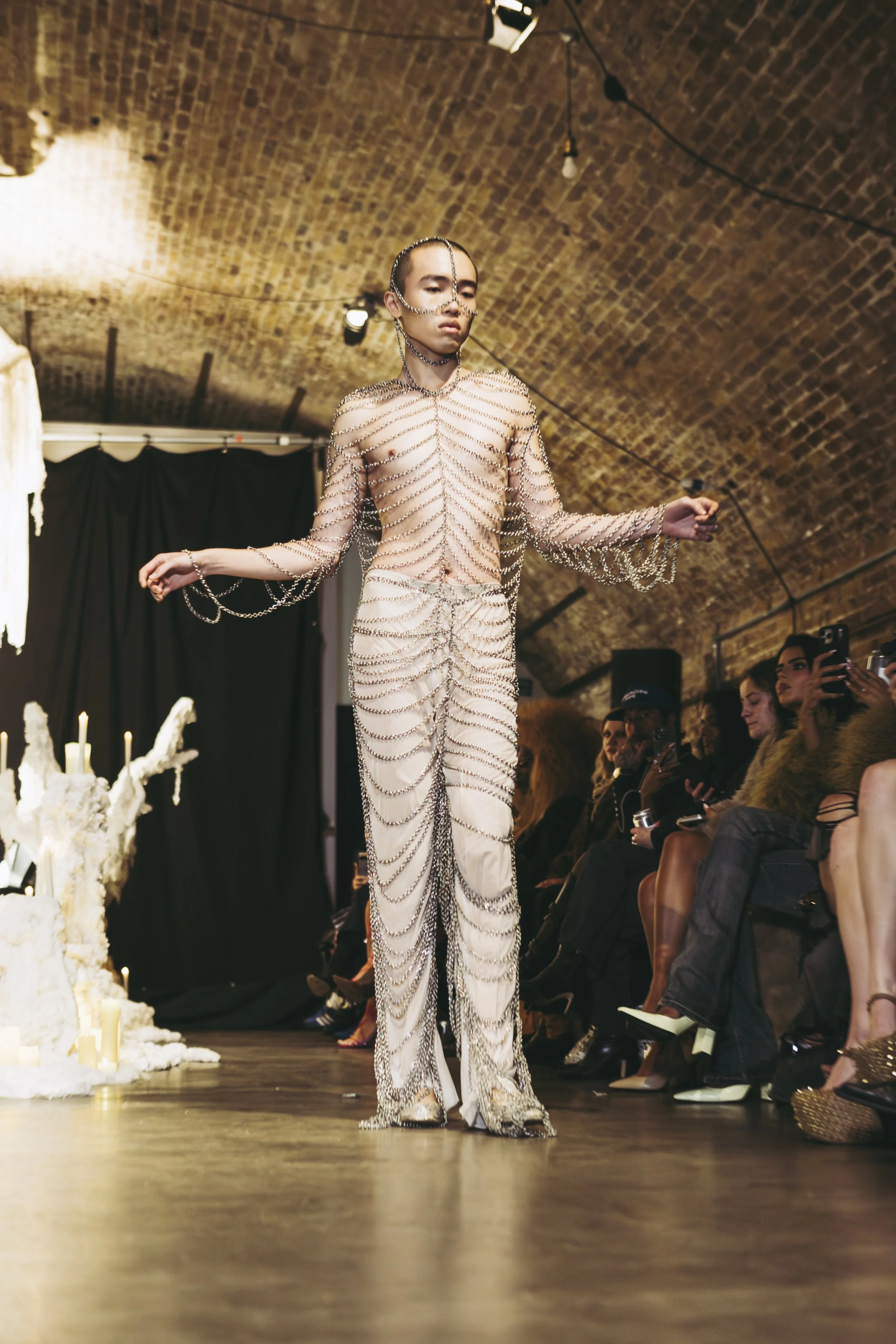
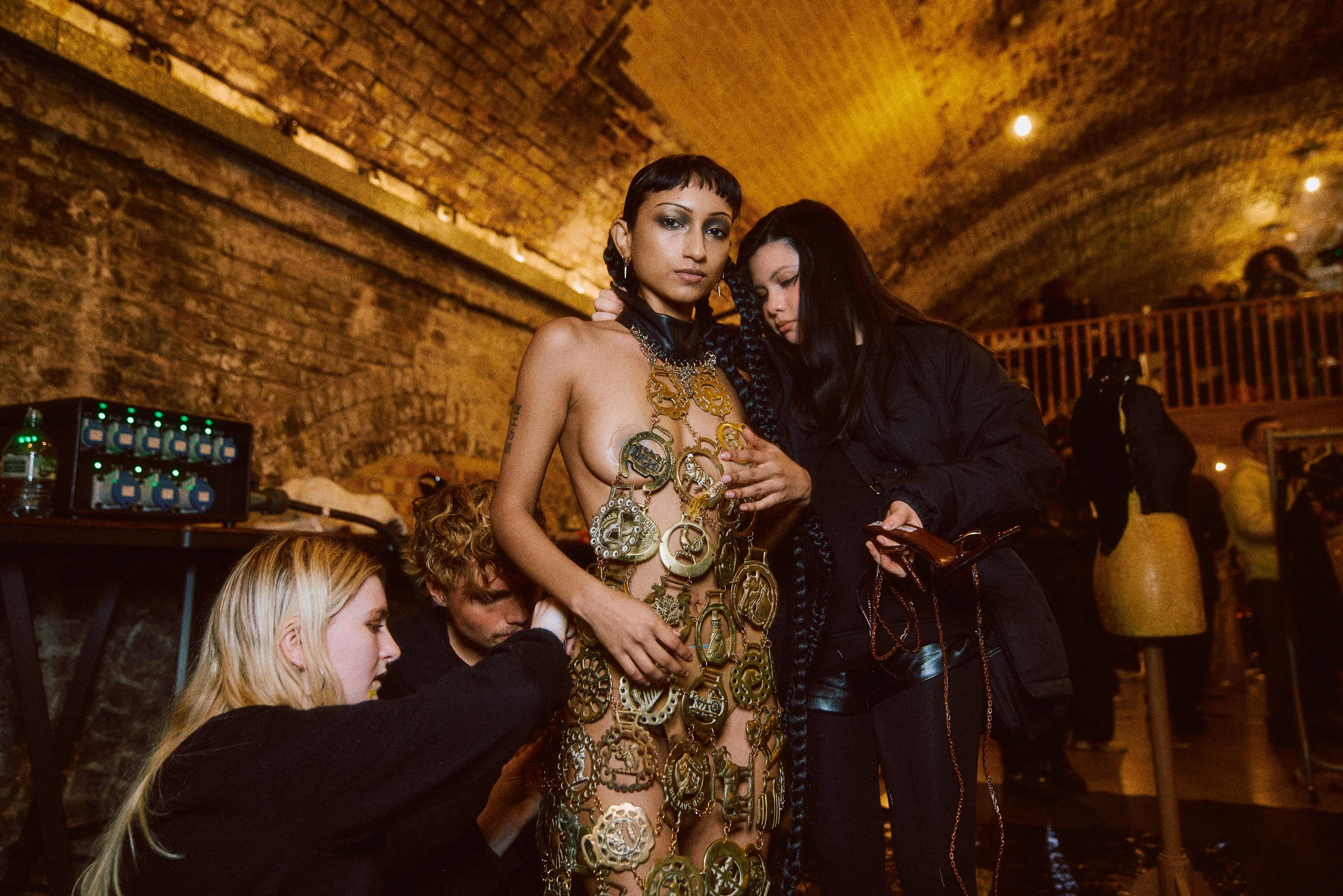
This show positions the models as the art, and the garments that grace them feel organic and ornamental.
Each model is strange and beguiling, presenting a different face of outsiderness. As the show progresses, we never feel once repelled but, instead, become further absorbed into the peculiar cast of subjects.
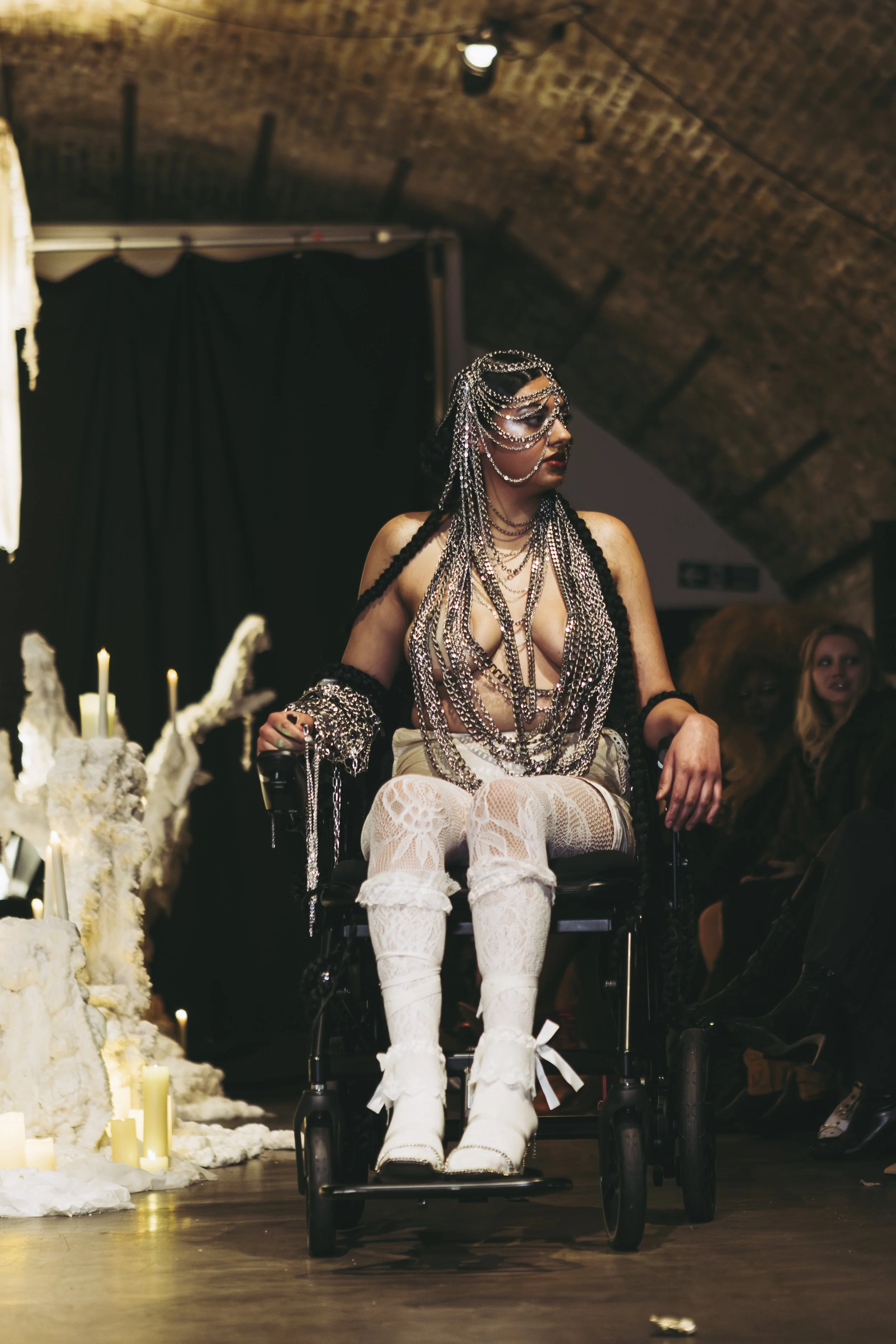
One point that felt incredibly impactful was the inclusion of plus-size and disabled models within the show.
Grete is a brand known for its seductive romantic quality, and when that is the focus, diversity is often not a meaningful conversation; here, it's front and centre, and it's not merely performative.
There is a lack of humanity afforded to disabled and plus size women in particular, and this is only more common in the world of fashion. The brands' choice to consistently and indiscriminately platform these underrepresented communities means more than perhaps they even realise. Not just to put them on a platform, but to raise them to the same level of beauty as the traditional model, giving the space to be adored and marvelled at, is the kind of innovation we desperately need. When it comes to disability specifically, there is a deep infantilization that removes a person's ability to live fully and embrace their own sexuality, the way that any adult should have the right and the ability to.
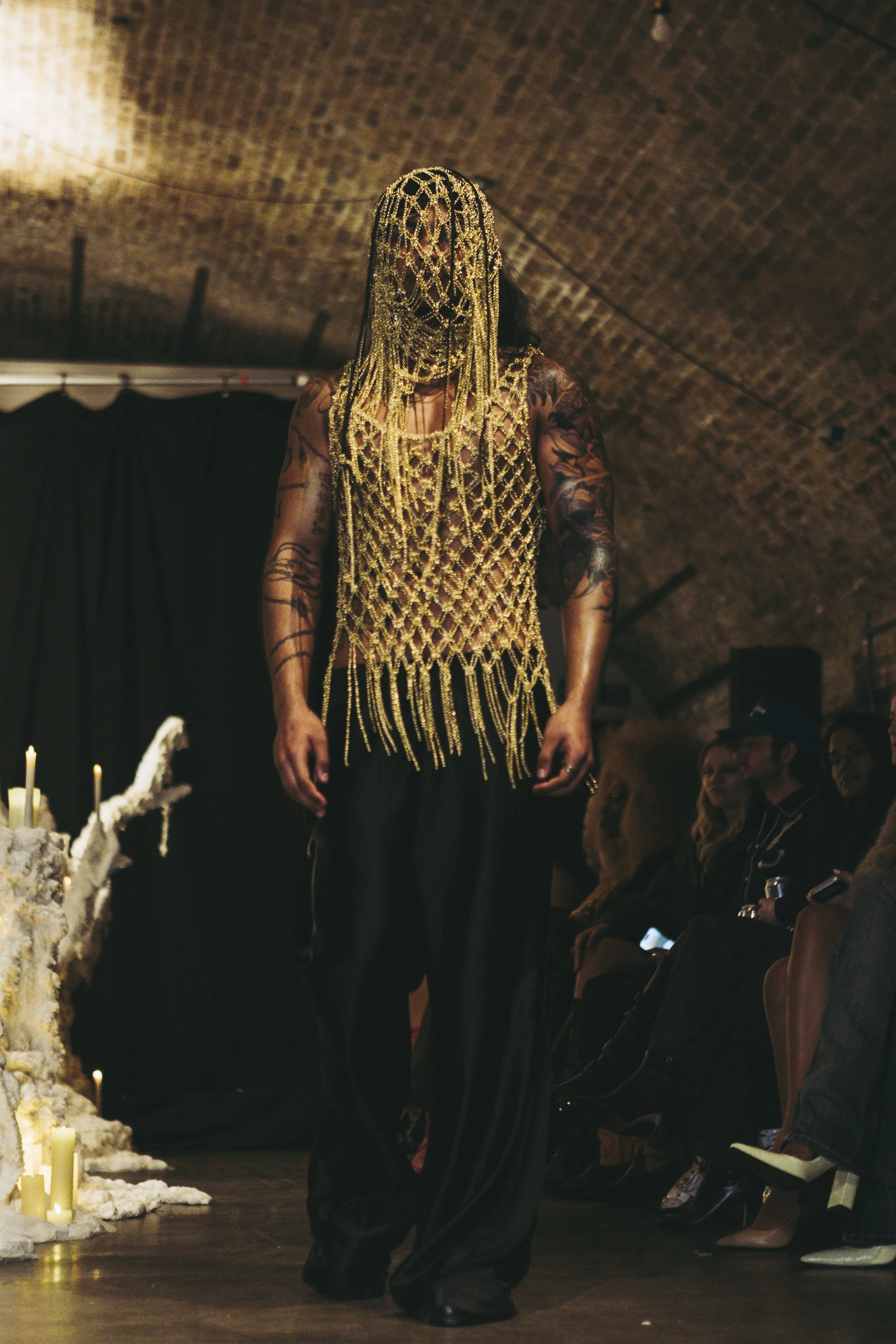
The pieces themselves are as we have come to expect from the brand gorgeous and entrancing. Models slink and prowl the stage, often breaking the 4th wall involving the audience in a way that draws us inside the walls of tartarus and hold us there captivated.
Tartarus becomes a place of wonder, and the more time we spend there, the more we understand that the hysteria is directed at Tartarus, not within it.This collections a mature and beautiful response to a world that wishes to eradicate all that makes fashion, art and humanity wonderful.