
Phoebe English
In Conversation with award winning sustainable circular fashion studio and designer PHOEBE ENGLISH.
Interview By: Anya Duncan
Images By: Asia Werbel
O.M: Fashion traditionally creates desire by convincing us we need something new. You've spent years questioning systems of production and waste. Can fashion still rely on desire while also asking for restraint?
P.E: That’s an interesting question. I’m not entirely sure I have the answer. I think desire and constraint can work together. We will always have desire, it is a base part of us as creatures. Throughout human history the ability for constraint has been much harder for us to achieve.
O.M: Throughout history, luxury has often meant rarity and excess. Do you think the definition of luxury itself needs to change?
P.E: I’m not sure what truly defines 'luxury.' It means so many different things to many different people and I have been asked this question many times whilst working in fashion. For me sitting down and being able to eat with people that you love is one of the greatest luxuries.
O.M: You often work with existing waste streams and dead stock materials. Does beginning with what already exists change the emotional relationship between designer and garment?
P.E: Yes I think it does. Although that wasn't something I initially set out to do. We have to approach it in such a different way in terms of design development, often working with a particular waste stream for months on end and sometimes for years, to garner the best way to utilise its particular fibre, size, quantity etc I basically had to retrain myself. We refer to it as a ‘responsive’ design process. We use the information from each specific waste stream to inform the design itself. So it’s a bit like listening very carefully to your materials and then designing with that information.
O.M: Can sustainability sometimes unintentionally become aesthetically limiting where responsible fashion begins to look visually similar?
P.E: I think there does tend to be that interpretation from people. We have attempted to try and omit any aesthetic changes to the work we do and the intention is that all the changes we put into place are ‘backstage’ - so all the work that goes into to building the collection and clothing rather than how it looks.
O.M: You've built work around visible process and craftsmanship. What do imperfections communicate that perfection cannot?
P.E: I’ve always preferred imperfect things over the ‘perfect’ - it always carries more spirit and character for me so it has a deeper weight to work with.
O.M: You've been vocal about systemic change rather than isolated gestures. Do you think fashion sometimes focuses too heavily on individual consumer guilt rather than industry responsibility?
P.E: It really needs to come from both and all sides, and yes there have been swings of pressure on individuals. But we should all be feeling the responsibility as citizens of the earth whether we are individuals or entire industries or governments.
O.M: You've worked against the pressure of constant production and seasonal urgency. What has slowing down taught you that speed never could?
P.E: It was years of building up to that change. It took me years and years to take that step. It was something I had wanted and needed to do for so long and I feel such huge emotional and physical relief that we are there now. This response has taught me that I should have remained slow from the start and not felt external pressures to try and fit my personal working practice into structures that were built on someone else’s much faster framework.
O.M: If fashion shows disappeared tomorrow, what would fashion lose and what would it gain?
P.E: Oh good question!!! Hm I’m not sure, but there was a time when fashion existed without them. That idea of being seen and of watching is systemic to human nature, I’m sure the same idea of dressing up and showing yourself in an impressive light would continue to exist in other scenarios.
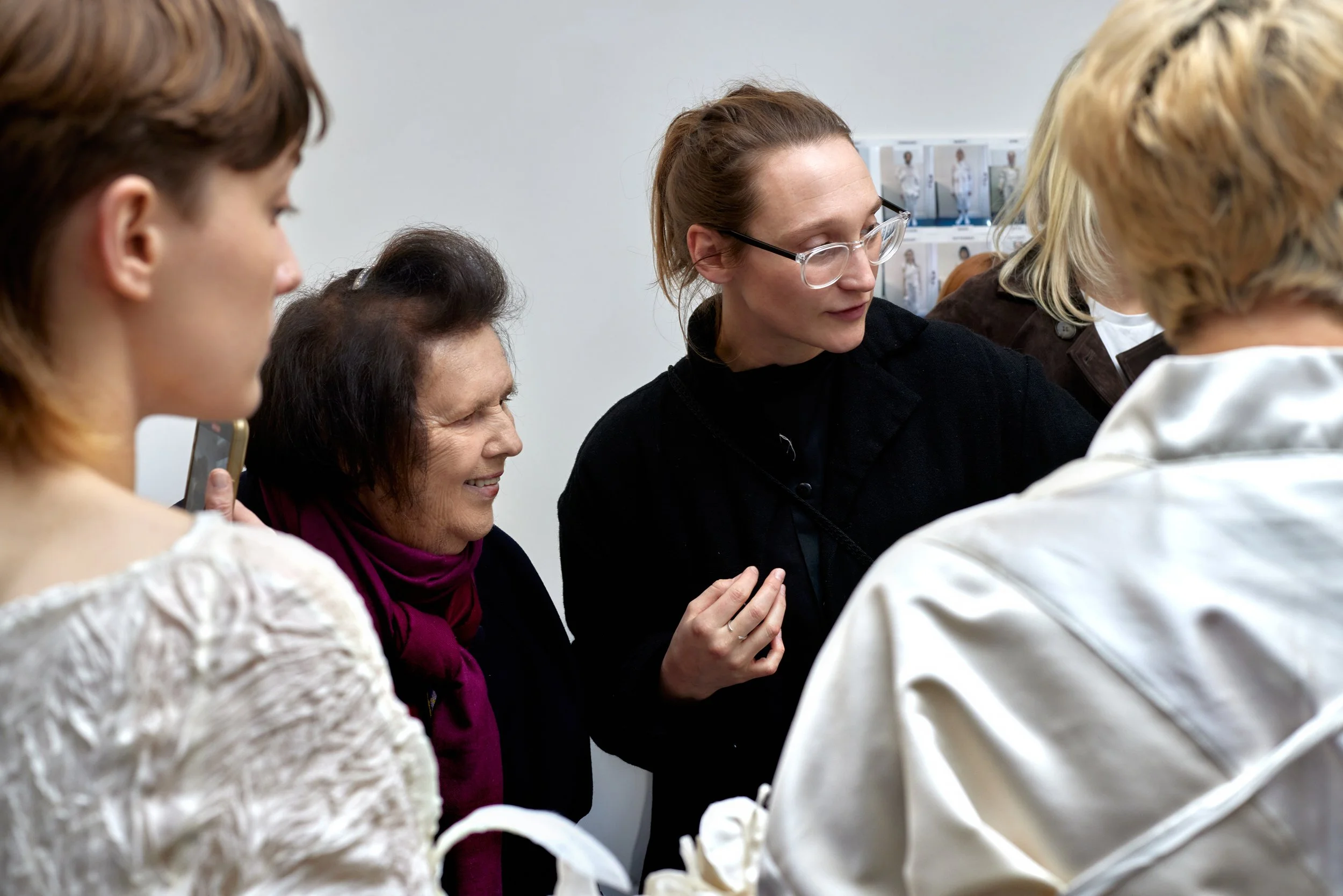
O.M: Your recent collection Lost Touch immediately feels emotionally loaded. Was the "loss" you were thinking about physical, emotional, social, environmental or something less definable?
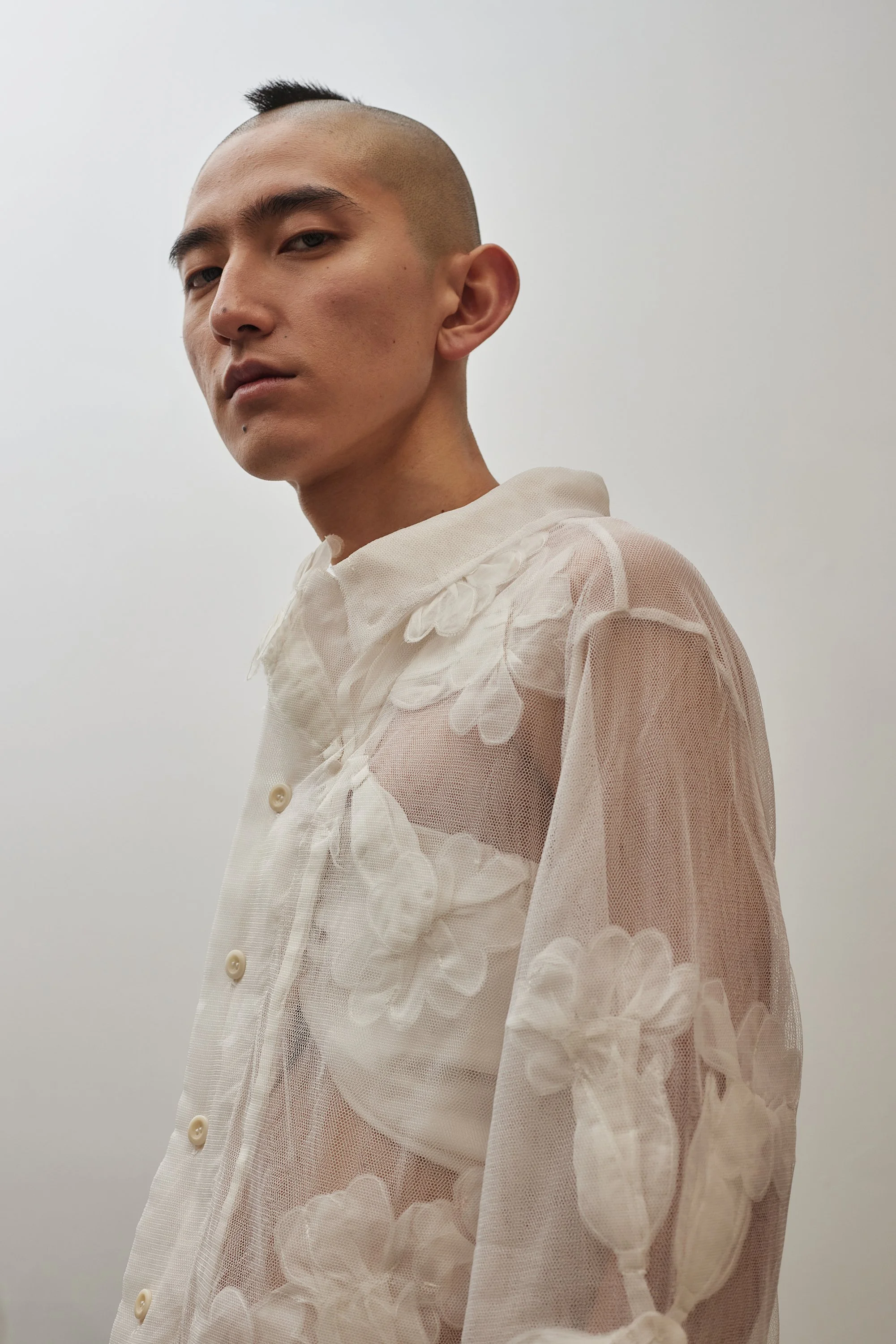
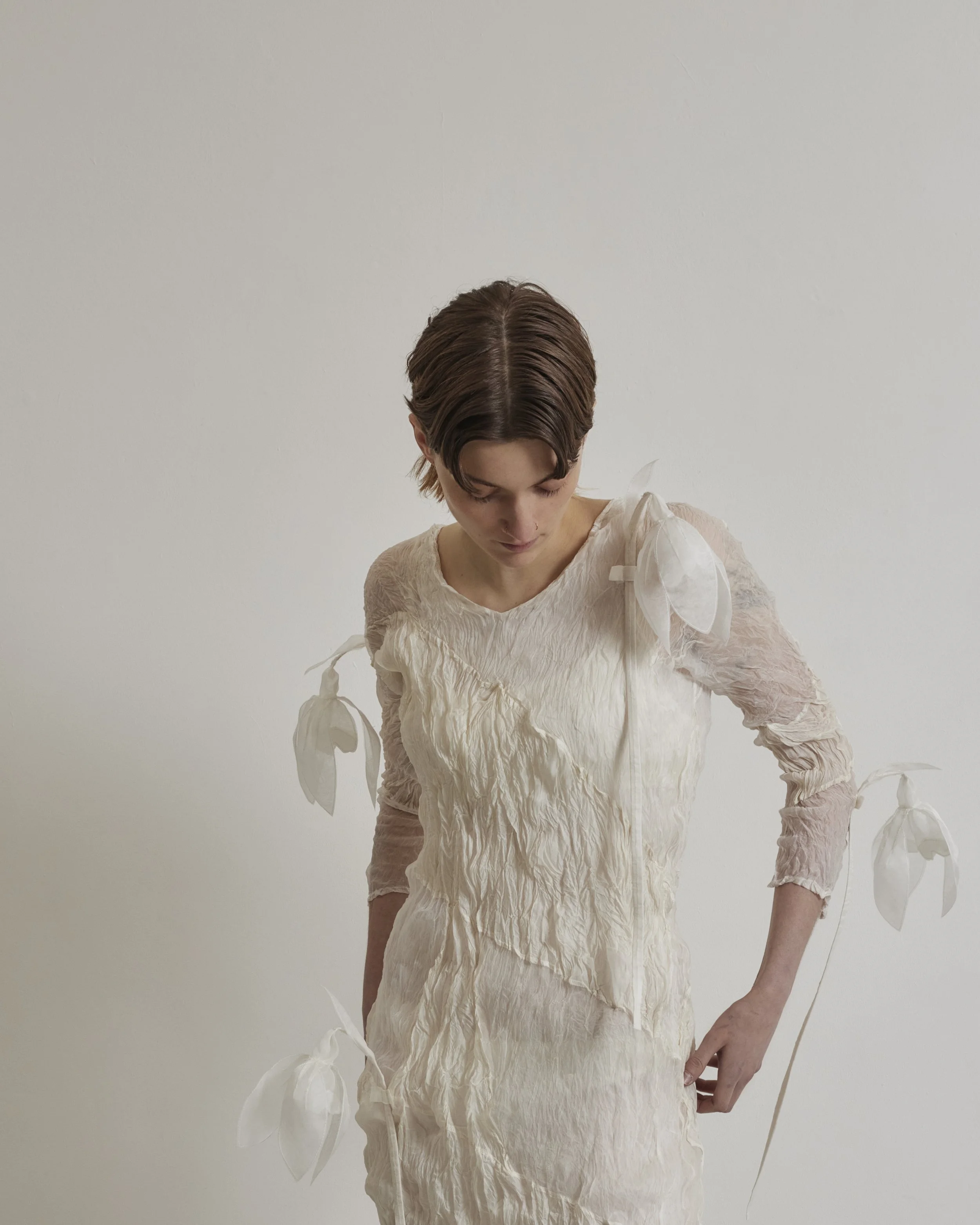
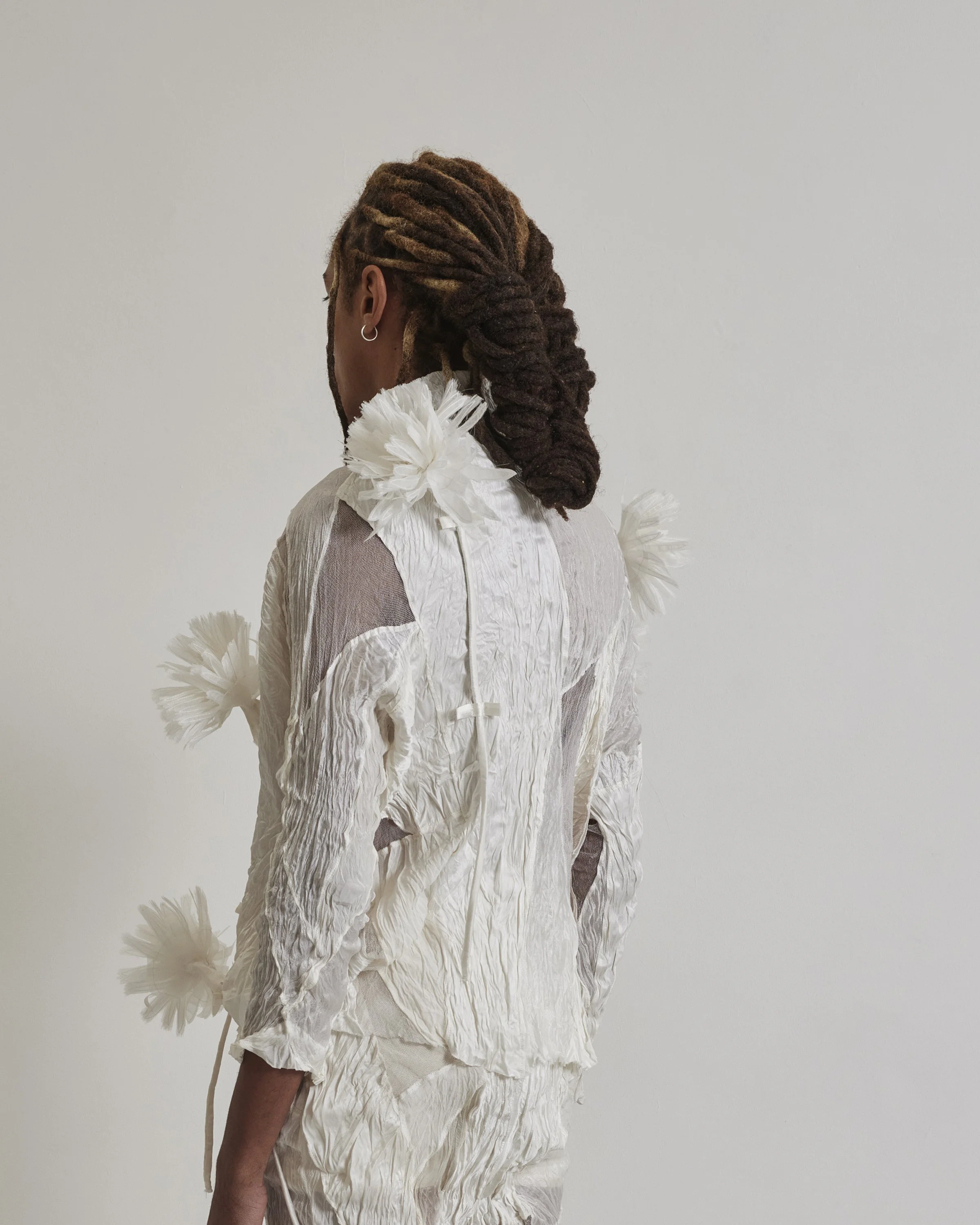
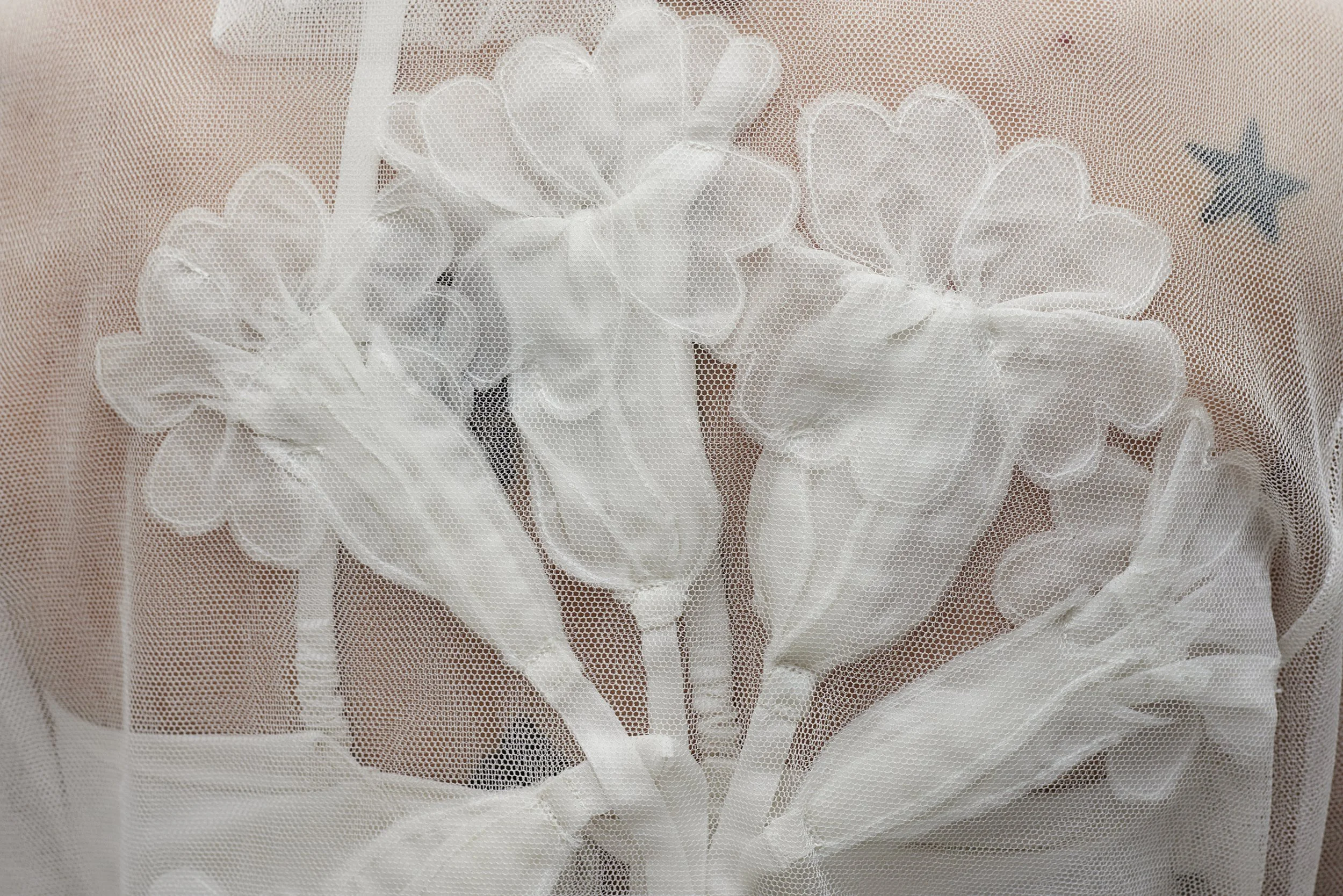
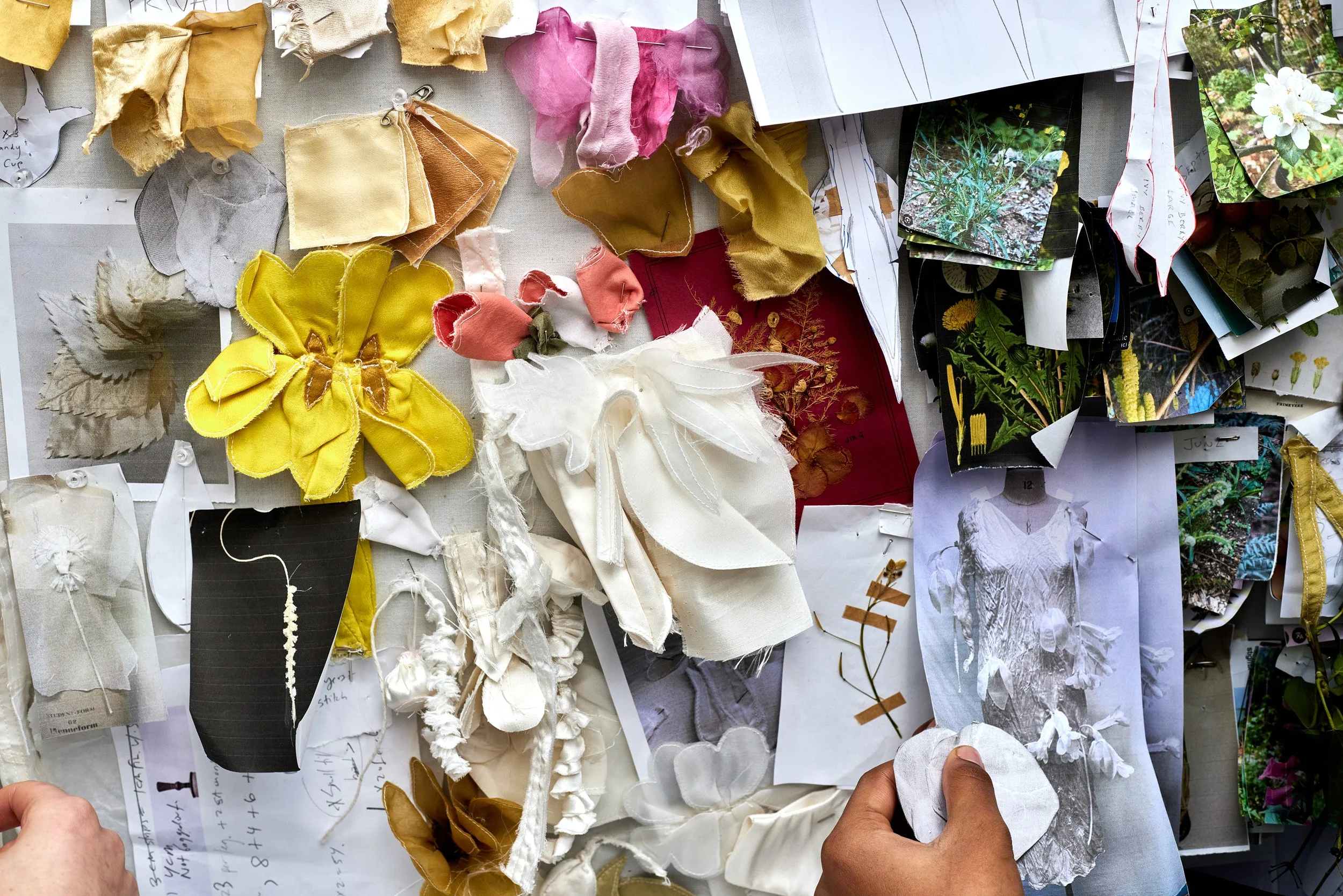
P.E: Yes it is very emotional loaded. The loss was in reference to many different losses. Some personal and some much much larger and beyond that. It’s not a sad collection, the intention was to give something away. To extend something, maybe tenderness? To extend work outwards, like an envoy, which was freeze frames of the totally extraordinary tiny transformations which occur around us. To capture it in time as they shift. Each of those small shifts occurring in the plants around me in my daily life brings me such enormous sustenance. I felt I needed to capture that and extend it out. It felt hugely important during this past year.
O.M: Your work frequently carries a tension between fragility and utility. With this collection, did you find yourself leaning further toward softness and vulnerability?
P.E: Yes I suppose so. It is very fragile. And there isn’t a conversation between things, which is what I normally tend to build my work on. It’s one singular and solid tone. It’s a very very different collection than I’ve ever done before and feels like a significant personal shift in my practice. I felt totally without foresight or direction when I was working on it, sort of in a strange confusing quagmire - a dull panic of uncertainty. It was so hard to attain the right visual language and to give clear and specific direction. But also I felt so incredibly clearly that I needed to embed and commit myself fully and deeply in the process of it. The feeling I had of this ‘transference of energy’ that I needed to capture and translate was so strong. Even though I had no idea why or where the direction actually was going or what it was for. I’ve not worked in a literal or figurative way like this, so I didn’t really have any skill or experience to work with on these forms. It felt so frustrating most of the time.
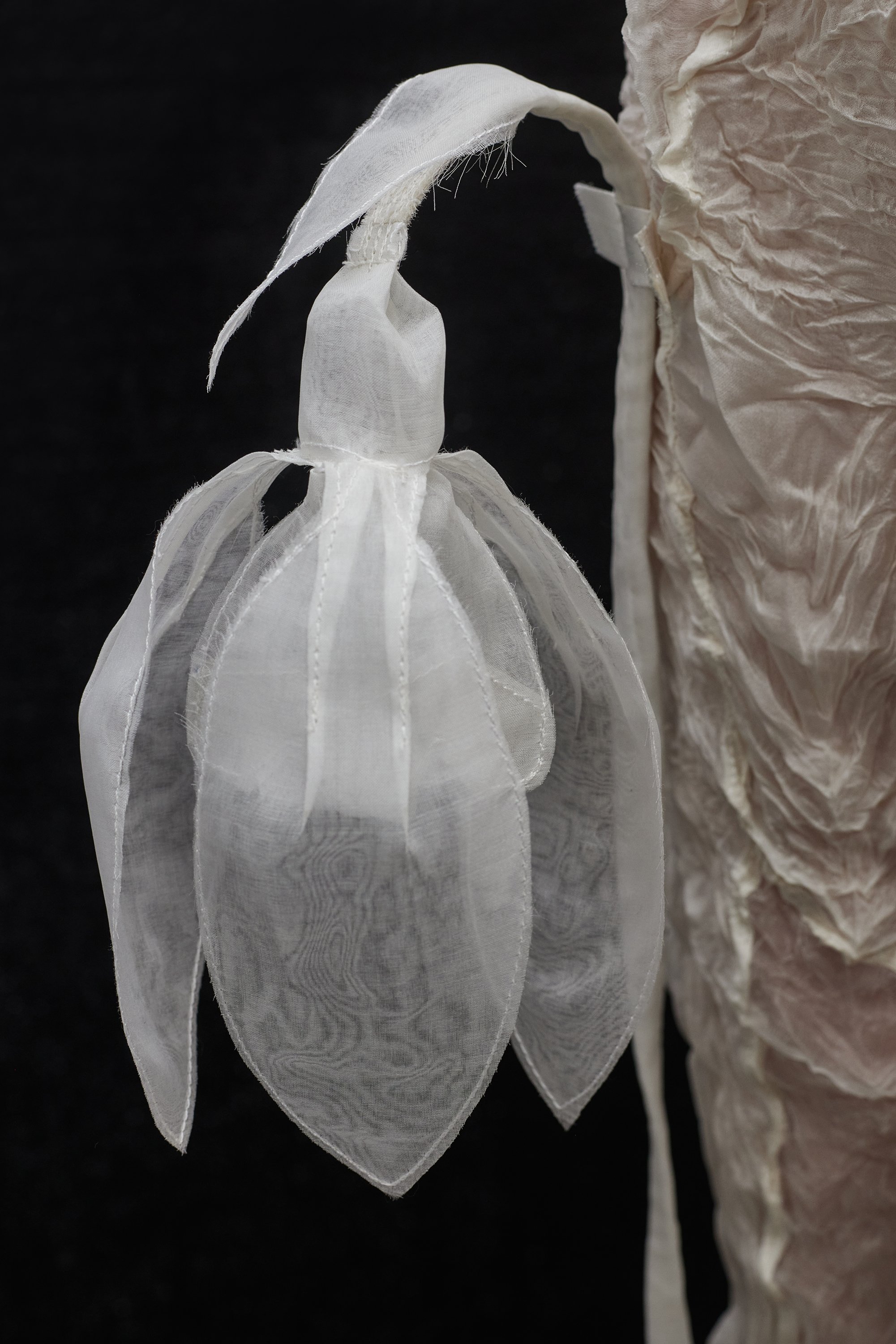
It ended up very much being an exploration of each plants specific architectural qualities but as we explored them it also then became increasingly about what figurative elements we might omit or leave out and how much we would leave to the imagination. Further along the line once we had a rough beginning of the scale and forms we began to explore how we could integrate a life-like movement in places. So for example, for some of the flowers we have engineered small hinges, and we were just working on hinges alone for a bit of time. For other plants it’s more of a serpentine movement where the length of plant is slightly articulated so it can wrap around the body. It was this architecture and engineering which was so hard to balance with light and colour as it was already so much. So we reduced the colour to nothing until we were just using the fabrics totally blank and instead worked just with the shadows alone; using tone on tone across the entire collection and using the architecture and engineering to build in shadow depth and movement. It’s has been so fascinating to see it appearing slowly but I’ve also had to try really hard to be patient and trust in the process.
O.M: Your collections often resist spectacle, yet they still feel emotionally rich. Do you think fashion sometimes confuses loudness with impact?
P.E: Yes. I am quite anti loudness actually. I think things that are quiet and small can have huge value, impact and importance. I have always felt very frustrated that there isn’t more celebration of small things. Small can be loud. It might just sound like a different type of loud than people are expecting perhaps.
O.M: Is there an idea inside Lost Touch that you still feel you haven't fully resolved yet?
P.E: It was always planned to be a work in progress from the start and not to be completed or fixed body of work. That sense of unfinished and transience was important and that is embedded in the designs themselves as they are modular and can be endlessly taken apart and reformed in different ways.
It was a very strange place to be in when I was working on it, and we were working on it for a very long time in small short bursts each week. It wasn’t until about seven days before we showed the collection that I started to understand what it actually was.
I cried in the first proper fitting, which was only about 10 days before the presentation. I have never ever done that before. I just stood there and wept. I was just so incredibly moved that the team and had got it so so close to how I felt it in my body. It was incredible and magical to see those elements come together.
During the walk through at the presentation I had to just walk out in the end as I just couldn’t cope with how it made me feel. I was so moved by what had been made and by the beautiful music that accompanied it, I just cried and cried. It’s the most emotional and personally important collection I have ever done in all these 15 years and I think I’m still very much processing and digesting it. I hope that tenderness reaches outwards somehow.
