
Kate Ireland
In Conversation
Words By: Lilly Gentner
“My main goal with performing is to give people permission and the language to feel things that they may also feel.”
Kate Ireland is a poet, performer and artist from Glasgow. The way she uses language is distinct. Kate manages to express the deepest most personal things that many of us struggle to put into words. She talks about society, depression, neurodivergence, and culture.
I first came across Kate’s art at the beginning of 2025 on Instagram and have been hooked ever since. The video that I and many others saw, is about trying. “You tried. You’re trying to solve some essential truth inside you. The endless unknown why. And they managed to convince you that everything will be better if you just try”, is how the poem ends. And how she first went viral online.
“I was looking at my phone and I was getting like two million views on this video. And then I had 15,000 followers and it just kept going up, which was a weird feeling. I’ve just been doing this work for years and working in theatre and writing and performing but it’s been quite a niche. I didn’t expect to explode like that, which gives you a little bit of sort of cognitive dissonance. You’re kind of like, Oh, I didn’t know if I wanted my work to appeal that broadly”, Kate tells me when I ask her what it felt like to blow up basically overnight. “At first, I felt quite disconnected and sort of like, Oh my God, I don’t know why this is happening. But now I actually do understand that the things I’ve written for myself in a private sort of digging deep into myself, do seem to hold true to a lot of people. So I feel like I know I have an ability to tap into something that a lot of us share”, she explains.
Kate doesn’t try and sit down to write about a specific idea because that usually never works out for her. Her creativity and ideas flow through her when she is busy doing other things. It’s a flow state, she says to me. “It’s like something in the subconscious, an idea that comes from the back of my head, when I’m just living.
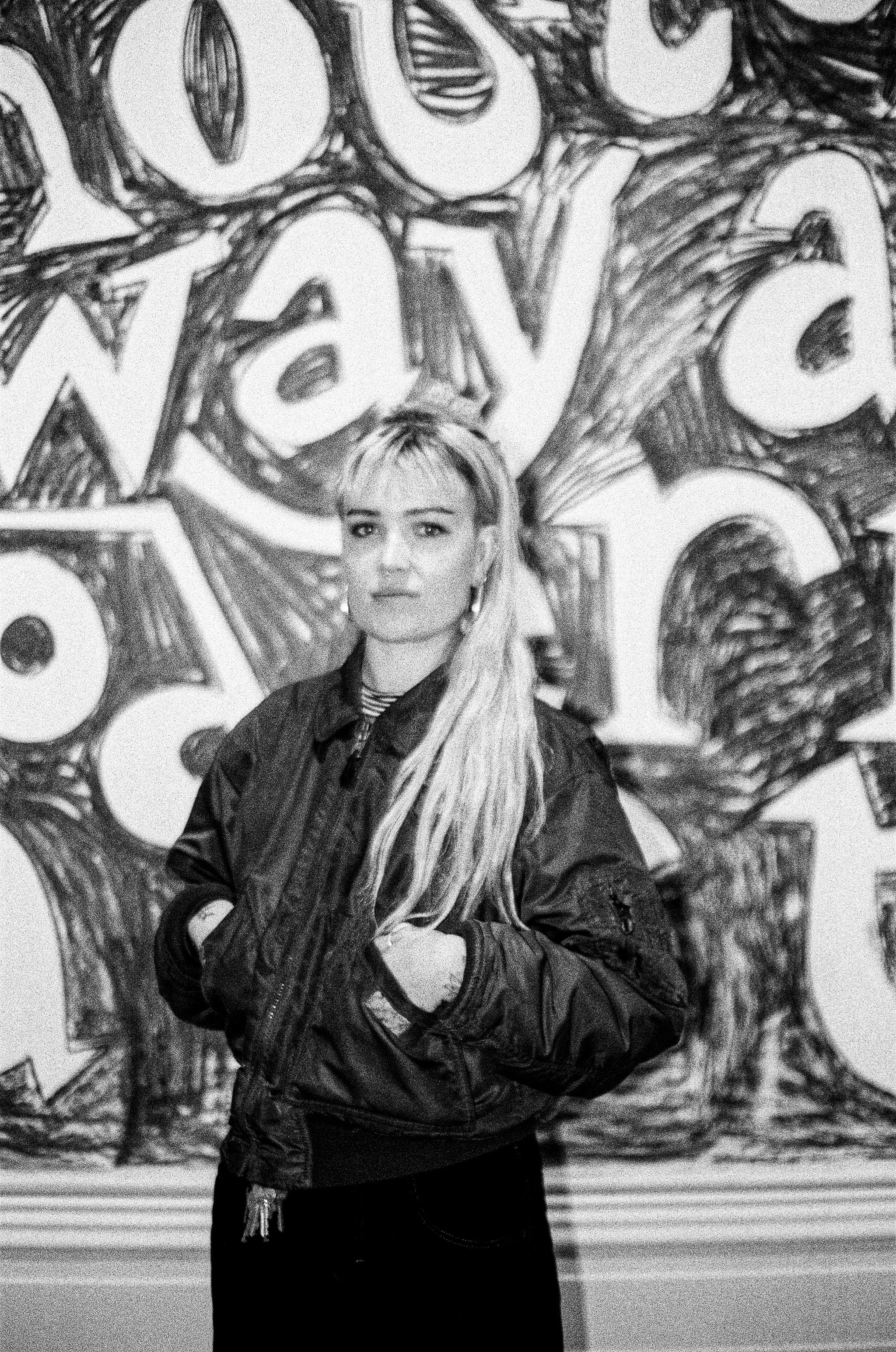
When I’m on the bus or when I’m doing the dishes or when I’m talking to someone. But then I’ll have these themes that I’m trying to grapple with”, Kate explains. The topics that Kate tries to talk about in her art are neurodivergence burnout, the way our society makes us feel that we have to constantly improve and update ourselves, as well as the disconnection that comes from that. “The way that we wear masks and pretend to be these functioning humans without actually going deeper”, she says.
I ask Kate if she ever struggles with writer’s block and she tells me: “I think because I’ve opened my mind to the idea that everything is connected, I’m kind of just writing about everything. I’m finding a story everywhere. And I genuinely think that is what an ADHD brain is for. I don’t think that it’s a defect or a disability. I think we are designed to connect the dots between things”.
A lot of the heavier poems that Kate has shared are from a place of personal experiences with the aim to not focus too much on the doom but on how she found the way through those difficult situations. “I don’t tend to write from stuff that I’m going through right now because I don’t have the privilege of perspective. And I don’t think it’s necessarily responsible sometimes to put stuff out there where someone is really, really struggling and still not reconciled and hurting. They say, with theatre, present your scars not your wounds”. That’s the ethical code that Kate has chosen for herself and her work. For Kate it is important to try and offer hope rather than focus on how devastating the world can be. “I sometimes think that some poets think that just to say these issues and to put them out there is what will galvanise us. But actually, I think that can lead to a lot of apathy”, she says.
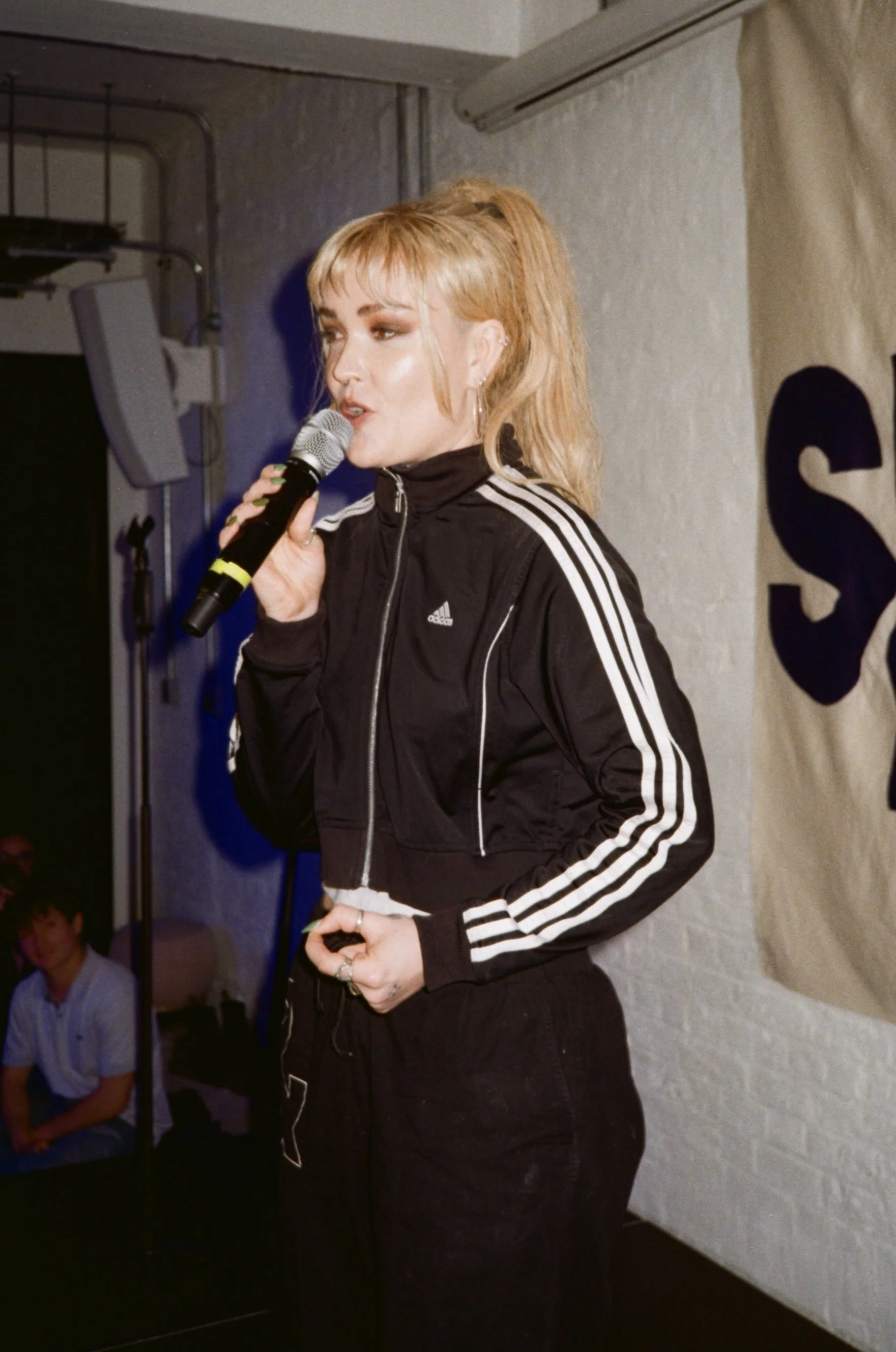
I ask Kate if she ever gets overwhelmed when she is performing emotional, more serious poems on stage in front of live audiences. She explains to me that it is doable for her to perform things she struggled with two years ago because she’s moved on from it now. Kate shares with me one experience she had where she got overwhelmed by emotions and had to leave the stage. It was a poem about Gisèle Pelicot, which she had performed for the first time in Birmingham at Verve Festival. “I had to walk off stage. I basically had a panic attack mid performance, which has never happened to me before. For some reason, I just hadn’t expected the feeling of the room. The audience felt so charged and I could hear gasps when I started talking about her. Then the poem led to the sort of insight about my own relationship to the case and I just couldn’t. That was a real learning moment of being like, I have to protect myself and know what I’m ready for”, she tells me.
Kate wants the audience to feel an emotion that is just coming through her performance rather than the way that she is feeling in the moment. “I think now I’ve realised that my main goal with performing is to give people permission and the language to feel things that they may also feel”.
Listening to her spoken words on Spotify, TikTok or Instagram, she gives her listeners exactly that. The tools to understand what you might be feeling and how to put that into words.
