
girli
In Conversation
Words By: Bee Woodley
“I wanted to take a word…that previously represented the idea of femininity as something that was silly or embarrassing and use it as an empowering thing.” - girli
Propping up alt-pop artist girli is Milly Toomey, who began by performing at open-mic nights for minimal audiences: one person, two if she was lucky. girli has been a fixture of the UK’s indie-pop scene since the 2010s. She’s known for the sapphic-regency opulence of her last album “Matriarchy”, but girli is looking to strip back in her third release “it’s just my opinion.”
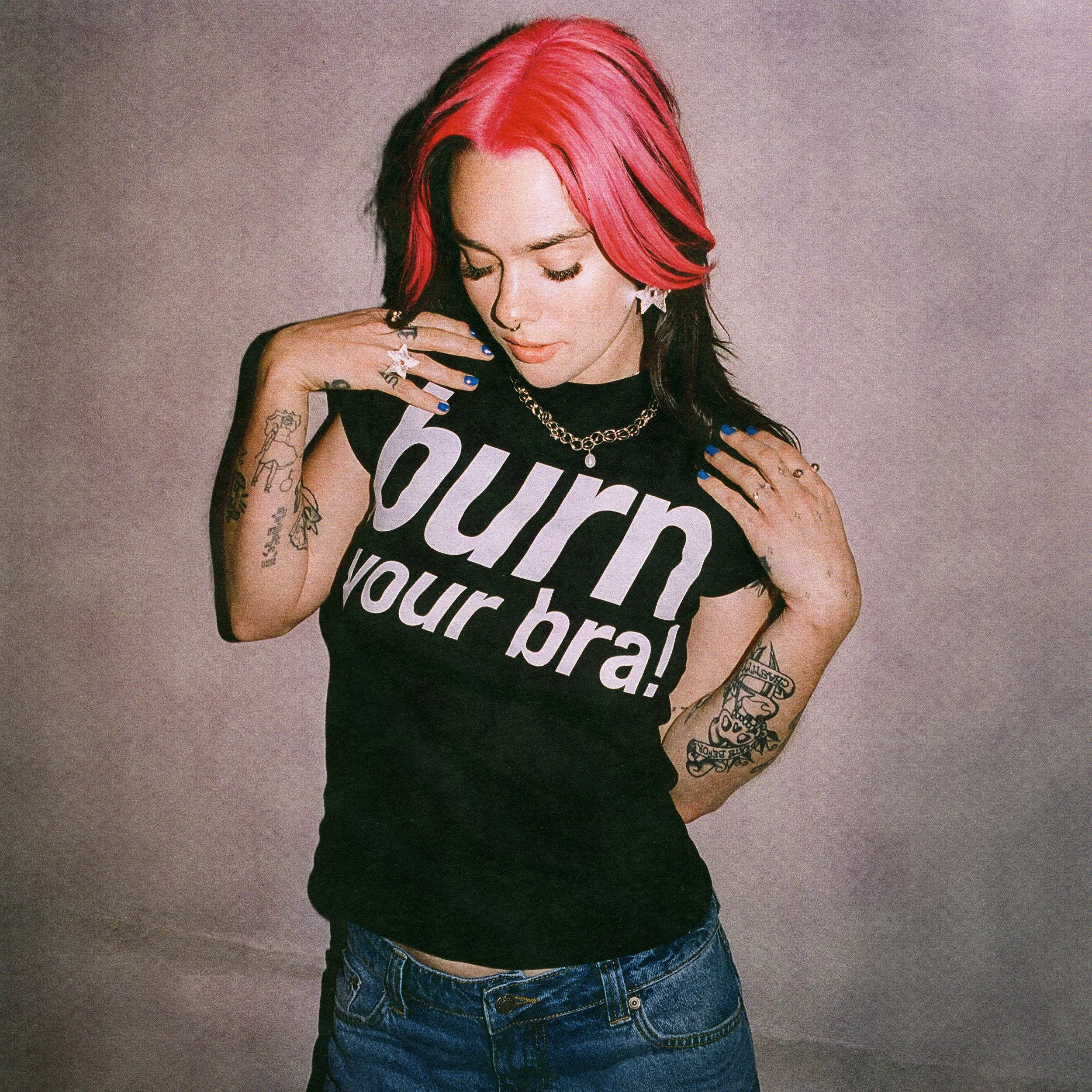
The record, due May 8th, is visually moving away from maximalism, towards a less curated slogan-t-shirt-and-jeans kind of vibe. Still, it represents girli’s long-term drive to ‘combine art with activism.’
My most memorable girli set began at 1AM in one of Latitude Festival’s woodland tents. I had made my friend stay up and we stood at the barrier. At the time I was just entering teenage-hood, and I can now look back on the importance of outspoken female voices that bolster political messaging and queer acceptance through music. Audiences savour pop music that has something to say to them. girli continues to produce this.
Original Magazine talked with girli ahead of her release, covering topics from the reclamation of the word ‘girly’, to performing at Prague Pride, to the significance of authenticity in 2026’s adapting music scene.
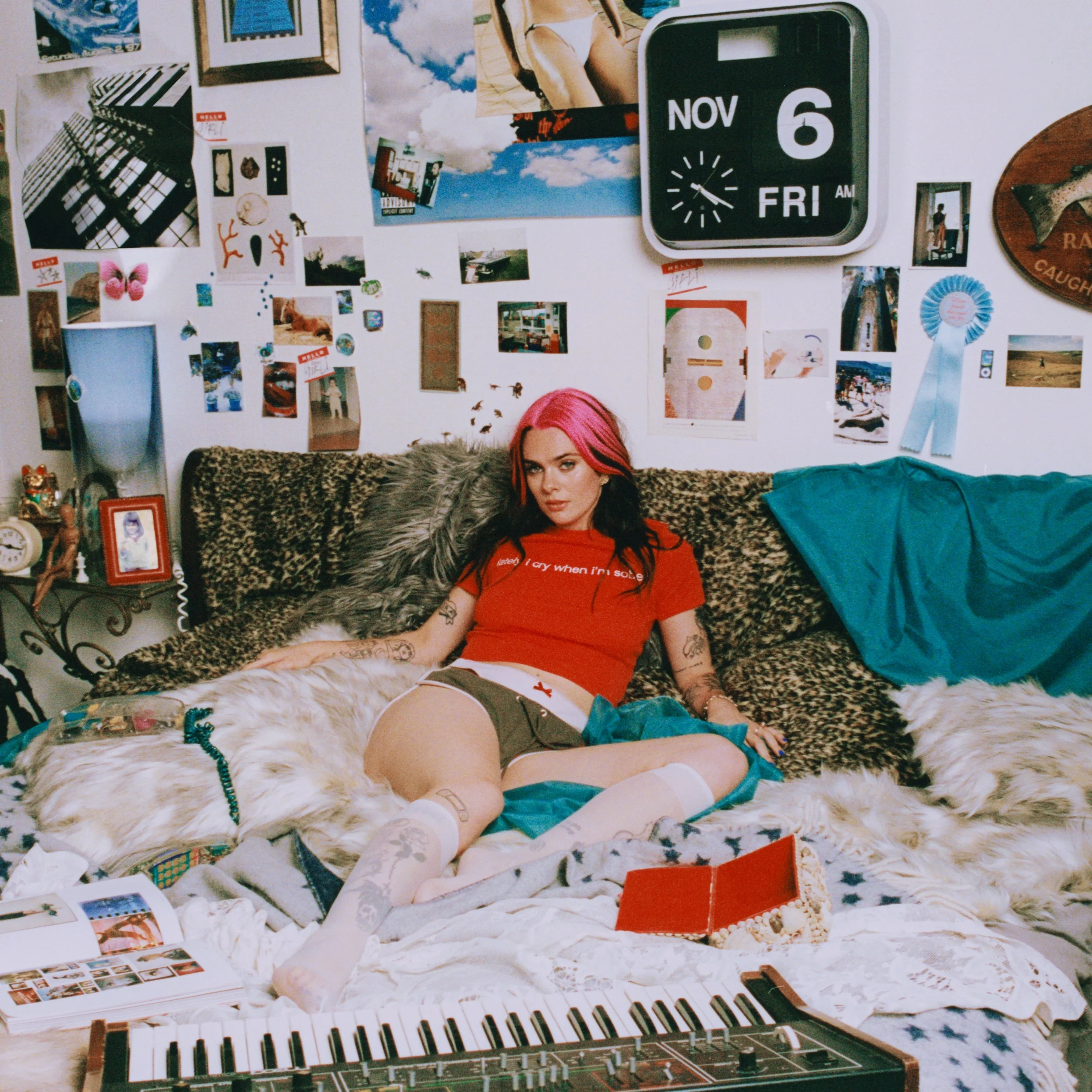
Bee: To begin, tell me about your background. I've read that you performed at open mic nights but what originally made you feel the drive to start getting into writing and performing music?
girli: My parents are actors, mostly in the theatre, and I grew up in theatres. On weekends, instead of childcare my mum would bring me and my sisters to the theatre and I just loved seeing people performing. I was really captivated by it, and for a while I wanted to be an actor because I think it’s normal for kids to want to emulate their parents. But I think when I was a teenager I realised, actually: I love the performing element but my real passion is music. I got into bands, as every teenager does. I hated school and was super angsty, and was like: ‘I need to go see some gigs.’ And then I realised: ‘Oh my gosh. Maybe I can do that!’
I’ve always loved writing stories. I mean, my favourite subject at school was English, so I think the story-writing element of songwriting and performing songs was what drew me into that form.
And yeah the open mic’s a classic. I remember the amount of open mics that I went to and played to like two people. One, two people if you were lucky; usually the host of the open mic night. That's where it started.
Bee: I feel like I've been to quite a few open mic nights where I've seen extremely extremely cool people play to minimal audiences. I’ve actually seen you play live a few times: the first in Brighton back in 2018, and also at a really, really, really late night set at Latitude Festival. Is there a particular sort of live show that you most like to perform at?
girli: I do love festivals. Festivals are so fun because you never know what to expect, but people are usually really down for a good time. I love pride, because just… the gays go so hard. I love that so much. I think the most memorable shows I've done have been at gay prides.
I really remember playing on the main stage of Prague Pride, and, oh my gosh, Eastern European fans just go off. I just love their energy. They're so amazing, and I think, especially because, LGBTQ+ rights in Eastern Europe, Czech Republic, and Poland are really...
they're really still fighting for so much out there, pride just feels that much more special to them. Being able to be a part of that and to perform for those crowds was so, so fun; so memorable.
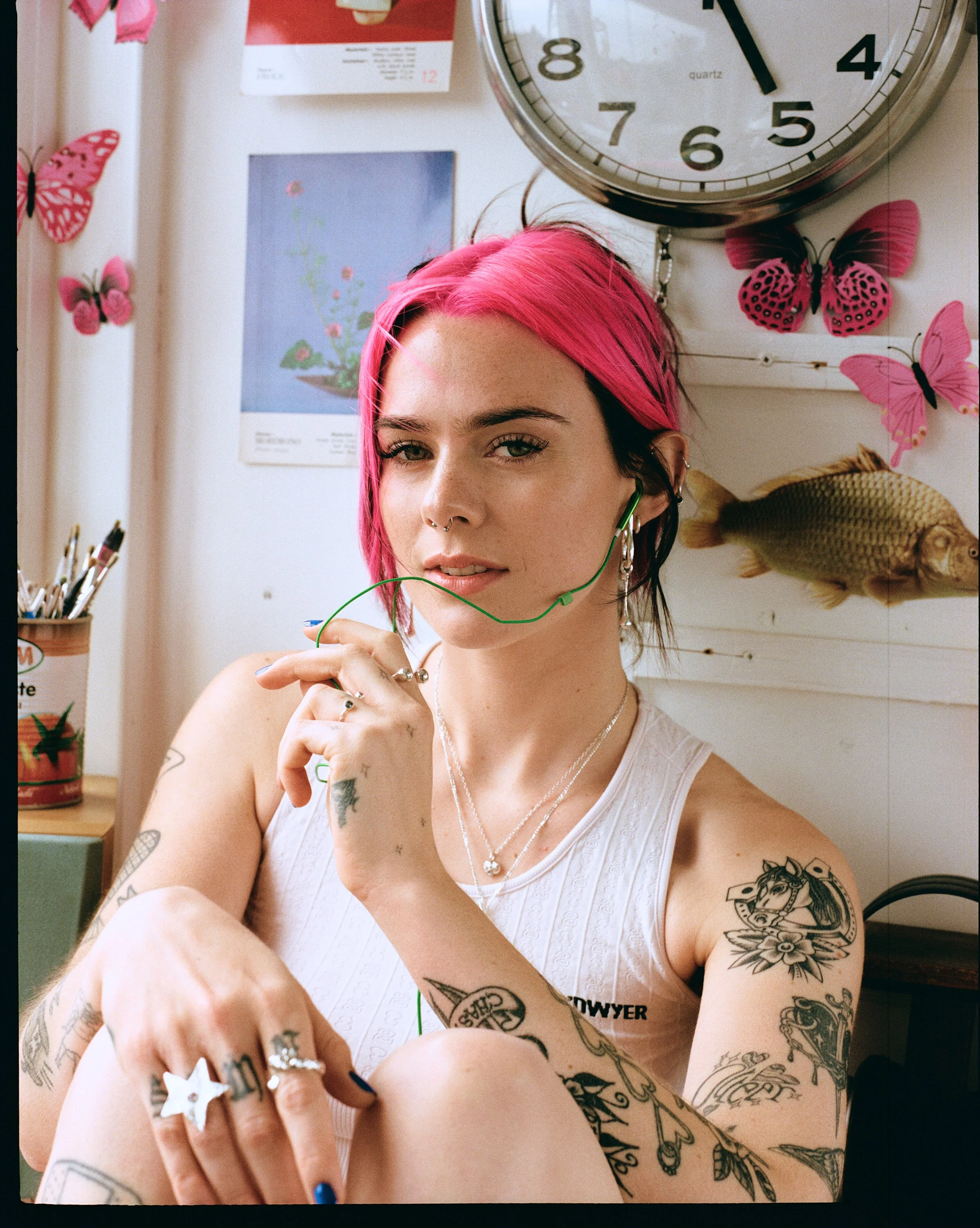
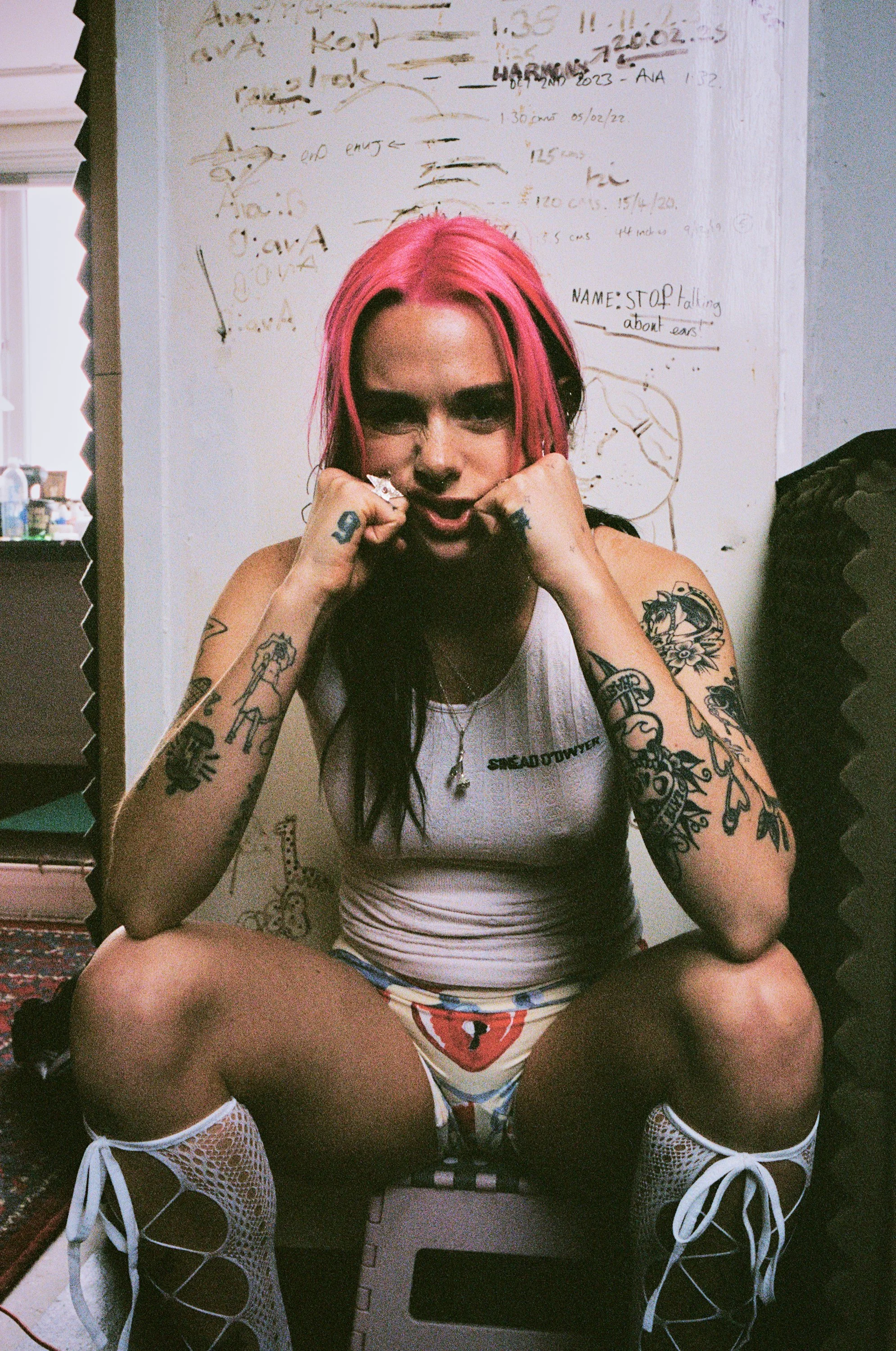
Bee: Throughout your songwriting would you say there were any particular repeated inspirations. This could be artists, memories, or more political motivations?
girli: Sonically, it's always changing. The artists that inspire me are never the same, but I would say definitely the drive to combine art with activism has kind of always been there, not with every song, but every project, there's been an element of that running through it: trying to translate feelings of anger and frustration into pop music.
On this album, the songs that are more political actually have a little bit more of a rock-leaning sound, which is really new for me. But in the past, it was kind of: ‘Okay, how do I translate these really angry feelings into something that has a pop sensibility that makes sense.’
Bee: Your album, “it’s just my opinion” is being released soon. How would you describe it in three or four words?
girli: Well, I'd say my new tagline is ‘I make opinionated pop music’, which makes sense 'cause the album's called, “it's just my opinion.” if I were to describe it in four words, it would probably be: opinionated. Eclectic. Sonically, I feel like there's something for everyone on there. I would say relatable and vulnerable as well.
Bee: How would you say that “it's just my opinion” is different to your past projects? You’ve told me you're leaning more into a rock sound, but sonically, would you say that it's significantly changing, and if so how?
girli: I've definitely leant into more of an indie-rock kind of vibe. My favourite genre growing up was indie and just missed indie sleeze. I definitely wasn't hands-on in 2013; 2014 when I was going to loads of indie gigs. It was really having a moment in the UK, and I feel like a lot of those sonics are coming back to me. I'm like: ‘Oh, wait, I want to make music that I first fell in love with when I was 14 or whatever!’ And, yeah [“it’s my opinion”] has a bit more of an indie rock kind of ‘punkier’ sound for some songs.
But I think the main difference has been in trying to strip back the layers of performance. My last album, “Matriarchy” was all about performance and big costumes and a kind of alter ego. All of my shows were this sapphic-regency vibe, so the whole thing was very curated. With this album visually, and then I think that bled into how I approached making the songs, I wanted it to be a lot more true to who I am day-to-day, and, I guess, a lot more authentic. I was blogging the whole process of writing it, and I've been blogging the whole process of putting it out, and promoting it.
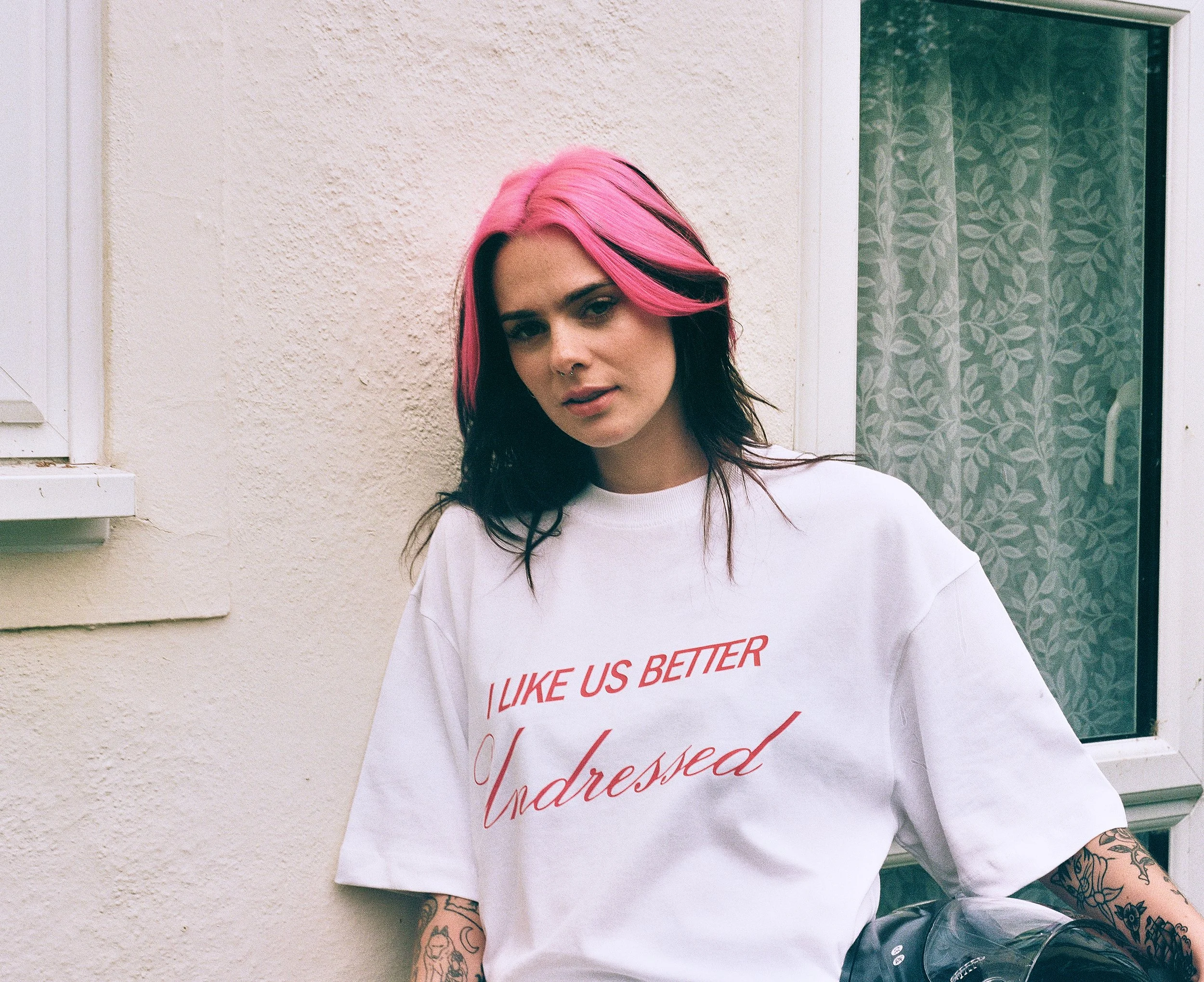
I think, in the visuals as well, a big thing that came up and tied together with the album being called, “it's just my opinion: was this idea of: ‘Oh, my God, I love performing in a t-shirt and jeans. How can I do this? I should wear slogan t-shirts. I should wear political t-shirts.” It kind of just became a thing. I would never have worn a t-shirt in the “Matriarchy” era. It was very much corsets and big dresses.
Bee: Lots of the tracks on “Matriarchy” focus on sapphicness or queerness. What would you say the role of queerness is in “it's just my opinion”?
girli: There's definitely a few songs that are really centred around the queer experience. There's a song called “lifestyle”, that I'm really excited for people to hear, that is about a true story of being in a relationship with someone who's not comfortable in their sexuality, and how that makes you feel. And, you know, the idea that people describe queerness as being a ‘lifestyle choice’ a lot of the time which I think is... bullshit. I think a ‘lifestyle choice’ is, like, ‘I might go to yoga today or tomorrow.’ Being queer is part of your identity and is not a lifestyle thing. I'm really excited for that song and I really wanted that to be a focus.
Then there's a lot of relationship songs on [“it’s just my opinion”] that are about queer relationships. In general, with how political and opinionated I am online and in the things I share that aren't music related, it all ties back to the queer experience and feminism. They’re things that I also write about in my songs so they will always be interconnected in that way.
Bee: I admire politics within music. In terms of identity, you obviously have a super distinct visual aesthetic and even a song called ‘Pink.’ I wanted to ask you: Why pink?
girli: The choice of the word ‘girli’ as the stage name and the choice of the colour pink both had really similar connotations. I wanted to find something that represented femininity, and things that are surrounded by societal baggage. The colour pink has gone back and forth as this super-gendered colour. It used to be a ‘boy's colour’, and now, it's a ‘girl's colour.’ It’s been linked to the way in which we mock and belittle femininity. If something is described as being ‘girly’, that word almost could be swapped out with ‘weak’ or ‘flimsy’ or ‘silly.’ I think that's such a telltale sign of the way in which misogyny is just pervasive in our language.
I wanted to take a word and a colour that previously represented the idea of femininity as something that was silly or embarrassing, and use it as an empowering thing. I saw that Debbie Harry had called Blondie, that name because she was always having people, mostly creepy men on the streets of New York, call her Blondie because she had blonde hair. She took this word that was used to belittle and objectify her and made it her stage name, which I just loved.
Bee: Now that AI tools seem to be used by an increasing number of artists in the music industry, do you feel like the role of DIY in music or self-production is changing or becoming more valuable?
girli: It could be that I'm just in a bubble of people who hate AI, but I felt like a lot of people recognise that using AI just defeats the point of being an artist. I think fans can also really tell when AI has been used. I think the DIY spirit will always, always remain.
It will always remain the coolest thing because people can see through inauthenticity, and AI is the definition of fake and inauthentic. People really want the real thing.
Bee: Finally, aside from “it's just my opinion” coming out’ what does the future hold for girli? Do you have long term goals or plans?
girli: Honestly, my goal is just to keep making music and touring. I feel so grateful that that's my life and that I can do that and that I'm on my third album. I hope one day I'll be announcing my tenth album and still be going strong. I just love creating and I love playing shows; connecting with fans who've been around the whole time and new fans. I think that's the main goal.
In the shorter term it’s going back to loads of different countries that I've toured in. I'm going back to America in June. I want to go back to Australia.
Three albums in, it is clear that girli’s discography represents something Gen-Z audiences do not take for granted: an artist getting louder rather than quieter. Original looks forward to hearing how this manifests in ‘it’s just my opinion.’
