LP
In Conversation…
Interview By: Michael Morgan
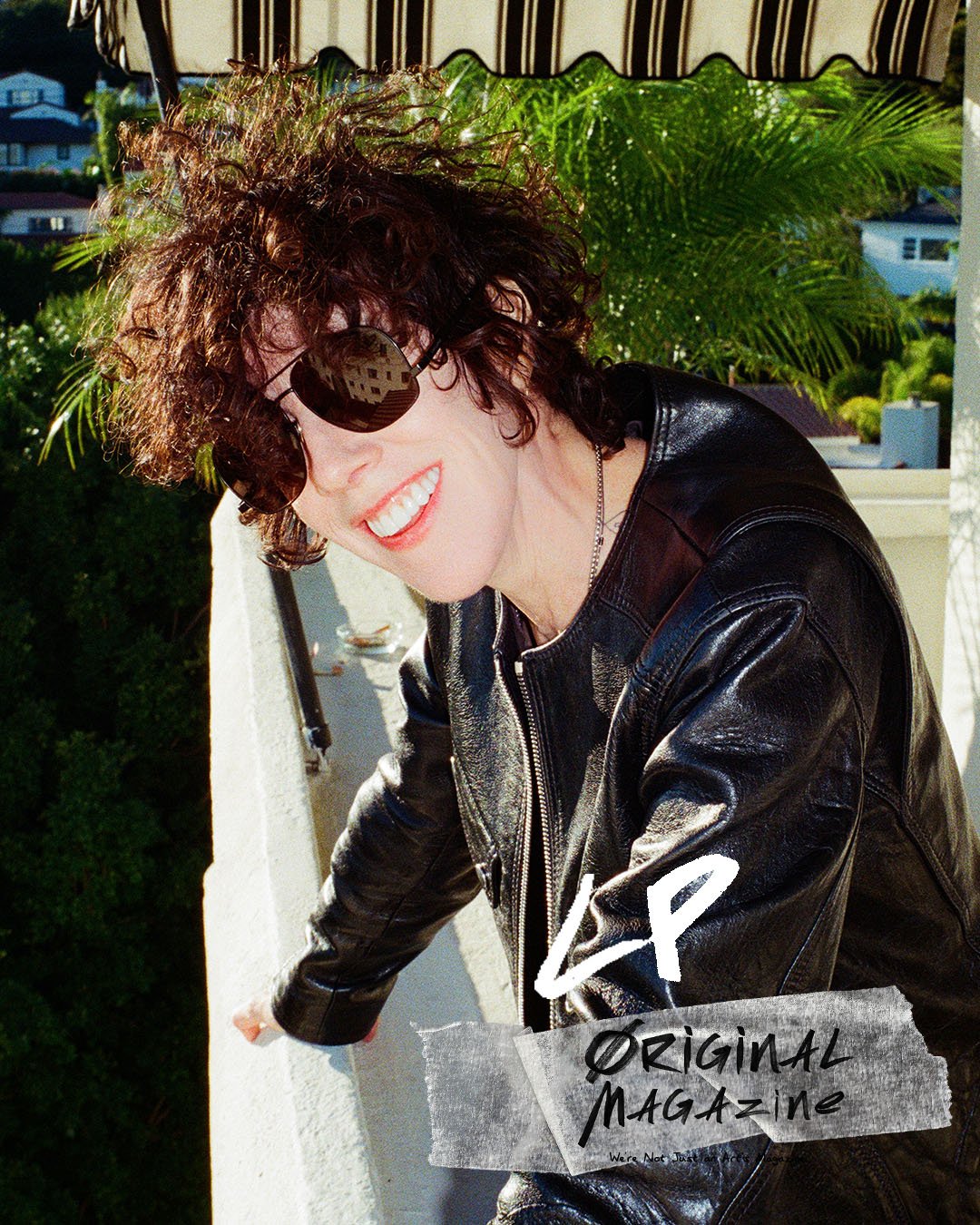
LP became a global phenomenon in 2017 with the song “Lost On You,” which reached #1 in 18 countries and surpassed 1 billion Spotify streams. Since then, they have amassed more than 3 billion streams across platforms and performed to sold-out crowds in more than 150 cities around the world. LP now has over 9 million monthly listeners on Spotify alone. Today, LP’s music reaches over 1M daily streams worldwide, with 2M+ daily YouTube views and 2m followers on Instagram. And, though their captivating and explosive performances enthrall audiences of all cultures, languages, and backgrounds, songwriting remains the core of LP’s artistic expression.
“Songwriting is a way for me to go to the centre of my own world and find the originality I needed to get for myself.”
Original: You’ve previously stated that the name Room 12 references the sanctuary of hotel rooms and all that can come from these temporary spaces you visit while travelling. Exactly how much of the material in this project was developed while you were on the road?
LP: Not much of it, I don't really know. I'm referring more to the fact, there's experiences, states of mind. When I'm traveling, when I'm touring, I don't write that much, I collect. I am alone so I'm thinking deeply about life and things like that and I'm jotting stuff down. But I don't really unless I rent a house when I want to make my actual music. I'm talking about these long dark nights of the soul sometimes. And different places I'm at in these rooms, who I'm with in my life, my friends, what's going on in my personal life? Things like this, you know there's many different ranges. But I feel like a room is a mood, that's what I'm correlating, songs as rooms, like when you go into a song and listen, that's where you are, you're in a place to me.
Original: Do you think these spaces offered you something you couldn’t have found in one permanent location?
LP: I think I could have found them anywhere. But yes I enjoyed the metaphor of them being separate rooms in hotels.
Original: You’ve spent years writing songs that other people have used to form their musical identities. On Room 12, do you feel more protective of the songs, especially as there’s no distance between the writer and the person performing them?
LP: I don't have protective feelings for songs, I feel like I was writing a record just for me as an artist so that did not come into it. When I write songs for other people, I write songs for other people. Sometimes if they do not get cut I'll think of them for myself or I’ll consider making them into songs for myself but not often. I feel free when I write songs. I was working on a new record because I'm quite capable of singing them, so I decided to write some songs as an artist because that's what I do.
Original: “Lost on You” has now passed a billion Spotify streams (congratulations!). Has the meaning of the song changed for you personally now millions of strangers have effectively written their own stories into it?
LP: No, the meaning of the songs has not changed, it hasn't changed for me. I wrote that song for something that still is that, I just kind of lean into people's reception of the song. And it feels good, I want it to be whatever it is for them, that's what I want. It's to honour their feeling of the song, to sing it with heart and emotion that can lend itself universally to how people receive songs.
Original: You were already an accomplished songwriter before the world really knew LP the performer. Looking back, is there anything you understand differently about fame now that you couldn't have understood when “Lost on You” exploded?
LP: I think I understand privacy even more. You know when you get into this and you unload your very personal life into the world and on people you don't necessarily count on them after they buy into your story of them countering with their opinion on how you should conduct yourself further. I, of course, am a sharer, I love to share things with people through art and expression. And so I wanted that, but you know as soon as it gets into the air of my personal life and who and what, and how I conduct myself, then yes that kind of stuff is kind of off limits. And you know, I think everyone kind of gets adjusted to things like that. Some stuff is for you and some stuff is just not for everybody to weigh in on.
Original: Does having one song become that enormous create a strange responsibility when you're writing the next album to either live up to it or deliberately escape it?
LP: I don't know if I deliberately escaped it, but I definitely don't write to please that angle. To try to recreate a success that I've had already. I am interested in more songs and more ideas, and more experiences that I've had. I think it's inauthentic for me to bang out things that are similar. And I think that people can hear that. And whether or not they stay with me to see what I do, because also I think people set you up for that. They're like “um, oh why can't you do what you did, but I don't want it to sound the same.” So it’s a kind of sometimes a no win situation, but the win is and always has to be your truth. So I just try and tell my truth with each album through the songs. And I welcome whatever the reaction is. I have to, it’s a part of the game.
Original: You open the current set with an acoustic “Chasing & Waiting” and later return to the full version. What are you trying to reveal by letting the audience hear the same song in two different emotional states?
LP: I don't know but it's been making me feel like it's a symbol of the cycle of things. Room 12, number 12, it's about cycles, about completion. And I don't think I did that on purpose with this bookend, but it's been feeling like that now. You know we might change it up at some point. Maybe when we go on a Europe tour next, but I discussed it with my musical director and he thought it was a cool idea, and the idea of chasing and waiting. You know running through it twice felt good. I think it gives the audience a chance to hear some new songs and have a moment of “Oh I've heard this before” and they have, at the beginning of the set : )
Original: The recent Vancouver show was described as moving between vulnerability, power and rock-and-roll energy. Which of those three states is actually hardest for you to reach onstage?
LP: None of them, I am a dynamic performer and person. I can run the gamut of emotions in a day. Internally or externally, It's something I had to learn to control and understand. But on stage I feel a tornado of emotions, even my quote and quote androgyny or masculine or feminine vibes are all swirling in there together too. I am often intrigued and surprised at where it comes out, and I just sort of let it rip. They're not hard, just surprising sometimes and there's a certain energy to it all. I feel there's a sense of when I get onto stage, it’s a prepared show but not a prepared emotional set point. I hit the stage and kind of gauge the energy in front of me and the room and what it feels like. And then there's been times in the beginning of a show that I feel shy, and you know trepidatious to show my full colours and then sometimes I just let it all out and its kind of exciting for me and I can see that it is for the audience.
Original: After hundreds of shows, what can still genuinely surprise you onstage?
LP: I think what I was just talking about surprises me. I think the newness of it surprises me. That's why I love doing this and this is why I still do it. Because it hasn't been written to me. It's still fun and surprising and a beautiful communing of myself and other people. I feel like I take it very seriously that people spend their money and time to come see me. There's so many things that they can be doing, seeing, and saving for, and it's a big deal. It always surprises me to see all of the people. And to see that these songs, my new and old ones means something to them.
Original: A lot of artists spend their careers trying to make the audience understand them. Your music seems to do almost the opposite it gives people enough emotional detail to project themselves into it. Do you think the real art of songwriting is knowing what not to explain?
LP: I mean yeah, that doesn't come into the equation. The trying to understand me. I am trying in my own way to commiserate. That's a key word that I use often in describing what I am looking for as a connection between my audience and myself. I just feel like it’s like talking to a friend, that's how I feel the audience is. The vulnerability of being like “I really loved you” and that hurt. And I'll get past it, the hope of everything, it's like a collective hope feeling that I often have. A pep talk to a friend if you will. I don't know I'm doing it but often I am. I don't know what not to explain, it's such a subliminal thing that might not be caught even by myself when I'm writing, but I mean yeah for sure. The best songs that I love of other artists , and I think that's why just some songs even with simple lyrics, you know those songs that just make you feel something and you're like “what exactly is this person saying?” Like they say something so profound in its simplicity, in what it makes you feel, that's what I think people go nuts for. It’s very exciting in a song. I think that its a very difficult thing to try to think of too much in a song. I think If you over think it you've immediately lost that possibility. Thats what i think people talk about when they’re like ‘oh they're channeling in the room” or I call it that or like the openness or the reception of the it factor, the source factor, the god factor, whatever it is you believe in.