
I AM THE PRIZE
The Cost of the Manosphere
Writer: Carolina Fernandez Bold
Red pill ideology and the language of online misogyny have steadily migrated from digital subcultures into the mainstream, increasingly scrutinised in work such as Louis Theroux’s Into the Manosphere and Jack Thorne and Stephen Graham’s 2025 series Adolescence. It is into this cultural moment that Oscar-longlisted writer-director Sai Karan Talwar’s I AM THE PRIZE arrives, turning its focus on the performance of masculinity as a sellable identity, and the consequences that performance carries. Premiering at BAFTA Piccadilly ahead of its international festival run, I AM THE PRIZE follows masculinity and life coach Anthony Selvon (played by Russell Tovey) as his influence, and carefully constructed image, begin to unravel at the height of a self-help lecture tour.
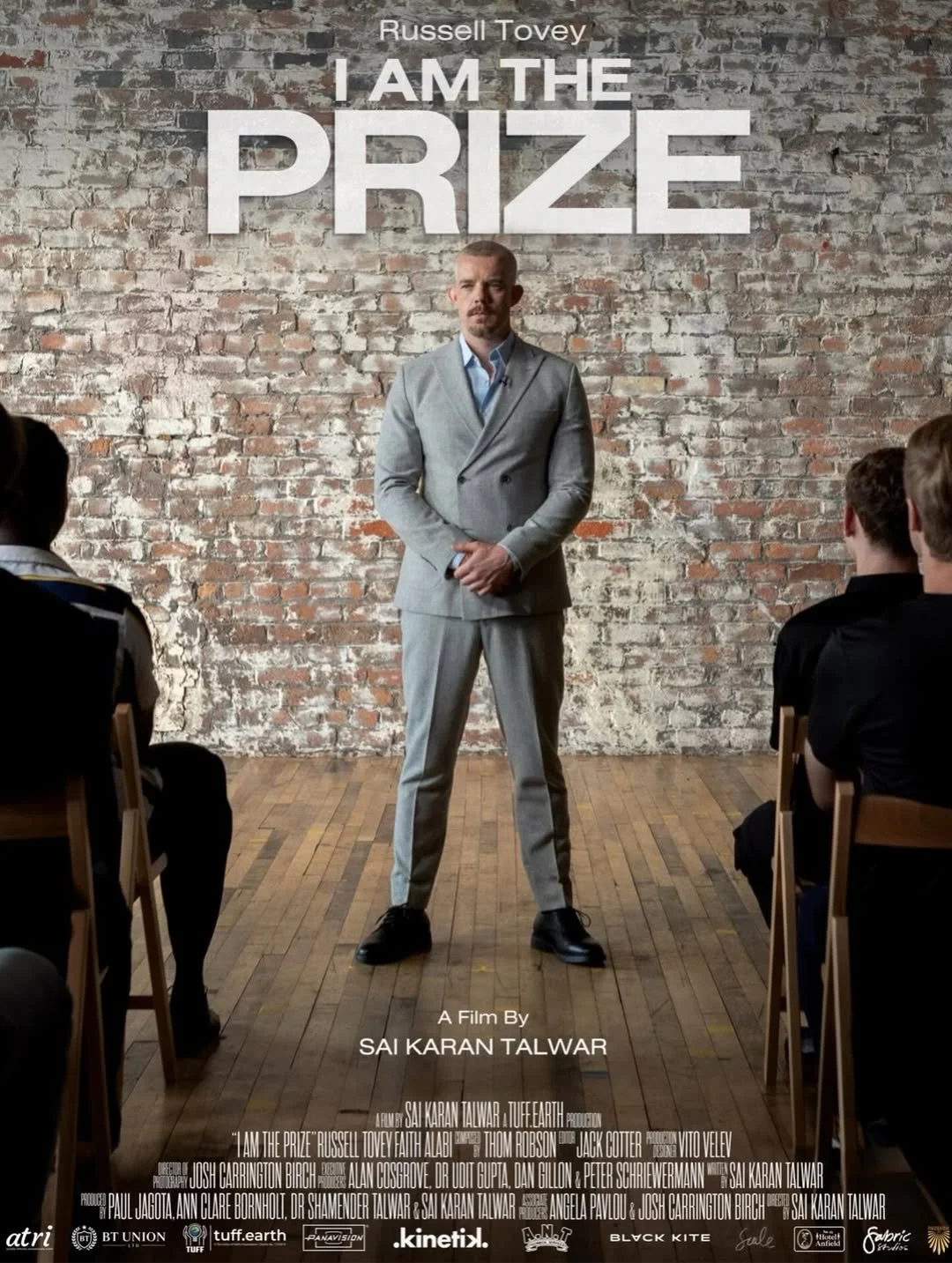
The short film immediately situates us within Anthony’s authority. We open on a scene of him addressing a congregation of silent, listening men; only their backs of their heads visible as the camera encroachingly pushes forward, drawing us closer to him. Anthony stands against an exposed brick wall; the setting seeming to want to suggest something unvarnished authentic, even. He monologues for five minutes, captivating in the confidence of his delivery, and yet … he’s mostly saying a whole load of nothing. Soundbites pose as wisdom but dissolve under scrutiny. Note taking is educational bulimia sticks as a particularly memorable phrase; in its sheer absurdity, it’s almost funny.
But as Anthony reaches the lecture’s main theme — women and the art of seduction — any edge of humour falls completely away. His words don’t have to be truthful to be harmful; they just have to be believed. His language becomes dehumanising as women are reduced to a crude pseudo-psychology, flattened into something to be managed and won. His explicit rejection of the “Mr Nice Guy” archetype, framed as confidence and self-improvement remedy, instead slides into a mindset that permits tactics of manipulation.
“I wanted to find a stillness in him that was like a shark,” reflects Russel Tovey, speaking in the post-screening Q&A alongside Sai Karan Talwar. It’s an apt description that speaks particularly to the calculated intelligence that co-exists within the monologue. Among the seeming nonsense, there are moments of genuine insight, such as when Anthony identifies with precision the reason that these men are all sat before him:
“You are all profoundly lonely.”
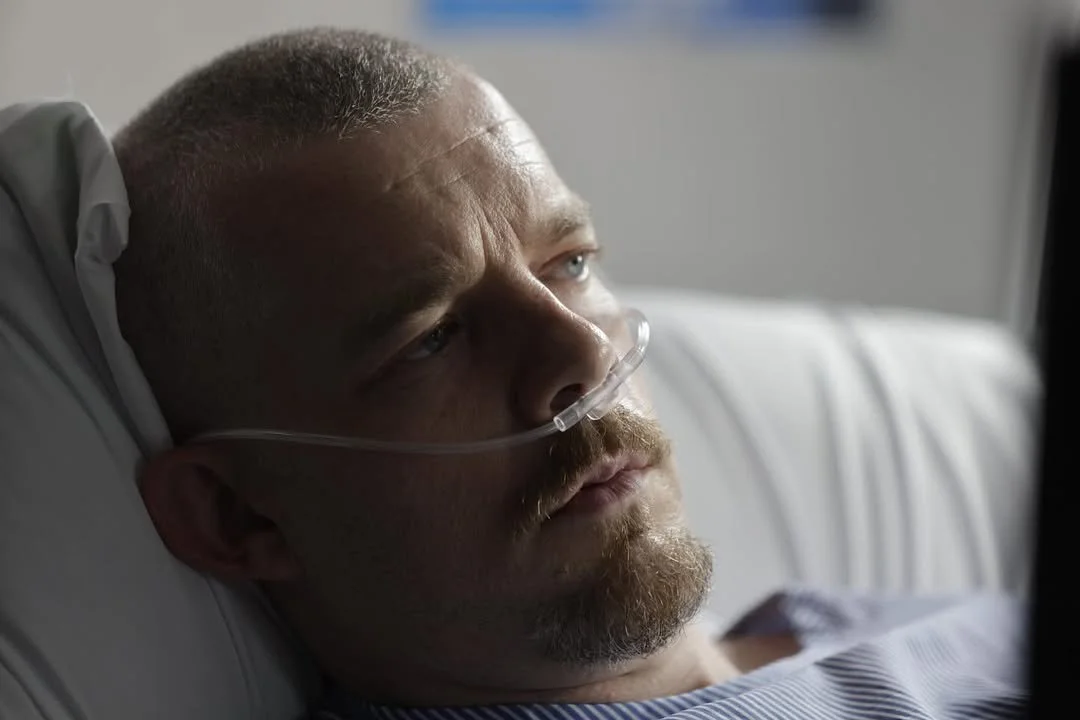
Speaking on the predatory instinct of figures like Anthony, Russell Tovey notes that his character knows that he is “preying on very vulnerable men.” In the ideology of the manosphere, the male loneliness epidemic, as it’s come to be known, is soothingly acknowledged but never meaningfully addressed. Of course it isn’t. Because the conditions that produce it where men are made to feel that vulnerability is weakness and that emotions shouldn’t be discussed are the very source of power for figures like Anthony.
Instead, in a predictable sleight of hand, that sense of grievance is redirected towards women. The contradictory attitude towards women within manosphere rhetoric is perhaps most clearly exposed in one of Anthony’s past remarks, raised later in the film: “Men should put women on a pedestal, because it’ll be easier to look up their skirts.” Women are to be desired, but not respected. To be seemingly elevated and then objectified in the same breath.
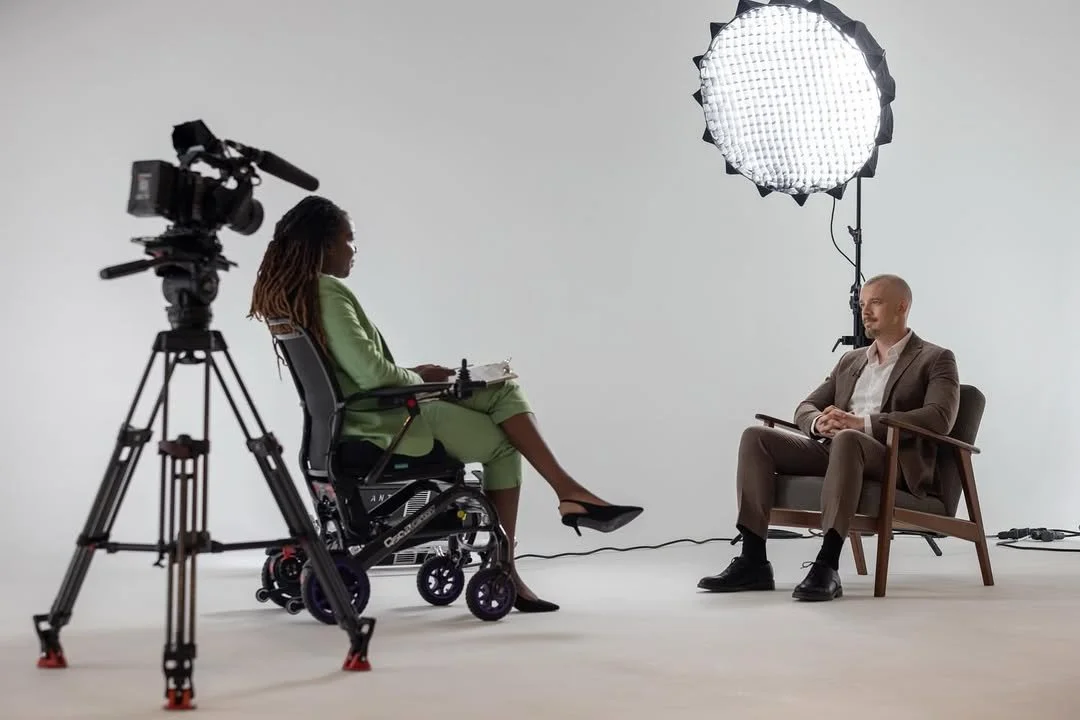
That remark resurfaces during a televised interview, where a journalist (played by Faith Alabi) confronts Anthony directly. When challenged on the dangers of his teachings, he remains composed; fluent in media-trained deflection. That is, until the journalist raises something personal: his involvement with a male sex worker, brought to light following a recent health incident. Against the harsh, bright white of the soundstage, Anthony is left exposed. He can’t regain control of the narrative, can’t even bring himself to confirm or deny it. He walks out of the interview.
Which leads us to the short’s concluding scene: Anthony, in that same lecture room, stood against that exposed brick wall, but now facing rows of entirely empty chairs. His disciplines proved fickle. He lights a cigarette, against a doctor’s explicit medical advice. A final image of downfall and complicit self-destruction.
I AM THE PRIZE is an intense and captivating eighteen minutes. I left the theatre wanting more and part of that is due to the sharpness of the writing and the strength of the performances. But another part is the sense of a crucial omission.
The poison at the heart of the manosphere is misogyny, yet, in this film its main victim is the man who perpetuates and profits from it. It’s hard to muster much sympathy for him or even for the men who sit in those seminar chairs, themselves exploited in their loneliness and insecurities. What I AM THE PRIZE captures so well is the hollowness of this performance of masculinity. But it has yet to fully confront its cost, because in the real world, the overwhelming victims of their rhetoric and ideology are women.
Perhaps I’m weary, even a little resentful, of the strain of feminism that has to be translated into male impact in order to be heard. The patriarchy hurts men too! feminism. It feels necessary, but nonetheless, still kind of exhausting. Especially when, violence against women and girls has reached epidemic levels across the globe. In England and Wales, it accounts for a fifth of all reported crime, affecting one in twelve women and girls each year. Stalking, sexual assault, domestic abuse and femicide remain persistent problems, meanwhile new forms of violence are evolving in step with the digital age, such as AI-generated undressing content, and the subjection of women and girls to deepfake pornographic depictions.
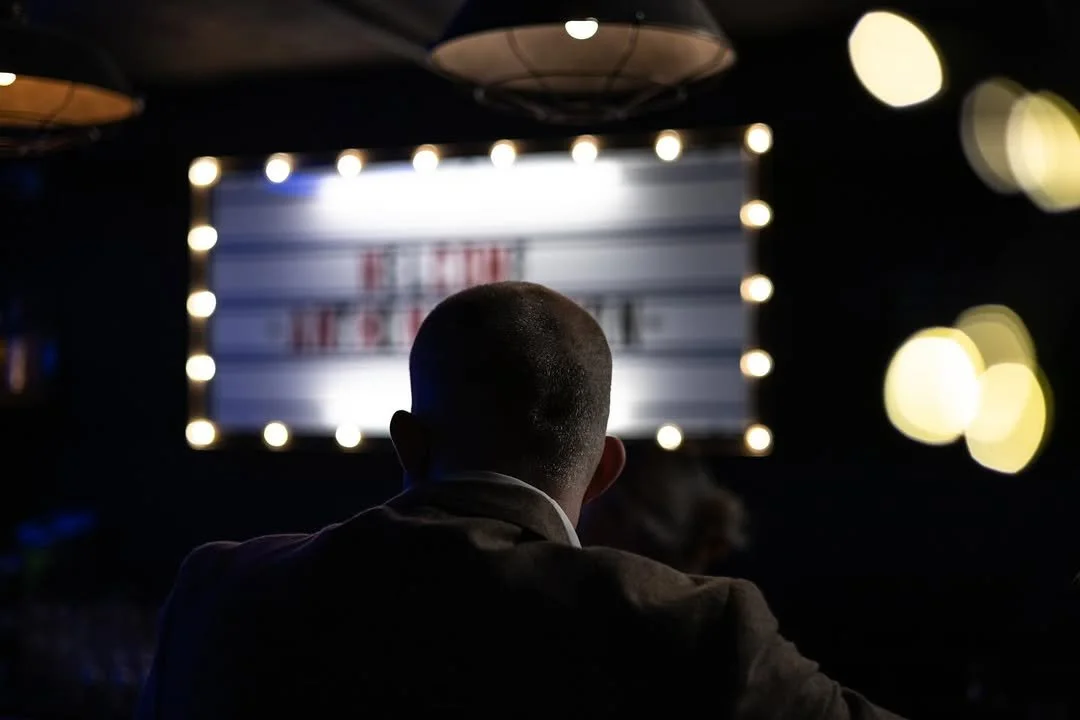
The supposed men’s empowerment and self-help angle with which Anthony frames his teachings on how to treat and pursue women is part of a larger, increasingly pervasive manosphere ecosystem. That language of entitlement, objectification and manipulation is intrinsically linked and worsens the epidemic of violence against women and girls. Indeed, this becomes strikingly apparent when we consider that perhaps the most notorious figure in the manosphere, Andrew Tate, currently faces multiple ongoing criminal allegations of human trafficking, rape and sexual exploitation.
In the post-screening Q&A, Sai Karan Talwar reveals his future aim of developing I AM THE PRIZE into a feature-length work, and potentially returning to an earlier iteration of the story that featured an ensemble cast, with Anthony positioned as one thread within a broader narrative. I would be extremely interested to see what a longer form of this story might allow the film to explore, that in version remains out of frame. I’d also be particularly keen to see if more contemporary version of masculinity coaches might be incorporated amongst this ensemble, such as the influencers who dominate algorithms and the inside of teenage boys’ bedrooms, alongside those figures who operate through an older style of in-person talks and published books.
In the meantime, I AM THE PRIZE stands as an urgent and important contribution to an ongoing conversation around contemporary masculinity and the limits of self-help rhetoric, and the fragile facade of authority behind such figures.
