
Dream Logic | The Art of Dreams
Writer: Taran Will
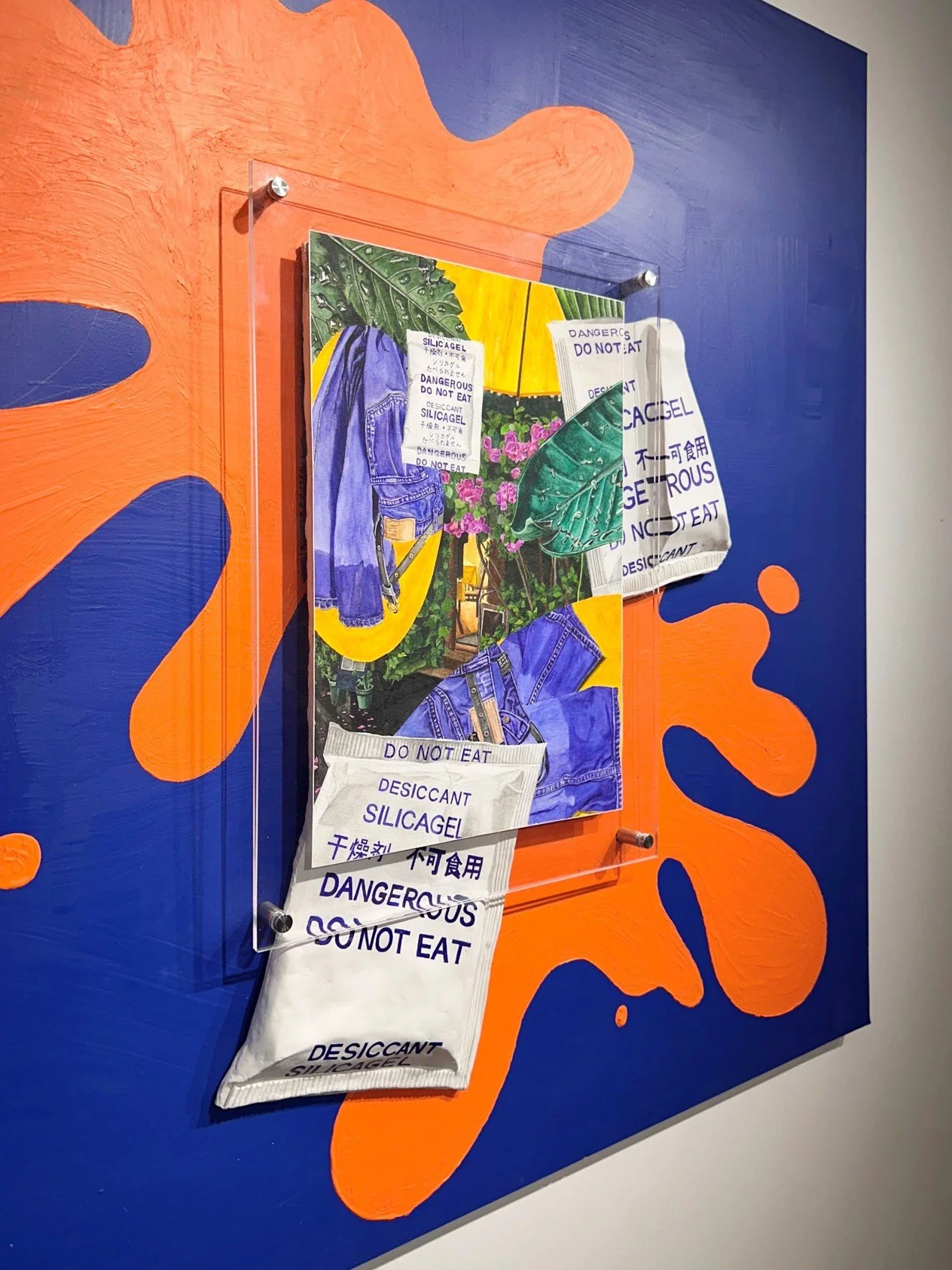
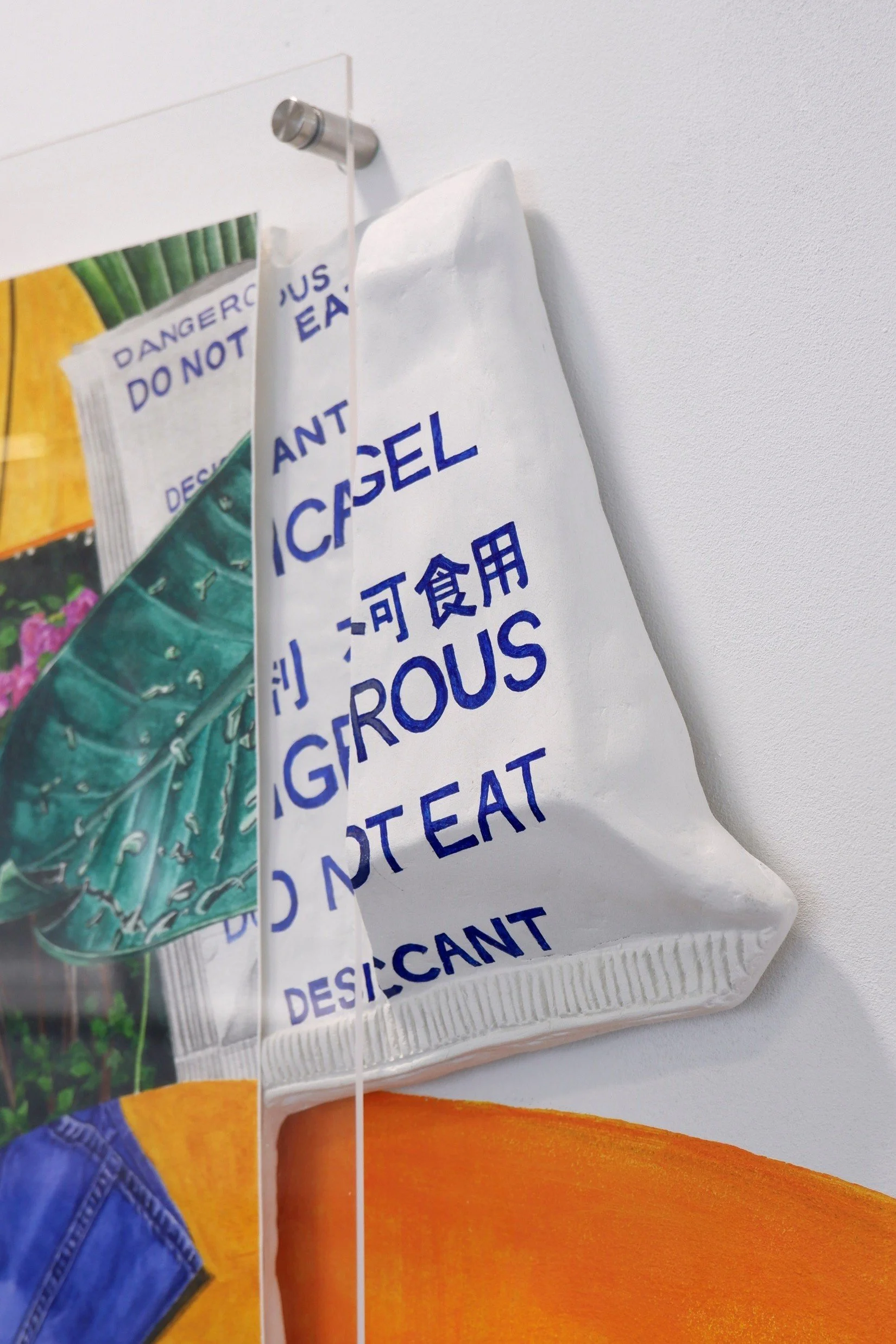
In Xiaoze Zhang’s paintings, the surreal motifs of her dreams often appear in freefalling cascades, where memory and nostalgia collide with popular culture and the realities of global overconsumption. Mirroring the porous boundary between awoken consciousness and subconscious dream states, her works spill beyond the canvas into perception-distorting spatial encounters, confronting audiences with painted elements that extend into sculptural forms, objects and installations in 3-D space.
Born in Shenyang, China, Zhang first moved to the UK five years ago to study fine art in Glasgow and now resides in London. During this time, she has also exhibited her work across London, Paris, Glasgow and China. With a background in animation situating her work in the realm of characters and narrative storytelling, a pivotal moment in her artistic journey was her transition to an exclusively physical media-based practice connecting watercolour easel painting, wall painting and sculpture.
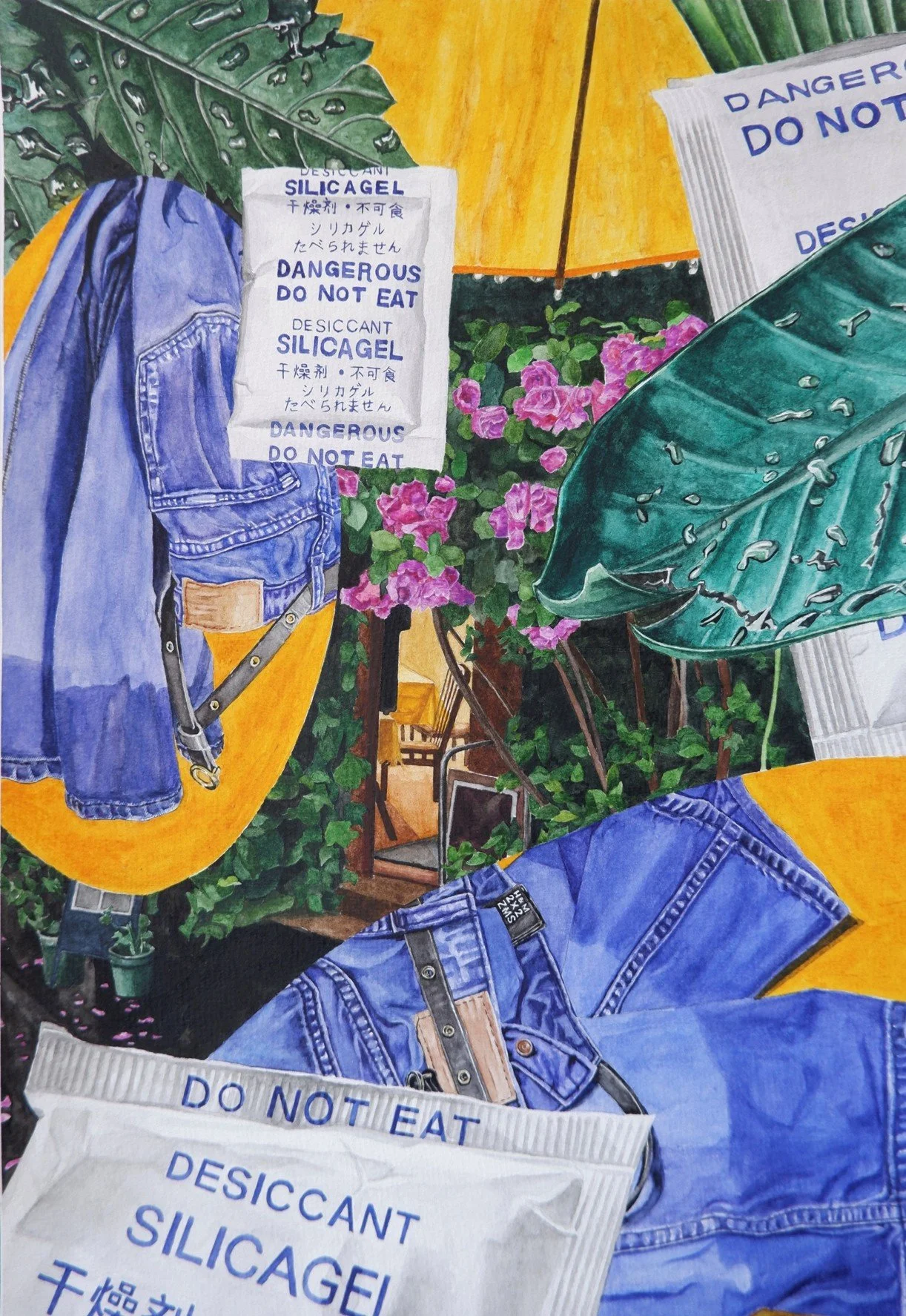
Any concepts of linear storytelling were shattered as Zhang embraced a style of hand-painted collage where audience’s eyes wander through a non-linear narrative of objects dotted across – and stretching beyond – the canvas. ‘Desiccant vs. Rain’ (2025) features yolky ellipses behind part-soaked jeans and packets of silica gel desiccant, all nestled between rain-splattered leaves and flowers surrounding an open doorway. Audience interpretations are intentionally varied: the intersection of capitalist overconsumption and disrupted ecological processes is superimposed over the playful, childlike desire to remove the rain using silica gel, hence preventing the jeans from further dampening.
Simultaneously, Zhang begun drawing deeper from her dreams as direct inspiration for her paintings. Keeping her own dream record, the symbols conjured up by her subconscious can be found across much of her work: warped, distorted imagery without a uniform sense of scale, following what Zhang refers to as dream logic.
“I think a dream is non-linear, a fragment, it’s not very whole.”
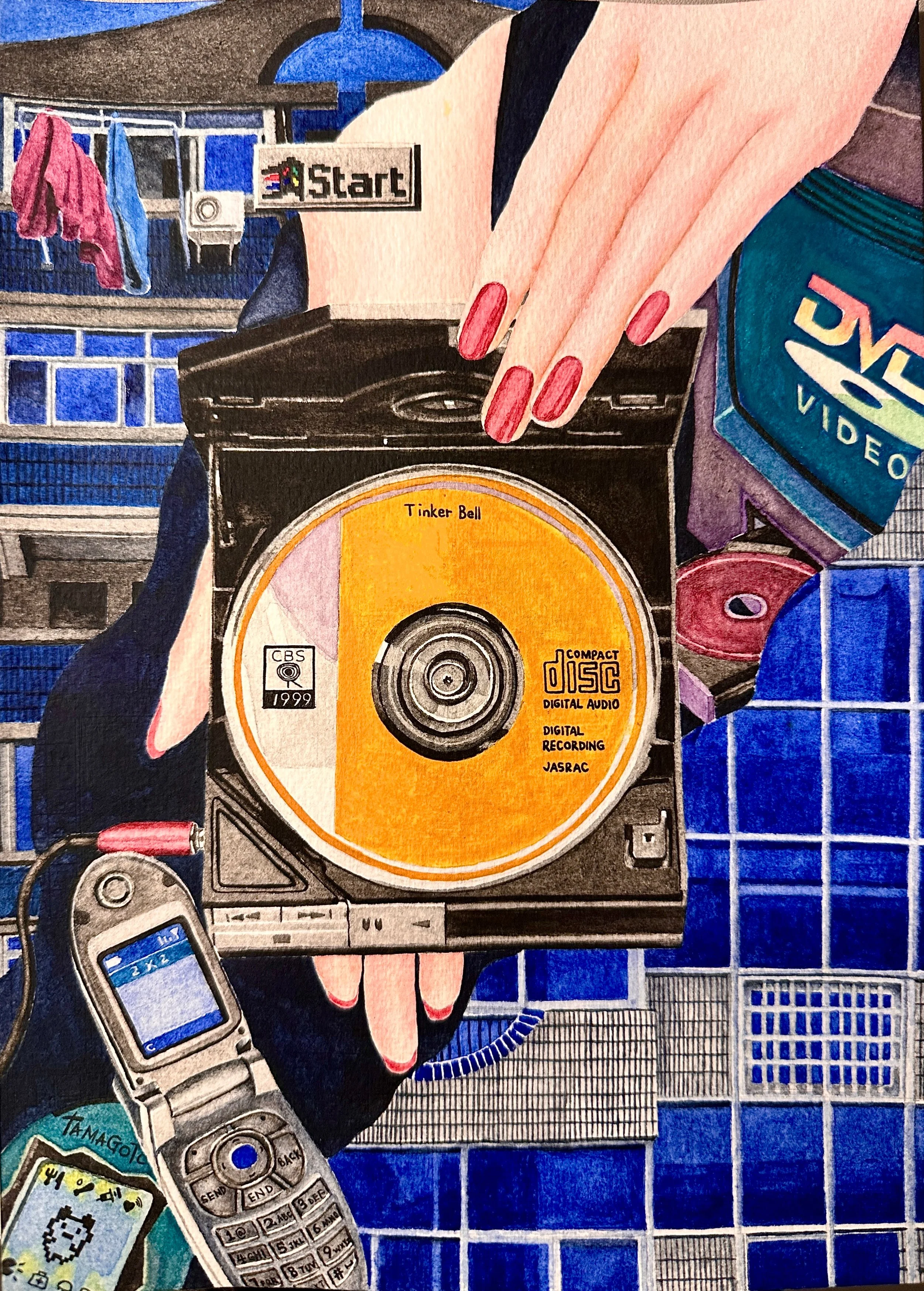
As she tells me, her concept of dream logic is acutely personal, these strange remnants concealing knotty emotions buried beneath. Zhang’s recent work ‘1999’ (2026) is a nod to the year of her birth, featuring a much-treasured Tinkerbell CD, a flip phone, the Windows 99 start icon, and a Tamagotchi. These symbols of since-defunct, now-retro media emerge from the chasm between blue tiles and building façades, the architectural vestiges of a place once known as home. The piece’s fragmentary nature captures the dislocation and longing felt by all whose present is half the world away from their family’s.
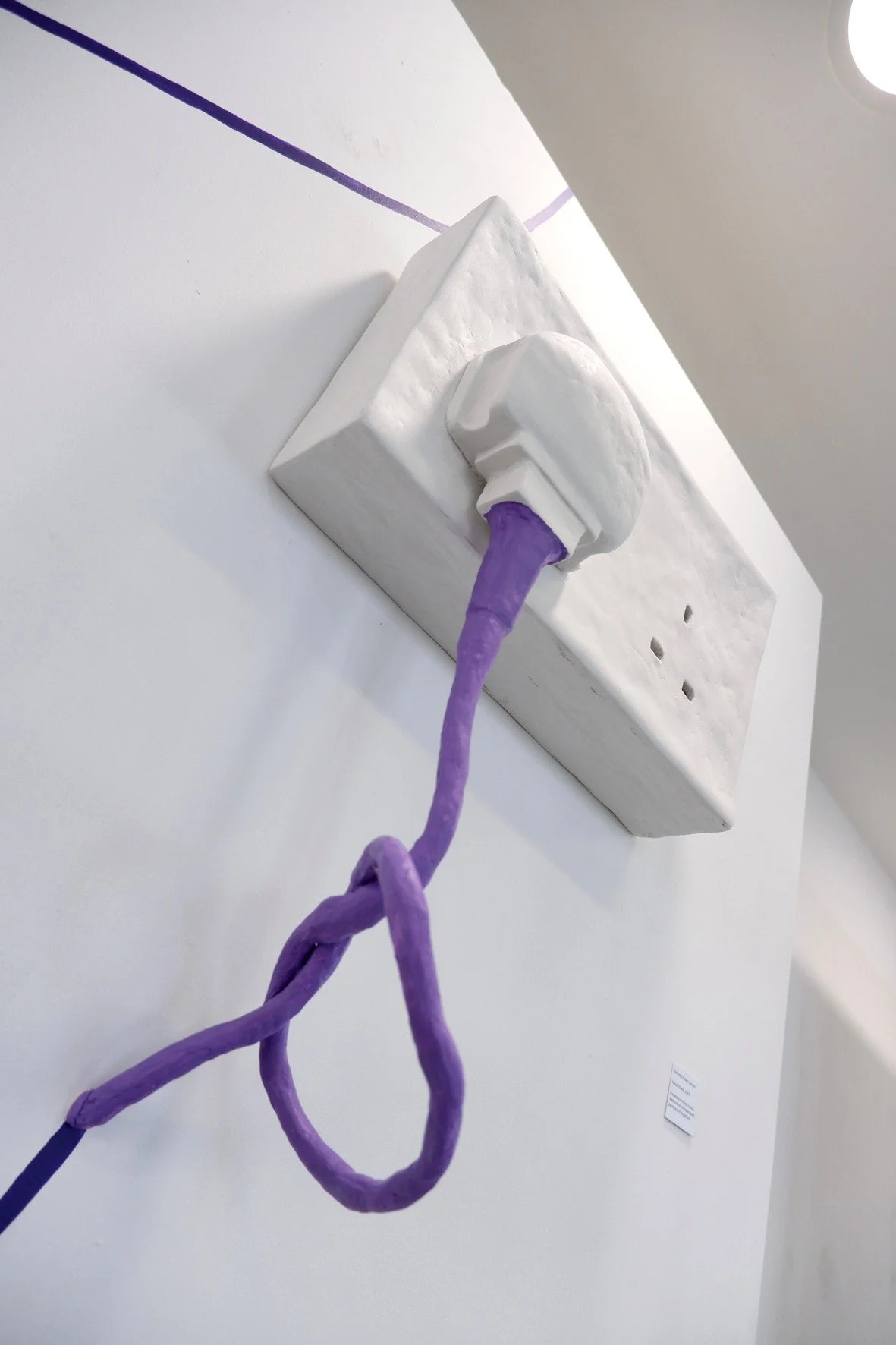
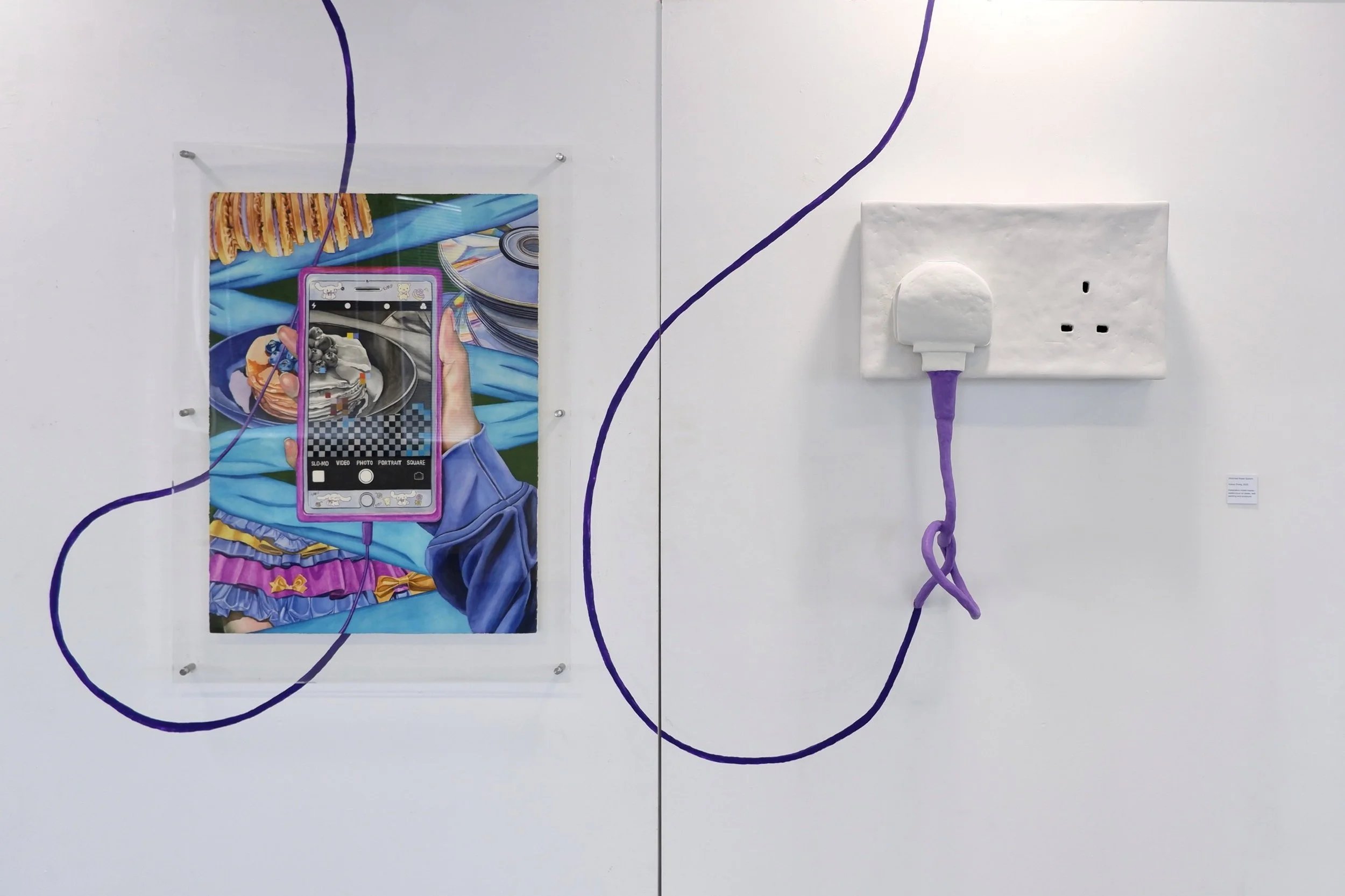
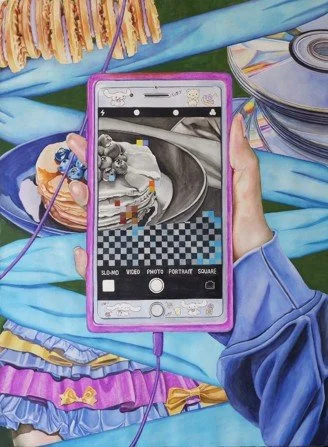
London’s vibrant art scene has nonetheless provided a constant source of inspiration for Zhang since moving to the capital. She channels her steadfast belief that art should be seen through your own eyes, not as a digital replica, in ‘Distorted Power Supply System’ (2025). An outstretched hand grips a phone screen to photograph a stack of blueberry pancakes, yet the LCD is purged of all colour, save for a handful of azure and autumn-hued pixels. Overlayed above a selection of hyperreal biscuits, a tower of glistening CDs and the ruffles of a yellow-ribboned dress, the phone’s purple cable slices through this scene, meandering beyond the canvas onto the wall behind it and finally reaching a sculpted wall plug. Here, Zhang’s spatial storytelling challenges viewers to reckon with the increasingly screen-based nature of much of our visual culture.
‘The Great Table Escape’ (2025) further pushes the boundaries of her mixed media installations, alongside featuring a physical manifestation of the thin veil between the subconscious dream world and our waking lives. A glass screen divides the mealtime scene, housing its painted croissants and half-eaten slabs of chocolate whilst a 3-dimensional table, wineglass and further baked goods extend below. Knife poised in front of a crimson blouse, and flanked by gaping mouths seemingly demanding sustenance, there’s a threatening ominousness to the headless figure we witness.
By reconfiguring these depth-filled two-dimensional images into sculptural environments shaped by her dream logic, Zhang captures the precarity and fragmented non-linearity that exists at the threshold between consciousnesses. Are we watching a gluttonous meal for one, or are we the ones escaping, peering back into an eerie dreamscape illusion, a distortion of our present reality?
