
Gallery Marquess
How does artwork interact with the space that houses it? Can the walls around an artwork alter or add to its meaning?
Writer: Carolina Fernandez Bold
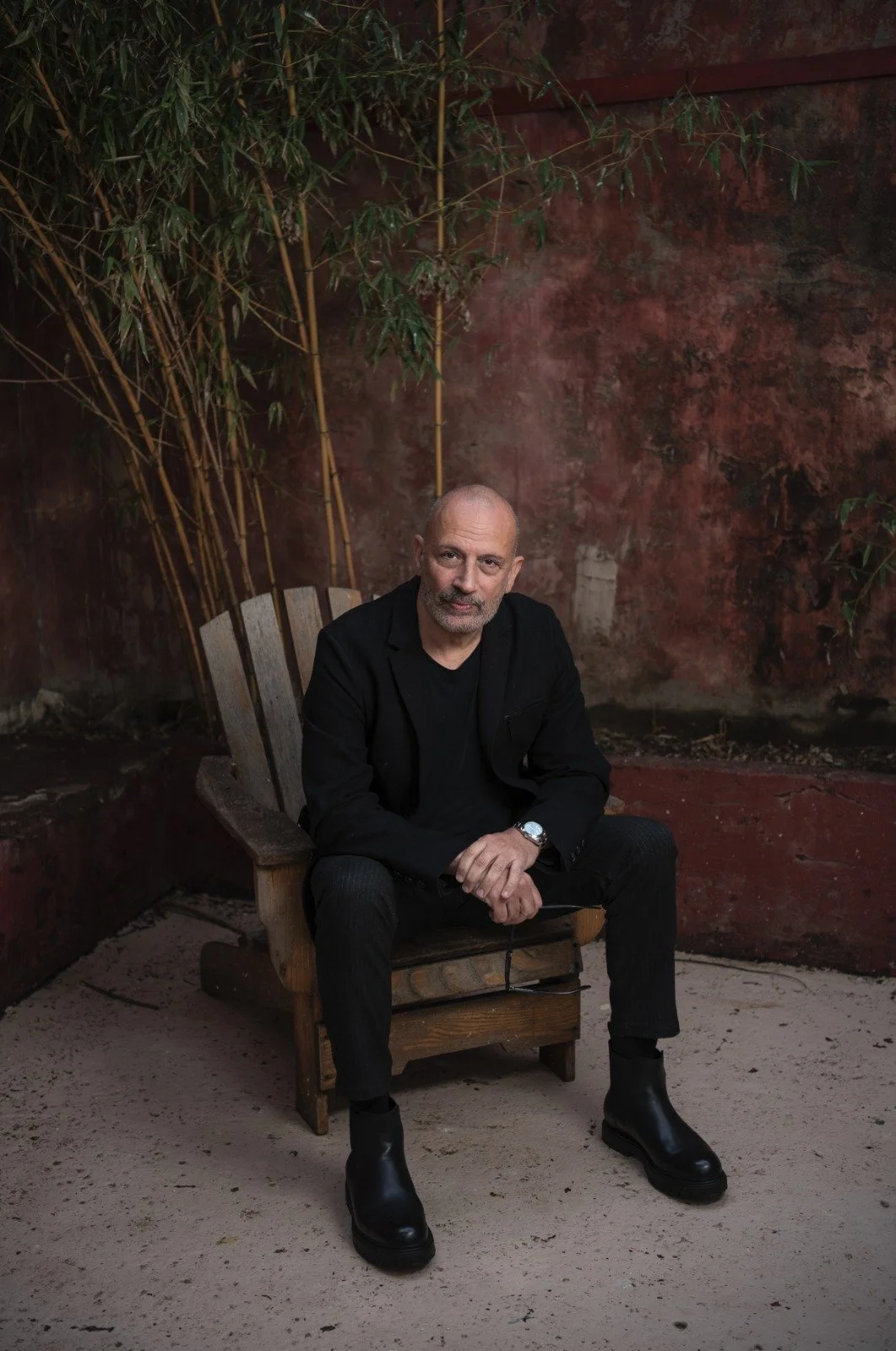
These are the ideas at the centre of Fahrettin Akyut’s curatorial vision for Gallery Marquess, now reopened at 3 White Horse Street in Mayfair. Drawing from his background in architecture, and a passion for its intersection with art, Fahrettin Akyut here champions the idea of the parergon: the notion that the frame surrounding an artwork is never neutral, but actively shapes the meaning of the work itself.
Original Magazine attended Gallery Marquess’ opening exhibition in the new space, A Silent Testimony of a Place: The Erasure and Reconstruction of Identity, which brings together works by three contemporary artists to explore the relationship between women, memory, and the spaces they inhabit. Early into the evening, I learn that 3 White Horse Street was once a residential building, which likely housed working lodgers over a century ago. Today, however, the renovation sees the ceilings and walls now drenched in a deep black, which creates a blank anonymity that we often associate with galleries. And yet, the conspicuous darkness also draws attention to itself. In seemingly obscuring the building’s past, it begs the question: what histories lie just beneath the surface?
As I look at the still intact fireplace along one wall, I can’t help but wonder about the people who were once kept warm by its glow. I find myself thinking about those former inhabitants whilst looking at the room’s new ones: Ishilla Aleksandra’s oil-painted women, whose close-cropped faces and nude upper bodies are reimagined from vintage porn magazines.
I begin wondering what kinds of spaces these women likely inhabited in their lifetimes, aware that housing and security are issues that have long shaped the lives of women, especially those working within the sex industry. That these women should now find a home, if only temporarily, within the affluence of Mayfair feels strangely moving; important. And through Aleksandra’s close-ups, which centre the women’s facial expressions of pleasure and playfulness, their presence within the gallery becomes a carving out of space for female desire to be foregrounded, within a culture still more accustomed to consuming female sexuality than reflecting on it.
Moving through the gallery, I come to Ayse Yenel’s work: sepia, vandalised photographs of women. At the exhibition, I was able to speak with the artist herself over the phone, all the way from her home country of Turkey. She tells me that the subjects of her work are women from her own life, her daughter and her best friend among them. She speaks about disturbing their photographs by scratching out the eyes, a clawing desire to prevent her girls from witnessing the cruelties the world directs at women. As she reflects on her own experiences of discrimination within the workplace in particular, I find myself staring at those scratched-out eyes and thinking about the inverse too: all which women have not historically been able to see or access.



Positioned alongside Aleksandra and Yenel’s women, Allesia Avellino’s urban landscapes begin to draw the exhibition’s questions of space toward ideas of access, movement, and power. A master of perspective, in her frantic charcoal drawings of towering high-rises, the sharp, stark vertical lines evoke the disorientating magnitude and relentless momentum of the city. Elsewhere, her oil painting of a docking ship appears suspended mid-movement, as though another minute might see it jutting out of the canvas and into the gallery itself. Behind the ship lies the open sea, almost beckoning.
Seen alongside the exhibition’s portraits of women, these works make me think about who is afforded the freedom to travel, to adventure, and to pursue the opportunities promised by the modern city. Just beyond these gallery walls, London itself looms: a city defined as much by opportunity as by the barriers to accessing it; barriers still deeply informed by gender and class.
Of course, architecture is never neutral; Fahrettin Akyut’s exhibition at the new Gallery Marquess brings this point sharply into focus. As I leave the gallery, mind still carrying thoughts of these past, present, and future women — the physical and social spaces we have been permitted to inhabit, and those we have yet to carve out for ourselves — the city itself feels to become something of a parergon.
