
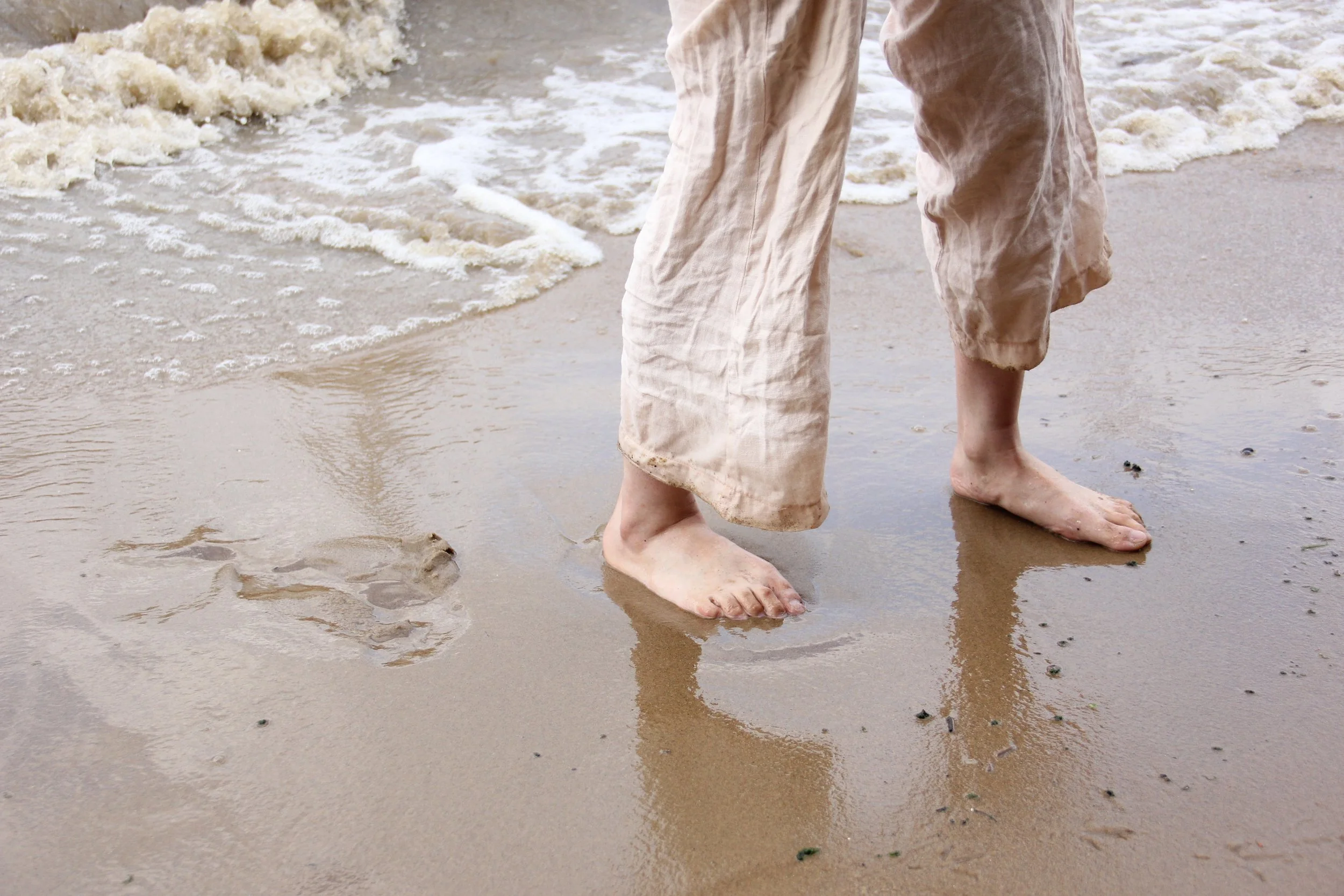
The Echo Project: A Live Experiment in Sound, Movement, and Collective Agency
To call Fanglin Luo an artist feels almost redundant. Trained at Goldsmiths and shaped by interests in feminism, mythology, and embodied identity, her practice works like a ritual — where movement, sound, and voice become channels of agency. Concepts of generational memory, bodily resilience, and feminine archetypes recur throughout her work, forming a vocabulary in which goddesses become mirrors for modern women.
Her installations and performances often blur distinctions between participant and witness, revealing how myth can be reactivated as method: a tool for re-embodying power that history has either diluted or erased.
The Echo Project (2023) was the moment this vocabulary became syntax. If earlier works taught Luo the words, this live event taught all participants how to speak. It marked a shift from solitary research to communal experimentation, and from narrative mythology to embodied ritual.
Created and art-directed by Fanglin Luo (Co-founder / Art Director), The Echo Project unfolded as a live, evolving room-scale performance exploring echoes as mechanisms of communication, reflection, and reunion. Hosted as a sequence of workshops and performances across 2023, it examined how bodies acquire meaning through relation rather than isolation. Dancers, sound artists, and participants became co-authors of a temporary organism in which sound and gesture looped back onto themselves, returning altered, delayed, doubled.
Its central proposition — both conceptual and experiential — was simple, yet resonant:
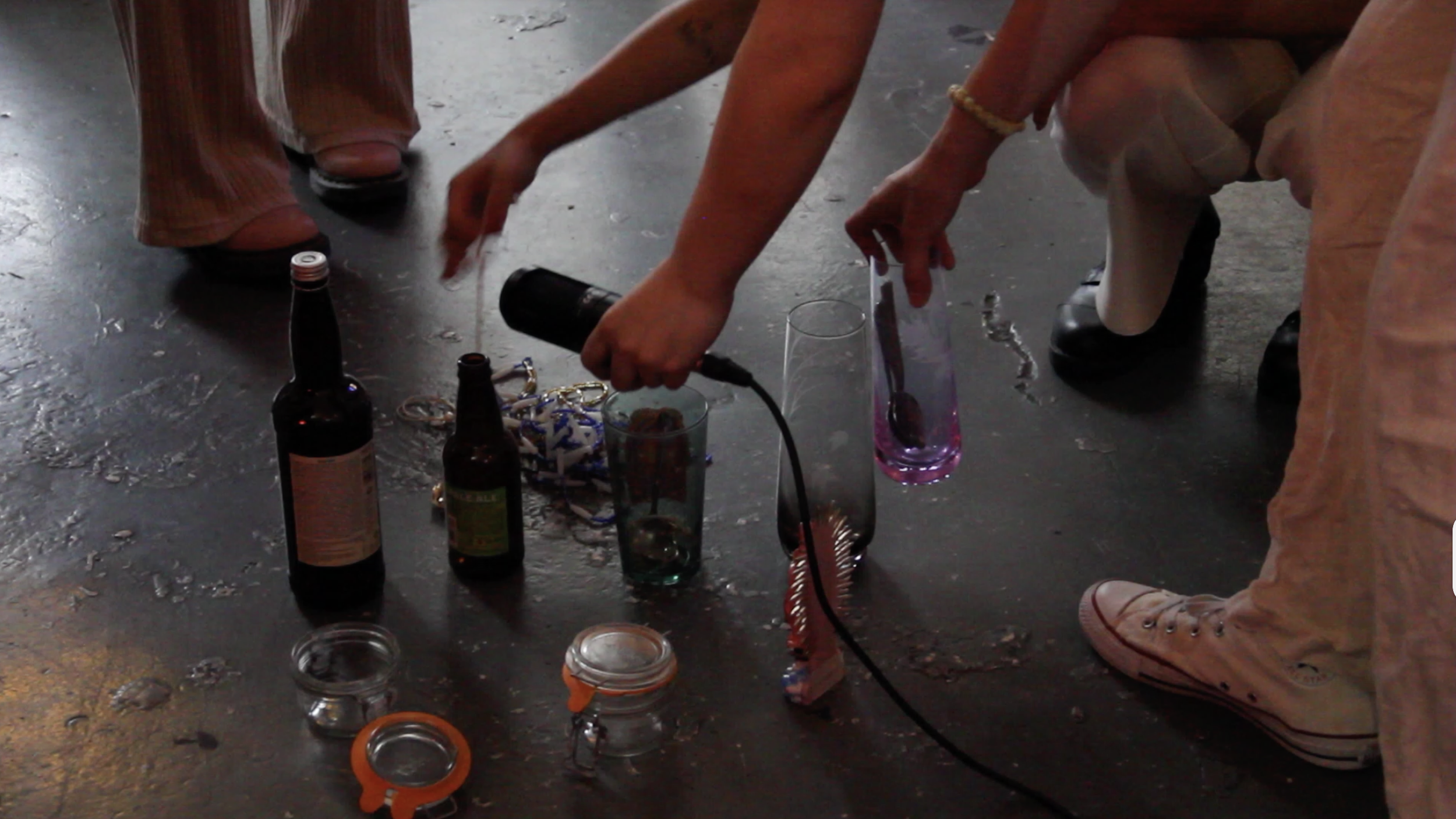
Echoes are endless. Echoes connect us. In delay, meaning emerges. This proposition framed the echo as a metaphor for social entanglement, friendship, recovery, inheritance, and the small astonishments of noticing oneself through others. At the core of the project was its distinctive live sound system, engineered and performed collaboratively by Yucong Huang (Co-founder / Sound Artist) and Eleanor Fineston-Robertson (Sound Artist). Using contact microphones, room microphones, and a calibrated array of amplification equipment, the two artists collected the noises of bodies moving through space; feet brushing against the floor, breath catching at the end of a gesture, fabric rustling, objects being lifted and released. Even the softest collisions — beads clinking or spoons scraping — were harvested as sonic material.
These captured signals were then fed into an amplifier system that sent the sound back into the room with a subtle delay, transforming individual actions into collective echoes. What might ordinarily go unnoticed was reintroduced as a kind of auditory mirror. Participants came to understand their bodies as both transmitters and receivers.
This was not simply acoustic novelty. It altered behaviour. People moved more slowly to hear the tail of their motion; others explored the space with fingers rather than feet; some tested the resonance of objects before testing the capacity of their limbs. By rendering contact audible, the project invited a deeper mode of listening—one that bypassed language entirely.
### **Choreography as Soft Governance**
The Echo Project’s structural rhythm was guided by **Ariel Yijun Deng (Dance Artist)**, whose choreographic approach emphasised recovery, suspension, and softness. Her movement prompts were drawn from Luo’s own experience of bodily rehabilitation after a sprained ankle—an event that forced her to re-evaluate speed, weight, balance, and vulnerability. Rather than treating injury as absence, Luo and Deng treated it as methodology: a reminder that bodies in repair often perceive the world with heightened attention.
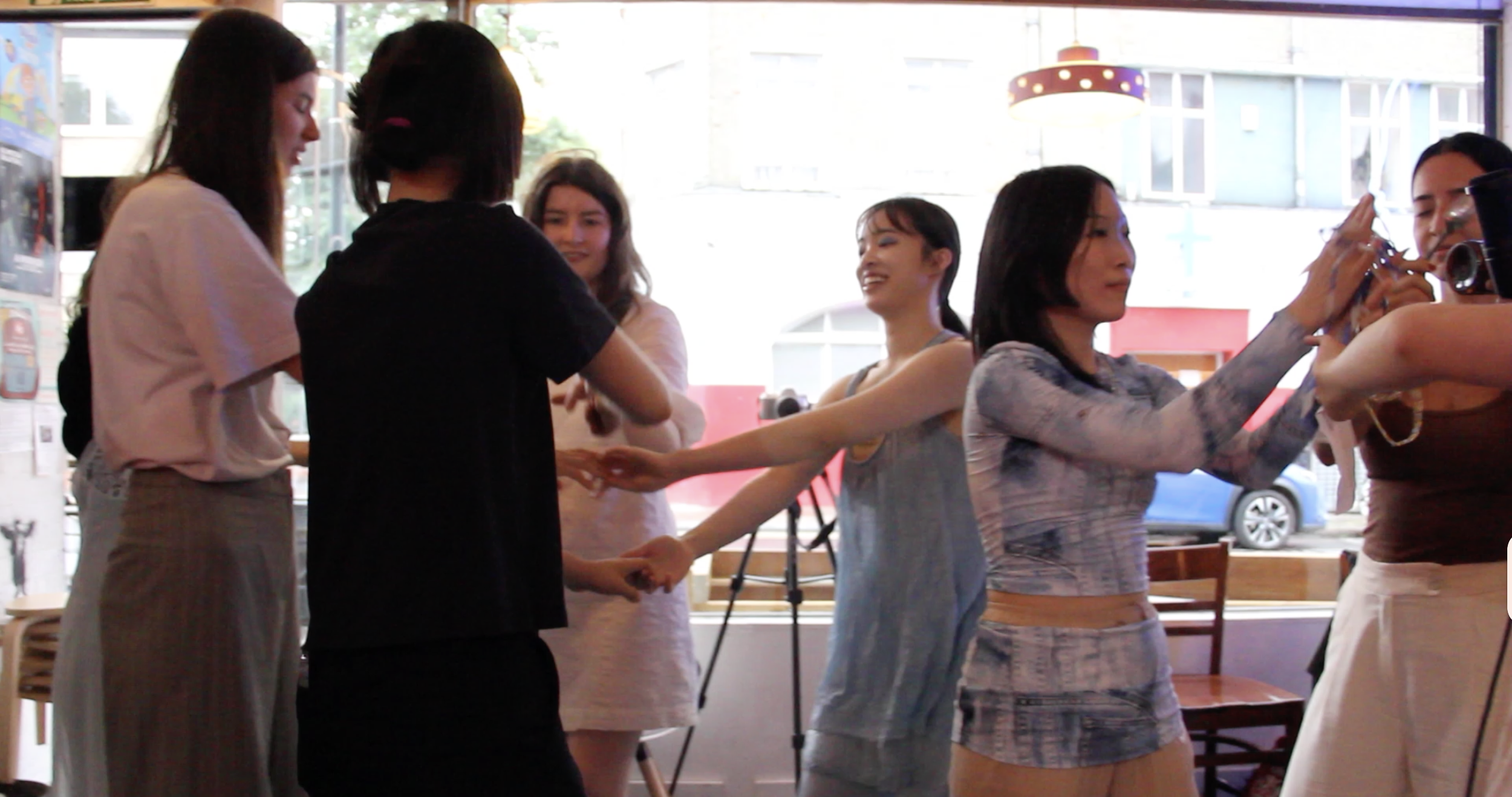
Participants were encouraged to explore limitation rather than mastery, slowness rather than spectacle. In this way, choreography became a form of soft governance—shaping the space without enforcing it. The result was a room that felt permissive rather than performative. Movements emerged gently, without the pressure of being watched.
### **Mythic Atmosphere and Visual Language**
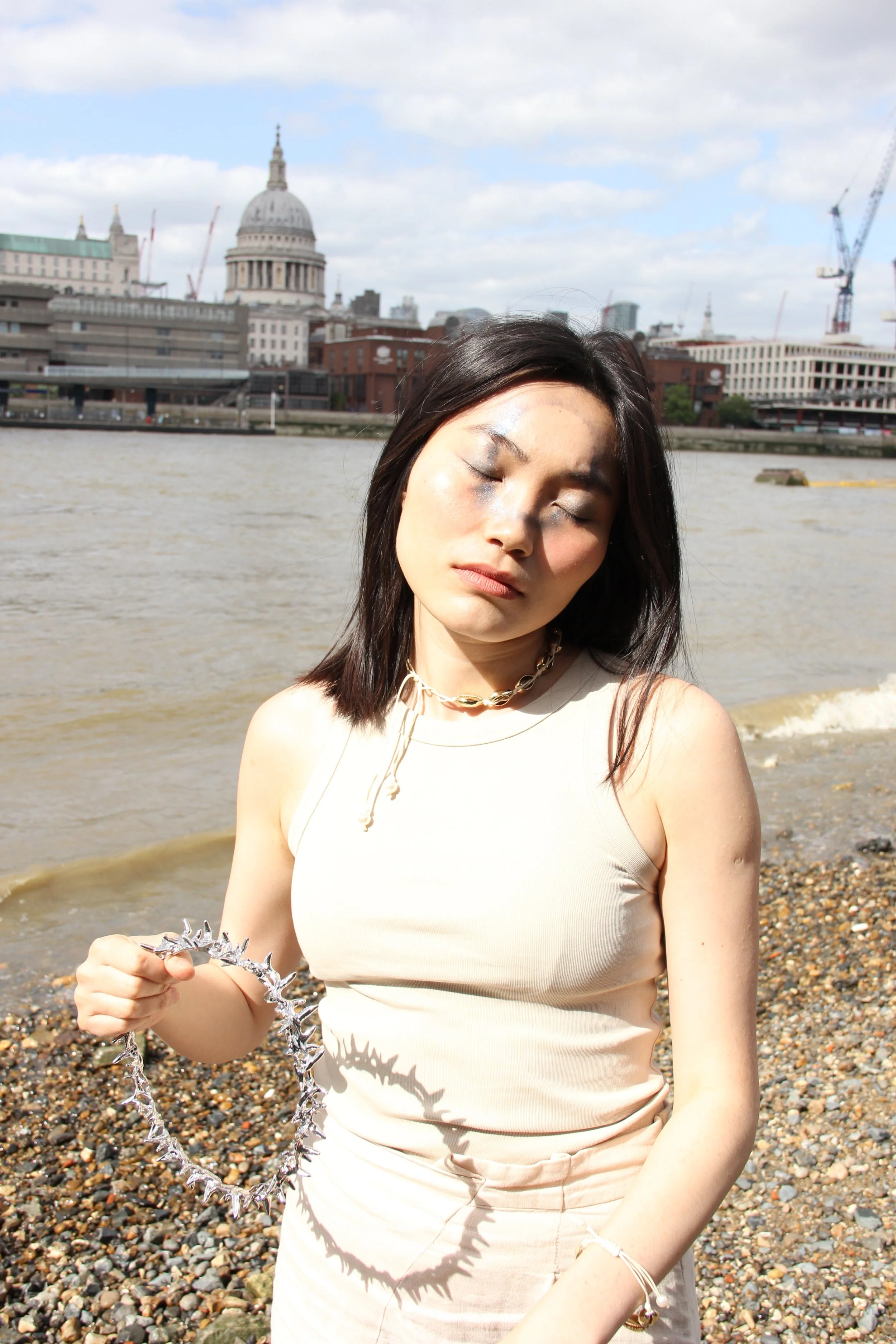
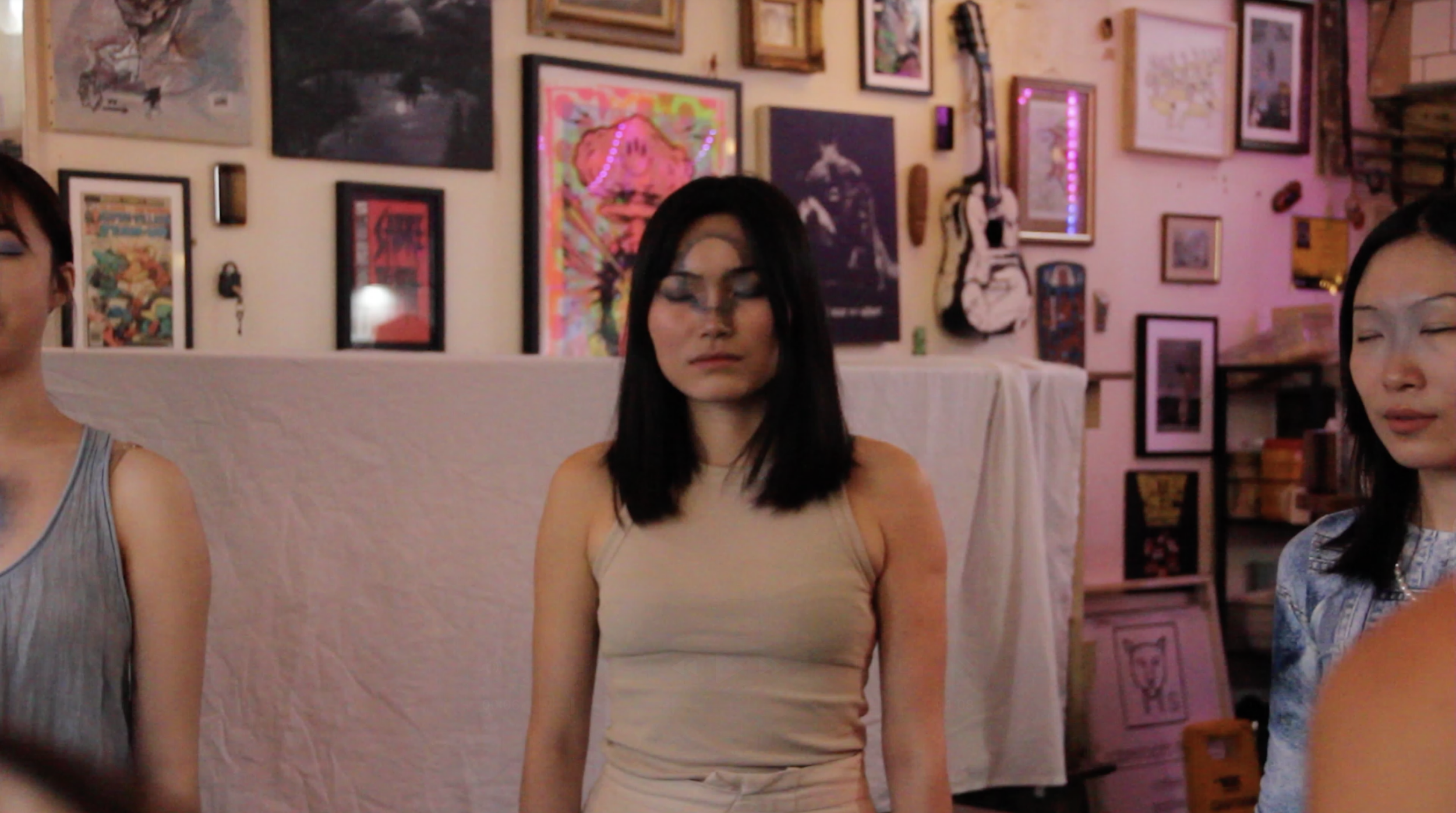
Luo’s background in fashion design infused the event with a mythic visual language. A Siren- inspired dress code—silver, nude, glittering—invited participants to soften the boundary between self and other. Dramatic make-up was encouraged not for beauty, but for transformation; it provided a material means of stepping sideways from one’s everyday identity.
Textures played an equally vital role. Vases, spoons, beads, and ribbons were scattered throughout the room—not as props to be “used correctly”, but as sonic agents that made contact audible. When a ribbon slid across skin, or beads pooled onto the floor, the room responded with sound. These exchanges created micro-scores: small acoustic scores of action and reaction. Participants became their own composers.
Lighting remained deliberately soft and mutable. Sound sculpted atmosphere more than spotlight. In this environment, the boundaries between dancer, spectator, and object became porous. No one stood in the “right” position; there were no front rows, only convergences.
### **Audiences as Co-authors** Perhaps the project’s most striking gesture was its refusal to distinguish between performer and audience. There was no fixed choreographic performance occurring “for” a seated public. Instead, the public itself generated the performance through action, listening, hesitation,curiosity, and courage.
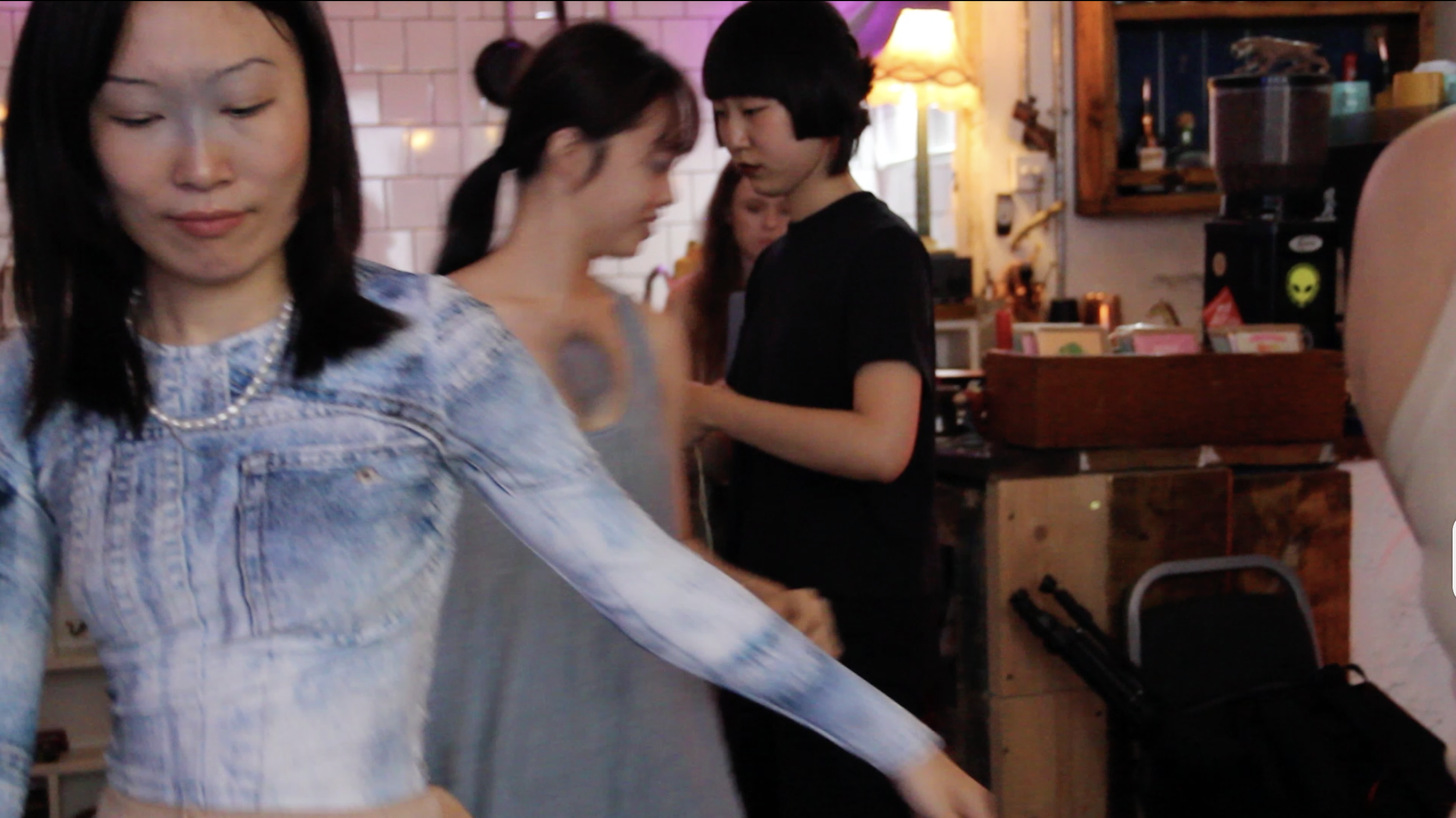
At one workshop, a participant remarked on the unexpected social ease that followed Deng’s movement prompts. What began as tentative participation transformed into an unforced sense of collective play. People began to notice one another not as strangers to avoid, but as temporary kin: bodies in the process of becoming resonant.
This social recalibration was central to Luo’s interest in echo as both metaphor and engine. An echo always returns—altered, softened, delayed. So, too, did participants gestures and interactions: what began as solitary movement often became communal pattern, or at the very least, communal awareness.
### **Echoes That Outlast the Room**
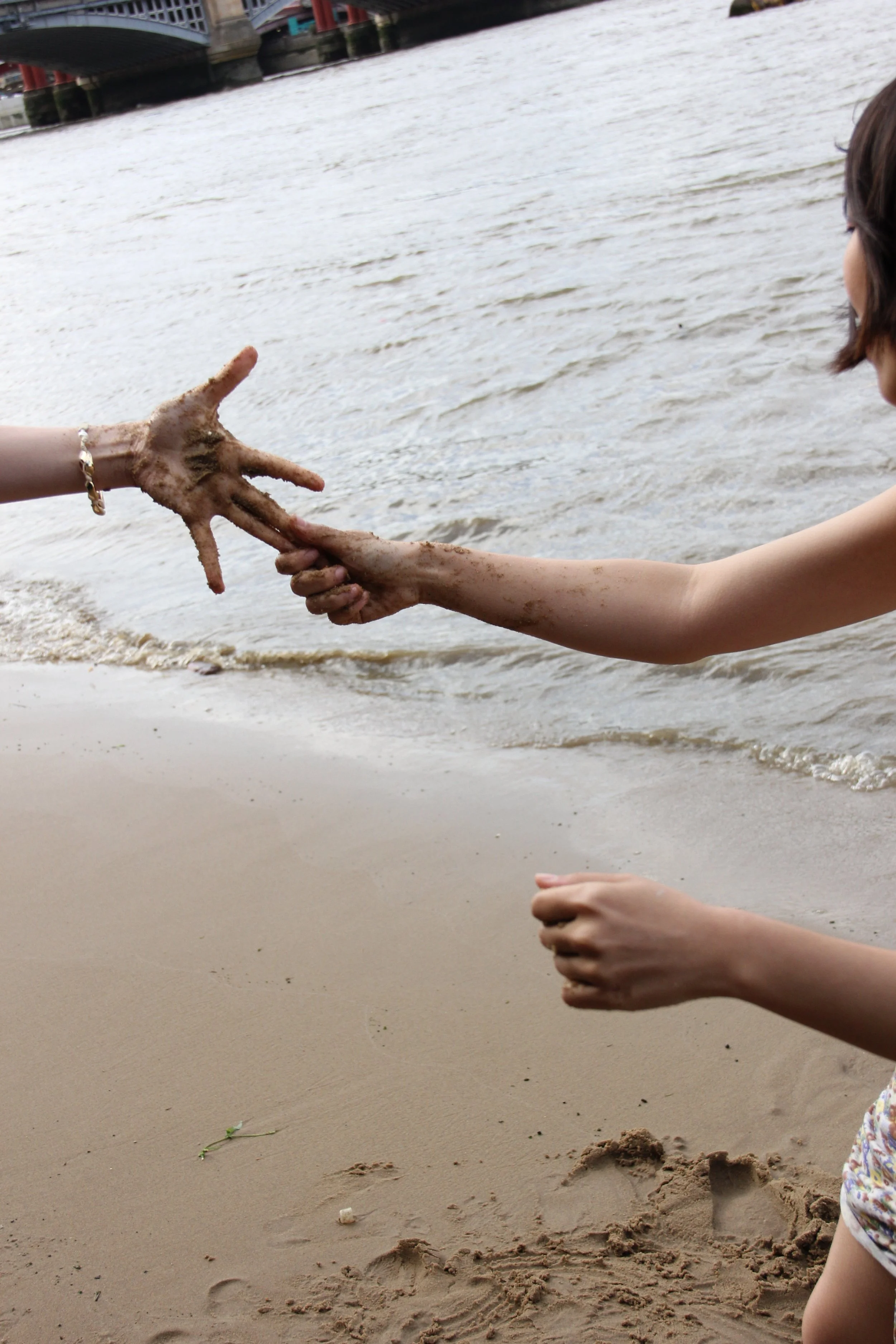
The Echo Project acknowledged that ephemeral work rarely ends at the edge of its runtime. Its afterlife was captured by **Zhongge Sui (Promotional Photography)**, whose images document moments of cohesion, rupture, hesitancy, and revelation. Sui’s photographs serve as extended echoes—visual feedback that allows future viewers to enter the reverberation rather than the physical event itself.
In this sense, the project continues. It echoes through memory, through documentation, through conversations, and through the embodied knowledge participants carried away.
## **A Thesis for Luo’s Practice**
Viewed retrospectively, The Echo Project functions as a thesis statement for Luo’s broader artistic concerns. It distilled her recurring investigations into:
* the body as site rather than object
* myth as contemporary tool
* feminism as lived ecosystem
* community as active material
* ritual as methodology rather than theme
* slowness, softness, and delay as political gestures
It also revealed Luo’s ethics: an invitation to transformation passed from one body to another.
The first iteration—held for women only—acknowledged the historical weight borne by female
bodies and created a temporary ritual space for reclamation. A later iteration opened to all
genders, widening the circle without erasing its original acknowledgement.
The Echo Project did not merely represent community; it constructed one—temporary, fragile,
resonant. It understood that echoes require both sender and receiver, and that community
requires both vulnerability and return.
We are, after all, echoes of one another. Luo merely tuned the room so we could hear it.