
The Cure x Iconic Images Gallery
Word and Photos by: Bee Woodley
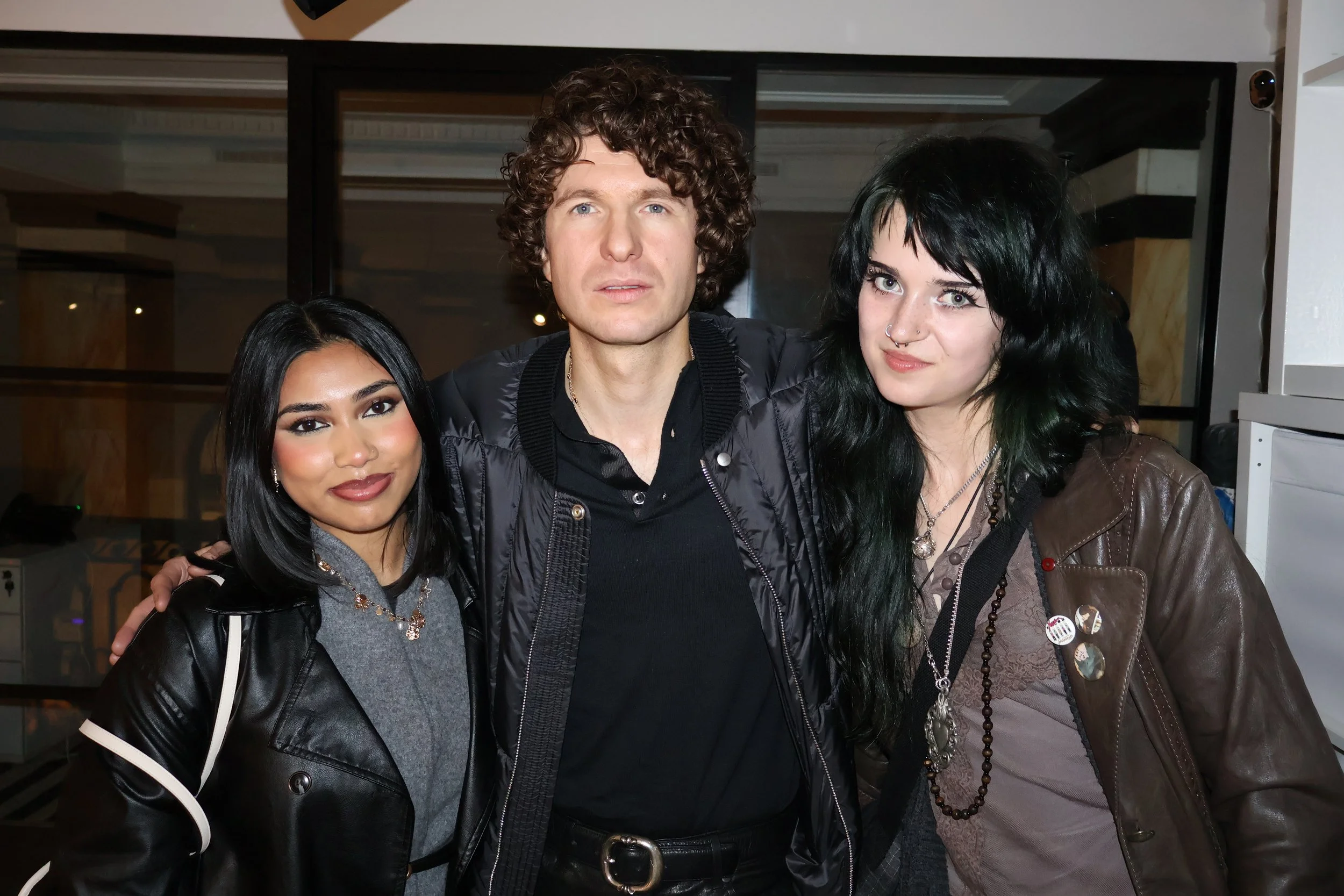
Post-punk icons The Cure played their debut live gig in 1978, going on to tour for nearly 50 years and carving their legacy into gothic alternative subculture. This summer, they are to headline the Isle of Wight Festival. Original Magazine attended an evening at London’s Iconic Images Gallery, exhibiting photographs of the band and other musical paragons, with photographers Kevin Cummins and Richard Bellia alongside Curepedia author Simon Price.
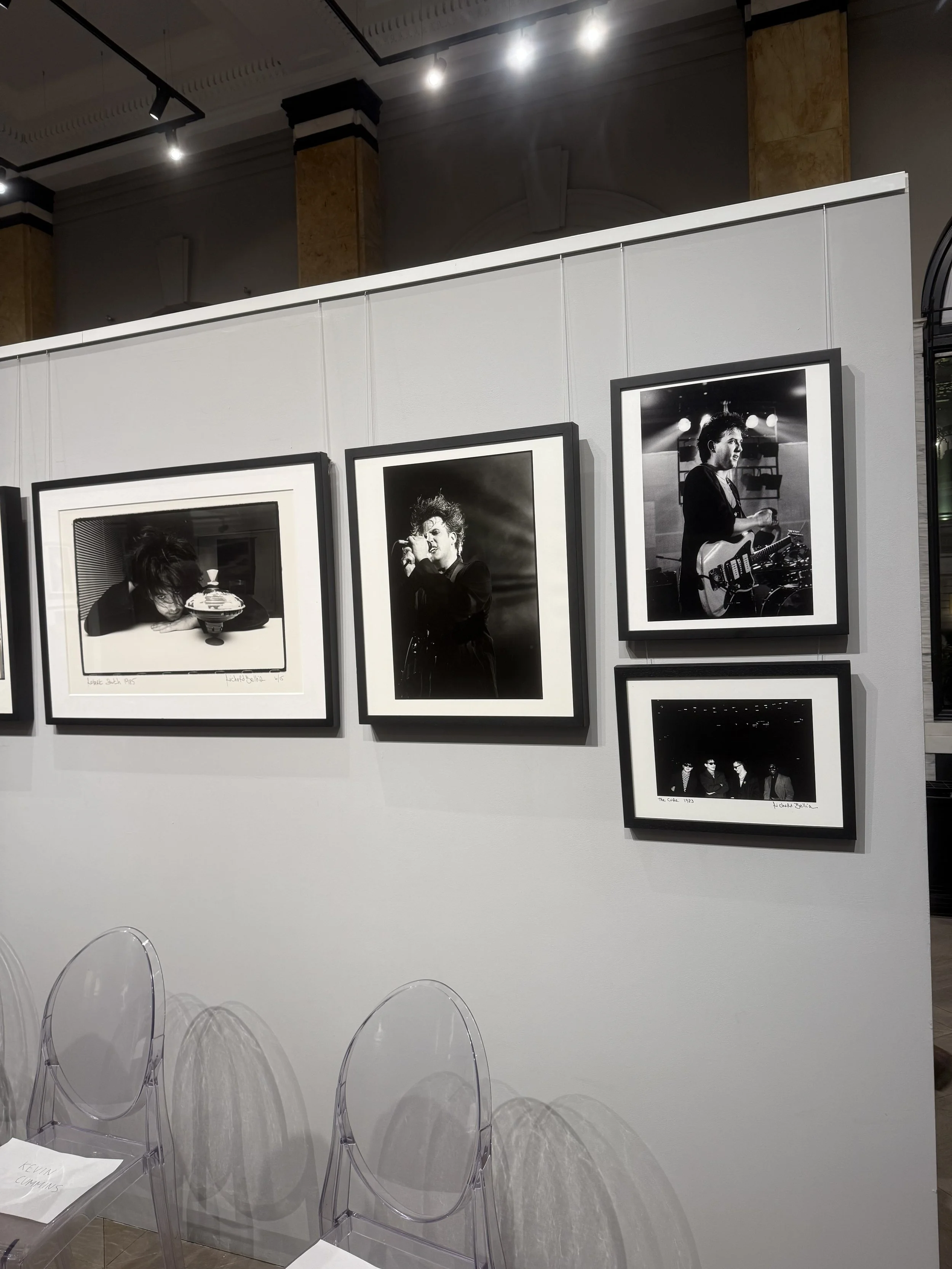
Iconic Images Gallery, London Piccadilly, houses a rotating shrine of photography depicting music and cultural history. For this exhibition, the gallery was lined with photos of The Cure alongside the likes of David Bowie and Bob Marley. The works, many monochromatic, featured the band on and off-stage, Robert Smith photographed for NME by Cummins and caught candidly by Bellia in 1985.
Many of the event’s guests were dressed monochrome, implicitly paying homage to post-punk fashion and the exhibit. Attendees included Luvcat, whose name is borrowed from The Cure’s track ‘The Lovecats’, and Luke Pritchard of The Kooks. Both are set to perform at the Isle of Wight Festival in June 2026. Original Magazine caught the artists for exclusive conversations, released soon.
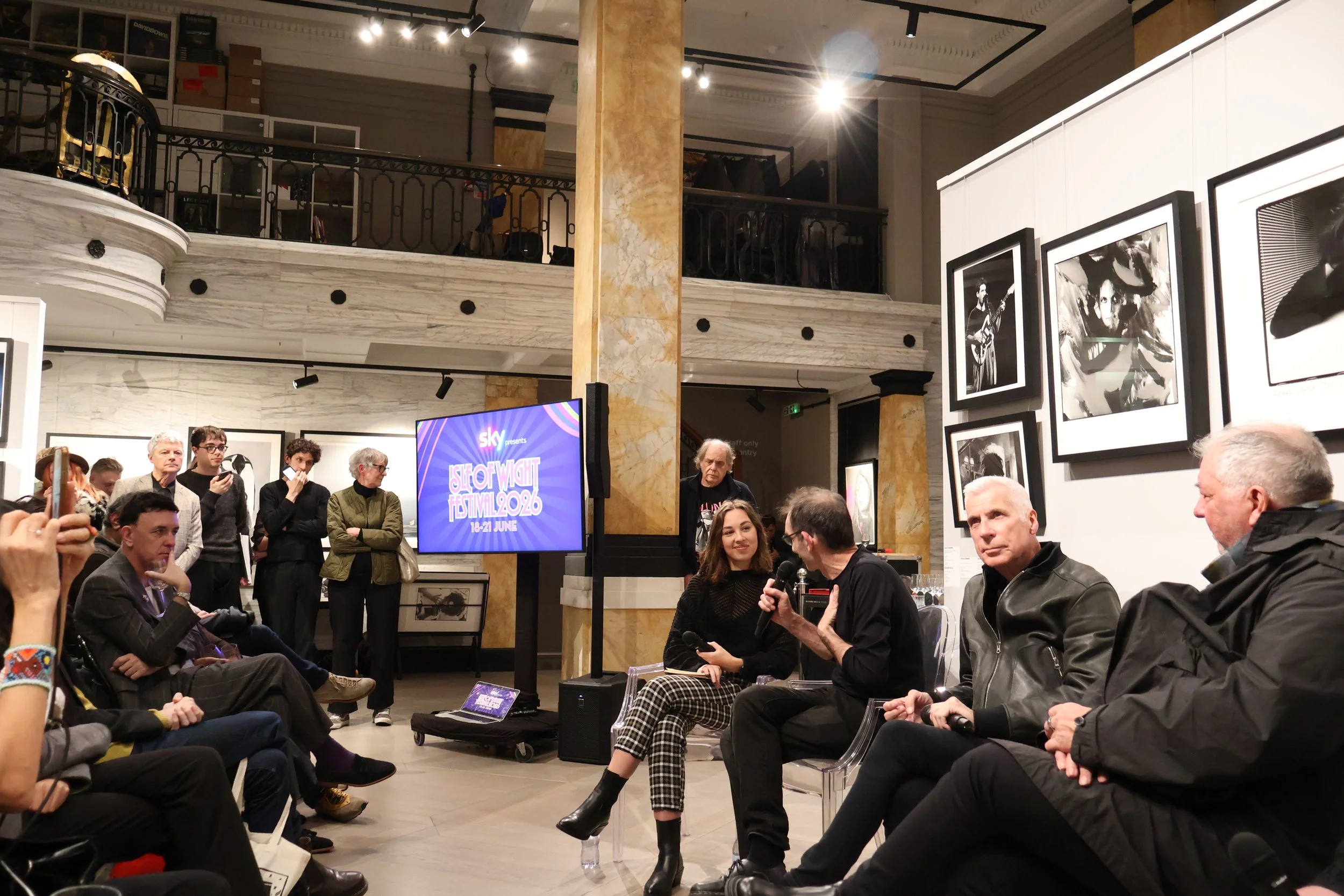
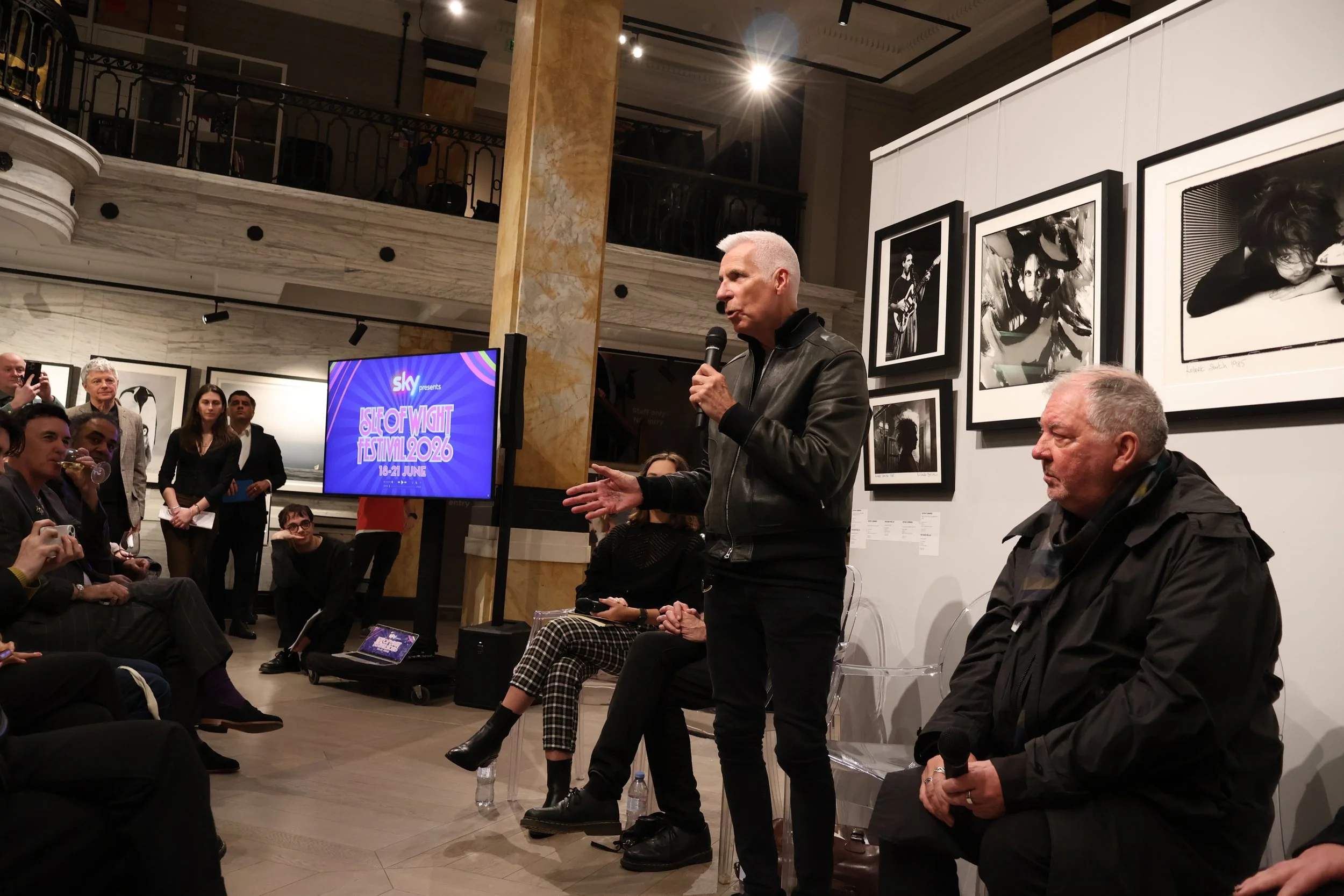
The event settled into a Q&A led by NME’s Liberty Dunworth and joined by promoter of the Isle of Wight festival, John Gidding. The talk covered the speakers’ stories from their time chronicling and collaborating with The Cure.
Kevin Cummins shared what it was like to work with Robert Smith: ‘He makes the process easy,’ the photographer explained, recalling shoot sessions filled with distraction. Unlike many music artists, Cummins said, The Cure’s frontman was uninterested in hierarchical culture which allowed for such intimacy in his photographs: ‘You build a relationship over time… and that’s what enables you to get something really honest.’
Richard Bellia recounted his first experience seeing The Cure perform: ‘I was nineteen, and I went to see the show. I got into them because of a photograph,’ and his experience of collating photographs for the exhibit: ‘when we were putting this together, I looked through the whole exhibit again.’ The conversation positioned The Cure as timeless figures superimposed onto alternative culture, with Simon Price noting how they continue to provide a sense of understanding for rolling generations of young people.
The Q&A conversation repeatedly looped back on the idea of something or someone being ‘iconic’, appropriately self-referential in the Iconic Images Gallery. The speakers suggested that ideas of what it really means to be an ‘icon’ have been dismantled as the term is overused, but Robert Smith is a true icon of the gothic movement. These ideas carried into Original’s exclusive conversation with Simon Price, too. Simon has been a music journalist for over 40 years, promoter of Brighton’s goth night ‘Spellbound’, and was the resident Cure expert at the event.
Original: You’ve written about music since the 80s - does anything still surprise you when you revisit iconic scenes like the Isle of Wight festival?
Simon: I suppose the past, the further we get away from it, becomes more fascinating because the past is a foreign country and things are so different now, but I think the thing that stays the same is music means as much to people now as it ever did. People discover it in different ways; they consume it in different ways. When a band hits you in the heart, the way that The Cure do, that transcends eras and it transcends generations. So that’s why they’re able, at the age of nearly 70, to headline a major festival like the Isle of Wight.
Original: When you look at the photos in this exhibit, what’s the first thing you feel or the first memory that comes up?
Simon: Well the first thing I feel when I look at pictures of Robert Smith, is that you feel something. He’s an icon but he’s not a blank icon. He actually stands for something. That’s why if you watch a film and the director has chosen to put a poster of The Cure ‘Boys Don’t Cry’ on his bedroom wall, you know what that means. It means something. It tells you who that person is, and, I think his visual image is inseparable from his voice, his lyrics, it tells you something about him and what he means. You don’t even have to speak English to get that; that’s why they’re so huge in Latin America, for example. You just get it. You see his eyes, his lips; his hair. You hear the timbre of his voice and without even knowing what the words mean, something just gets you.
Original: I know you’re involved with goth culture, especially through promoting Spellbound, how do you see goth changing from when you got into the subculture? Has anything stayed entirely the same?
Simon: I think what’s mainly changed is it has branched out from music into all sorts of other things like adult fiction and games and films and, you know, anime and all sorts of stuff like that. But then, in the first place, using the adjective ‘gothic’ to describe music was bringing it from literature and architecture and other media to describe music. So in a way, it’s only fitting that it should mean other things.
The music has probably become heavier. I remember when I was first involved in the goth scene we didn’t listen to metal. Metal was considered music for dumbass people, it really was. We were much more sophisticated and classy than that, but at some point at around the late 90s it sort of merged goth and metal. Maybe Marilyn Manson’s to blame, I don’t know… I think as a rock artist in that era he was very powerful. So, I guess it’s changed.
Another thing that has changed is, you see people turning up to clubs with glowsticks and wearing pink clothing. I thought ‘well wait a minute, goths don’t wear pink!’ Well apparently, so, you know it changes but it stays the same in that it’s about having a certain dramatic sense about yourself: that you’re the main character in your own film. And maybe feeling a little bit romantic and tragic about things going slightly wrong in your life, that maybe haven’t gone that wrong, but adolescents have a way of exaggerating things and overdramatising things and I think that is why there will always be new generations who discover bands like The Cure or Siouxsie and the Banshees, or whoever it may be.
Original: Did researching for Curepedia change how you listen to The Cure at all?
Simon: Yeah, about half way through I started hating The Cure! I didn’t want to listen to The Cure again, ever. Well, just because I had been listening to every song including, frankly some of the sub-standard ones, trying to squeeze any sort of meaning out of them and it was at the expense of listening to anything else. I didn’t have a varied musical diet at that time. I couldn’t see the light at the end of the tunnel; I thought ‘Is this ever going to end?’ And, yeah, I started resenting and despising The Cure, for a brief amount of time! Then I came out the other end and I am able to enjoy them again, thankfully. Because imagine that, if I’m tied to this book [Curepedia], I’m walking around promoting this book everywhere I go and ‘argh I hate them!’ - you know.
Original: What’s one Cure fact you assumed was common knowledge, until you wrote Curepedia?
Simon: I wouldn’t say this is anything I presumed was common knowledge, but I got really interested in the connection between The Cure and Victorian mental asylums - ‘lunatic asylums’ as they would have been called in those days. So, Robert himself is kind of obsessed with insanity, mental illness; he’s read lots of books about it. But The Cure filmed a video for Charlotte Sometimes in a derelict Victorian asylum. A member of The Cure, Michael Dempsey, worked in one of these, and when they were filming the video Robert trespassed into what used to be the art department and found etchings and a sculpture made by the patients, and these things haunted him and got into his psyche. And he wrote songs based on that, so this kind of circularity of inspiration, and just generally about The Cure: the more I zoomed in with a microscope it turned out there was more and more and more to discover.
They’re one of these bands that is so rich in references and meaning and resonance, whether it’s the literature that inspires them or, you know, drugs and all that kind of stuff. It’s kind of endless. It’s like every song is an easter egg and you open it up and there’s more and there’s more and there’s more. So, that’s why the big is so big - too big [He laughs].