The Art of Afterlife:
Weaving Waste, Labour, and Memory in Hui Zhang’s Sculptures
Words by: Carolina Fernandez Bold
Hui Zhang’s work reclaims what culture devalues: material waste and women’s labour alike.
A Chinese artist now based in the UK, she has exhibited in Beijing, London, Edinburgh, and Paris, situating her work within the shared conditions of globalised, consumer culture. This article explores three of her recent works, with insight into process and inspiration from Zhang herself.
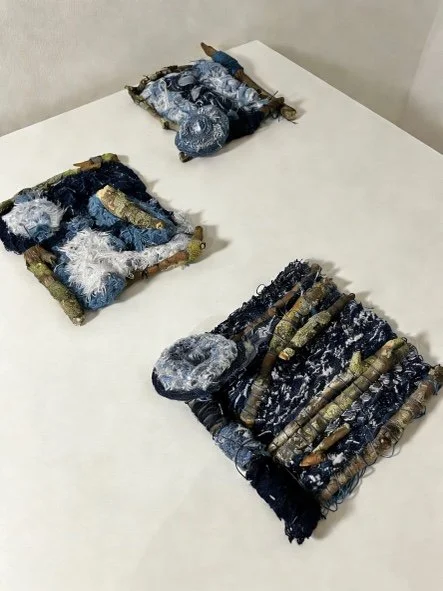
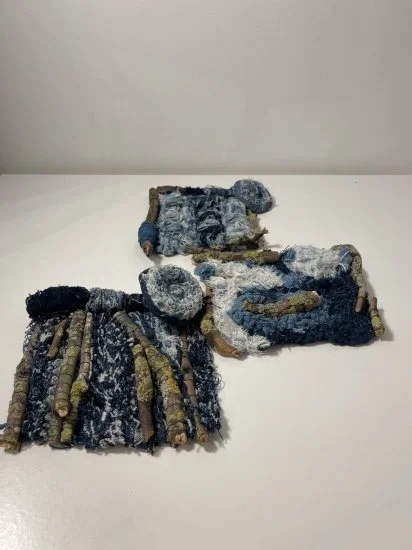
Re-Growth weaves together branches and discarded denim into rectangular sculptures that read almost like three dimensional paintings, escaping the boundaries of form. The branches were gathered from the ground in London’s parks; physical embodiments of the peace that Zhang experiences in nature.
Denim, then, became the perfect counterpoint. Sourced from her apartment recycling bin and the wardrobes of friends, Zhang chose this fabric specifically for its “significant environmental burden”.
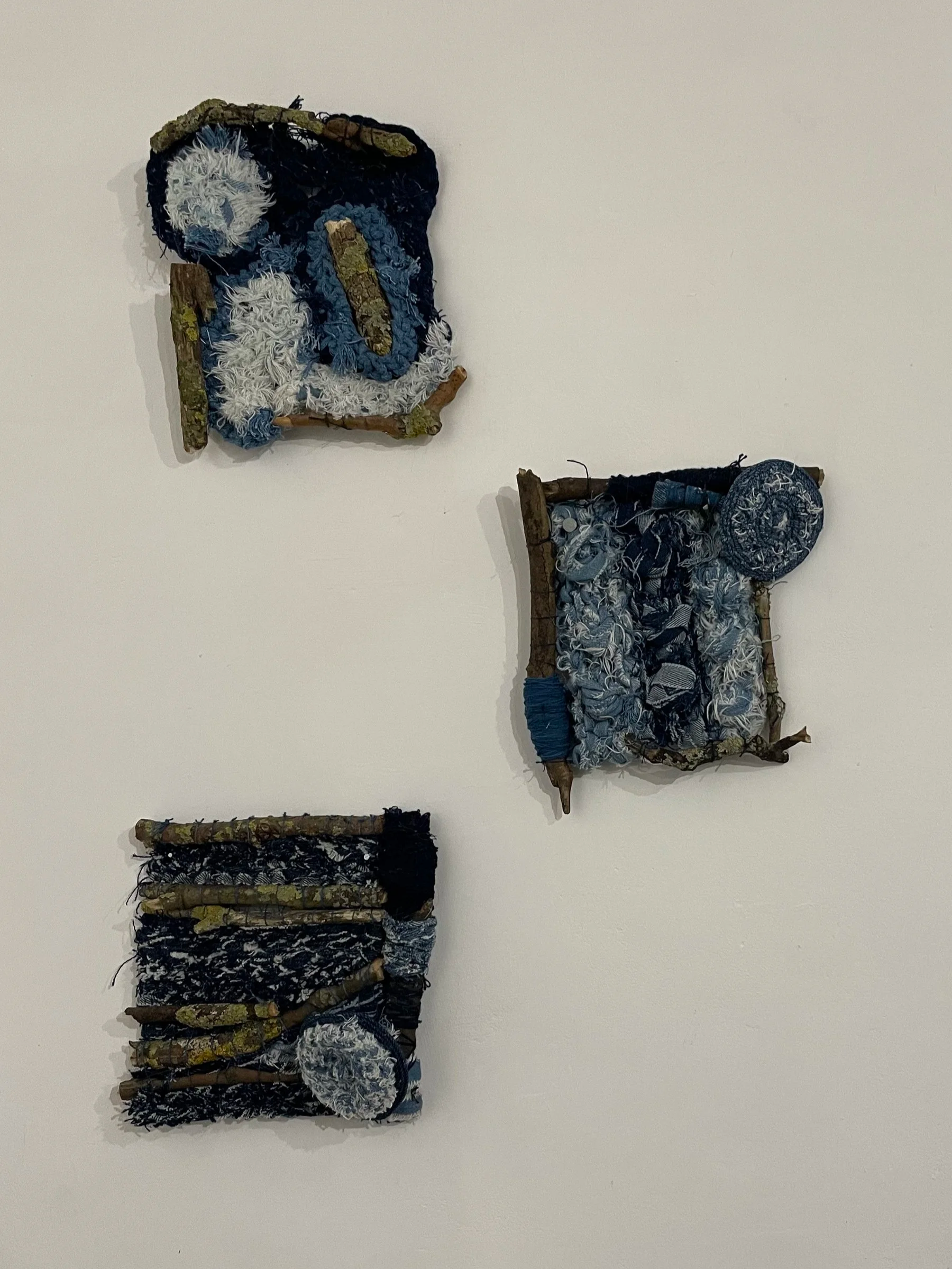
Re-worked and no longer clothing, the denim does seem to lose something of its manufactured, man made quality. And yet, this dominant fabric, this marker of globalised fashion, retains what Zhang calls its “cultural value”.
Even in its deconstructed state, the iconic material still seems to carry traces of the bodies which once wore it. Intertwined, the two juxtaposed materials of this work speak to a pressing paradox of the moment: humanity exploits the natural world while remaining utterly bound to it, dependent on the very systems we erode.
In her next two works, Zhang’s exploration of the discarded expands to include women’s domestic labour, which, as she notes, “despite often being central to the household, is frequently overlooked”.
Echoes Between Threads is a work which combines denim with loofah sponge in cylindrical structures; this latter material choice inspired by the ecologically sustainable practises Zhang witnessed in her childhood. “My mother grows loofah plants herself. They are edible vegetables when young, and when matured, serves as natural sponges for cleaning and absorbing grease.” Echoes Between Threads can thus be understood as a monument to cultivation, patience, and the resourcefulness of women; rebellion against a culture which values novelty, speed and disposability.
Inside the sculptures, portable mini speakers play layered recordings: Zhang’s mother doing chores and cutting paper, field recording of insects, audio from Zhang herself engaged in domestic life. This sound folds the human and non-human together, collapsing time and geographical distance, while repositioning domestic labour as part of the environment’s rhythms.
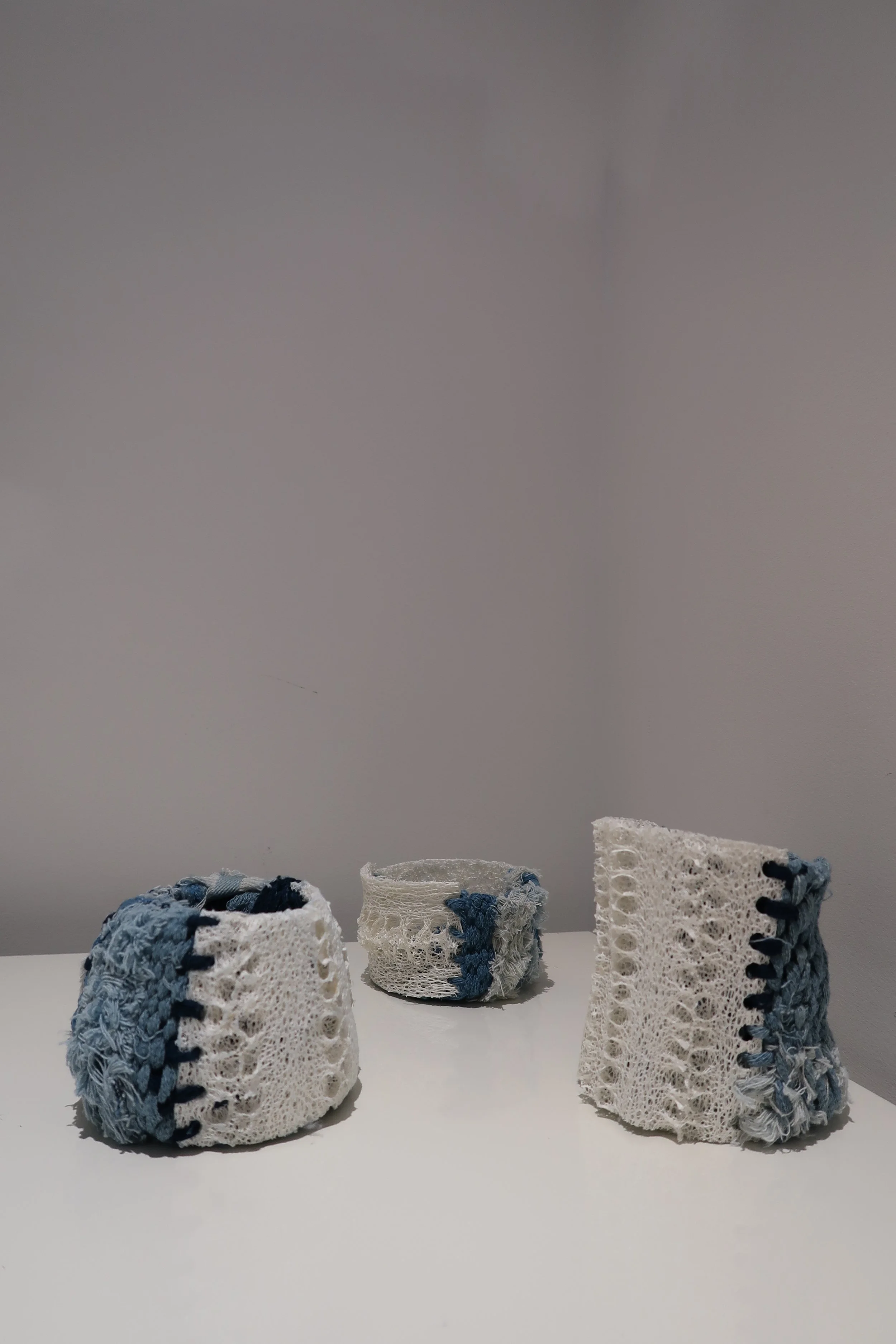
Echoes Between Threads
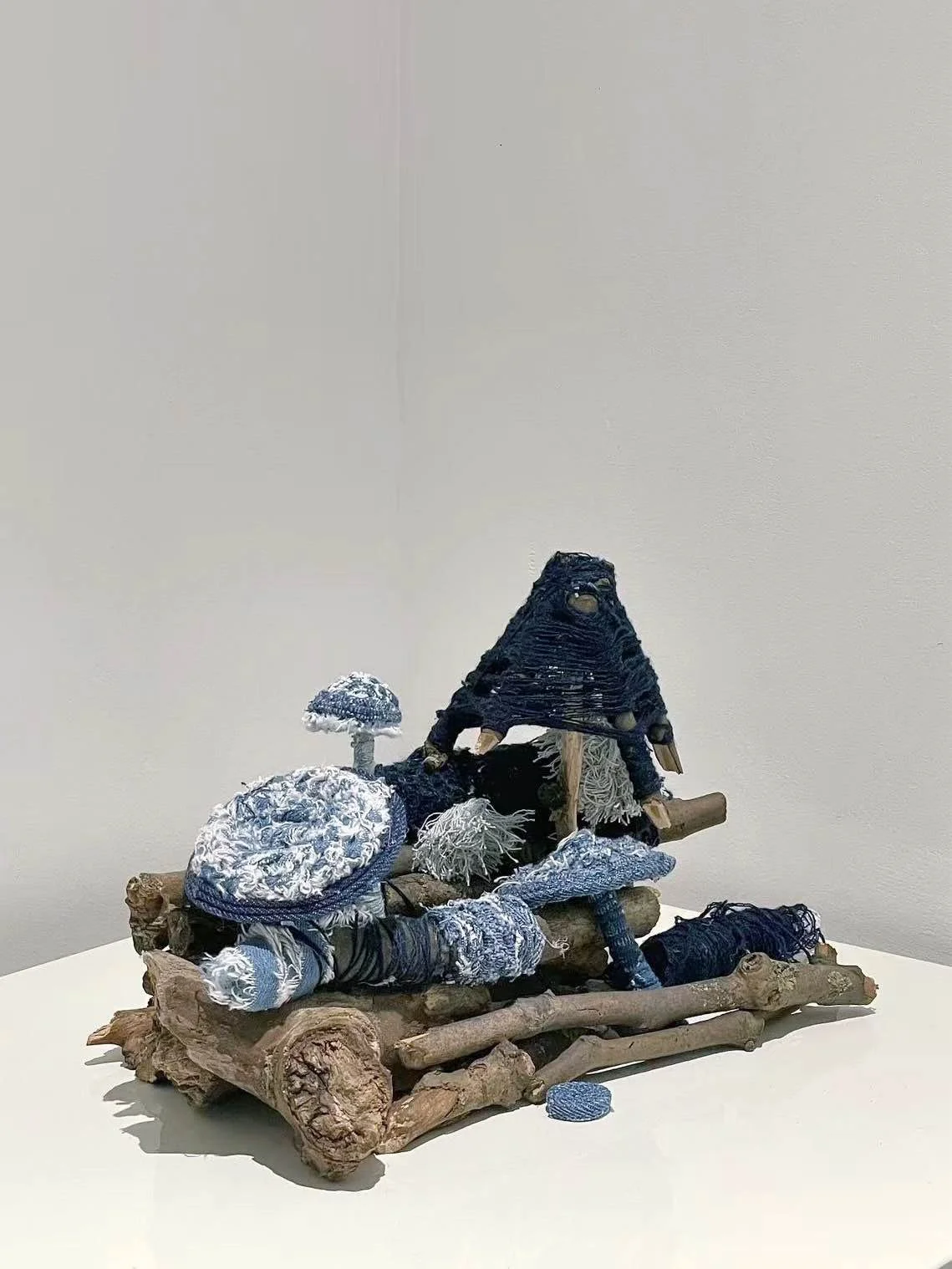
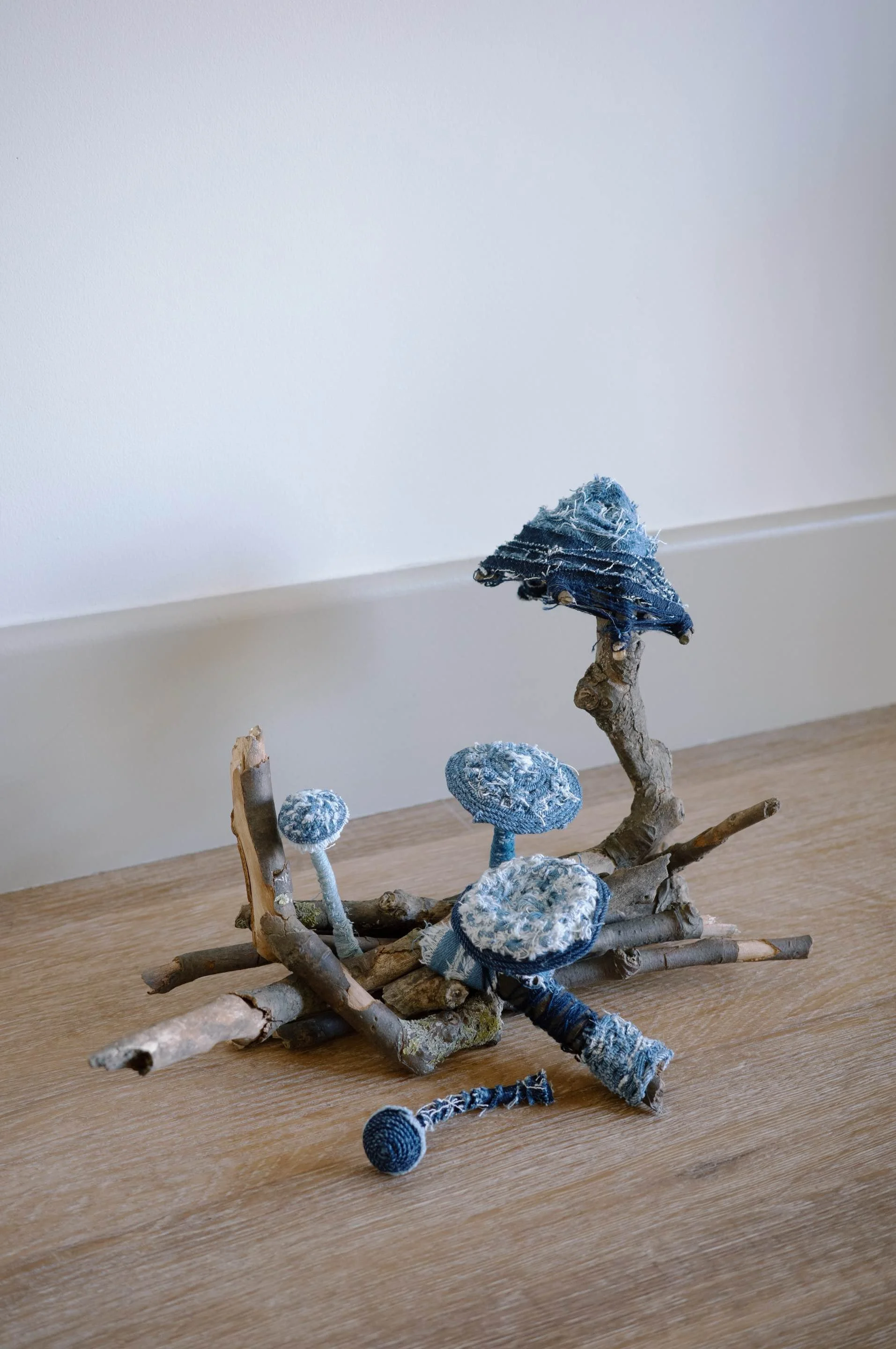
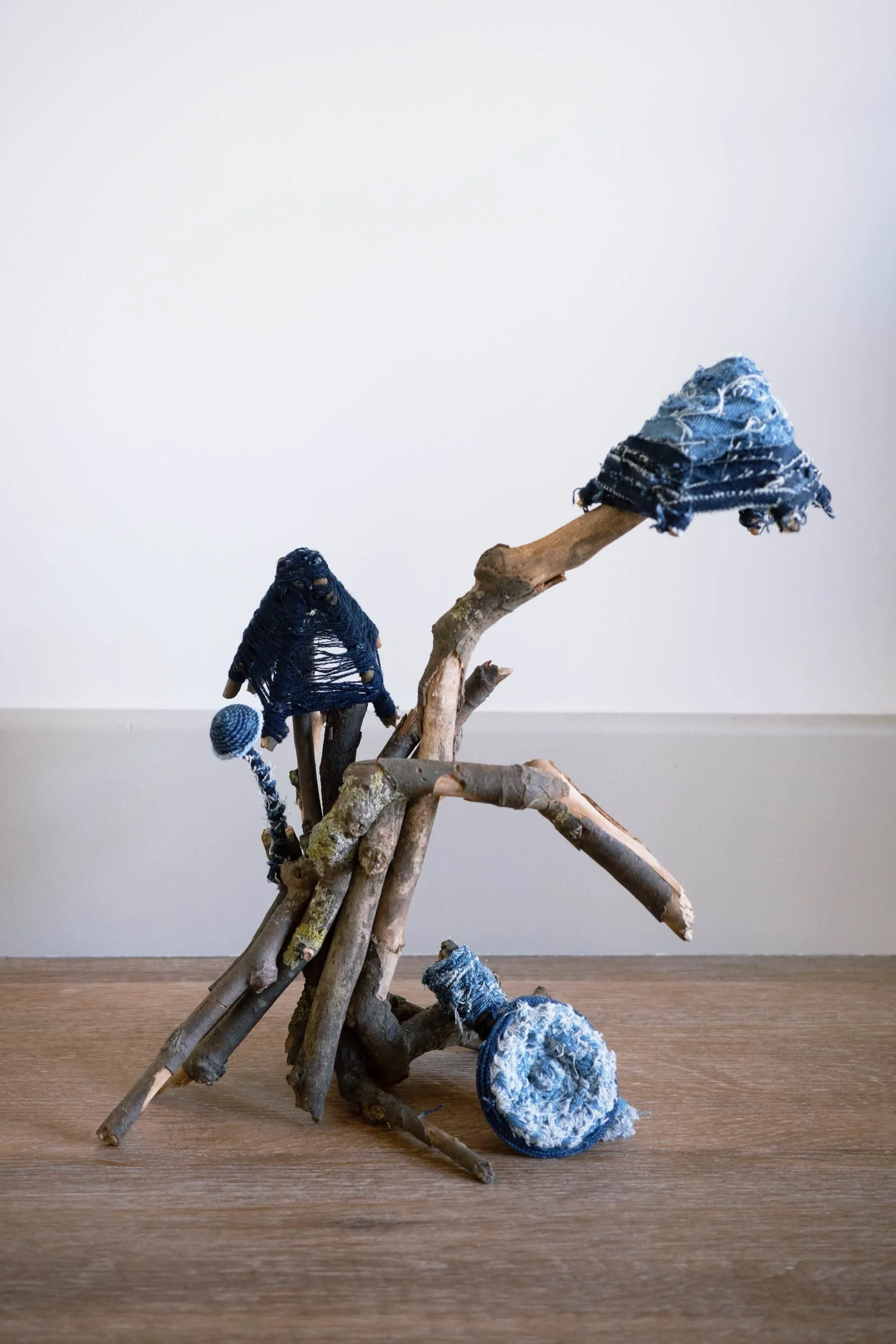
Similarly, Zhang’s memory of her grandmother, who cultivated and wove grasses into household objects, informed her weaving in When Spores Fall— where denim sprouts like fungi from fallen branches, forming structures that hover somewhere between forest floor and bonsai garden. An apt visual metaphor, as fungi feed on what’s discarded, turning decay into growth. Zhang turns what we call waste — materials, time, labour — into art, while holding up consumerism itself as the true rot.
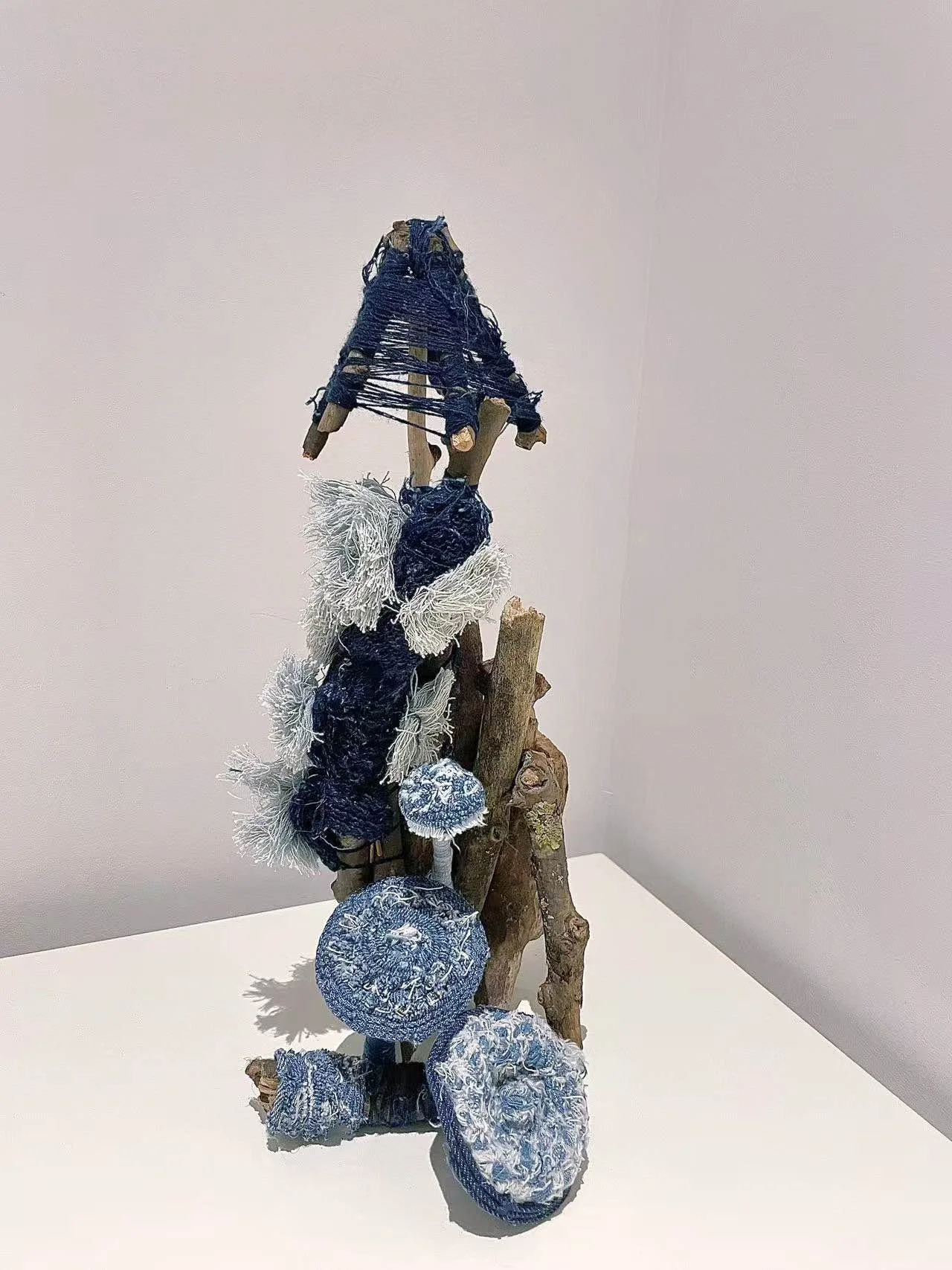
When Spores Fall