OBTUSE (°)
Review by:
For two nights, in the convivial confines of Brick Lane’s Galleria Objects, the first in a series of events developed through curatorial platform Obtuse Archive, set out to translate its central metaphor into a physical, multi-sensory experience. The exhibition was one that strived to occupy the “unsettled zone” between structure and resolution.
Thursday 18 December saw the exhibition, curated by Selin Kir and Yangrung Chen, open with a private dinner and preview, followed by a full public programme with daytime exhibition viewing and an evening show the following day.
Ultimately, OBTUSE (°) succeeds as an inaugural show because it aptly achieved what it blatantly set out to do: avoid a unified statement. Instead, it relies on proximity and co-presence; While the wide variety of media – from Japanese memes to French desserts – could risk feeling scattered, the central metaphor of leaning without ever arriving provides a cohesive enough container for this choreography of almosts, unsettled zones and partial alignments.
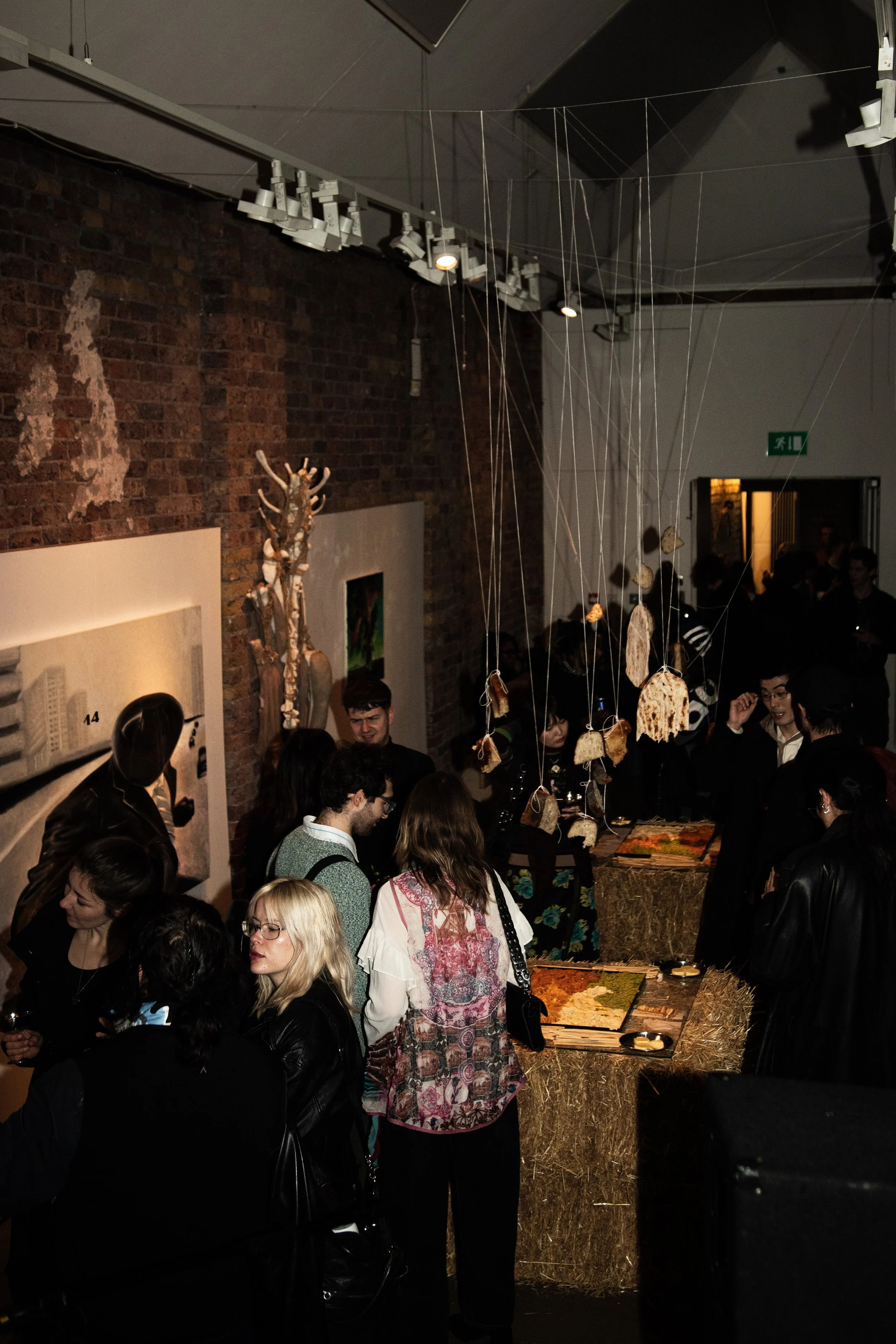
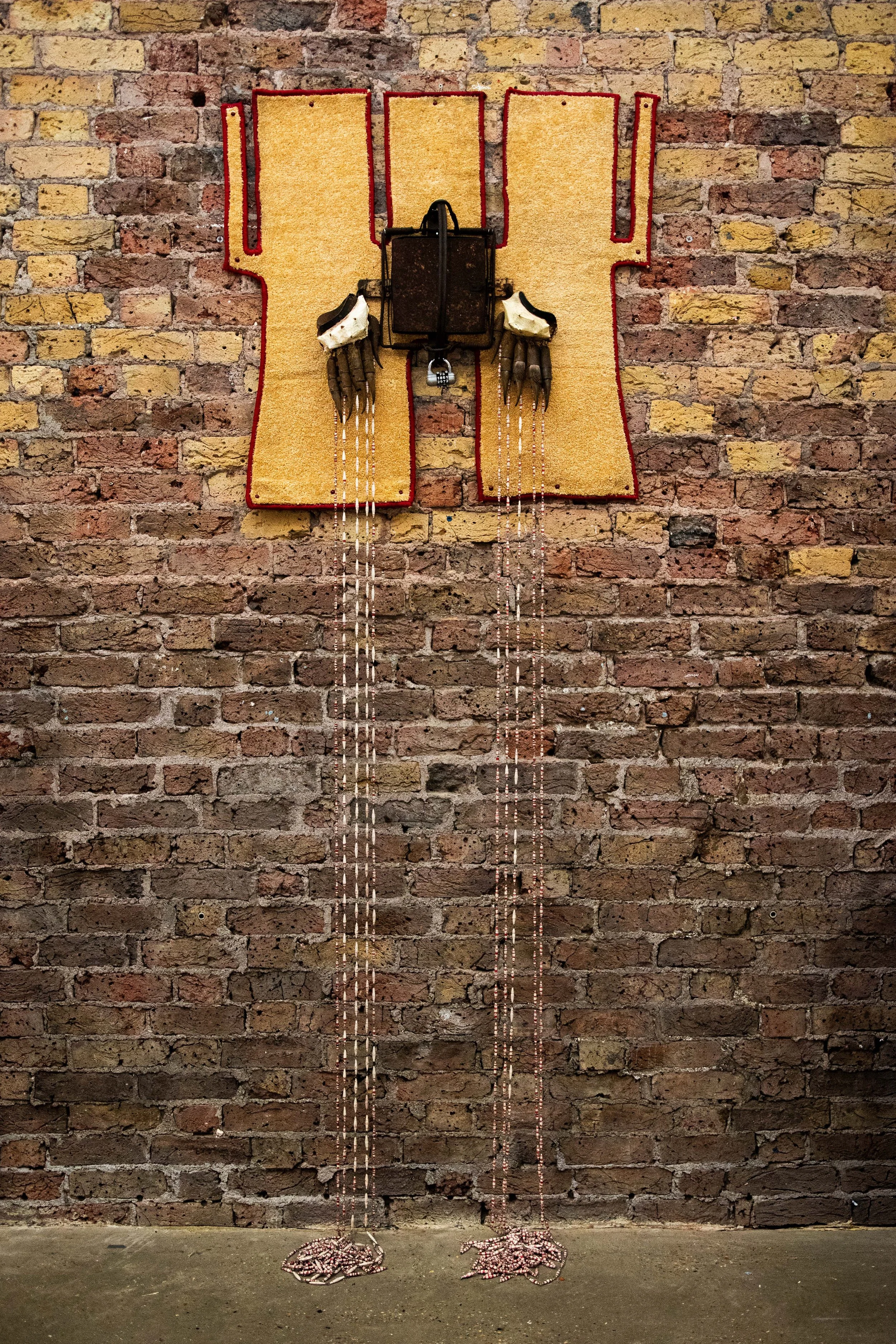
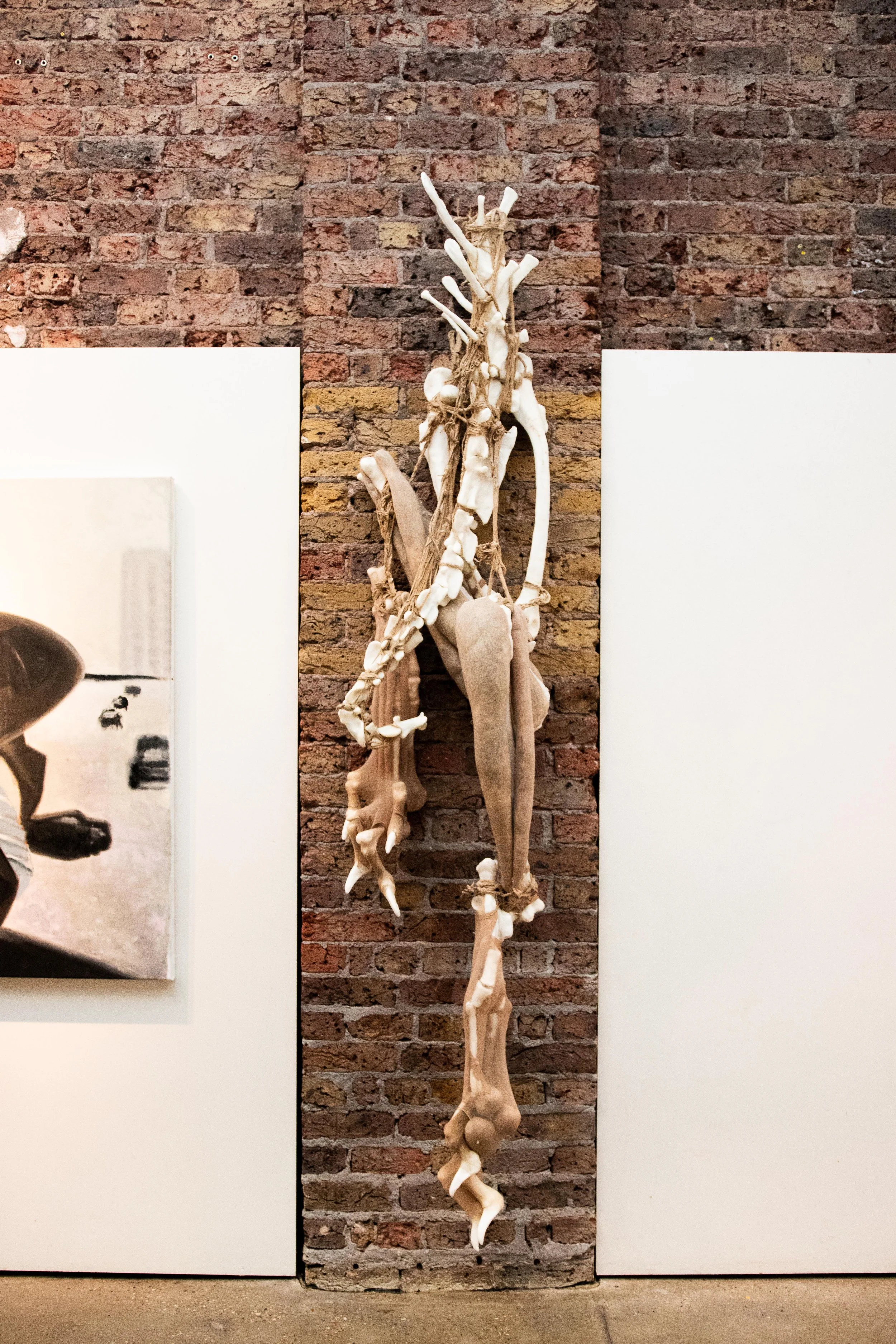
For two nights, in the convivial confines of Brick Lane’s Galleria The early, initial still allowed the materiality of the works – the weight of the traps, the softness of hair, the smell of the bread – to breathe before the obtuse; geometry. With no accompanying text, the displayed artwork was often a matter of personal interpretation.
Upon further reading, however, the exhibition text lists a rather fittingly eclectic mix of artists, including works by artists Cas Campbell, Lola Dupre, Juntao Gao, Yutaro Inagaki, Jon Kipps, Irene Pouliassi, Meitao Qu, Alfred Francis Pietroni, Bo Sun, Yuma Radne, Zeus Li and Abigail Norris.
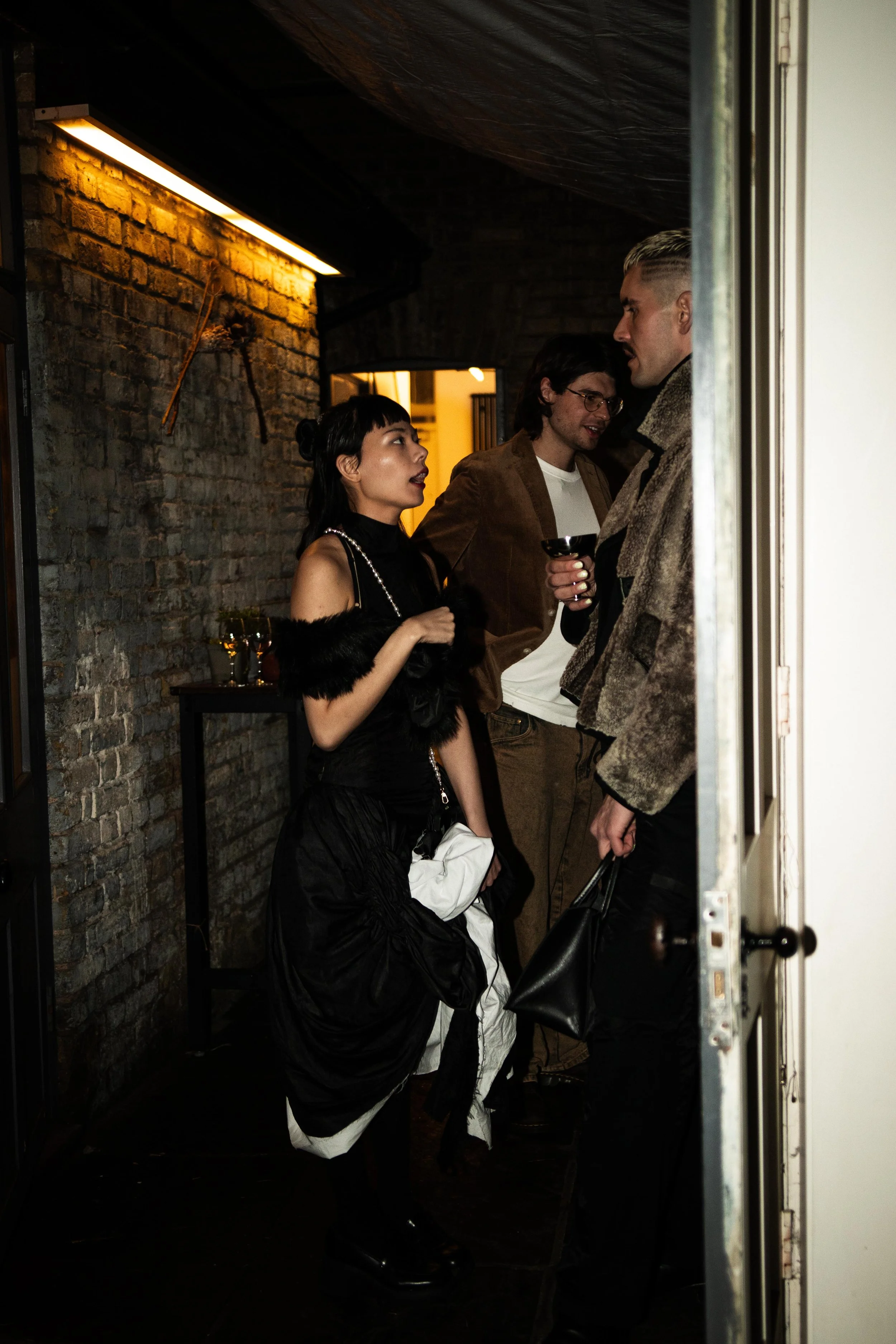
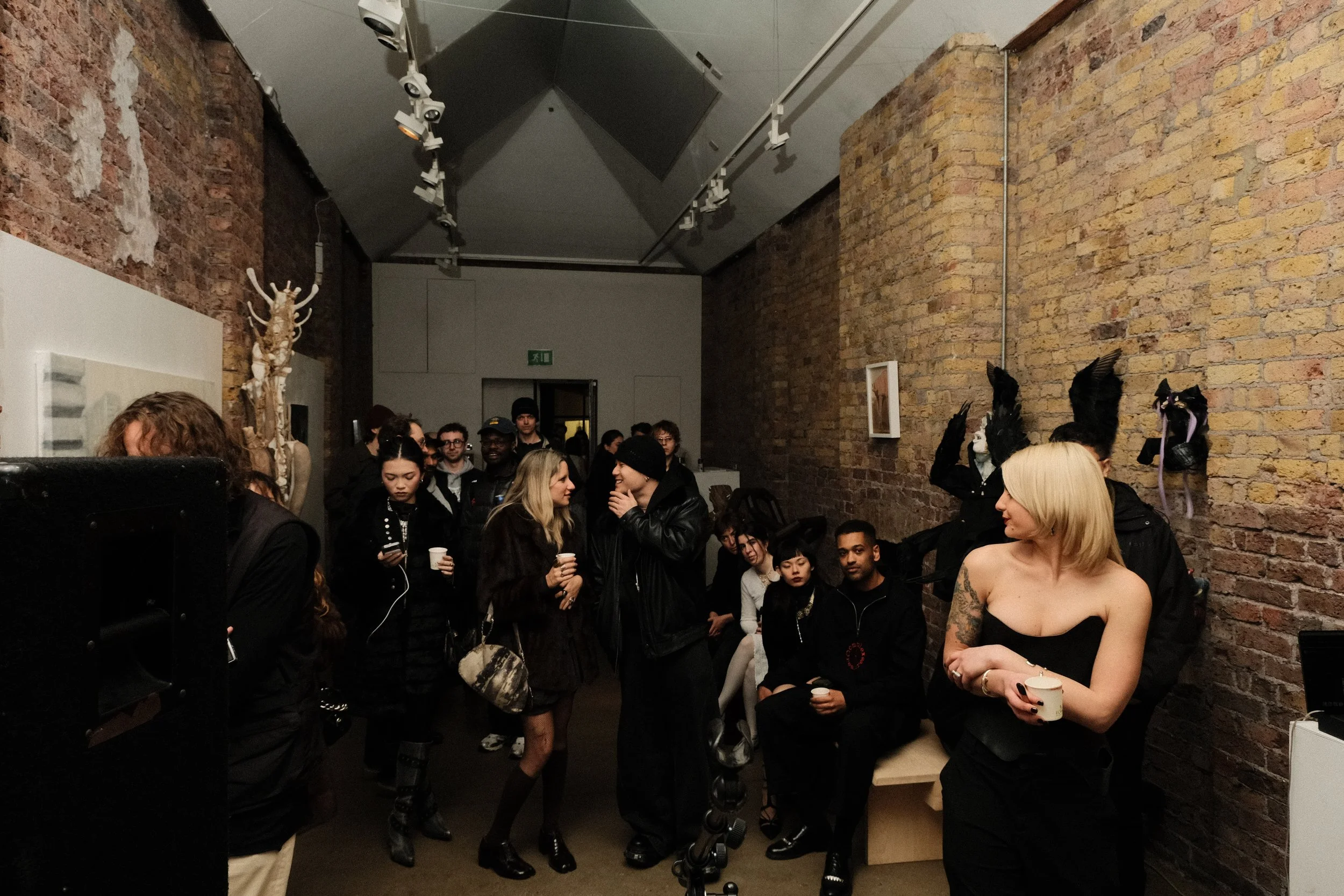
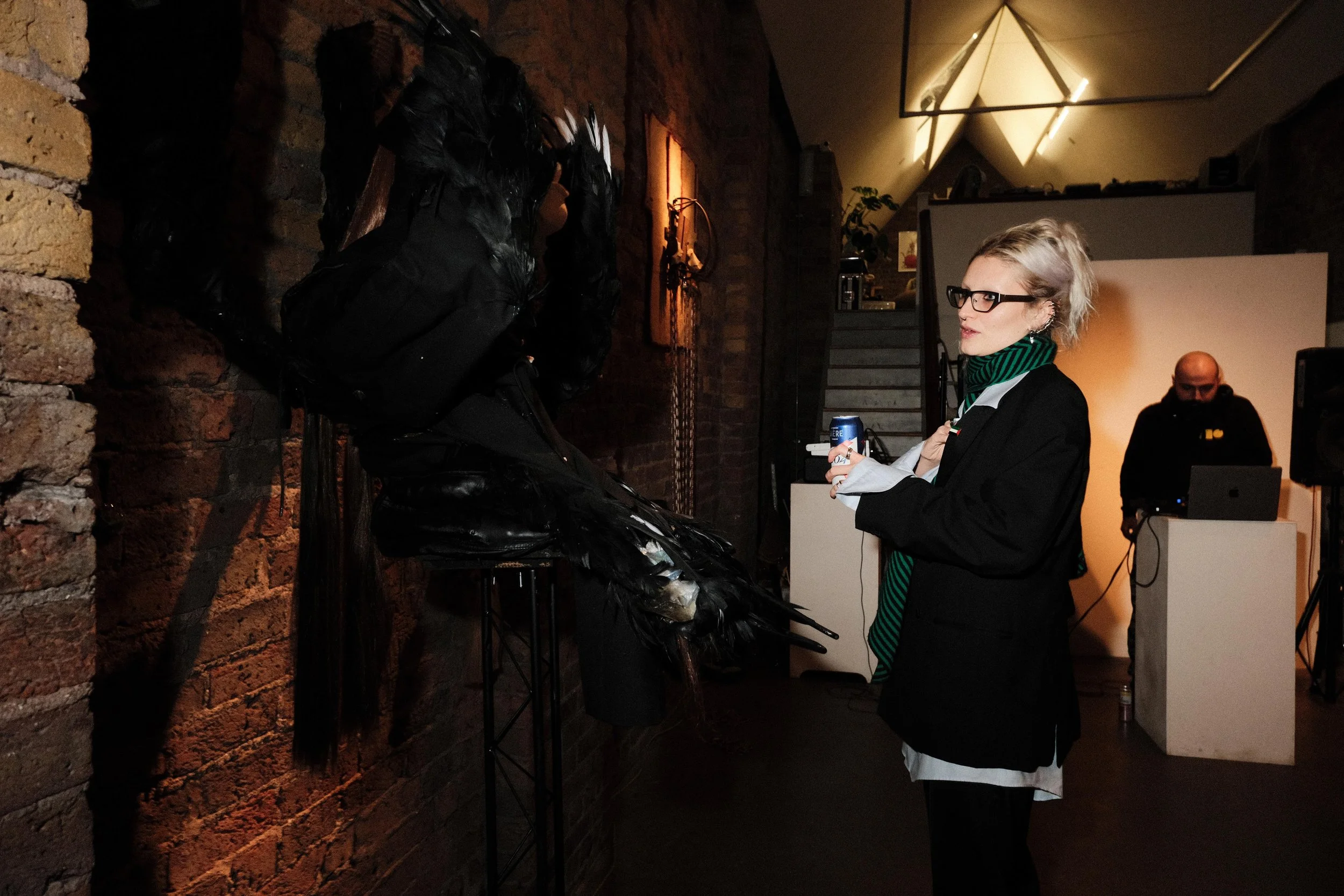
The venue features a dual-natured layout that subtly, but notably, alters the exhibitions register, shifting as the viewer moves through the rooms. In a movement that feels like something of a circuit, rather than a single open space – with an outdoor yard connecting the two main gallery spaces, providing a welcome respite during the transition and of course, networking – one eventually reaches the main room shortly thereafter.
Could it be here that we see in action the exhibition’s spatial logic, as explained in its curatorial statement?:
“The Right Angle (90°): Represented as the “articulated, stabilising, and finite;” edge of a frame or structure.
The Flat Line (180°): Represented as the “horizon or absolute symmetry”.
The “Obtuse” Zone: The show successfully leans into this middle ground – wider than structure but “shy of resolution;”
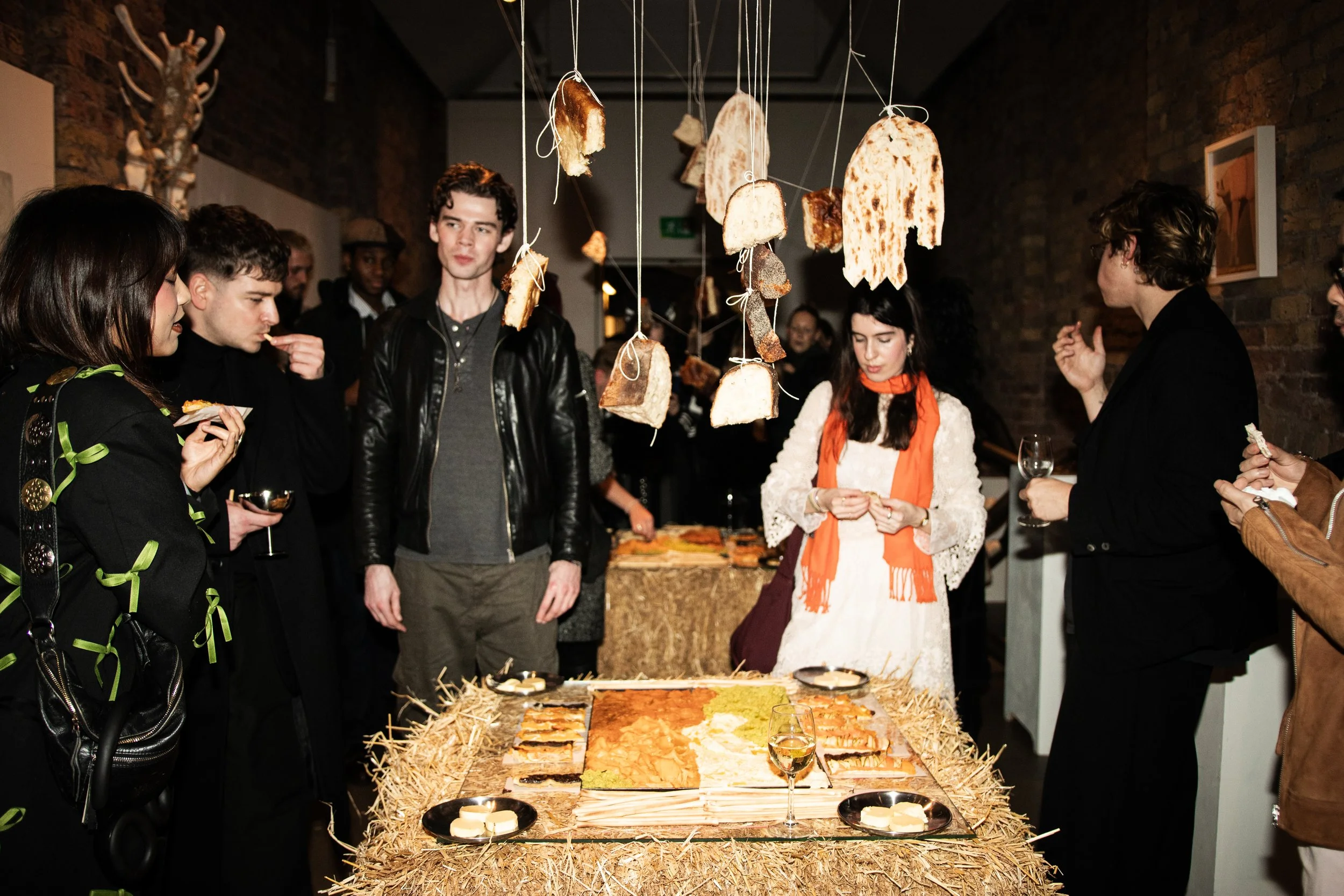
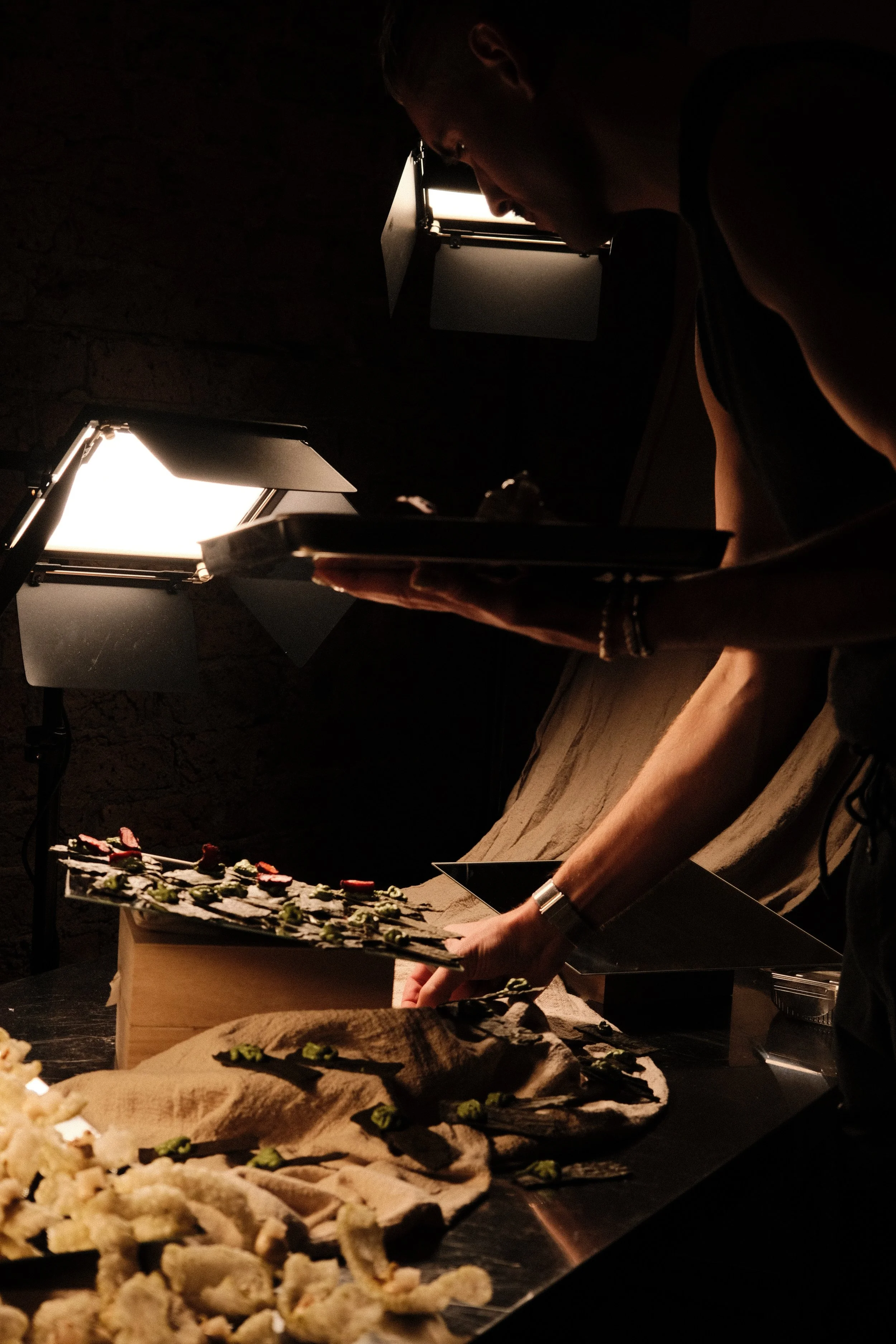
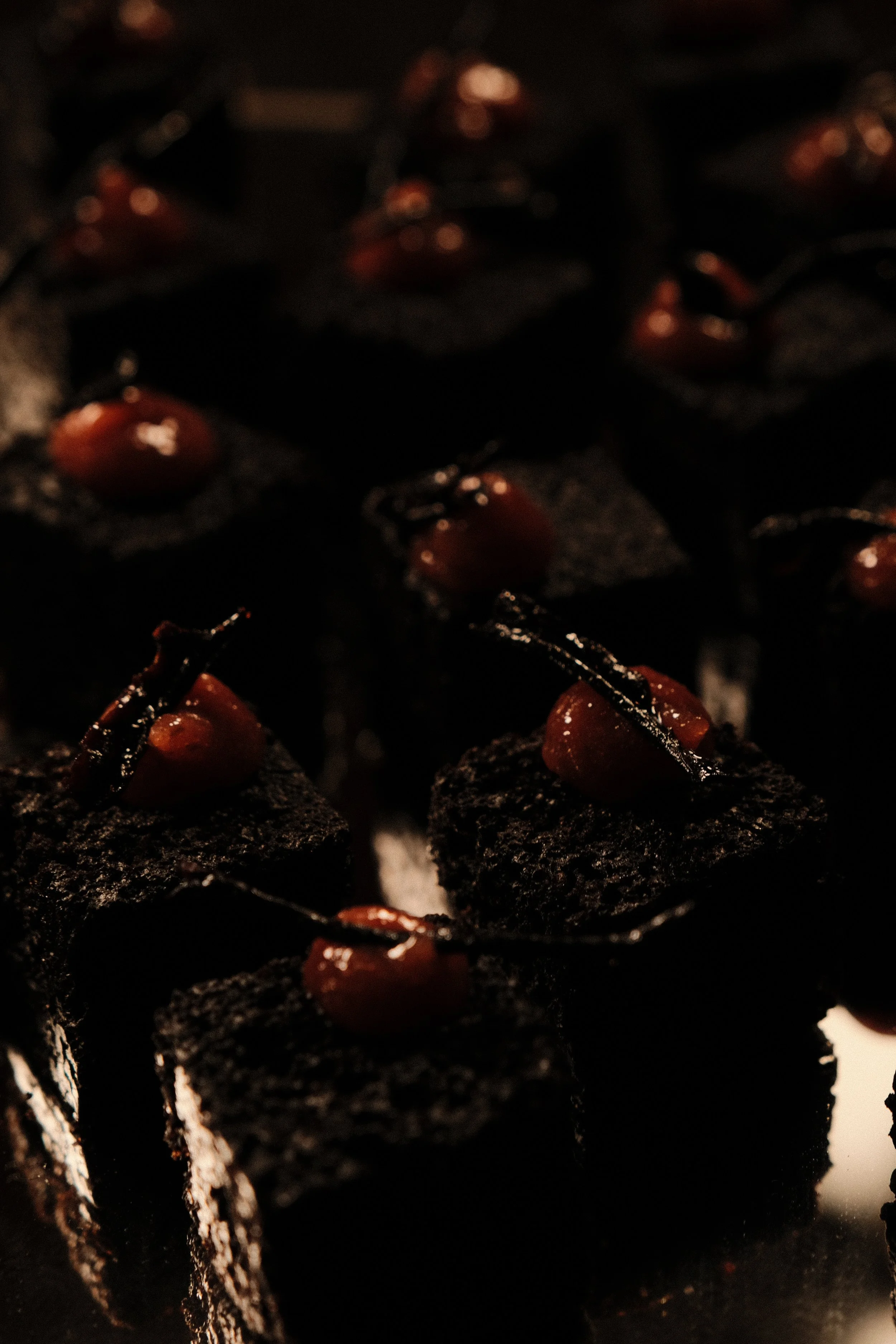
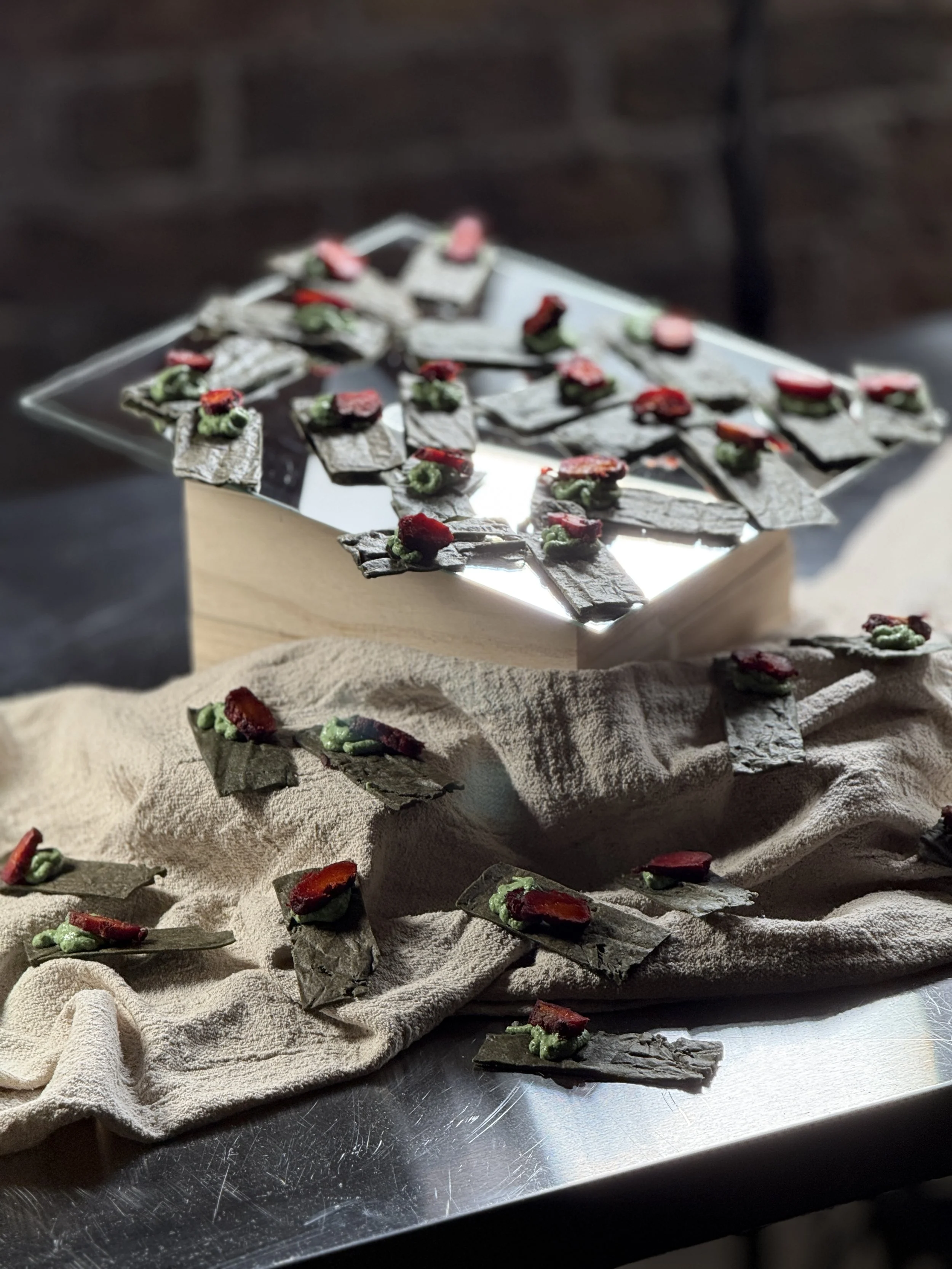
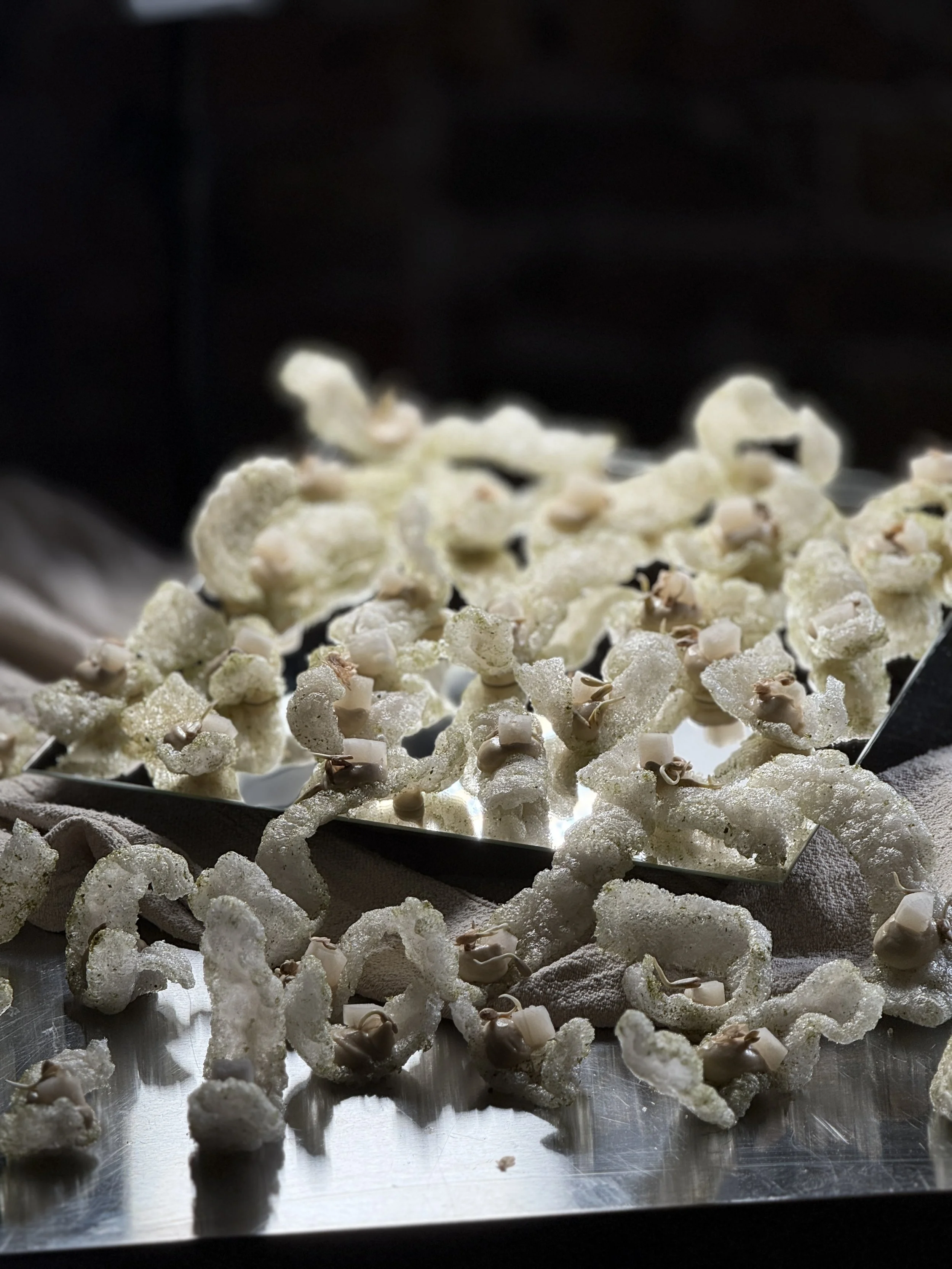
A wonderfully binding element of the exhibition was its use of sensory activation. Catering and culinary project Tros London’s opening dinner and food artist Barney Pau’s intervention, both artfully integrated into the exposed-brick walls of the “engine” room of the exhibition, add a tasteful touch. Food – bread suspended from the ceiling, large trays of colourful dips, entreés artfully placed on light-refracting panels – enliven the space. You’re made to join in what the curators refer to as a “choreography of partial alignments”, where one must physically navigate the art to consume it.
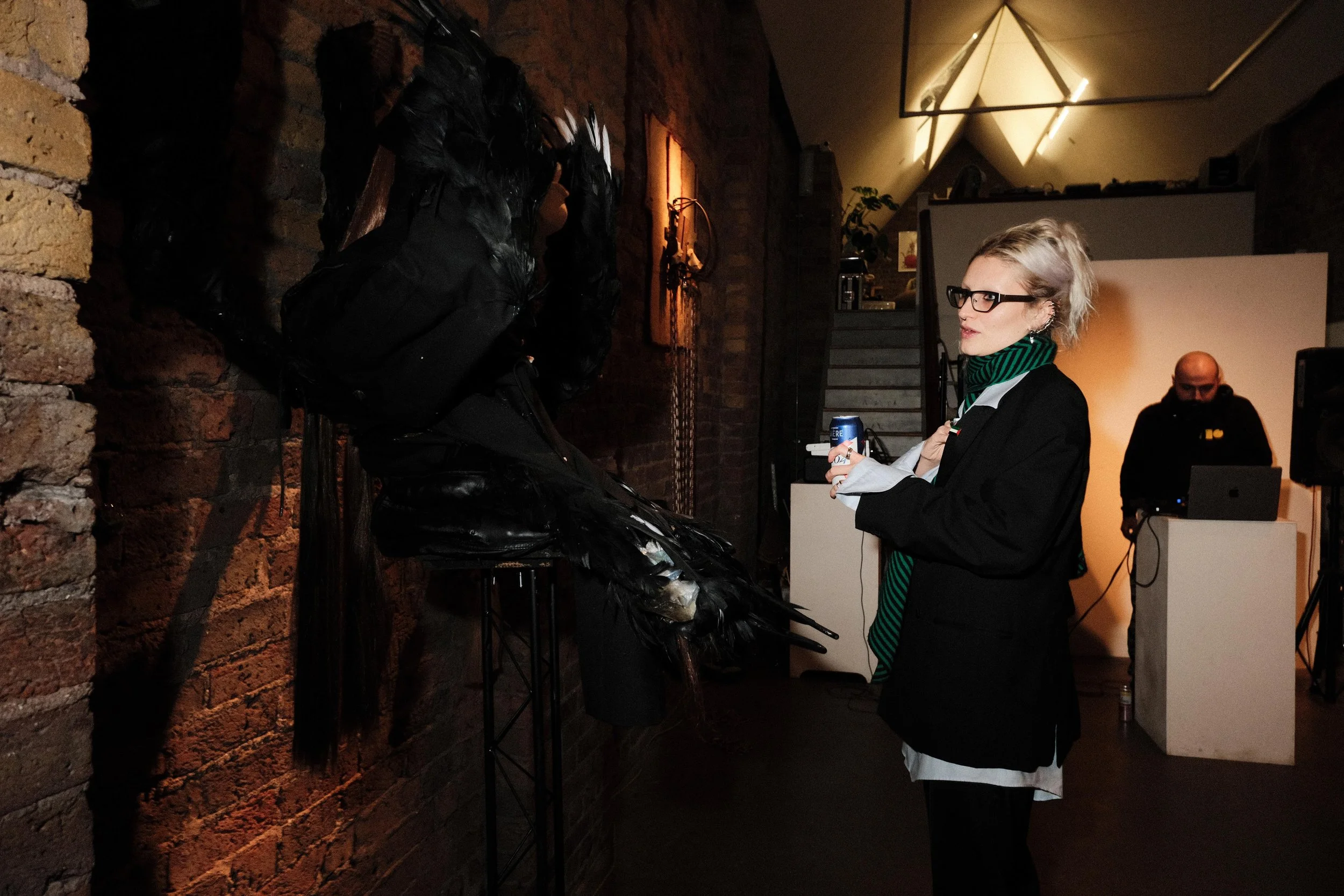
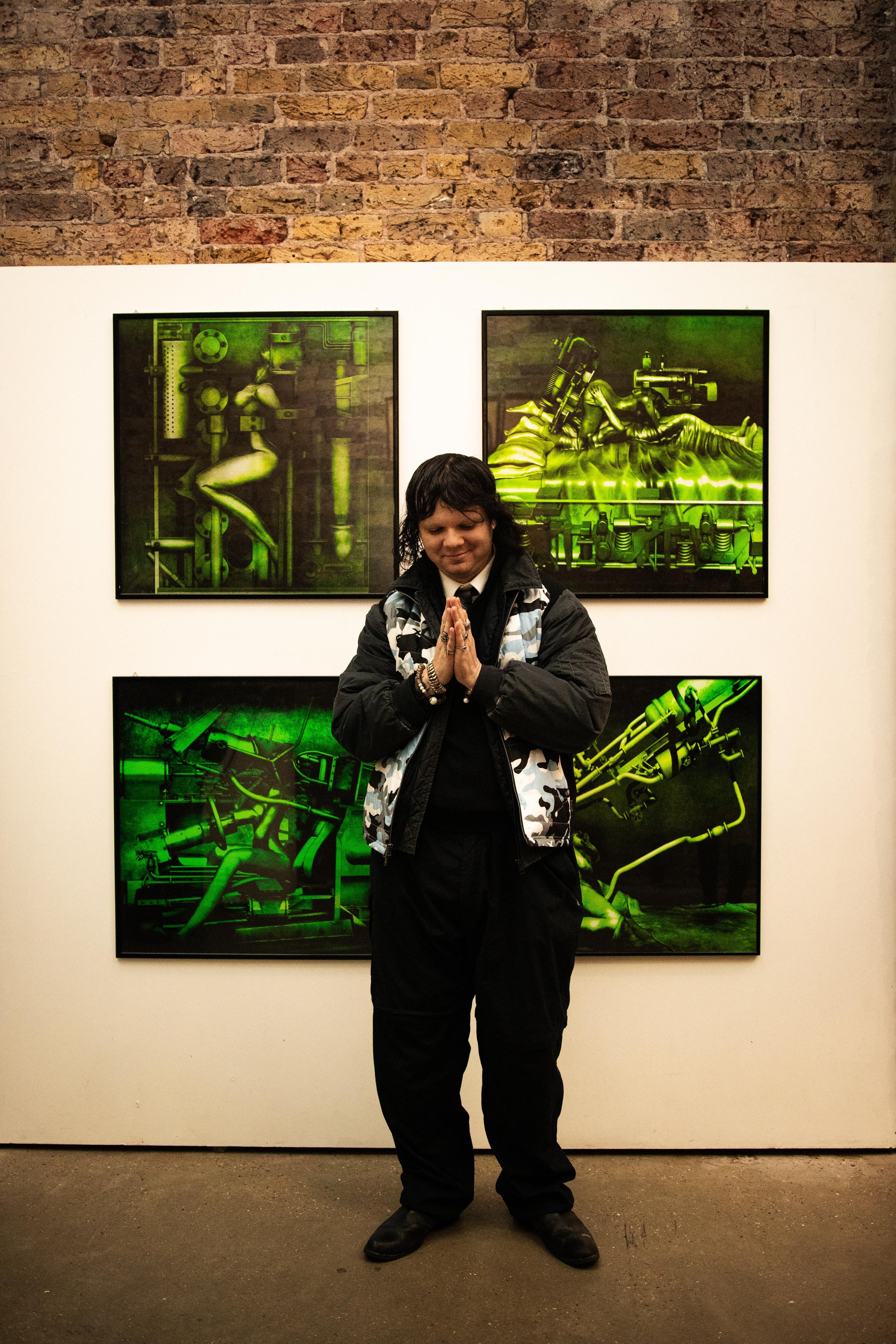
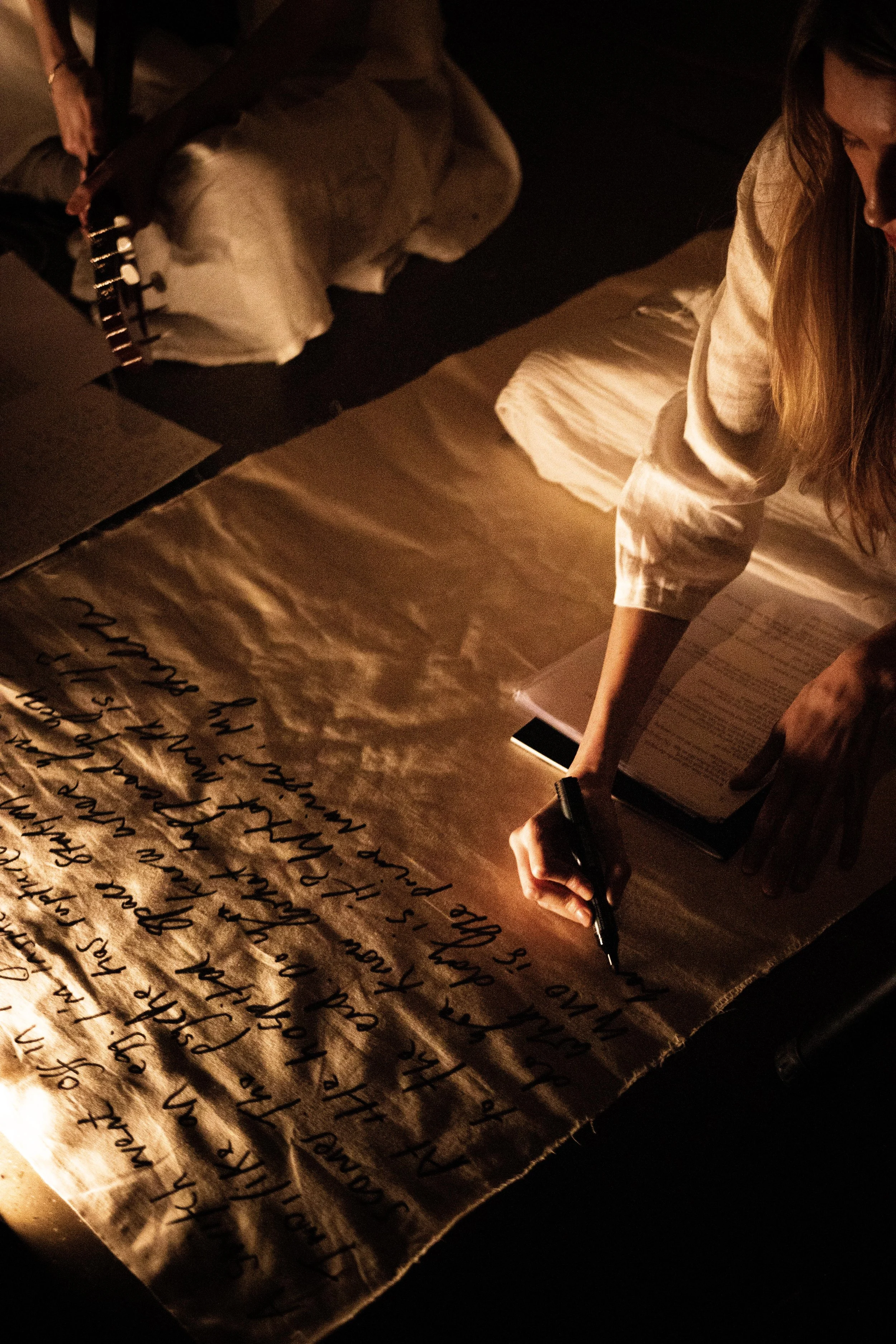
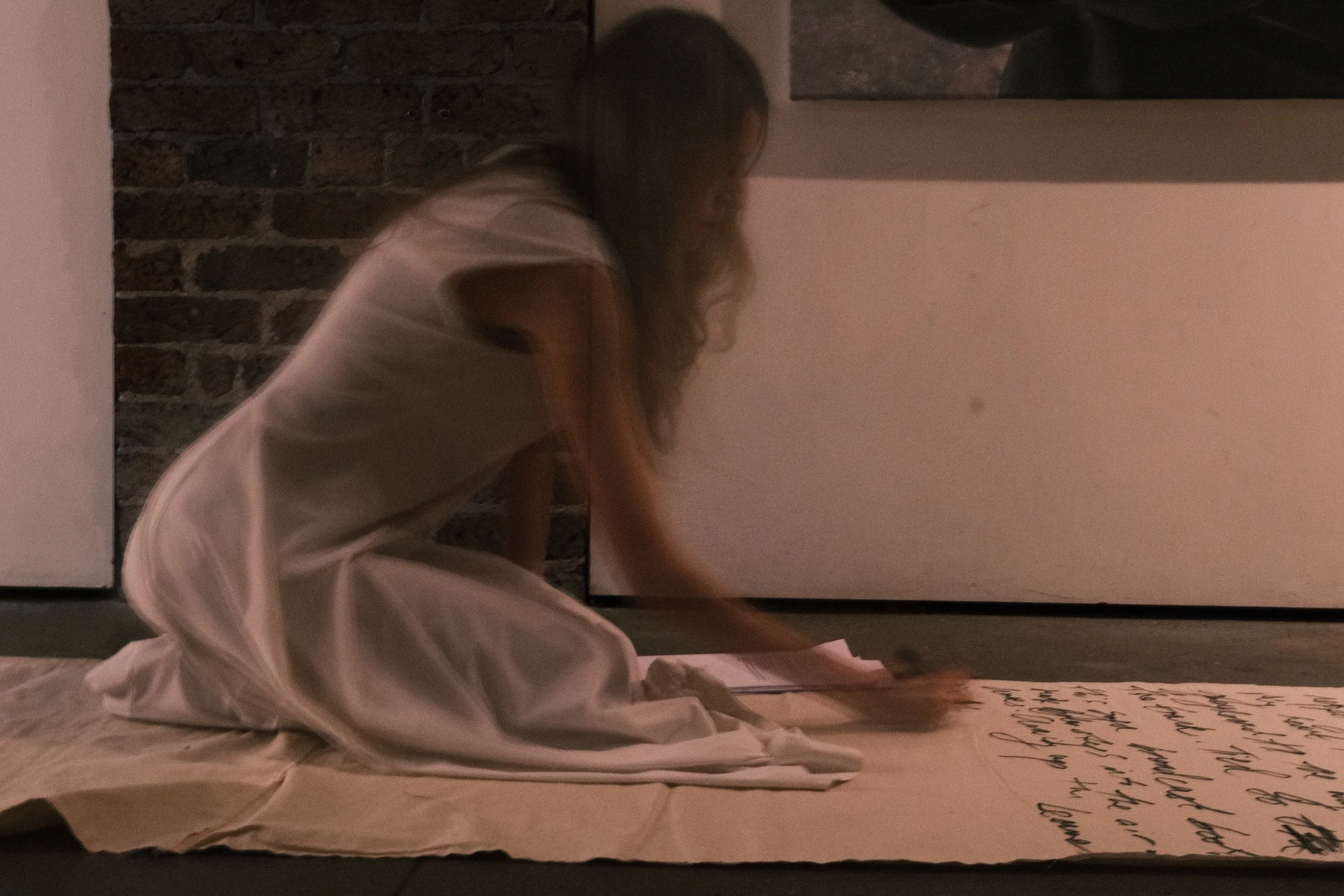
The live performances also served to further extend the motif of the obtuse angle into time. Vera Sacra – the solo project of Emily Marks, a cellist and producer – whose work is a blend of ambient, neoclassical and deconstructed dance; Waterbaby, a London-based duo known for ethereal, genre-bending soundscapes combined with performance art; PYTKO, an artist whose work frequently explores the boundaries of voice, electronics and emotional resonance and performer/musician who often works at the intersection of architecture, sound and spatial performance, otherwise known as Emmy Bacharach, all contribute, in large part, to the emotional and sensory memory of OBTUSE (°) as a whole.
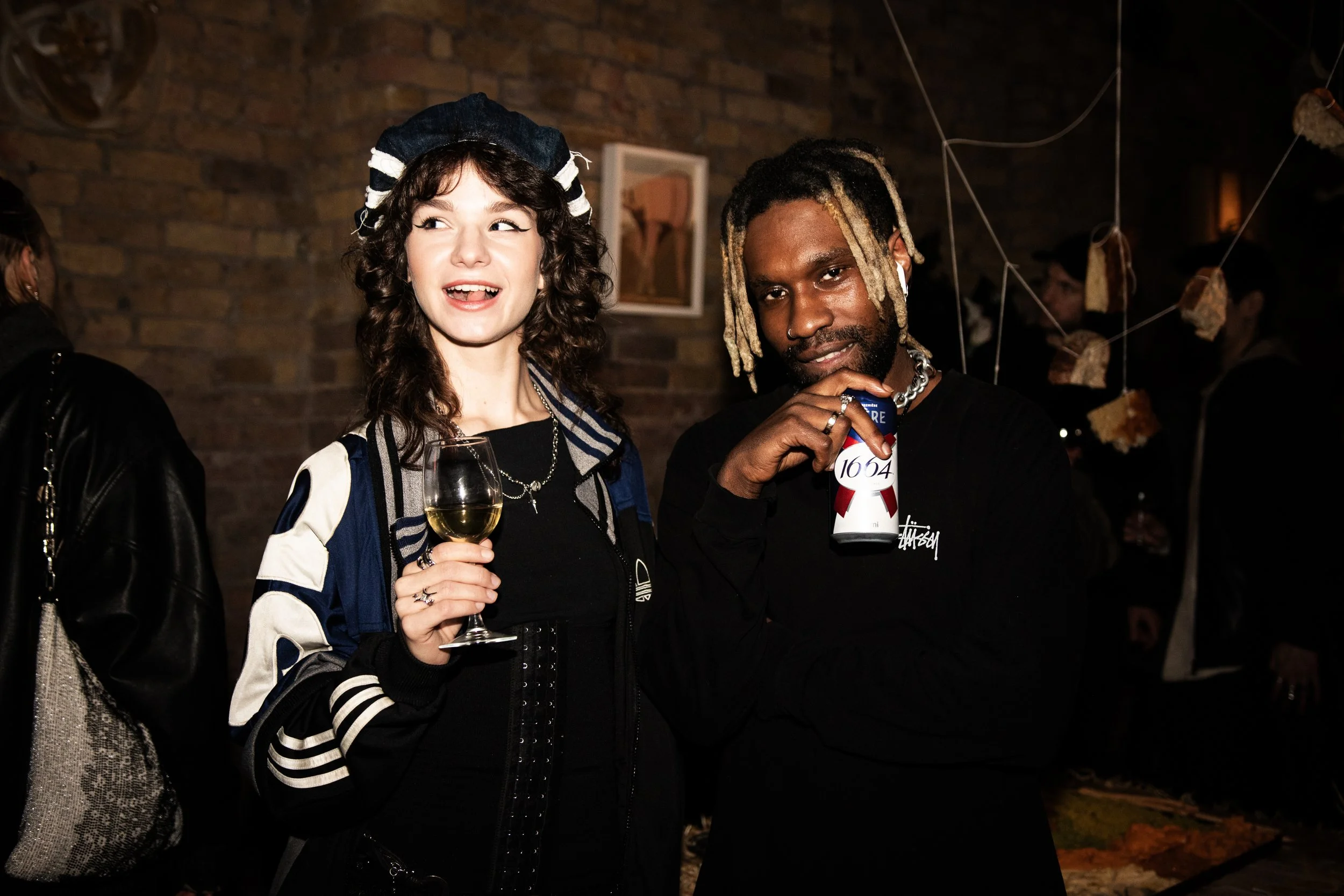
The opening night never quite settled into the static hush of a traditional private view. Instead, it was something more intimate – and porous. Just as the obtuse; angle refuses the stability of a right angle, the evening’s programme refused the standard etiquette of the institutional London art scene, dismantling the typical look-but-don’t-touch; formality. Herein lies the joy: seeing a curatorial duo’s very first exhibition. Or maybe the delight of walking in not quite knowing what to expect, only to then experience something both highly curated and refreshingly unpolished; genuine encounter over mere observation.