
Whispers in White: Phoebe English brings tranquility to Fashion Week
Words & Images by: Anya Duncan
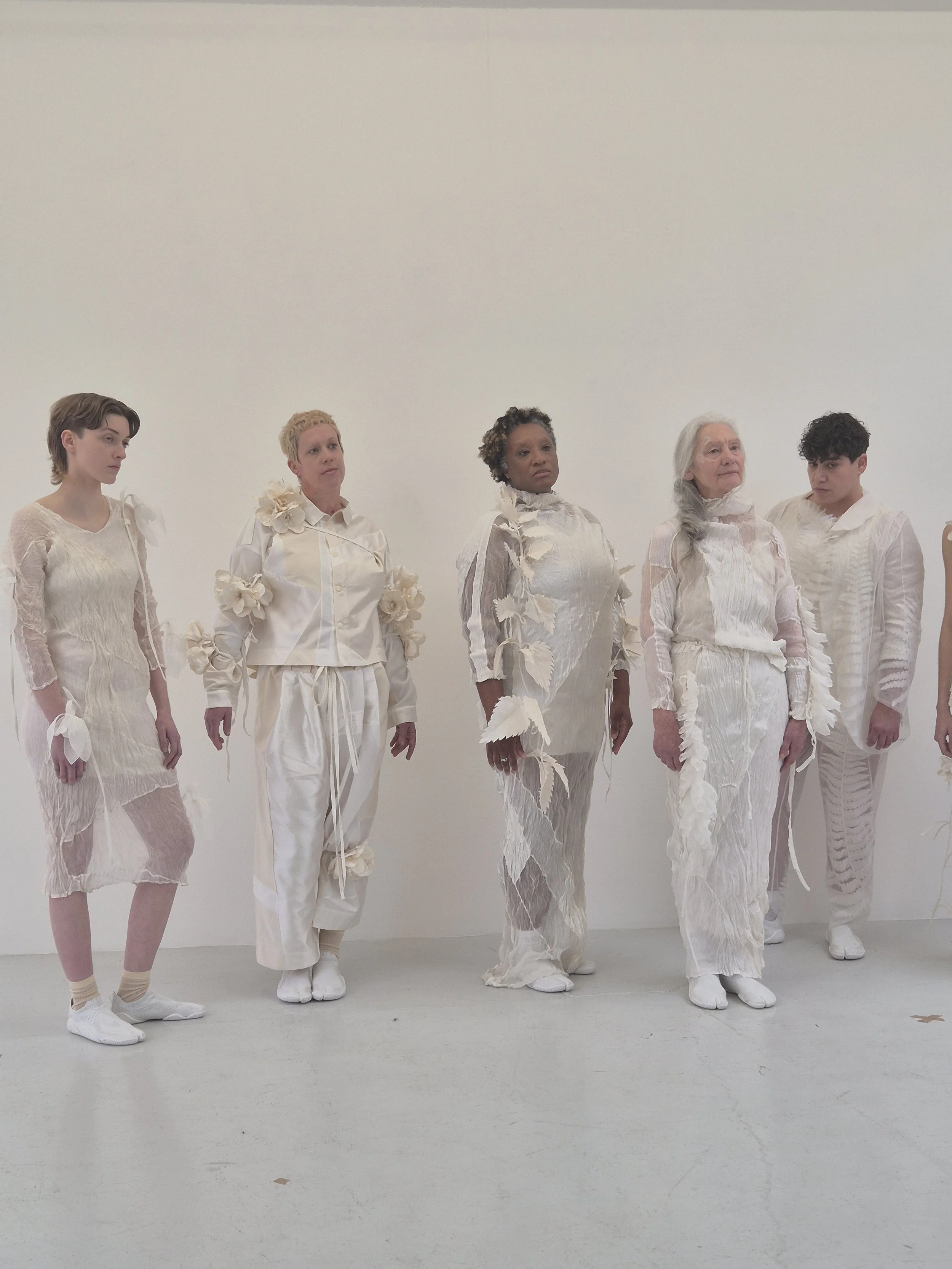
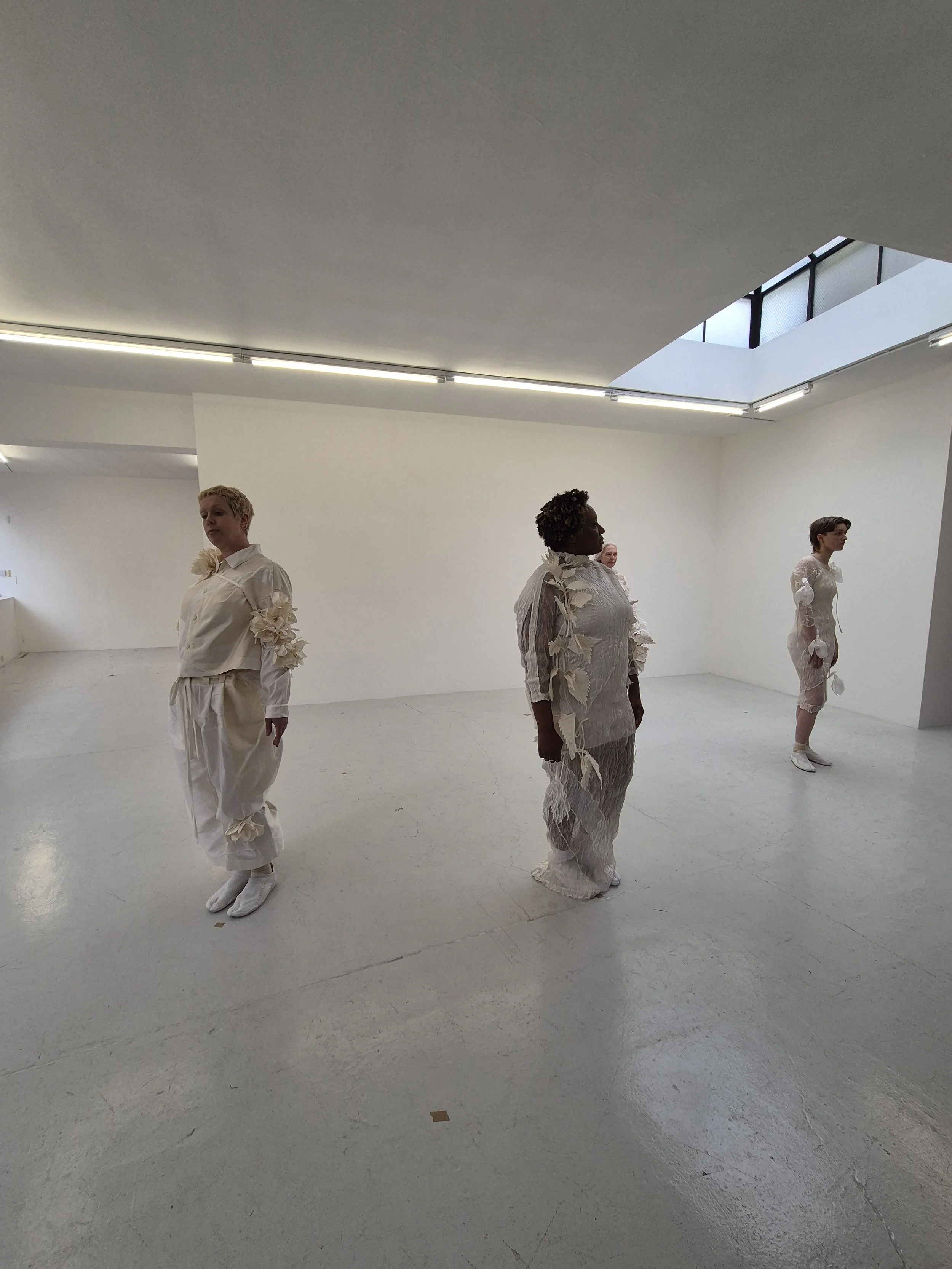
There are presentations that roar and presentations that whisper; this was the latter. In a stark white gallery — a single room pared down until only the bones of clothing remained — Phoebe English offered Lost Touch, a show that felt less like spectacle and more like confession. This season she returned to the February schedule to place an intimate, considered counterpoint against Fashion Week’s usual commotion. Instead of DJs and overheard speakers, a solitary cellist sat humbly in the corner and dutifully soundtracked the presentation. He produced a focused line that caressed hems and seams as they passed. The music was calming, modestly adorned like a craftsman’s signature stitch; simple at first listen, but full of micro-ornaments that revealed themselves if you leaned in.
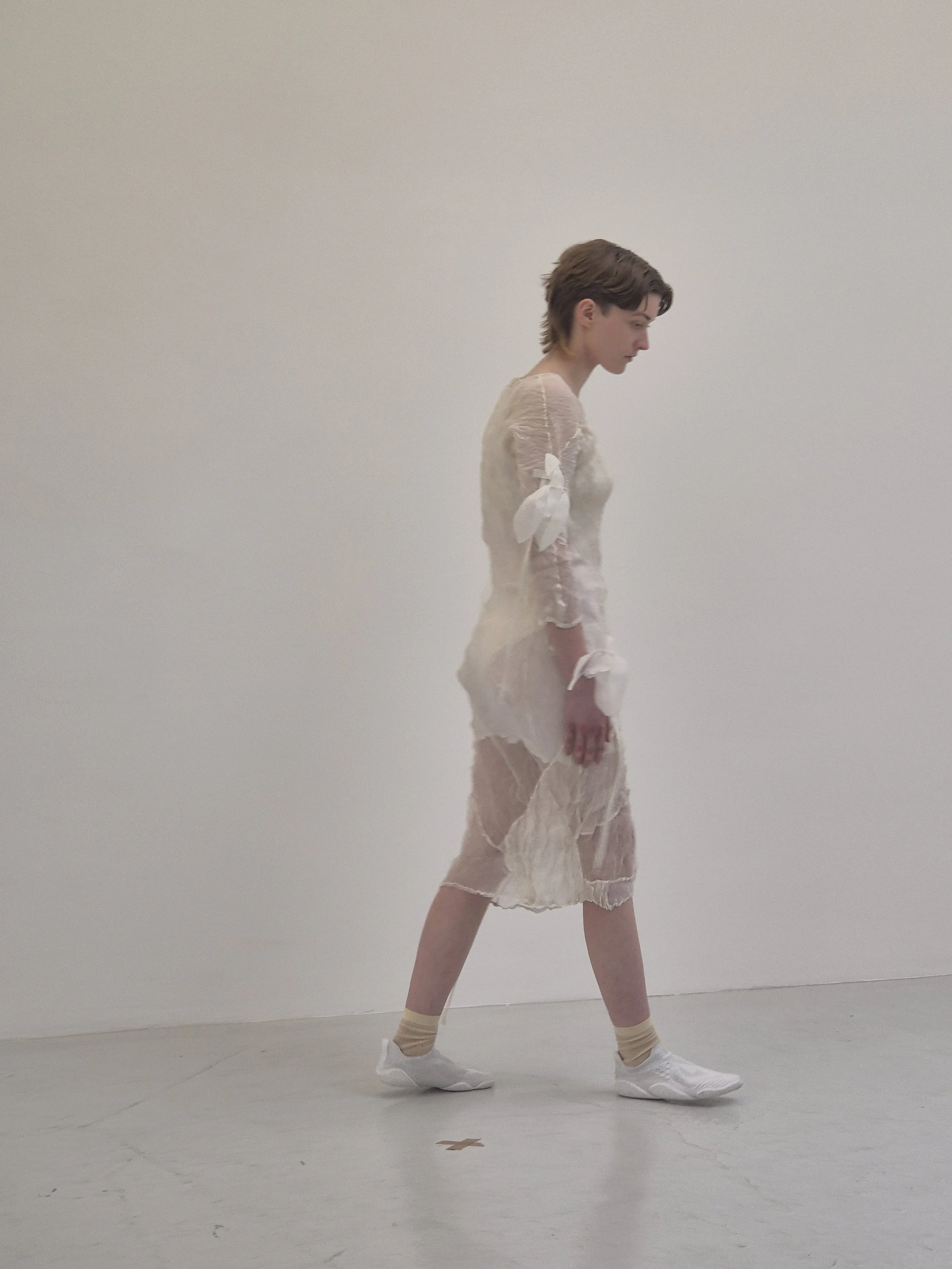
That restraint allowed the garments to speak. The collection’s title hung in the room like a question: what do we lose when fabric hovers instead of hides? When the body is suggested rather than erased? Every look was composed from the same mercurial textile: a diaphanous mesh that could be folded, layered and coaxed into multiple personalities. On some bodies it bloomed into opaque, sculptural swells. Elsewhere it whispered across skin in a single filament, leaving chest and arm exposed as if by design rather than omission.
The range of bodies wearing it felt crucial to the presentation’s visual language. This fabric hovered across all kinds of forms, lightly touching curves and sharp edges to bind each model into the story of the collection. My clearest memory is of a shirt that read like an Iris van Herpen watercolour transmuted into tailoring. It arrived folded into opalescent waves (opacities here, sheer shimmers there), in a dialogue between concealment and revelation.
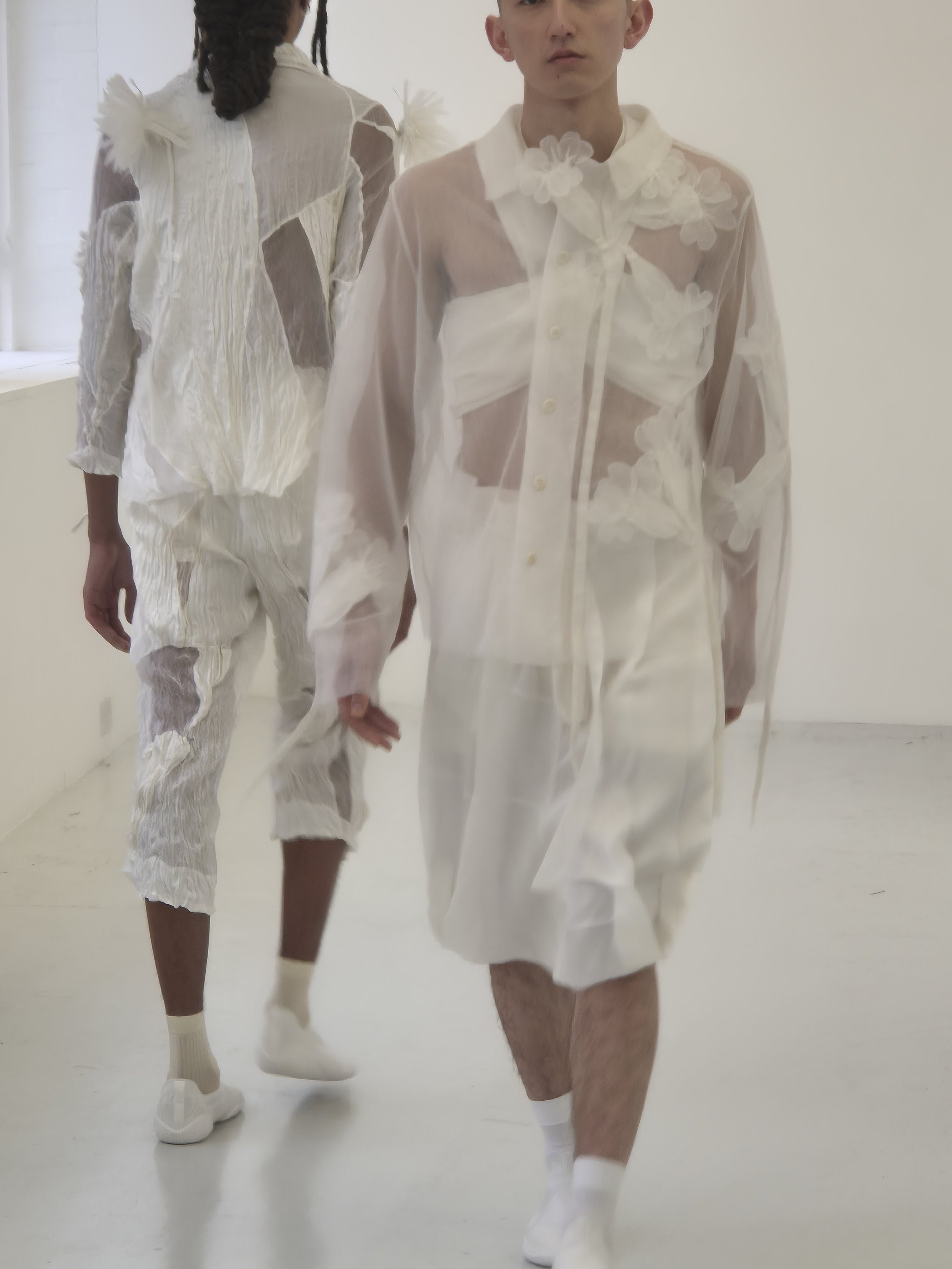
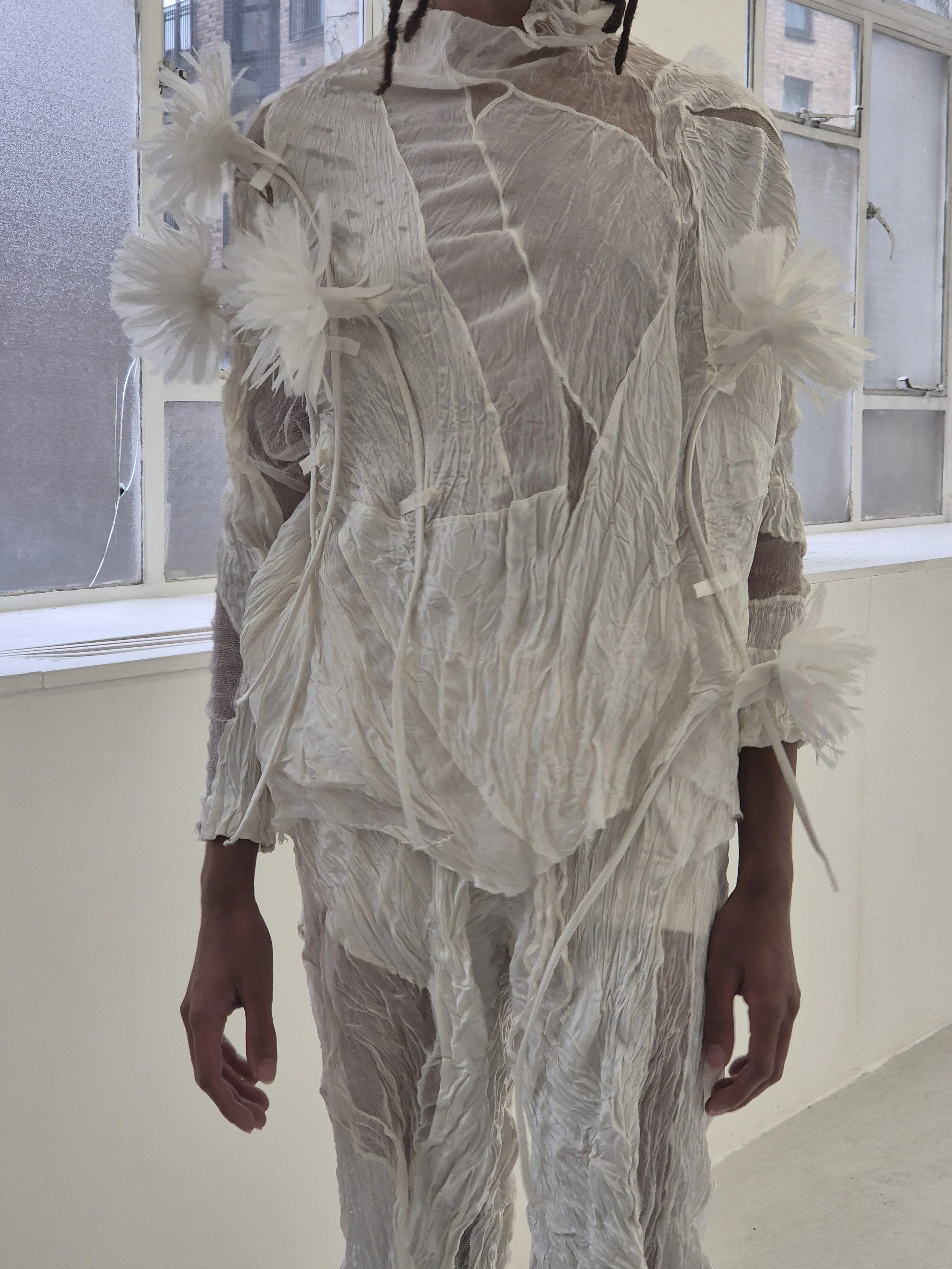
A single layer of mesh mapped the rib and arm — not to titillate, but to insist that the body beneath is part of the construction, rather than merely its hanger. Paired with wide-leg trousers of matching temperament, the ensemble balanced structure and breath. Down the side seam, a spray of florals unfurled in a procession of ruffles and gathered petals that ran like a white river. With every step, the blooms jostled, bending into the room’s hush like slow, fragrant punctuation.
A related look delivered ruffles that arched from the sides of the arms to form fragile wings. They did not promise flight; they offered motion — a crawling, rhythmic passage that traced the audience’s faces with soft momentum. Those flounces were both delicate and decisive.
Lost Touch read as a meditation on tactility in a mediated age. That sheer fabric — so capable of being draped one way and then another — became a language of connection and its absence. To me, the show’s restraint was its argument. When everything is stripped back, the relationship between maker, material and wearer becomes visible. The cello’s last note faded, the garments retreated into white light, and the room felt a lingering caress that had been lost.
Peace was the prize of Phoebe English’s runway. Peace, and understated admiration.