

In Conversation x Nazzal Studios
Middle to Whom: The Politics of Silhouette
I recently had my doom-scrolling interrupted by a clip of Nawal el Saadawi, an Egyptian writer and political activist, whom I was, sadly, unaware of until now. The clip was an excerpt of a YouTube video, a freedom lecture. In it, she discusses the origins and politics of the term ‘the Middle East’, its intrinsic link to British colonialism and the reductive quality of its use. She explains that regions such as Egypt were given the label 'Middle East' by proximity to London, just as India became the 'Far East'. It presents an image of the world orbiting Europe; it groups a swath of countries and hundreds of cultures under a peripheral term. Geography has always been political: the way we explore it, how we document it, and, critically, how we discuss it. Saadawi humorously notes the hypocrisy in our language: “now when I go to London, I say I'm going to the middle west and people laugh, when I'm going to America I say I'm going to the far west and people even laugh but when she (panellist next to her) says “Middle east” no one laughs” there is a commodification with which we speak about the world outside of Europe. This colonial mindset embedded in our language makes much of the world a mere backdrop for Western culture.
Art and fashion have long reflected these colonial dynamics, often appropriating fabric, labour, and culture from across the globe. The fashion industry thrives on exploiting the world's heritage and workforce, yet rarely acknowledges its sources. Labour remains faceless, attributed only to distant lands that we, the customer, the viewer, the audience, must not concern ourselves with. Anonymity removes the impetus for empathy by design. Art is our most fundamental form of communication, and fashion is the most universally identifiable expression of our individual humanity.
Fashion often distances itself from the realities and politics underpinning its own industry, presenting beauty amid exploitation and chaos. That is where I will introduce Sylwia and Nazzal Studios.
Sylwia embodies all that the fashion industry has so long lacked. An artist who is not merely unsacred by social disruption but is designing with that explicit intent. Born and raised in Jordan, she is a Palestinian woman who centres the need for Arab visibility and Palestinian justice in her world of creation. She became the first Palestinian to show at any fashion week, presenting her frankly breathtaking collection, Al-Najah, at Copenhagen Fashion Week this past January.
‘Original Magazine’ was lucky enough to speak to her following.
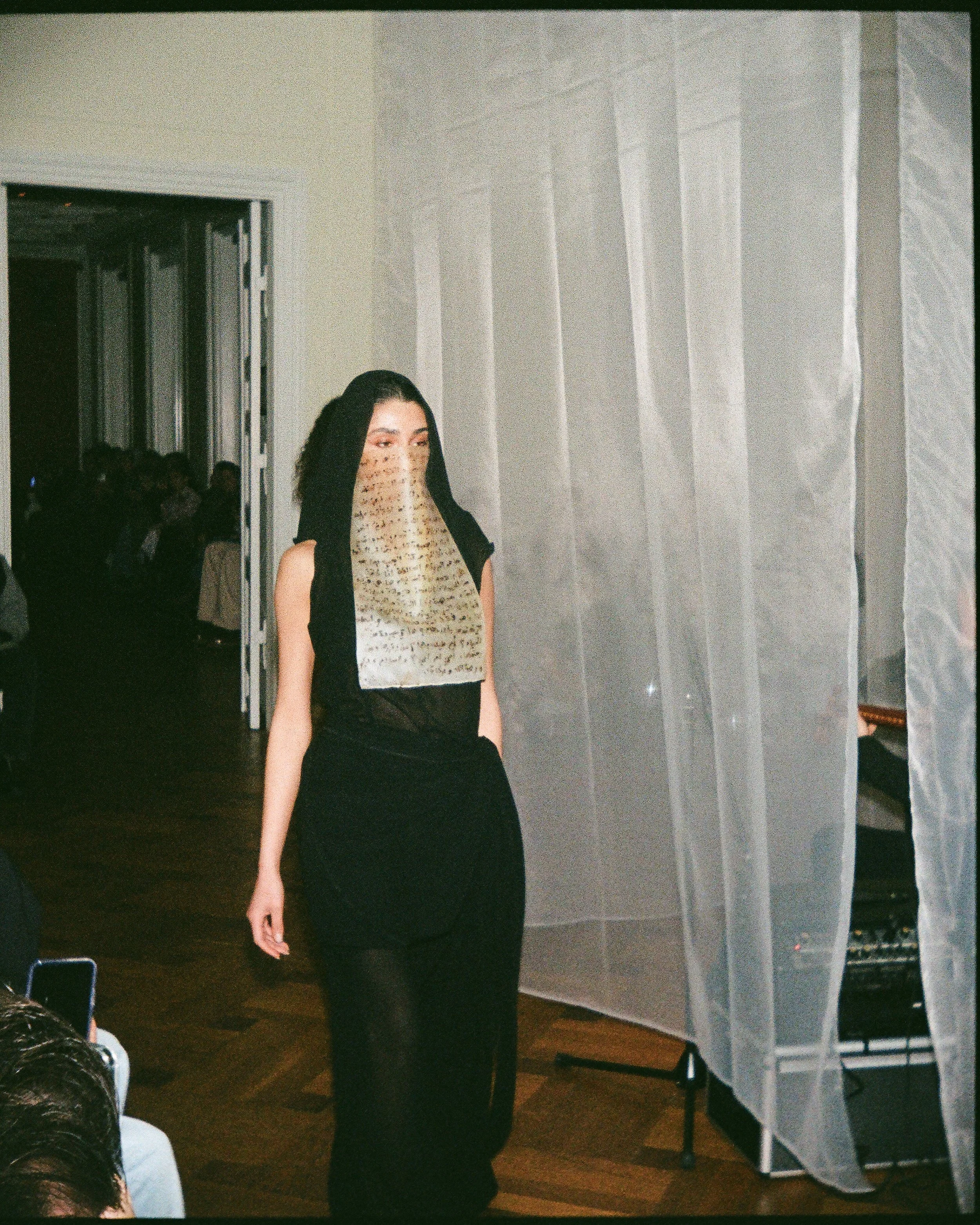
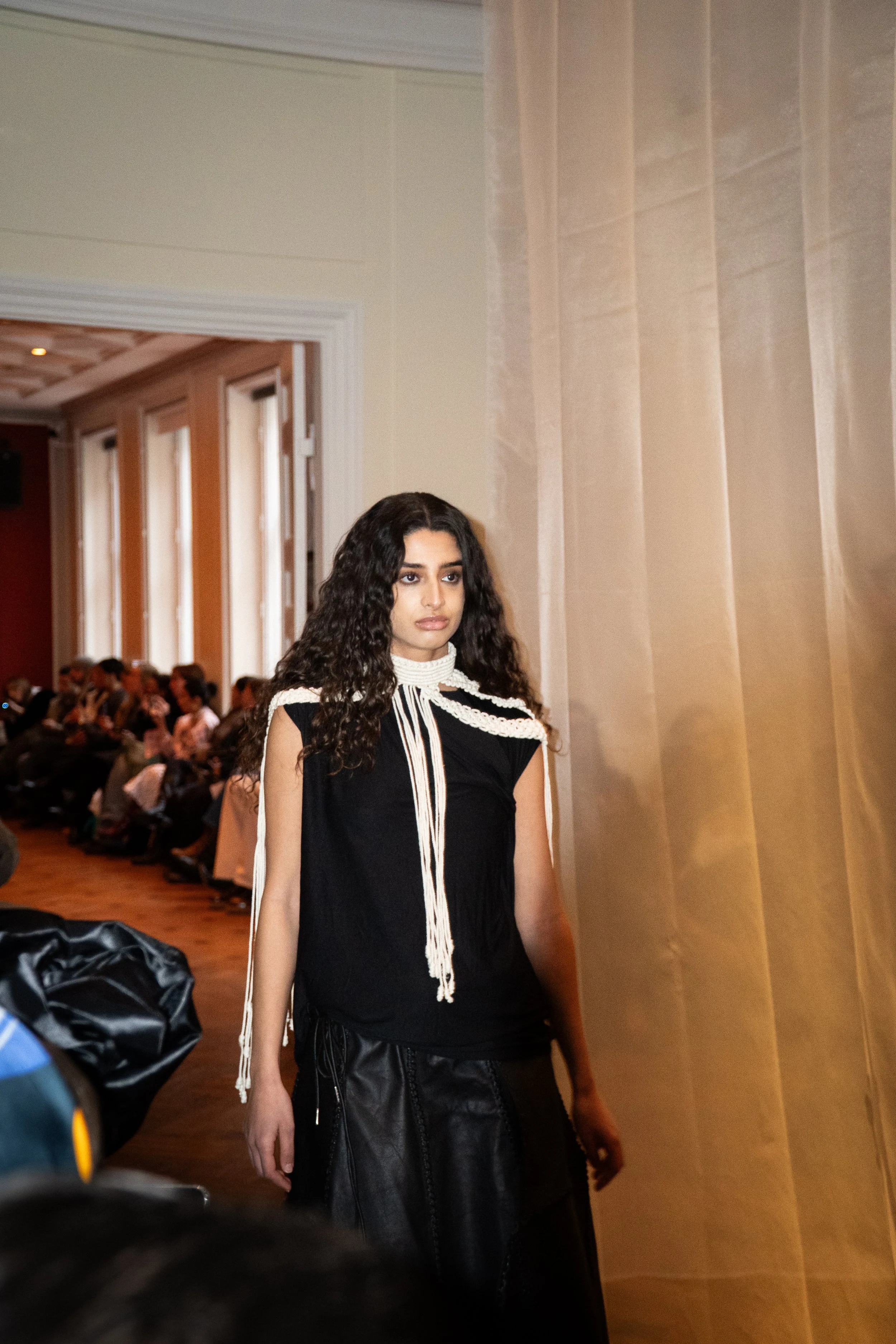
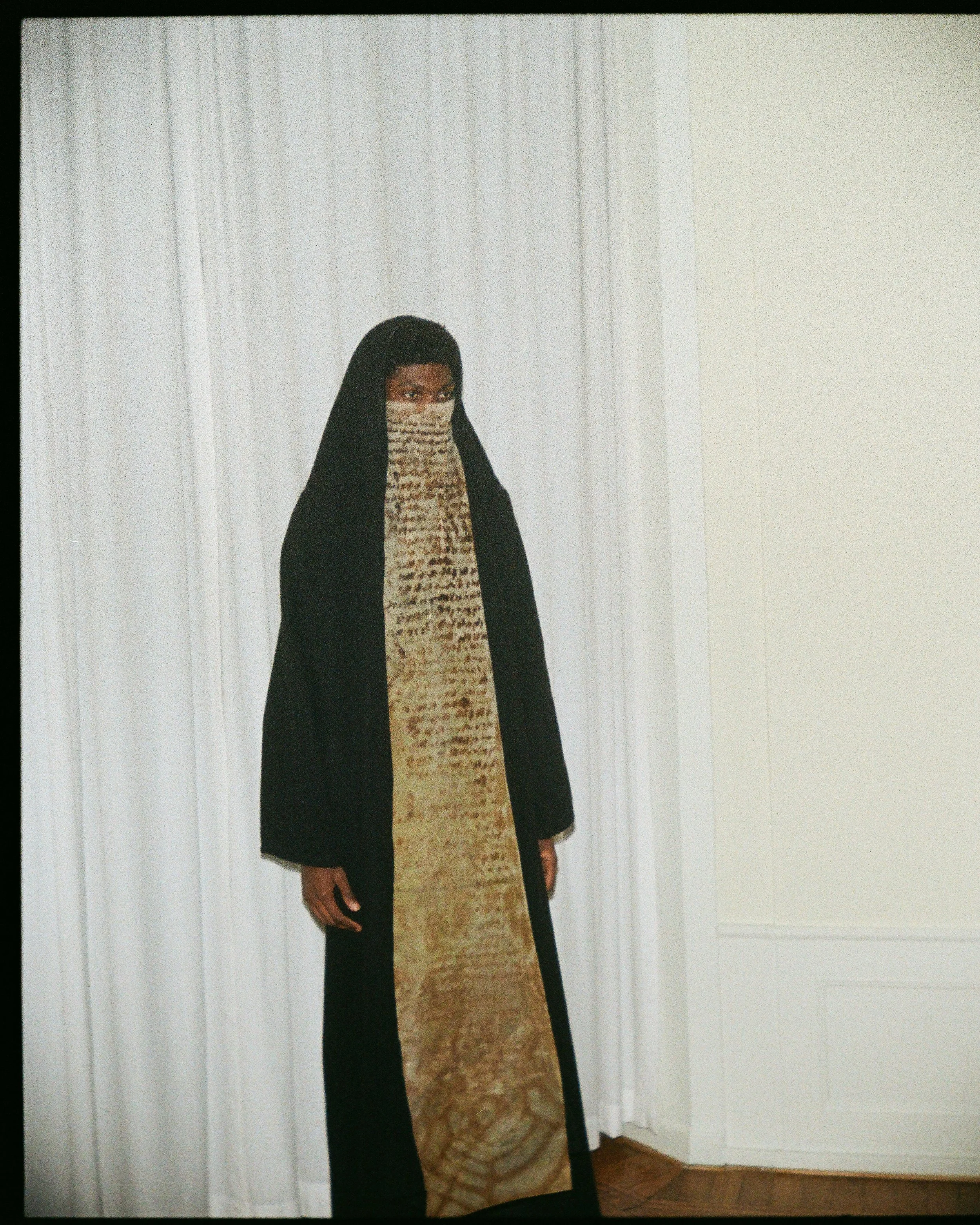
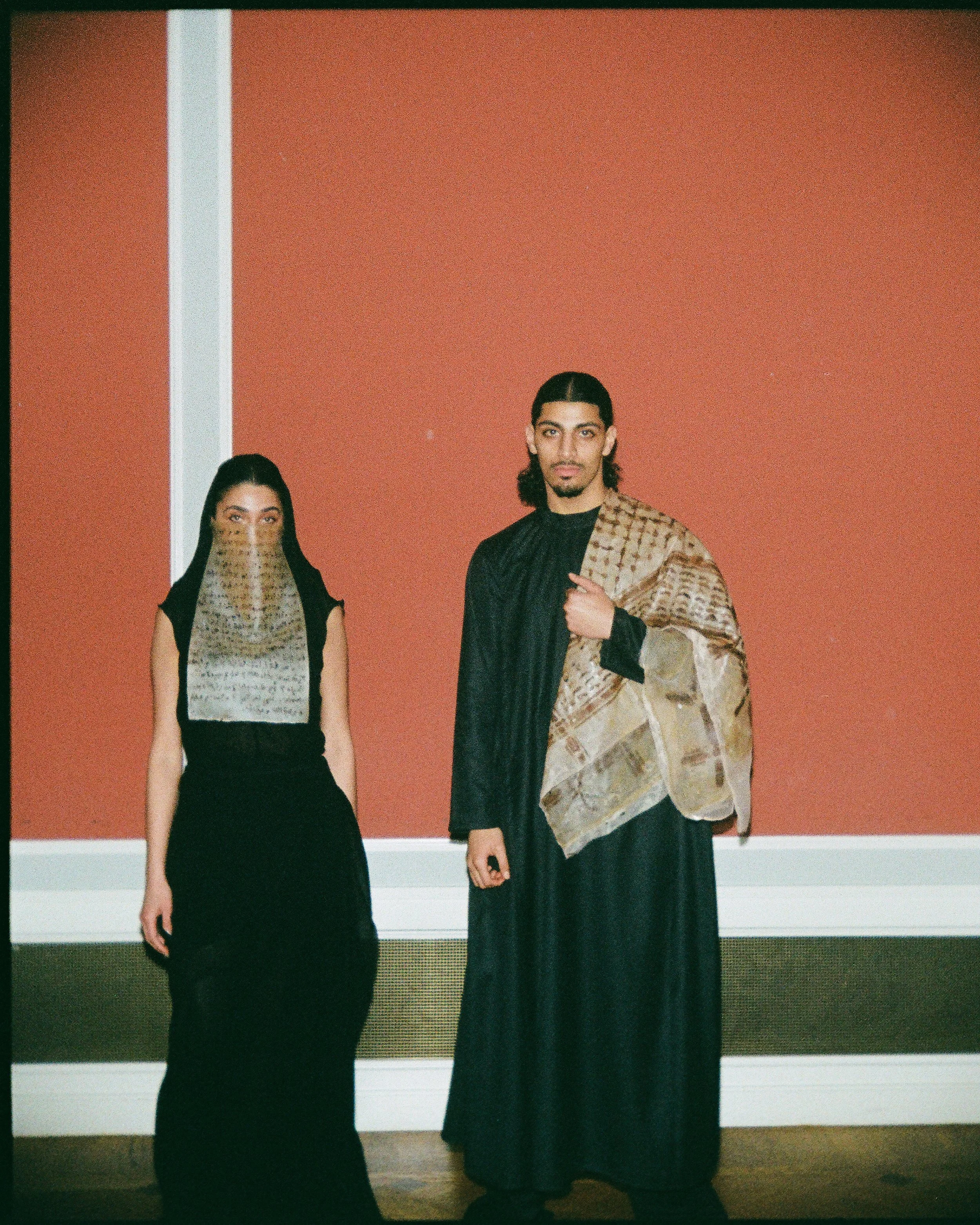
Nazzal has always used her garments as the setting for her own ethical and political activism. From her first collection, “What Should Have Been Home,” to now, fabric and silhouette have been the lexicon in which her world can be understood. Palestinians' resistance and the Arab visibility are fundamental to the brand's conception; her work
heavily revolves around Reframing narratives of classic Arab/Islamic fashion “I feel like that's what drove me to kind of do my own thing in fashion. [...] It really bothers me seeing a hijab on a runway or a very Middle Eastern silhouette on a runway that's used in Paris, and like that can be chic, then these same fashion brands are working in France, where France bans the hijab from the workplace.”
Sylwia's first collection is a devoted, loving tribute to home. “What Should Have Been Home” introduces us to the creative universe of Nazzal Studios—earthy, serene colours and unmistakably regional silhouettes set the stage for a paracosm of Arab excellence.
Sylwia is incredibly intentional; for her, it isn't just about making clothes; it is an exercise in art. “Because I view myself as much more of an artist, my approach can still feel like a student's when it comes to the design process, [...] I'd rather go for the conceptual meaning behind everything than the wearability. [....] I have this message, and I want it to be taken a specific way, and so I don't compromise that for the fashion industry.”
Every aspect drip with reverence for her Jordanian and Palestinian roots. Constant motifs of hijabs and niqabs, paired with colours of ivory, stone, ecru gold and lush deep browns, evoke a sense of comfort and warmth, while very much mirroring the landscape's complexion. There is something deeply endemic about many of the designs. Contrasted with huge, imposing, and almost alien figures in the garments. Puffers and hoodies, which drape and wrap around the face and swell, both masking and adorning the wearer, are emblematic of the modesty of traditional dress and the modernity and freshness of their designer.
As Sylwia puts it, “It's both honouring, but it's also kind of that storytelling aspect that I find so important in my work.” This is a novel approach to construction from a perspective many of us in Europe and America have never seen. Nazzal Studios' collection lets us into that world, and we can't help but fall in love.
My infatuation and interest have only grown with Al-Najah. In her previous collection, I was particularly enthralled by her golden puffer jacket, which featured prominently on her social media. The jackets' lining detailed the names, ages, locations and dates of the death of Palestinians killed, “an incomplete list of Palestinians killed by IOF in 2022”. It is central to understanding the core of Sylwia's work and a profound, heartbreaking introduction to the role writing plays in her creation. The theme recurs periodically and consistently for the designer, through poems by her aunt reflecting on life as a Palestinian teenager in the 70s, and in her recent collection, adorning the face of a latex niqab. We discussed the origin of this motif.
“I don't know, I feel like writing has always been important for me, and I think it's one of those things where it's something that keeps coming up, but I don't fully understand why I always use it. I loved writing, like in poetry, as a kid. Now, as an adult, I'm finding little ways to attach it to my practice.”
The aforementioned Niqab is a true standout in a collection of wonders.
“Actually, I'm glad you brought up the veil, it's a niqab, and I really think this was the aspect I found beautiful. So, we used latex. [...] anything you put behind it just feels like a memory; this blurred vision, it's so beautiful." This material's ephemeral quality opens up much discussion when placed in the context of its use as a veil.
“It kind of brings humanity back to how people constantly look at the Arab world, especially at hijabis and women who cover themselves. They usually look at them as less than. And they always lack seeing the human person behind the hijab. They say they take it off, and if they do, then apparently, they're justified, they're more human, they're not oppressed, and whatnot. But it's so far from the truth because it's a choice that these women are consciously making. And so, I feel like there's something interesting about having a blurred niqab where you can't see who is behind it, but you can't see that there's a face there. Maybe that has some sort of metaphor behind it, of, you know, there's a dehumanisation to those who constantly look at hijabs in a very Islamophobic way.”
I think this whole collection, and on a wider scale, Nazzal studios, is getting to the heart of that issue, to the core of why we have such distant alienation to those who live beyond our border, particularly when we are within the Arab world.
Sylwia studied for her undergraduate degree at Parsons Paris. Despite how dreamy that may sound, her experience was anything but. “I personally found living in Paris extremely challenging, and I didn’t enjoy my time there.”
“I was really bullied at university, and I feel I was always very outspoken and political. We had a class group chat where I would be like, 'Please donate,' and I would send all these links and be left with no replies. Maybe the one Lebanese girl in the class was like, "Thank you for sharing," and then everyone ignored me. I was preaching about Palestine for years, everyone at my school, in my class, and I felt that was always one of those things where it was like, we're not really going to respond to you, and we'll be polite, and we're going to overlook you to be polite. But, for me, it felt like you were diminishing me.”
She recounts so many moments where her designs and messaging were met with complete ignorance. “I would show my reference images and then all these hijab silhouettes. And then I would make a jacket that had no neck seam that was flat and resembled a hijab. A teacher would tell me, ‘You know, you'd be surprised with how elegant the traditional dresses are and how elegant these silhouettes are.’ I would be like, 'Why is that surprising?’ There is often, within fashion, this fantasy of exceptionalism and Eurocentrism, a belief that true fashion only exists within its borders. That outside of Europe, creativity and elegance do not exist tangibly, at least not like they do here.
Particularly in France, there has been over the past years a growing resentment toward the Arab world and a removal of Islamic imagery and dress from public life. Though it's both horrifying and perplexing that a teacher would make such a comment, it isn't shocking, which is more horrifying. France has made mounting attempts to remove the hijab and niqab from public viewing, a move that is both racially motivated and incredibly undemocratic. The topic of fashion and how we choose to cover ourselves has become increasingly political.
Fashion is visibility, and visibility is life. Nowhere has that been clearer than in Palestine. Nazzal Studios is making sure it's on full display, and none of us can look away. She gained much public recognition following October 7th, when suddenly all eyes were on Palestine. Dealing with sudden success can be challenging at the best of times, but under the shadow of such tragedy, I couldn't imagine how hard it must have been to reconcile. “It was one of those things where, you know, I wasn't even looking at what was happening with my career and my life because I was just so focused on the genocide. Many Jordanians are actually originally Palestinian and moved there; it was a collective sadness. You could feel how dark the country felt for Palestinians. Everyone was speaking about it for a year straight. That was the only topic of conversation.”
“When I started going viral, it was just one of those things where I was posting to share what was happening. So if I have people's attention, let me also be political. [..] But then people started asking me, where can I buy? And I was like, shit. I never planned on selling this.”
Though her audience is within Europe and America, as she hopes to keep people's eyes on Palestine and their hearts on change, she has, to her joy, returned to Jordan, where she has recently established her own studio. “It was so grounding. I was so fed up with living in Paris, and especially after October 7th, it was such a bad taste in my mouth to
be there; it just didn't feel right at all. When I moved back to Jordan, it was literally like a breath of fresh air.”
Taking the time to back, soaking up all the beauty and life her home has to offer has help her practise contuinue to bloom. “There's so much culture; if you're going to be inspired by any place, be inspired by your heritage. It brought so much out of me when it comes to not just my livelihood, but my inspiration.” She goes further to say, “in many aspects, it was healthier for me, healthier because my family is there, and friendships, and all my childhood is in Jordan.”
Though her love for Jordan and her relief at being home are palpable, it can be difficult for her to bridge the gap between Jordans everyday fashion culture and her ambitious avant-garde designs, though she imagines a future in which they may feel more at home. “Maybe they also haven't caught up to, let's say, the vision I have of wanting to see an Arab designer in high fashion. I think it's always couture or ready-to-wear, but there's no storytelling, high-fashion, absurd, insane, 'this isn't wearable' type of things. I was like, " Let me be that”. Because I also think high fashion is the closest to art. I mean, all fashion is art, but high fashion just has this lack of wearability that feels so, like, freeing, almost.”
FTA Franca Sozzani Debut Talent Award in 2024 and now first Palestinian at fashion week, it's no doubt Sylwia Nazzal is making history with her work, but as is so often the case, the litany of questions about ‘how it feels to be the first’ can be fatiguing. We spoke about what it actually means to be that first, and whether she felt a performance was demanded of her, particularly by Western audiences. “Yeah, I do think there is. There is that gap. And I think like there is a pressure to represent. But then, personally, I don't feel like I have that power. I think a lot of my practice always feels naive because I don't think I look so much into other people's opinions the way I do or the way that other people expect me to. I just feel like I'm representing a message, and I'm representing Arab identity through my lens.”
as we closed our discussion, reflecting on all that her collections represent and have achieved she laments on what it means to Palestinian in this current climate, “we claim our heritage so tightly and so deeply and were raised to respect it and own it and love it, and it almost feels like a different entity that doesn't belong because it's so universal between Palestinians. I feel like I look at that otherworldly feeling (in my work) as almost a universe that I see Arabs in. It's kind of like I'm keeping a universe alive. Like that lens that I want people to see Arabs through the way I highlight them.”
I know, as we enter 2026, there is a new designer I will be looking at, and it'll year of fashion that says fuck you to ignoring politics.
“You know, as Palestinians, whether you live in Palestine, you've never visited Palestine, and you're a third-generation Palestinian, we claim our heritage more than I've seen any other. You could see a third-generation Palestinian American, and they would still say, I'm Palestinian before they call themselves American. To me, this is so special. How we all claim our land, a home that we don't have anymore.”