Becoming the Observer: Sex, Spectacle, and Self Reflexivity in Four Chambers
Words by: Anya Duncan
In Four Chambers, presented to the London public during the Barbican’s Dirty Weekend , Vex Ashley builds an erotic cosmos where pornography is neither product nor provocation. Instead, erotica is treated as process: an ongoing inquiry into how a body becomes an image, and how an image, in turn, looks back at its voyeur.
Her exhibition combines photography, fashion, and film into a living nervous system. The compact space carved out for Ashley’s vision heightens the sense of stepping inside another consciousness. You emerge with memories of a continuously shifting organism that treats sexuality as an experimental language rather than a market-driven reflex.
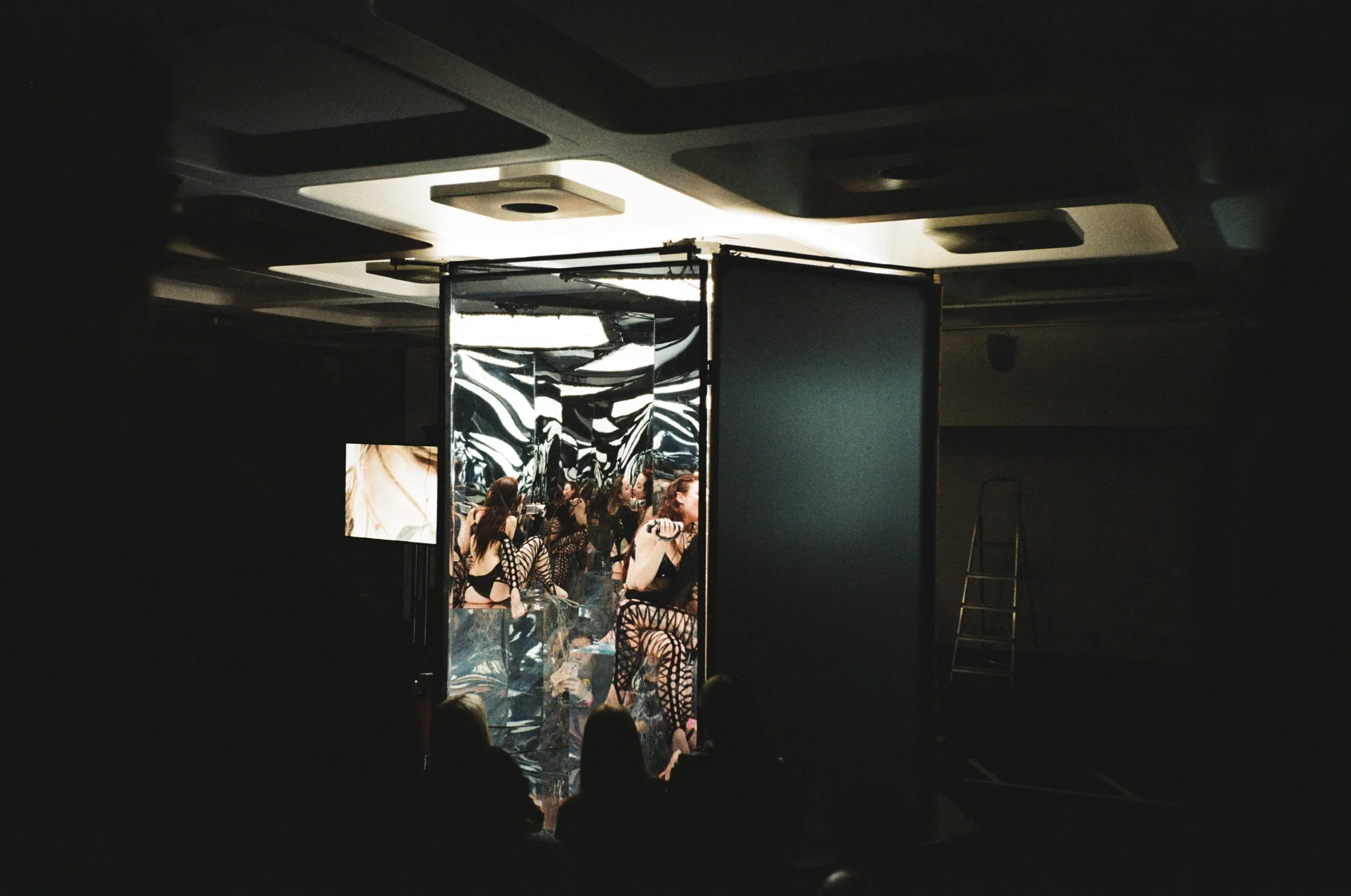
Most striking in this exhibition is the sense of entering a hall of mirrors that appears to think back. Step inside and you’re multiplied: a dozen versions of your gaze ricocheting back, each one asking a slightly different question.
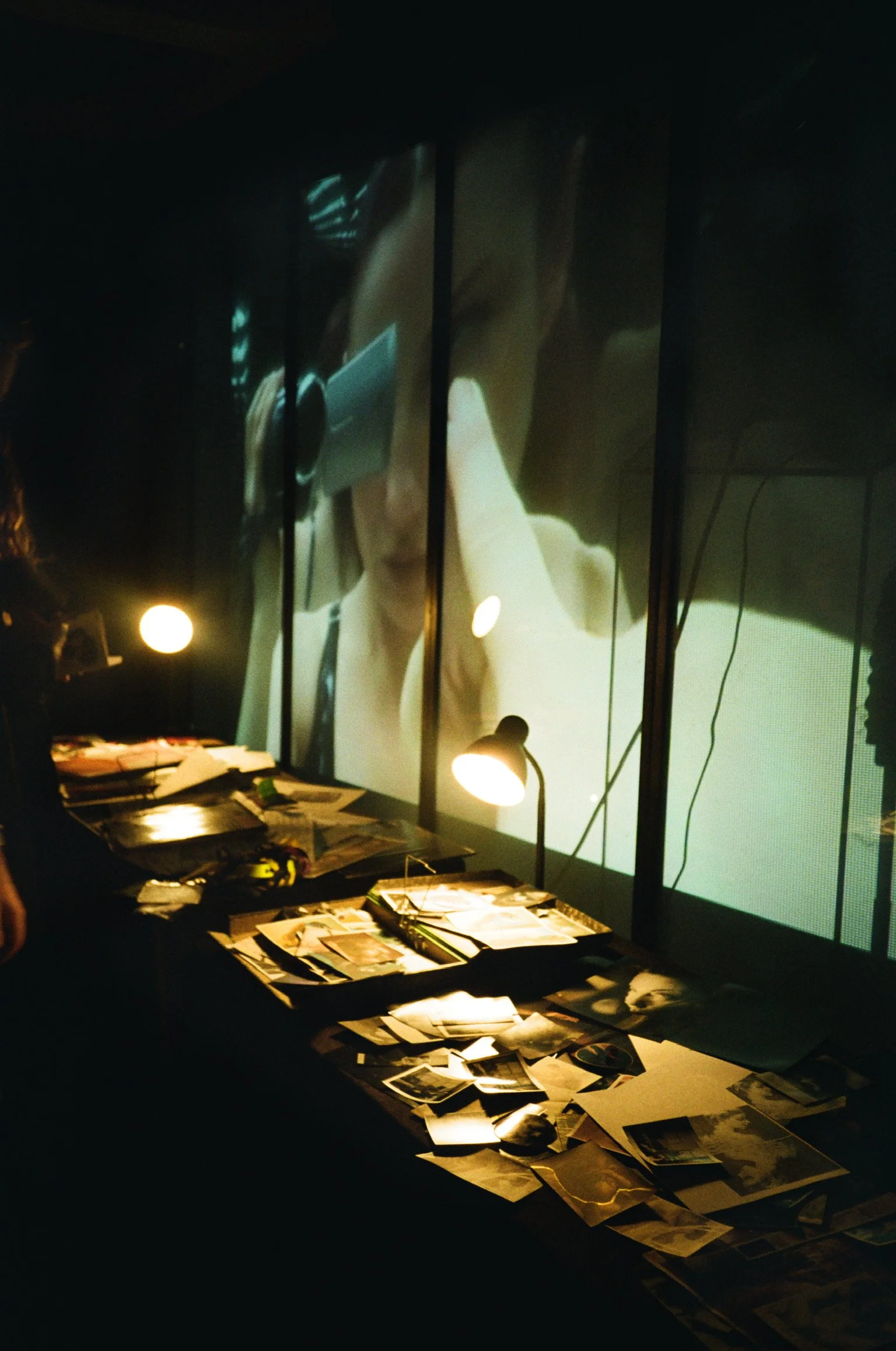
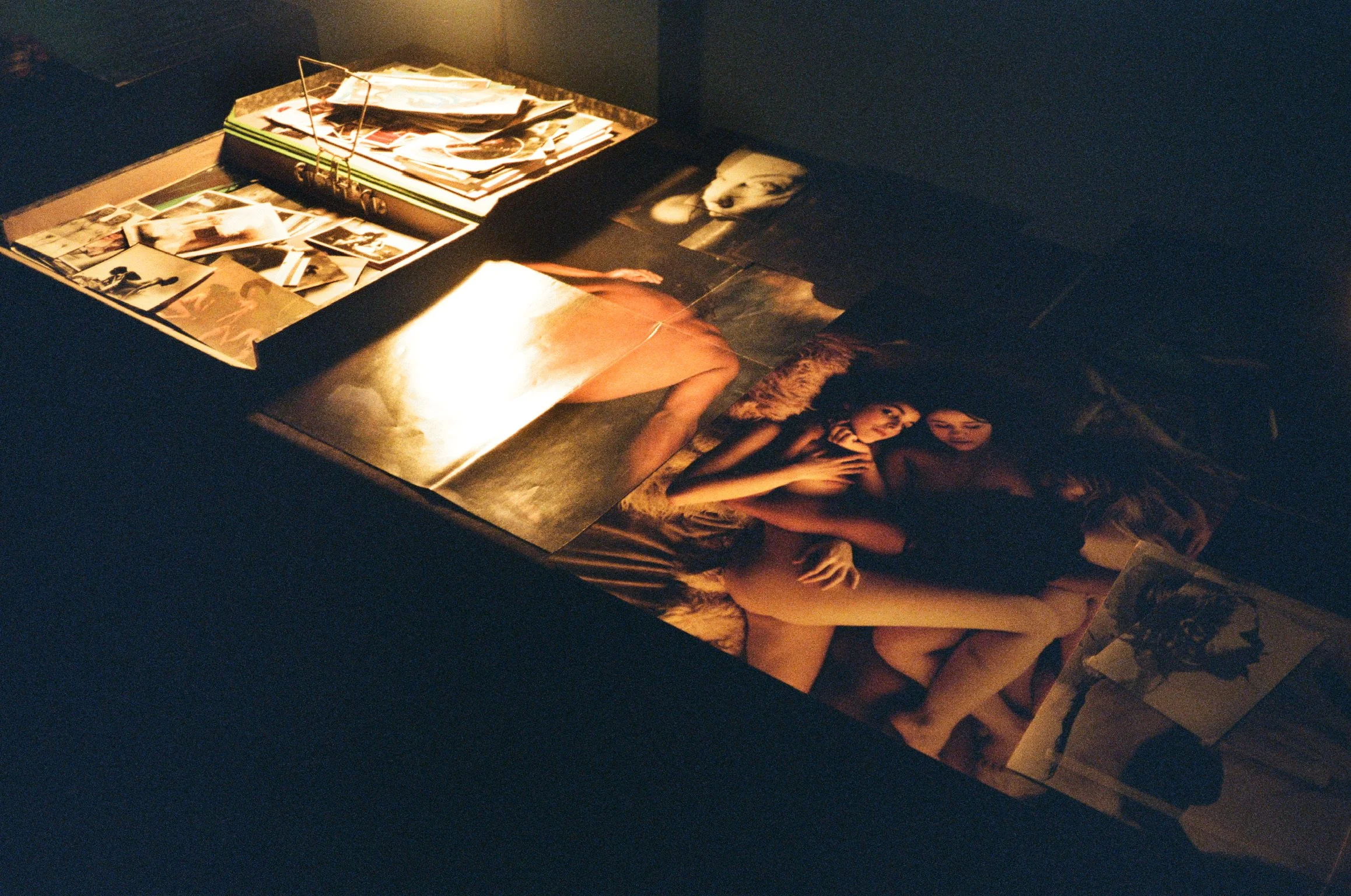
Ashley’s long-standing preoccupation is perception. How desire is shaped, distorted and repurposed through cameras, screens and cultural scripts. The exhibition’s mirrored structures make this explicit. Iconic outfits worn by figures like Lady Gaga hang nearby, bridging celebrity spectacle and erotic cinema, while sexually charged images regard you with a deliberate coolness.
Images Provided by Lover Management
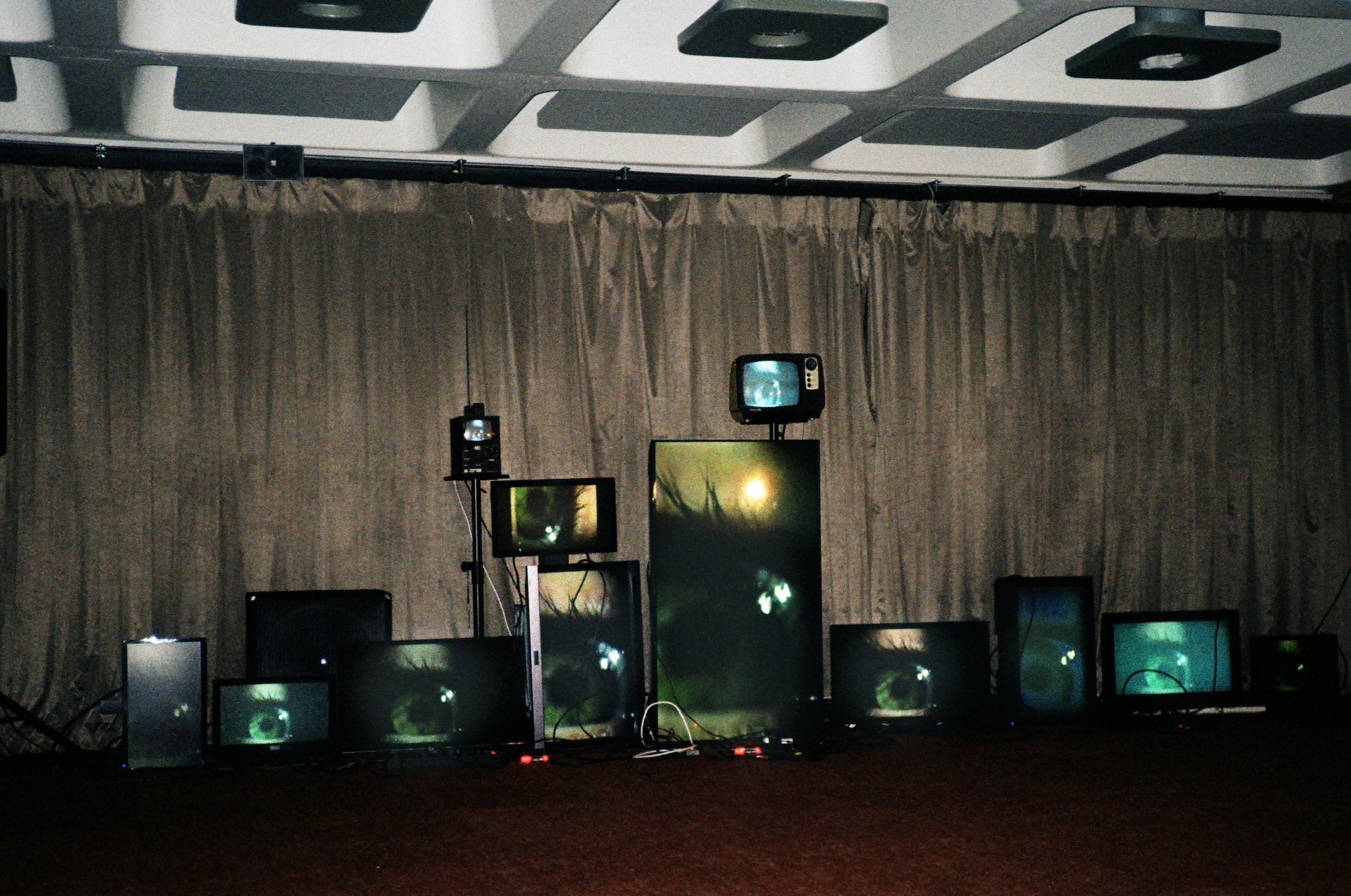
Gazes multiply until the visitor becomes part of the composition, confronted with the unsettling possibility of being both voyeur and subject. The pornographic here is not offered as a consumable tableau but as a recursive loop. To look is to be implicated, folded into the mise-en-scène.
This is where Four Chambers departs from traditional pornographic logic. Rather than staging sex as a spectacle to be passively absorbed, Ashley insists on a porous boundary between art object and observer. The viewer is invited (perhaps compelled) to interrogate their own gaze, and the feelings that fill them as they interact with many visual forms of marketed desire.
Ashley’s decade-long practice draws heavily on the symbolic scaffolding around sexuality. Archetypes, techno-mythologies, alchemy, and the micro-rituals of contemporary self-presentation situate sex as a site of ongoing transformation.
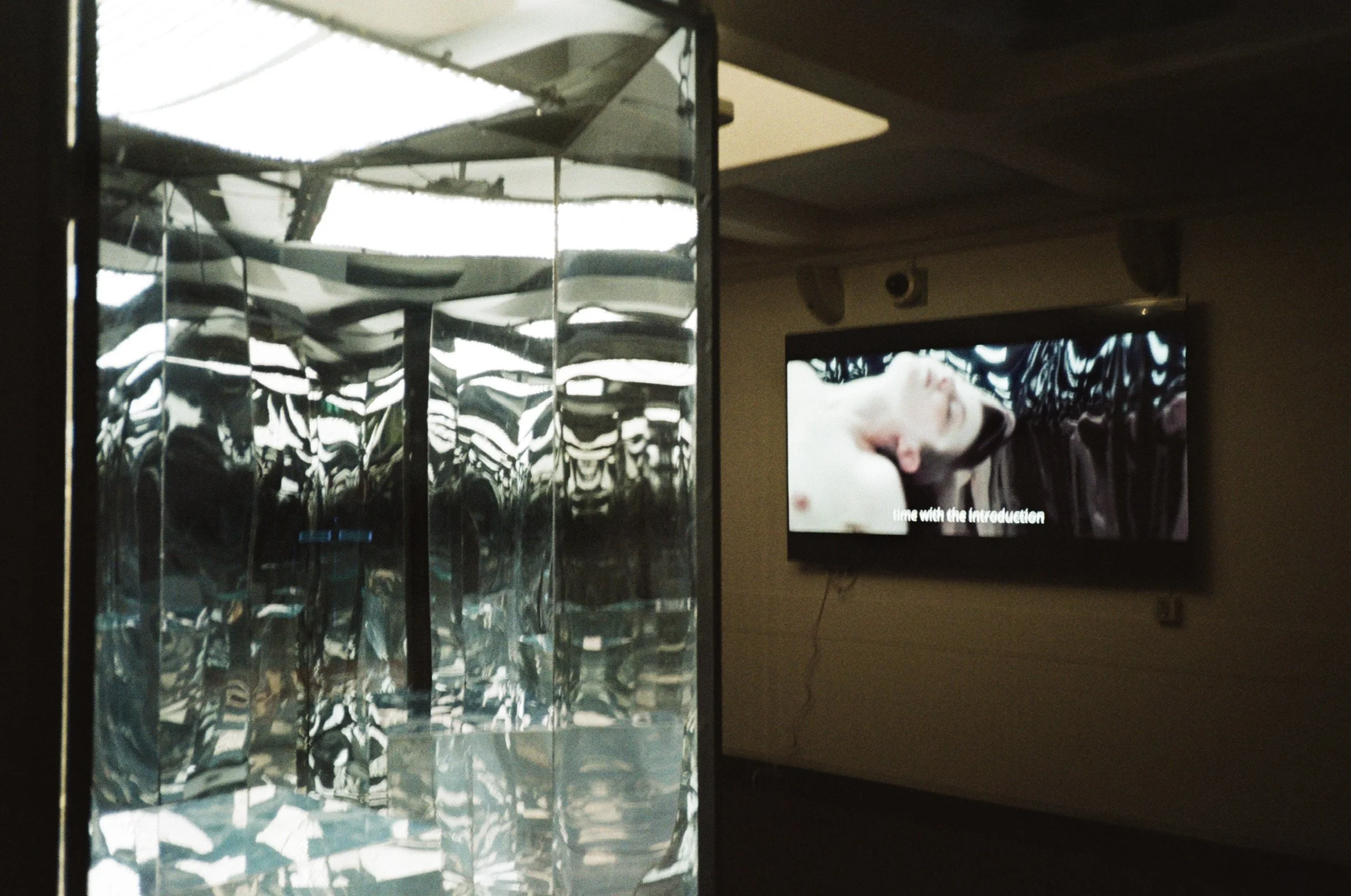
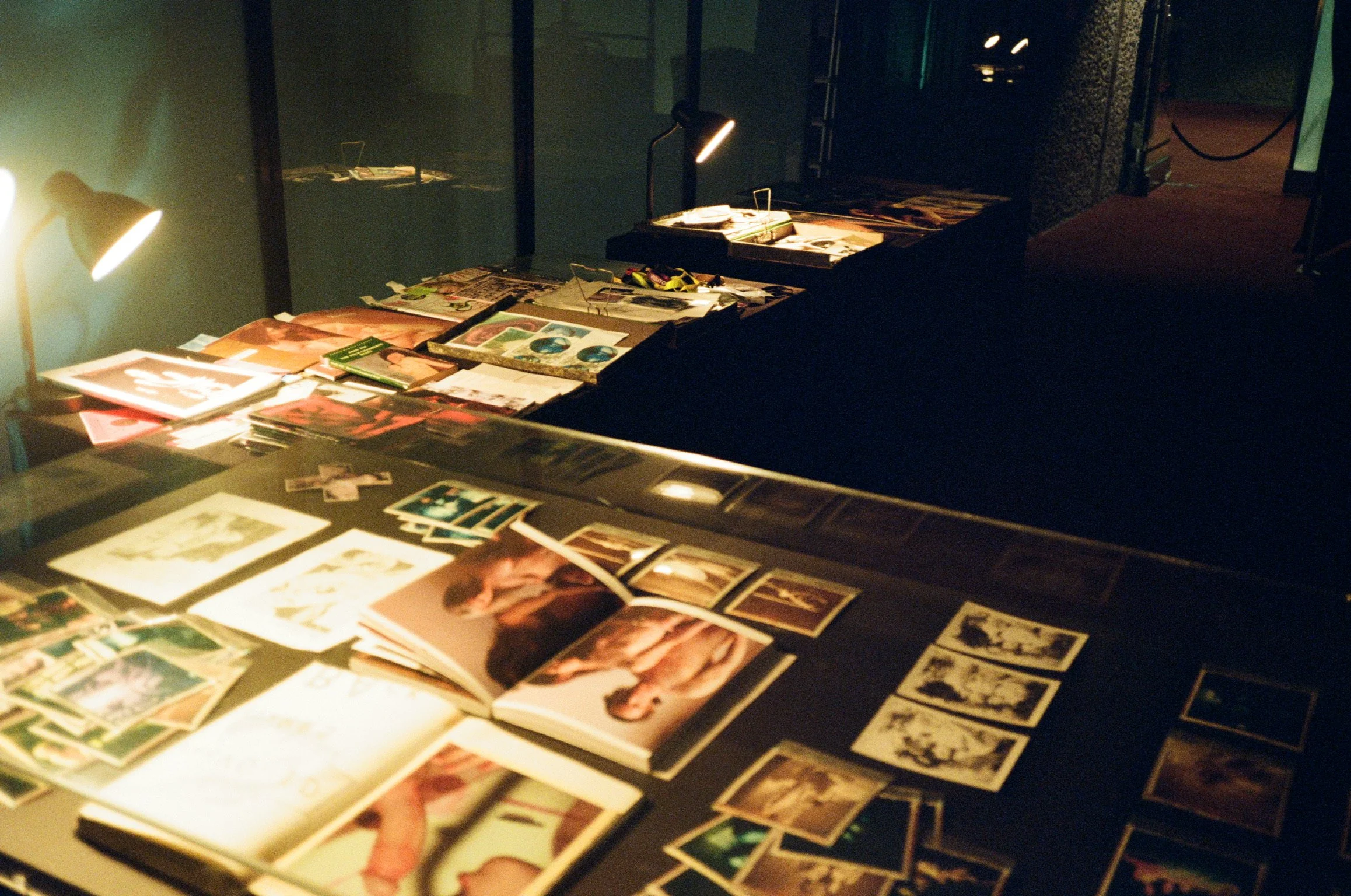
Fashion and photography heighten this mutability. Identities remain suspended in ambiguity, resisting the tidy labels that often define adult entertainment. Within Ashley’s world, pornographic labour becomes creative labour.
Collaborative, conceptual, and richly coded.
Yet beneath the exhibition’s surreal polish lies a determinedly independent ethos. Four Chambers originated from DIY filmmaking and collective experimentation. It forms part of a broader decentralisation in adult media, where performers reclaim control over their bodies. In this context, sex returns to the avant-garde, shaped by intention rather than extraction.
Here, sex is constructed rather than captured. Negotiated, rather than purchased. It is co-authored between those on and off screen. The project’s embrace of ambiguity — its refusal to settle on “art” or “porn”— becomes a provocation in itself, unsettling the cultural hierarchies that attempt to separate high art from sexual expression. The audience is made to pick apart these two words. Or not, if they so desire.
Ultimately, the exhibition invites viewers to experience eroticism as a state of becoming. The installations and live activations challenge you to enter the frame not to perform, but to confront the mechanics of your own looking. In doing so, Ashley argues that pornography can serve as a feminist and queer site of possibility. A medium capable of introspection, critique and transformation.